Building Blocks: The Basic Ingredients Behind Japan’s Flavors
Kuzu Creates Crystal-Clear Cuisine
Food and Drink Culture- English
- 日本語
- 简体字
- 繁體字
- Français
- Español
- العربية
- Русский
In our companion article “Kuzu: An Ancient Root Starch, a Modern Focus on Health Benefits,” we present the history of kuzu (kudzu), the fearsomely strong-growing vine whose roots provide a fine starch long used in Japanese food and medicine. Below we take a look at some of the classic ways kuzu is consumed in Japan.
Kuzukiri
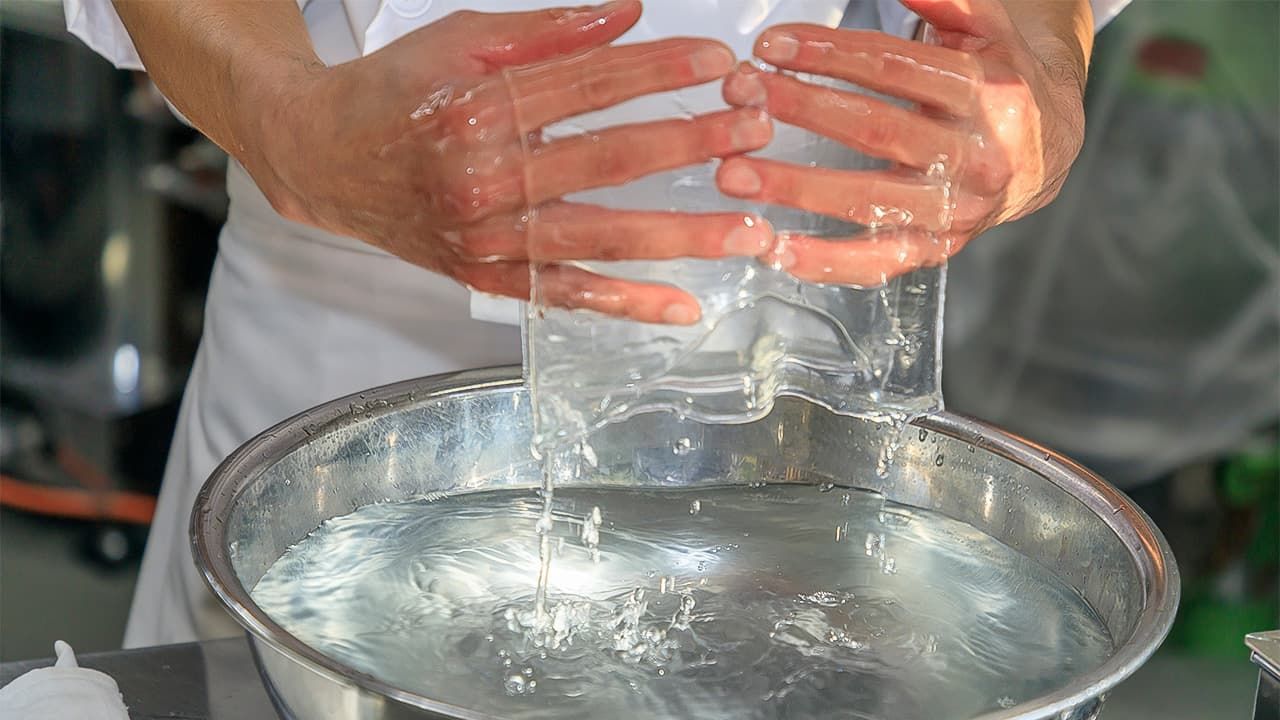
This traditional dessert of translucent noodles is made using kuzu starch dissolved in water, poured in a thin layer into a prep tray, which is then floated in a large pan of boiling water until set. To finish, just cut the layer into thin strips and serve with Japanese brown sugar syrup (kuromitsu) and sweetened soybean powder (kinako). Both the ingredients and preparation are very simple, and when freshly made, these noodles are wonderfully moist and chewy!

(© Pixta)
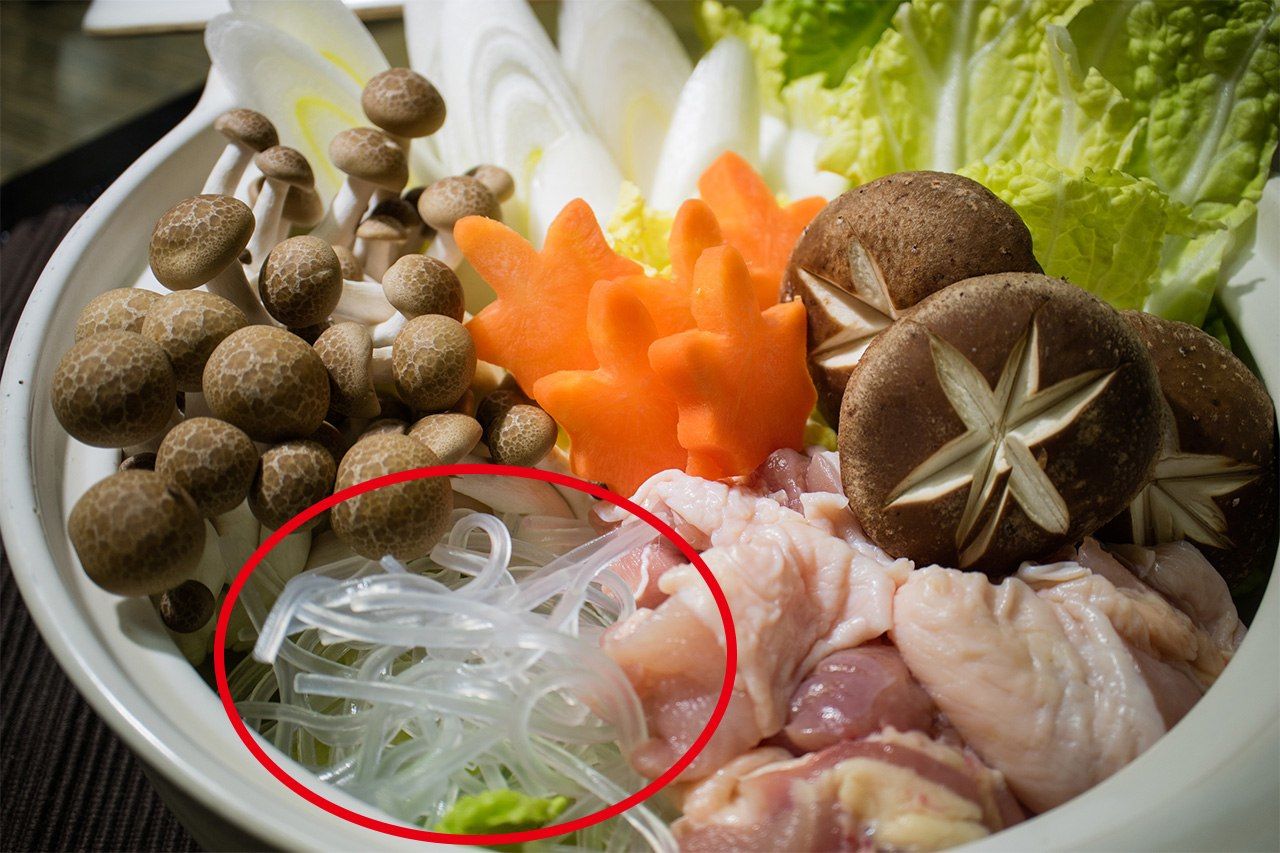
Dried kuzukiri can be added to nabe hotpots (see it circled here), but remember to rehydrate the noodles first! (© Pixta)
Kuzumochi
This translucent, jellylike dessert is softly set using kuzu starch, water, and sugar. Like kuzukiri, it is served with a topping of kuromitsu and kinako.
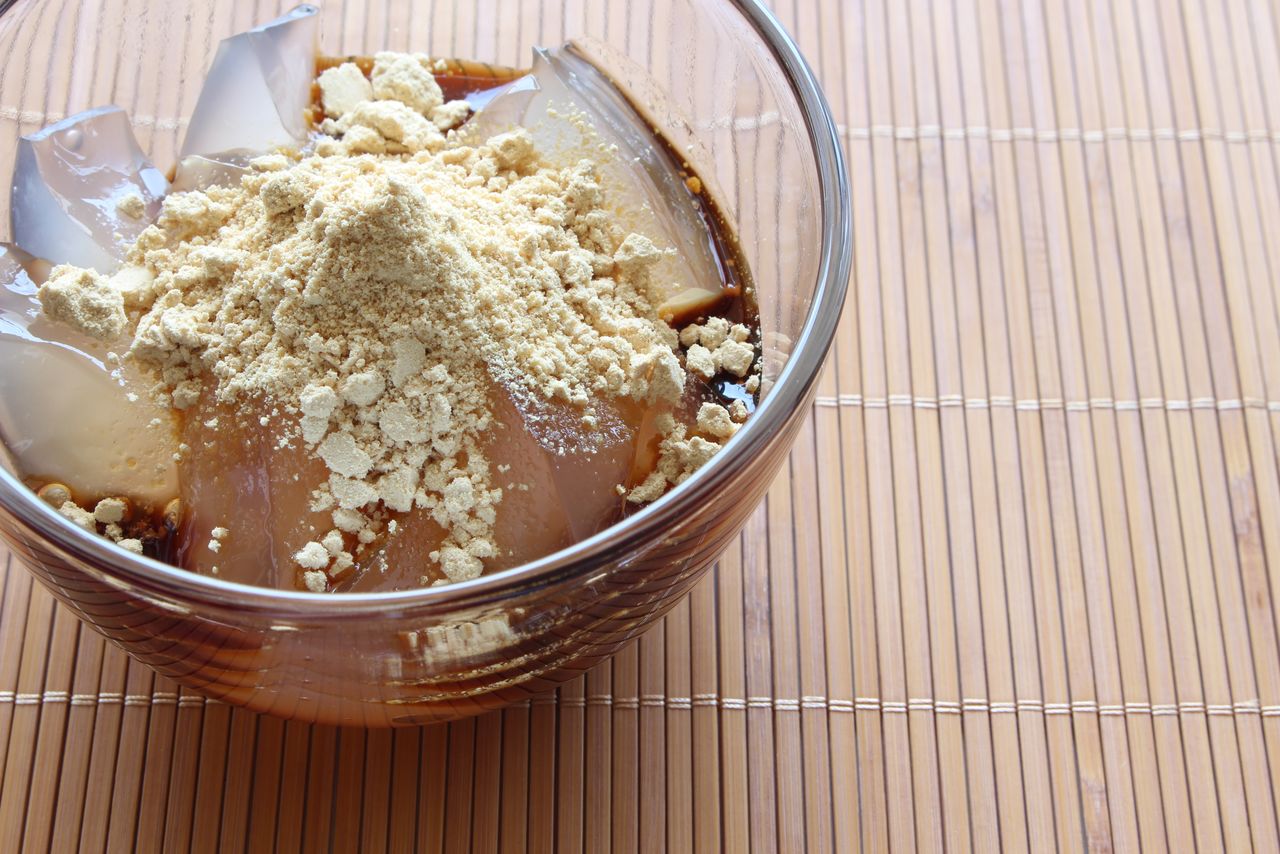
(© Pixta)
Gomadōfu
This dish is said to have originated as a form of shōjin ryōri, vegan Buddhist cuisine, at Mount Kōya, a sacred temple area established by Kūkai, also known as Kōbō Daishi, around 1,200 years ago. The traditional way of making this was with peeled raw sesame seeds, which were combined with water from Mount Kōya and kuzu powder from Nara’s Yoshino district and ground to a smooth paste in a mortar. The mixture was then heated until it began to thicken and poured into a mold to cool and set, before cutting it into tōfu-style blocks.
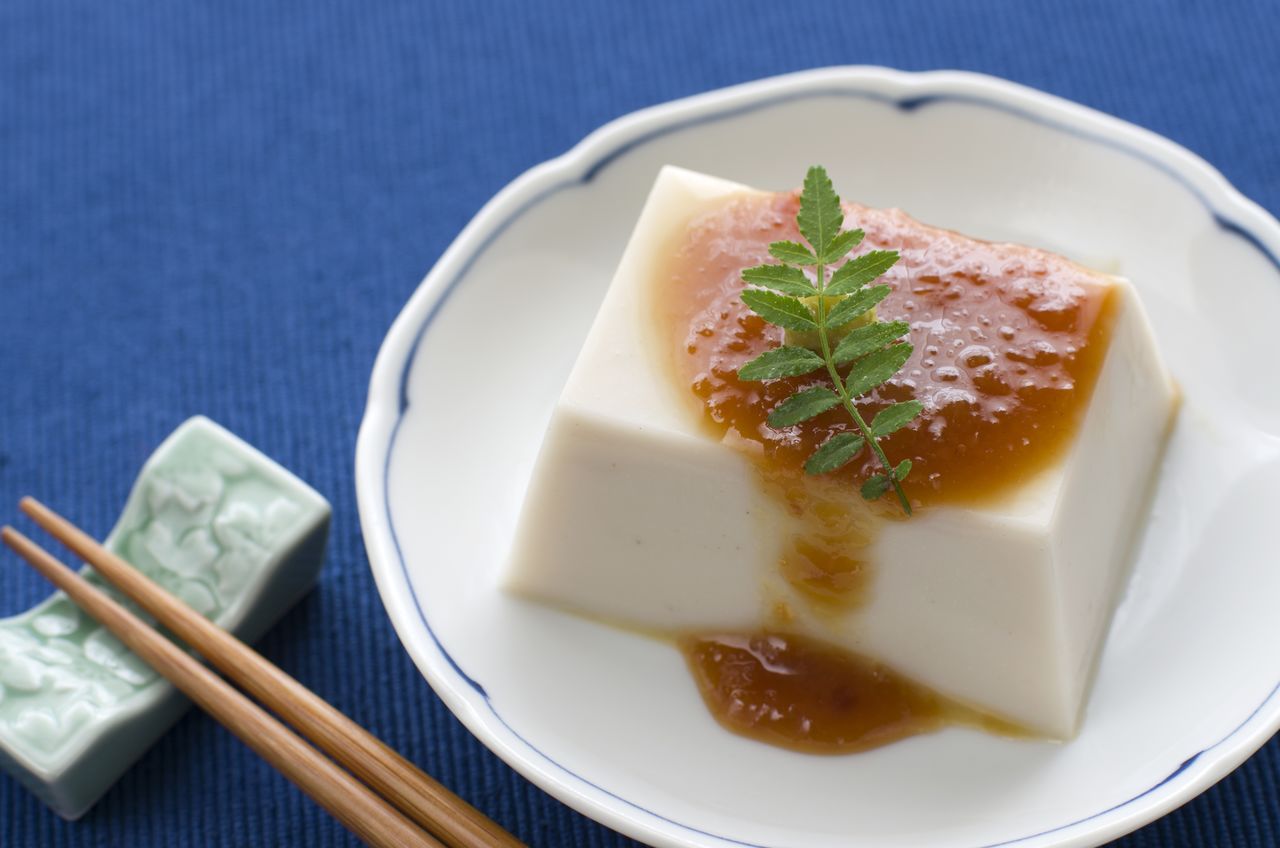
(© Pixta)
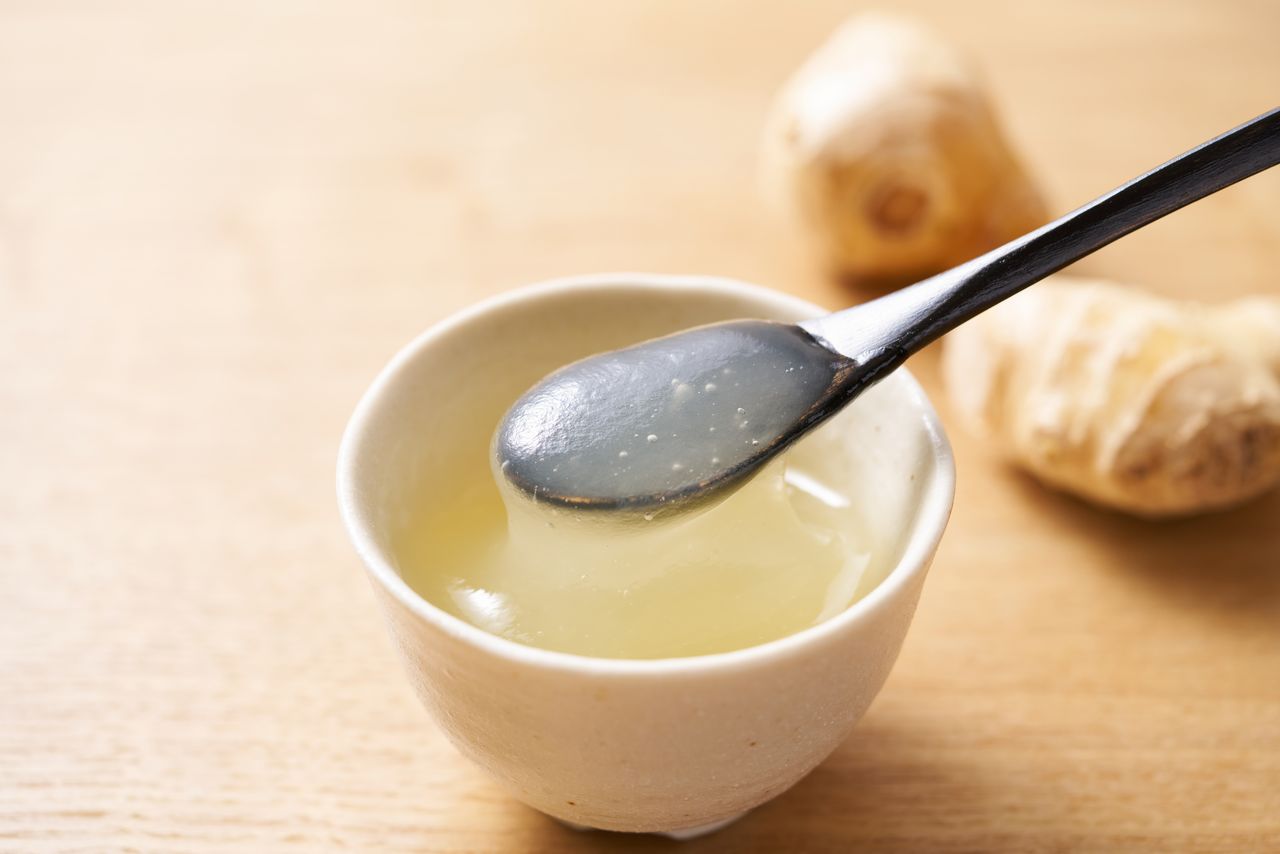
Kuzuyu
This hot beverage is made by dissolving kuzu starch in boiling water and adding ginger or honey to create a drink that will warm you right through. It is also used for thickening baby food and creating dishes for people who have trouble swallowing.
(© Pixta)
Data Sources
- Nara Food Culture (Nara prefectural government).
(Originally published in Japanese. Banner photo © Pixta.)