Building Blocks: The Basic Ingredients Behind Japan’s Flavors
Chestnuts a Symbol of Autumn and Indulgence in Japan
Food and Drink Culture Lifestyle- English
- 日本語
- 简体字
- 繁體字
- Français
- Español
- العربية
- Русский
Edible Seeds
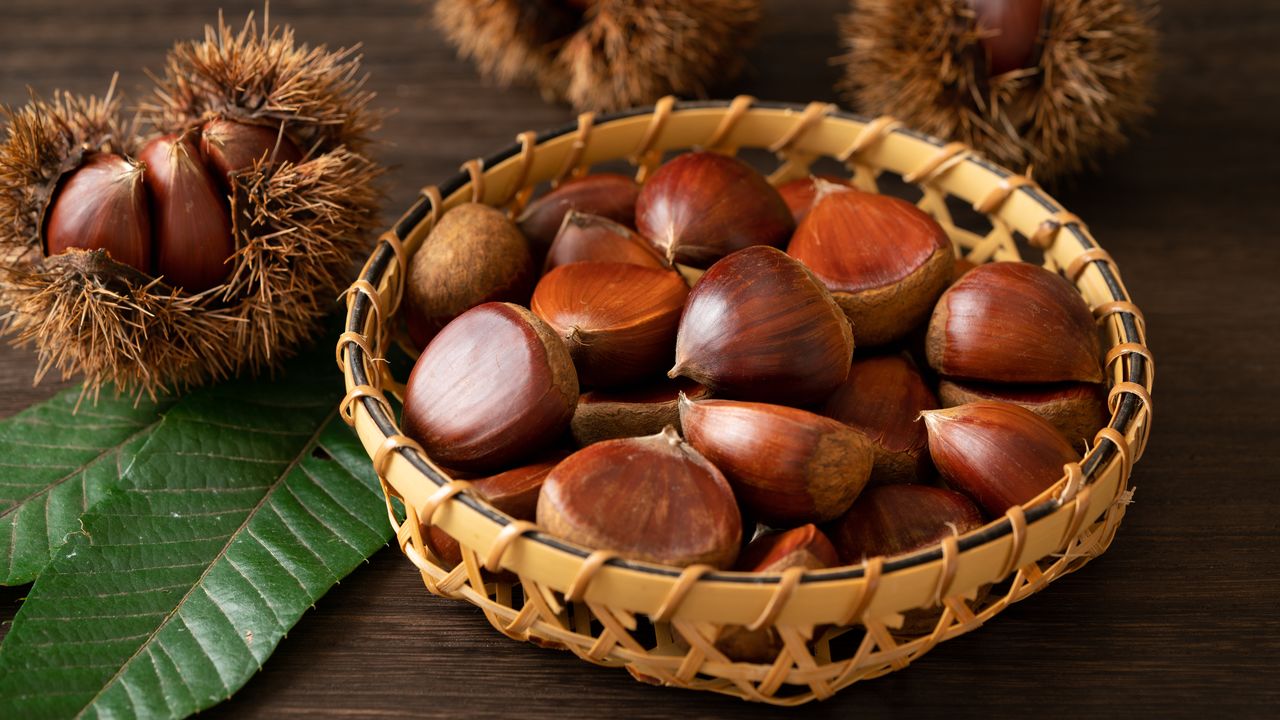
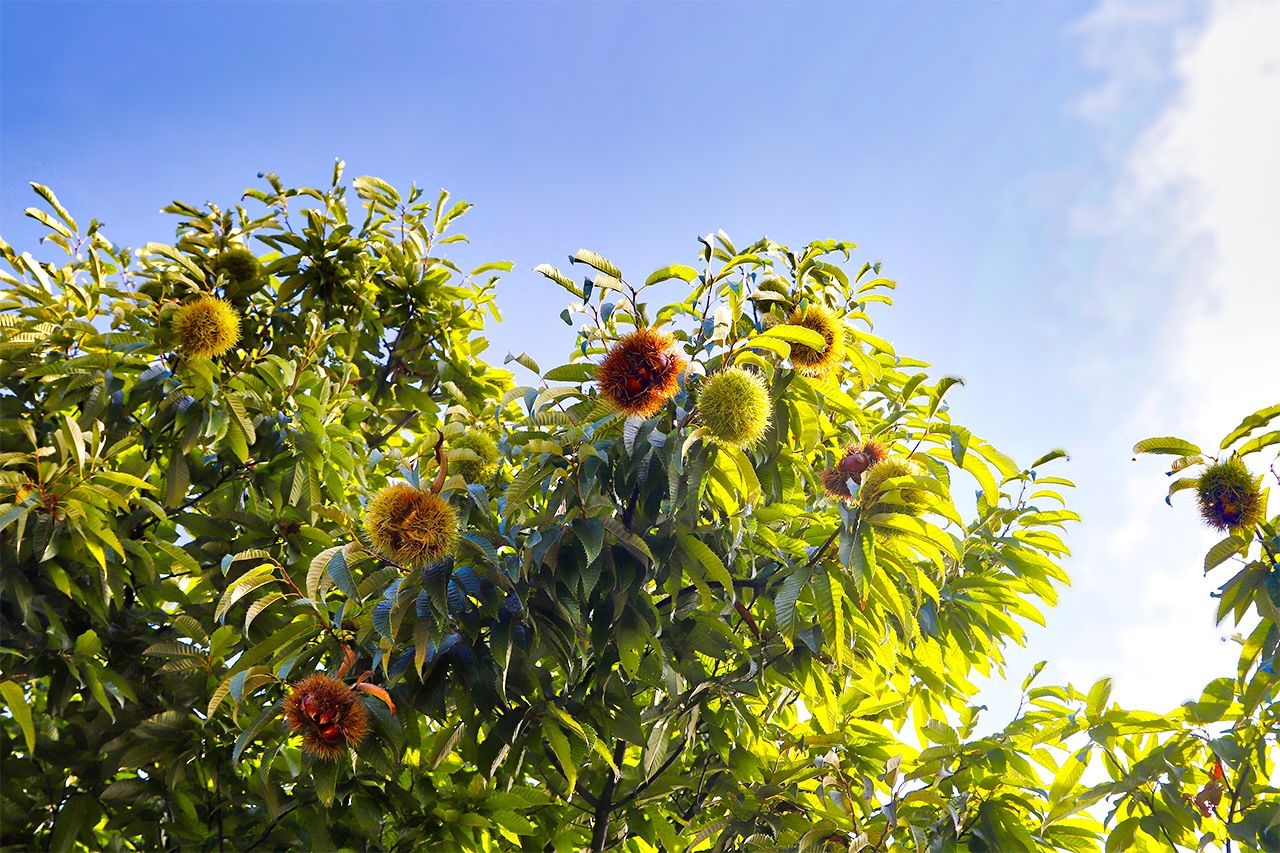
Chestnuts, known in Japan as kuri, are in season between September and October. Of the many varieties of chestnuts around the world, Castanea crenata are found in Japan and Korea. These are known for their large size and good flavor, but the one downside is that they are hard to peel. Tianjin sweet chestnuts, a Chinese variety well-known in Japan, can be peeled easily by hand if they are heated, but that is not the case for Japanese chestnuts.
The top kuri producing region is Ibaraki Prefecture, with the Tsukuba chestnut, named after the area, a representative Japanese variety. They have also long been cultivated in Tanba, Kyoto, and the locally produced Tanbaguri chestnuts are a highly regarded brand.
(© Pixta)
An Ancient Staple
These days, kuri are regarded as an autumn treat, but it seems they were an important staple food in ancient Japan. Kuri dating back approximately 13,000 years have been discovered at an early Jōmon period site in Agematsu, Nagano. At the Sannai-Maruyama site in Aomori, dating back to the early to mid-Jōmon period, along with signs of kuri consumption, it was also confirmed that chestnut trees were used as pillars for buildings.
Kuri are mentioned in the Kojiki and Nihon shoki, two chronicles written in the early eighth century, which indicated that the cultivation of kuri was promoted throughout the country. High in nutrition, they were even carried by samurai as a preserved food during the Warring States period (1467-1568).
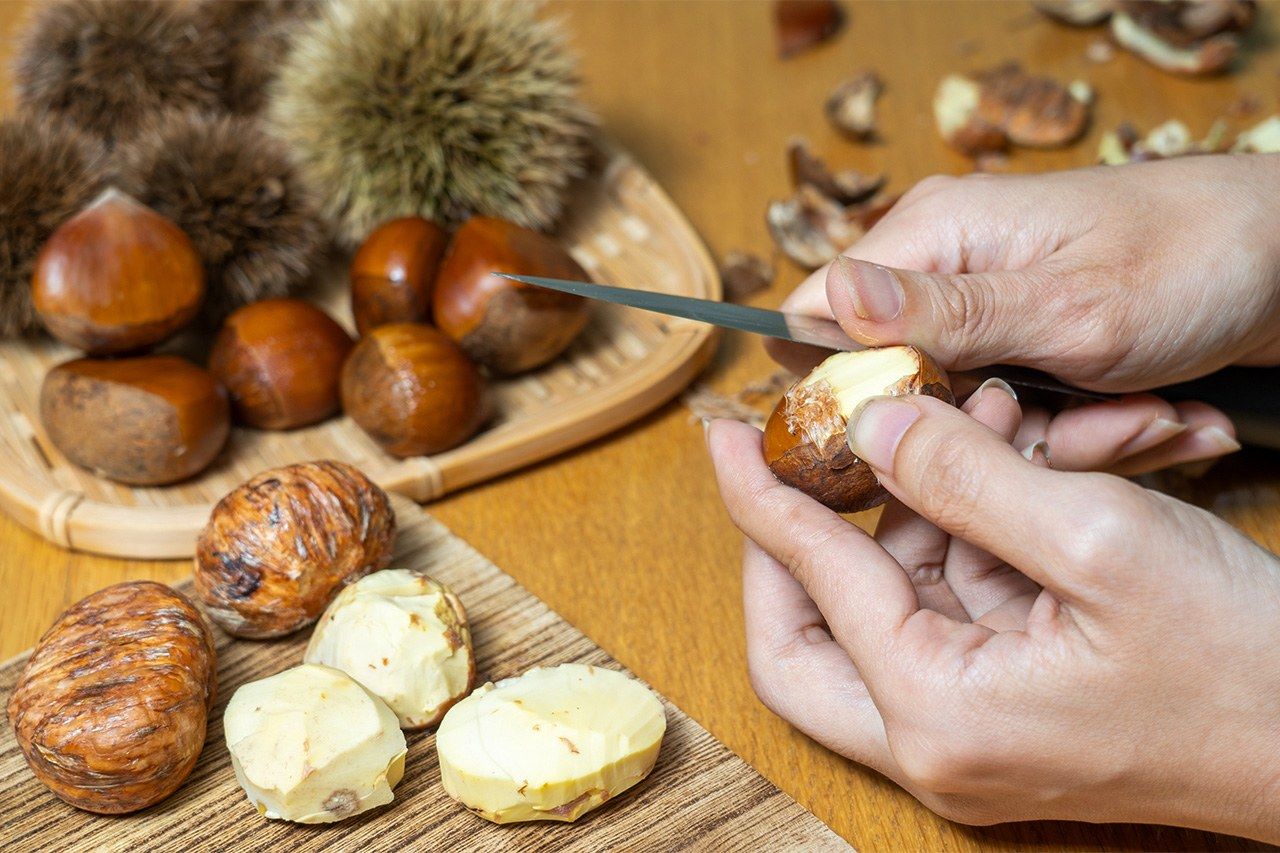
When cooking kuri with the inner skin still intact (bottom left), the bitterness needs to be removed first. (© Pixta)
While delicious simply baked or steamed, kuri no kanroni (candied chestnuts), simmered and preserved in heavy syrup, last longer and can be used for a whole range of culinary purposes, from savory dishes to Japanese and Western-style sweets. Bright as gold, they create a sense of luxury and just a single kuri atop an everyday sweet can elevate it into a delicious-looking confectionery. Every year, with the approach of autumn, a range of seasonal chestnut flavor sweets go on sale. More than just a food ingredient, kuri are a quintessential symbol of autumn flavors.
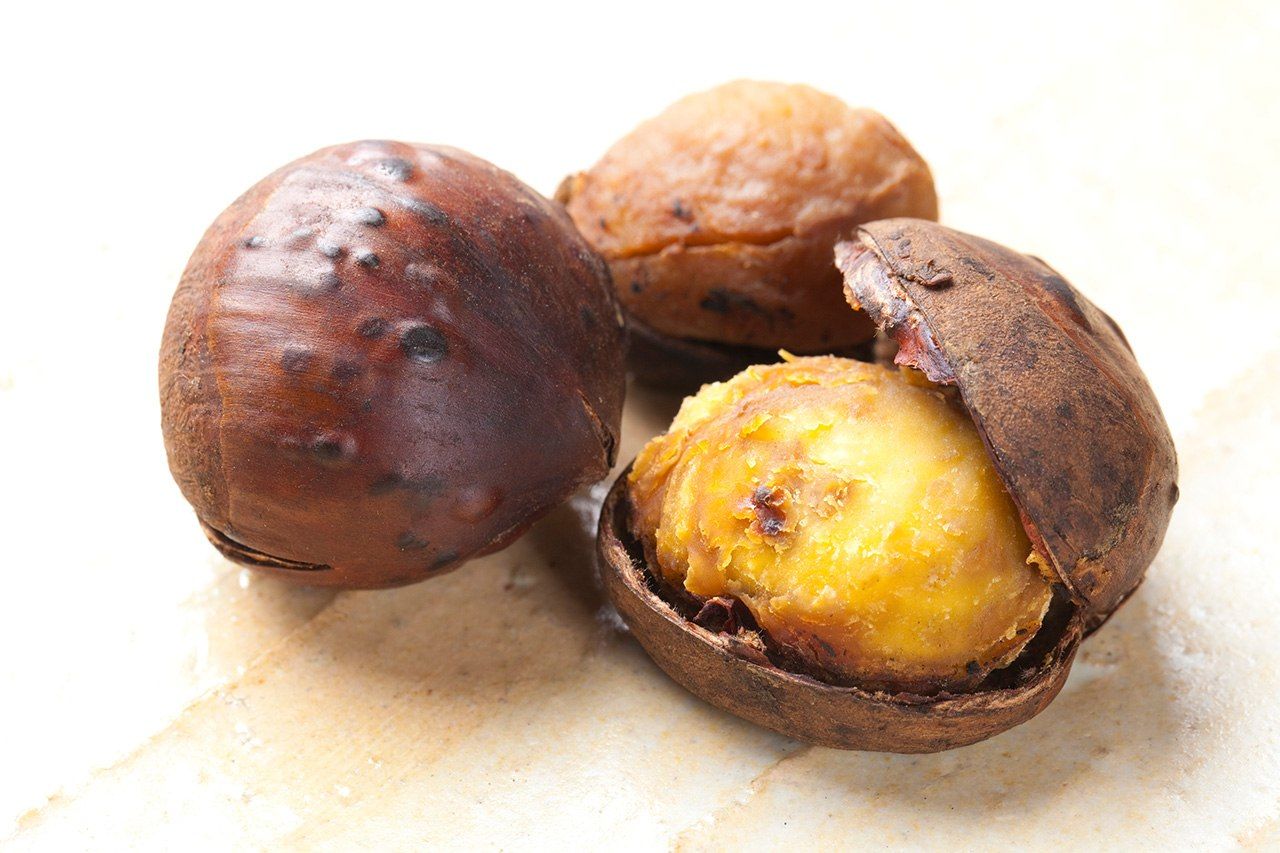
Chestnuts cultivated so that the inner skin can be easily peeled, are now available. (© Pixta)
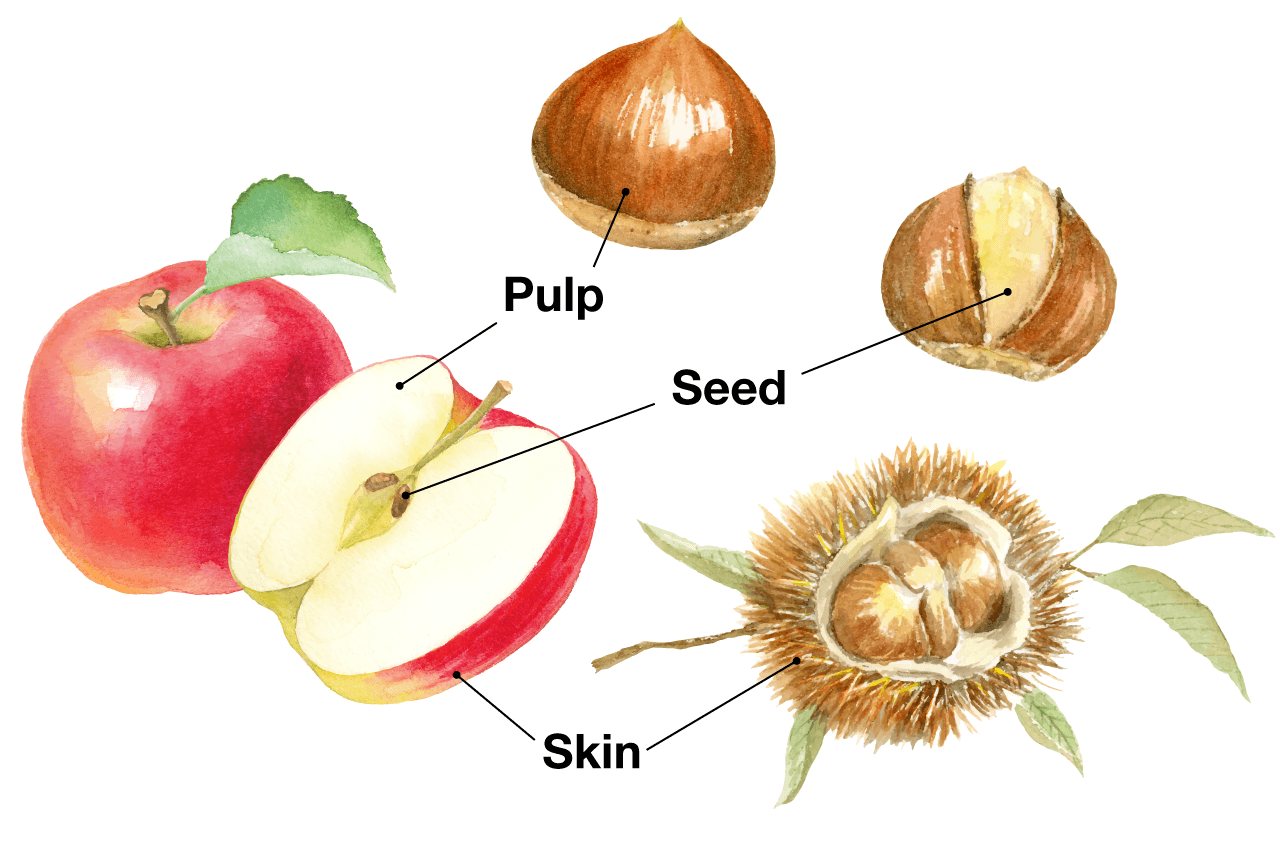
Incidentally, the spiky outer casing of the kuri equates to the skin of a fruit, while the hard brown shell, known in Japan as the oni-kawa (“demon skin”), is the pulp. What we are actually eating is the seed.
Find out more about kuri in “Sweet and Satisfying: Chestnuts in Japanese Dishes.”
(Originally published in Japanese. Text by Ecraft. Banner photo © Pixta.)