Building Blocks: The Basic Ingredients Behind Japan’s Flavors
Yuba: Japan’s Simple, Nutritional Soybean Delicacy
Food and Drink Culture Lifestyle- English
- 日本語
- 简体字
- 繁體字
- Français
- Español
- العربية
- Русский
Concentrated Soybean Nutrition
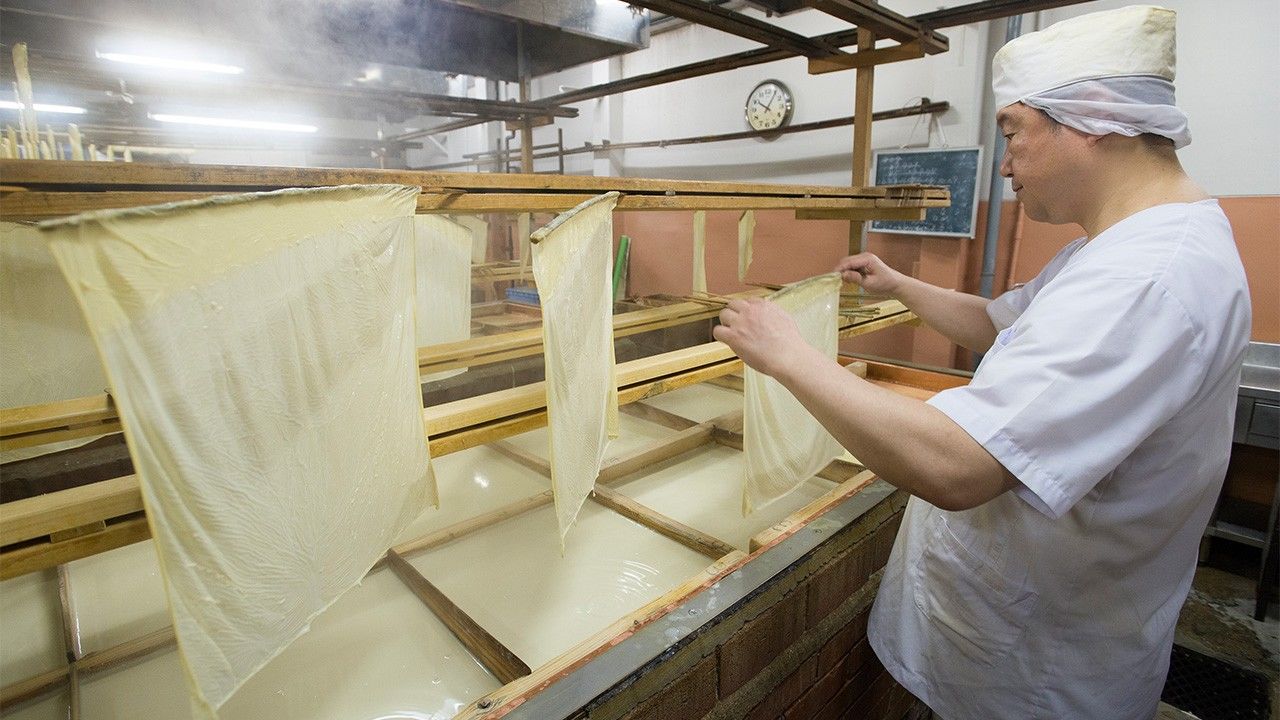
When simmered soybeans are mashed and strained, they separate into soy milk and okara soybean pulp. The soy milk is then heated and nigari added to coagulate it in order to make tōfu. During that process, a skin forms on the surface; once skimmed off, this is called yuba. Composed of the protein and lipids that coagulate when the soy milk is heated, without anything added, yuba has a rich taste with no hint of bitterness.
Freshly skimmed yuba is known as nama yuba, and then there is hoshiyuba, or dried yuba, devised as a method of long-term preservation in an era when there was no refrigeration.
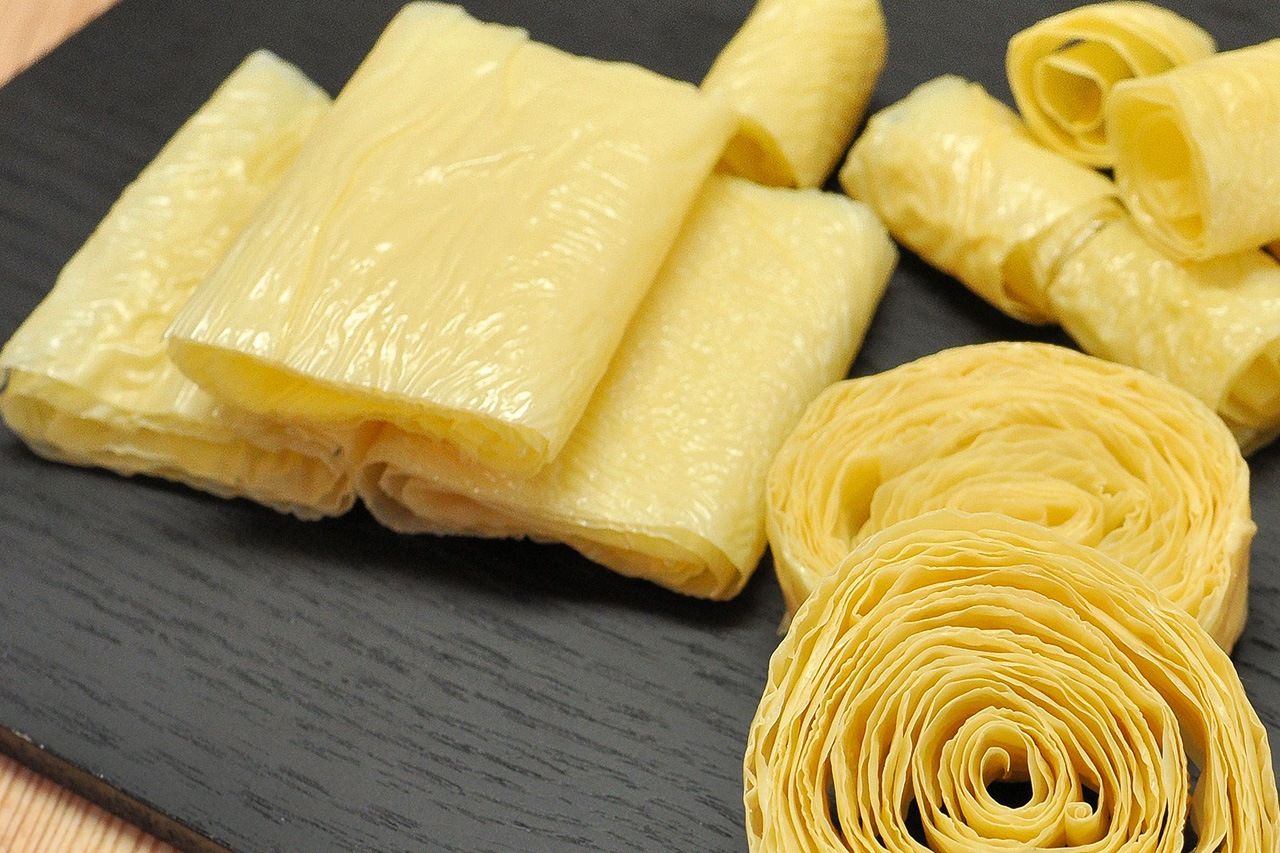
Dried yuba comes in various shapes and sizes. (© Pixta)
There are two theories as to how yuba got its name. The first is that it comes from uba (“old woman”), due to the wrinkled appearance of the skin. The second is that the pronunciation of the words uwa and uha (both meaning “surface”), in reference to this skin that formed on the top, changed over time to become yuba. The standard way to write yuba in Japanese is 湯葉 (literally “hot water leaves”). However in some regions, the characters 湯波 (“hot water waves”) are used.
A Traditional Temple Standby
Yuba dates back a long time and is thought to have been introduced to Japan along with Buddhism, although the exact date is not known. The popular thinking is that the Buddhist monk Saichō, who traveled to Tang China as an envoy, brought this food ingredient back with him. A children’s song that is sung at Enryakuji, a temple founded by Saichō on Mount Hiei in Shiga Prefecture, includes the lyrics “What does a mountain monk live on? Grilled yuba.”
In adherence with Buddhist teachings, monks eat shōjin ryōri, Buddhist vegetarian cuisine. Compared to tōfu and okara, also made from soy milk, yuba is protein-rich, has a high lipid content, and contains the minerals and vitamins of soybeans, making it is an important source of nutrition.
During the Kamakura period (1185–1333), yuba was widely produced at Zen Buddhist temples in Kyoto. That production later spread to other temple areas, such as Nikkō in Tochigi Prefecture and Minobu in Yamanashi Prefecture.
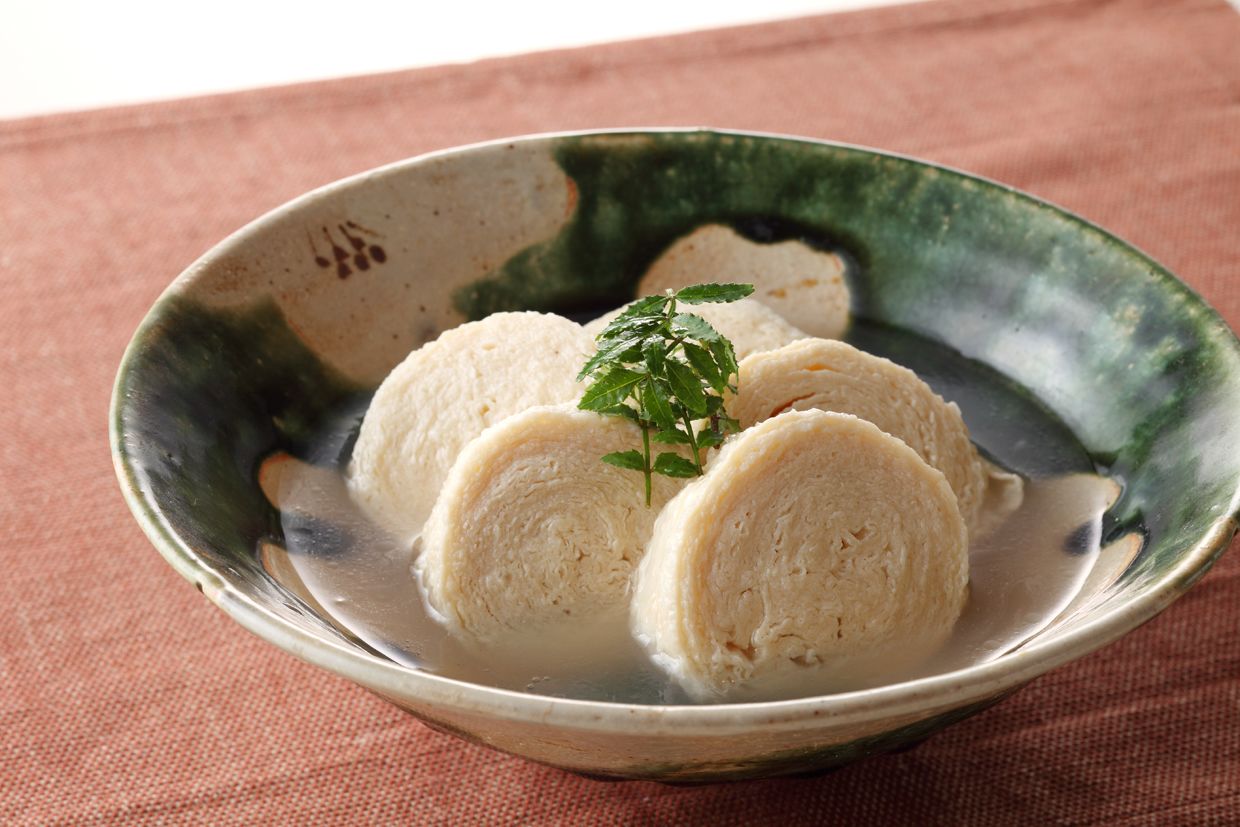
Dried yuba rolls that have been simmered. (Photo courtesy of the Nikkō municipal government, Tochigi Prefecture)
In recent years, yuba has been gaining attention both in Japan and overseas as a health food boasting concentrated amounts of soybean nutrients. As it is plant-based, vegans can enjoy it too, making it an ingredient with a lot of potential.
(Originally published in Japanese. Text by Ecraft. Banner photo © Pixta.)