Building Blocks: The Basic Ingredients Behind Japan’s Flavors
Persimmons: A Traditional Sweet Japanese Treat with Many Uses
Food and Drink Culture Lifestyle- English
- 日本語
- 简体字
- 繁體字
- Français
- Español
- العربية
- Русский
Kaki Namasu
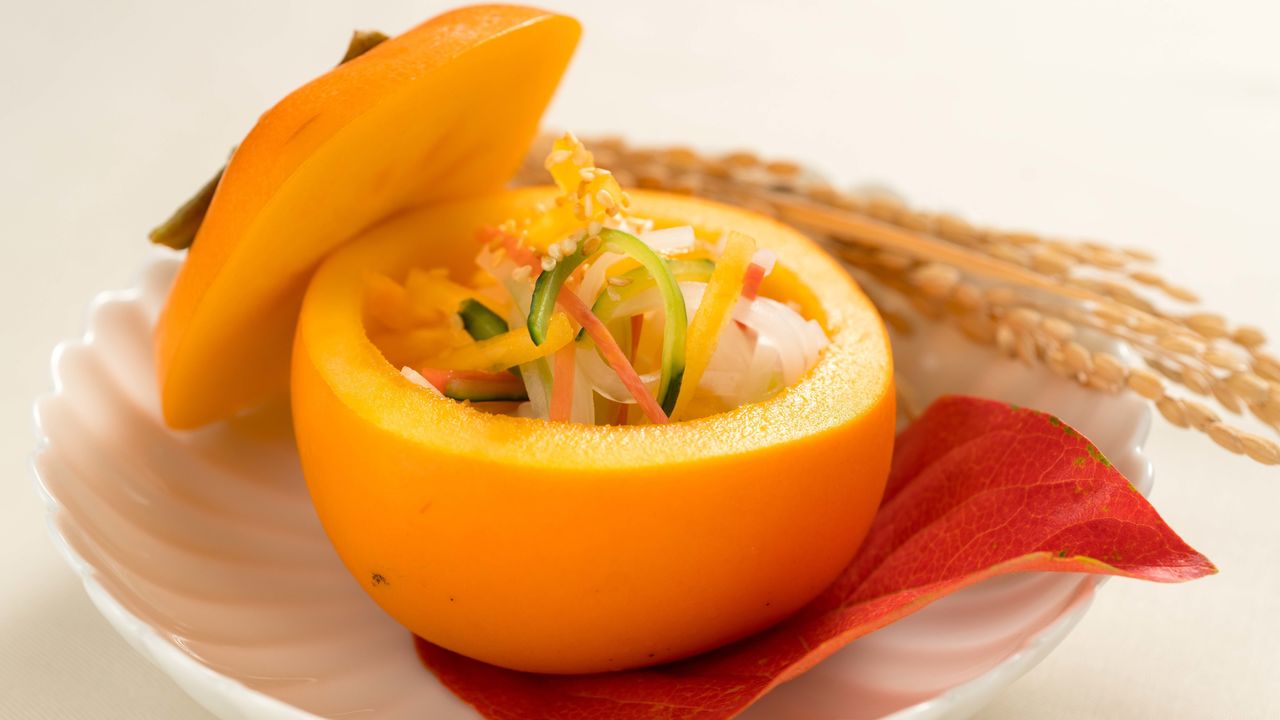
The auspicious dish kōhaku namasu, often made using pickled carrots and daikon, is a staple of osechi ryōri and other celebratory meals. Here, persimmon has been added to this dish to make it into kaki namasu. In most cases, hoshigaki dried persimmon is used. The sweetness of the fruit pleasantly rounds out the sourness of the vinegar.
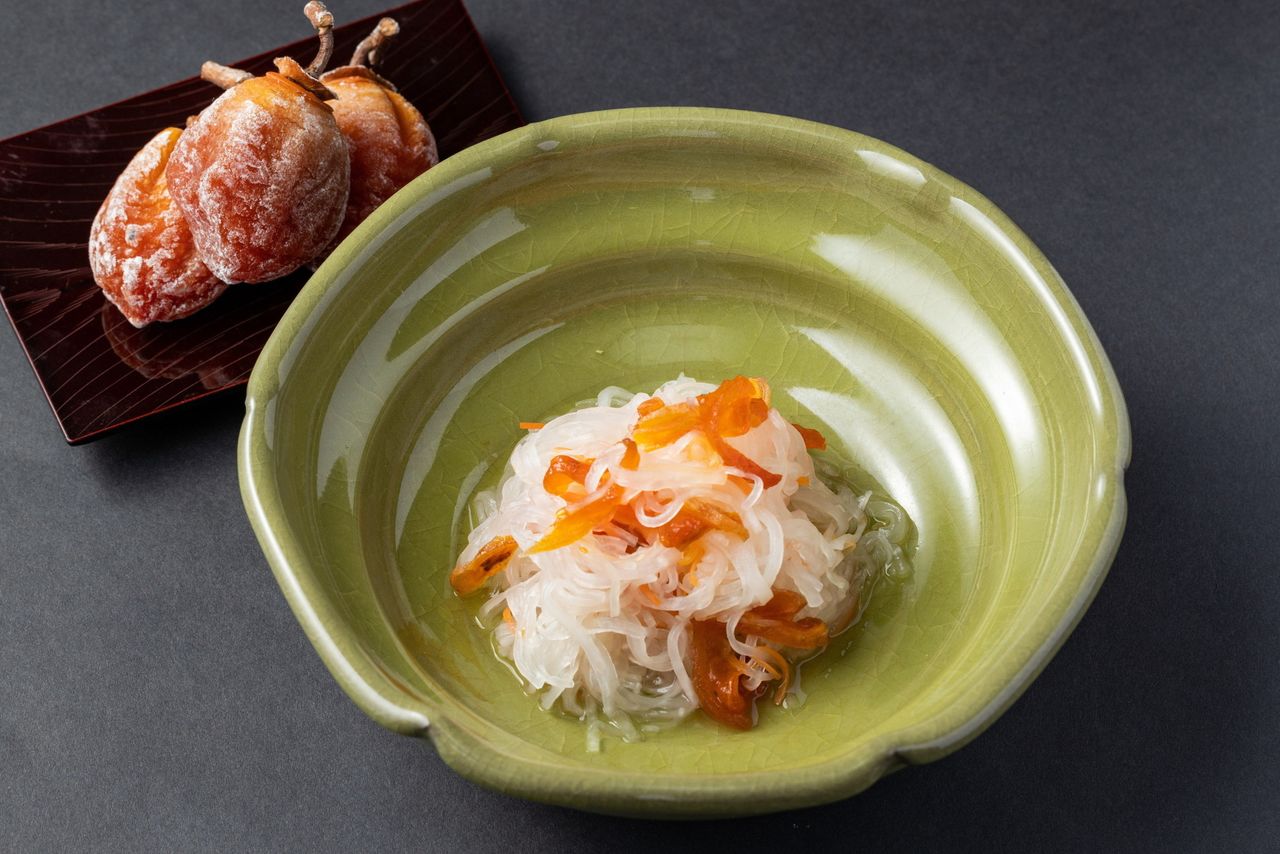
Hoshigaki namasu from Saga Prefecture (Courtesy Ministry of Agriculture, Forestry, and Fisheries)
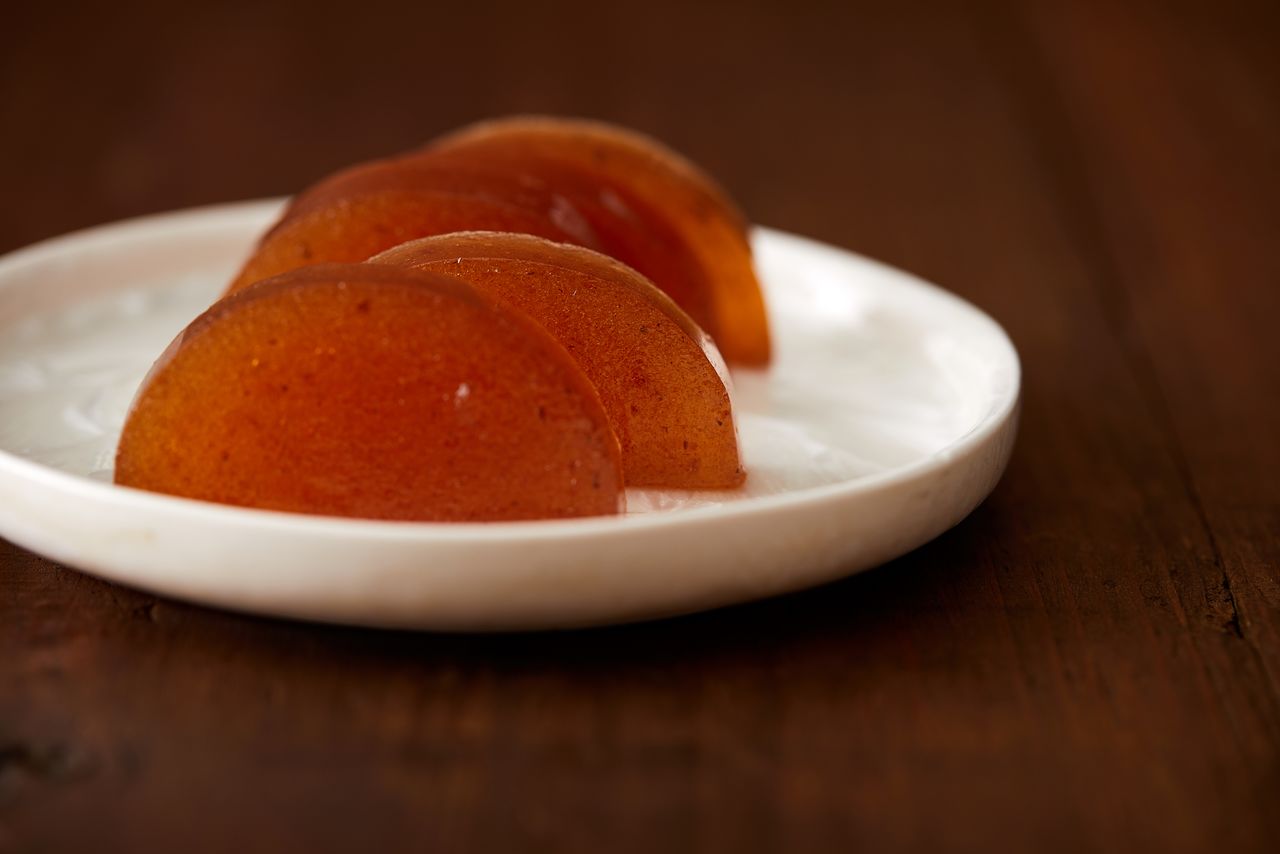
Kaki Yōkan
This is a type of wagashi from Gifu Prefecture, a region well known for its kaki production. The main ingredients for making this hard jelly are usually hoshigaki, sugar, and kanten. In some regions, the hoshigaki is mixed with shiroan white bean paste.
(© Pixta)
Hoshigaki
Hoshigaki dried persimmon is a traditional Japanese preserved food. Generally, these are made using shibugaki astringent persimmons, as once the bitterness is removed, they have a higher sugar content than amagaki sweet persimmons. The persimmons are peeled and dipped briefly in boiling water, and then strung together by their stems to be hung from the eaves of the house, protected from the rain. After a week, they are gently massaged by hand, being careful not to damage them. For around the next month they are left to dry until ready, while continuing to be occasionally massaged to bring the moisture containing sugar to the surface.
The white powdery coating that forms on persimmons that are dried in an environment with a low temperature is crystallized sugar. This type of hoshigaki is readily available and Ichidagaki dried persimmon—a specialty of Nagano Prefecture, which leads hoshigaki production in Japan—is a prime example of this.
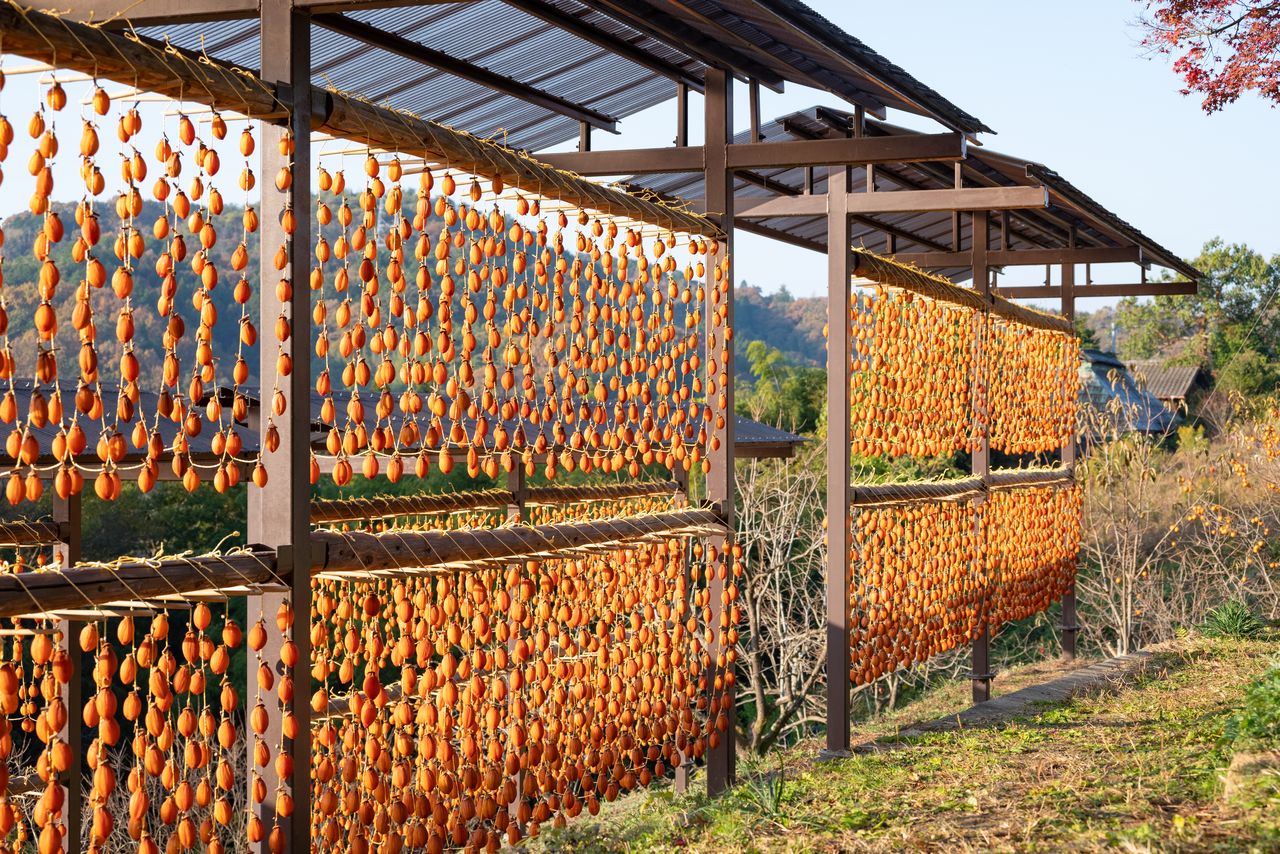
Drying hoshigaki. (Courtesy Onomichi Tourism Association)
On the other hand, semi-dried types like Anpogaki from Fukushima are prone to mold, so are fumigated with sulfur after peeling. Doing this makes them tender and juicy. By the way, the peeled skin can be dried and used to sweeten pickles.
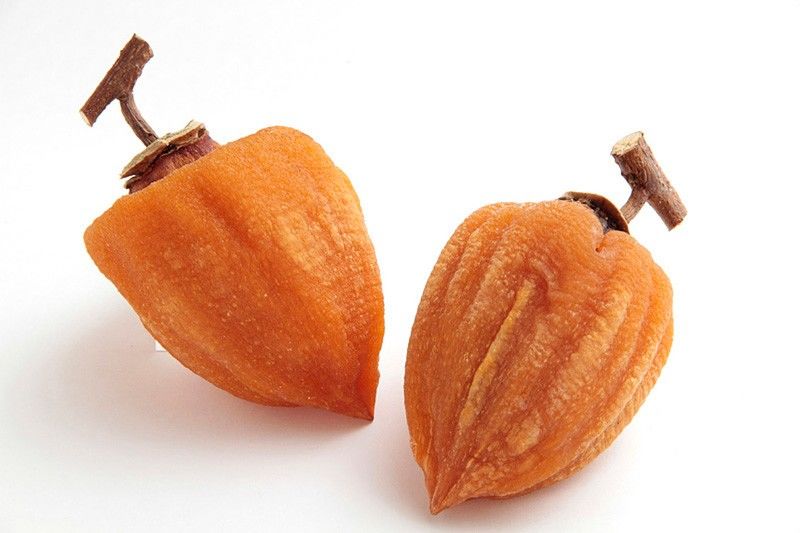
Anpogaki (© Fukushima Prefecture Tourism and Local Products Association)
Hoshigaki and Cream Cheese
Perhaps surprisingly this renowned Japanese dried fruit pairs wonderfully with cream cheese. A sprinkle of black pepper makes it an excellent accompaniment to wine too.
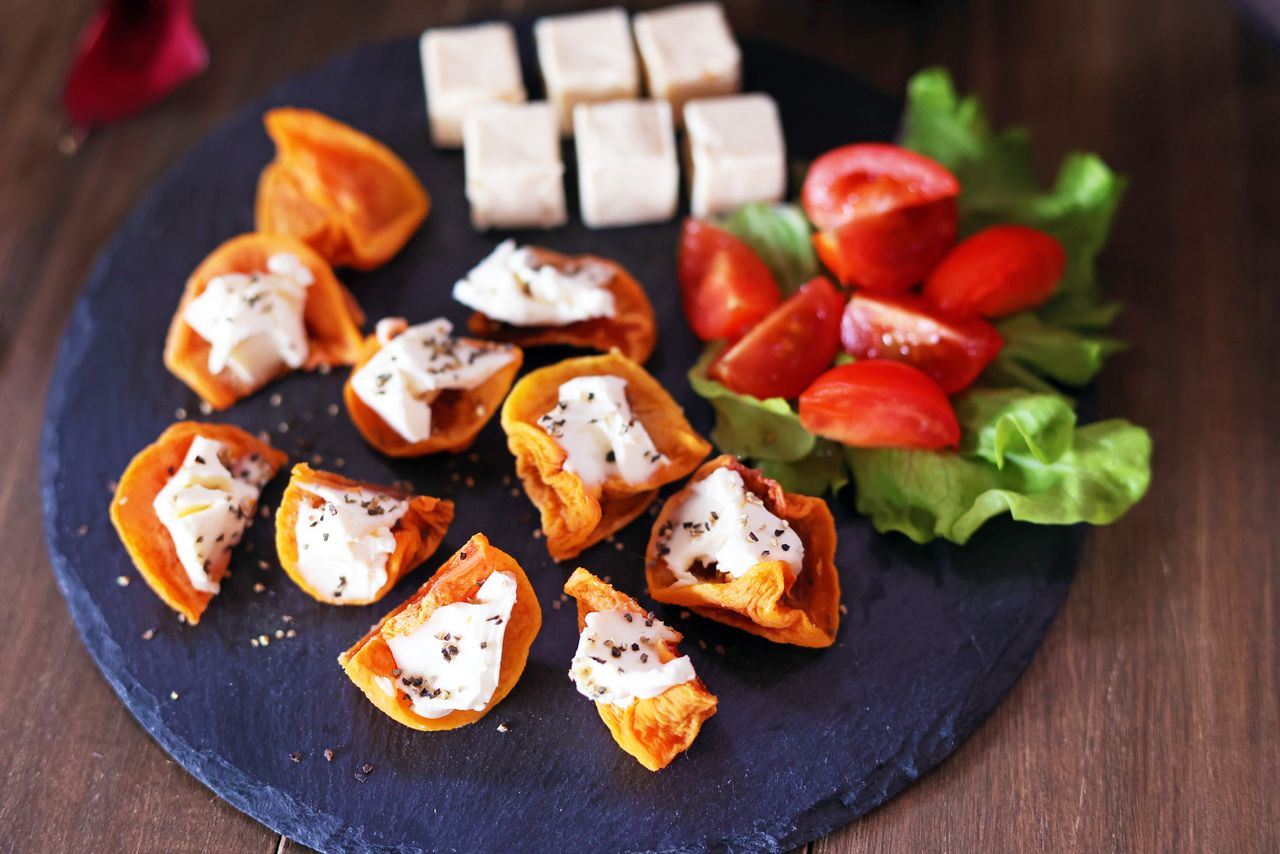
(© Pixta)
Kakinoha-zushi
Here, it is the persimmon leaves that are used. This is a local dish from the Yoshino region of Nara Prefecture, a major kaki production area. Before refrigeration became available, the mackerel caught in nearby waters was salted and transported to Nara. There, the fish was layered with vinegared rice and wrapped in kakinoha (persimmon leaves) to make pressed sushi, and this is how kakinoha-zushi came about. Persimmon leaves, rich in tannins, have antibacterial properties, so are effective in extending the shelf life of food. The gently aromatic leaves impart a rich flavor to the sushi.
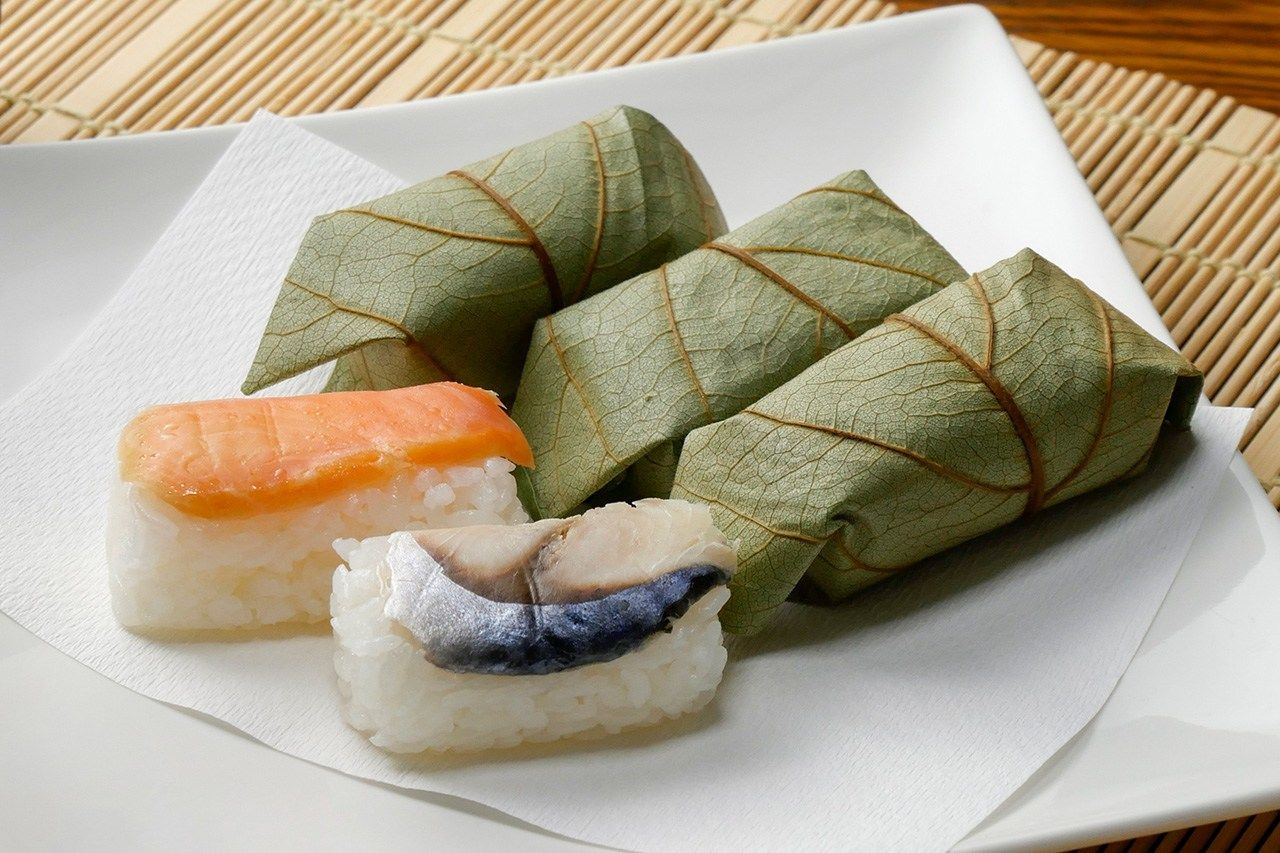
(© Pixta)
As persimmon leaves are rich in vitamin C, some people steam and dry them to use as tea leaves. With such a wide range of uses, it means that no part of the persimmon goes to waste.
Find out more about kaki in “Persimmons: A Sweet Autumn Tradition in Japan.”
(Originally published in Japanese. Text by Ecraft. Banner photo: Nara Prefecture–style kaki namasu. Courtesy Ministry of Agriculture, Forestry, and Fisheries.)