Building Blocks: The Basic Ingredients Behind Japan’s Flavors
Nattō: Japan’s Sticky, Pungent, and Highly Divisive Fermented Food
Food and Drink Culture Lifestyle- English
- 日本語
- 简体字
- 繁體字
- Français
- Español
- العربية
- Русский
Unknown Origins
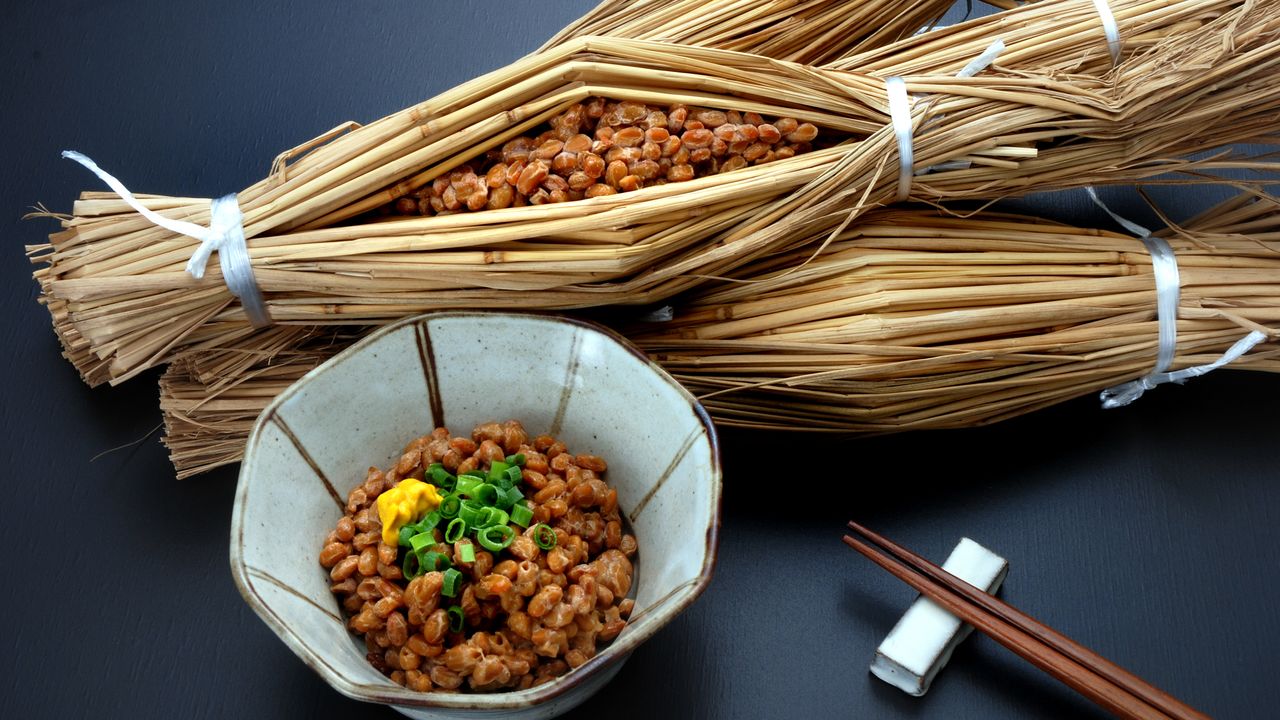
The unique stickiness and distinctive aroma of nattō, made by fermenting steamed soybeans sprinkled with nattōkin, a variant of the bacterium Bacillus subtilis, is craved by some, but shunned by more than a few as well. It is a very clear case of love or hate.
Ibaraki Prefecture, known for its Mito nattō, is the top region for production in Japan. The highest consumption is in Tōhoku. Over in Western Japan, nattō is less commonly consumed, with many people tending to avoid it.

(© Pixta)
The origin of nattō is debated, with some saying it dates back to the Jōmon period (ca. 10,000–300 BCE) and others to the Heian period (794–1185), with the exact region it comes from unknown. The one thing that is known though is it was accidentally discovered after boiled beans wrapped in rice straw began to emit an odor and had become sticky and stringy. A Muromachi period (1333–1568) text, Shōjin gyorui monogatari (“Tales of Vegetables and Fish”), includes a character that personifies nattō called Nattō Tarō Itoshige, an indication that the most common kind of nattō, itohiki nattō, already existed at that time.
Incidentally, there is a type of nattō that existed before that called shiokara nattō. That type is made by fermenting soybeans with kōji mold and lactic acid bacteria, instead of nattōkin bacteria, and is still enjoyed as a traditional food in various regions.
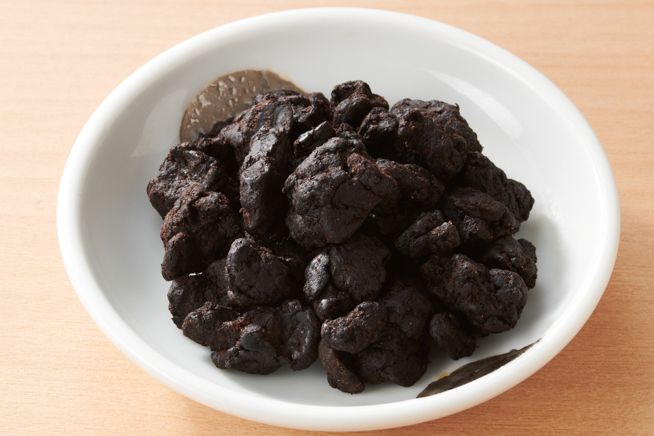
Tera nattō, a type of shiokara nattō from Kyoto. (Courtesy of the Ministry of Agriculture, Forestry and Fisheries)
An Excellent Health Food
The stickiness of the nattō is from amino acids and, due to its strong umami flavor, it is often added to soups. During the Edo period (1603–1868), it began being produced by small-scale manufacturers. This was also when people started eating it on top of rice. It is rare to see nattō wrapped in rice straw these days, with it usually packaged in Styrofoam or paper containers. There are various varieties, depending on the size of the soybeans, from small to large, and also hikiwari, where the soybeans have been finely crushed.
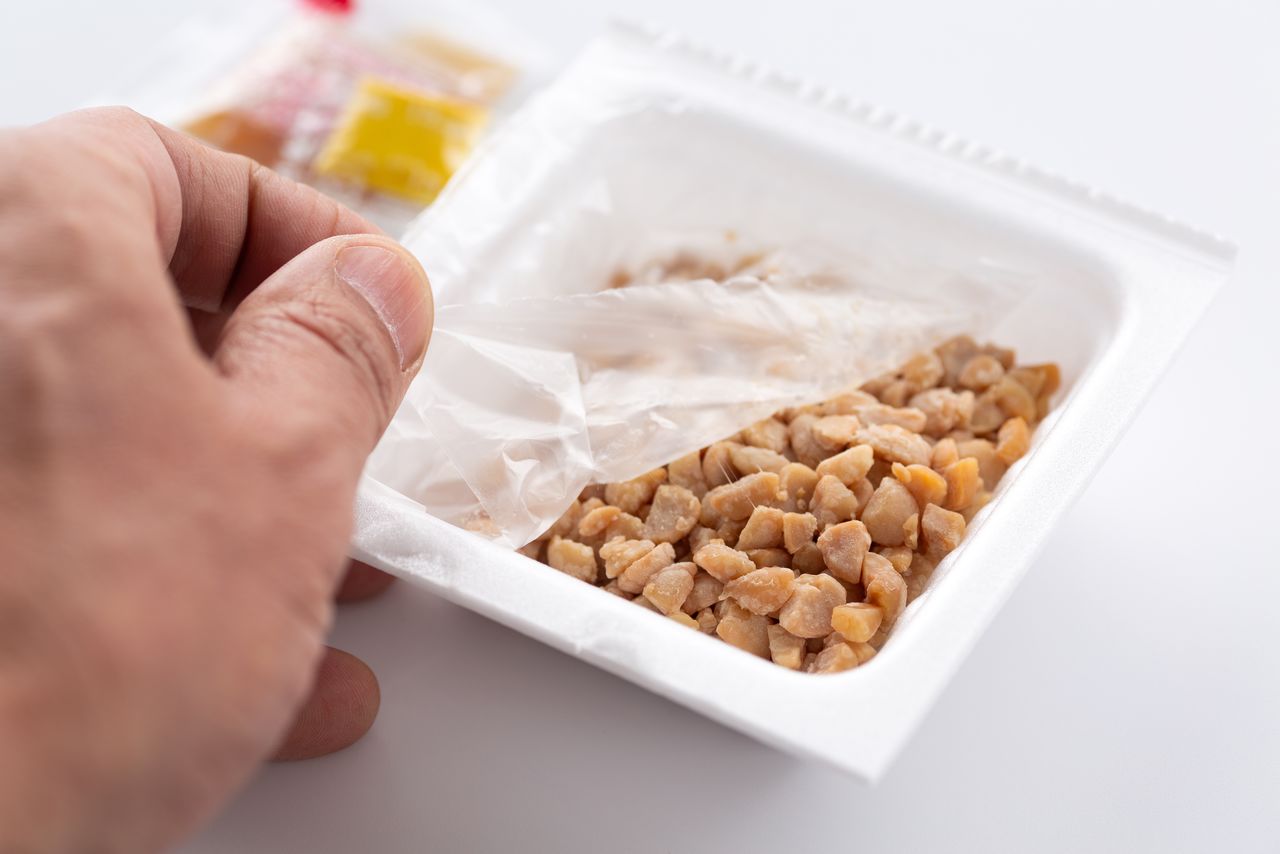
Hikiwari nattō. (© Pixta)
People who love nattō eat it every day, while others include it in their diet for health reasons. Along with nutrients from the soybeans, a variety of compounds is produced during the fermentation process, including B vitamins essential for metabolism, vitamin K for strong bones, and the enzyme nattokinase that acts as a blood thinner, making this a highly nutritious food.
(Originally published in Japanese. Text by Ecraft. Banner photo: Nattō. Straw-wrapped nattō made using the traditional method. Courtesy Ibaraki Prefecture.)