Building Blocks: The Basic Ingredients Behind Japan’s Flavors
Yuzu: A Uniquely Fragrant Citrus Fruit with Global Appeal
Food and Drink Culture Lifestyle- English
- 日本語
- 简体字
- 繁體字
- Français
- Español
- العربية
- Русский
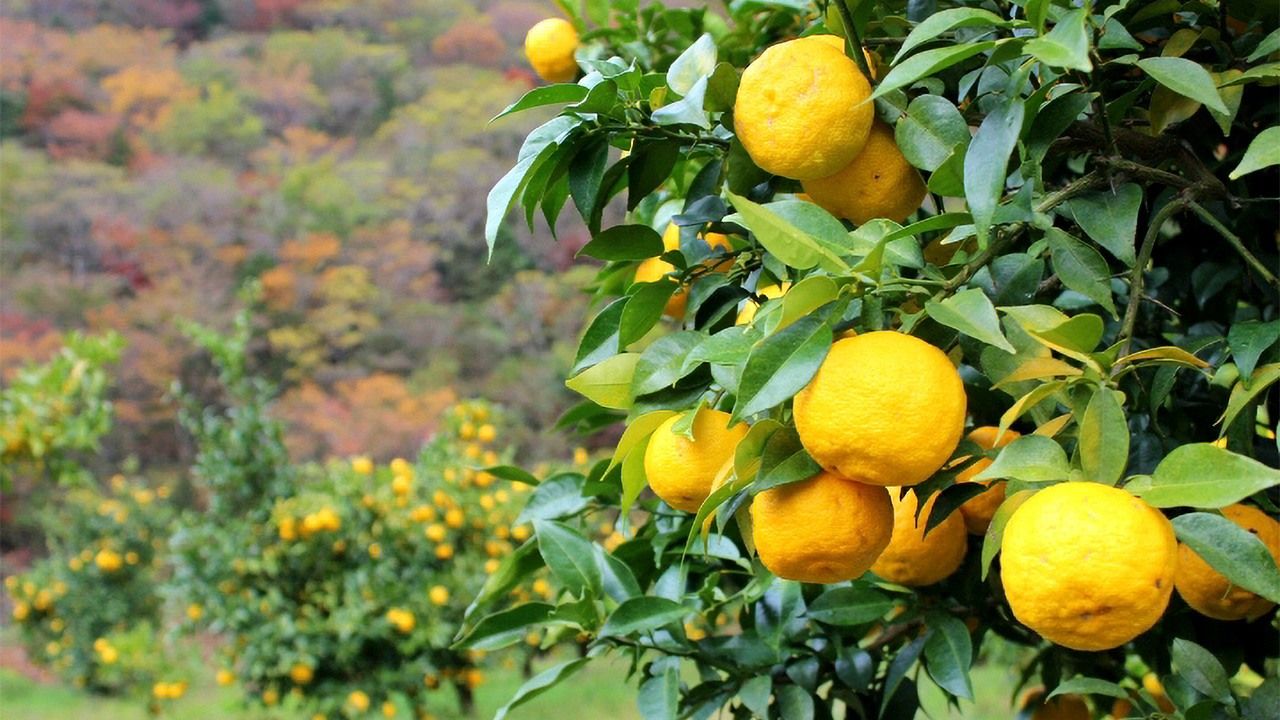
Yuzu (Citrus junos), a fruit in the Rutaceae family, comes into season in November and is widely available around the New Year. Introduced from its native China during the Nara period (710–94) and cultivated mainly in western Japan, it is distinctive for its bright yellow, slightly uneven peel. Kōchi Prefecture accounts for 50% of national yuzu production; when combined with two other Shikoku prefectures, Tokushima and Ehime, this total rises to 70%. Unlike mikan mandarin oranges, the flesh is hardly ever eaten. Instead, the peel and juice are used to add a refreshing aroma to cuisine.
While yuzu contains a variety of aromatic compounds, a unique one, yuzunone, is found in the peel. It is for this reason that the peel, not just the juice, is used in cooking, confectionery, and seasonings. It is also why it is said that no part of the fruit goes to waste.
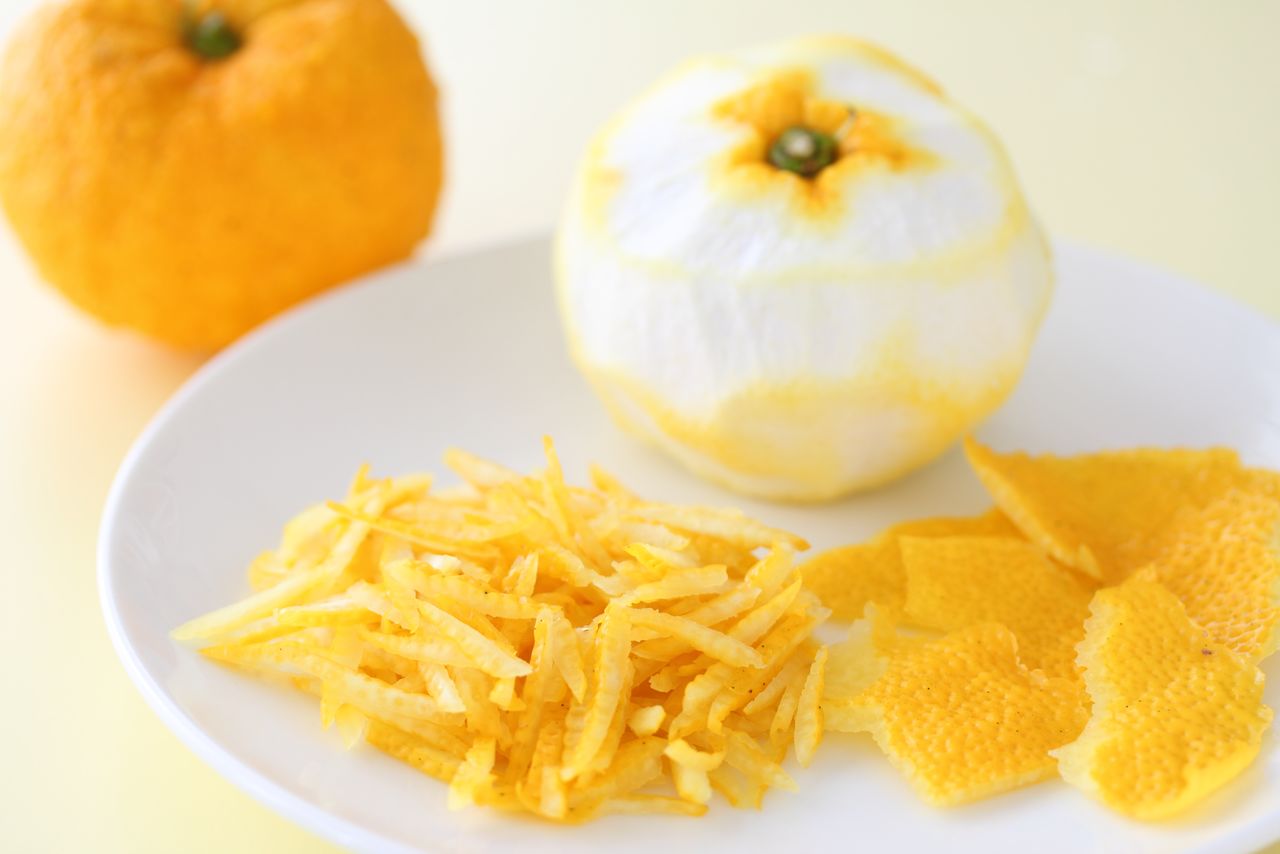
A freshly zested yuzu. (© Pixta)
The custom of floating yuzu in bathwater on tōji, the winter solstice, to ward off colds began in the Edo period (1603–1868), when sentō public baths first emerged. The yuzu compounds dissolve into the hot water, improving blood circulation, while the refreshing aroma has a relaxing and uplifting effect. Many people enjoy floating yuzu in their bathtubs at home.
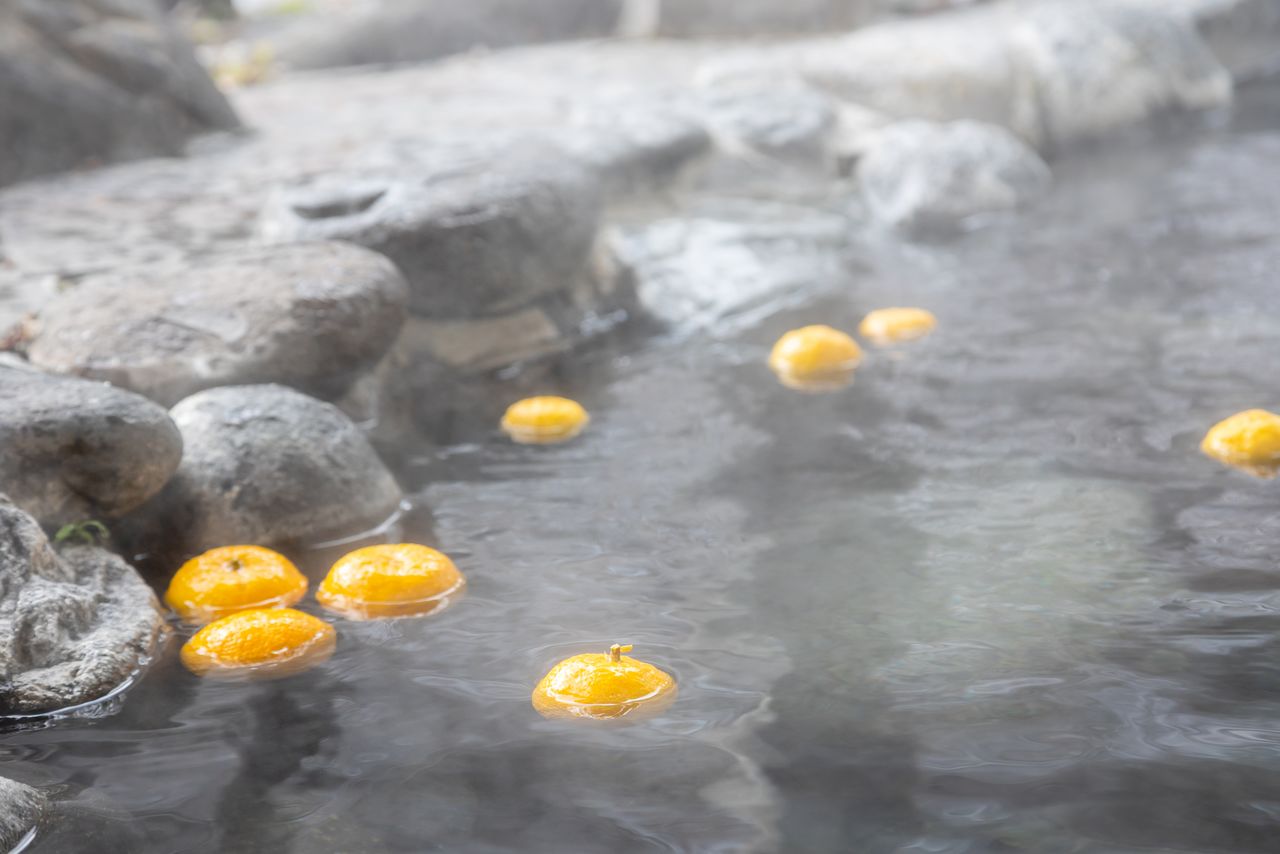
(© Pixta)
Kōchi Yuzu a Hit Overseas
Yuzu enhances traditional Japanese cuisine with its unique aroma, and although Japanese people tend to regard it as old-fashioned, it has won the attention of French and Italian chefs, leading to it being increasingly exported to Western countries.
Behind this momentum is one major production area: the village of Kitagawa in Kōchi Prefecture. As domestic demand for yuzu slowed, local officials organized a tasting event in France in 2011, inviting chefs and media representatives to develop new overseas distribution channels. This event featured cuisine that highlighted the aroma and tanginess of the fruit. Its unique fragrance, so unlike that of lemon or orange, was a hit, and it began being used in Parisian restaurants in everything from dressings and pasta sauces to desserts,. Unsurprisingly, chefs from other countries also picked up on this exotic ingredient that had been embraced by the capital of gastronomy.
Initially exported as a juice, the following year, in 2012, the fresh fruit also started being exported. Today, Kōchi’s yuzu has a well-deserved international reputation.
(Originally published in Japanese. Text by Ecraft. Banner photo: A yuzu orchard in Kitagawa, Kōchi Prefecture. Courtesy Kōchi East Tourism Association.)