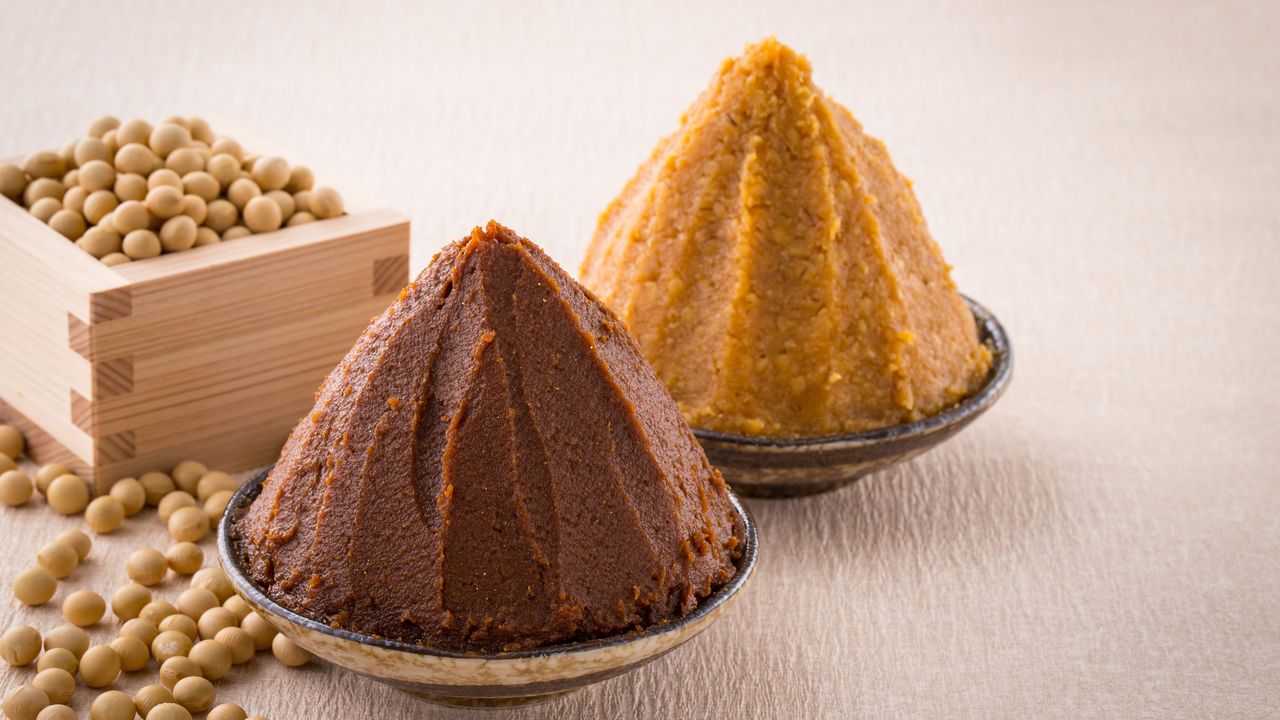
Building Blocks: The Basic Ingredients Behind Japan’s Flavors
Miso: A Quintessential Japanese Seasoning
Food and Drink Culture Lifestyle- English
- 日本語
- 简体字
- 繁體字
- Français
- Español
- العربية
- Русский
A Variety in Every Region
While there are a number of theories about the origins of miso, it is widely accepted that it evolved from an ancient Chinese sauce made by salting and fermenting ingredients, and introduced into Japan via the Korean Peninsula. The first recorded mention of it appears in the eighth-century Taihō Code.
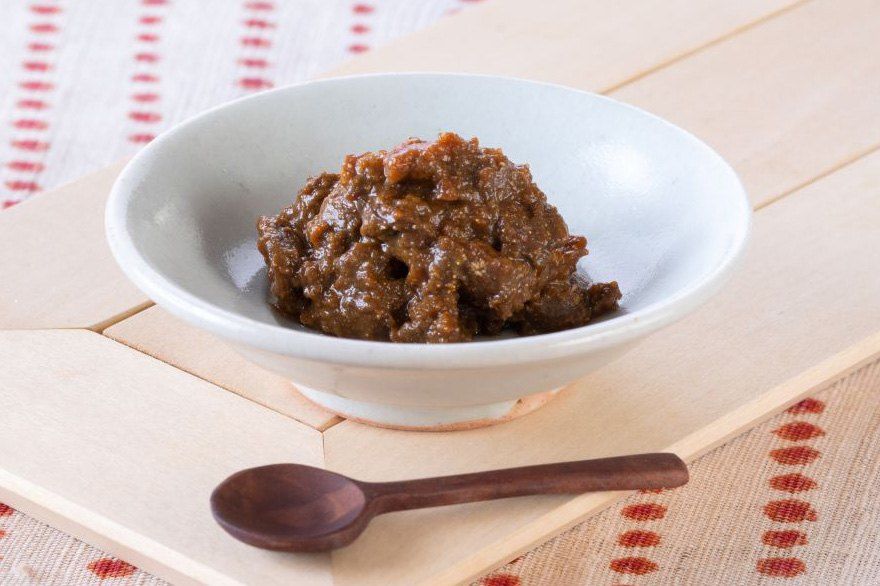
An ancient forerunner to miso from Nara Prefecture. (Courtesy of the Ministry of Agriculture, Forestry, and Fisheries)
During the Heian period (794–1185), it was still a valuable commodity and only high-ranking nobles and monks used it as a seasoning. In the Kamakura period (1185–1333), miso started being put in soup and it became part of the samurai dietary practice of eating ichijū-issai (one soup, one dish). With soybean cultivation spreading across Japan from the Muromachi period (1333–1568) onward, farmers began making their own local miso, suited to the climate and environment of that region.
These unique types of miso have gone on to become fundamental seasoning for all kinds of Japanese cuisine. In December 2013, washoku was inscribed on UNESCO’s Representative List of the Intangible Cultural Heritage of Humanity and since then, miso has gained broad recognition, with chefs worldwide incorporating it into their cooking.
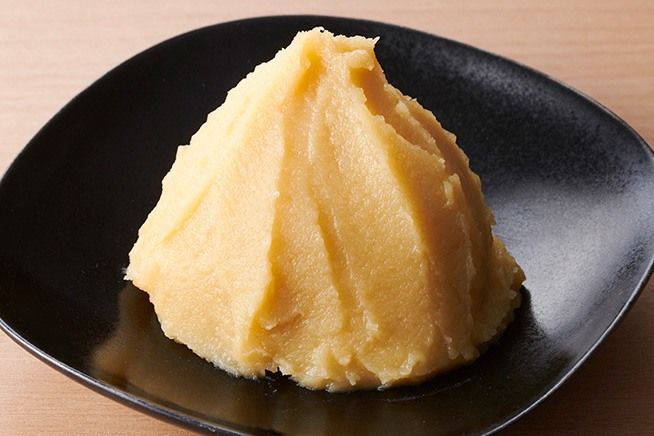
Saikyō miso from Kyoto. (Courtesy of the Ministry of Agriculture, Forestry, and Fisheries)
Sweet White and Salty Red
Making miso is a simple process. Just mash steamed or boiled soybeans and mix them with kōji mold and salt. The fermentation process with the kōji creates amino acids and vitamins, as well as producing yeast and lactic acid bacteria not naturally present in soybeans, increasing the umami and nutritional value of the miso.
There are three broad categories of miso—kome (rice), mame (soybean), and mugi (barley)—with the names deriving from the type of kōji used. All use soybeans as the main ingredient, and the only difference is the type of kōji; rice and barley are not used as a substitute for the soybeans. Kome miso is the most popular, accounting for 80% of national production. Mame miso is mainly produced in the Tōkai region, while mugi miso is common in Kyūshū and parts of Shikoku and Chūgoku.
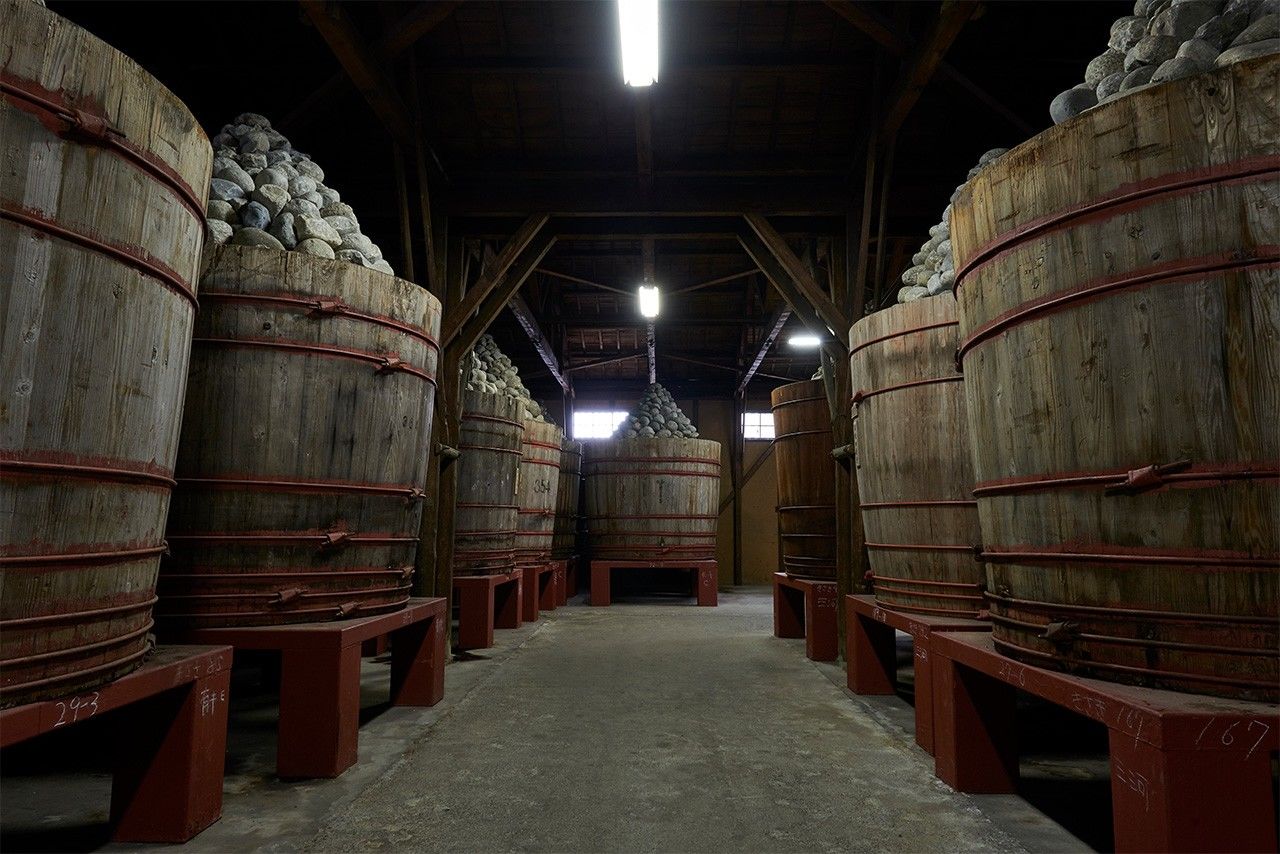
Barrels of Hatchō miso. (Courtesy Okazaki City municipal government, Aichi Prefecture)
The flavor and color of miso is influenced by the amount of kōji and salt used, as well as how long it is left to mature. White miso has a higher proportion of kōji and less salt, and is only matured for a few days to several weeks, so retains the original flavor of the soybeans, making it mild enough to be eaten straight. If the salt content is higher, it can be matured for a longer period, becoming more complex in flavor and deepening in color over several years. There are exceptions to the rule, but in general, it’s fine to remember that white miso is sweet and red miso is salty.
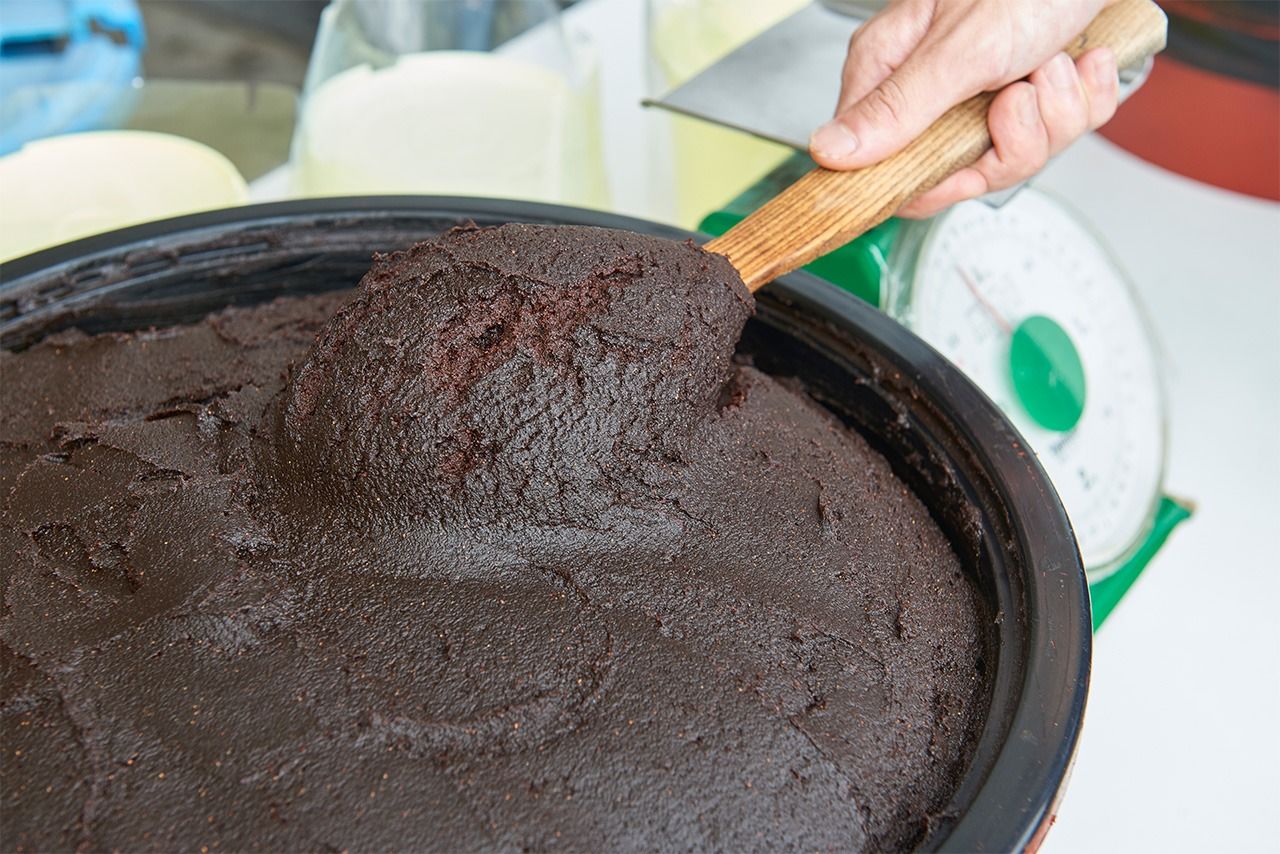
Hatchō miso. (Courtesy Okazaki municipal government, Aichi Prefecture)
Many varieties bear the name of the region where they are produced, such as Shinshū miso and Sendai miso, and each has its own regional flavor. More than just a seasoning, these traditionally made varieties of miso are both a local food and a true taste of home.
(Originally published in Japanese on November 3, 2025. Text by Ecraft. Banner photo © Pixta.)