Building Blocks: The Basic Ingredients Behind Japan’s Flavors
So Much More Than Soup: The Many Uses of Miso
Food and Drink Culture Lifestyle- English
- 日本語
- 简体字
- 繁體字
- Français
- Español
- العربية
- Русский
Misoshiru
The first dish that comes to mind with Japanese cuisine has to be miso soup. It can easily be said that this is Japan’s soul food. With a huge number of types and so many different ingredient combinations possible, the variations are endless!
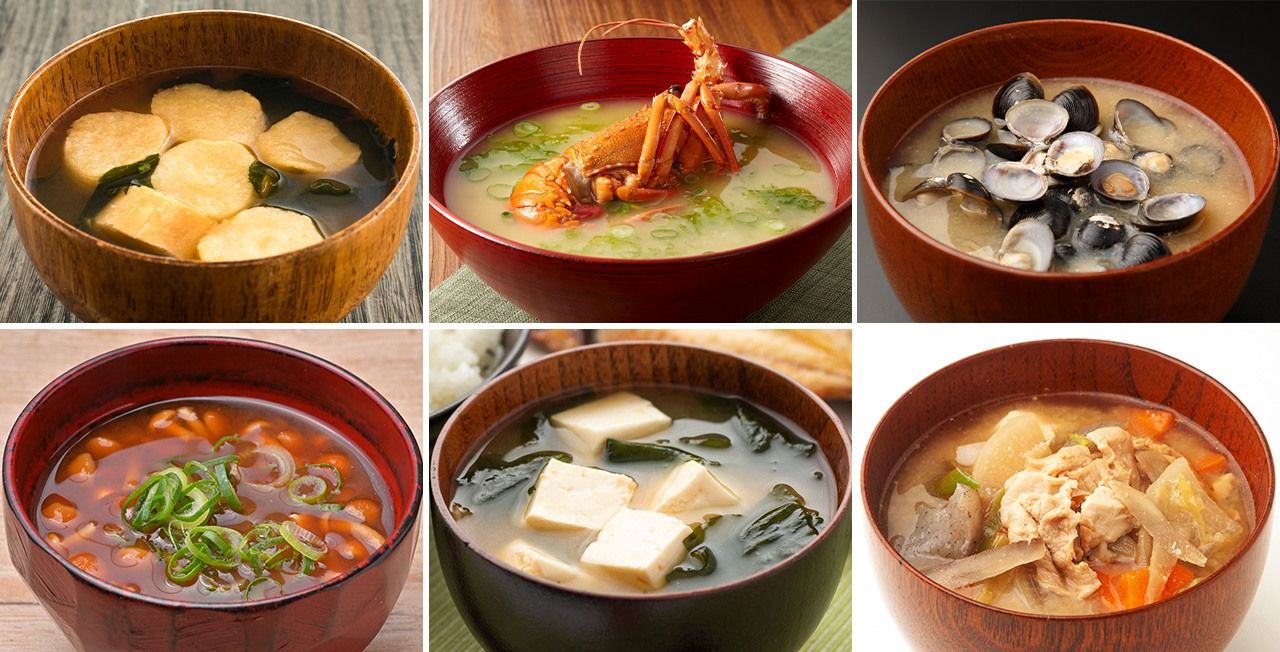
Just a selection of the combinations. (Top, left to right) Fu and wakame; ise-ebi lobster and aosa nori seaweed; shijimi clams. (Bottom, left to right) Nameko mushrooms and leek; tōfu and wakame; tonjiru pork and root vegetables. (© Pixta)
Ishikari Nabe and Kaki Dotenabe
When the weather turns cold, it’s time to enjoy nabemono, or hot pot cuisine. Two quintessential miso-based hotpots are ishikari nabe from Hokkaidō and kaki dotenabe from Hiroshima. Ishikari nabe features Hokkaidō salmon and vegetables, all simmered in a miso-flavored dashi. Meanwhile, kaki dotenabe has Hiroshima’s renowned oysters and vegetables that are cooked in a pot with a bank (dote) of miso spread around the rim and enjoyed by slowly pushing it down into the broth as you eat. Simmering all the ingredients together creates a much richer flavor than regular miso soup.
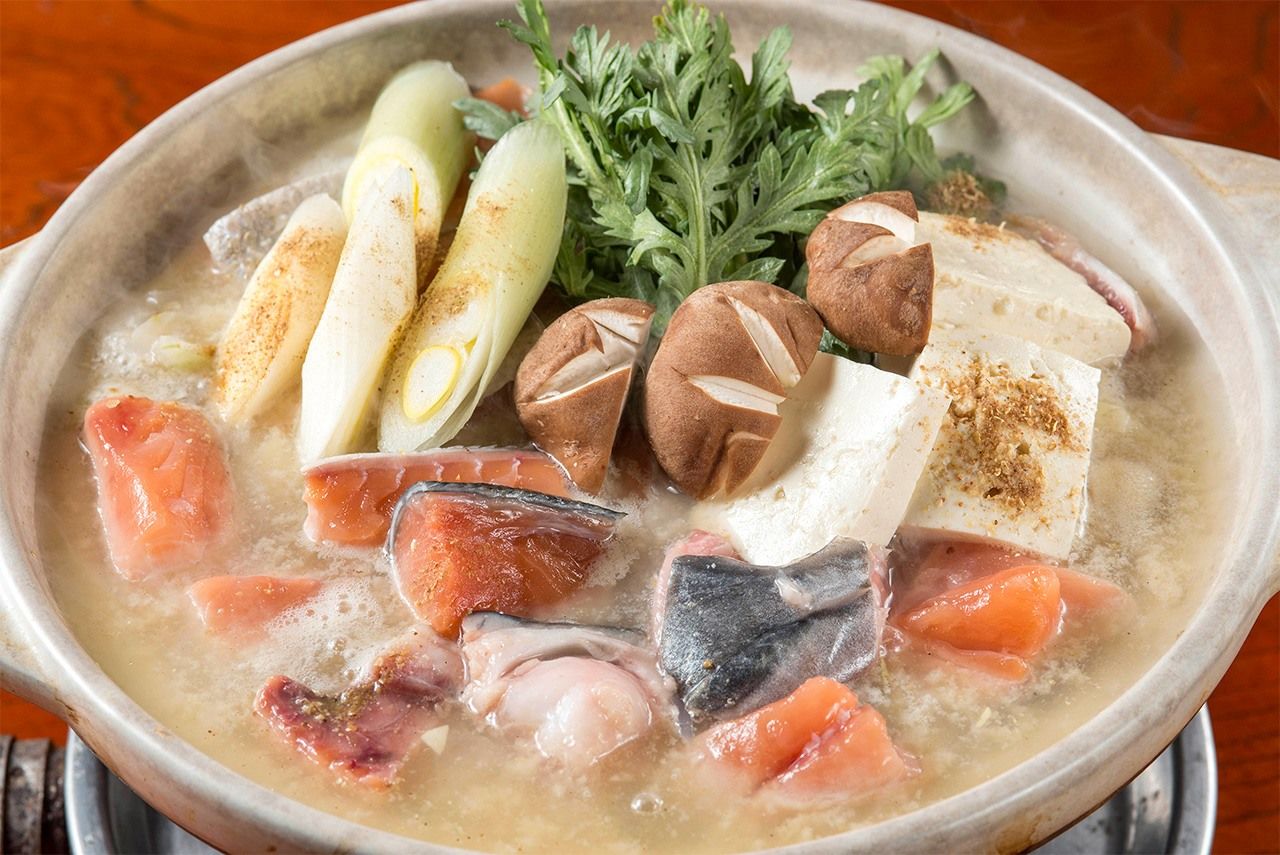
Ishikari nabe (Courtesy Hokkaidō Tourism Organization)
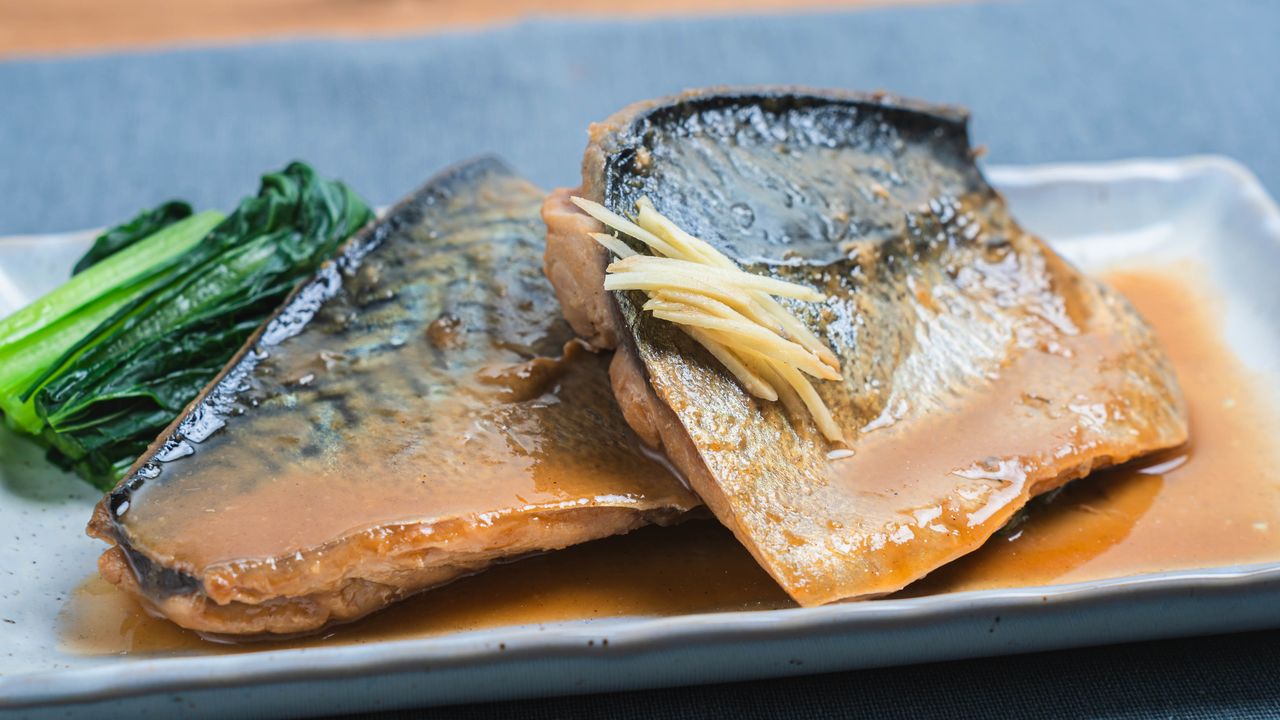
Saba no Misoni
This is a standard homemade dish, made by simmering mackerel fillets in miso and other seasonings. It is a popular choice for the teishoku set meal at restaurants as its rich flavor is the perfect match for rice.
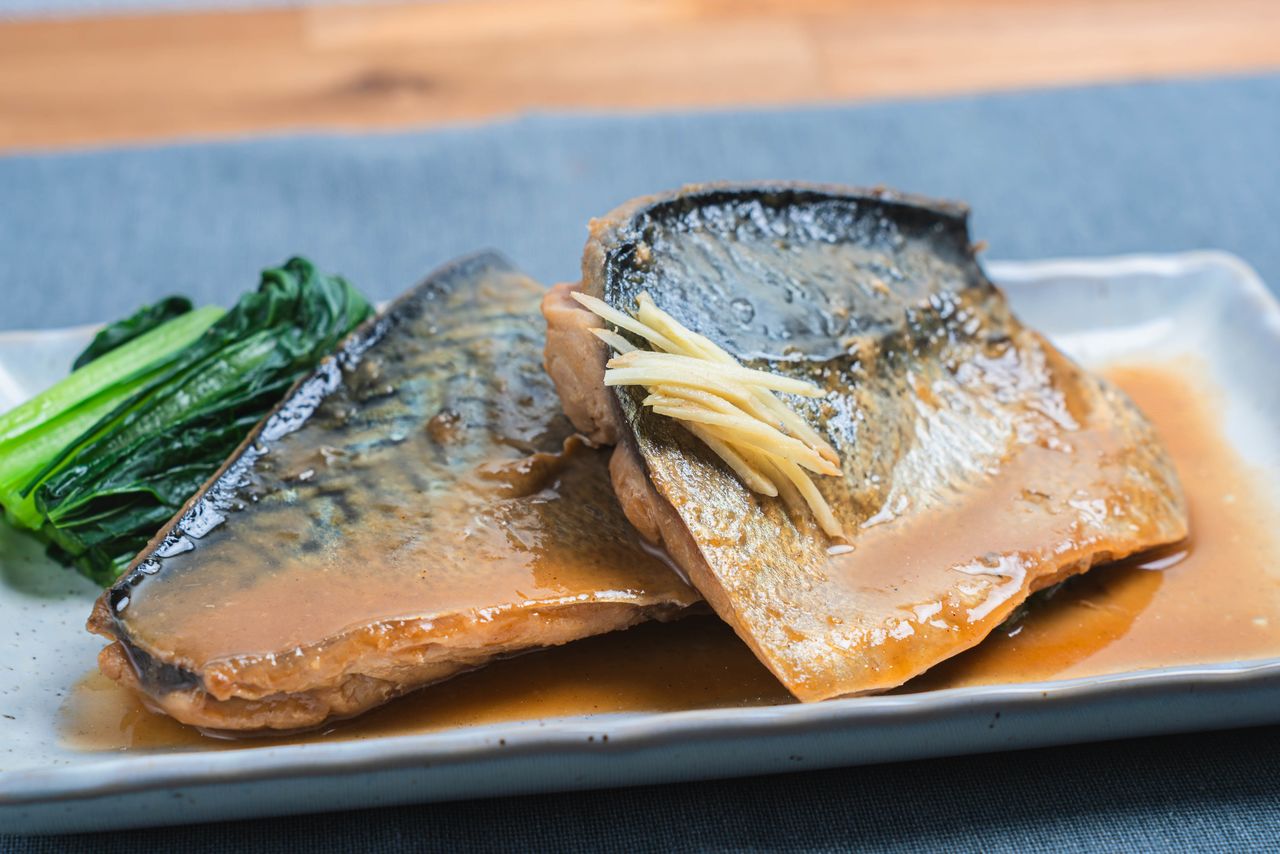
(© Pixta)
Miso Nikomi Udon
For people living in the three Tōkai prefectures of Aichi, Mie, and Gifu, miso invariably means Hatchō miso. This mame miso, aged for more than two years, has a unique flavor due to the concentrated umami of the soybeans. Although classed as a red miso, it is almost black and is used here to flavor the soup, in which chewy udon noodles are simmered.
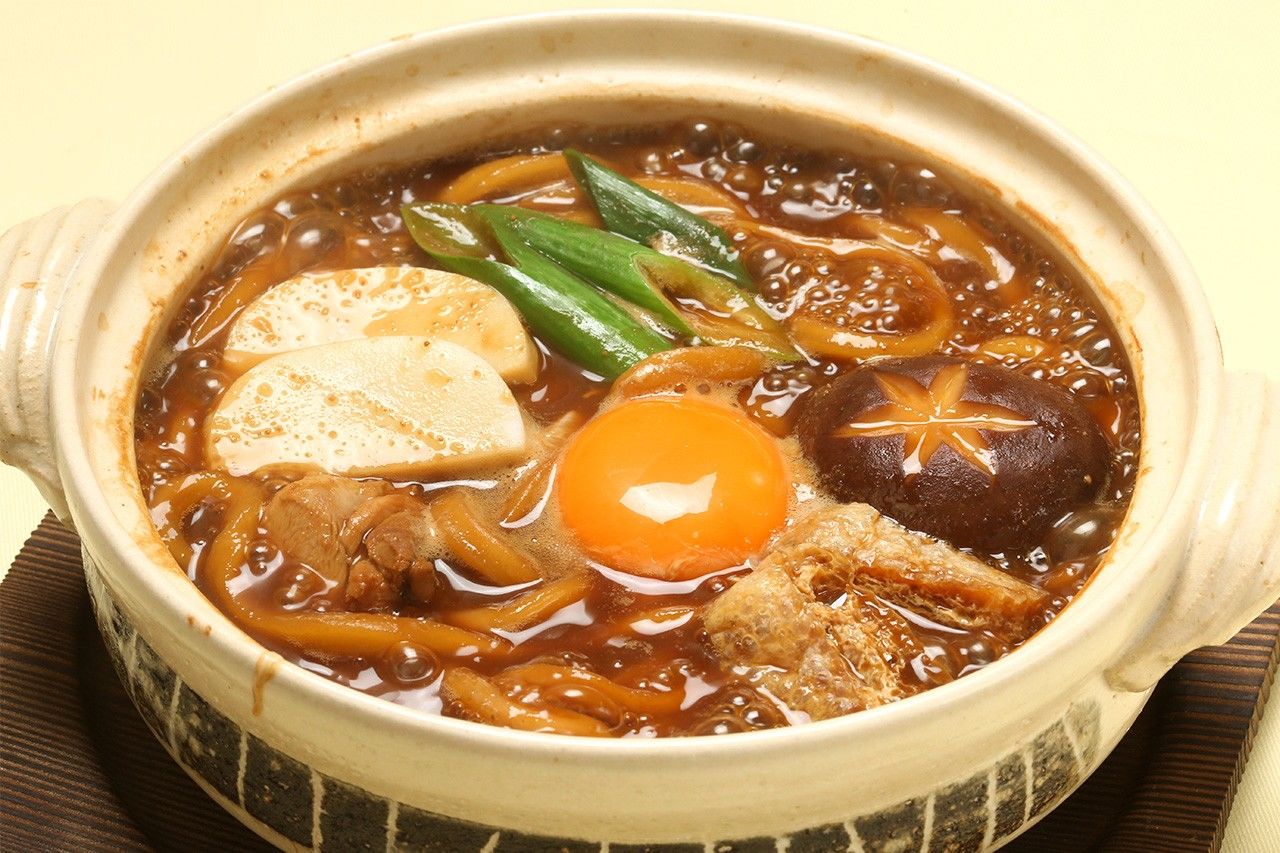
Miso nikomo udon (Courtesy Nagoya Convention and Visitors Bureau)
Incidentally, Hatchō miso’s name comes from it being produced in Hatchōchō, with hatchō meaning it is located eight chō, approximately 870 meters, west of Okazaki Castle. The two breweries located there, just across from each other, continue to produce this miso, using a method unchanged since the Edo period, and only they are allowed to use the name Hatchō miso.
Miso Oden
Oden derives from dengaku, a mix of skewered foods like tōfu and konnyaku glazed with miso. While people in each region tend to use their own local miso, those living in Aichi, Mie, and Gifu Prefectures typically use Hatchō miso. The traditional way of making this dish is to place a pot of miso sauce in the center of the cooking pot, and the oden ingredients are then simmered around it and dipped in the sauce before enjoying them. In a more recent version, the oden is simmered directly in a miso-flavored dashi.
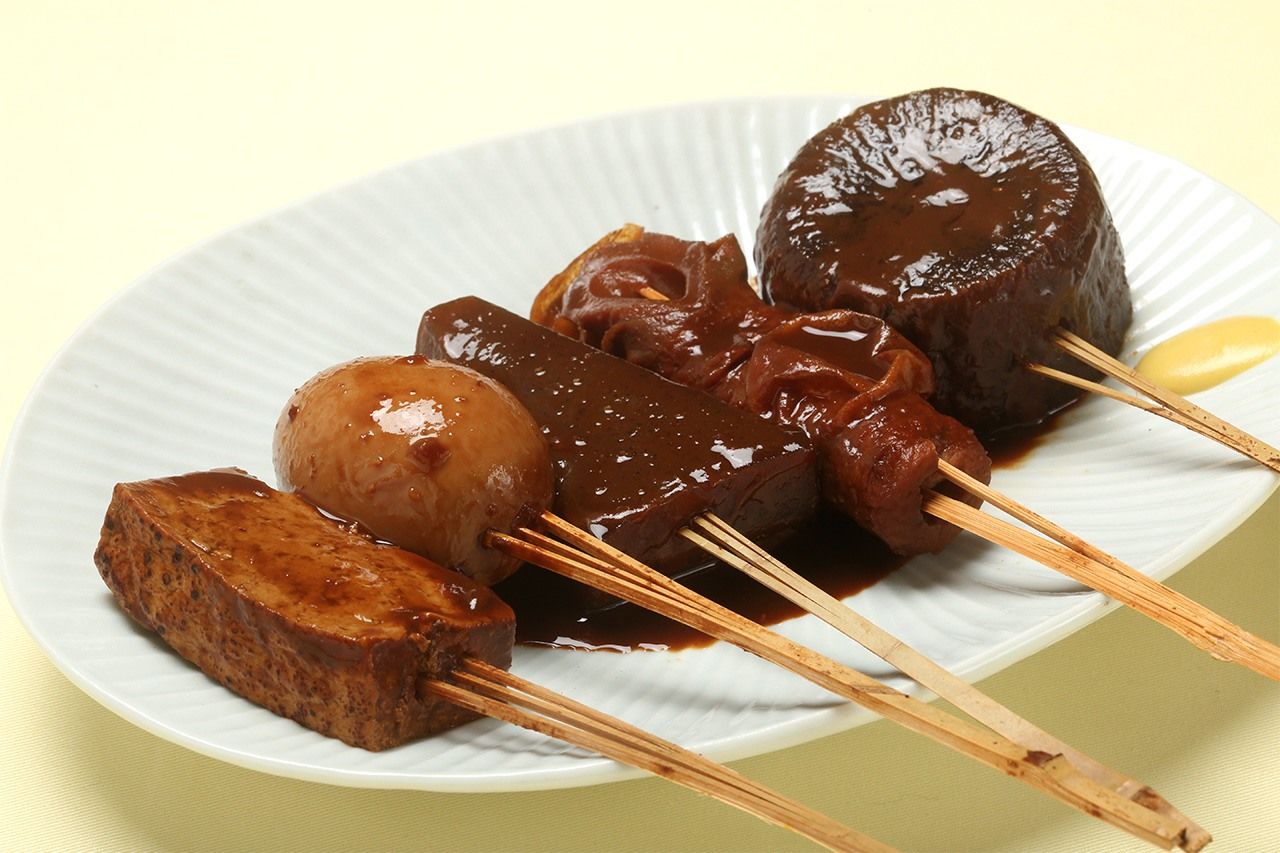
Miso oden (Courtesy Nagoya Convention and Visitors Bureau)
Saikyōyaki
In the Kansai region, white miso is a well-established part of the culture and Kyoto’s traditional Saikyō miso is the most representative type. The dish saikyōyaki is made by adding sake and other ingredients to this sweet and mellow miso to create a paste in which fish fillets or thick slices of meat are marinated and then grilled. It is so well-known, it is thought of as a whole dish in itself. In other regions, it is common to use a different miso for the marinade.
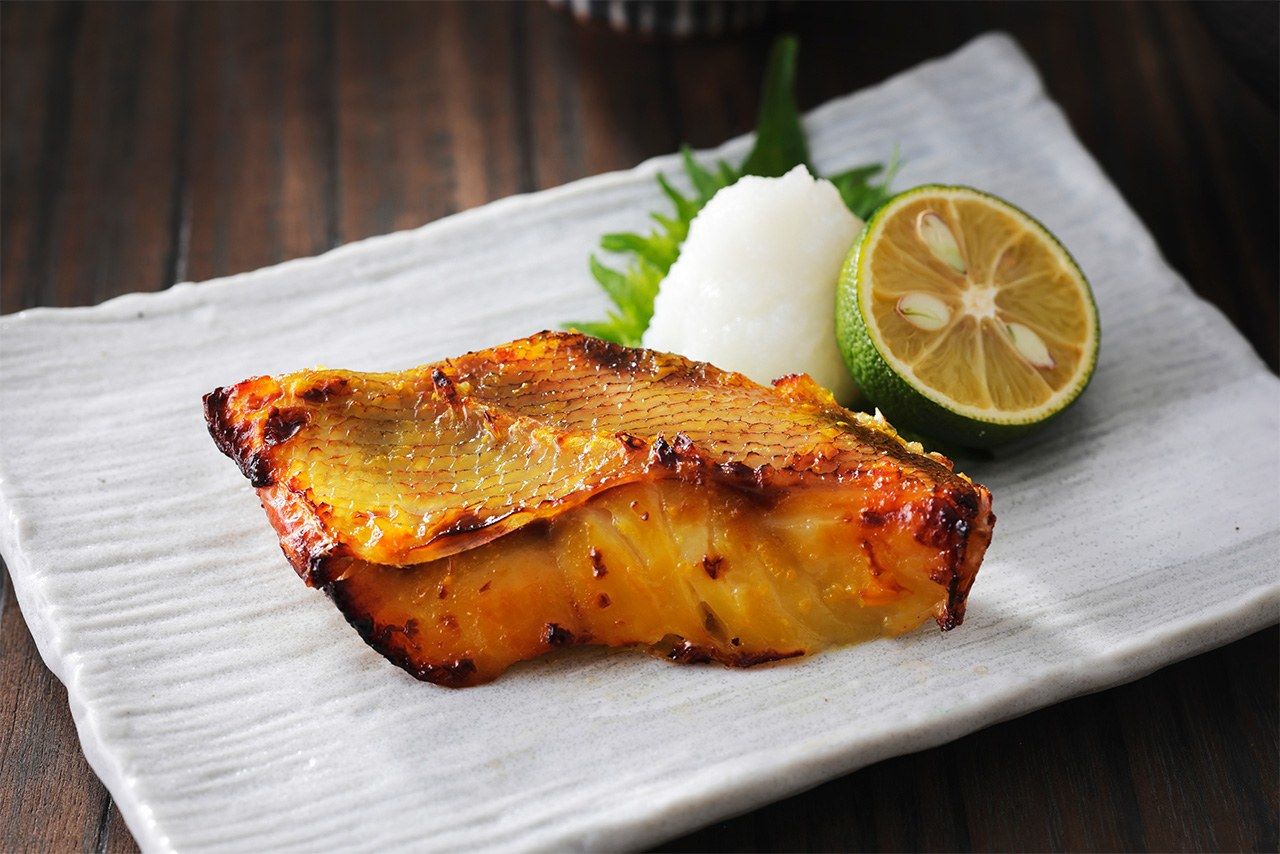
(© Pixta)
Shiromiso no Zōni
Zōni soup is traditionally served at New Year and the ingredients and flavors vary depending on the region. In the main Kansai areas of Kyoto and Osaka, this rice cake soup features round mochi and white miso.
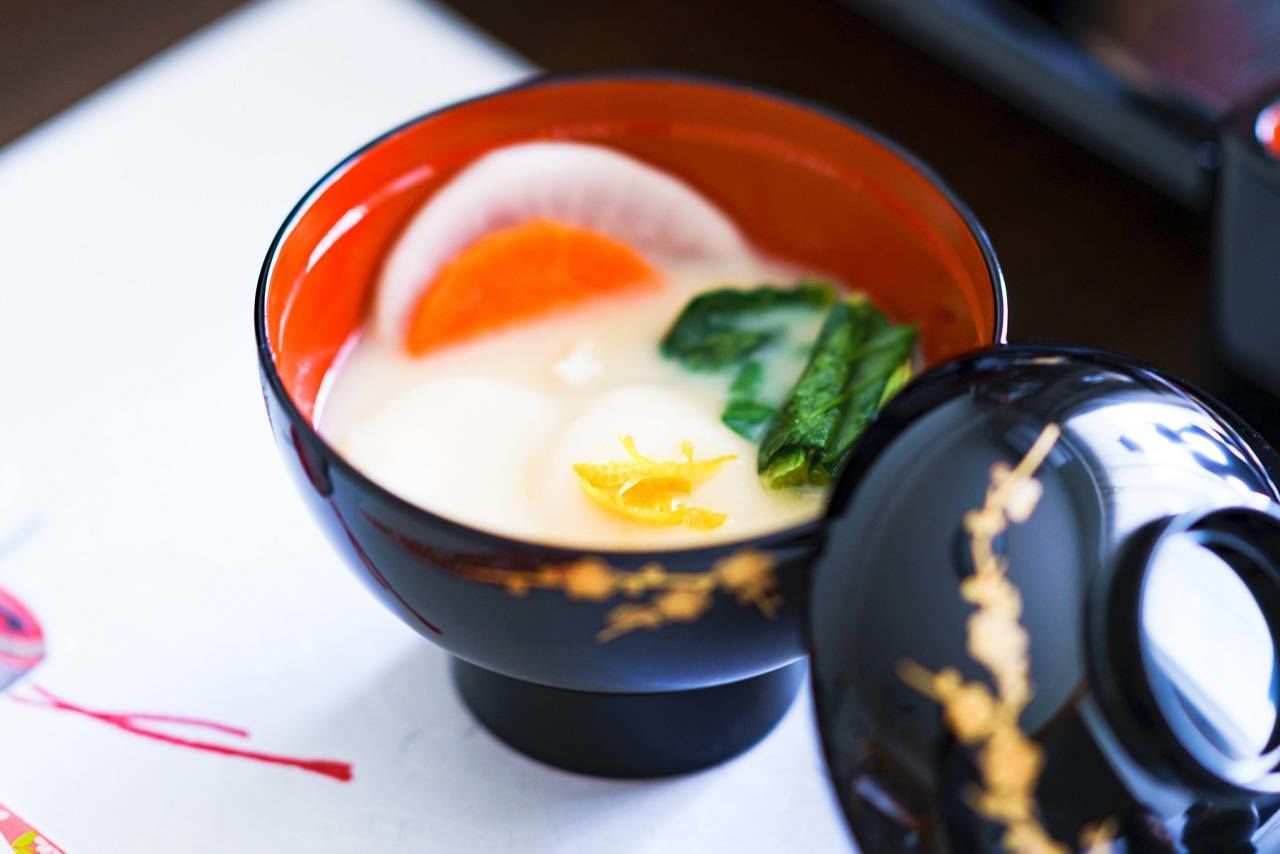
(© Pixta)
Hanabira Mochi
The filling for this Japanese sweet is created by mixing shiroan white bean paste with a small amount of white miso, giving it a rich flavor with a subtle saltiness. Wrapped in a circle of soft gyūhi rice dough, along with a stick of sweetened burdock, and folded over to resemble a hanabira (flower petal), this is a popular wagashi for celebrating New Year.
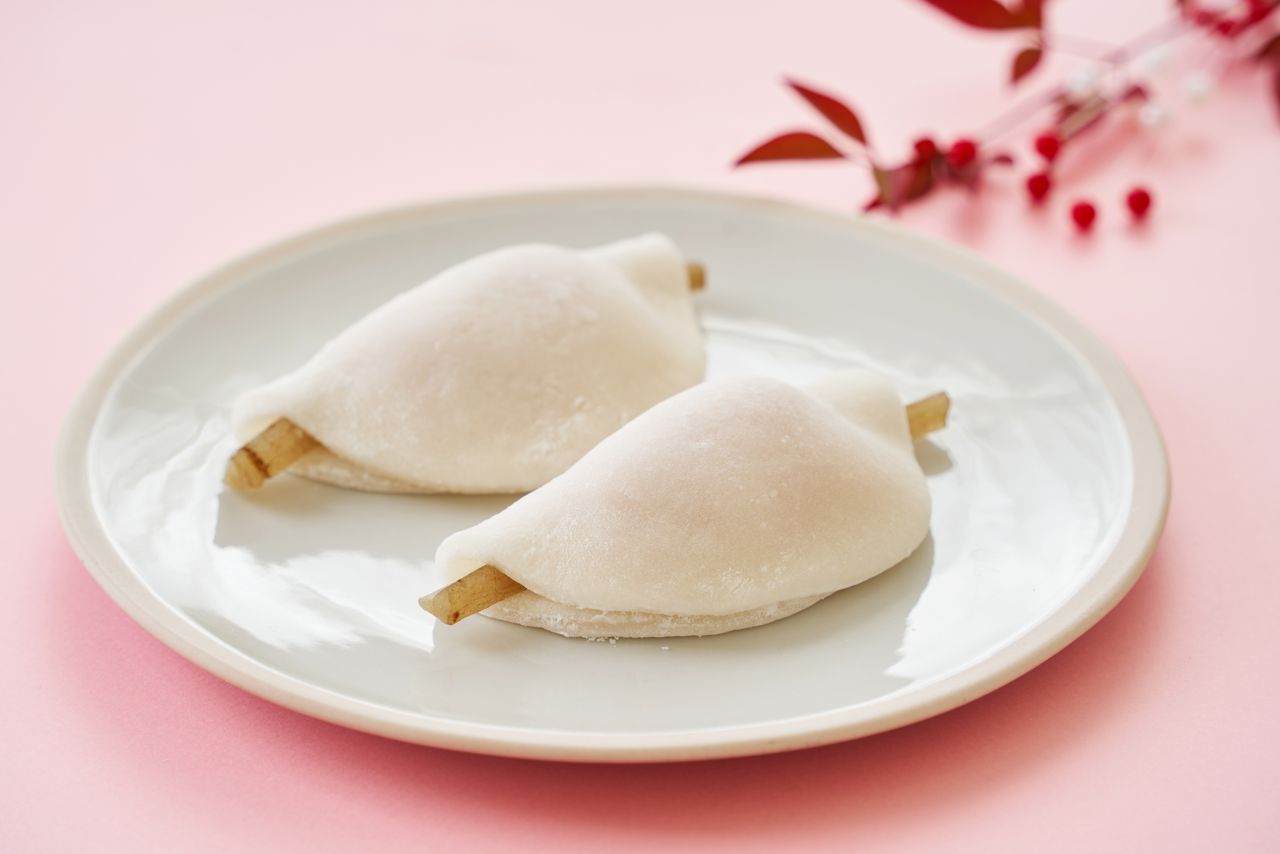
(© Pixta)
(Originally published in Japanese. Text by Ecraft. Banner photo: Saba no misoni. © Pixta.)