Building Blocks: The Basic Ingredients Behind Japan’s Flavors
Nori: A Japanese Seaweed Favorite
Food and Drink Culture Lifestyle- English
- 日本語
- 简体字
- 繁體字
- Français
- Español
- العربية
- Русский
A Food Fit for a Shogun
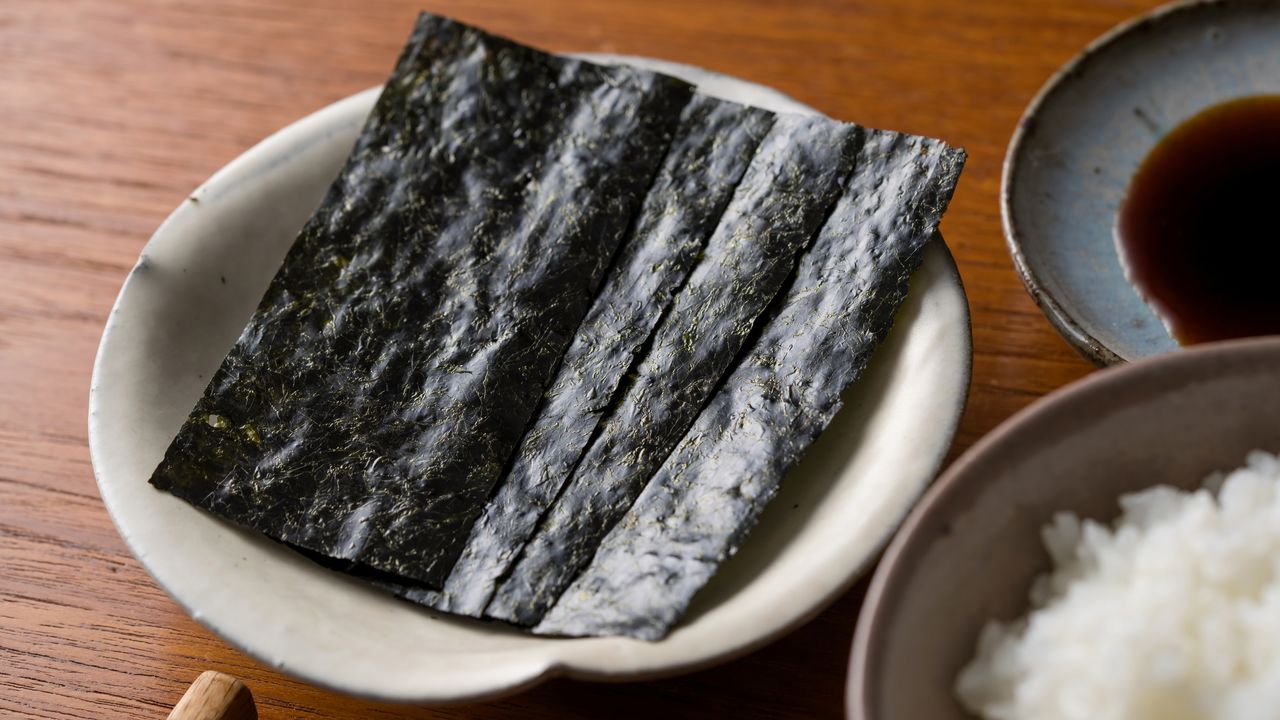
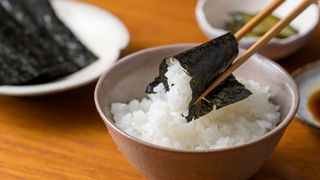
Nori is a well-known accompaniment to rice. It is produced by finely chopping the red algae neopyropia yezoensis and processing it into square sheets.
The technology for this method was established in the early modern period. Prior to that, nori harvested from the sea was enjoyed in its natural state. In Japanese, nori is written as 海苔 using the characters 海 (umi, or sea) and 苔 (koke, or moss), due to the way it clings to rocks. During the Heian period (794–1185), it was served at feasts for court nobles and aristocrats and during the Kamakura period (1185–1333) it also began being used in shōjin ryōri Buddhist vegetarian cuisine for monks.
It was during the Edo period (1603–1868) that a major change occurred. To be able to present the shōgun with fresh nori, seaweed farming was established at a beach facing Tokyo Bay. By the mid-Edo period, it was being used as a dried food, by applying techniques similar to those used for paper-making to produce thin square sheets of nori, which were then dried in the sun. At the same time, it became hugely popular among the ordinary people to layer rice on these nori sheets and add a variety of fillings, rolling them up to make norimaki. Its production was controlled by the shogunate and Edomae nori became a renowned specialty product.
Following the end of World War II, seaweed farming spread nationwide. Up until then, Tokyo had led in Japan for nori production; however, land reclamation in Tokyo Bay due to postwar industrialization meant that the number of seaweed farms fell drastically in the region. The seaweed farming industry in Chiba Prefecture is now responsible for producing the traditional Edomae nori. Another well-known area for nori is the rich fishing grounds in the Ariake Sea, off Saga Prefecture in northwest Kyūshū, where the high-quality brand Ariake nori is produced.
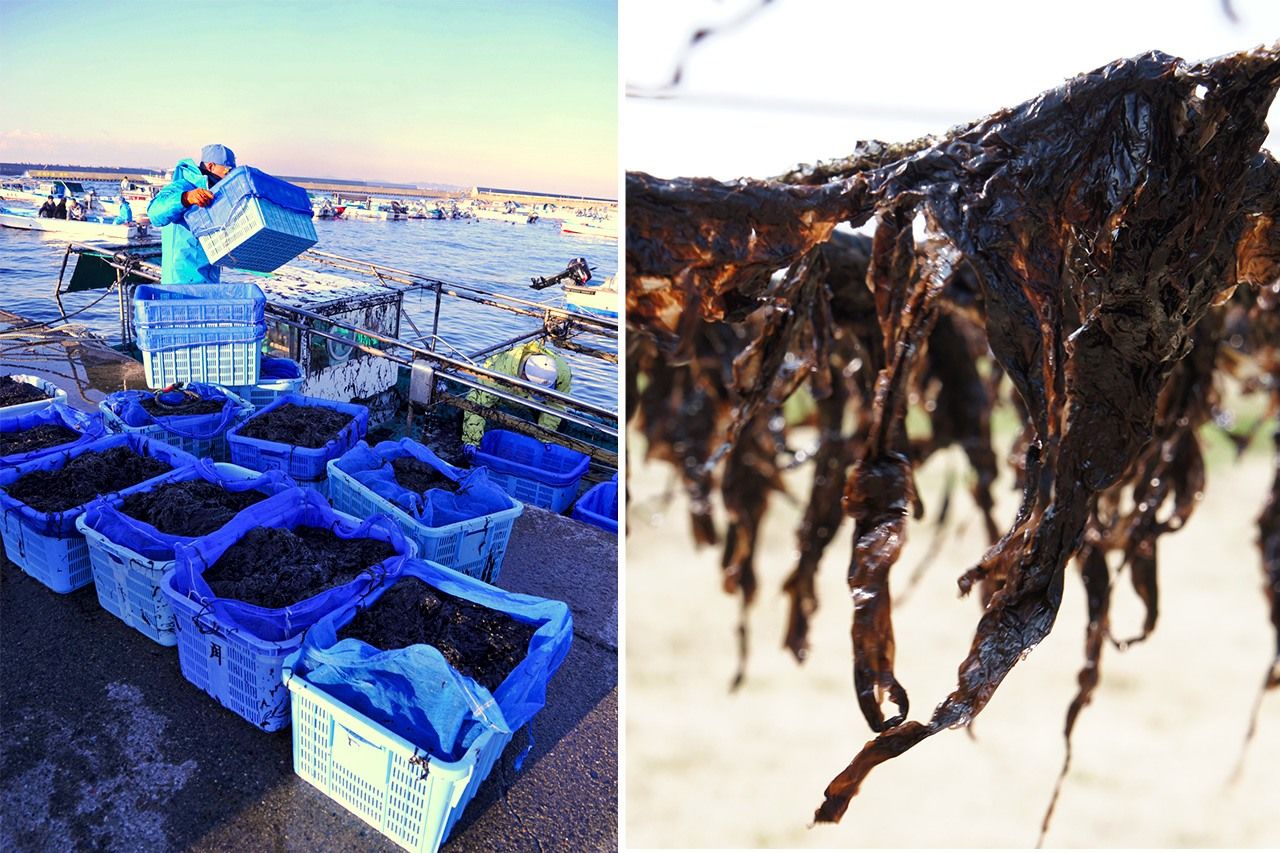
Nori landed at Shin-Futtsu fishing port in Chiba. (Courtesy Chiba Prefectural Tourism and Local Products Association)
Rich in Vitamins and Minerals
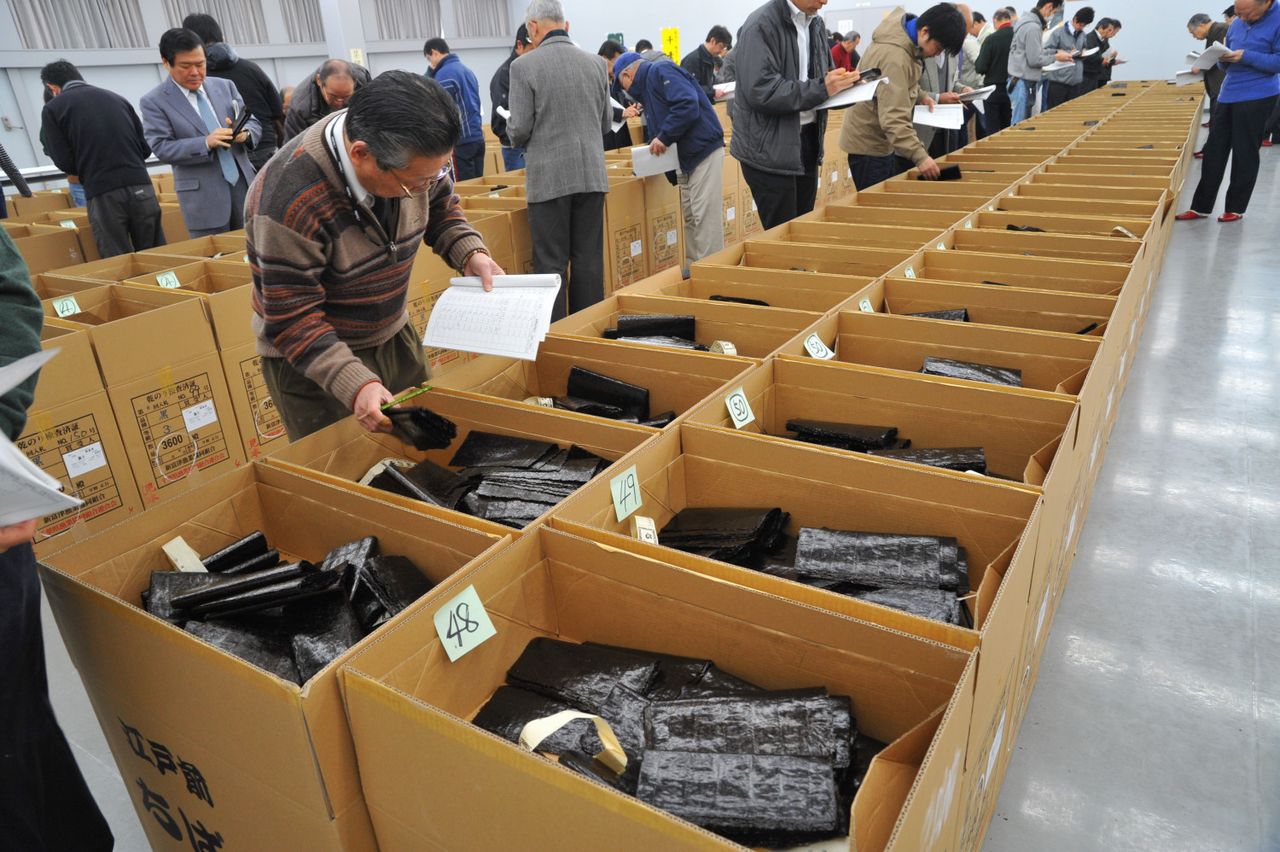
Bidding on nori at an auction. (Courtesy Chiba Prefectural Tourism and Local Products Association)
The nori sold in supermarkets is yakinori, dried seaweed that has been grilled at a high temperature until crispy. While a standard nori sheet is 21 centimeters long and 19 centimeters wide, there are many variations, including sheets cut to size for specific uses such as for onigiri (rice balls) and temaki-zushi (hand-rolled sushi).
Nori is rich in calcium, iron and other minerals, as well as vitamins, and is often described as a “sea vegetable.” It contains all three major umami components—glutamic acid, inosinic acid and guanylic acid—so it tastes delicious even when eaten unprocessed.
Incidentally, aosa, a standard ingredient in miso soup, and aonori, usually sprinkled on okonomiyaki, are types of green algae, whereas nori is a type of red algae. Taste them and it is easy to tell the difference in aroma and flavor.
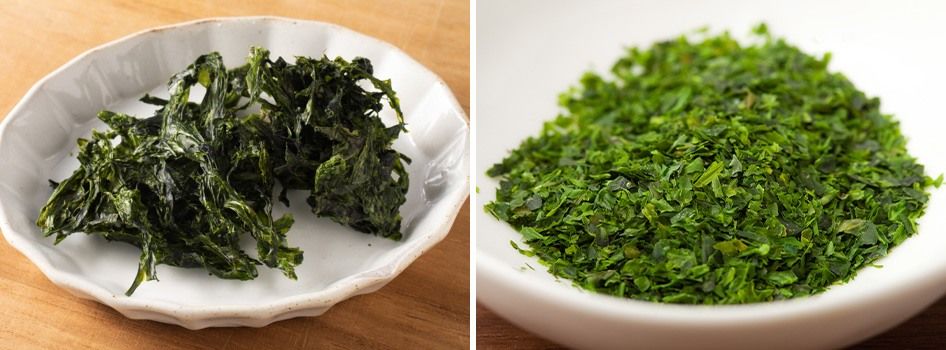
Dried aosa produced in Mie Prefecture pictured on the left (Courtesy of the Ministry of Agriculture, Forestry and Fisheries) and aonori flakes on the right. (© Pixta)
(Originally published in Japanese. Text by Ecraft. Banner photo courtesy Saga Prefectural Tourism Federation.)