Building Blocks: The Basic Ingredients Behind Japan’s Flavors
Wrap, Sprinkle, and Roll: Many Ways to Enjoy Nori Seaweed
Food and Drink Culture Lifestyle- English
- 日本語
- 简体字
- 繁體字
- Français
- Español
- العربية
- Русский
Onigiri
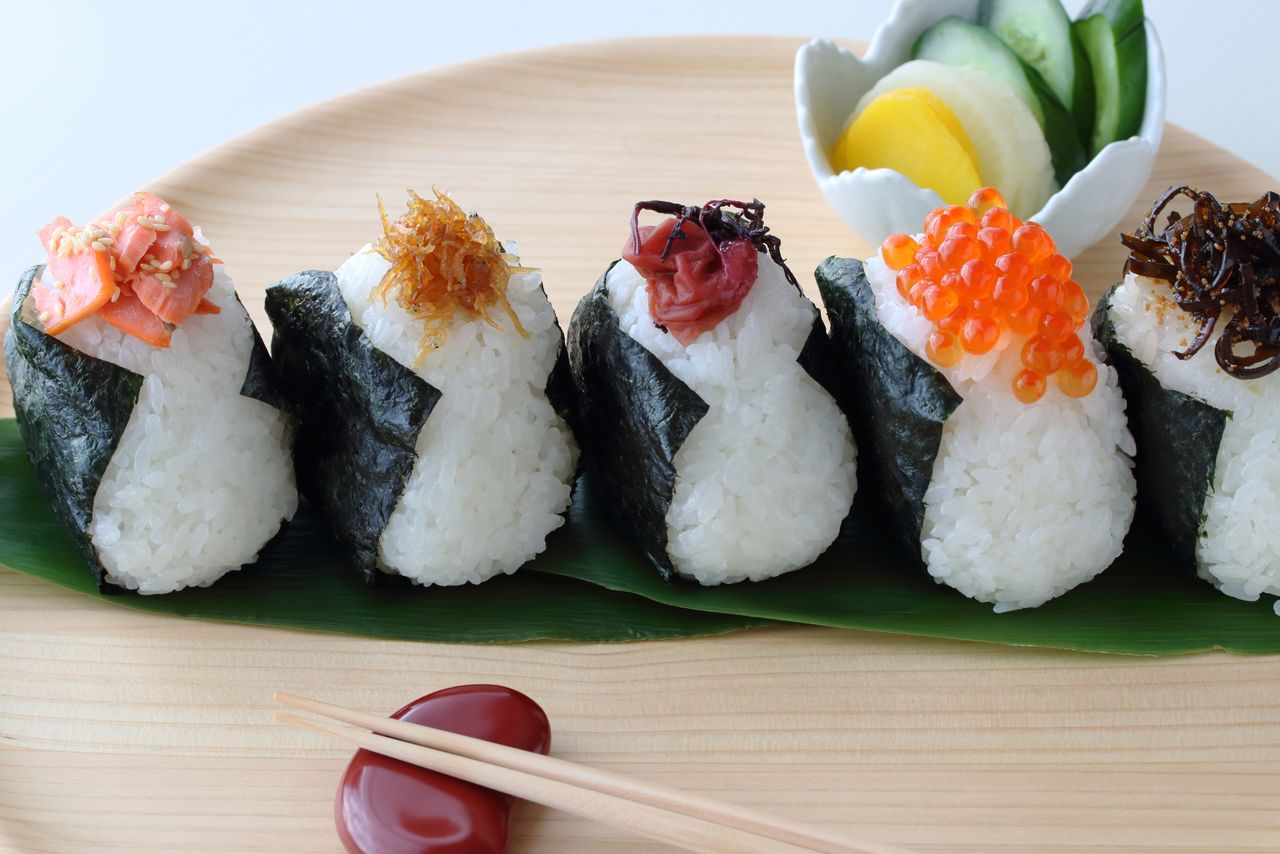
Rice balls are the perfect example of fast food in Japan. With convenience store onigiri, you can enjoy crisp nori due to the unique packaging that lets you wrap the rice ball right before eating, but moist nori that seems to just melt into the rice has its own rich flavor too.
(© Pixta)
Norimaki and Temaki-zushi
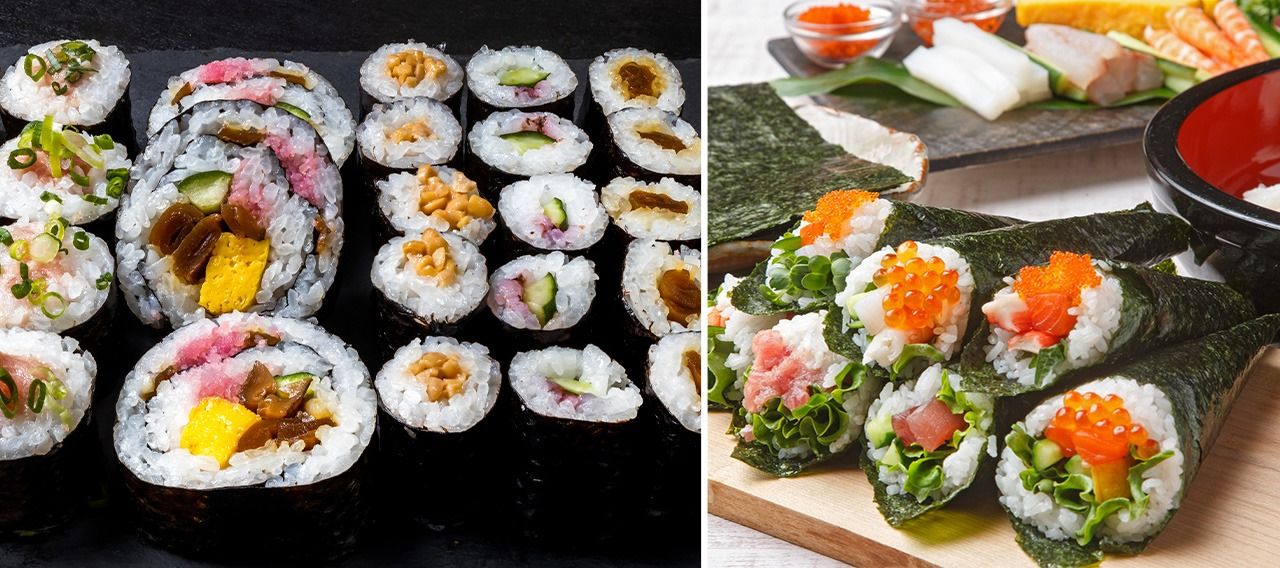
Norimaki sushi rolls are made by layering sushi rice on top of a sheet of nori and then adding a core of your favorite ingredients, after which you roll it into a cylinder shape using a rolling mat. Thickly rolled and crammed with colorful ingredients, they take pride of place at celebratory occasions. In the case of temaki-zushi, these are hand-rolled by taking a palm-sized sheet of nori and filling it with rice and various ingredients. You can be as creative as you want and they look gorgeous, making them popular at parties.
(© Pixta)
Gunkanmaki
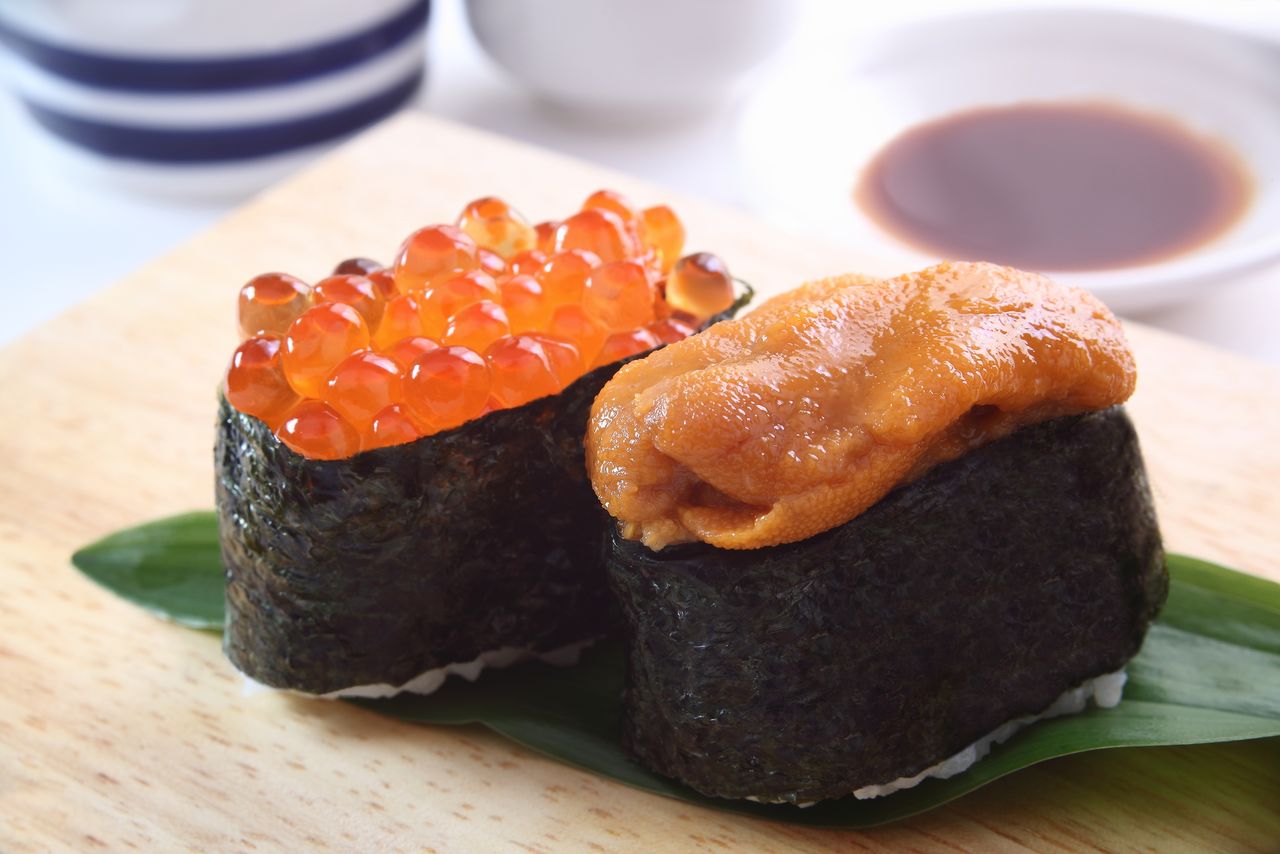
Here, small-sized balls of sushi rice are wrapped around the sides with nori and topped with soft ingredients. Gunkan means battleship and this dish is so named from its resemblance to a ship when viewed from the side. Uni (sea urchin) and ikura (salmon roe) are the most popular toppings, adding a real taste explosion.
(© Pixta)
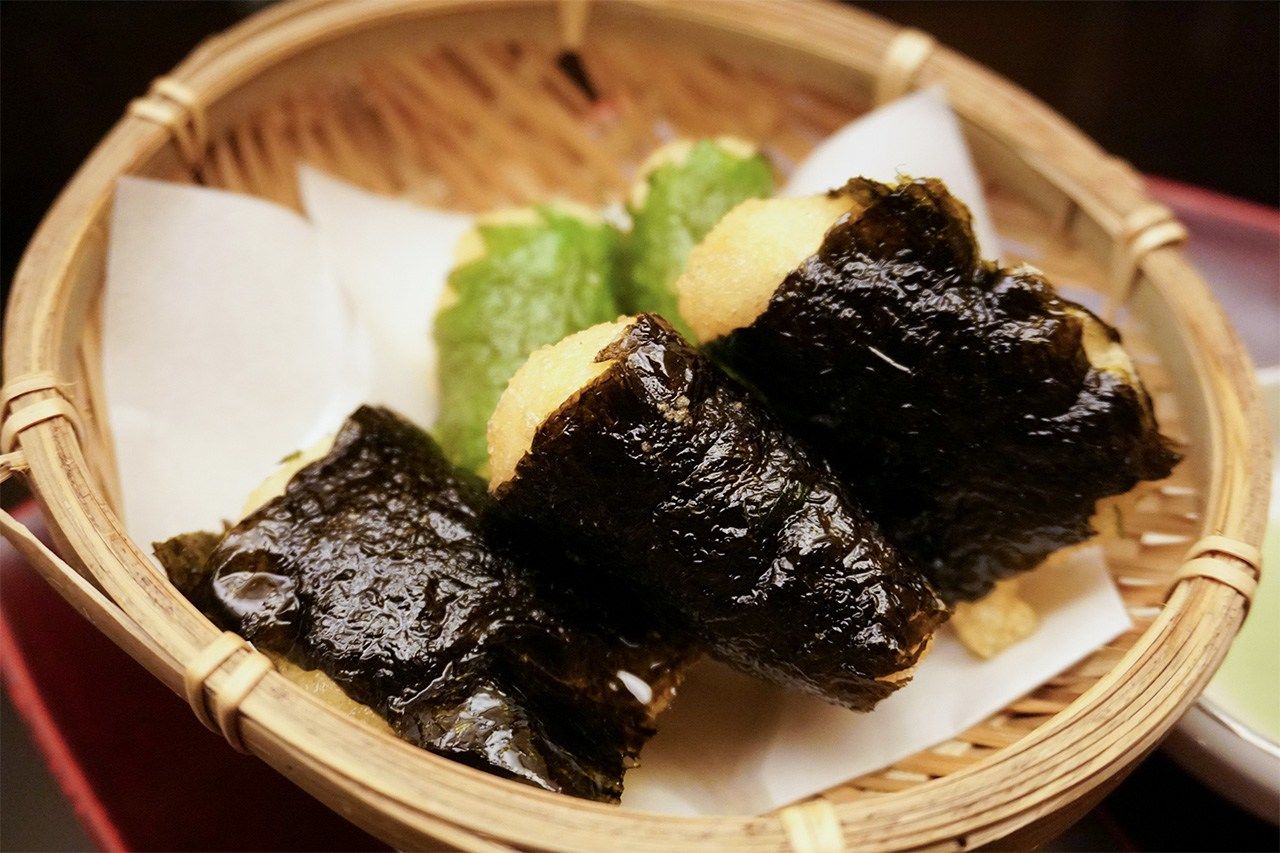
Isobe-age
This aromatic dish, reminiscent of a seashore (iso), is created by wrapping nori around various ingredients and deep-frying them. It can be created using any type of food, especially yamaimo (mountain yam) and tsukune chicken meatballs.
(© Pixta)
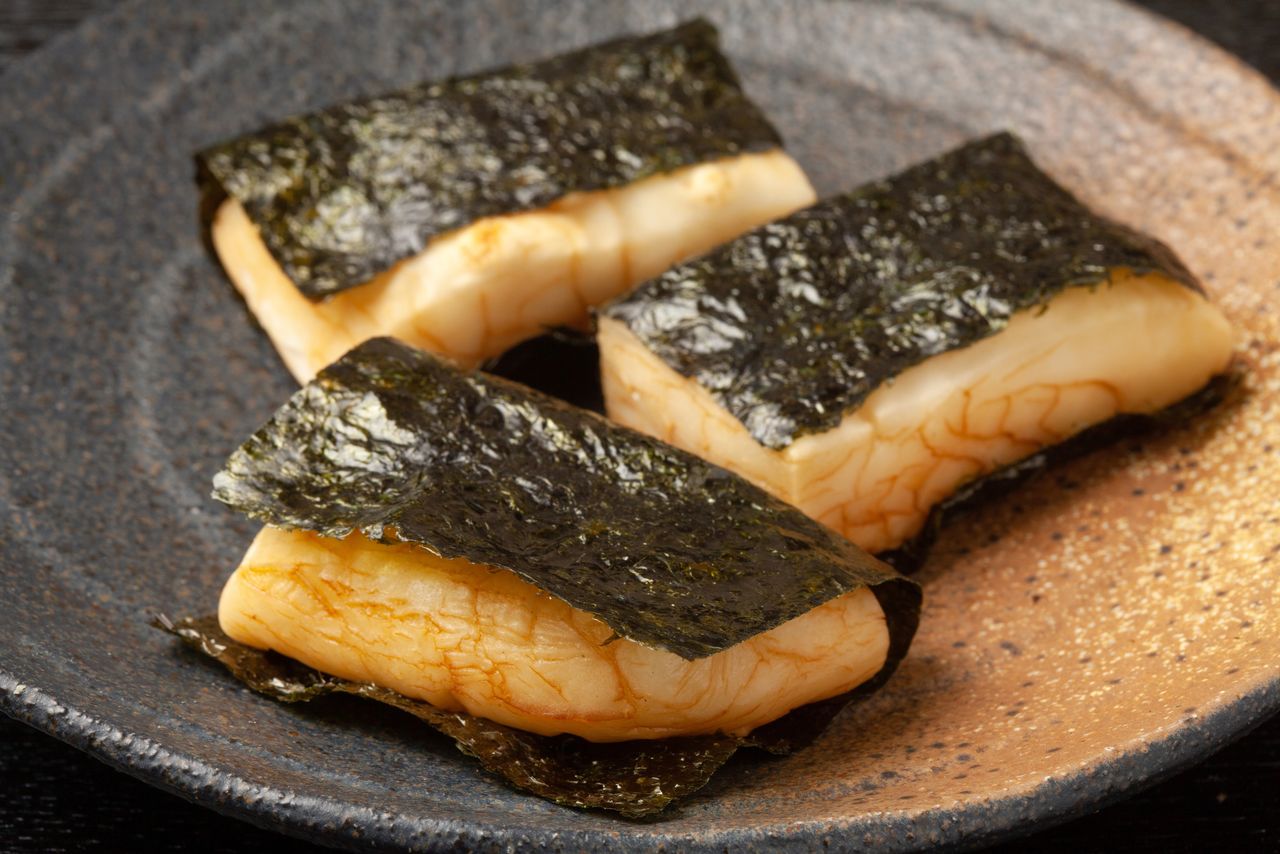
Isobe-mochi
For this dish, grilled mochi rice cakes are simply coated in soy sauce and wrapped in nori. It is a true winter comfort food.
(© Pixta)
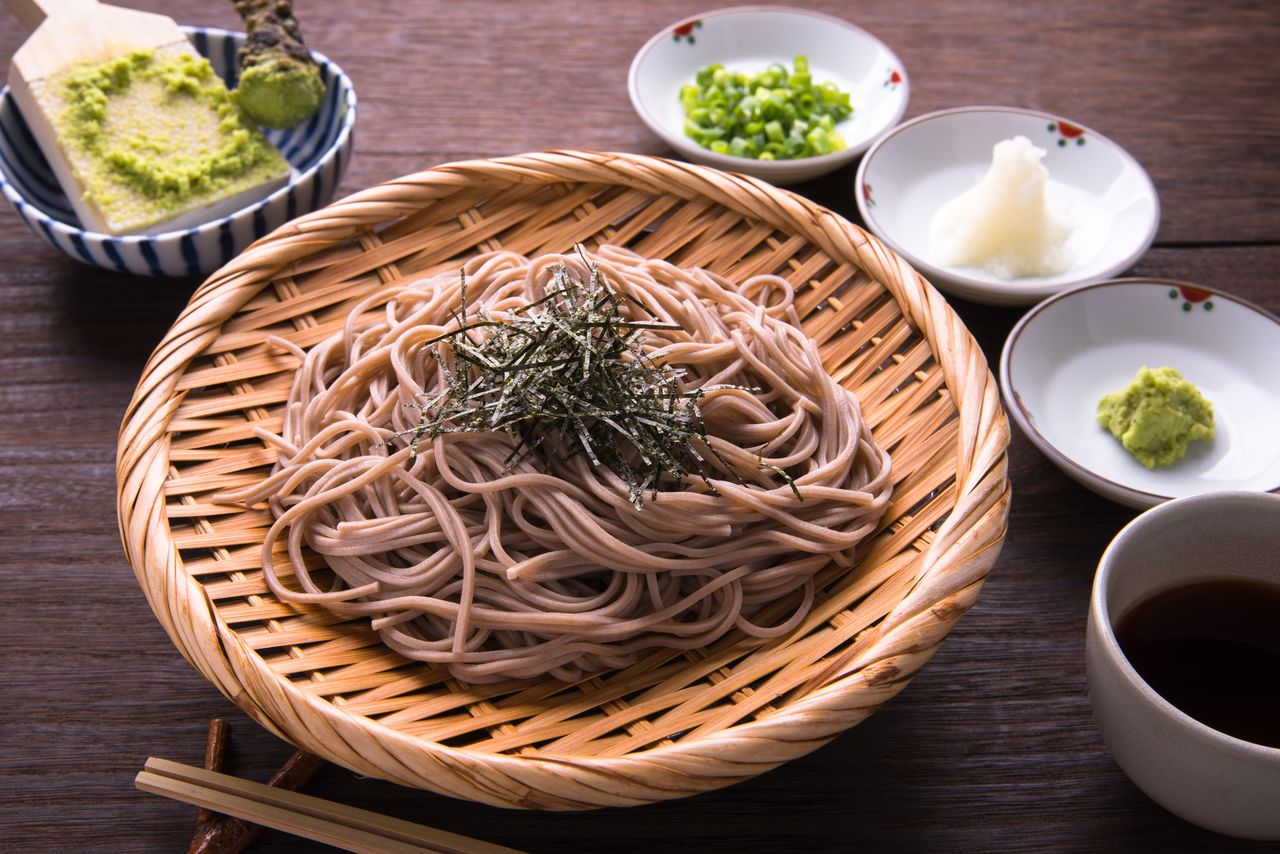
A Variety of Toppings
Thinly sliced nori makes the best topping for all kinds of dishes like soba, udon, and oyakodon, enhancing both the taste and appearance. It can always be found on Japanese-style pizzas and pasta dishes too.
(© Pixta)
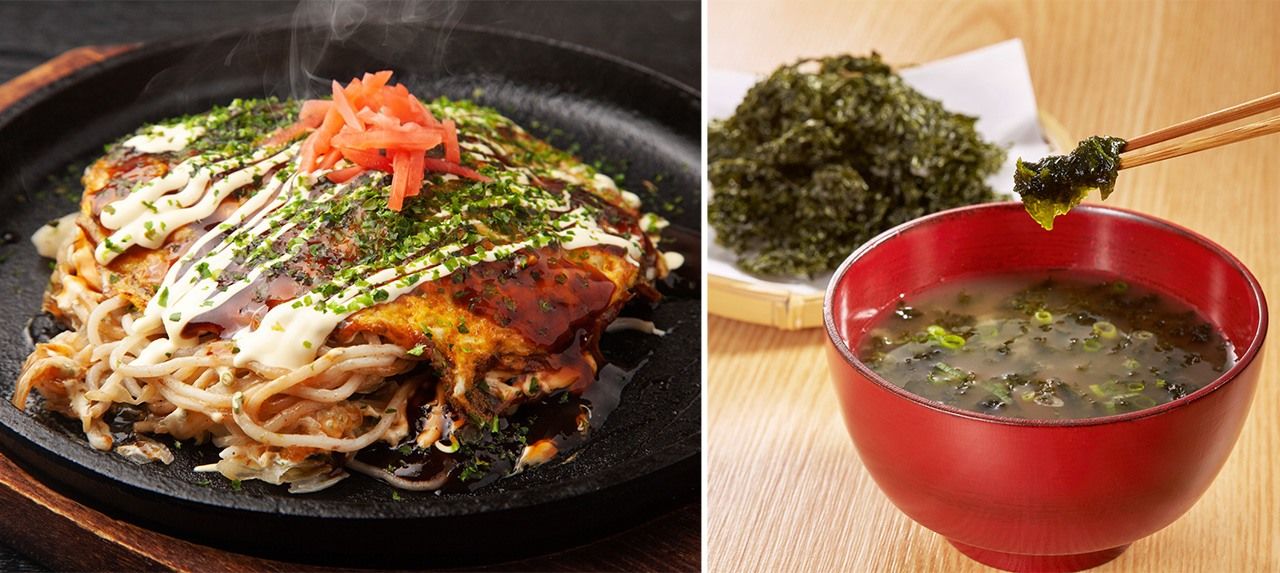
The seaweed typically used as a topping on dishes like okonomiyaki, takoyaki, and yakisoba is aosa, a type of green rather than red algae. It is also a popular ingredient in miso soup.
(© Pixta)

(Originally published in Japanese. Text by Ecraft. Banner photo courtesy Saga Prefectural Tourism Federation.)