Building Blocks: The Basic Ingredients Behind Japan’s Flavors
Sanshō: A Small Berry with a Surprising Punch
Food and Drink Culture Lifestyle- English
- 日本語
- 简体字
- 繁體字
- Français
- Español
- العربية
- Русский
Native to Japan
Sanshō (Zanthoxylum piperitum) is a native Japanese shrub belonging to the citrus family Rutaceae, with its berries being used primarily as a spice. The berries have been consumed since ancient times, having been found in pottery dating from the prehistoric Jōmon period (ca. 10,000–300 BC). The plant is known for its pleasant aroma, one meaning of the character 椒 (shō) in sanshō, but another reading for the character, hajikami, indicates it as “being so spicy you grimace when you bite it.”
Growing wild in partially shaded mountainous areas, both the berries and the young leaves are edible. The numbing spiciness of sanshō is due to the pungent compound Hydroxy-α-sanshool, and its tangy aroma, characteristic of the citrus family, adds a cooling freshness to dishes.
The young leaves of the sanshō are called kinome and are used when in season from spring through summer to add fragrance and color to Japanese cuisine.
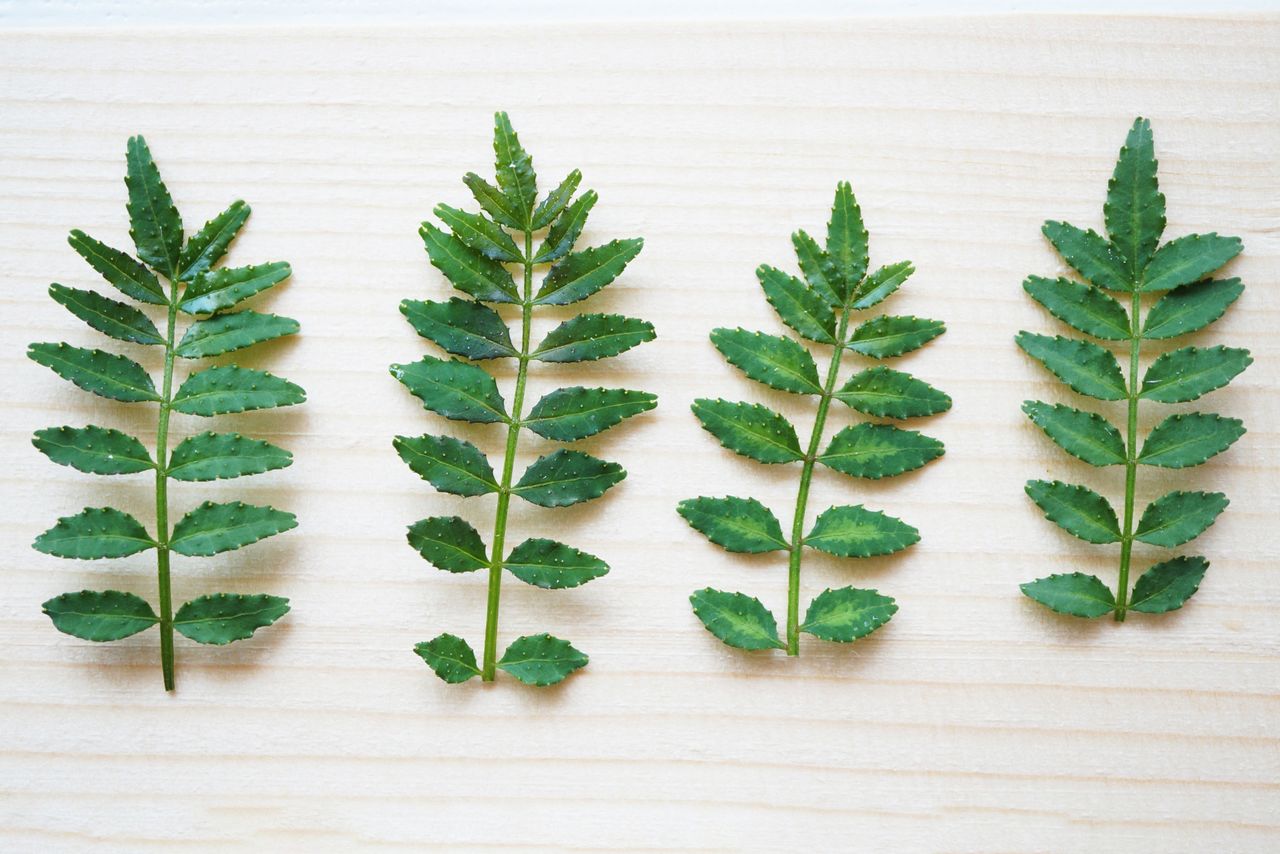
Kinome (young sanshō Japanese pepper leaves). (© PhotoAC)
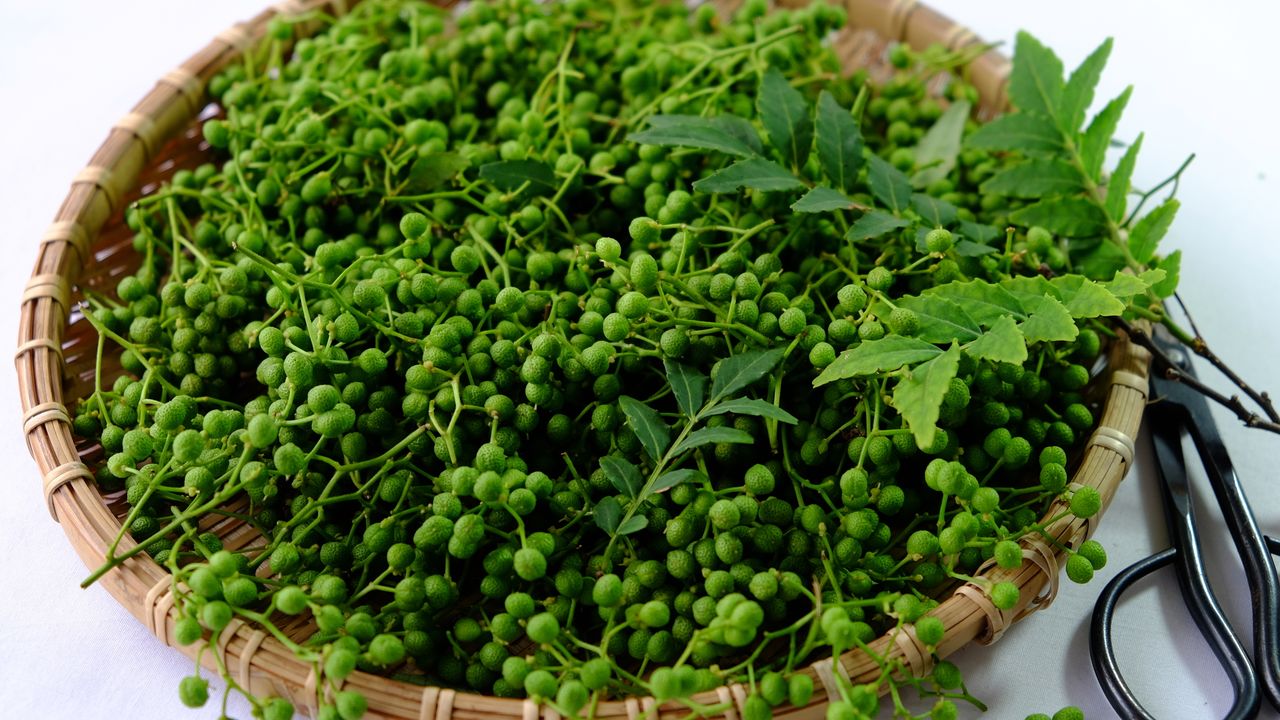
The vivid green sanshō berries, known as mi-sanshō, are harvested in early summer and, more often than not, used just as they are.
The berries that ripen and turn yellow from summer through autumn are gathered and dried. Their black seeds are then removed and the outer shells ground to a powder to make kona-zanshō (ground sanshō).
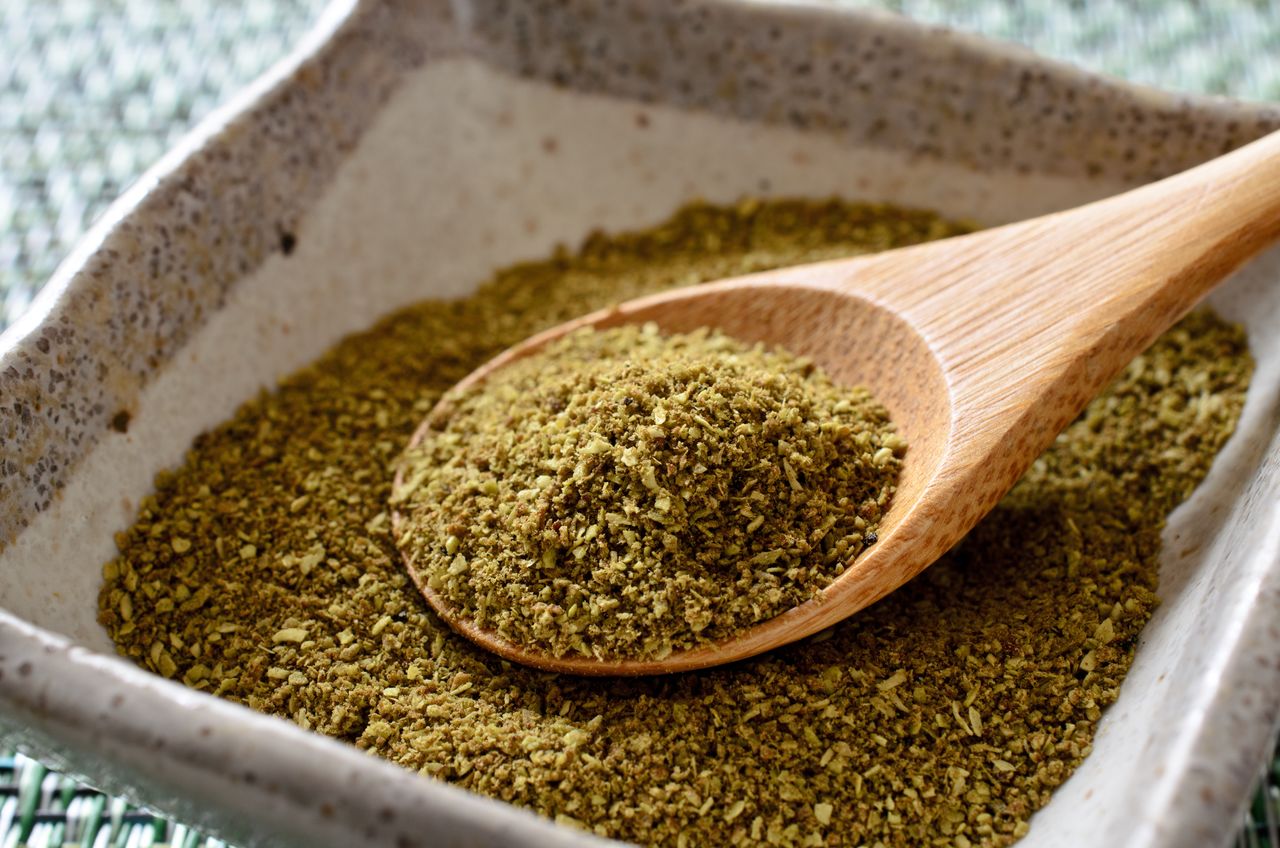
Ground sanshō. (© Pixta)
The flowers on sanshō shrubs are known as hana sanshō. While edible, they are exceptionally rare and therefore considered a luxury ingredient. By the way, Sichuan pepper from China belongs to the same family and has a similar numbing spiciness and citrusy aroma, but is a different species from sanshō.
Favorable Response from the West
Wakayama Prefecture is Japan’s top production area for sanshō, accounting for 60% of domestic supply. A special variety known as budō sanshō is grown there, so named because the berries form in clusters like grapes (budō).
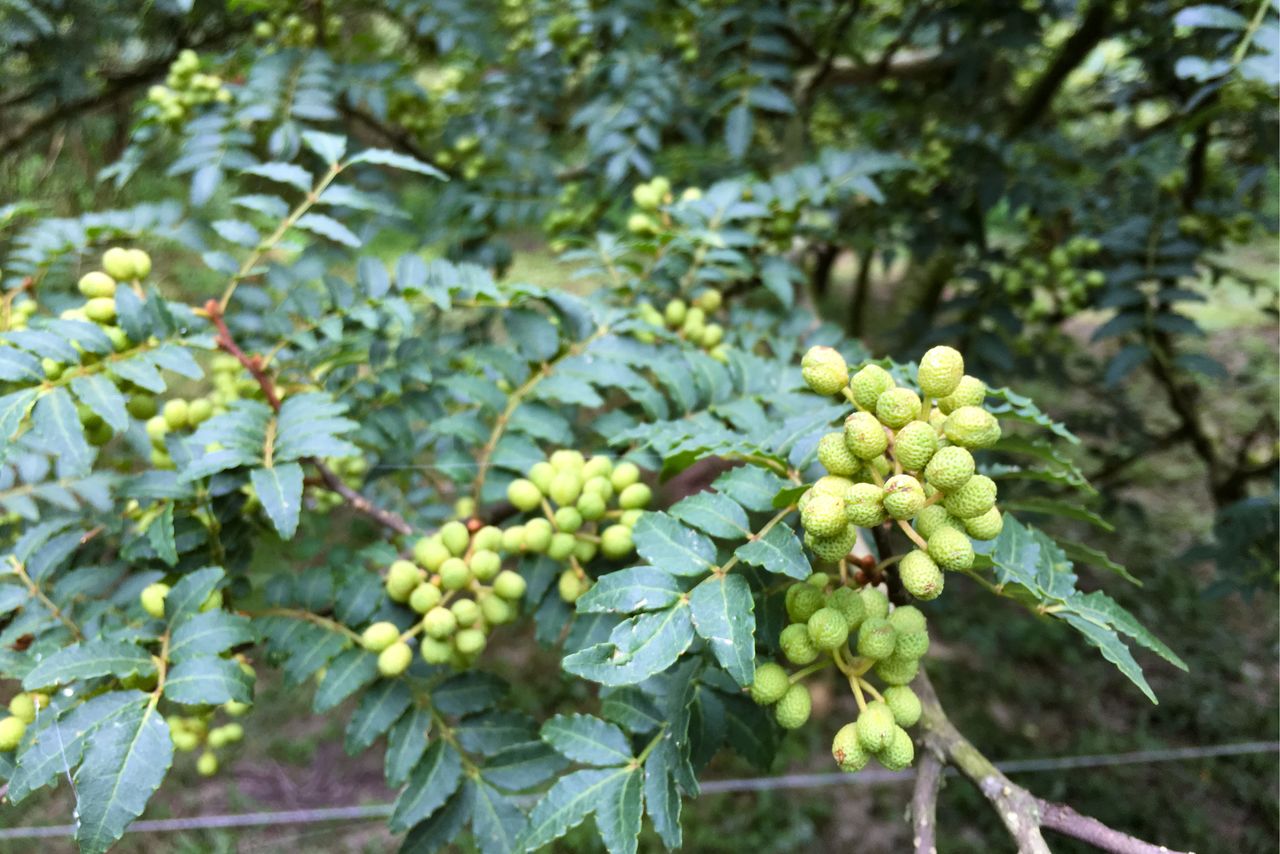
Budō sanshō. (Courtesy the Wakayama Tourism Exchange Division)
Recently, sanshō has been growing in popularity as it pairs so well with meat dishes and dairy products. Top restaurant chefs and spice dealers from Europe are visiting Japanese farmers to purchase sanshō, and exports are increasing overall. It is evident that overseas awareness and appreciation for this unique Japanese pepper is on the rise.

(Originally published in Japanese. Text by Ecraft. Banner photo © Pixta.)