Building Blocks: The Basic Ingredients Behind Japan’s Flavors
Satsumaimo Dishes to Satisfy Your Sweet Tooth
Food and Drink Culture Lifestyle- English
- 日本語
- 简体字
- 繁體字
- Français
- Español
- العربية
- Русский
Hoshiimo
This sweet potato snack is produced by thinly slicing or dicing steamed satsumaimo and then drying them. It is a standard, guilt-free snack that can be found in prepackaged form even in convenience stores and drugstores.
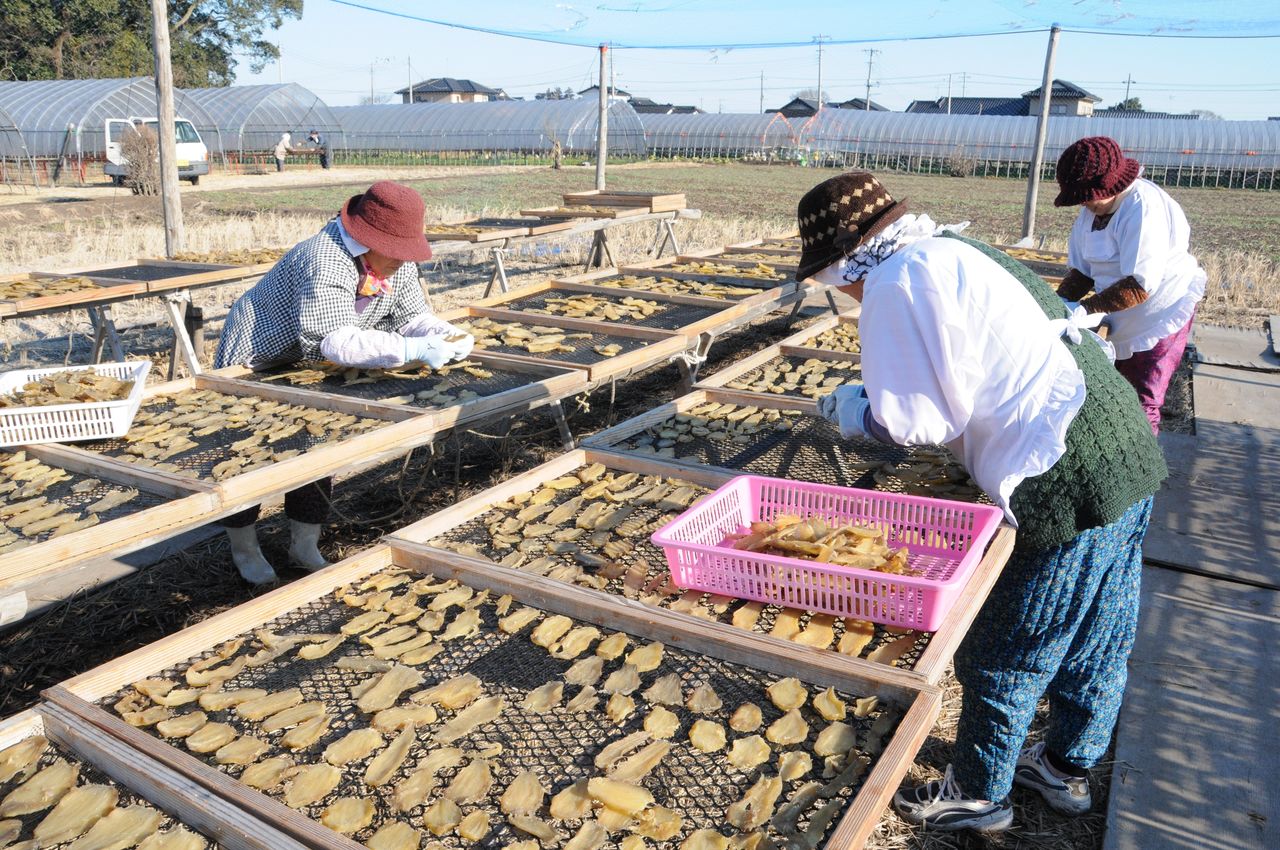
Thinly sliced steamed satsumaimo drying in the sun. (Courtesy Ibaraki prefectural government)
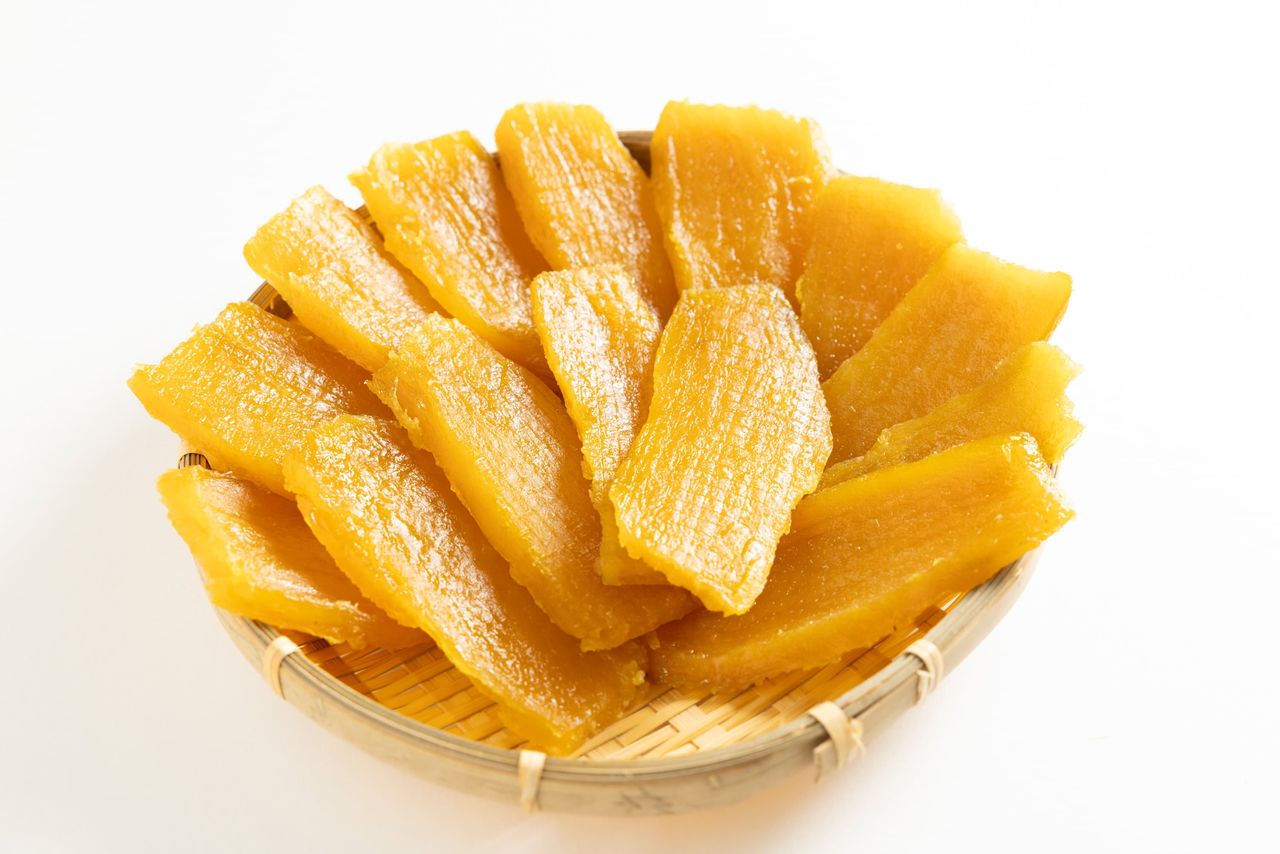
(Courtesy Ibaraki prefectural government)
Imokenpi and Imokarintō
This sweet snack, originating from Kōchi Prefecture, is made from thin sticks of satsumaimo that have been deep-fried and candied in sugar syrup. Kenpi is a traditional sweet made from wheat flour; add the imo, for potato, to get the name for this sweet potato version. They look like French fries, but are hard and crunchy. In some areas, they are also known as imokarintō, with karintō being the name for another crunchy sweet snack.
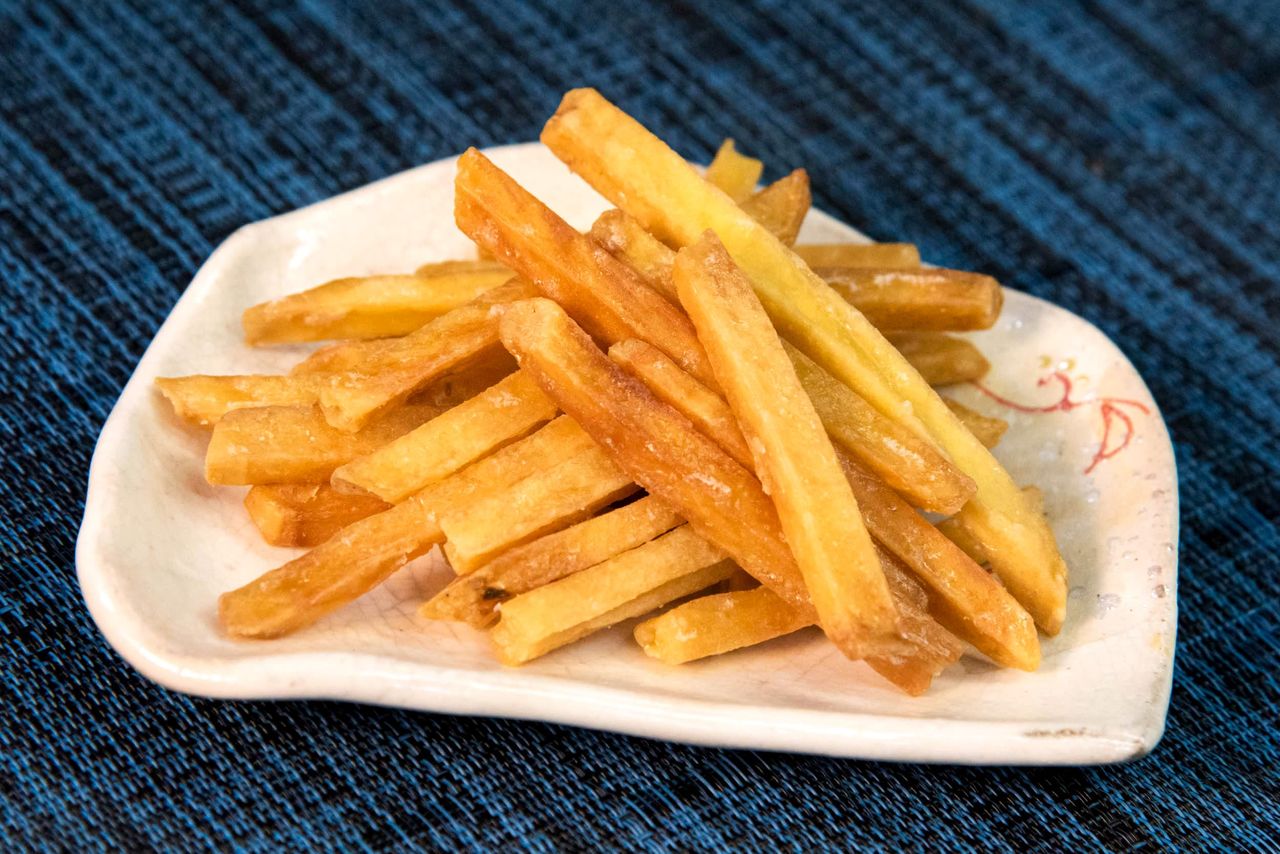
(Courtesy Kagoshima prefectural government)
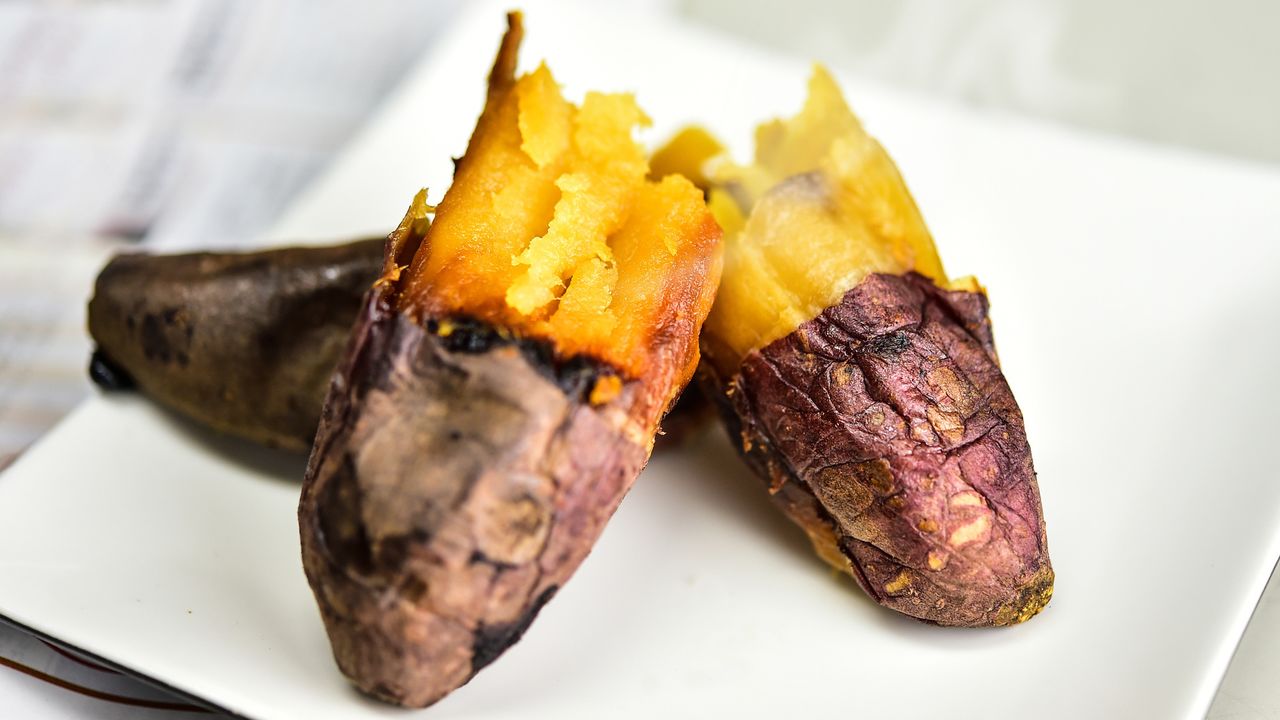
Yakiimo
This is the most popular way to eat satsumaimo. In the past, they were a winter treat, cooked by wrapping them in foil and slowly roasting then on an open fire or stove, but recently they are a popular item sold all-year-round in supermarkets and greengrocers. The texture varies from fluffy to moist depending on the variety, making it fun to compare them all.
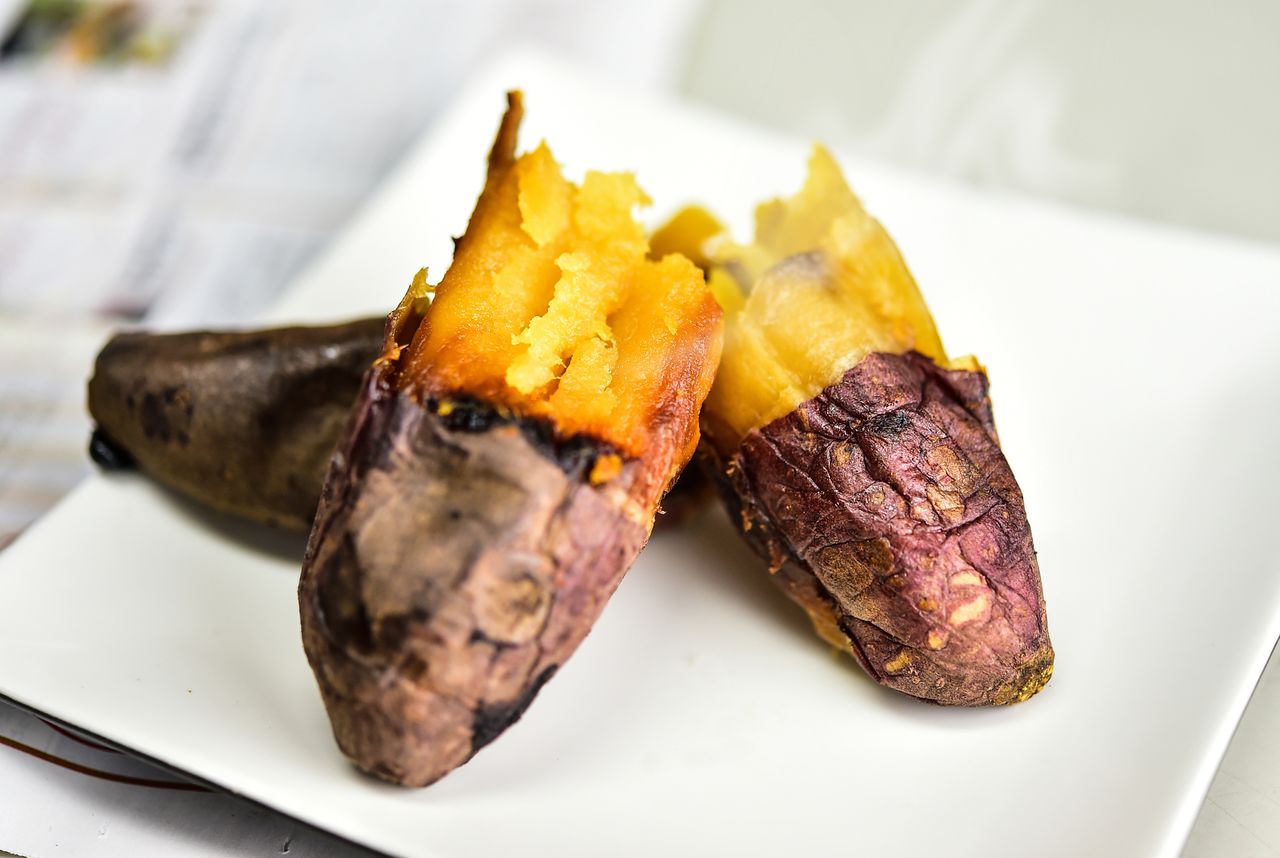
(Courtesy Kagoshima Prefectural Visitors Bureau)
Imo Yōkan
Boiled satsumaimo is finely strained, combined with sugar and kanten, and then placed in a square mold to solidify. Yōkan is usually made with adzuki beans, but here satsumaimo is used instead.
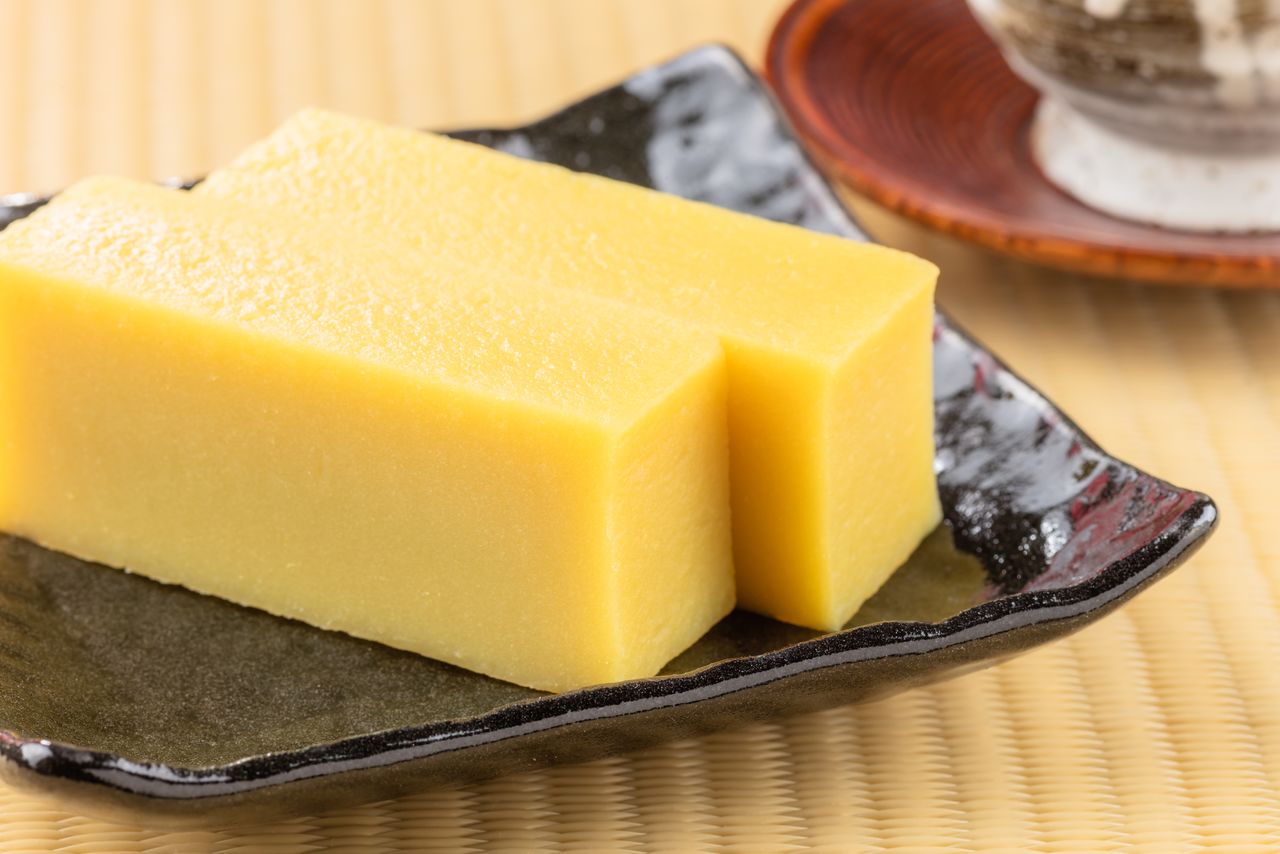
(© Pixta)
Daigakuimo
A delicious dish featuring deep-fried chunks of satsumaimo caramelized in syrup. Literally meaning “university potatoes,” there are many theories as to how it was named, including that it started as a popular food in the university areas of Tokyo, that students created it to sell to make money to cover their tuition, or that it was a dish created by a restaurant in front of the University of Tokyo.
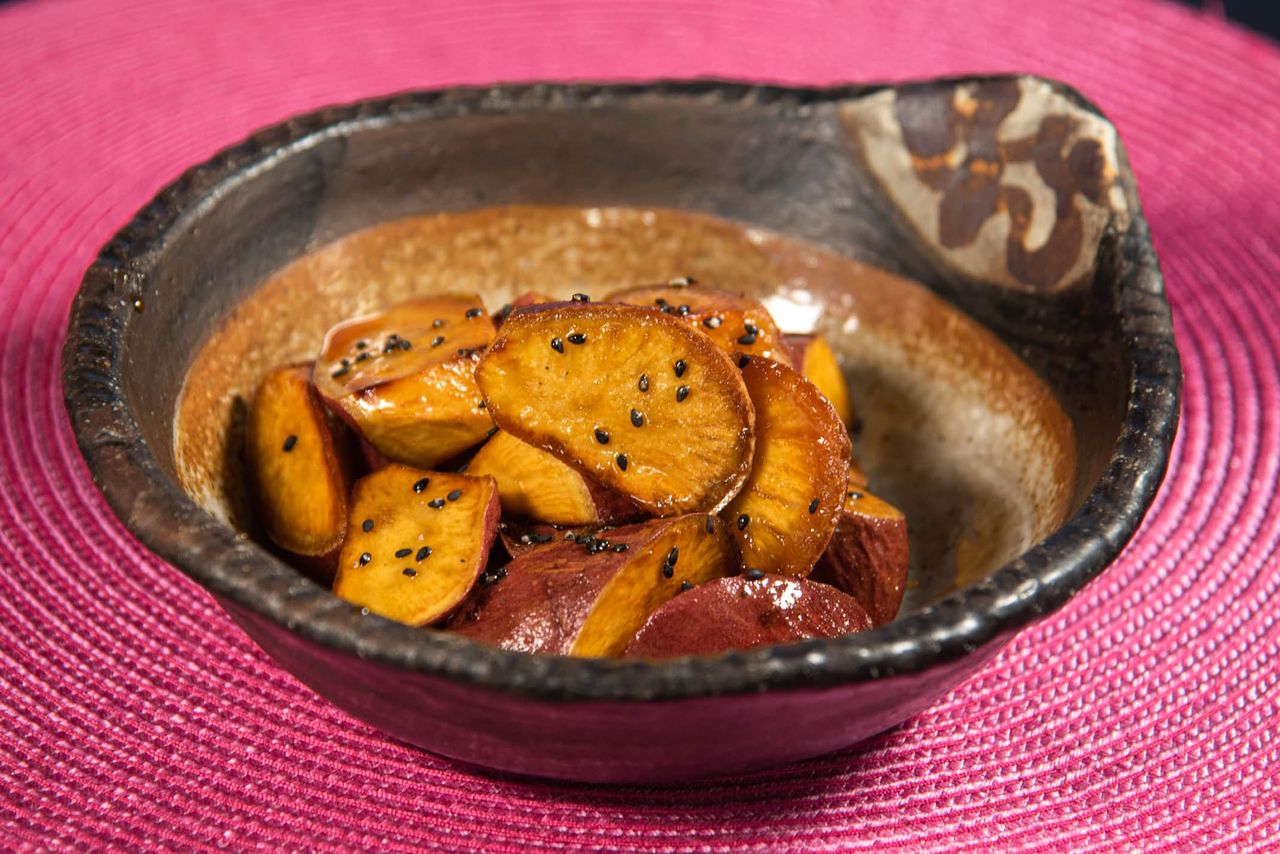
(Courtesy Kagoshima prefectural government)
Imo-gohan
Cubes of satsumaimo are cooked together with rice. The subtle sweetness of this dish conjures up the abundance of autumn.
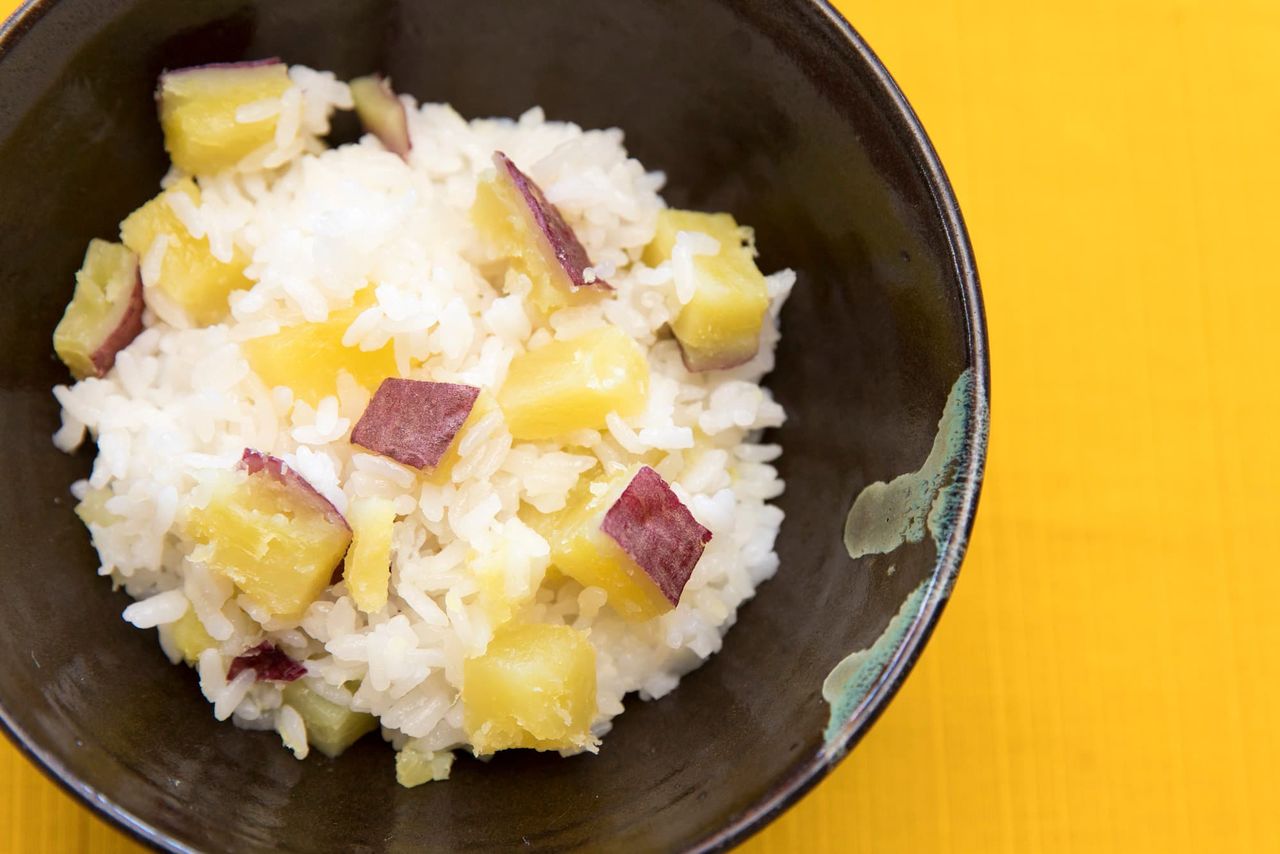
Karaimo-gohan from Kagoshima Prefecture. (Courtesy the Ministry of Agriculture, Forestry, and Fisheries)
Imoten
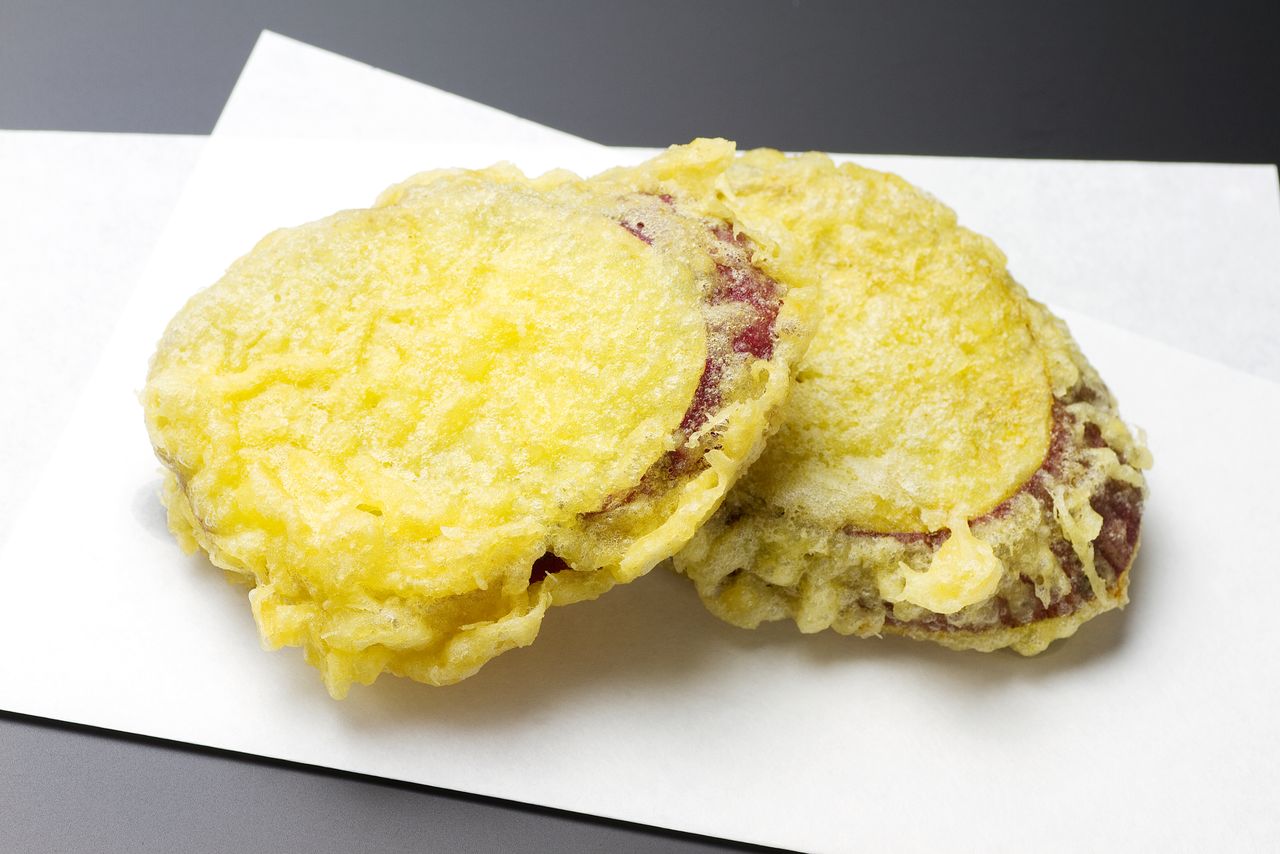
Satsumaimo is a popular ingredient for tempura. The crispy freshly deep-fried slices taste great with a light sprinkling of salt.
(© Pixta)
Kinton
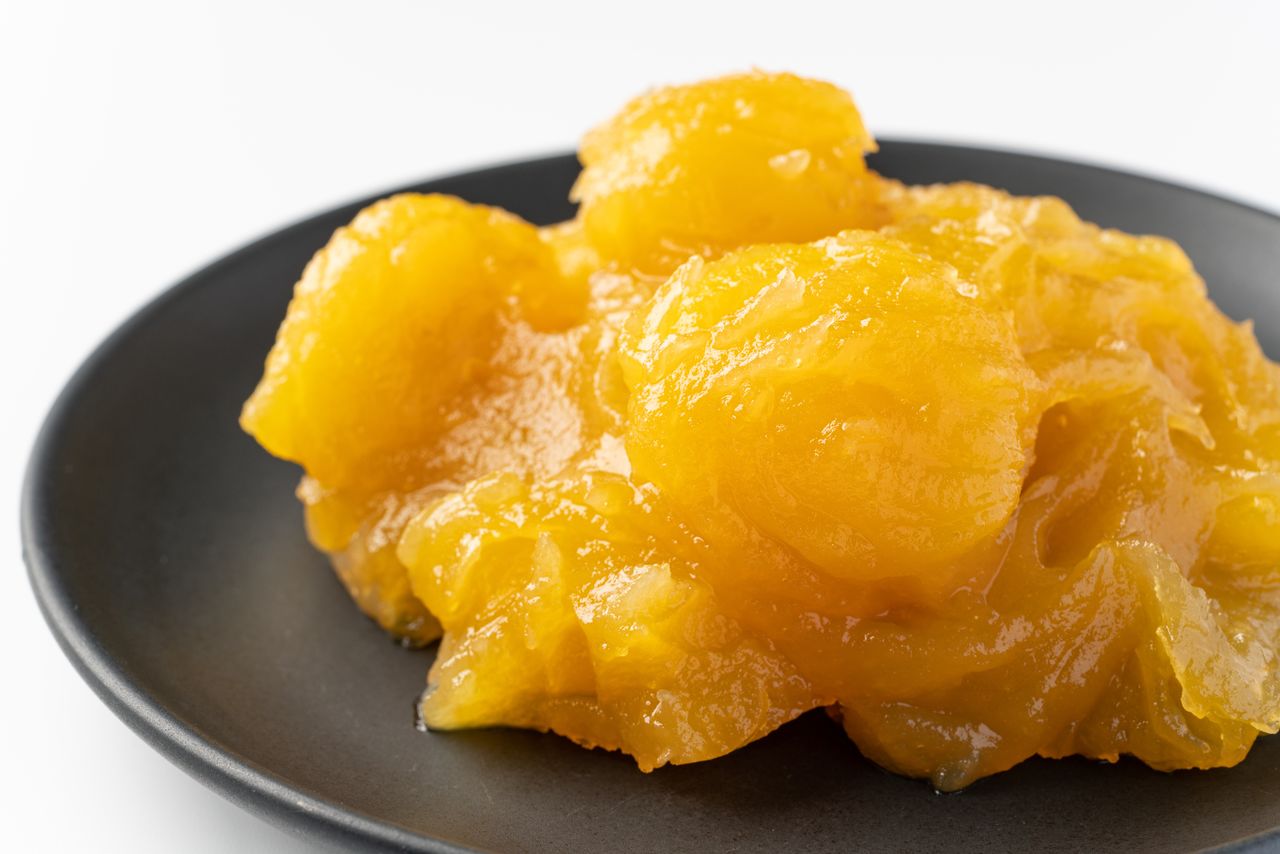
Also known as kuri kinton, this chestnut and sweet potato mash is an essential part of osechi ryōri at New Year. Occasionally, only candied chestnuts are used in this dish, but usually boiled, finely sieved satsumaimo is added as a paste that coats the chestnuts.
(© Pixta)
A Favorite Snack Within Easy Reach for Edoites
Satsumaimo is often likened to chestnuts, as they are similar in color and taste. The difference is that chestnuts are more of a luxury, while satsumaimo are reasonably-priced and more easily available to the population at large.
In the Edo period (1603–1868), the closest satsumaimo production area to Tokyo was Kawagoe in Saitama Prefecture, just thirteen ri (jūsanri, with one ri being around four kilometers). Playing on the Japanese word for chestnut—kuri, homophonous with the phrase for nine ri—yakiimo sellers came up with slogans implying it was better to go jūsanri than kuri, because the yakiimo taste better. This made them a big hit in Edo, and the satsumaimo from Kawagoe were so popular they became known as jūsanri.
(Originally published in Japanese. Text by Ecraft. Banner photo: Freshly-baked yakiimo. Courtesy Kagoshima Prefectural Visitors Bureau.)