Building Blocks: The Basic Ingredients Behind Japan’s Flavors
Japan’s Dried Fish Dishes: Whet Your Appetite with a Wide Variety of Himono
Food and Drink Culture Lifestyle- English
- 日本語
- 简体字
- 繁體字
- Français
- Español
- العربية
- Русский
Hiraki
The himono, or dried fish, known as hiraki is fish that has been cut open either from the belly or backbone, so it can be easily dried. This style is mainly used for aji (Japanese jack mackerel), sanma (Pacific saury), hokke (Atka mackerel) and karei (righteye flounder). The head and spine are sometimes removed too. When the ichiyaboshi method is used, literally drying the fish over just one night, the fish retains moisture, making it plump and soft.
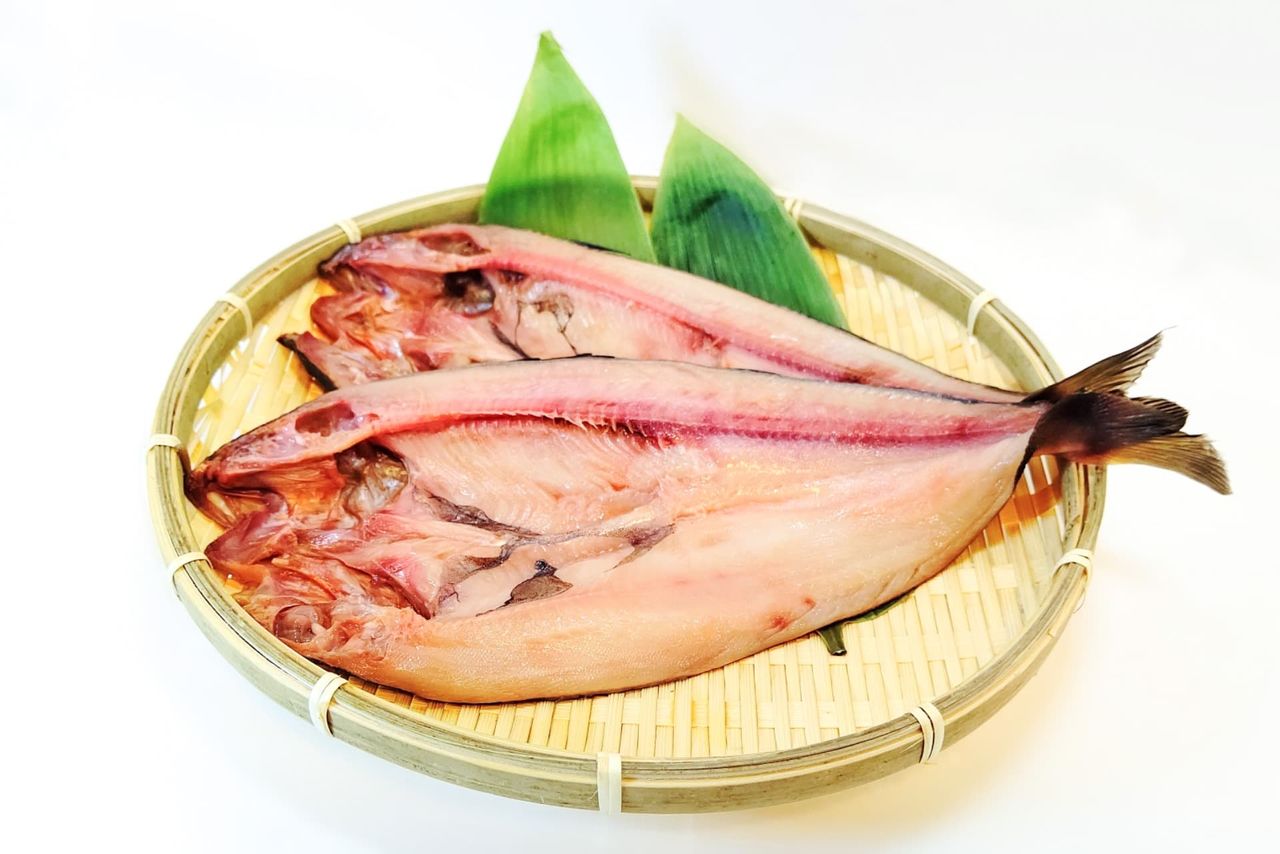
Hokke no hiraki, dried Atka mackerel. (© PhotoAC)
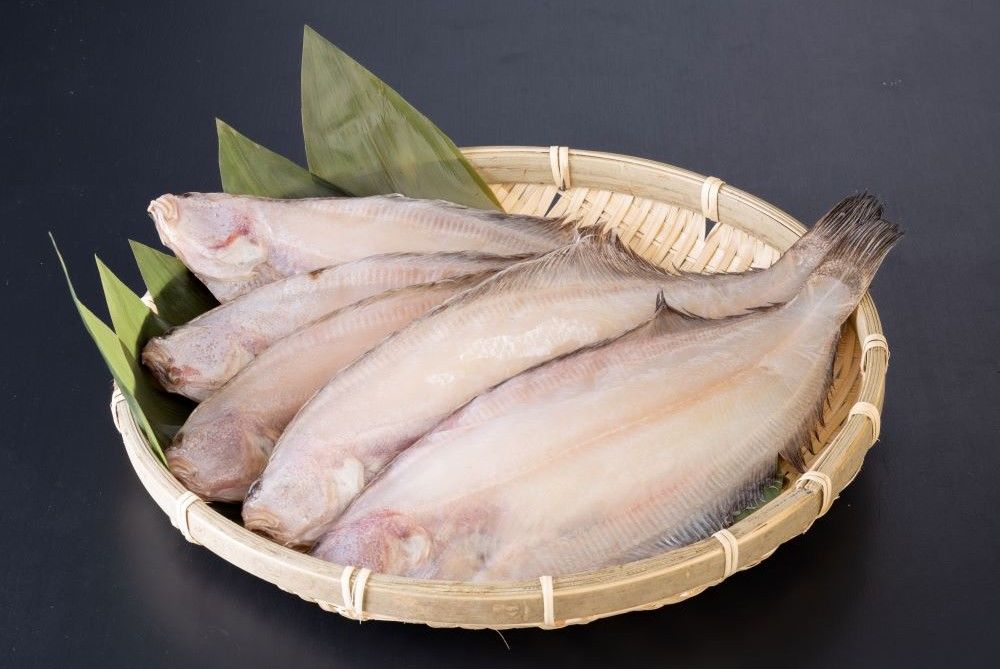
Karei ichiyaboshi, flounder that has been dried overnight, from Fukui Prefecture. (Courtesy the Ministry of Agriculture, Forestry, and Fisheries)
Mirinboshi
This jerky-style food is also called sakuraboshi. Here, fish, such as saba (mackerel), iwashi (sardines), and kawahagi (filefish) that have been cut open and filleted, are marinated in soy sauce and mirin, and then dried. They are often sprinkled with white sesame seeds too. The long, thin strips of fish are then lined up together flat and lightly grilled over an open flame. The sweet flavor makes this dish popular with children too.
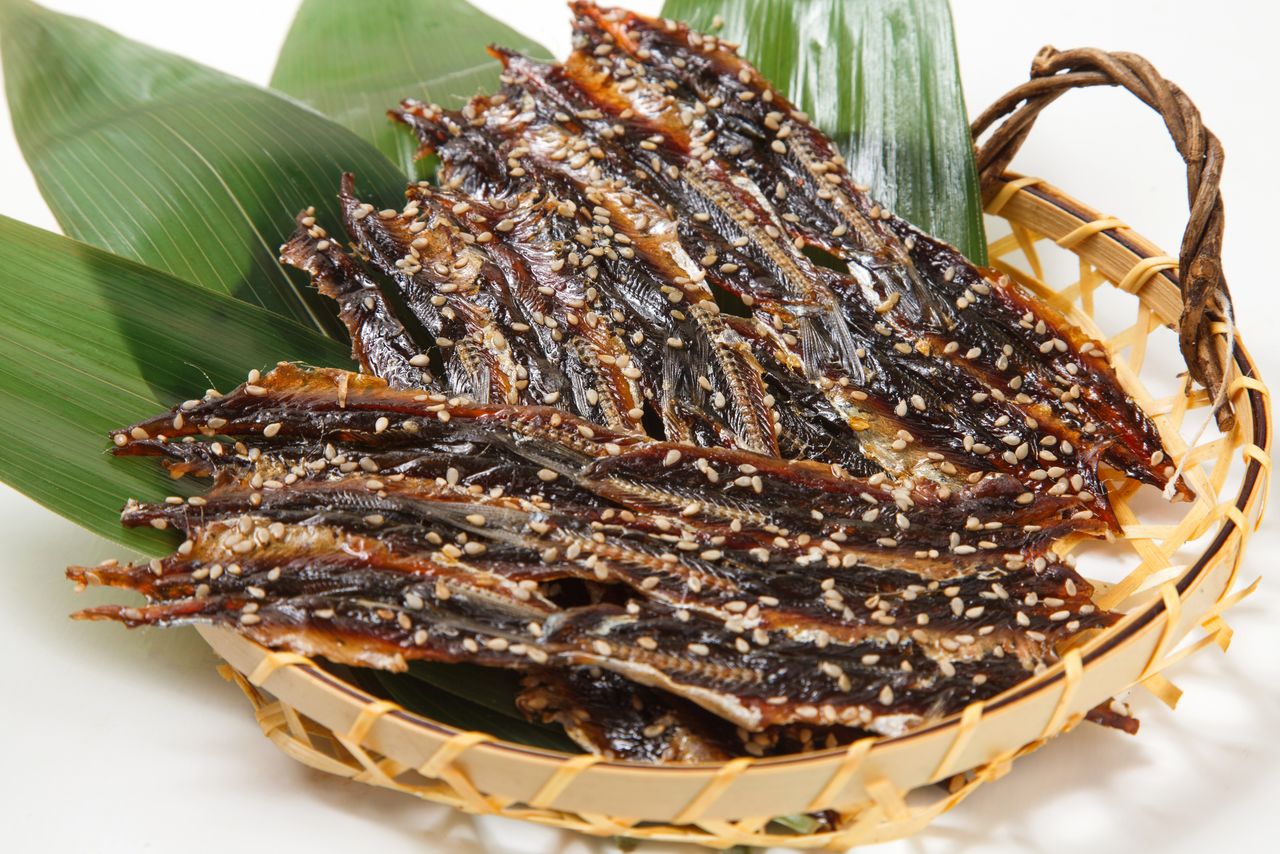
Iwashi mirinboshi, sweetly simmered sardine jerky. (© Pixta)
Maruboshi
For this type of himono, fish such as sanma (Pacific saury), iwashi (sardines), kibinago (silver-stripe round herring), and shishamo (smelt) are kept whole, without removing the innards, and dried. One version of this is known as mezashi (literally “eye-pierced”), where small whole fish like iwashi are pinned together with a bamboo skewer through the eye sockets and dried.
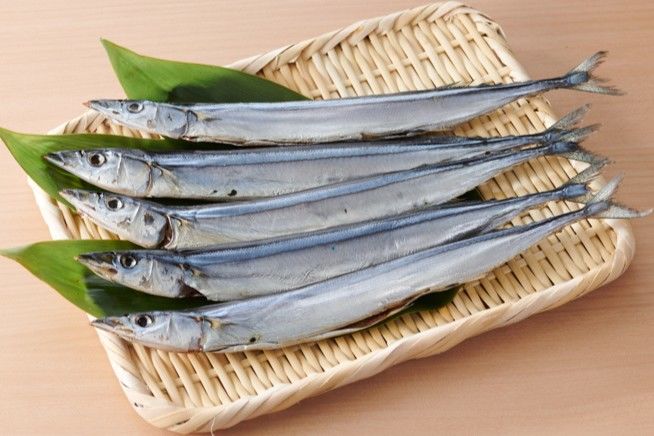
Sanma maruboshi, whole dried Pacific saury, from Mie Prefecture. (Courtesy the Ministry of Agriculture, Forestry, and Fisheries)
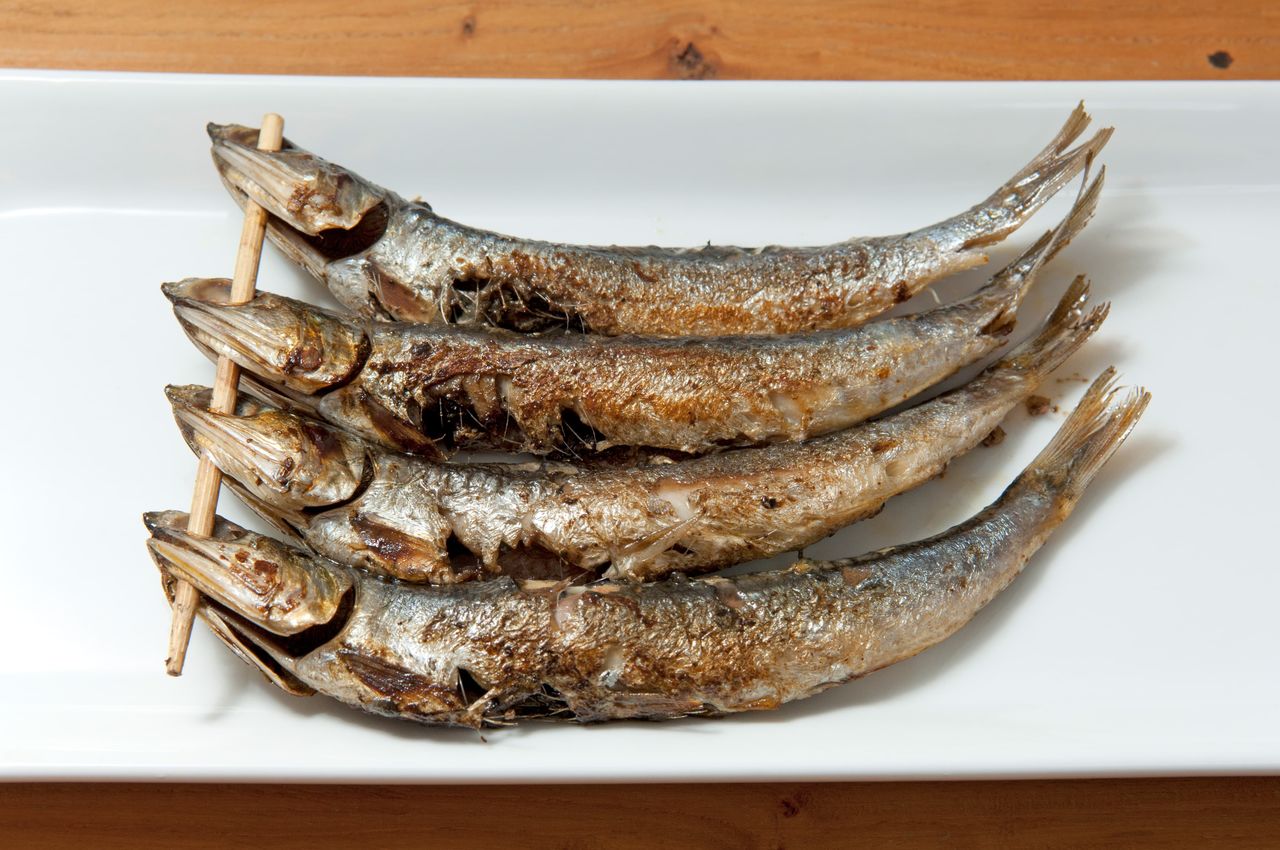
Yakimezashi, grilled small whole fish on a skewer. (© Pixta)
Niboshi (Iriko)
Niboshi, sometimes called iriko, refers to katakuchi-iwashi (Japanese anchovy) and other small fish that have been simmered and dried; an essential ingredient when making dashi stock. Compared to using katsuobushi, a much richer, umami-rich dashi can be created. Not only is it great to use in miso soup, niboshi ramen, which uses this dashi as a base, is so popular it has dedicated lovers known as niborā.
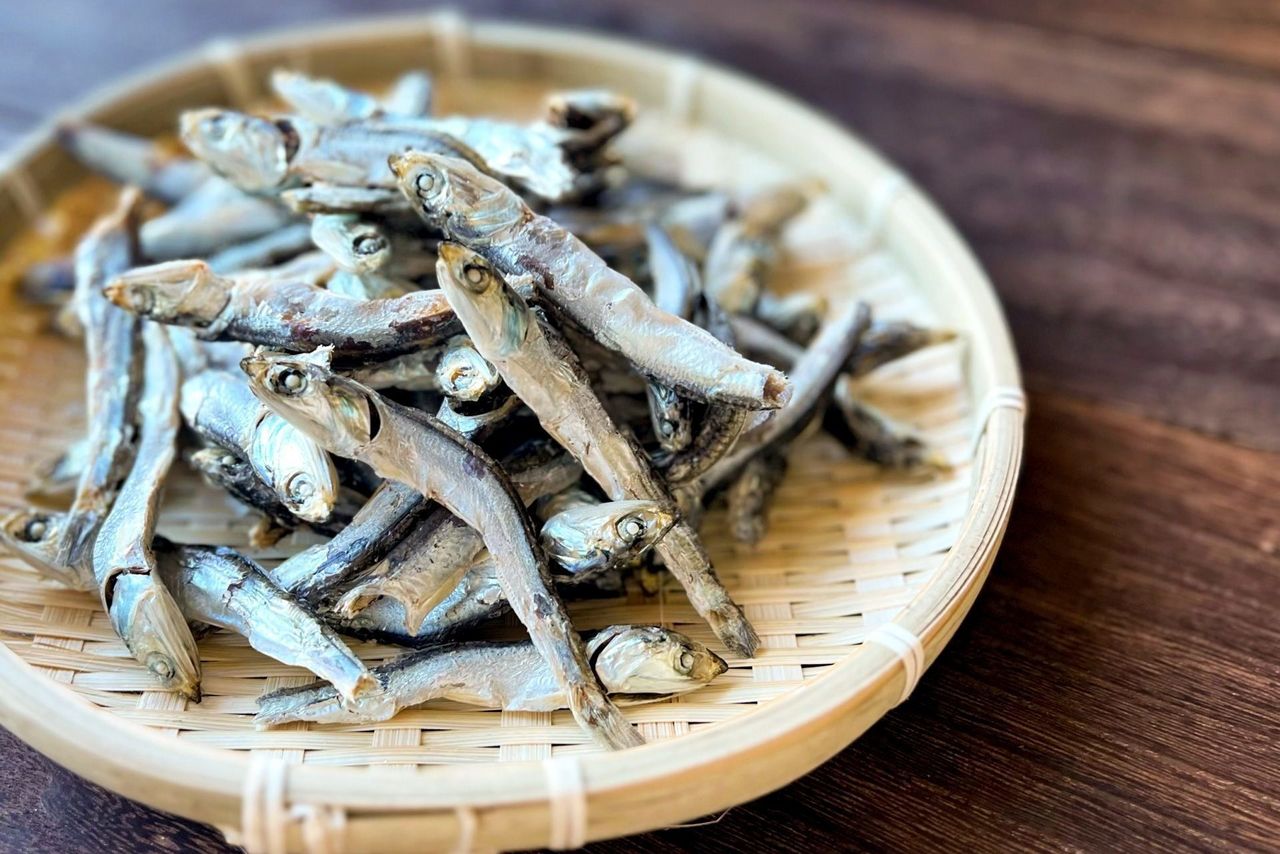
Niboshi (© PhotoAC)
Migaki-nishin
This type of himono uses nishin (Pacific herring) that has been filleted and dried. Before cooking, the dried fish is soaked for a long time in water to rehydrate and soften it. In Kyoto and Hokkaidō, there is a specialty noodle dish called nishin soba, featuring a topping of this sweetly simmered herring. It is also used as a filling for konbumaki kelp rolls.
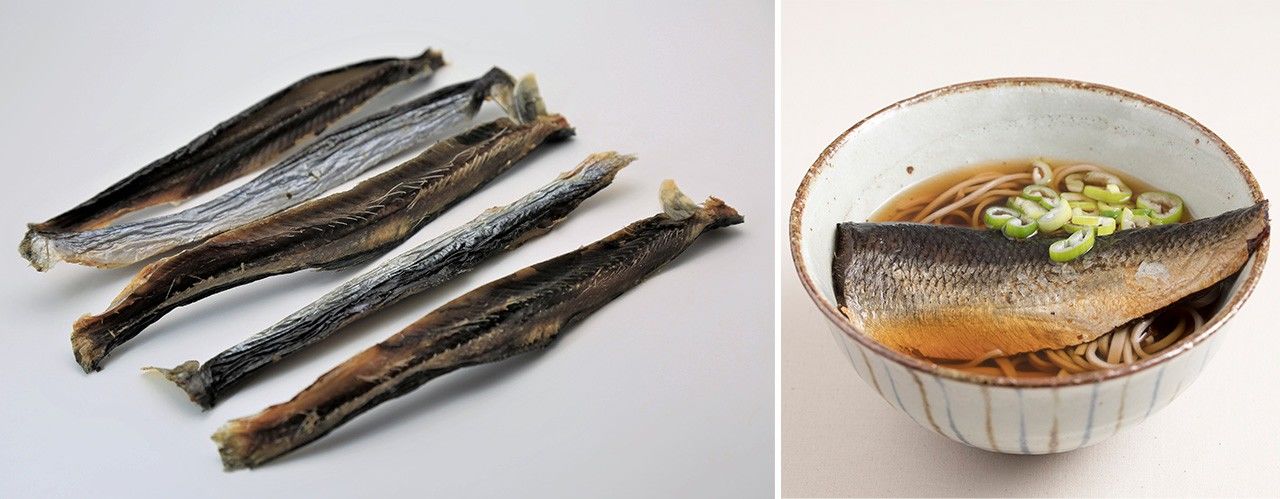
Migaki-nishin, on the left (© Pixta), and nishin soba from Hokkaidō, on the right. (Courtesy the Ministry of Agriculture, Forestry, and Fisheries)
Bōdara
Himono using tara (cod) is mainly produced in Hokkaidō and Tōhoku. Fresh tara soon loses its freshness, so in order to be able to distribute it widely across Western Japan, it is plain-dried for several months in the cold, at which point it is said to have become so hard that you could use it to hammer a nail. It is normally soaked in water for around a week to rehydrate it for use. There is a comparatively softer type available called tōkan, where the cod is freeze-dried, rather than drying and then freezing it like bōdara.
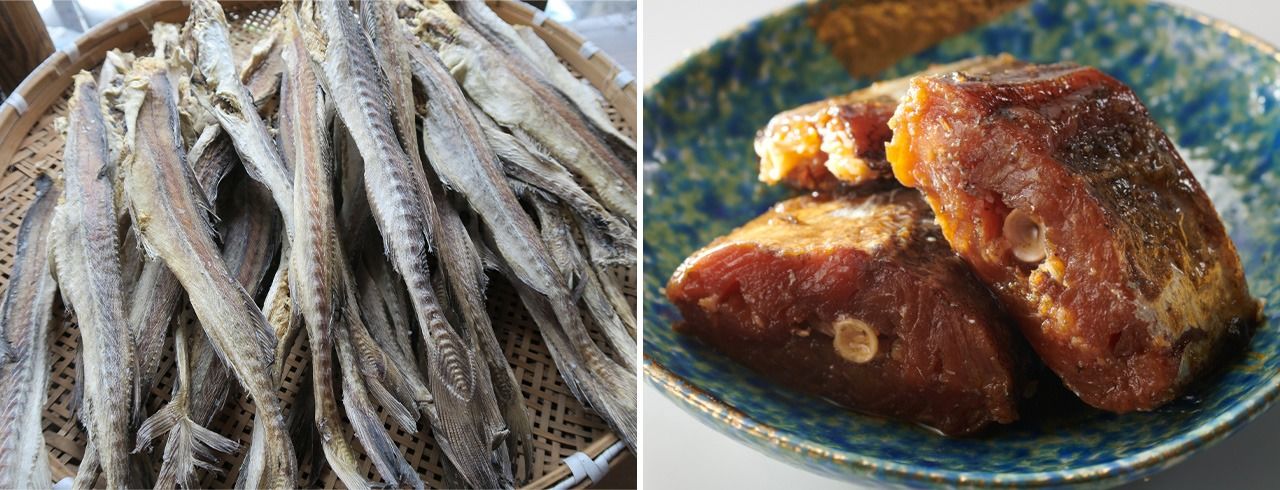
Bōdara on the left (© Pixta) and bōdara-ni, simmered cod, from Yamagata Prefecture, on the right. (Courtesy the Ministry of Agriculture, Forestry, and Fisheries)
Saketoba
This is a traditional food in Hokkaidō, with the name coming from the Ainu word tupa, meaning salmon (sake) that has been cut into long, thin strips and dried. It is a popular snack for alcohol.
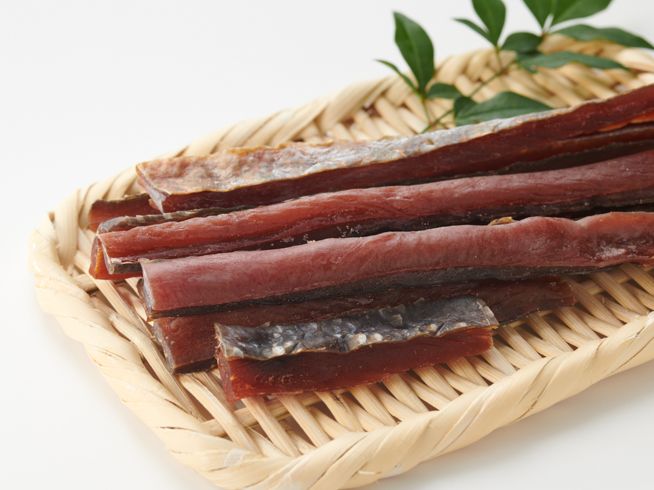
Saketoba from Hokkaidō. (Courtesy the Ministry of Agriculture, Forestry, and Fisheries)
Surume
As the main ingredient for this type of himono is surume-ika (Japanese common squid), it has come to mean all types of dried squid. Sold either whole or cut to either just the body or tentacles, this is the perfect accompaniment to alcohol. Matsumaezuke, a dish of thinly sliced surume and konbu (sometimes also combined with kazunoko herring roe), that has been marinated in a soy-based sauce, originates from Matsumae Domain (now Matsumae town) in the southern end of Hokkaidō.
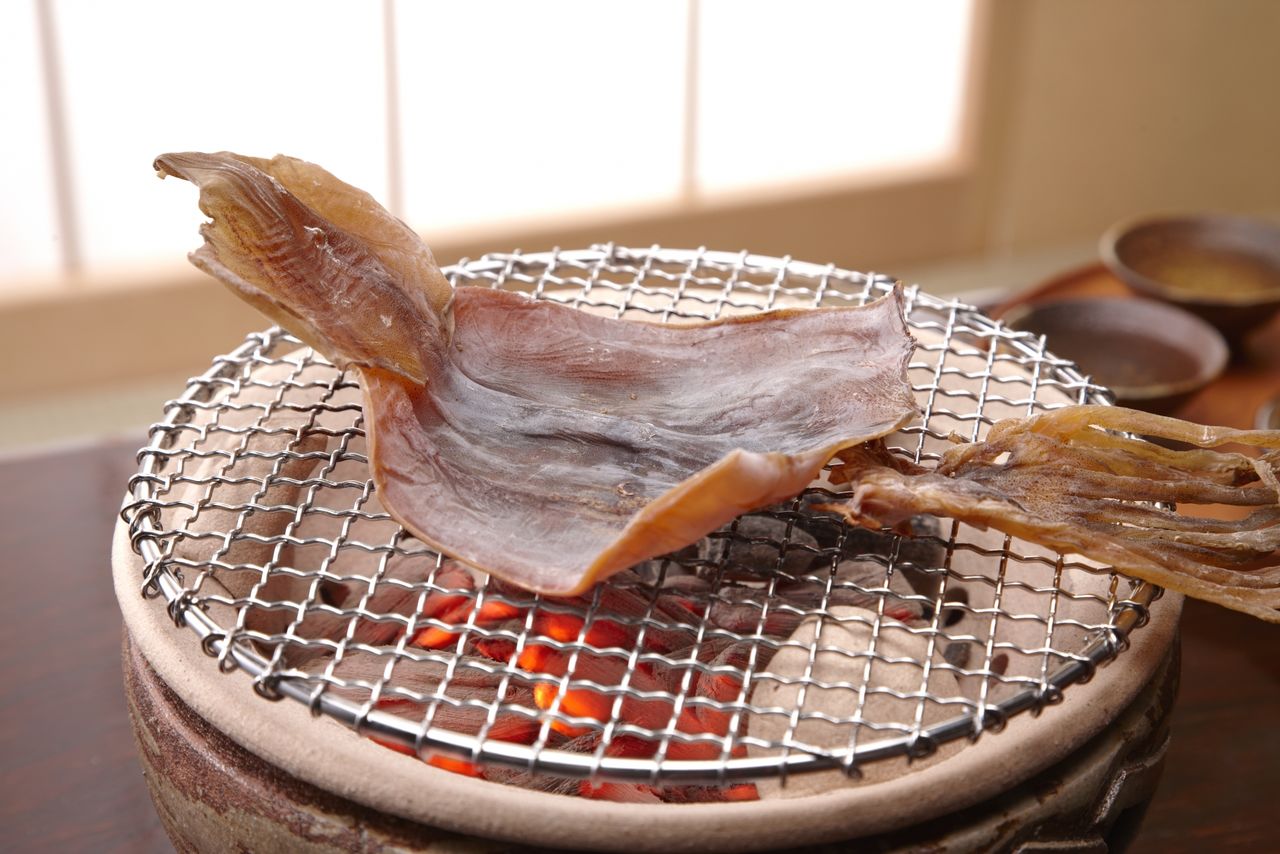
Yaki-surume, grilled dried squid. (© PhotoAC)
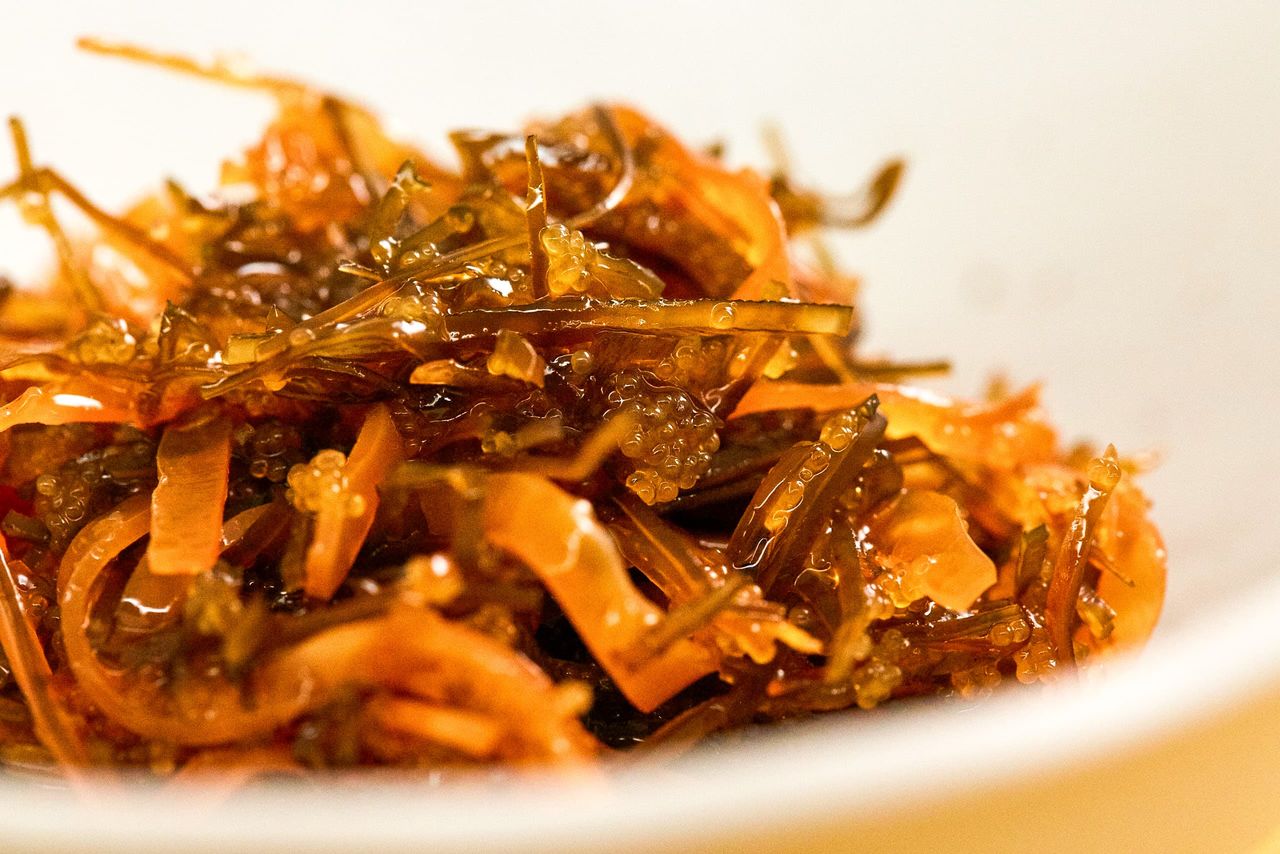
Matsumaezuke from Hokkaidō. (Courtesy the Ministry of Agriculture, Forestry, and Fisheries)
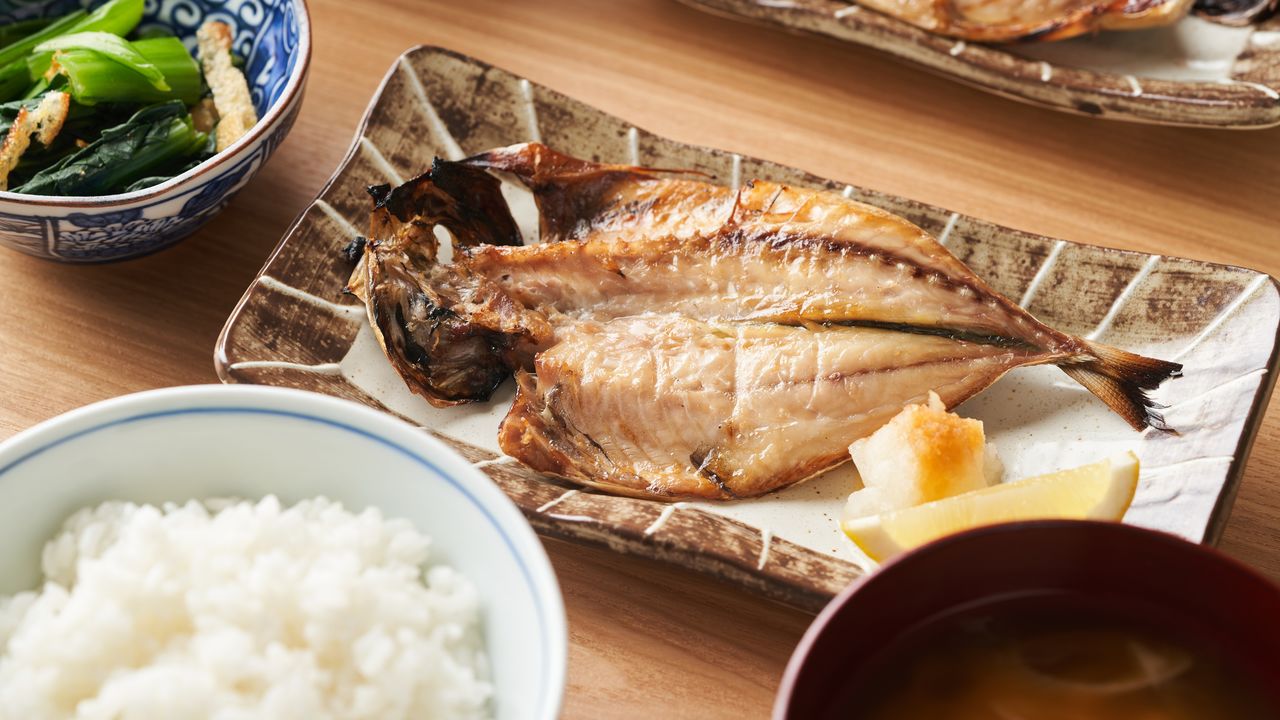
(Originally published in Japanese. Text by Ecraft. Banner photo: A set meal featuring aji-biraki, dried Japanese jack mackerel prepared hiraki-style. © Pixta.)