Building Blocks: The Basic Ingredients Behind Japan’s Flavors
Tsukudani: A Traditional Fisherman’s Preserve Loved Across Japan
Food and Drink Culture Lifestyle- English
- 日本語
- 简体字
- 繁體字
- Français
- Español
- العربية
- Русский
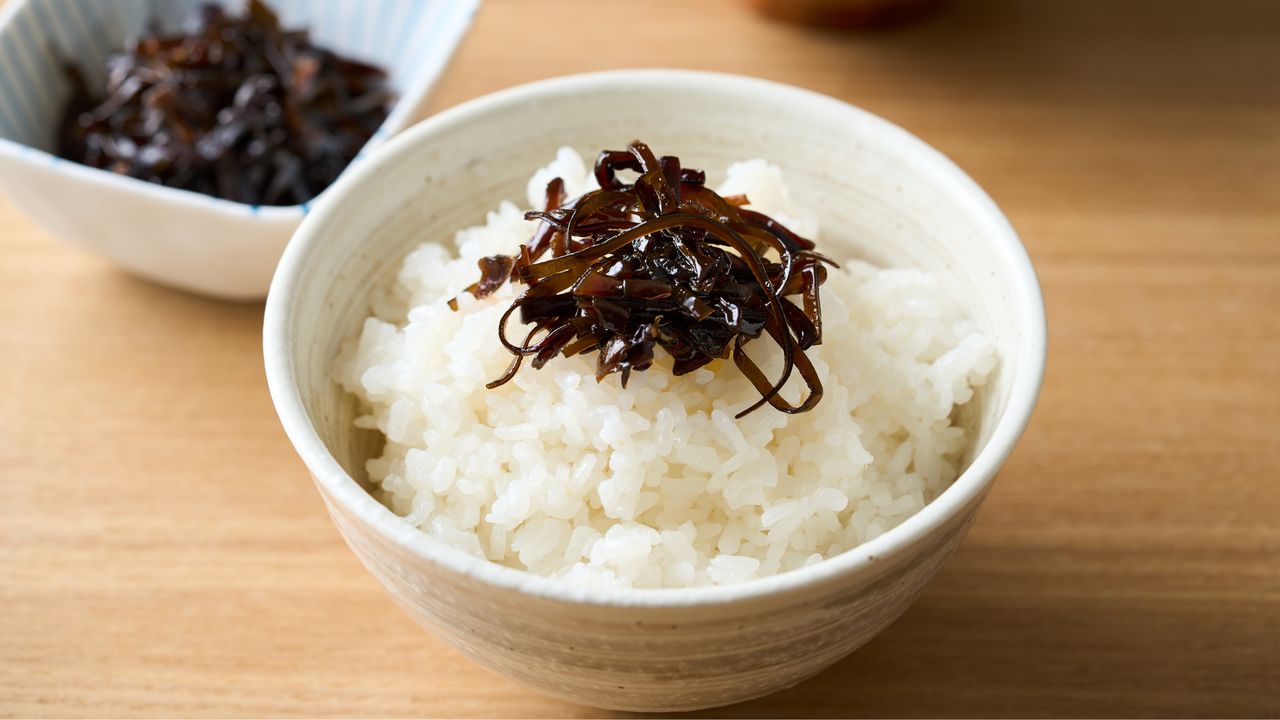
Tsukudani is a sweet, savory preserved food made mainly from seafood, such as seaweed, shellfish, and fish, or agricultural produce that has been simmered in soy sauce and sugar.
The name of this dish comes from the fact it originated in Tsukuda, formerly the island of Tsukudajima, in Chuūō, Tokyo. Tsukudajima was a small artificial island, created when land was reclaimed from tidal flats at the mouth of the Sumida River by 33 fishermen whom Tokugawa Ieyasu, on establishing the Edo shogunate, had summoned from the village of Tsukuda in what is now Nishiyodogawa, Osaka, due to his connections with that place.
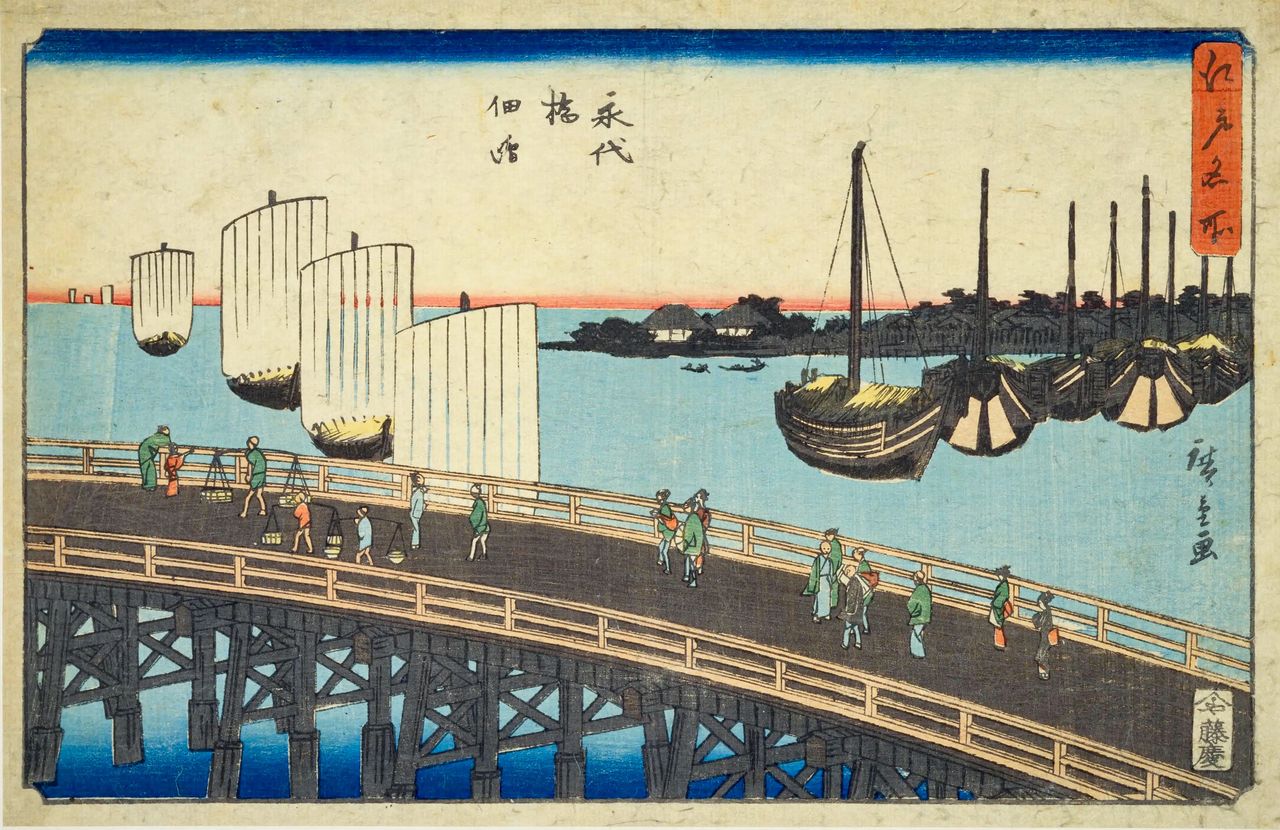
Utagawa Hiroshige’s Hundred Famous Views of Edo features Eitai Bridge and Tsukudajima (Eitaibashi Tsukudajima), Fujikei. (Courtesy National Diet Library)
This island became a fishing center, and the fishermen there created tsukudani as a way to preserve surplus ingredients long-term. Initially, it relied mainly on salt as a preservative, but once it came to use soy sauce from Kishū (Wakayama Prefecture), its flavor greatly improved, as did the length of time the ingredients could be preserved.
Samurai returning from stays in Edo under the sankin kōtai system would bring tsukudani back with them as a souvenir, and it became popular across the land to re-create this dish using local products. Today, there are countless versions throughout Japan, with the prices varying widely, from just a few hundred yen, making it easily available every day, to higher-end items found in department stores. In a broader sense, kanroni, food that has been simmered and preserved in sugar or heavy syrup to make it sweeter, and shigureni, where spicy ingredients like ginger have been added to the simmered ingredients, can be considered tsukudani too.
As the flavor is very rich, this dish is usually eaten in small amounts as an accompaniment to rice. It is also often used as an onigiri rice ball filling or an ingredient for ochazuke (green tea or dashi over rice).
Below are some of the familiar types of tsukudani available.
Konbu
This type of tsukudani is a classic filling for onigiri and is popular as a corner filler in bentō boxes too. It is usually combined with other ingredients, with many varieties to choose from, including shiitake konbu, sanshō konbu, goma (sesame) konbu, and tarako (salted cod roe) konbu.
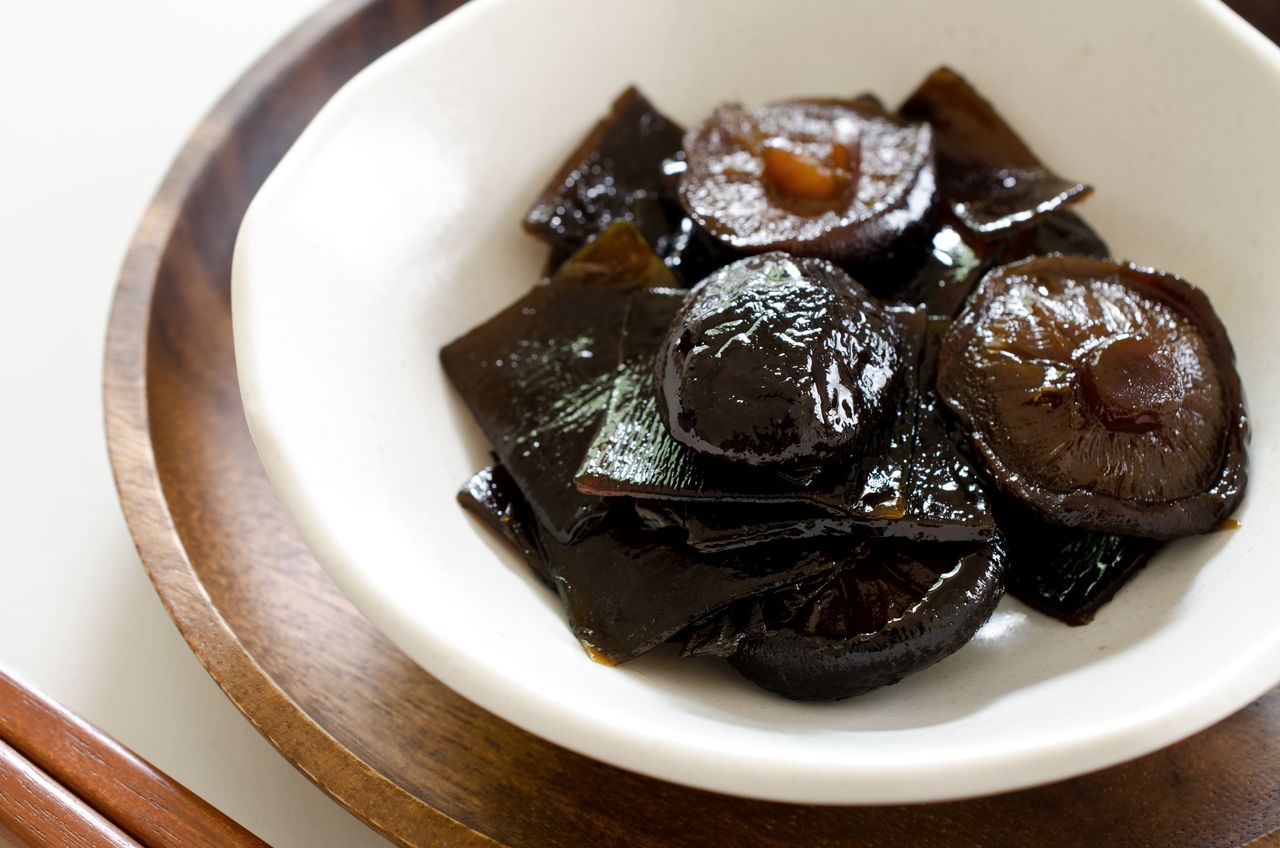
Shiitake konbu. (© Pixta)
Nori
This sweet-tasting seaweed, simmered in soy sauce and sugar, began as an Edo specialty food. It is now widely enjoyed as it offers a flavor that differs considerably from the usual crispy sheets of nori.
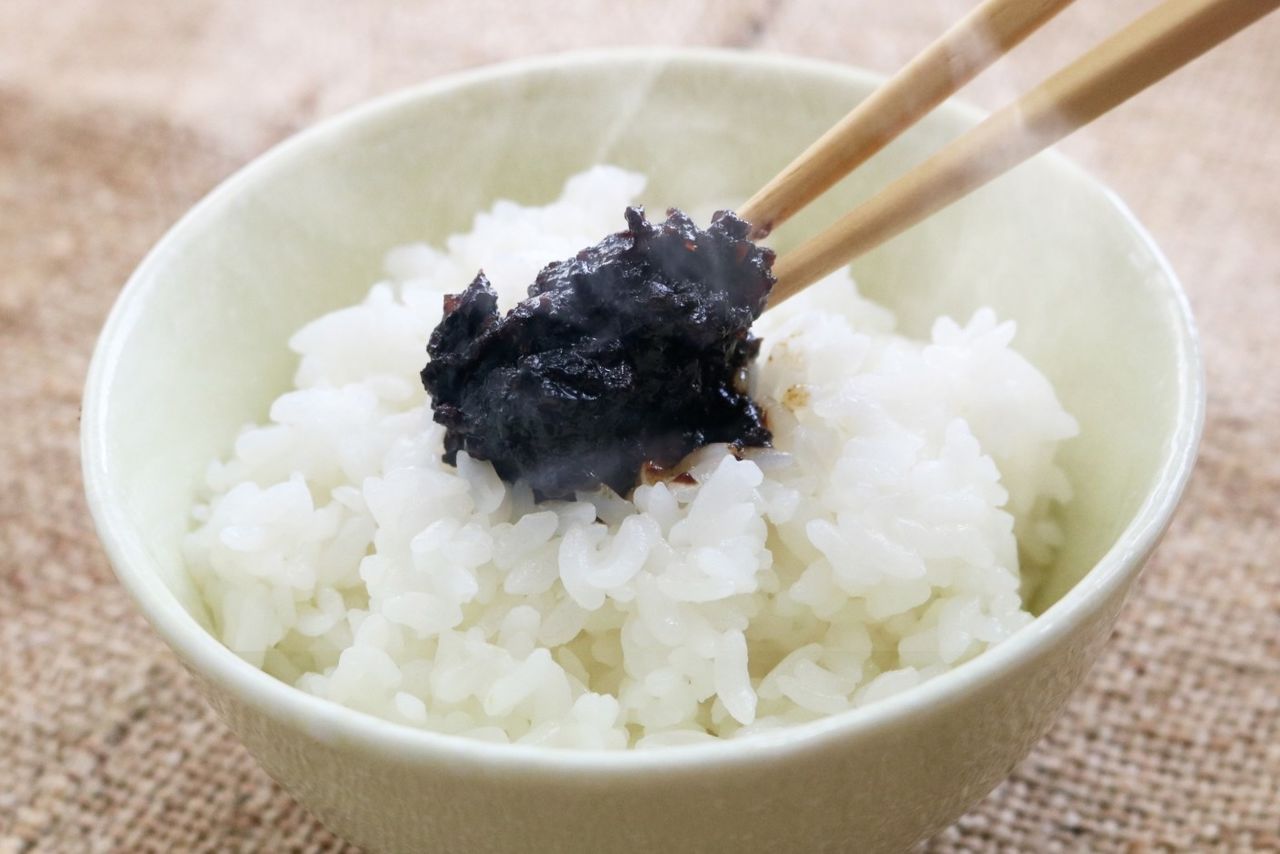
(© PhotoAC)
Shellfish
Asari clams, shijimi freshwater clams, and hamaguri clams are typically used for this type of tsukudani, giving it a much deeper umami flavor.
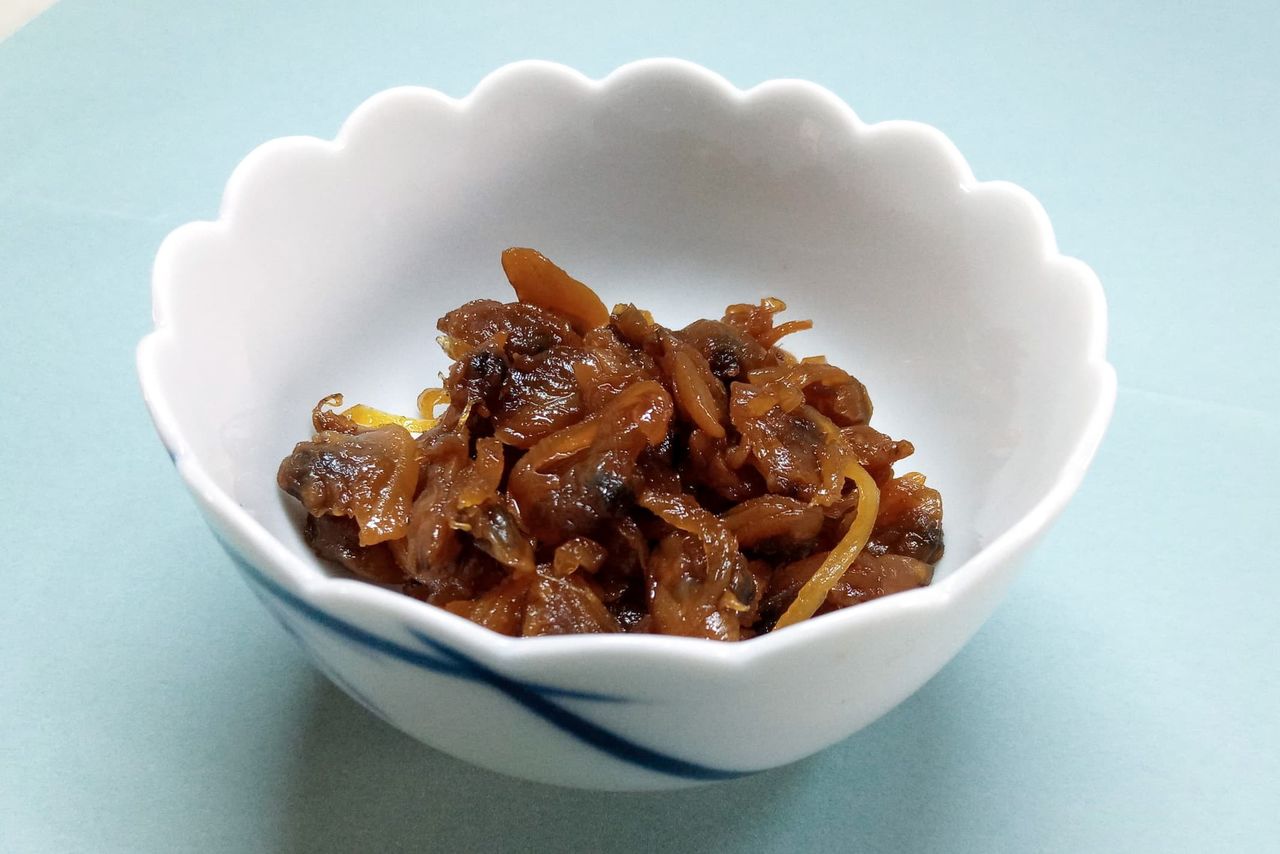
Asari clam tsukudani from Tokyo. (Courtesy Ministry of Agriculture, Forestry, and Fisheries)
Shrimps and Prawns
Small crustaceans, including shrimps and prawns, are often used to make tsukudani too. This version is rich in calcium.
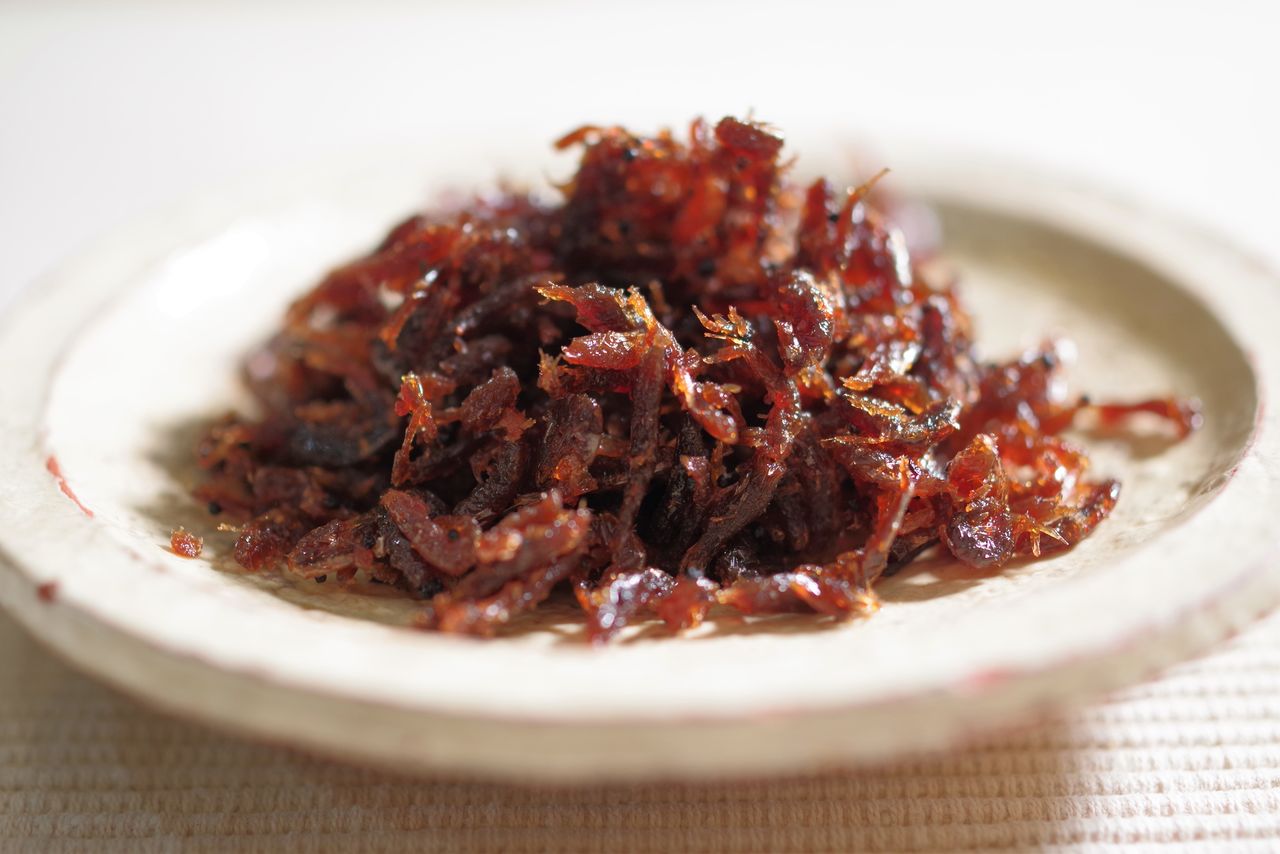
Shrimp tsukudani. (© Pixta)
Fish
Here, small fish such as shirauo (icefish), haze (goby fish), and wakasagi (Japanese smelt) are used whole, while medium-sized fish like nishin (herring) and sanma (Pacific saury) are cut into smaller pieces before simmering.
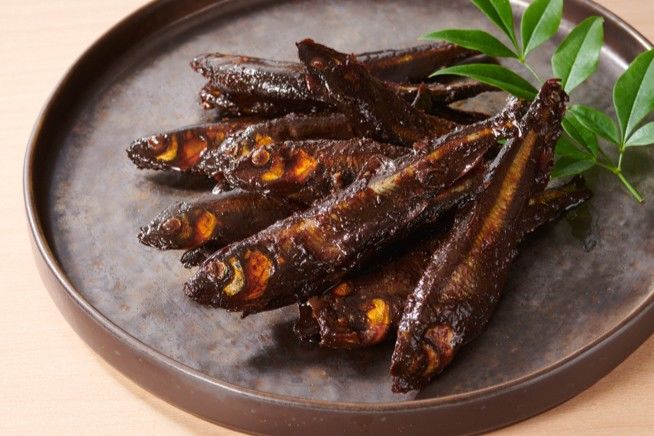
Wakasagi no kanroni, Japanese smelt simmered in an extra sweet sauce, from Yamanashi Prefecture. (Courtesy Ministry of Agriculture, Forestry and Fisheries)
Tsukudani made using the fry of ikanago (Japanese sand lance) is called kugini, because the curved shape of the fish resembles a traditional nail (kugi). In the Kantō region, ikanago are called kōnago, and there is a special type of tsukudani called kōnago kurumi, which pairs sand lance with chopped walnuts, a deliciously crunchy combination that is a favorite with children.
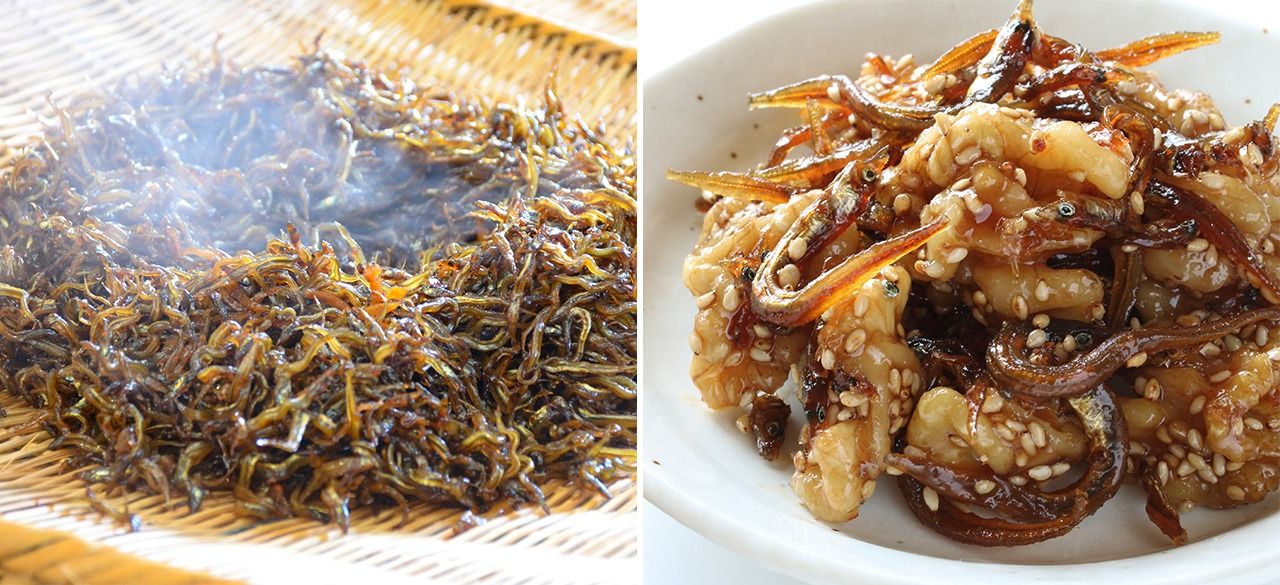
Ikanago kugini from Hyōgo Prefecture on the left (courtesy Ministry of Agriculture, Forestry, and Fisheries) and kōnago kurumi on the right (© Pixta).
Edible Wild Plants
When fuki (butterbur) is used for tsukudani, it is called kyarabuki. Other mountain delicacies such as chili pepper, shiso, and sanshō berries also make good ingredients for tsukudani.
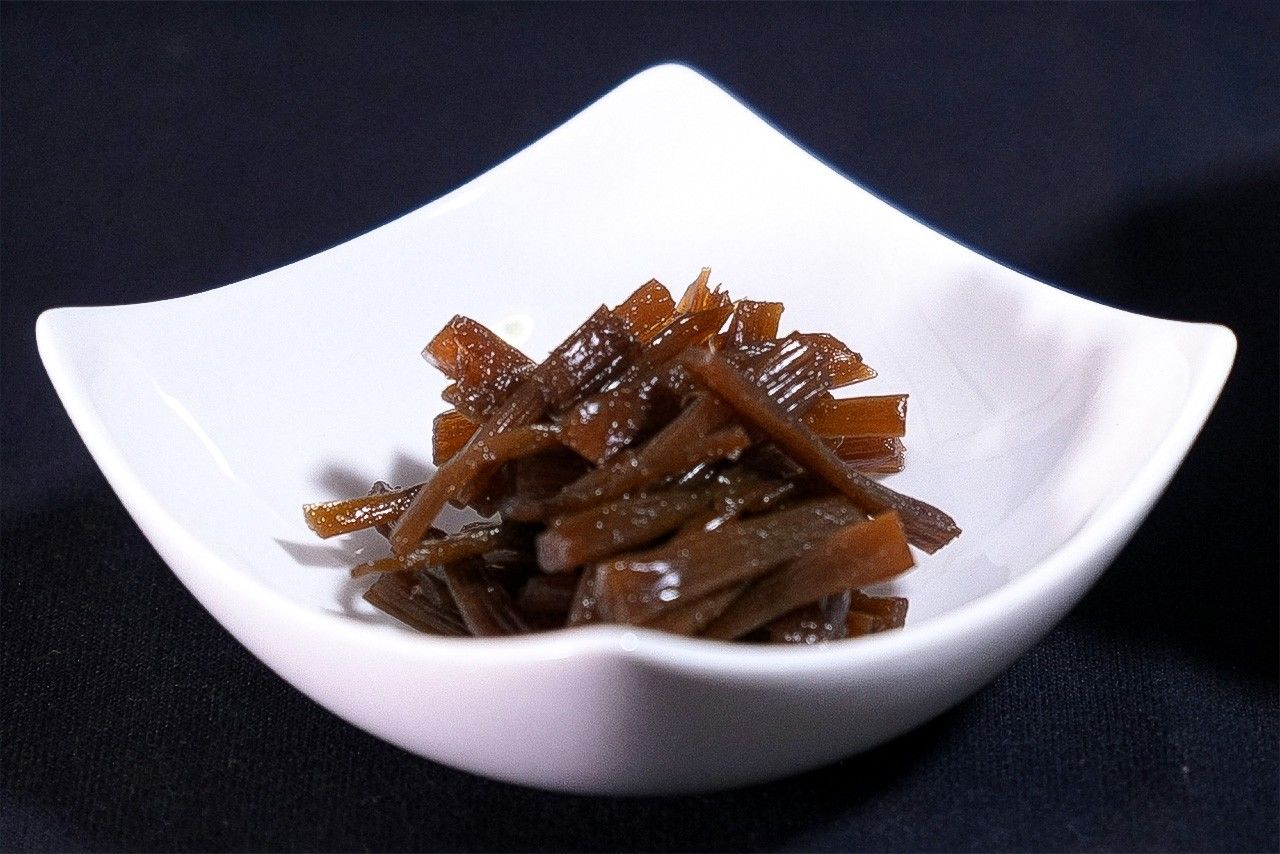
Kyarabuki. (© PhotoAC)
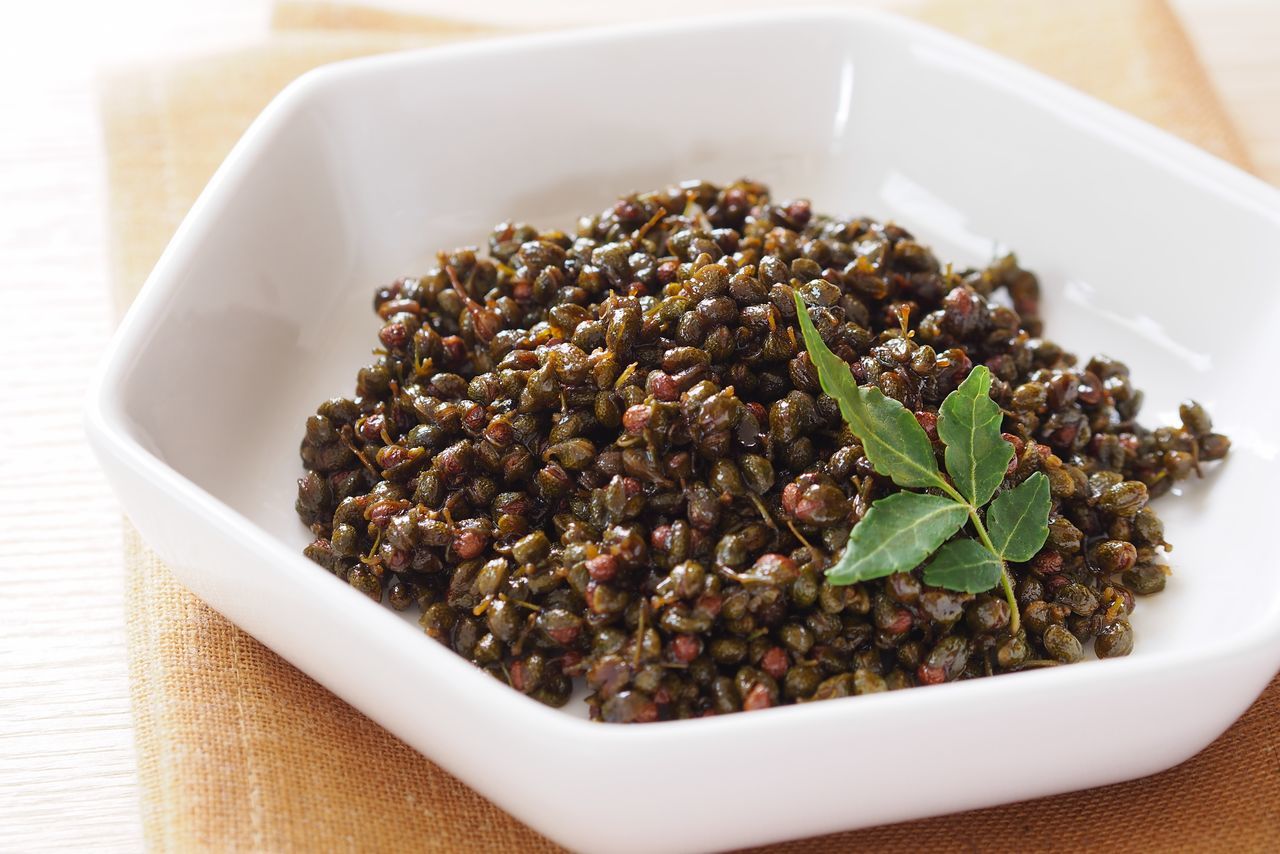
Sanshō no tsukudani. (© Pixta)
Insects
Although regarded as pests that destroy rice crops, inago locusts were an important source of protein in times of poverty. They have a unique texture and savory flavor, making inago tsukudani a great side dish with rice or a snack with alcohol. Even now, there is an established tradition in the Ina region of southern Nagano Prefecture of eating insects—not just inago, but hachinoko, a name for the larvae of the suzumebachi (Vespula flaviceps) giant hornet and other wasps.
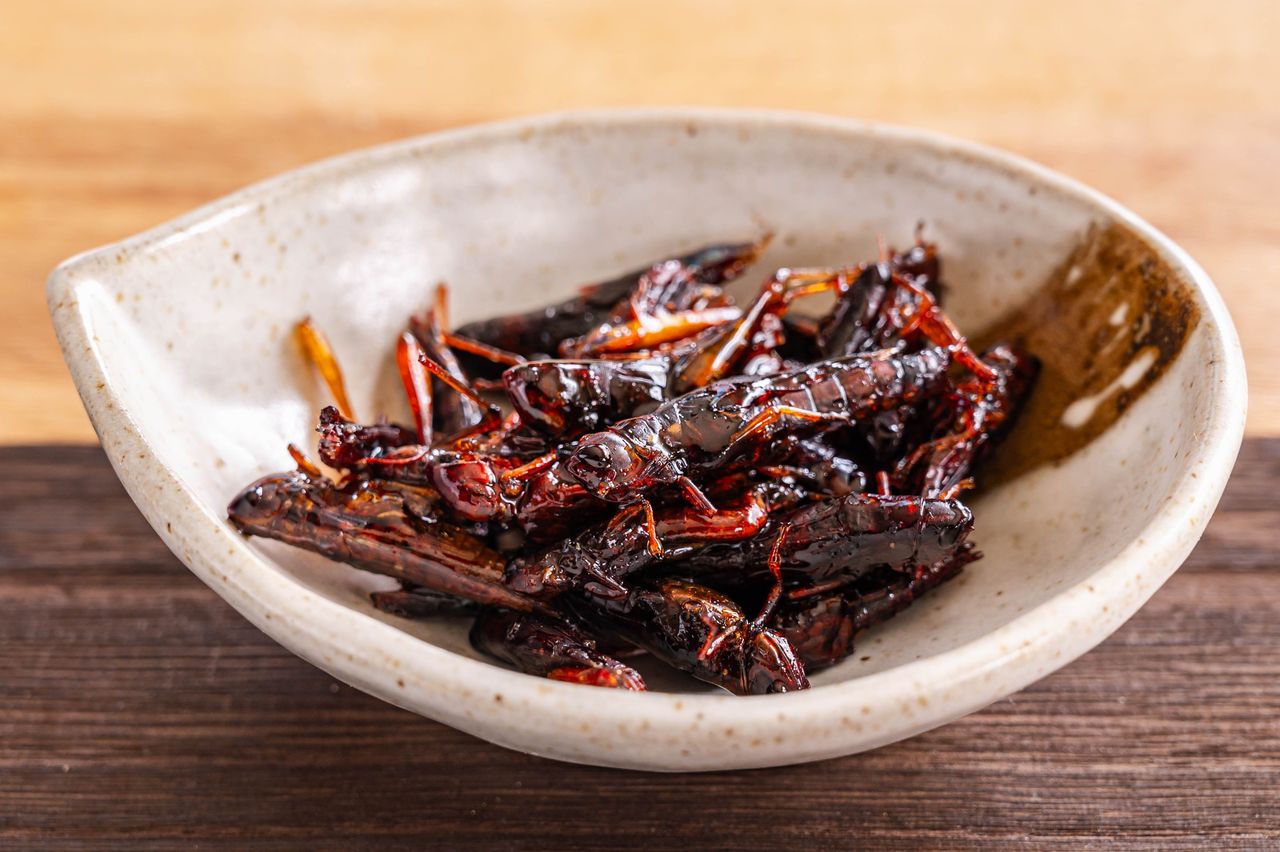
Inago no tsukudani. (© Pixta)
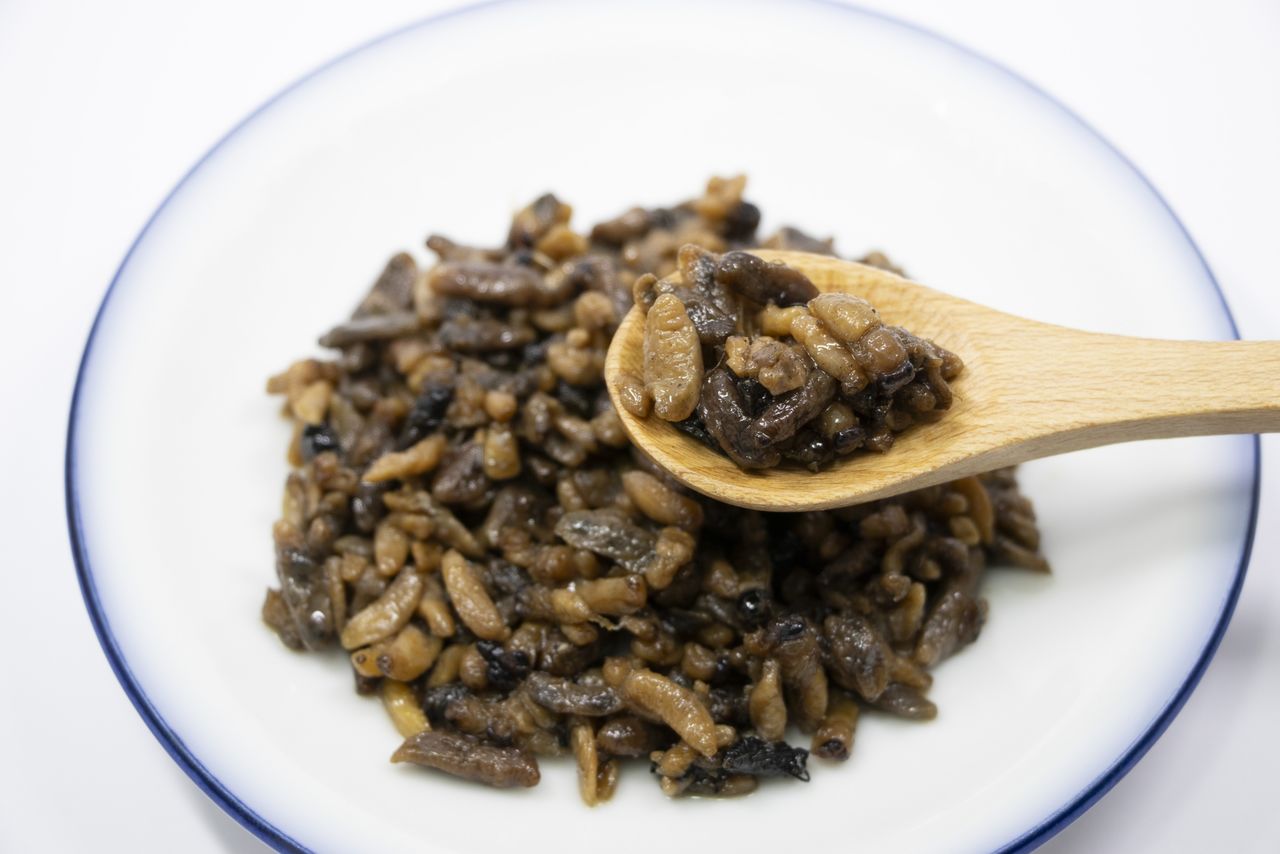
Hachinoko no tsukudani. (© PhotoAC)
(Originally published in Japanese. Text by Ecraft. Banner photo: Konbu tsukudani, the perfect topping for rice. © Pixta.)