Building Blocks: The Basic Ingredients Behind Japan’s Flavors
Goma: Flavorful Sesame an Indispensable Ingredient of Japanese Cuisine
Food and Drink Culture Lifestyle Guide to Japan- English
- 日本語
- 简体字
- 繁體字
- Français
- Español
- العربية
- Русский
An Ancient Culinary Staple
Sesame is a central ingredient in Japanese cuisine, adding flavor, texture, and aroma to an array of dishes. The roots of sesame, goma in Japanese, can be traced to Africa, where the oil-rich seeds were first cultivated some 3,000 to 4,000 years ago along the Mediterranean Coast. From there, they spread via Egypt to the Middle East and India, arriving in Japan from China during the prehistoric Jōmon period
Records from the Nara period (710–94) describe different uses of sesame, including in cooking and as a medicine. It was also an important source of oil for ritual lamps in Buddhist temples and Shintō shrines and became a staple of shōjin ryōri, Buddhist vegetarian cuisine. For much of Japanese history, though, it remained a precious commodity enjoyed mainly by members of the upper class.
In the Edo period (1603–1868), improvements in techniques for extracting oil from seeds drove an increase in sesame cultivation. This was helped along by the popularity of tempura, which established sesame as the premier oil for making deep-fried dishes. As sesame became more readily available, its culinary versatility quickly made it a standard part of the Japanese diet.
Although sesame is widely used today, Japan produces only a tiny fraction—around 0.1%—of what it consumes, with the small Kagoshima island of Kikaijima being the main source of domestically grown seed. Japan imports the other 99.9% of the sesame it uses from countries in Africa, Central and South America, and Southeast Asia.
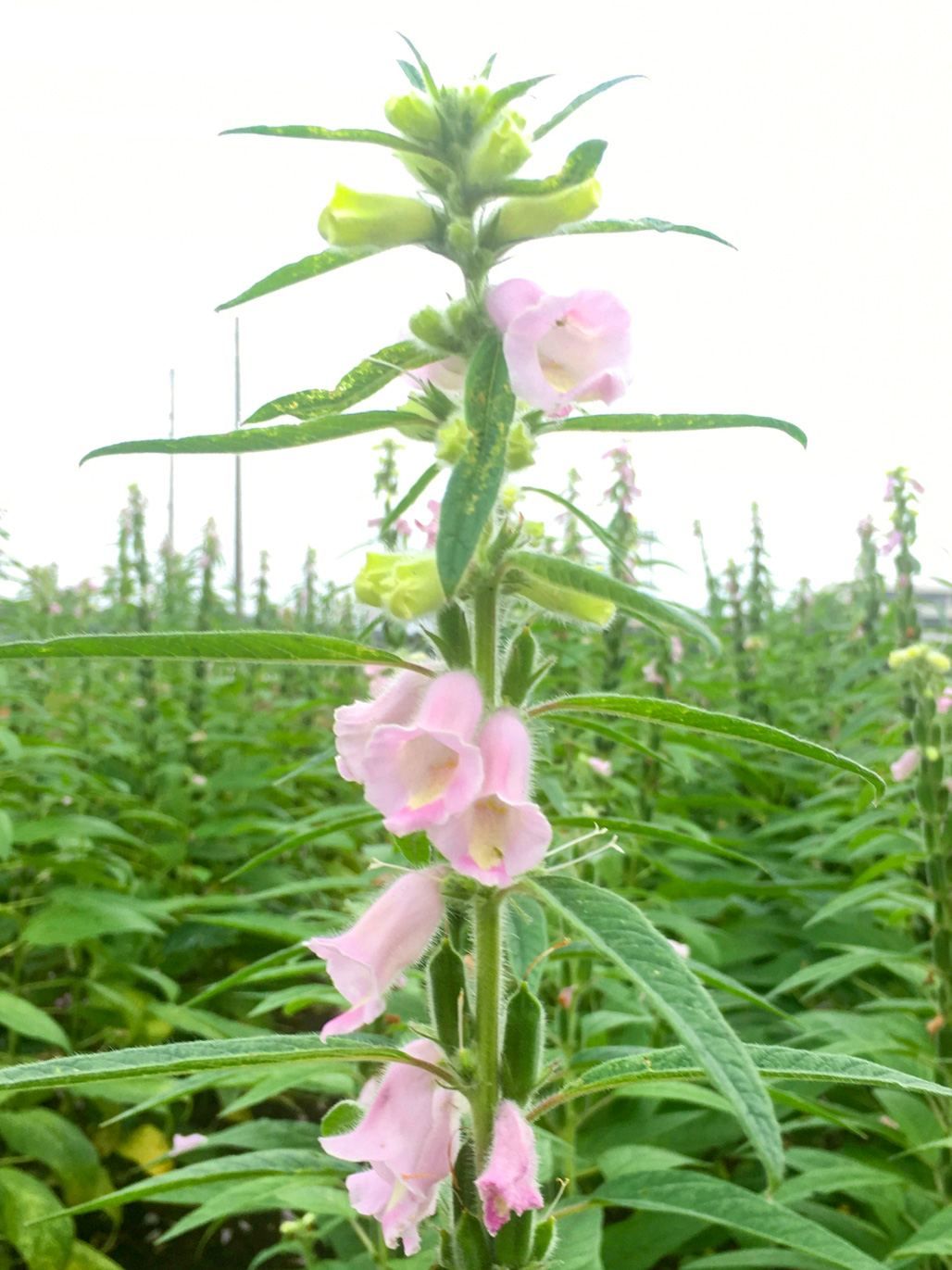
The flower of a sesame plant produces a pod containing some 80 to 100 seeds. (© Photo AC)
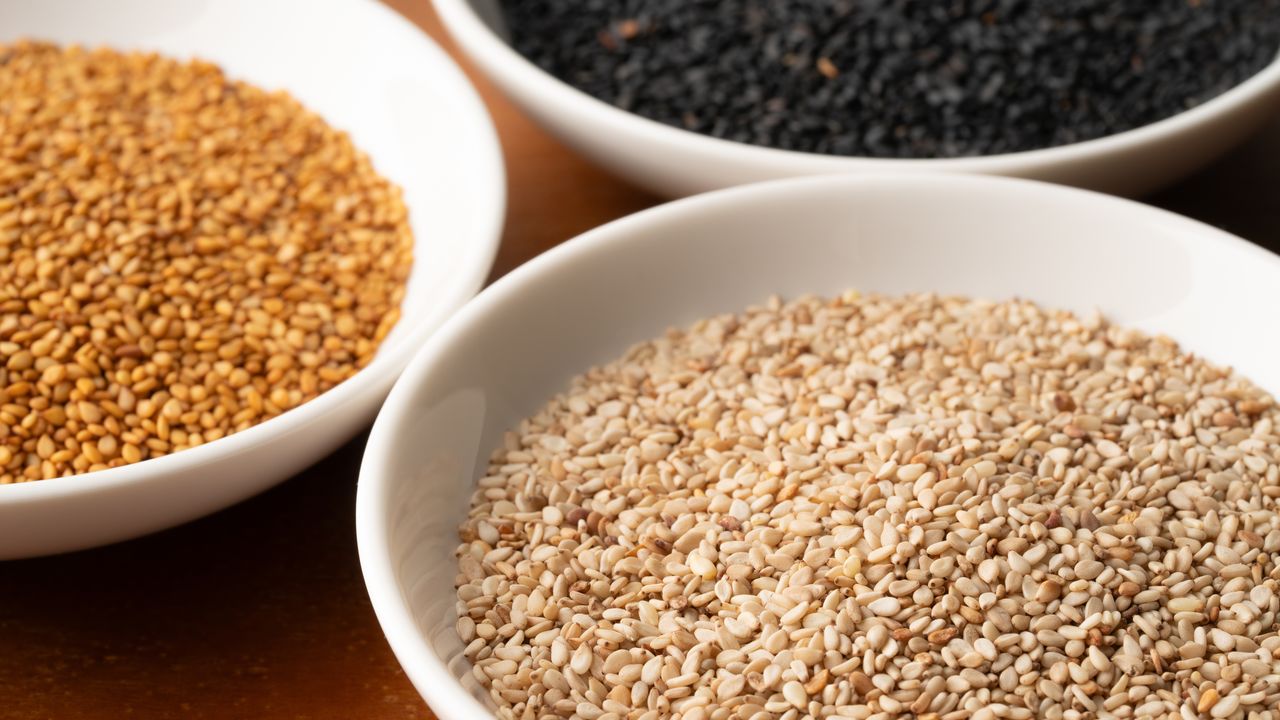
Sesame primarily comes in white, black, and golden varieties, with each boasting distinct culinary characteristics and uses. White sesame (shirogoma), the most common variety, has a mild flavor and aroma suited for use as oil. Black sesame (kurogoma) serves as a visually appealing and savory topping on rice and other dishes and is also a good source of polyphenols, which help prevent lifestyle-related diseases. Golden sesame (kingoma or chagoma), the most expensive of the three, is valued for its rich flavor and deep aroma that pairs well with a wide range of foods.
Health Benefits
Sesame seeds are highly nutritious. They are packed with vitamins and minerals, and they are rich in unsaturated fatty acids that help improve blood flow and prevent arteriosclerosis. Sesame is also a great source of different sesame lignans, bioactives potent with antioxidant properties. The hard coating of the seed is difficult to digest, but crushing sesame or grinding it into a paste makes it easier for the body to absorb the many different nutrients.
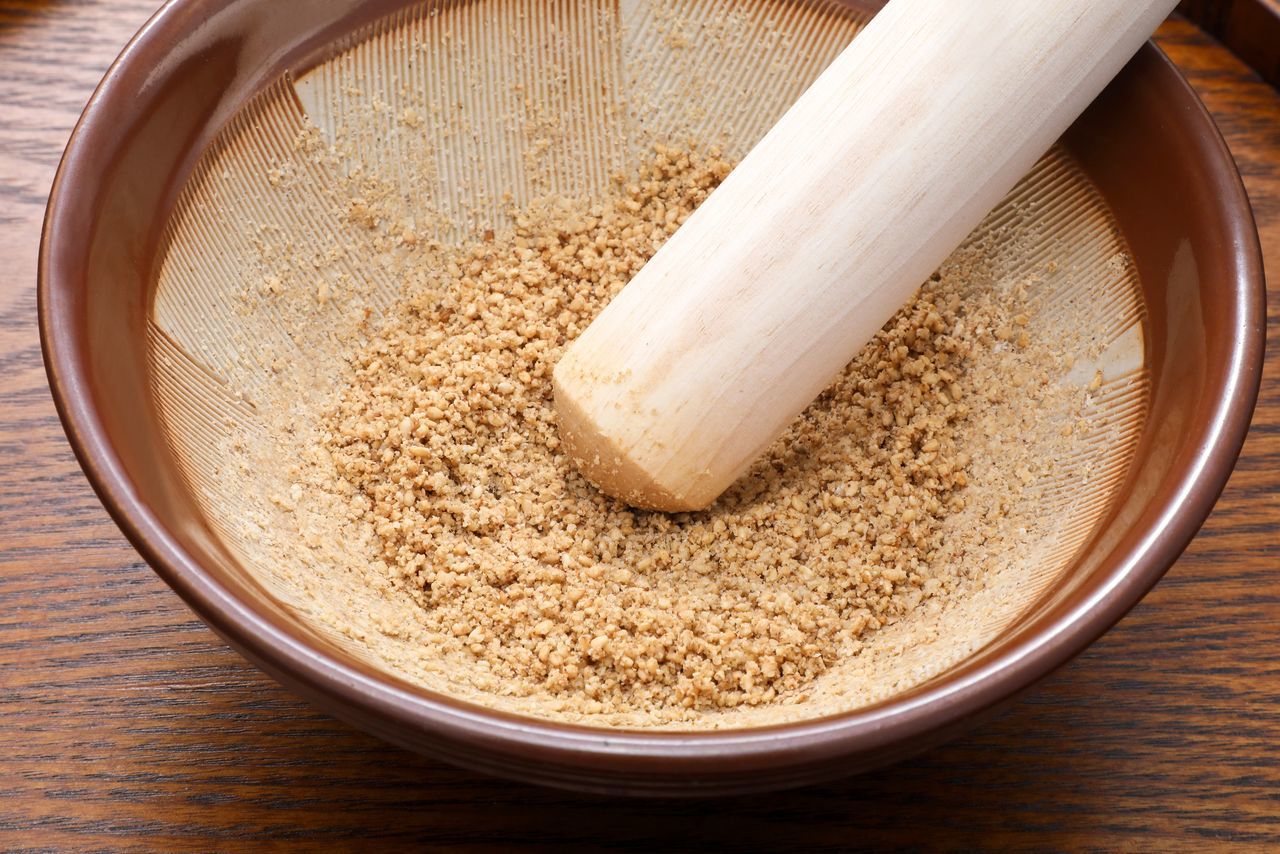
Crushed sesame in a suribachi, a traditional ceramic mortar bowl. (© Pixta)
Data Sources
- Differences in Types of Sesame Seed (Japanese) from the Ministry of Agriculture, Forestry, and Fisheries
(Originally published in Japanese. Text by Ecraft. Banner photo: White, black, and gold sesame. © Pixta.)