Building Blocks: The Basic Ingredients Behind Japan’s Flavors
Umeboshi Pickled Plums: Salty, Sour, Super Flavor for Your Table
Food and Drink Culture Lifestyle Guide to Japan- English
- 日本語
- 简体字
- 繁體字
- Français
- Español
- العربية
- Русский
The Fruit at Center Stage on the Japanese Table
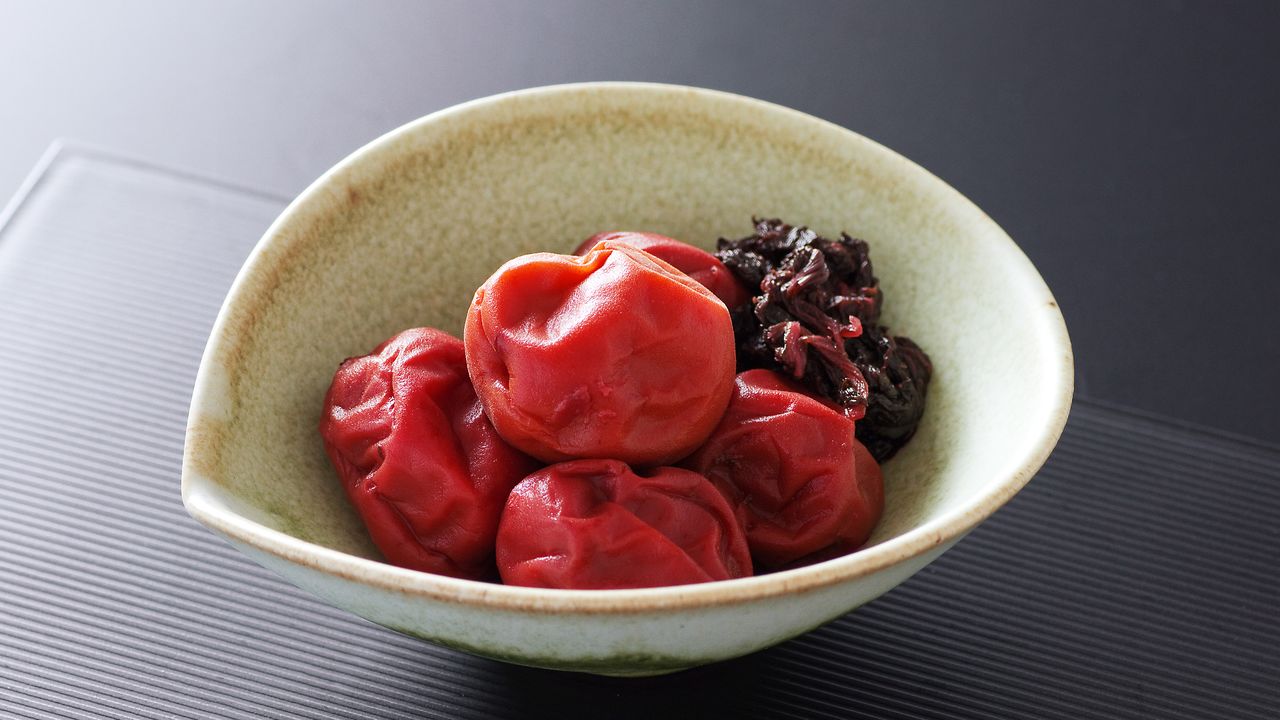
Umeboshi (literally “dried plums”) are the salted, pickled fruit of ume (Prunus mume) fruit-bearing trees; sweet, sour, and salty, they are eaten as an accompaniment to rice or used to accent various dishes.
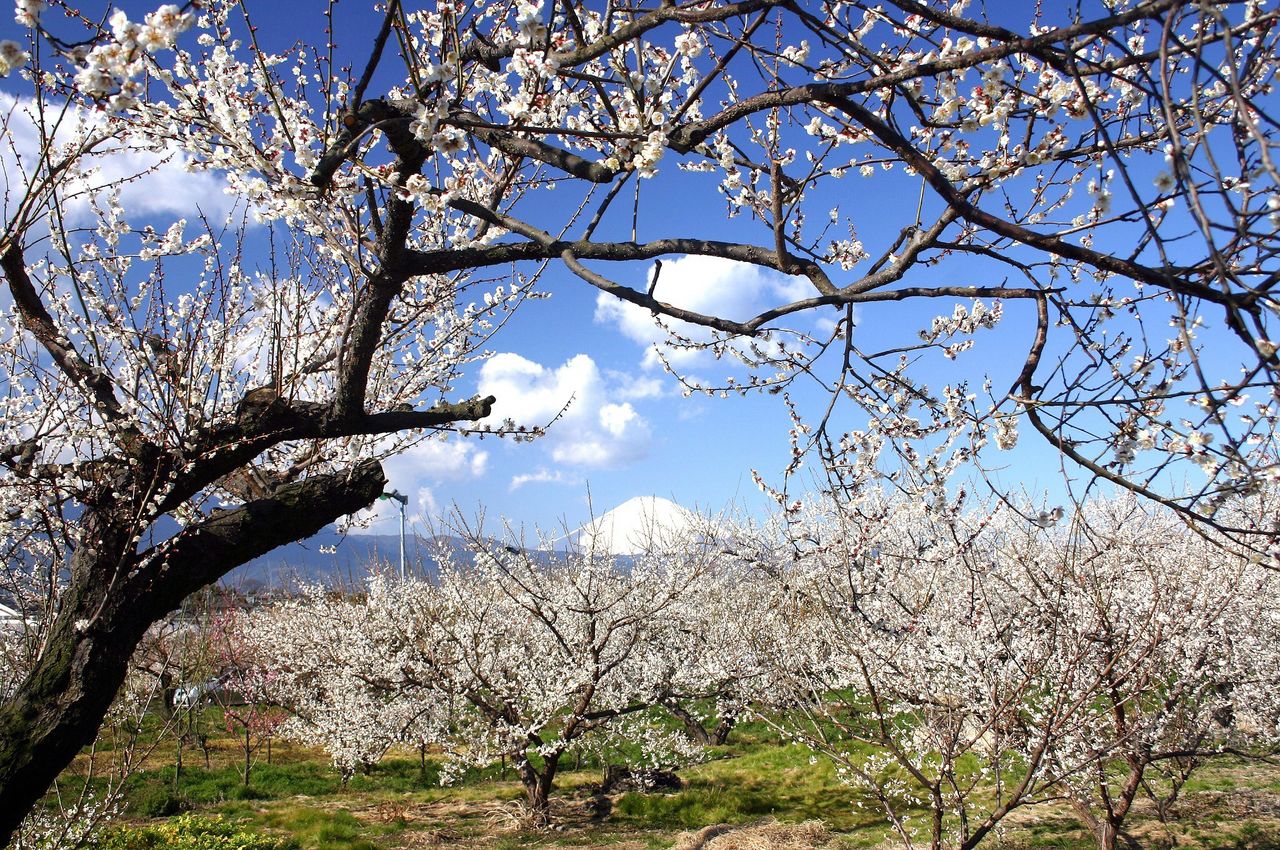
A grove of ume trees in Odawara, Kanagawa Prefecture. (© Kanagawa Prefecture Tourism Association)
Ume trees originated in China; although they are often called “plum” in English, the tree’s fruit is actually closer to the apricot. Ume is part of the family Rosaceae and is related to the sakura cherry tree and the sumomo (Japanese plum, Prunus salicina). It was transmitted to Japan by Asuka (593–710) and Nara period (710–94) emissaries to China who returned from their travels with smoked apricot pits they called ubai, which were used in China for medicinal purposes.
In Japan, ume has long been admired for its flowers. The Man’yōshū, Japan’s oldest collection of poetry, dating from the second half of the seventh century, contains 120 poems about ume. In terms of ume fruit production, Wakayama Prefecture accounts for the largest domestic share, at 60%. One famous variety is the Nankō ume, which has hefty, meaty flesh and a delicate skin.
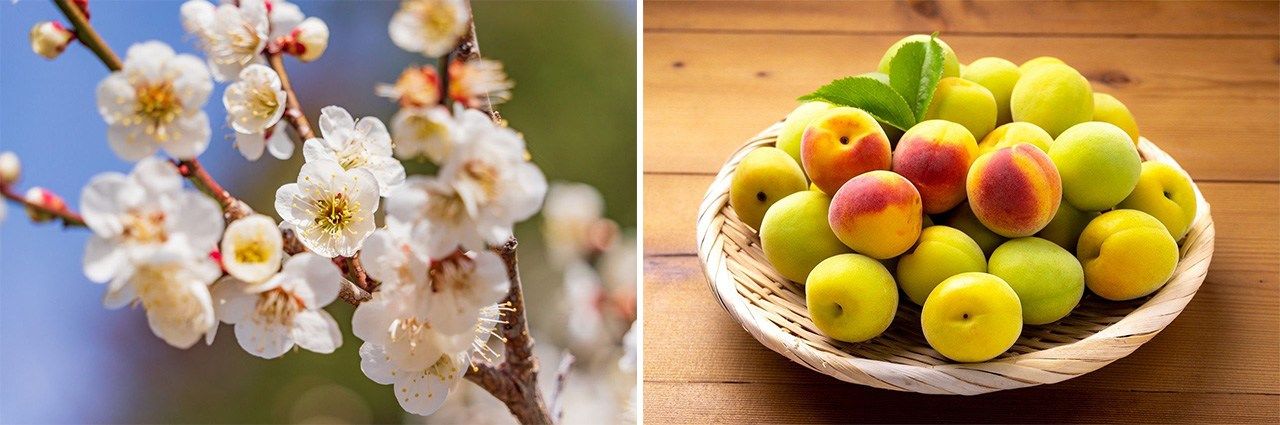
Ume flowers and fruit. (© Pixta)
The fruit began to be processed and eaten during the Heian period (794–1185). It is often mentioned in documents of the period for its medicinal and nourishing properties. During the Warring States period (1467–1568), umeboshi pickled plums were prized for their energizing and antibacterial properties; being highly portable, they were regularly eaten on the battlefield. During the Kamakura period (1185–1333), umeboshi appeared on samurai tables, later spreading among the general public in the Edo period (1603–1868). China and Korea also have processed ume products, but umeboshi are unique to Japan.
Is It True that Umeboshi Don’t Spoil?
Ume trees bloom in early spring. The fruit develops in May and is harvested when it ripens in June. Rain is frequent during this time, and ume has become associated with this kind of weather, called tsuyu, literally written with the characters for “plum rains.” Small ume appear in stores at the beginning of the season, followed by larger green fruit, and later by golden-colored, more fully ripened fruit.
Umeboshi is made by pickling the fruit in salt for one month. Once tsuyu ends, the pickled fruits are sun-dried for three or four days. Salt content can be adjusted according to preference, but when made by traditional methods, salt content is around 20%. This high salinity makes long-term preservation possible, which is why it is believed that umeboshi never spoils.
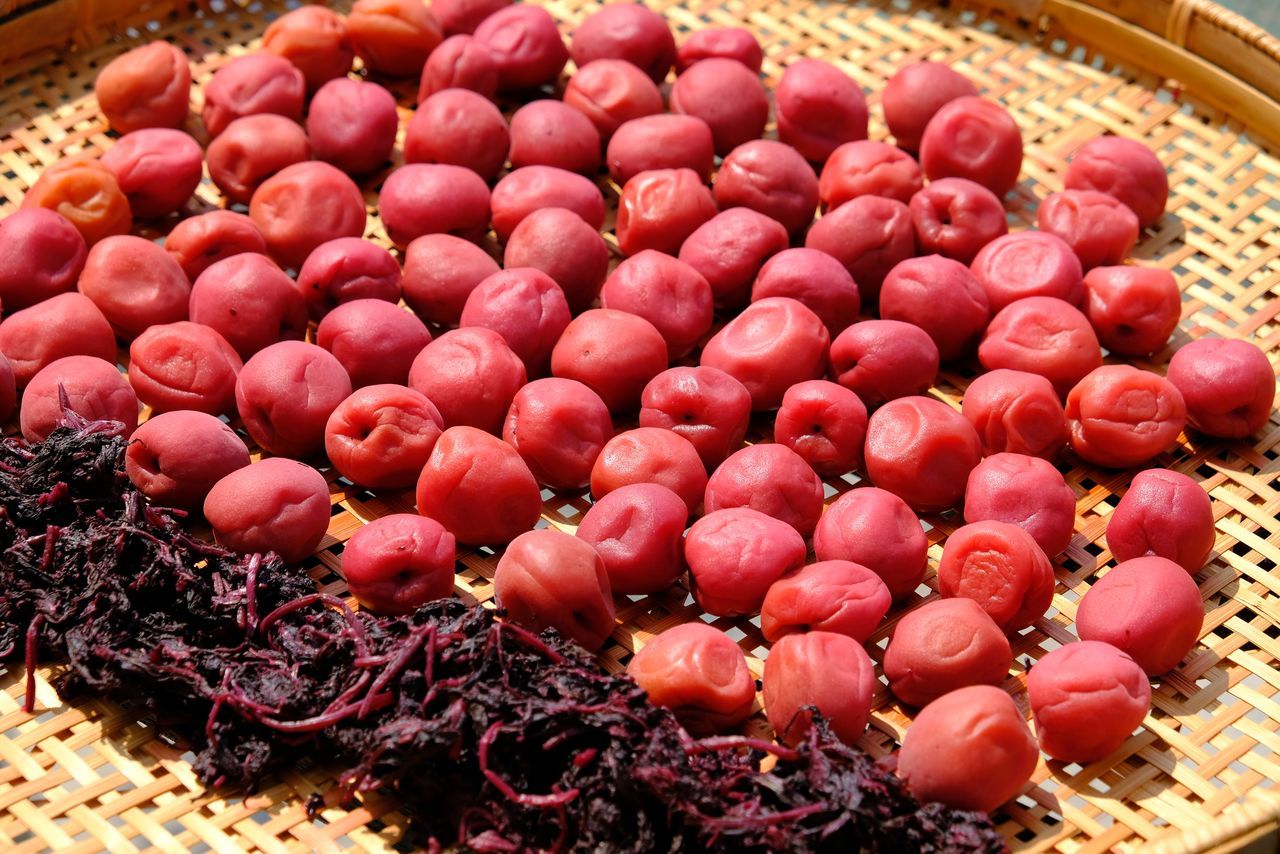
Sun-drying umeboshi and shiso leaves. (© Pixta)
The only types that can be preserved long-term, however, are shiroboshi, pickled with salt only, and shisozuke, with purple shiso perilla leaves added for color and flavor. Traditionally, only ume prepared according to these methods can be labeled umeboshi.
Several other preparations are also available: gen’en reduced sodium umeboshi, katsuo ume, to which katsuobushi bonito shavings have been added, hachimitsu ume, containing honey for a milder flavor, and crunchy karikari ume. Most of these are sold as chōmi (flavored) umeboshi.
The increasing preference for a Westernized diet among Japanese has decreased domestic demand for umeboshi, but exports are growing due to the popularity of washoku Japanese cuisine and umeboshi’s imputed health benefits. Just as simply thinking of umeboshi is enough to make anyone with a Japanese palate salivate, it will be interesting to see this food spread widely and make people all over the world pucker up.
Data Sources
- The world of traditional Japanese foods (Japanese) from the Ministry of Agriculture, Forestry, and Fisheries
(Originally published in Japanese. Text by Ecraft. Banner photo © Pixta.)