Building Blocks: The Basic Ingredients Behind Japan’s Flavors
Asari: Plump, Umami-Rich Clams Best Enjoyed in Early Summer
Food and Drink Culture Lifestyle Guide to Japan- English
- 日本語
- 简体字
- 繁體字
- Français
- Español
- العربية
- Русский
A Shellfish Eaten Since Prehistoric Times
Asari, or Japanese clams, are bivalve molluscs that can be found in coastal areas from Hokkaidō to Kyūshū, as well as around the Korean Peninsula, mainland China, and Taiwan. They inhabit the sand and mud of tidal flats in inlets and shallow seas. Along the coasts of Japan are shell mounds, deposits of shells and animal bones discarded by prehistoric people, that prove Japanese people have been consuming asari since ancient times.
During the Edo period (1603–1868), harvesting asari grew in popularity around what is now Tokyo Bay, and clams became an essential source of food for ordinary people.
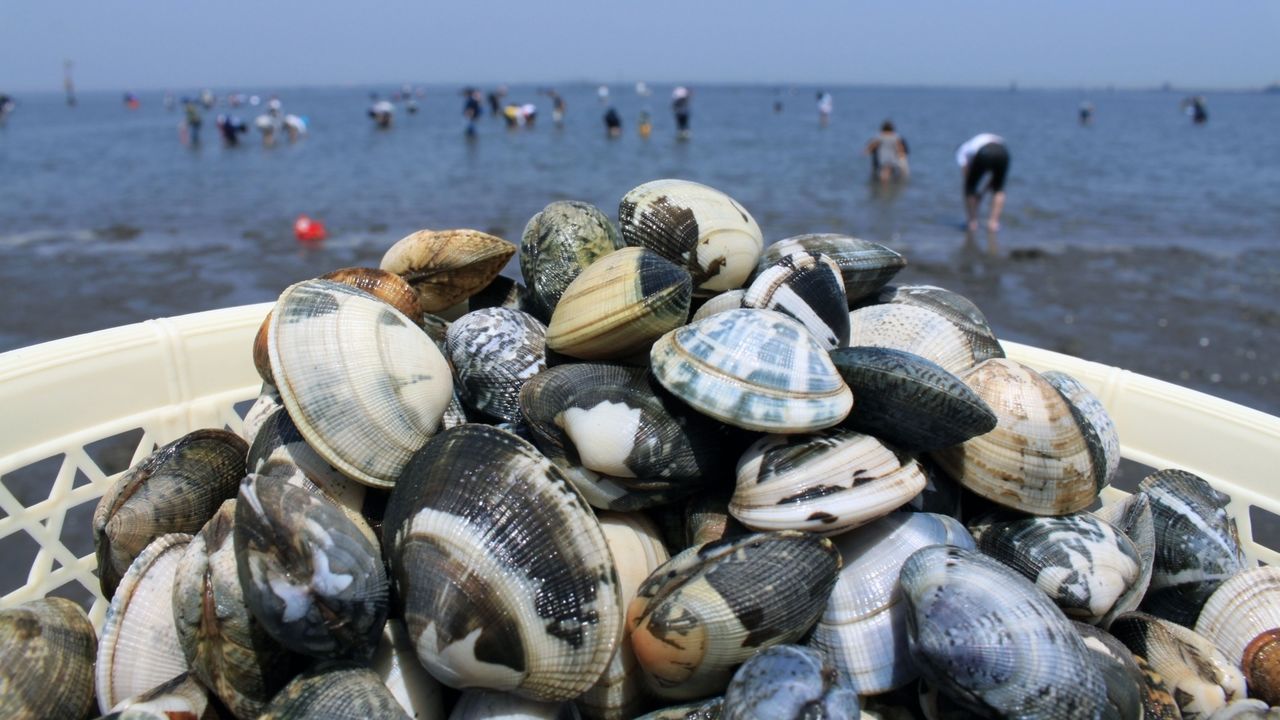
While asari are available all year round in supermarkets, they reach their peak from spring to summer, the period before spawning. At this time of year, they are at their plumpest and full of umami flavor. As the temperature of the sea rises, people can enjoy the popular pastime of shiohigari clam-digging in shallow waters.
The umami of the asari comes primarily from a compound called succinic acid, which gives them the deep, rich flavor characteristic to shellfish. They also contain glutamic acid and amino acids, so they are excellent for use in making dashi stock.
Even these delicious asari can be ruined, though, if the sand isn’t removed properly. To avoid the unwanted gritty texture, after buying asari, soak them in a 3% salt solution, equivalent to seawater, for around two hours to let them purge any sand they contain. It is said that clams relax and expel the sand better if they are kept in a dimly lit, quiet place, rather than, say, on a bright kitchen counter with the television on.
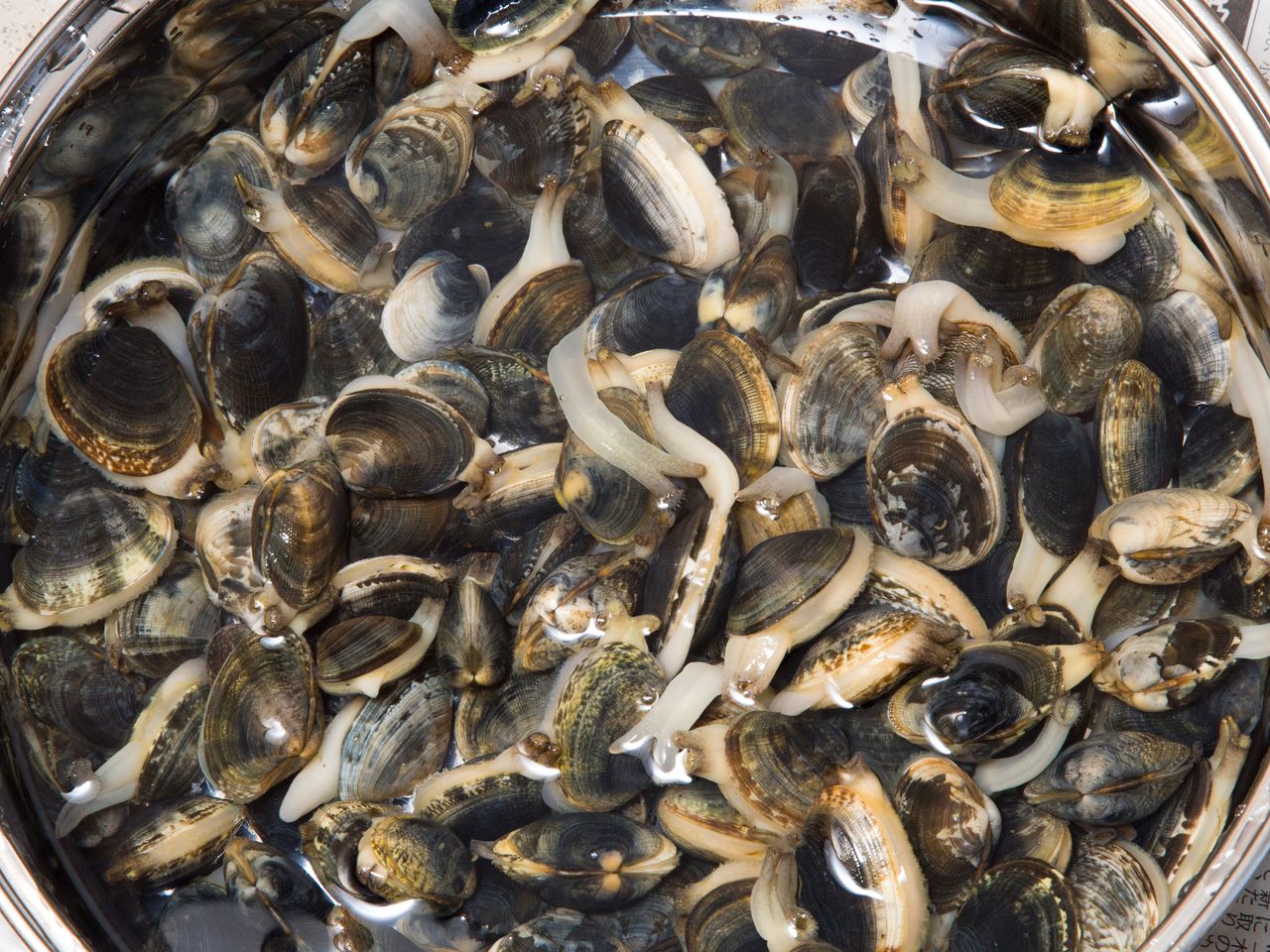
(© Pixta)
If you watch the purging process, you will see two tubes protruding out from between the shells. This is how they draw in and expel water. In this way, asari take in seawater, feeding on the plankton and other organisms included in it, and then expel any inedible matter by binding it with mucus. While humans use this function to clean them, in the natural world, asari play an important role, acting as filters that protect the surrounding marine environment.
Below we present some of the best-known ways to enjoy asari as part of the Japanese table.
Sakamushi
This delicious dish is created by simply steaming asari in sake. For an extra-rich taste, add a little butter.
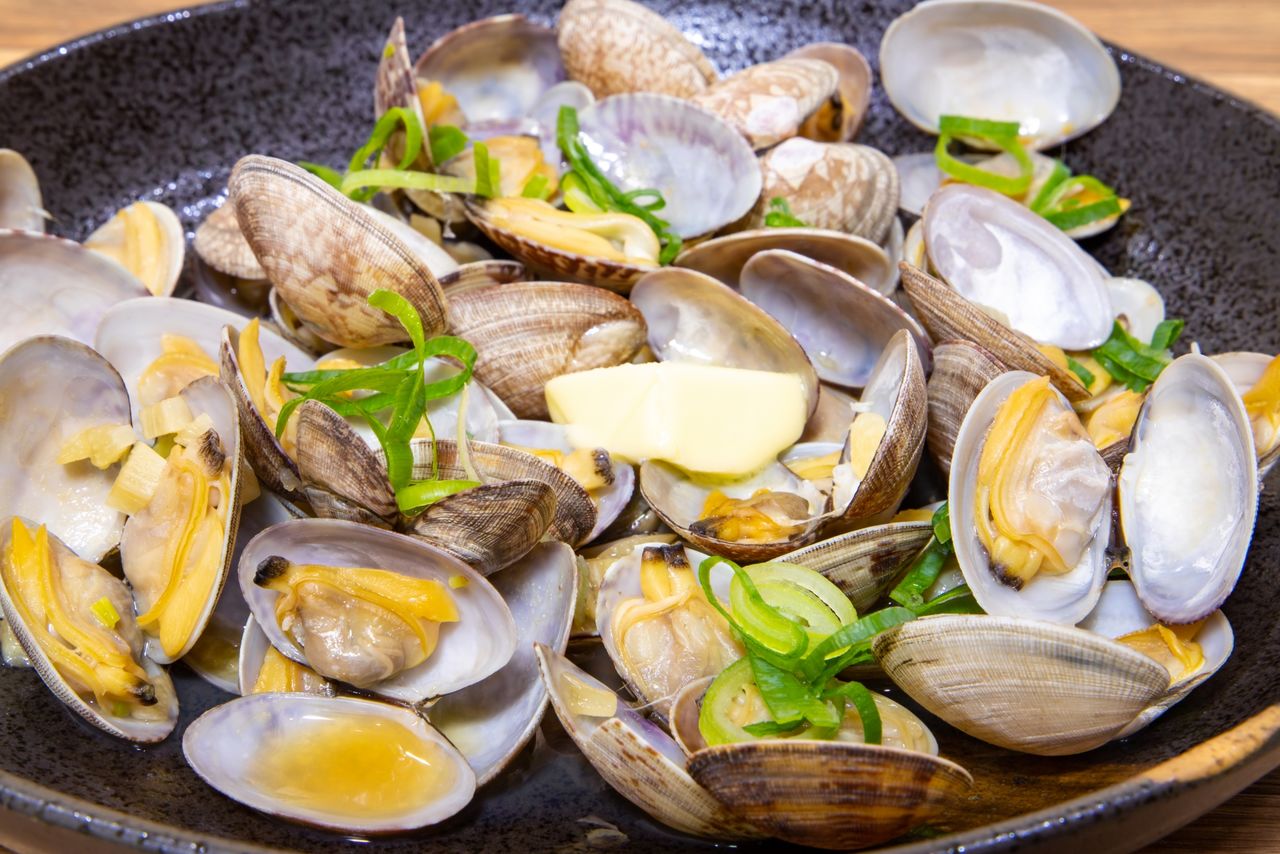
(© PhotoAC)
Misoshiru
As asari create a rich dashi when cooked, there is no need to use konbu or katsuobushi to add extra umami. This makes them a convenient ingredient that easily enhances the flavor of miso soup.
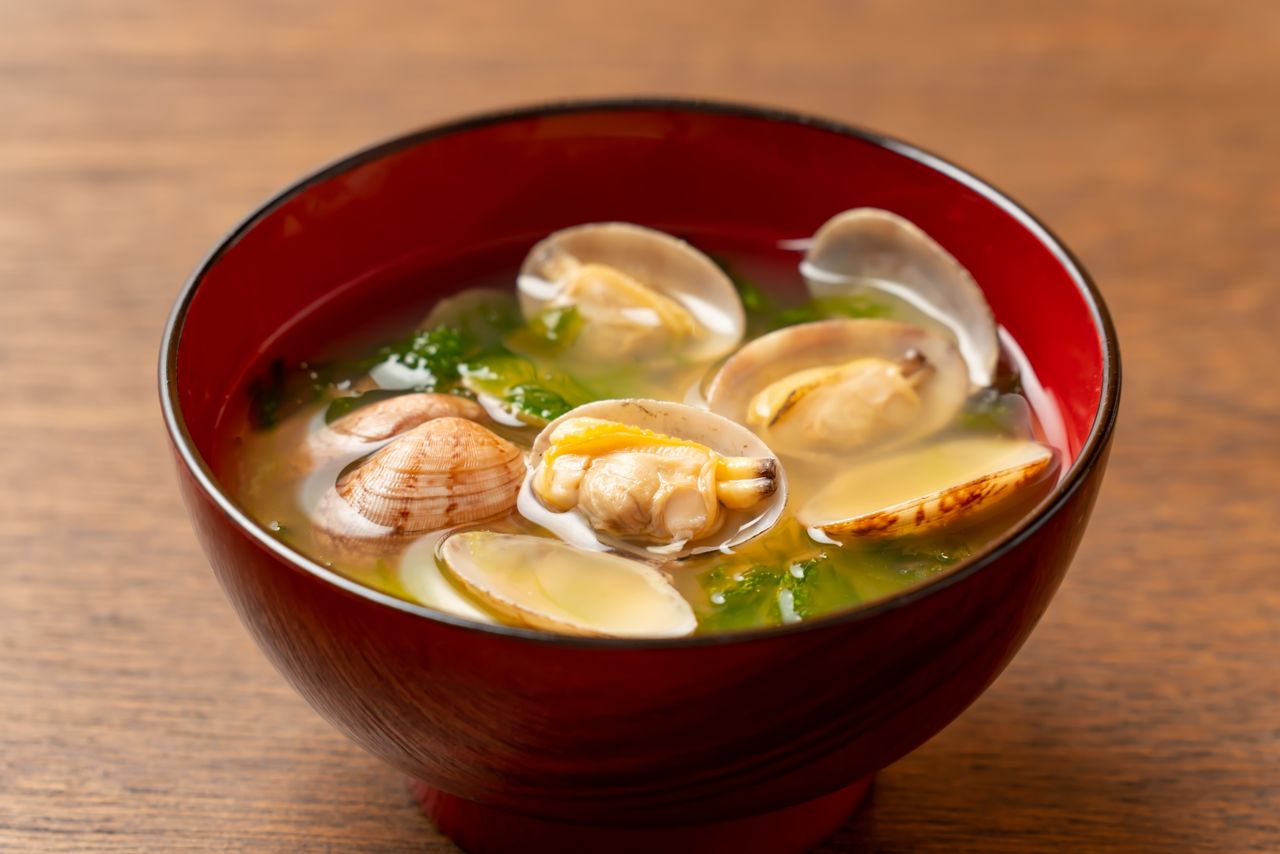
(© PhotoAC)
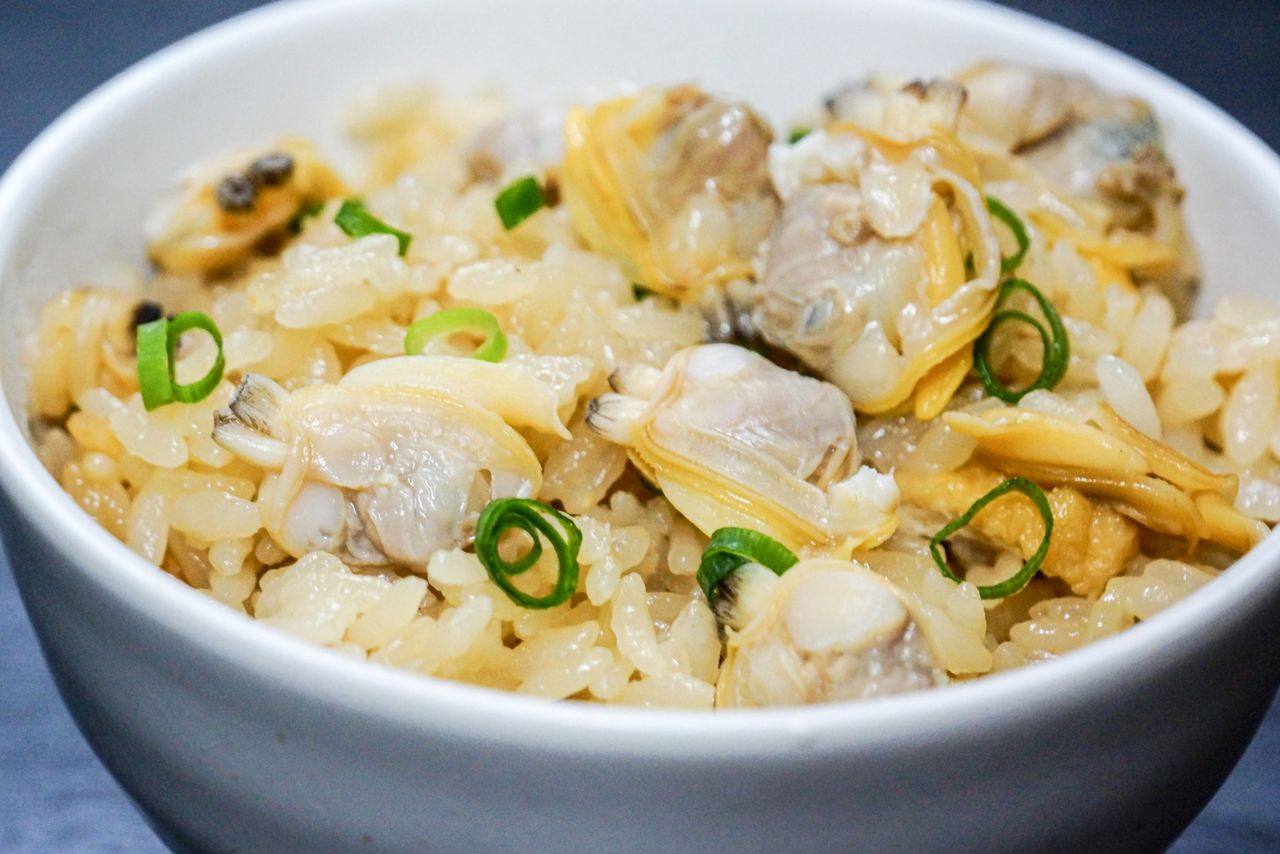
Takikomi-Gohan
This savory rice dish is brimming with umami from the asari dashi. It can be used to create tasty onigiri, too, by shaping the rice into balls and wrapping them with high-quality nori (dried seaweed sheets).
(© PhotoAC)
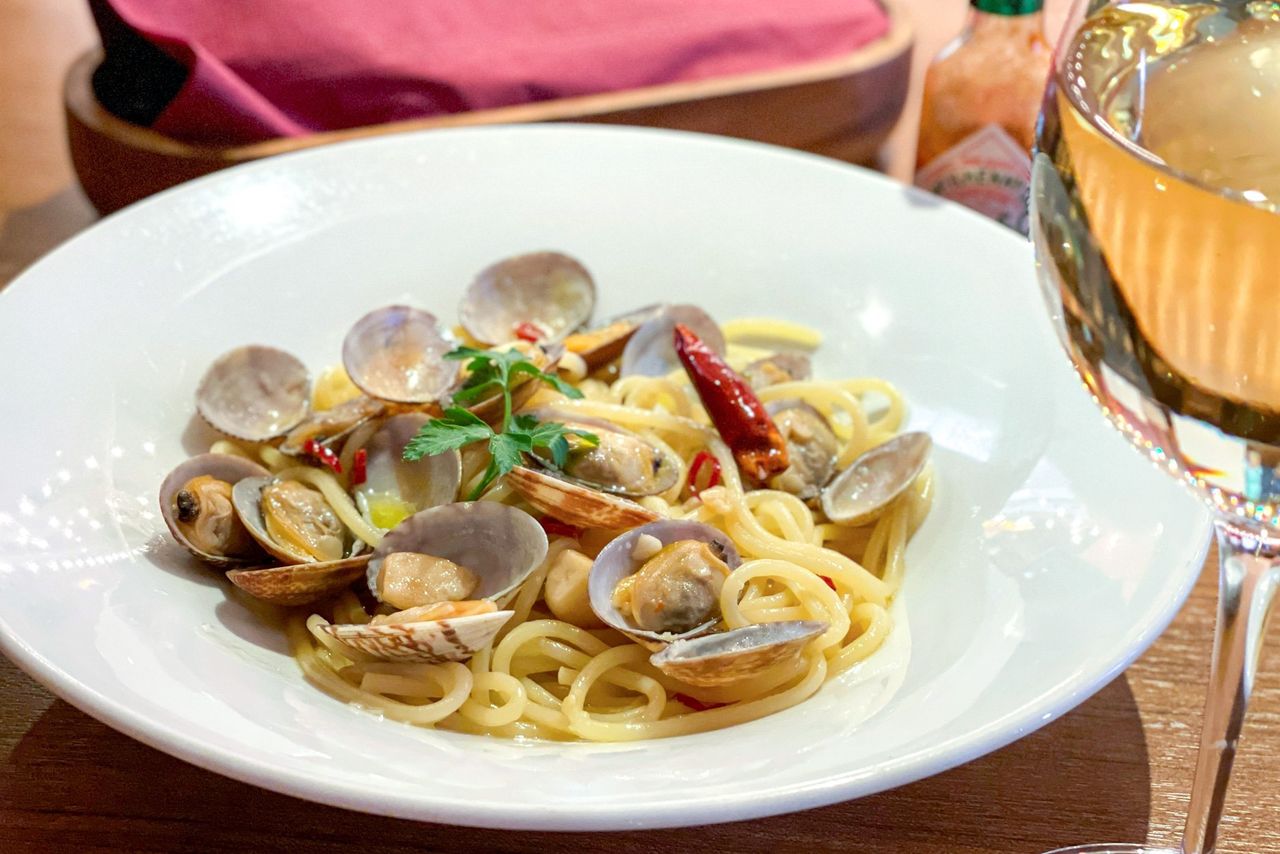
Vongole Bianco
For this spaghetti dish, asari are cooked with garlic, red pepper flakes, and dry white wine. While not exactly Japanese cuisine, this is a popular dish, often enjoyed at home, not just in restaurants.
(© PhotoAC)
(Originally published in Japanese. Banner photo: Asari clams collected during the popular spring and early summer activity of shiohigari [clam-digging]. © PhotoAC.)