Building Blocks: The Basic Ingredients Behind Japan’s Flavors
Mizuna: A Satisfyingly Crunchy Leaf That Pairs with Any Cuisine
Food and Drink Culture Lifestyle- English
- 日本語
- 简体字
- 繁體字
- Français
- Español
- العربية
- Русский
From Winter Treat to Year-Round Go-To
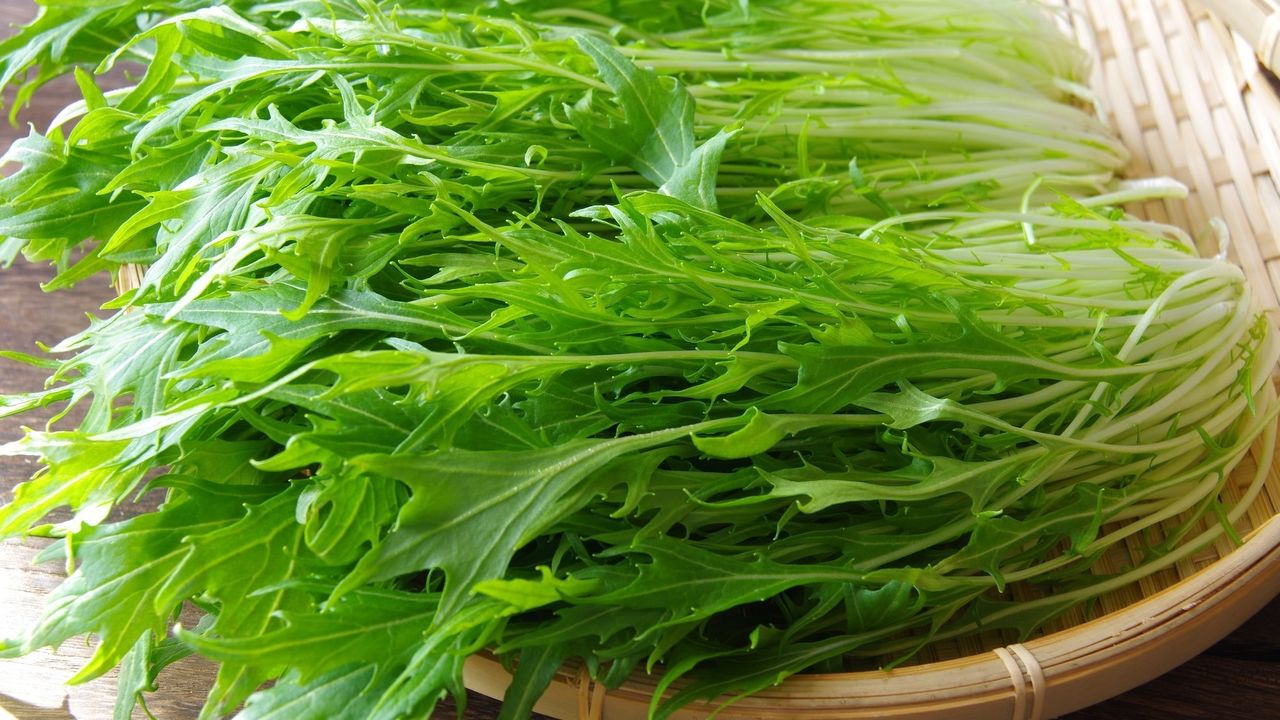
Mizuna, or Japanese mustard greens, is a leafy vegetable belonging to the Brassicaceae family and native to Japan. Growing wild in mountains and fields, it has been cultivated since ancient times and by the Edo period (1603–1868) was being widely grown around Kyoto. Its name, literally meaning “water greens,” derives from the fact it was cultivated by diverting flowing water along rows in the fields around the Kyoto Basin, an area rich in groundwater. Mizuna has deeply serrated leaves, a mild flavor, and a satisfying crunch when eaten.
Hydroponic cultivation is currently the main growing method, so it can be purchased all year round, with the price remaining stable at around ¥100 to ¥200 a pack. Originally, though, it was a winter vegetable. In the Kansai region, people said that “it is truly winter when mizuna appears,” and it was regarded as an essential ingredient in nabe hotpot dishes. Kyoto mizuna is grown during the colder months, so its availability is more limited and costs more than double the usual price, but it has an exceptional crispiness.
There is a similar kyōyasai (heirloom vegetables originating in the Kyoto region) called mibuna, a variety closely related to mizuna. It has distinct long, slender leaves, almost spoon-like, with smooth rather than serrated edges. The traditional Kyoto pickled dish mibuna-zuke is very popular.
Being only slightly bitter, mizuna can be eaten raw, making it a good addition to salads. Recently, it is also becoming a widely used ingredient in Italian and ethnic cuisine, not just Japanese dishes.
Harihari Nabe
This is a popular winter dish in the Kansai region. Harihari is a Japanese onomatopoeia, used here to represent the crunchy sound made when biting into the mizuna. The combination of fatty meat with the refreshing taste of mizuna is exquisite. Traditionally this dish was made using whale meat, but these days more readily available meats, like pork or beef, are generally used.
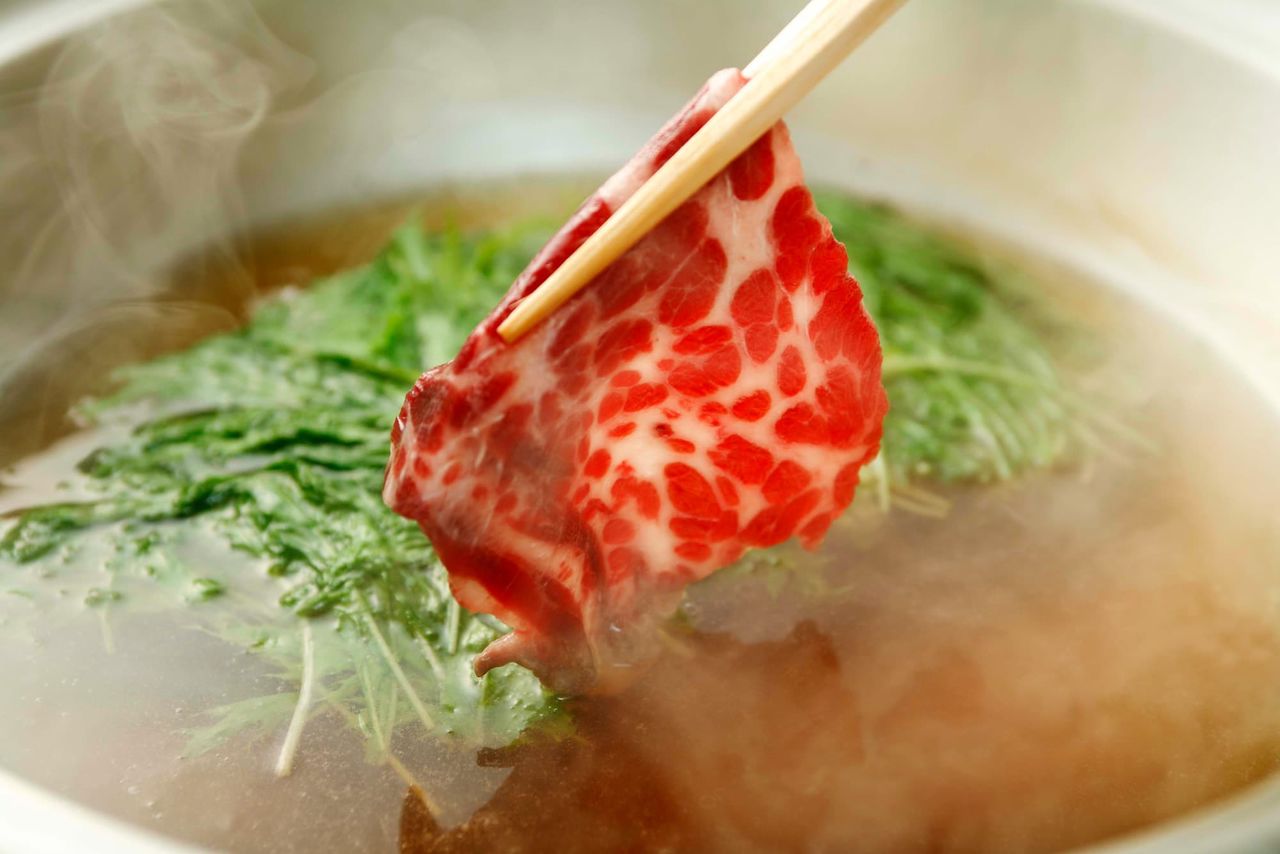
(© Pixta)
Tsukemono
Here, pickled mizuna is used as a garnish for kabu senmaizuke, a side dish of thinly sliced and pickled Japanese turnips.
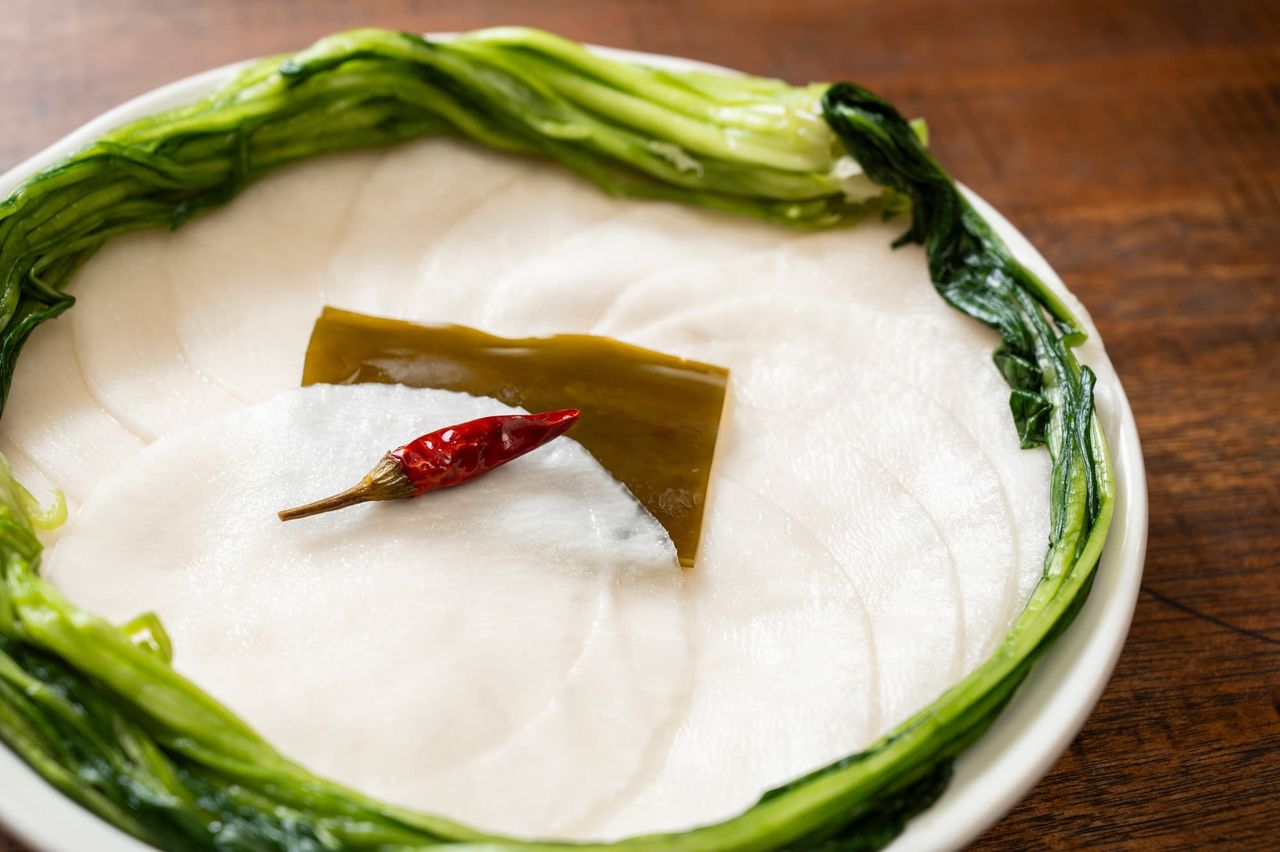
Pickled mibuna, a close relative of mizuna, arranged around slices of kabu senmaizuke, letting you enjoy a variety of textures. (© Pixta)
Mizuna to Atsuage no Nibitashi
This classic Kyoto dish, pairing atsuage deep-fried tōfu and mizuna simmered in a light dashi stock, creates the perfect combination of contrasting textures and delicate flavoring.
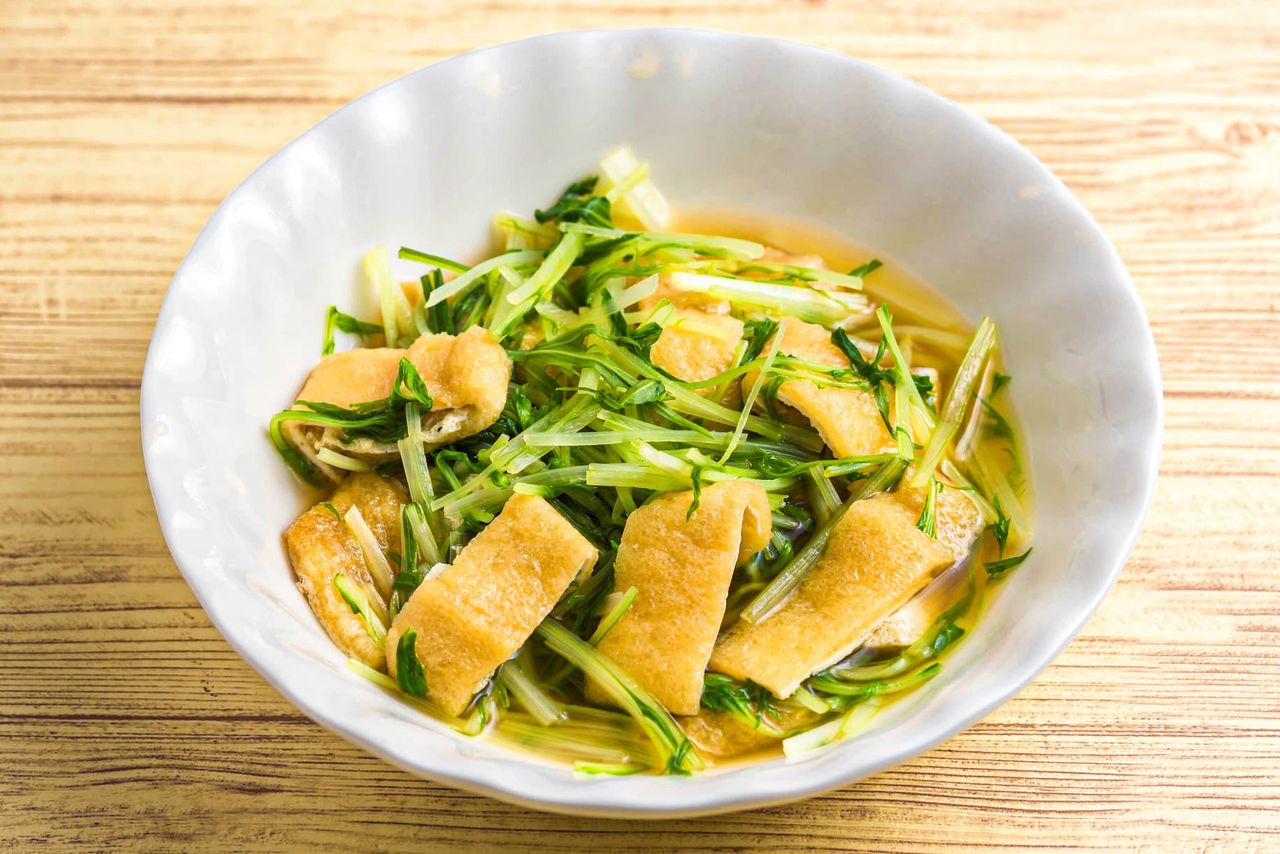
(© Pixta)
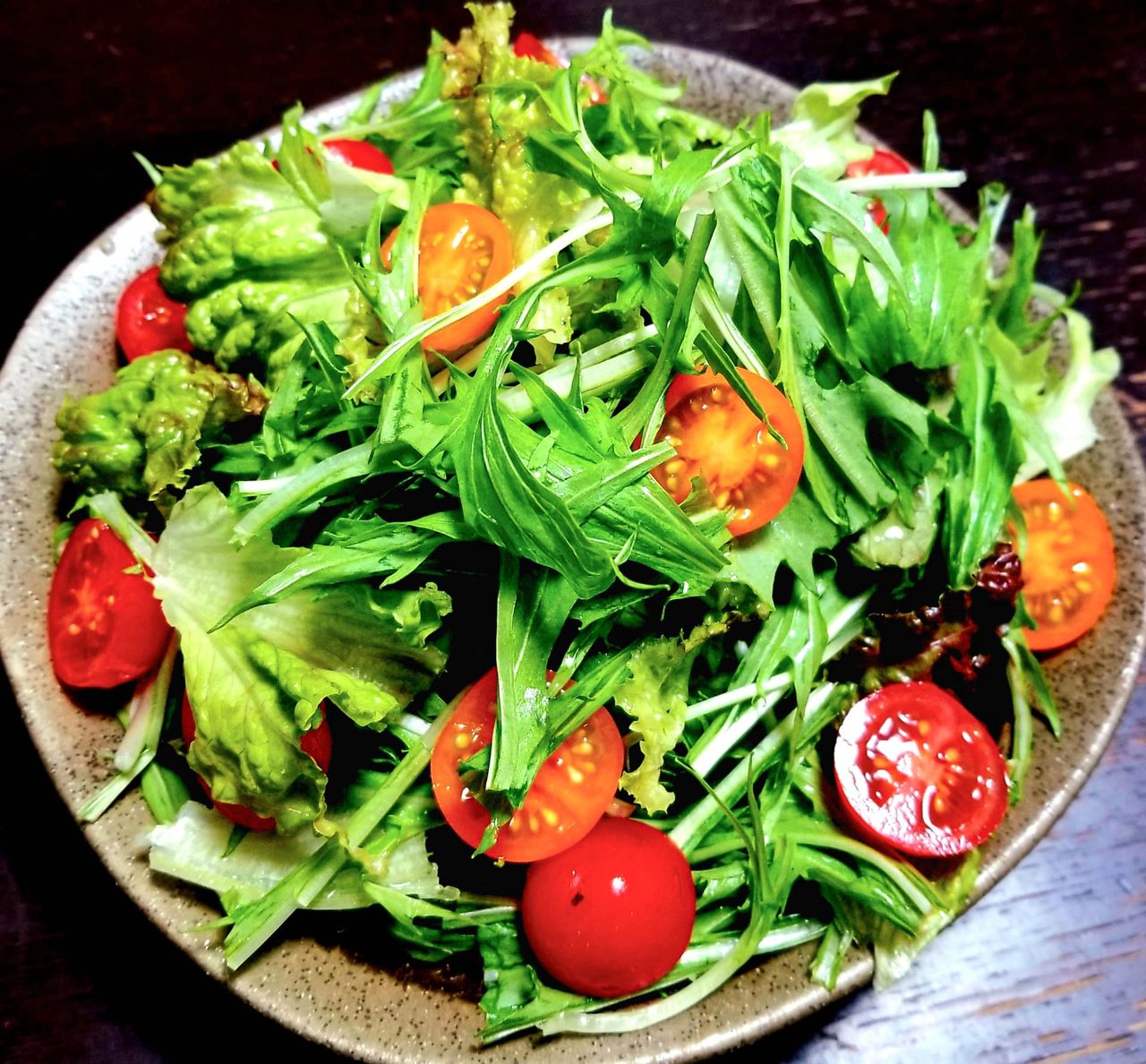
Mizuna Salad
Mizuna may be kyōyasai, but it can be used in Western dishes too. Its lovely crisp texture adds extra variety to salads.
(© PhotoAC)
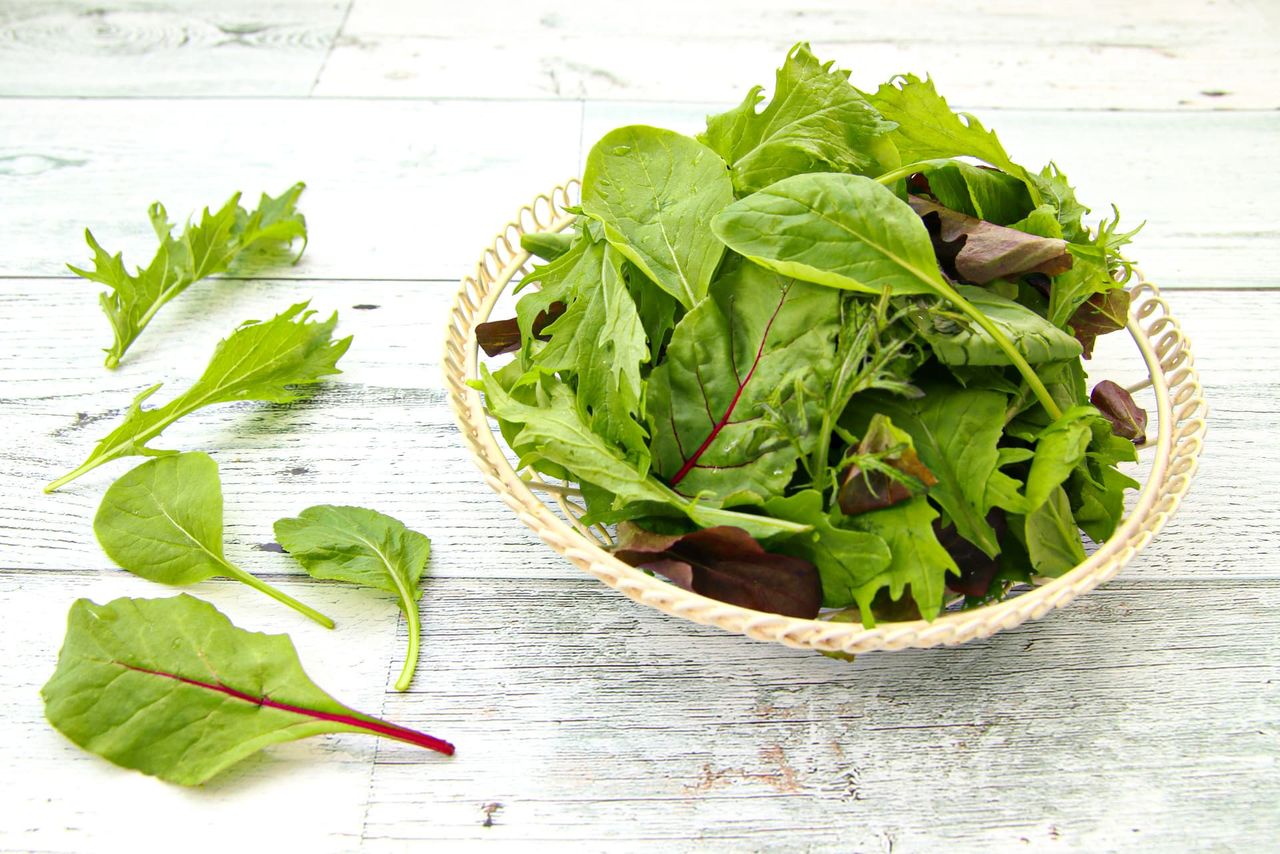
Baby Leaf Salad
As the leaves of young mizuna already have that distinct feathery serrated edge, its beautiful appearance makes it a welcome addition to any baby leaf salad.
(© PhotoAC)
(Originally published in Japanese. Banner photo © Pixta.)