JFL Today: Considering Japanese-Language Education for Foreign Residents
Supporting Foreign Schools to Better Serve Students in Japan
Education Lifestyle World- English
- 日本語
- 简体字
- 繁體字
- Français
- Español
- العربية
- Русский
Outside the System
Japan’s “foreign schools,” as they are called, exist in a legal gray area. Article 1 of the School Education Act, promulgated in 1947, sets out three types of schools: first, a broad category including elementary, junior high, and senior high schools, special needs schools, universities, and colleges of technology (kōsen), referred to as “Article 1 schools”; second, specialized training colleges; and third, miscellaneous schools. Article 1 schools must use textbooks approved by the Ministry of Education, Culture, Sports, Science, and Technology (MEXT) and meet other stringent criteria. Specialized training colleges exclude those focused solely on foreign residents of Japan.
“Foreign schools” offering curricula in the first languages of many foreign communities in Japan are considered to fall outside the country’s standard compulsory education institutions and are often placed into the “miscellaneous schools” category, which also includes everything from driving schools to tutoring in soroban (abacus) skills, and licensed by the prefectures in which they operate. But many such schools that fail to meet the same requirements as Article 1 schools, in terms of their facilities or other criteria, are viewed as unlicensed tutoring institutions and fall outside legal provisions. (For convenience, here I refer to these schools—often those offering a foreign language curriculum—as “unregulated schools.”)
A 2021 MEXT survey counted at least 223 foreign schools in Japan, broken down as follows: 8 Article 1 schools, 126 miscellaneous schools, and “over” 89 unregulated schools, the “over” signifying that the actual number of such schools is not known. As of March 2026, there are 39 foreign schools serving Brazilians, who began arriving in Japan in large numbers in the 1990s and later. There has also been a marked increase in schools for Nepalis and for the Islamic community. In fiscal 2025, MEXT estimated that approximately 12,000 school-age children were attending foreign schools. This number does not, however, include a breakdown of those attending schools in the unregulated category.
Limited Japanese Language Instruction
Unlike Article 1 schools, unregulated schools, for which there are no provisions under the Education Act, receive few tax advantages or other government support. This exposes the children attending such schools to two major risks. Take schools for Brazilians throughout Japan, for example.
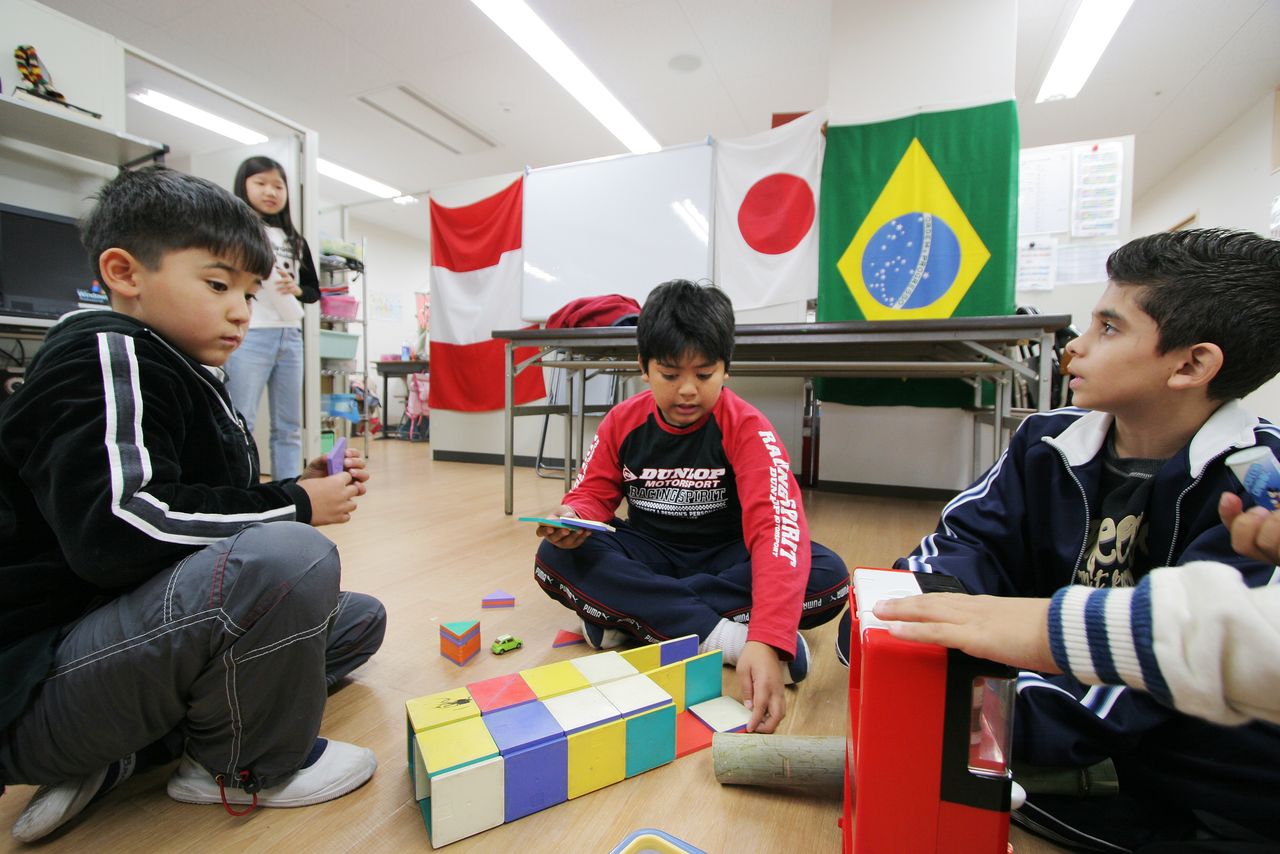
The Paulo Freire Community School, operated by a nonprofit organization at a housing complex where many Brazilians and Peruvians of Japanese descent live, in Toyota, Aichi Prefecture. (© Jiji)
First, these schools tend to offer only limited opportunities for their students to learn the Japanese language and social customs. Support by central and local government authorities is scant, and even if Japanese language instruction is offered, the teaching is often done by volunteers rather than professional language teachers. The environment for learning Japanese tailored to native-level language development and academic capabilities is thus poor. Moreover, outside of school the children often spend much of their time within their own language communities, further limiting exposure to the Japanese language, culture, and customs.
In theory, students graduating from schools licensed by the Brazilian government qualify to take entrance examinations for Japanese high schools and universities, but those who have not received adequate Japanese language education face tall hurdles. Similarly, due to limited Japanese ability, high-school leavers cannot easily find jobs under the same conditions as their Japanese peers.
Although Japan is accepting ever-growing numbers of foreign workers to compensate for the domestic labor shortage, there are very few government policies in place to ensure that children attending foreign schools are more fully integrated into Japanese society. As a result, they are frequently relegated to the margins.
Lack of Health Monitoring
Second, miscellaneous schools or foreign schools lack systems for monitoring their pupils’ health and ensuring their safety. This is because they do not fall under the School Health and Safety Act and the Act on School Lunch Programs, which mandates these systems and makes them a given in most public and private education in Japan. Many Brazilian schools lack publicly funded regular health checkups and school infirmaries, and expenses for school lunches must be shouldered by the pupils’ families.
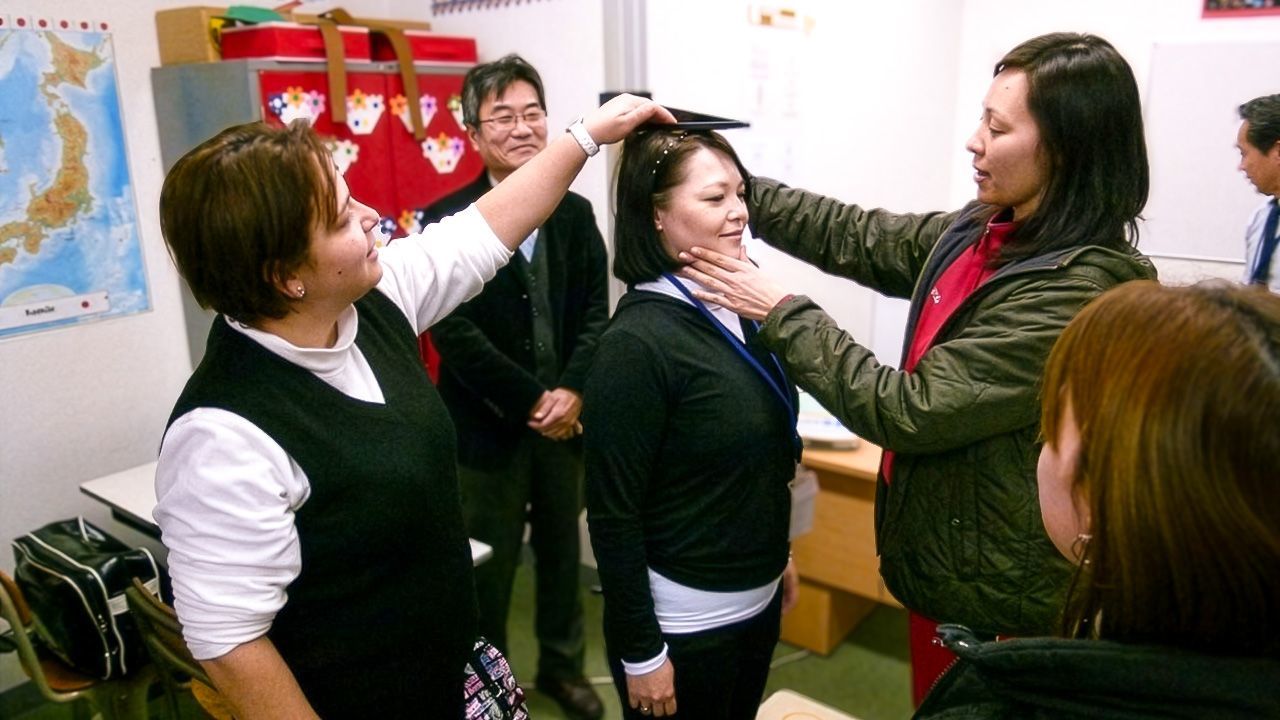
Some physicians or local authorities do offer regular health checkups,. In one case at a Brazilian school, a child was discovered to have significant visual and hearing disabilities. The condition had not been noticed by the child’s parents, who reported no physical pain or other evident difficulties in life at home, and who were distraught at the news. If not for that checkup, the child might have grown up with the condition hampering the ability to learn and communicate with teachers and parents.
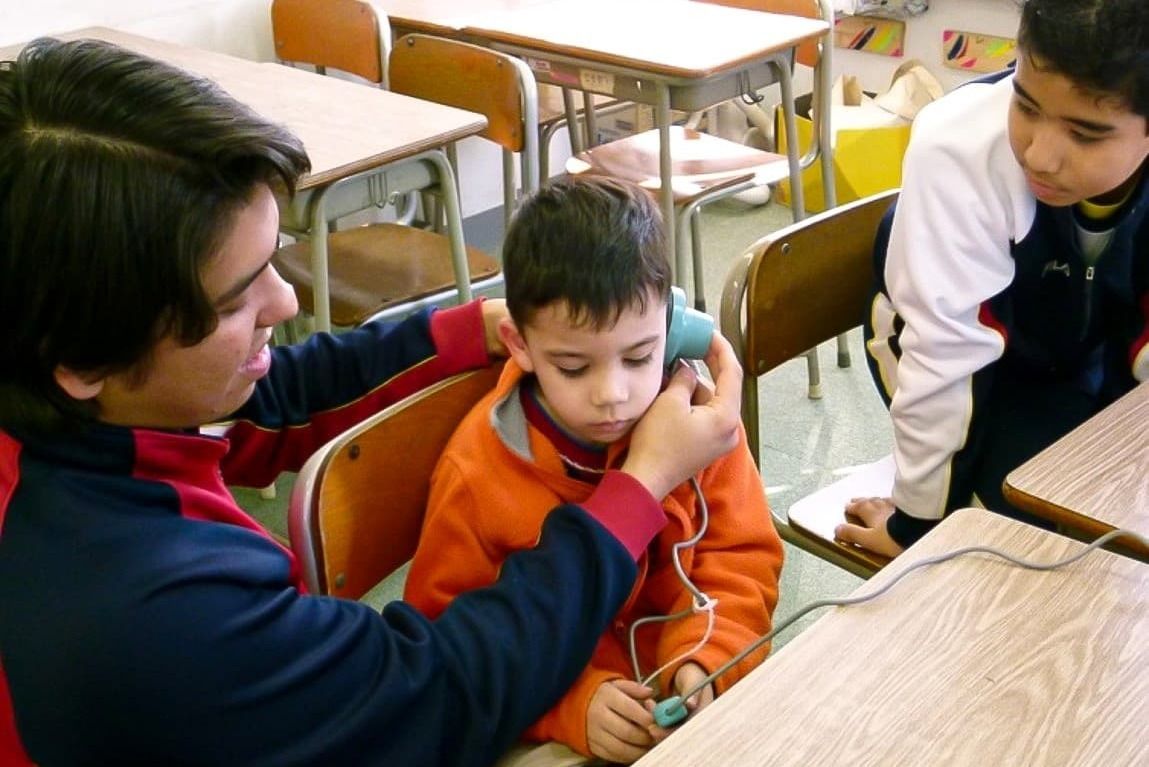
A health checkup conducted by a volunteer at a Brazilian school. (© Kojima Yoshimi)
In 2020, a COVID-19 cluster developed at a Brazilian school in Gifu Prefecture. According to the school’s officials, several days went by before prefectural officials began discussing how to deal with the outbreak. The school had not been informed of infection control measures by the local authorities, thus presenting a risk that the virus might spread into the community at large.
Although this particular school was licensed by the prefecture, this incident highlighted how little communication exists between such schools and the local authorities in ordinary times. The situation is even more dire in the case of unregulated schools. Neglecting the health of pupils at such institutions can have repercussions for society at large.
Foreign Schools’ Ill-Defined Roles
Some contend that children of foreign nationality could just as well attend regular public schools. But under current laws, education is not compulsory for these children; their parents must apply for them to be accepted into public education programs. And some local authorities are reluctant to grant permission because of anticipated language difficulties, so some children have no choice but to attend foreign schools.
Further, foreign schools serve quite a few children with foreign roots who stopped attending Japanese public schools. They also teach pupils who could not advance to regular high schools, which require entrance examinations, because of insufficient Japanese language proficiency. Foreign schools do play an important role in Japanese society, but lack of awareness of conditions in those schools makes it difficult to offer adequate support.
Education is a basic human right guaranteed to all children, as stated in the Convention on the Rights of the Child and other treaties to which Japan is a signatory. Nonetheless, the government does not recognize foreign schools as “schools” within the regulatory framework, thus distancing children with foreign roots from mainstream society.
Social Inclusion the Norm in Europe
Many countries in the West make no distinctions based on nationality when it comes to schooling. According to a 2018 report by the European Commission on the education systems of the 42 EU member countries, Turkey, Romania, and North Macedonia are the only three that do not offer compulsory education to foreign-nationality children.
School Systems for Foreign Children
| Educational Requirement | Foreign Schools | |
|---|---|---|
| France | Compulsory | Private, nonprofit organizations |
| United States | Private | |
| Britain | ||
| Germany | ||
| Japan | Not compulsory | Miscellaneous schools, unlicensed |
| China | Bodies similar to Japan’s miscellaneous schools | |
| South Korea | Private, miscellaneous schools |
Notes: In Britain, schools must be licensed, while in Germany, options include alternative schools and supplementary schools. In South Korea, schools are licensed or approved by regional authorities.
Created by Nippon.com based on MEXT documents detailing expert committee discussions on improving education for foreign-nationality students.
Based on the principle of the right to learning being independent of nationality, the authorities involve themselves in education. Most EU member states place foreign schools on the same footing as public and private schools that follow the national curriculum. Meanwhile, Japan, South Korea, and China do not necessarily oblige foreign-nationality children to be part of the compulsory education system, as the table above describes.
The European system views foreign-nationality residents as members of their society. Faced with an aging, shrinking population, Japan should model itself on this approach and fundamentally overhaul its education system. This would help the country become a hub for attracting and educating multilingual human resources and injecting new vitality into our economy and society.
In parallel with opening public education to everyone, the authorities must concern themselves with foreign schools. In Okinawa, the prefecture is involved in the operation of Amerasian schools, which serve children of mixed Japanese and American parentage. Some schools offer bilingual education in Japanese and English, and these schools are often held up as a model case for administrative support.
Change to Ensure Stability
Japan missed an opportunity to have substantive discussions on the issue of schooling for foreign children when the Immigration Control and Refugee Recognition Act was revised in 1990, following the labor shortage Japan experienced during its bubble years in the late 1980s.
At the time, there was a rapid rise in the number of foreign children accompanying their parents taking jobs in Japan who did not come from the areas commonly seen until that time, such as Japan’s prewar colonial holdings like Taiwan and the Korean peninsula. This should have led to the formulation of new rules concerning their position in the compulsory education system, but the government clearly viewed the adults as migrant workers who were not expected to remain in Japan for long. Consequently, it assumed the same for their children, simply treating them as it did residents of Korean or Taiwanese backgrounds without Japanese citizenship. This in effect exempted all these foreign children from compulsory education requirements, giving rise to nationality-based discrimination and excluding those children from standard educational opportunities.
Later, the number of international marriages greatly increased, families became much more diverse, and it was no longer unusual for children to have different nationalities than their parents, or even their siblings. In addition to the fact that more Japanese-nationality children were attending some foreign schools to receive education in English, such schools also began functioning as alternative places of learning for Japanese children for whom domestic school systems were not a good fit. But even so, the government has made no moves to change the existing system, generating considerable confusion and contradictions for families and schools alike.
We must face the fact that foreign schools are no longer simply just for foreign children. The central and local governments need to at least guarantee that these schools will provide the same health and safety oversight as Article 1 schools.
A new Specified Skilled Worker System will go into effect in April 2027. More foreign workers, and presumably their children too, are expected to come to Japan to live and work.
Incorporating foreign schools into the Japanese education system would give foreign children living in Japan a chance to become integrated and to acquire the skills they will need to thrive in our society even as they retain their first language and culture. Increasing the number of foreign residents with a broad understanding of Japanese customs and systems will provide a stable base for this nation. As more and more people from abroad continue coming here, education for their children is an issue that demands a solution.
(Originally published in Japanese. Written by Matsumoto Sōichi of Nippon.com based on an interview with Kojima Yoshimi. Banner photo: A health checkup conducted by volunteers at a Brazilian school in Japan. © Kojima Yoshimi.)