A Calendar of Traditional Japanese Sweets
February’s Wagashi: Kōbai, the Deep Red Plum that Heralds Spring
Food and Drink Culture- English
- 日本語
- 简体字
- 繁體字
- Français
- Español
- العربية
- Русский
February is a time of hunched heads, hats, and hoods, as people protect ourselves from the bitter cold as they walk. When they do happen to glance up, though, they notice that the ume, Japanese plum blossoms, are starting to bloom—presenting a welcome sense that winter is nearly over.
Ume are the early harbingers of spring. As the first flowers to bloom while the season is still frigid, people in ancient times must have waited eagerly for them to appear. The eighth-century poetry collection Man’yōshū contains 119 poems about ume, many more than the 47 that refer to sakura, or cherry blossoms.
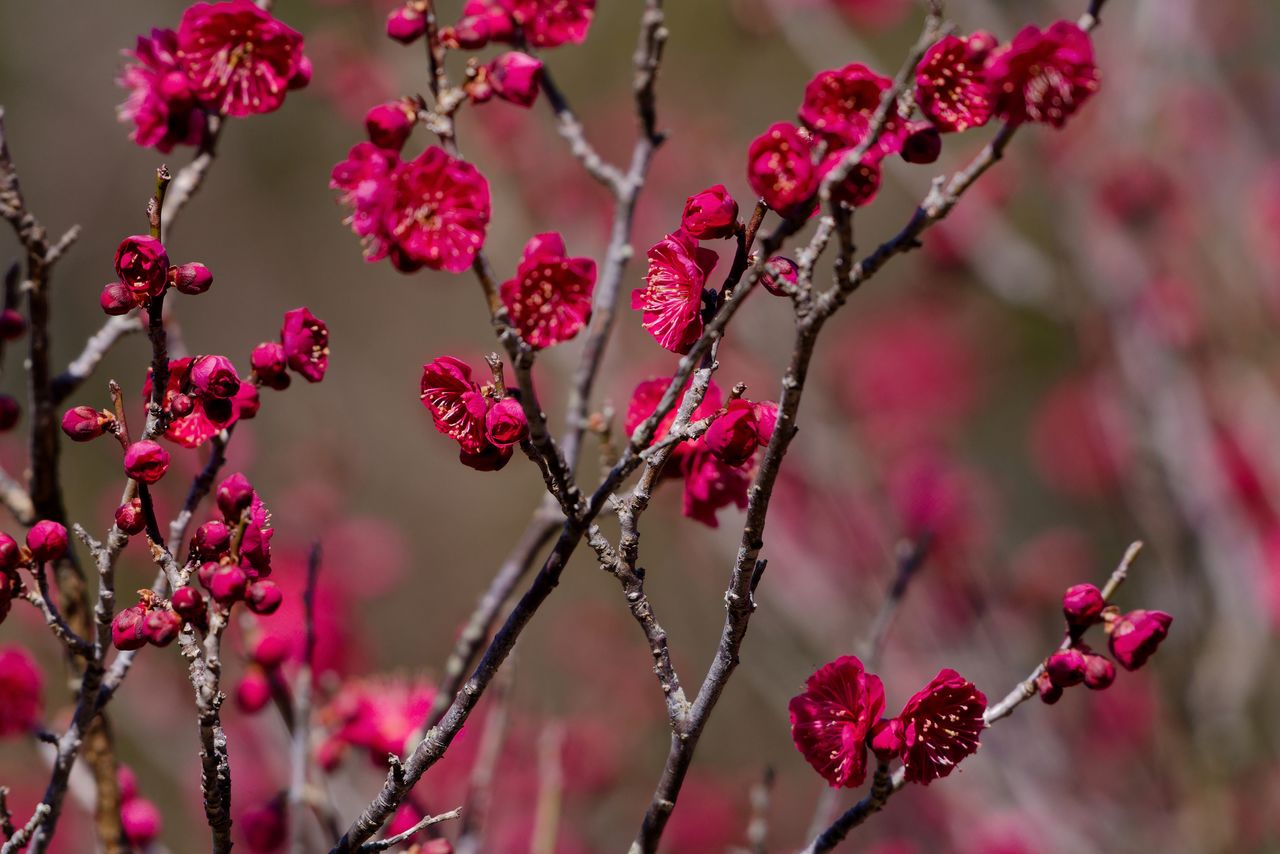
The suōbai (Prunus mume) variety, with its scarlet blossoms. (© Pixta)
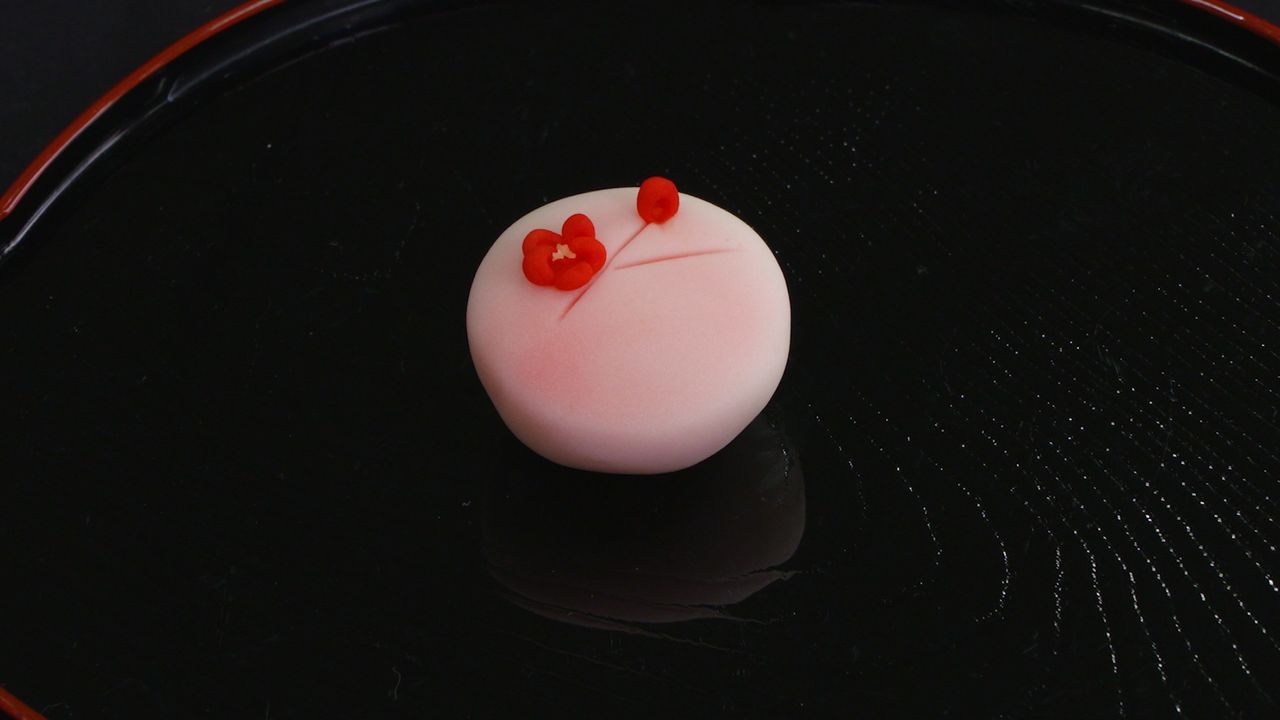
There are said to be more than 400 varieties of flowering ume, many of which have delicate white or pale pink blossoms. Here, though, we have created a nerikiri that represents kōbai, the red plum blossoms that provide a striking contrast of color to the drab winter scenery. Using the tip of a chopstick, tiny balls of red dough are pressed down into the base of this wagashi, so that they curve to form rounded petals. How soon before these tightly closed buds open?
(Originally published in Japanese. Banner photo: a kōbai nerikiri treat created by Gotō Reiko, Nagomi no Suzu. Courtesy of Gotō Reiko.)