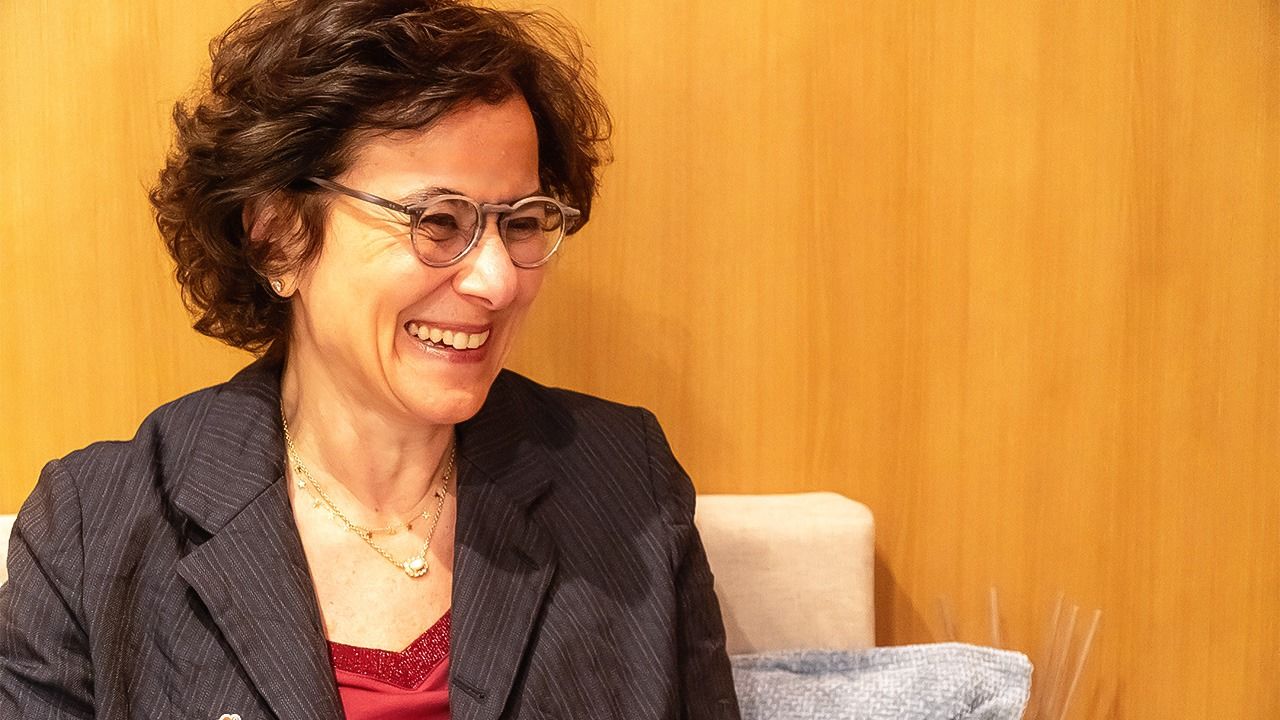
UN Human Rights Leader Nada Al-Nashif on the Need for an Active Japan
Politics- English
- 日本語
- 简体字
- 繁體字
- Français
- Español
- العربية
- Русский
A Japan That Can Open the Way
INTERVIEWER Thank you for meeting with us today here in Osaka. I’d like to start by asking you for your assessment of the current Japanese human rights situation. Do you think that Japan still needs to improve in terms of the equality between men and women, in terms of the freedom of expression, in terms of social media or other Internet-related issues?
NADA AL-NASHIF We hope to see Japan do more with human rights education. First of all, this is because of Japan’s role in the world. As a member of the G7, the G20, a leading member of the OECD, we need Japan to be fully engaged on human rights.
We’re looking to some key reforms in many areas—in the area of gender, the pay gap, for example, is still a very big issue in Japan. We have been engaged on that through some of our committees. On the issue of the death penalty, meanwhile, the UN human rights position is very clear on the need to declare a moratorium, first of all, and then to abolish the death penalty. This is a global position, anchored in many of the conventions that Japan is party to.
There are some other things that I think will help—for example, establishing a national human rights institution in Japan. Japan has already accepted this recommendation, which comes from the UN Human Rights Council’s Universal Periodic Review. In Japan there are of course departments of human rights that work within the Ministry of Foreign Affairs and so on. But it’s not the same as having an independent voice for human rights that can speak consistently to civil society, the business sector, and the government.
This is very important because we need a Japan that is strong nationally, but also a strong Japan for the region. There are vital roles that Japan can play in places like Myanmar, the Koreas, and Afghanistan. Japan has been engaged through agencies like JICA, and has long been a champion of some of the concepts that are very important for us. The Japanese can open the way at the regional level for more engagement, and globally, with artificial intelligence, the digital sphere, climate justice.
All these roles require a strong Japan that is anchored in human rights commitments at the national level.
INTERVIEWER Japan hasn’t been as proactive as it could be in the area of human rights, in part because we’ve had something of a guilty conscience about the Second World War and so have shied away from taking active positions. But I think progress has been made, although slowly and timidly.
AL-NASHIF No country has a perfect human rights record, and every country has history. There is always baggage. What’s important is to make the commitment toward a common understanding of what the upholding of the rule of law is about.
These are very complicated times, and there’s been pushback on human rights at the global level for some years now. I think we are really facing an existential crisis for the United Nations. We’re facing tremendous global instability—over 120 conflicts around the world, along with humanitarian crises in South Sudan, Myanmar, Afghanistan. In Ukraine, we did not think we would see conflict drag on this long. And there’s Gaza. Again, Japan’s involvement in the Palestinian issue, its commitment to the Middle East, is longstanding.
But these are all things that no one country can tackle on its own. We require coalitions to protect the rule of law and democracy. There are many aspects, such as engagement with refugee crises, climate justice, shrinking civic space, that require interregional alliances.
Which brings us to Japan’s role on the world stage. Japan can work on all these levels at the same time—it’s part of the European group in the UN regional groupings, but it’s also very much part of the Asia Pacific, which allows it to help move this global agenda.
Pressure on the United Nations
INTERVIEWER Japanese academics and journalists are conscious of the growing expectations toward Japan to address these important issues. But now that US President Donald Trump has announced that America aims to leave the UN Human Rights Council and reduce UN funding, it has been affecting greatly the work of the UN High Commissioner for Human Rights.
AL-NASHIF We are trying to adjust, just like the rest of the world. We’ve enjoyed a very strong partnership with the United States over decades, whether Democrats or Republicans were in charge. We’ve tried to diversify our donors, but in the end, the whole UN system depends on the same five to seven key donors, and the United States is very much above all of those.
So of course we are deeply concerned. We will continue to build on our partnership with the US administration, but also with academia in the United States, with civil society, with the tech and other business sectors, to foster dialogue. We’re trying to ensure that the United States will remain engaged.
The European member states have been very clear that they are willing to step up, but the financial support is not likely to fill the gap of the depth of the US cuts for critical programs delivering aid, supporting vulnerable communities, delivering on human development, and fighting against terrorism and illicit trafficking. Europe is also reducing its UN budgetary commitments at the same time because of the existential threat of the invasion of Ukraine.
It’s important to say that we’re not concerned about the staff and salaries at the UN. It’s about the people that we serve. In Afghanistan, for example, more than 9 million people will miss out on health and protection services. In Syria, more than two and a half million people need assistance. The lack of US support leaves huge populations vulnerable in Ukraine, South Sudan. It will be hard to fill that gap.
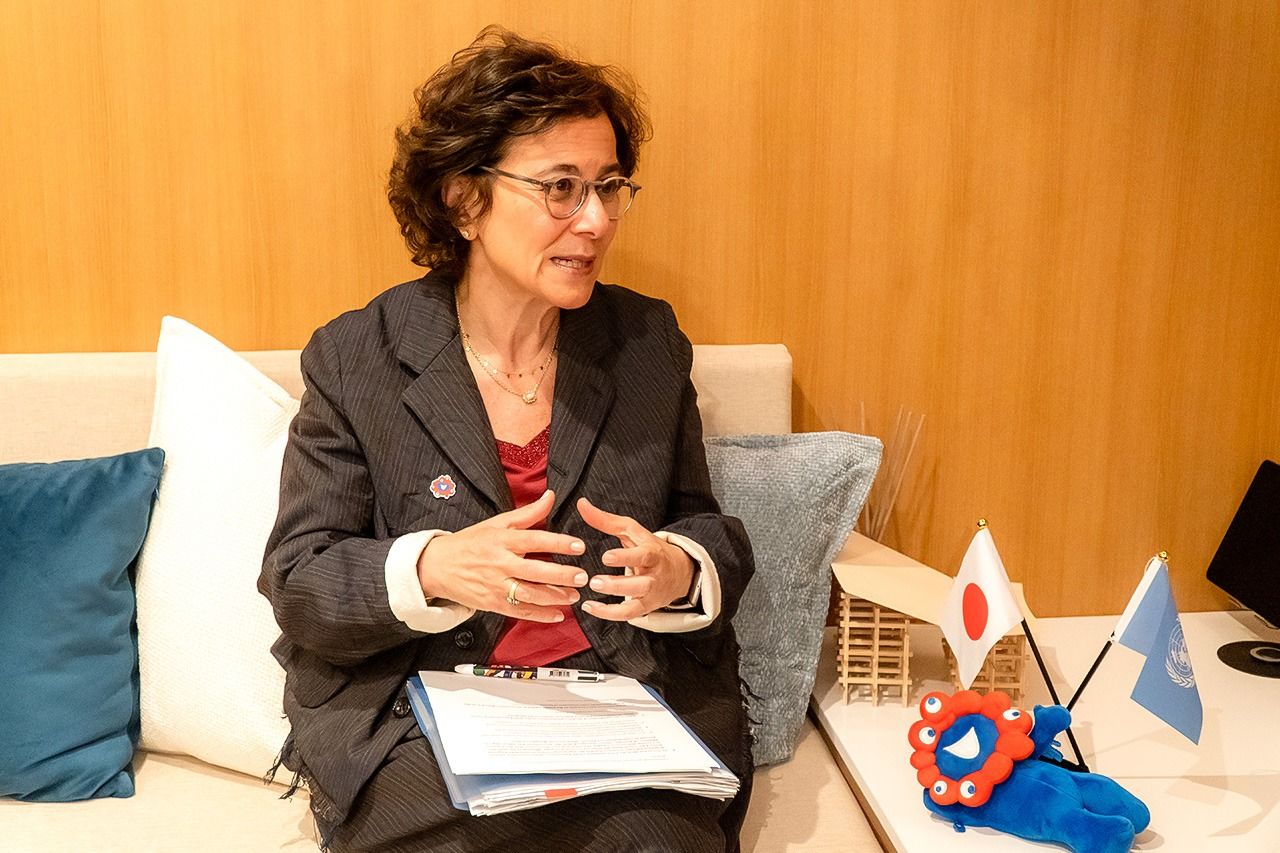
UN Deputy High Commissioner Nada Al-Nashif. (© Nippon.com)
Cultural Outreach in Osaka
INTERVIEWER Let’s turn instead to this year’s World Expo here in Osaka. What’s the significance of the UN system and the UN High Commissioner’s Office for Human Rights participating with the pavilion here?
AL-NASHIF I think it’s a unique opportunity—all the millions of people we expect to visit the event. We’ve had about 2,000 visitors a day, and we hope that number will increase, especially among young people.
We have a very special collaboration with manga artists who have interpreted human rights through manga, shedding light on these themes through their now global art. We’re here to capture the imagination and inspire the Japanese public about the ideals of the UN.
People hear about the UN, but they don’t really know a lot about what we do—the tasks related to development, food, refugees, children, women. We’re drawing attention to the results that we’re trying to pursue.
Given the assault on multilateralism and universality, it’s very important that we stick to multiculturalism, to multilingualism. I think using manga as a tool of expression lets us show that when we take cultural constructs from Asia, we can express these as truly global values, belonging to the whole world.
After this I’ll be going to Kyoto, to the Manga Museum. And then we hope to take this exhibition to Geneva and New York, using it as a tool in human rights education.
INTERVIEWER While you’re here in Japan, what messages are you giving to the Japanese government and people about human rights issues?
AL-NASHIF My humble advice would be that the world needs a proactive Japan that is bolder—that is confidently putting its culture, its energy, and its economic and political potential into the ring. We look forward to strengthening our cooperation on human rights for all of the world, with meaningful input from Japan.
We really want you to be more present. It’s important for all of us.
(Originally written in English based on a May 8, 2025, interview at the Expo 2025 Osaka Kansai UN Pavilion. Interviewer Akasaka Kiyotaka is president of the Nippon Communications Foundation. Banner photo © Nippon.com.)