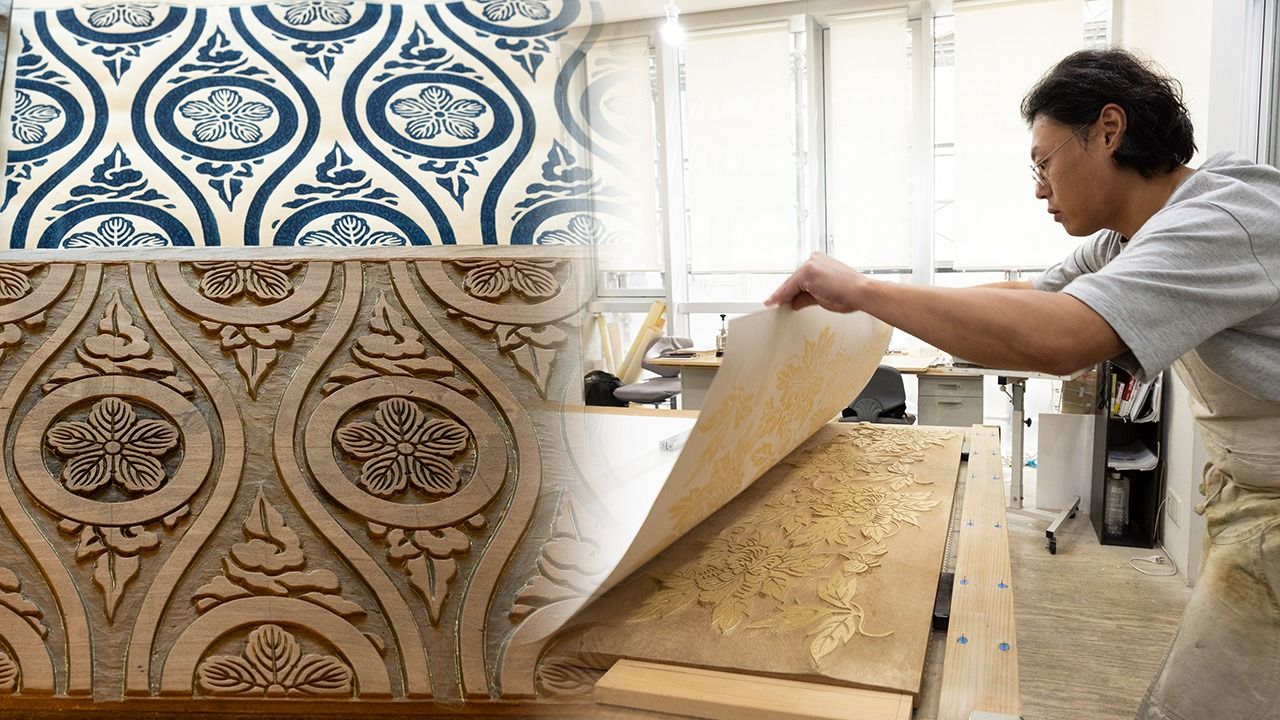
Breathing New Life into a Thousand-Year Karakami Tradition
Architecture Culture History Lifestyle Art- English
- 日本語
- 简体字
- 繁體字
- Français
- Español
- العربية
- Русский
What Is Edo Karakami?
Karakami is a term that is unfamiliar even to many Japanese today. Yet its presence is woven into the fabric of traditional interiors—especially in the form of patterned paper used on fusuma sliding doors. Made from handmade washi and decorated with intricate designs using carved woodblocks or stencils, karakami is both a practical material and a centuries-old art form.
Tokyo Matsuya is a washi manufacturer and wholesaler with headquarters near Asakusa that specializes in Edo karakami. It was founded in 1690 as a publisher of popular books, and over time it began supplying washi to nearby temples, according to Kōno Ayako of the product planning department. After World War II, karakami became its main product.
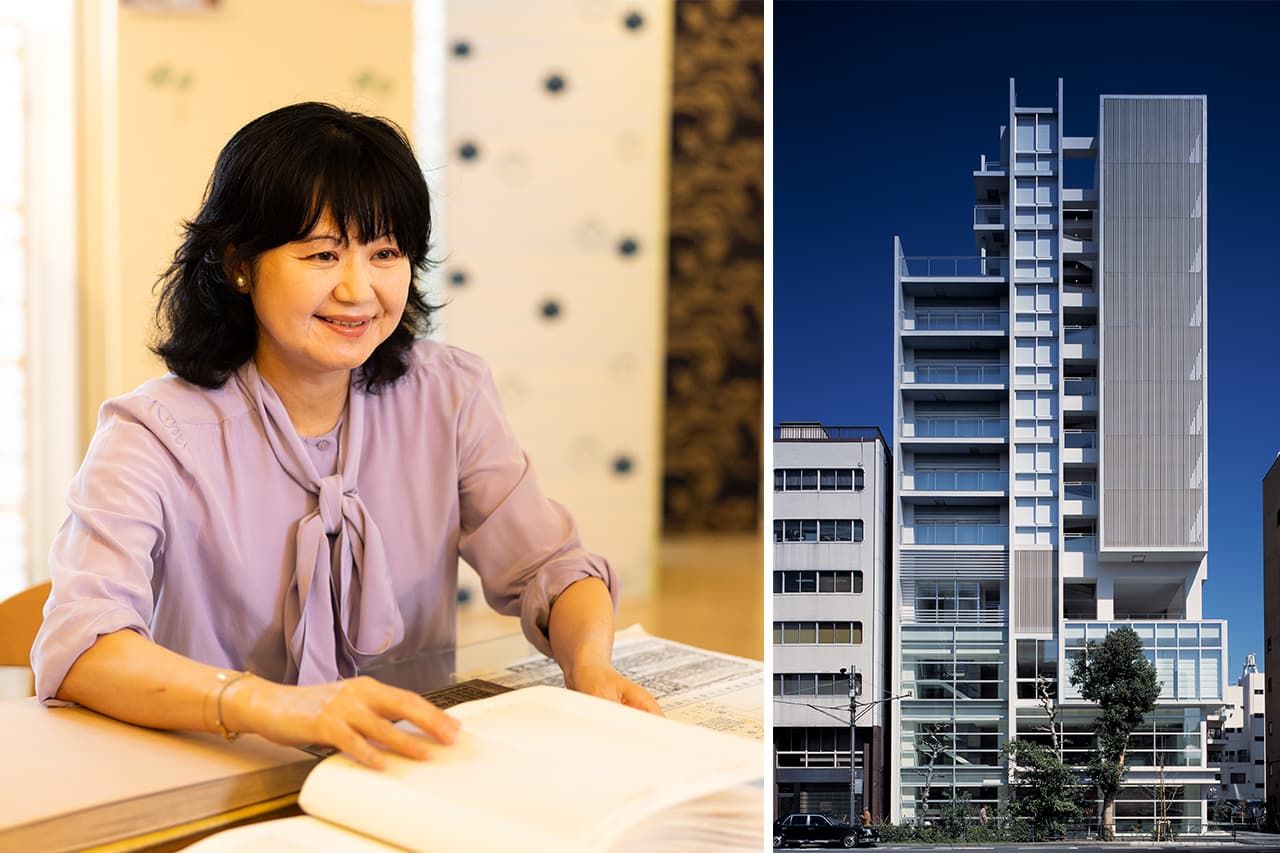
Kōno Ayako in Tokyo Matsuya’s showroom. At right is the company’s head office. (Courtesy of Tokyo Matsuya)
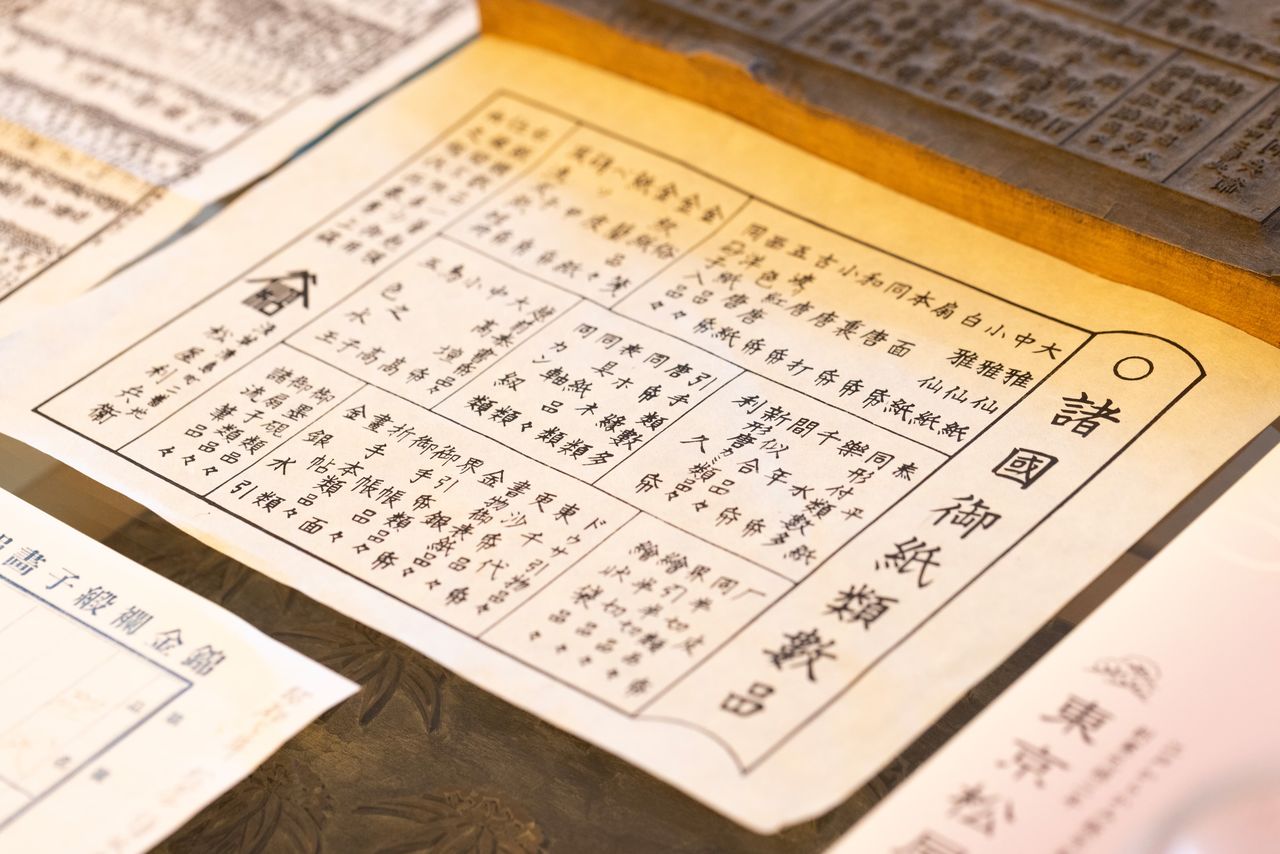
A woodblock flyer from the late Edo period (1603–1868) listing categories of paper products. A reference to “new-style karakami varieties” is found in the middle-right box. (© Kawamoto Seiya)
Karakami, literally meaning “Tang paper,” was introduced from China during Japan’s Heian period (794–1185). Originally prized by aristocrats as elegant writing paper for poetry, it was later fashioned into folding screens and other interior elements—marking the beginning of its use on sliding doors.
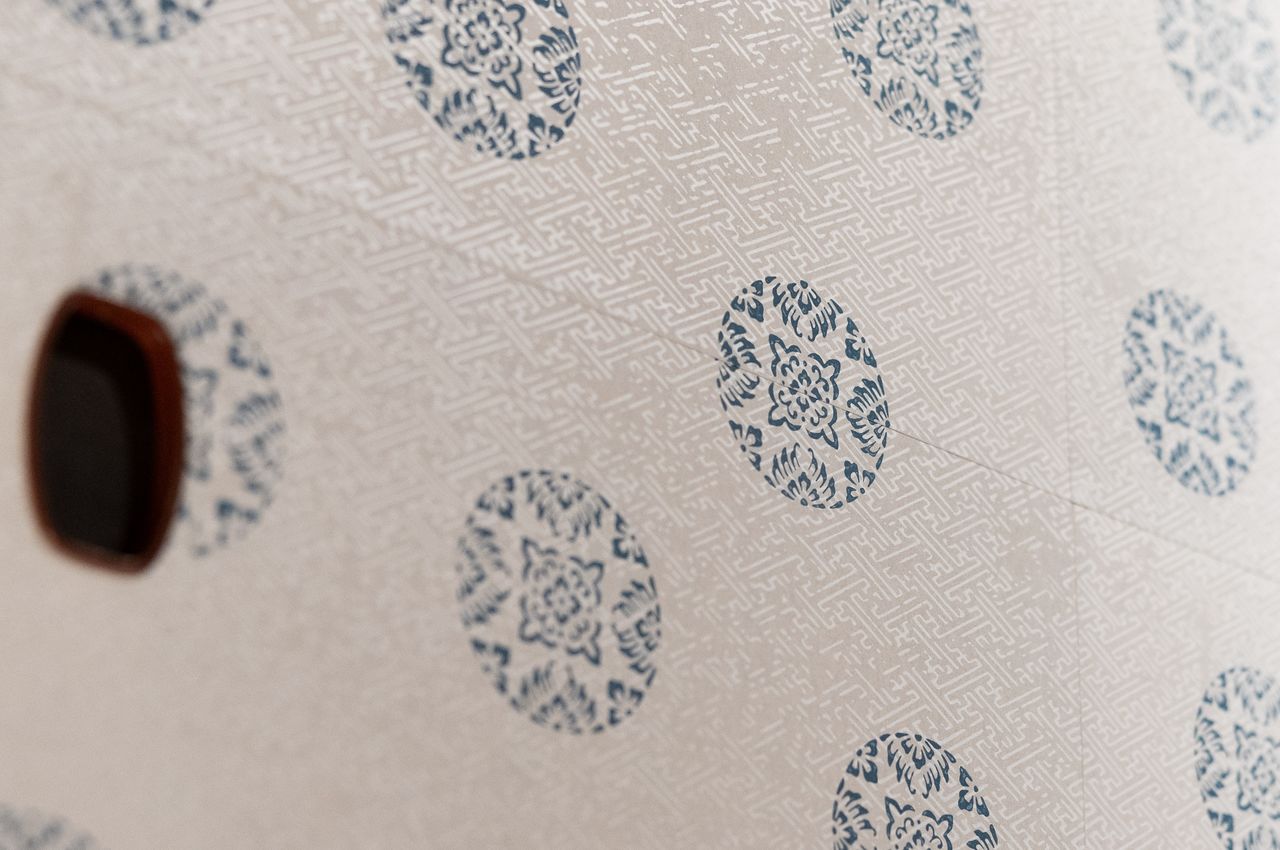
A fusuma made by joining 12 sheets of karakami. The pattern flows seamlessly across the panels. (© Kawamoto Seiya)
The population of Edo (now Tokyo) surged after the Tokugawa shogunate established its capital there. Artisans from Kyoto, heirs to the karakami tradition, migrated to the castle town and passed on their techniques. Local artisans began creating designs that reflected the tastes of Edo’s townspeople, featuring flowers and plants, stylish stripes, and lattice patterns. A vibrant array of karakami emerged.
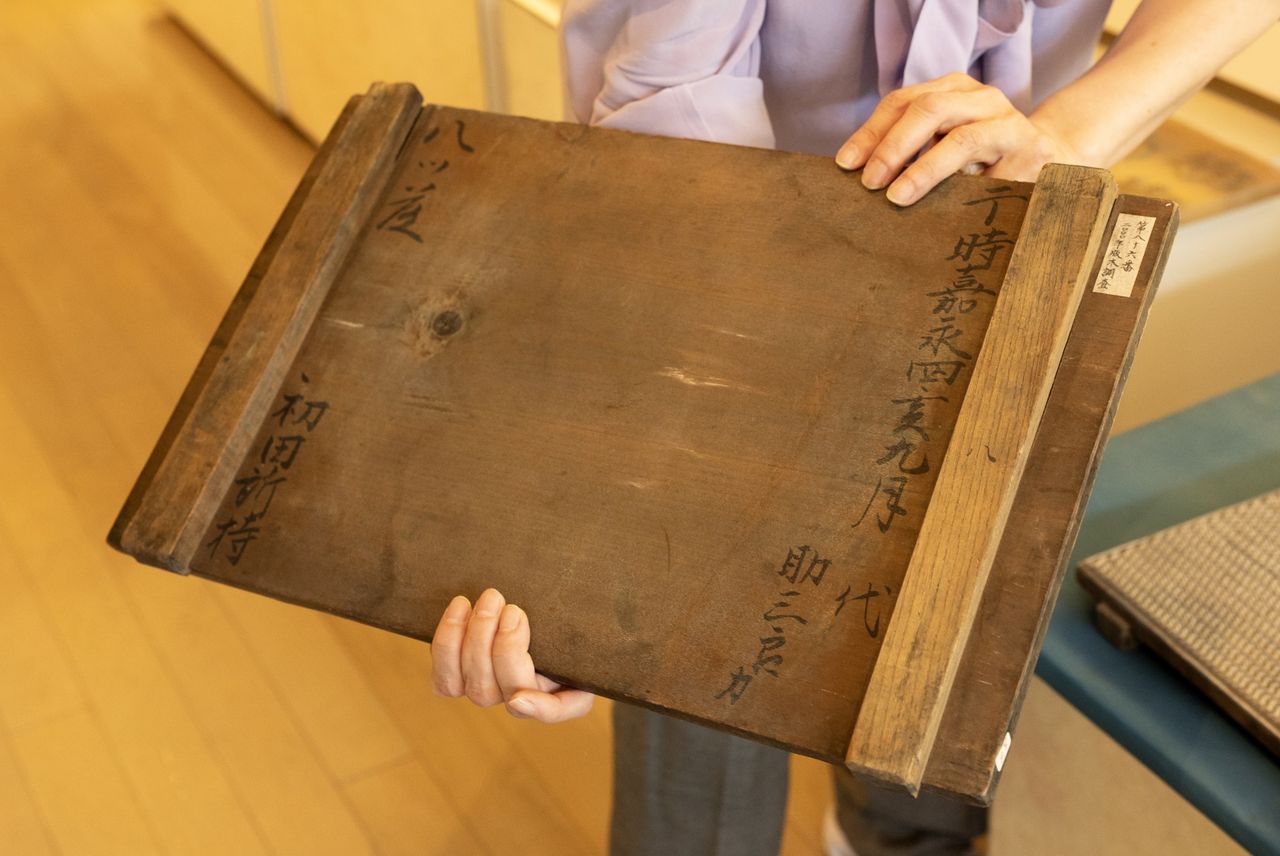
The reverse side of a woodblock from the Edo period. The inscription “September, Kaei 4, Year of the Boar” dates it to 1851. (© Kawamoto Seiya)
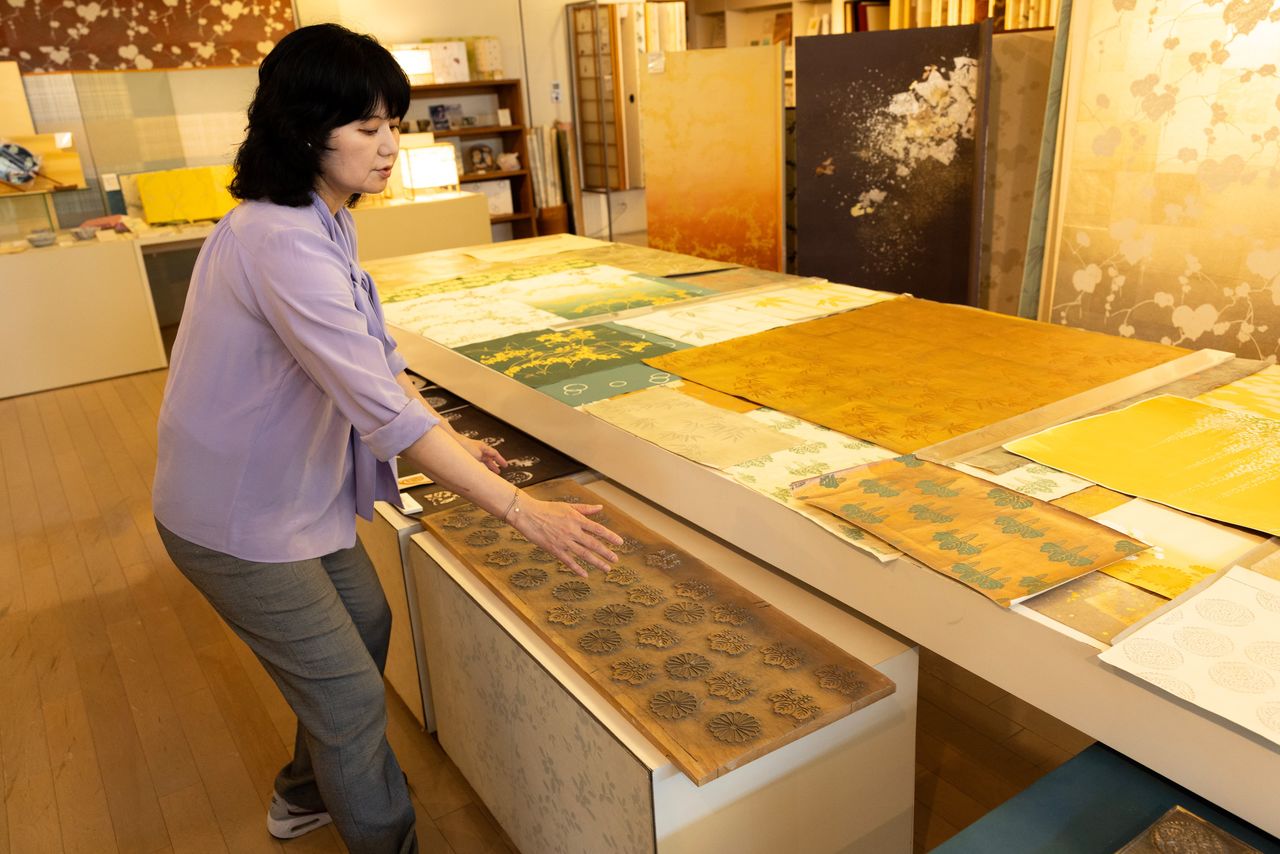
As techniques for making large-format paper improved, woodblocks also grew in size, allowing for more elaborate designs. (© Kawamoto Seiya)
A Three-Decade Quest to Revive Traditional Patterns
Edo’s frequent fires created high demand for fusuma, and karakami production flourished. But the 1923 Great Kantō Earthquake destroyed thousands of woodblocks. Those that were later restored or newly carved were again lost in the 1945 air raids over Tokyo. Although some large-format blocks were revived after the war, many makers downsized or closed, and handmade karakami production plummeted.
Ban Rihei (Mitsuhiro)—Kōno Ayako’s father and now president of Tokyo Matsuya—joined the family’s business in 1963, during Japan’s construction boom, when demand shifted toward mass-produced, machine-printed fusuma paper. Tokyo Matsuya, too, focused on volume products at the time, but Ban, moved by the beauty of prewar catalogs of design samples, felt it a shame that such exquisite designs had fallen out of use. Determined to preserve this legacy, he made it his mission to revive Edo karakami.
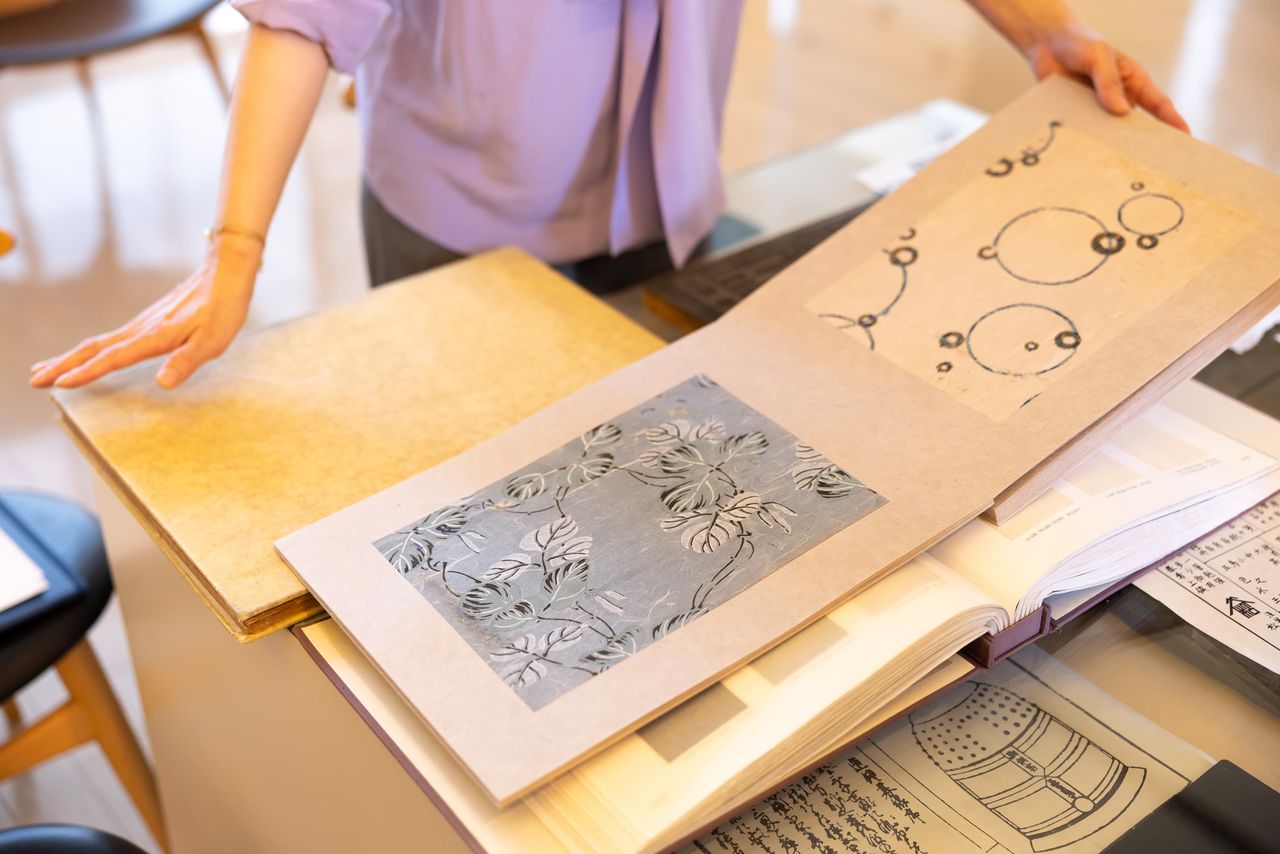
A prewar catalog of Tokyo Matsuya’s design samples. (© Kawamoto Seiya)
Ban began visiting one artisan after another, uncovering woodblocks that had been shelved and forgotten. He also painstakingly recreated the designs of old karakami preserved in private homes and temples. After three decades of dedication, he published a new design catalog in 1992 titled Irodori (Color), featuring 393 examples of handmade washi and Edo karakami.
In 1999, Edo karakami was designated a traditional craft product by the Japanese government, bringing renewed attention to the art form. Yet many of the skilled artisans were already advanced in age, raising concerns about the transmission of techniques. Determined not to let a millennium-old tradition fade away, Ban established an in-house production department to create karakami under Tokyo Matsuya’s own roof.
Transferring Patterns by Hand
Edo karakami employs specialized techniques—woodblock printing, hand-printing of patterns using persimmon tannin, and the sprinkling of gold and silver flakes—to create a wide range of decorative effects. Takasugi Yūya, head of the production department, demonstrated his method of hand-printing with woodblocks using gold mica pigments.
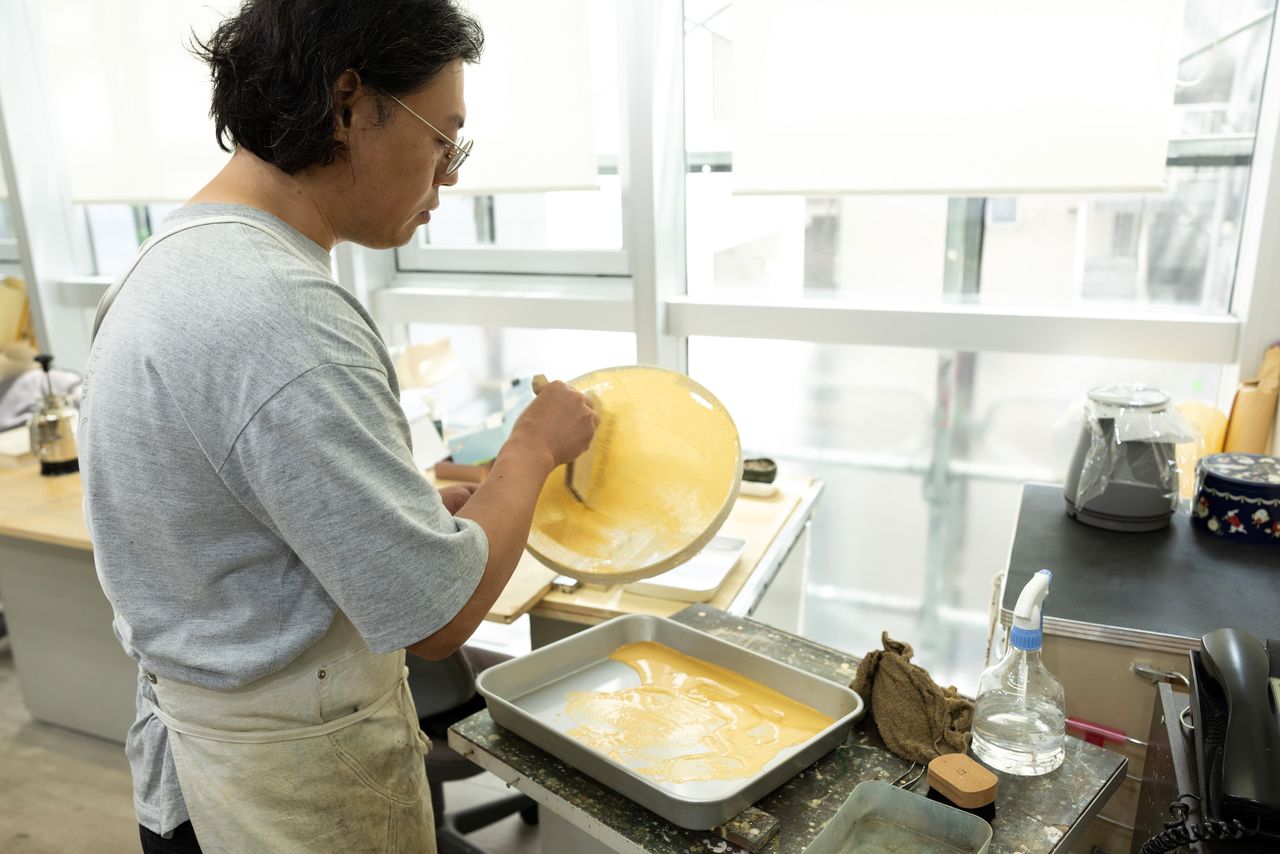
Takasugi applies blended pigments to a cloth-stretched sieve. (© Kawamoto Seiya)
Using the same principle as woodblock printing, pigments applied to the raised surface of the block are transferred onto washi paper. If only one side of the paper is moistened by the pigment, it tends to curl—so the reverse side is also dampened in advance. Subtle adjustments are required depending on the type of paper, as well as the temperature and humidity of the room. Utmost care is taken to ensure a consistent finish and prevent uneven color or tone across the many sheets needed for a single set of fusuma panels.
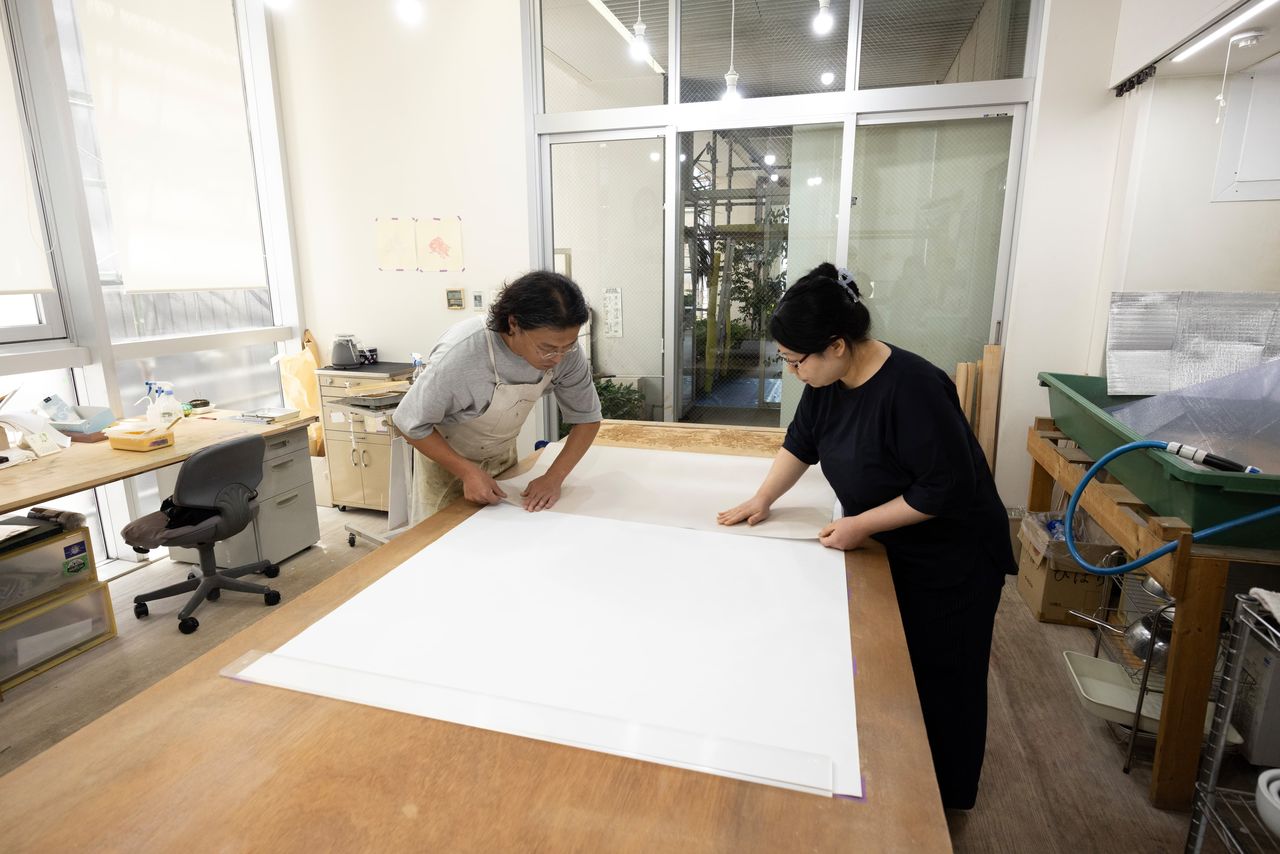
Aligning the paper requires two pairs of hands. (© Kawamoto Seiya)
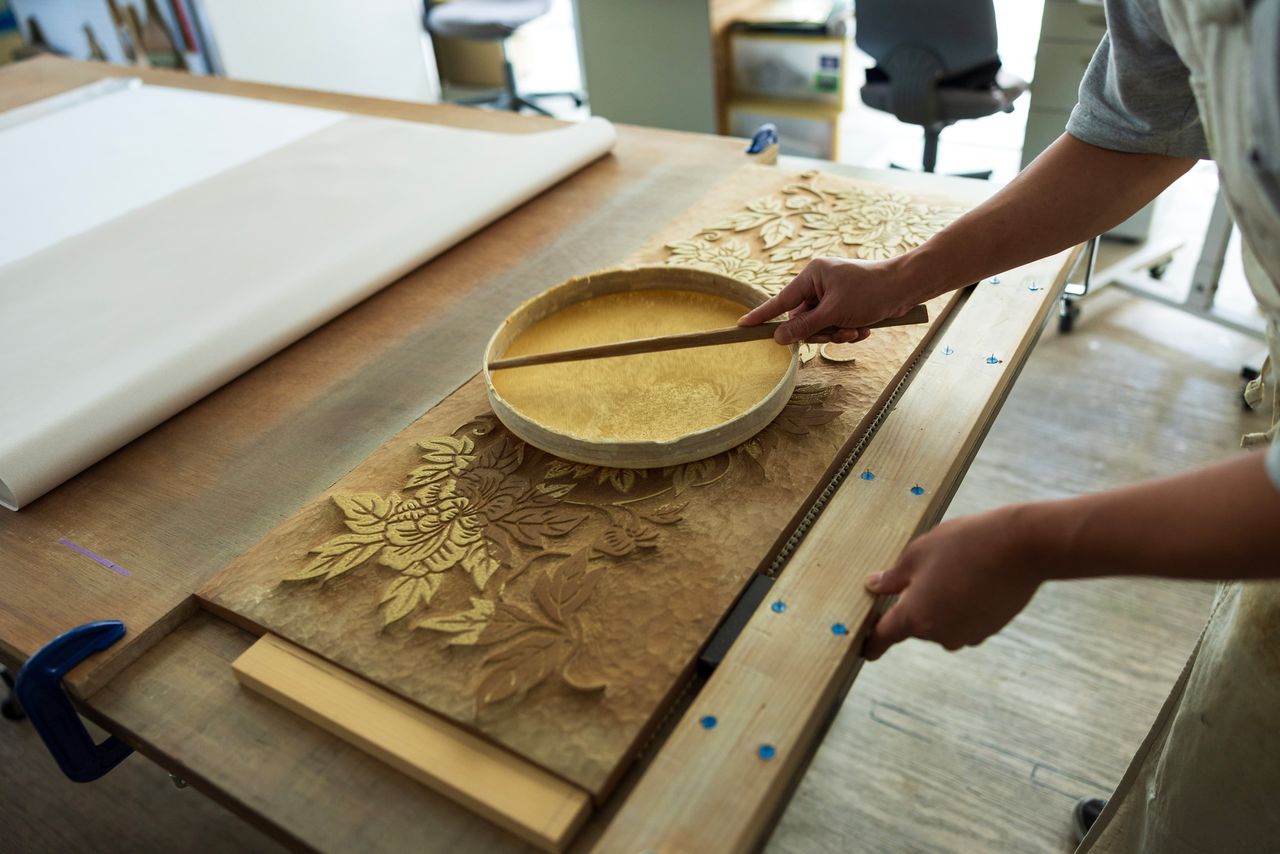
Pigment is gently dabbed onto the raised surface of the woodblock using a cloth-covered sieve. (© Kawamoto Seiya)
The pigment brushed onto the screen is a pale yellow known as kinkira, made by blending powdered pigment with gold mica and a seaweed-based adhesive and adjusting the tone to suit the washi. The woodblock design features a peony blossom. Once the pigment is applied, Takasugi carefully lays the washi over the block and gently glides his hand across the surface to transfer the pattern. True to Edo karakami tradition, the printing is done by hand, without relying on burnishing tools.
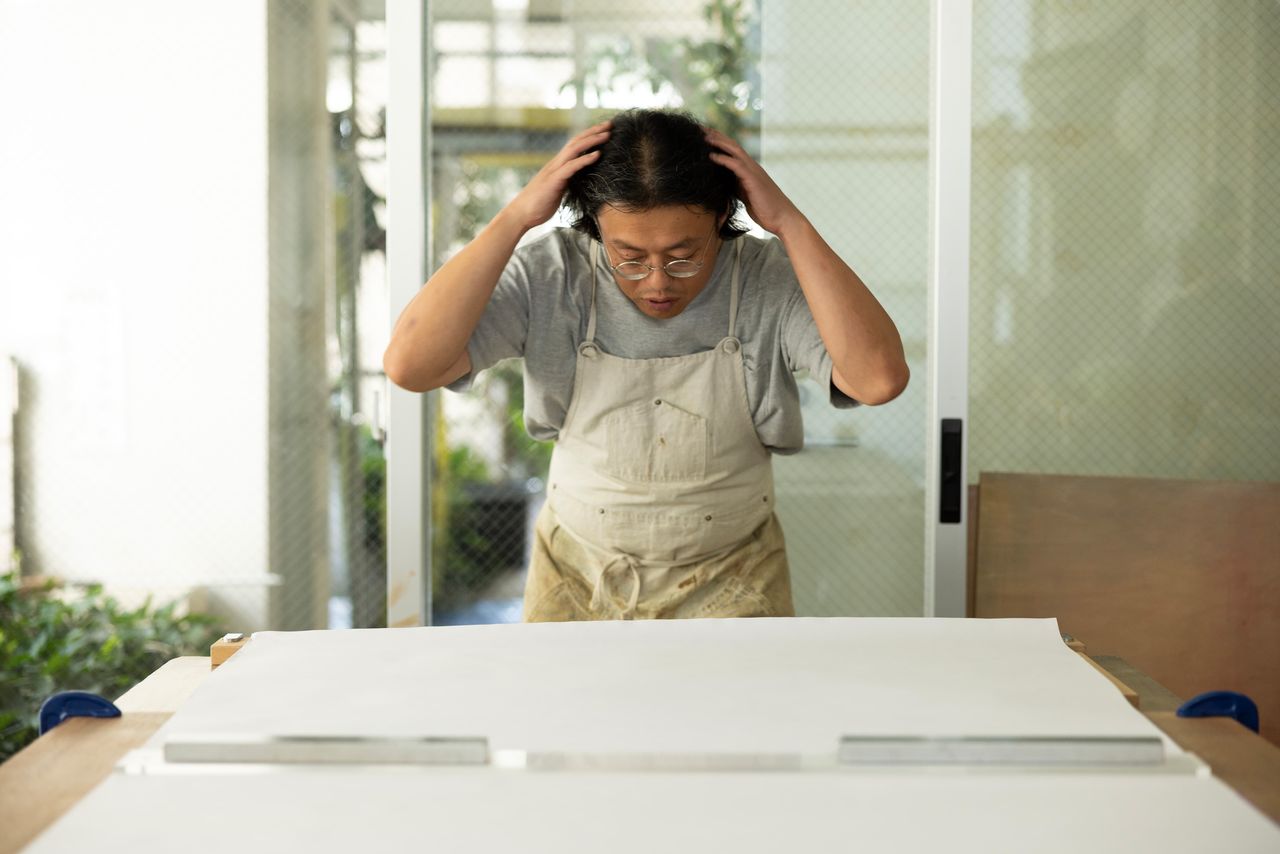
Touching one’s hair before printing is a trick Takasugi learned from a veteran artisan to improve hand glide. (© Kawamoto Seiya)
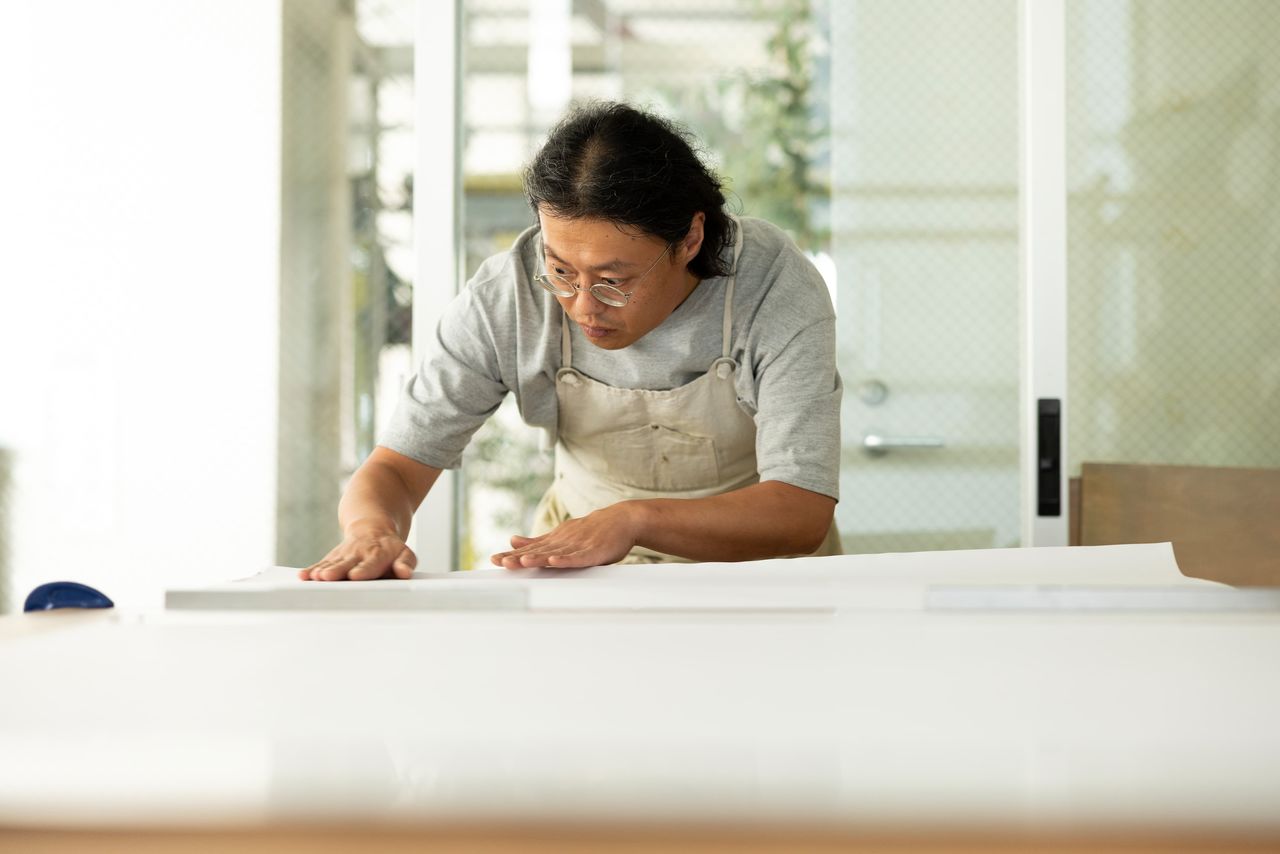
Every step of the printing process demands complete focus. (© Kawamoto Seiya)
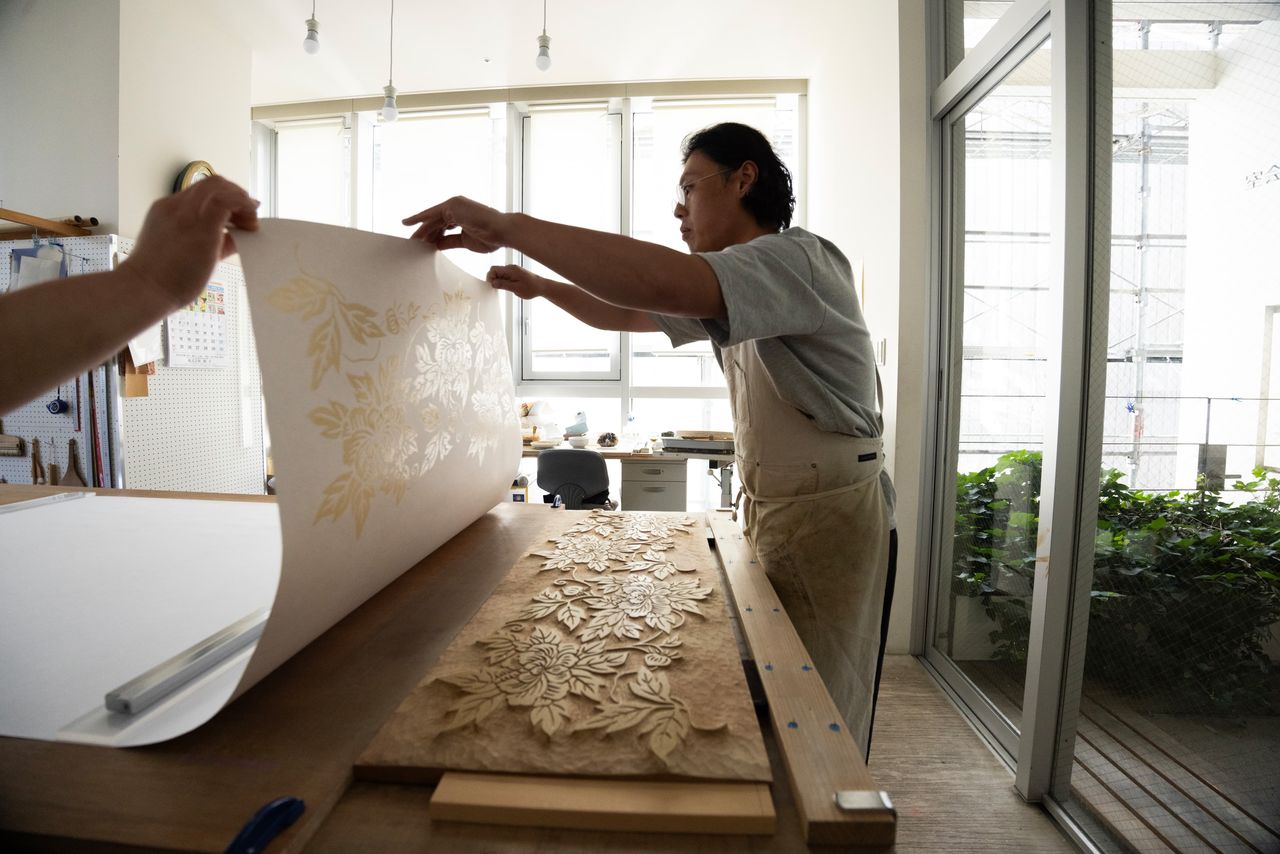
Lifting the printed paper with nervous anticipation. (© Kawamoto Seiya)
As the paper is gently lifted, a shimmer appears—one that could not have been imagined from the pigment alone. Peony patterns glow softly against a whisper of gray. This technique has long been cherished for the way designs are transformed under candlelight or moonlight, revealing a different expression from their daytime appearance.
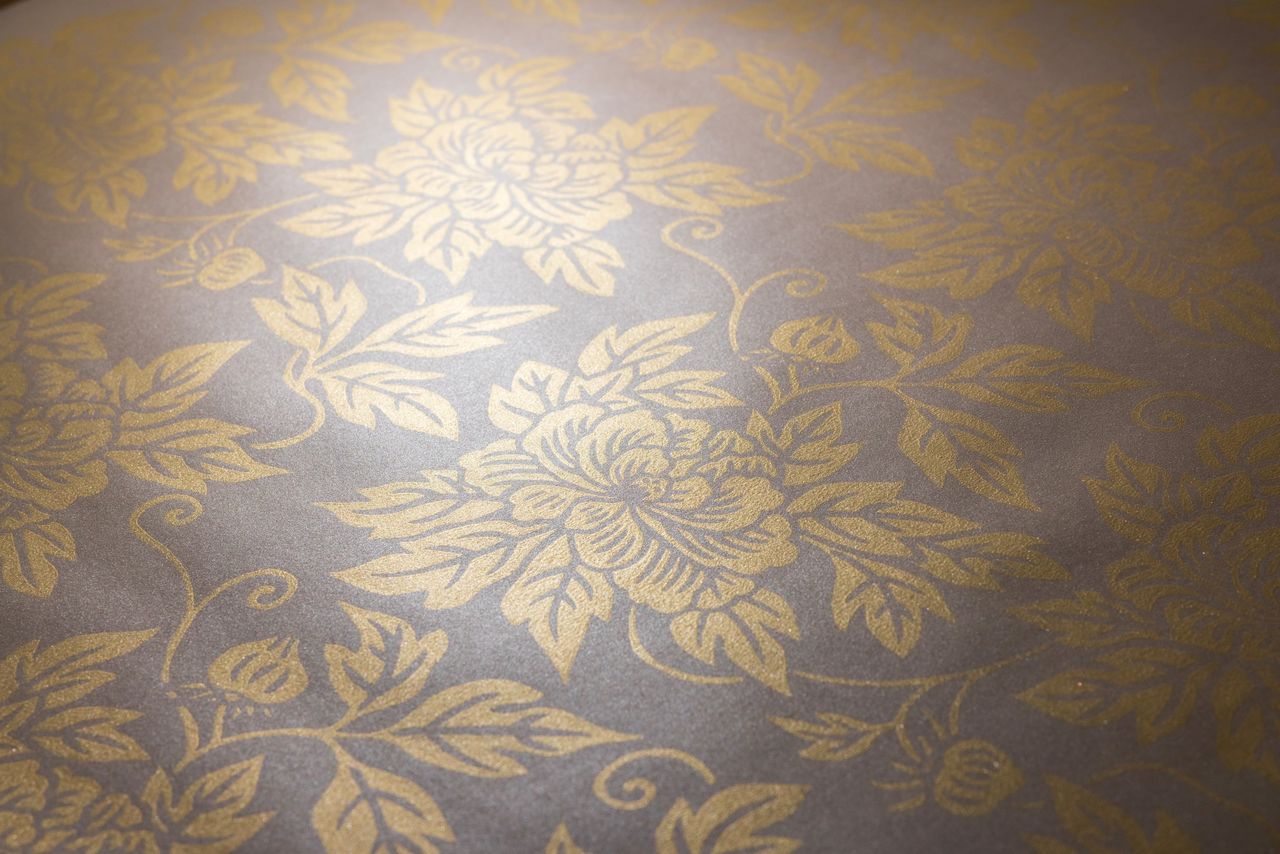
The shimmering peony motif exudes quiet elegance. (© Kawamoto Seiya)
Training Artisans In-House
Originally from Niigata Prefecture, Takasugi Yūya moved to Tokyo to study music and pursue a career as a musician. When making a living proved difficult, he joined Tokyo Matsuya at age 24—a career path more closely aligned with his grandfather and father, both of whom worked as carpenters.
After six years of working in sales, Takasugi was assigned to attend a training school for paper mounting and framing. There, he learned the techniques for mounting Tokyo Matsuya’s paper onto fusuma panels and hanging scrolls. After two years of study, he earned national certification as a professional mounting artisan.
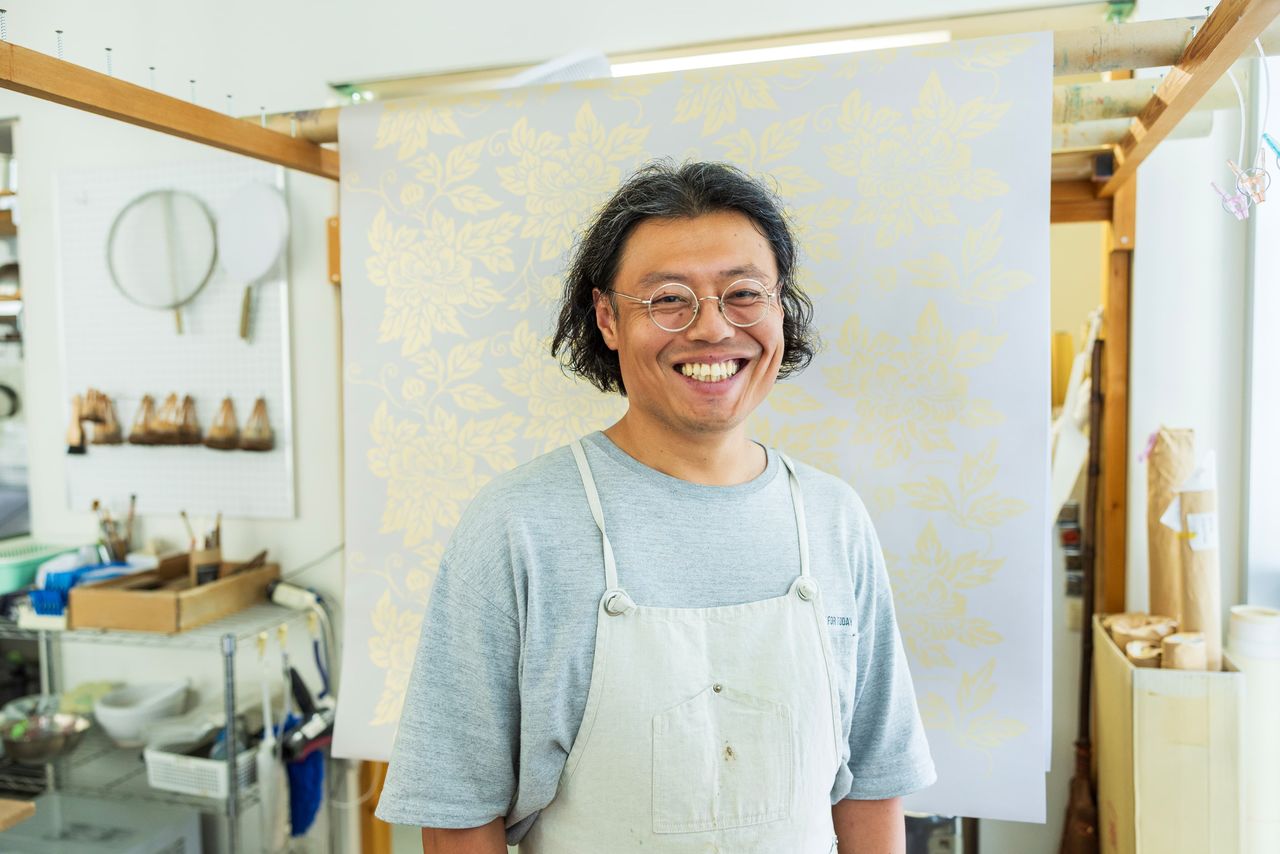
Takasugi Yūya, a karakami artisan. (© Kawamoto Seiya)
Before long, Tokyo Matsuya established an in-house production department, and Takasugi began his path as a karakami artisan.
Washi paper varies widely depending on its raw materials, place of origin, method of production, and intended use. Having always enjoyed making things by hand, Takasugi quickly became absorbed in the creative process. He spent three to four years learning techniques from older, retired artisans, gradually coming to understand the significance of each task and to feel his own progress.
“No two pieces turn out exactly alike, even if you follow the same steps,” he explains. “That’s the beauty—and the challenge—of hand-printing.” Even now, with years of experience, he often finds himself wondering how karakami dating from the Edo period could have been made with such finesse. He dreams of one day creating an original, nature-inspired design.
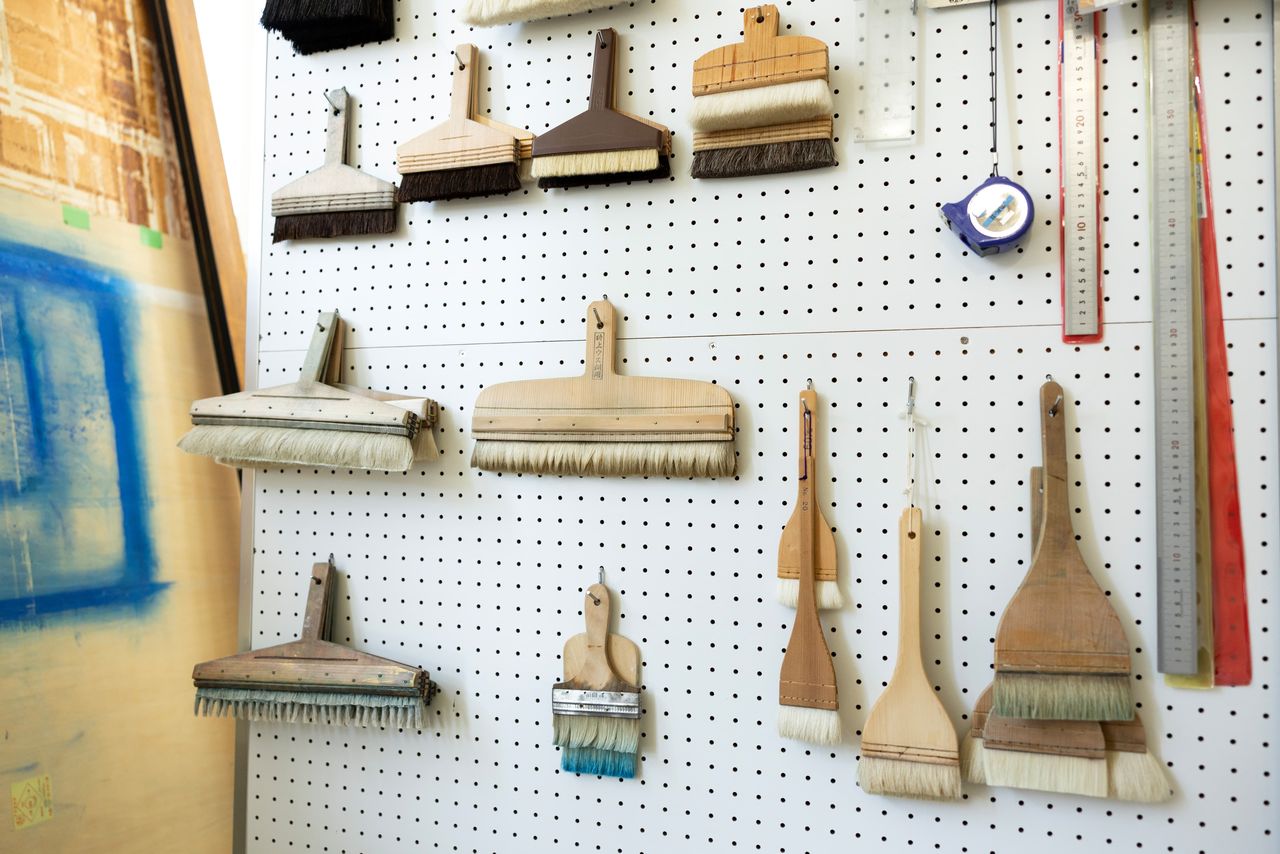
Takasugi customizes his own tools. At lower left is a brush with thinned bristles, used to create striped patterns. (© Kawamoto Seiya)
Takasugi has now been engaged in karakami production for 10 years. Having seen the closure of many workshops due to a lack of successors, he has come to understand how difficult it can be for artisans to make a living on their own. “It’s a rare privilege to be able to create karakami as a full-time employee of a paper manufacturer,” he says.
Keeping Edo Karakami Alive
Tokyo Matsuya reports receiving large orders from hotels and restaurants in recent years. In addition to its traditional role as fusuma paper, karakami is now being adapted for space-dividing panels and showcased as art pieces that enrich interior design. While many new condominiums lack tatami rooms where fusuma are typically installed, some clients still request authentic karakami for their closet doors.
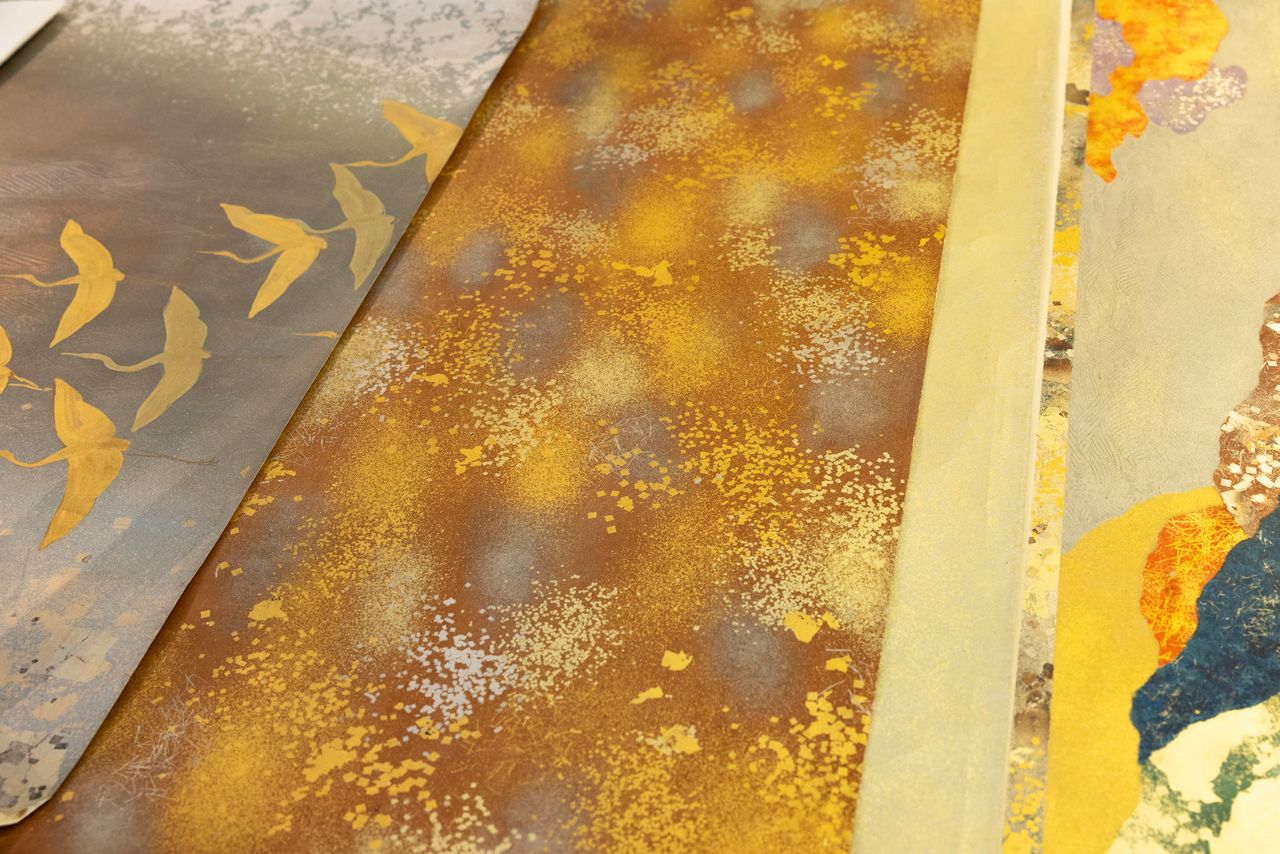
Edo karakami decorated using gold and silver flakes. (© Kawamoto Seiya)
Crafted using traditional papermaking and printing techniques, handmade washi is often considered more expensive than mass-produced alternatives. But its long fibers make it strong and durable, and its resistance to fading and natural ability to regulate humidity contribute to creating truly comfortable living spaces. Hoping to promote lifestyles enriched by washi, Tokyo Matsuya has outfitted the 40 residential units above its head office with Edo karakami on fusuma doors and walls.
With a history going back many centuries, Tokyo Matsuya holds a firm conviction in the enduring appeal of washi and the timeless charm of karakami patterns—trusting that true quality will always stand the test of time.
(Originally published in Japanese. Reporting and text by Nippon.com. Banner photo: A karakami print made from an Edo-period woodblock, left, and Takasugi Yūya hand-printing a design using traditional techniques. © Kawamoto Seiya.)