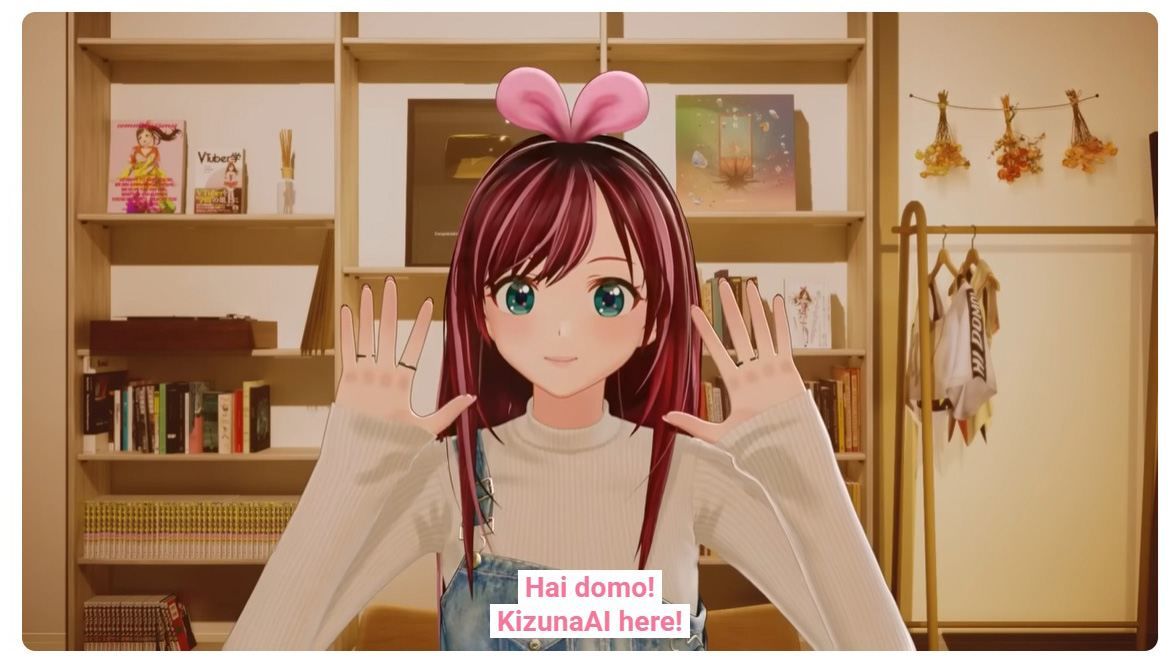
Diving Into the VTuber World: A New Nexus of Japanese Pop Culture
Culture Anime- English
- 日本語
- 简体字
- 繁體字
- Français
- Español
- العربية
- Русский
KizunaAI Returns After Three Years
“I want to give it all I have so that people can fall in love with me all over again.”
On February 26, 2025, the digital YouTube performer KizunaAI resumed her activities for the first time in three years. This legendary online entertainment figure had gone on hiatus after her “Hello, World 2022” live concert. Now she has declared a new focus on her career as a musical artist and released a new track.

KizunaAI’s comeback concert in Shinjuku, Tokyo. Using the latest technology, her image appears as a lifelike, three-dimensional character onstage. (Courtesy KizunaAI/PR Times)
KizunaAI made her debut on December 1, 2016, calling herself a “Virtual YouTuber.” She described herself as the perfect being born when the unconscious wishes of humanity converged online, triggering the singularity, the point at which artificial intelligence surpasses human intelligence.
Since her return, her subscriber count has grown by about 100,000, reaching 3.07 million as of October 1. Her YouTube channel has nearly five times as many subscribers as Tamaki Yūichirō, leader of the Democratic Party for the People and the politician with the most subscribers for an individual channel among the heads of Japan’s major parties. In corporate terms, she is even approaching the 3.5 million subscribers of Nintendō’s official channel.
VTubers Surge Into an Expanding Market
The explosive debut of KizunaAI ignited both the imagination and creativity of audiences everywhere.
According to User Local, a social media analytics firm, the number of VTubers—performers reaching their fans through the online video-sharing service—reached 1,000 in March 2018. Six months later, in September, the figure climbed to 5,000. By January 2020 it had surpassed 10,000, and by November 2022 it exceeded 20,000. The VTuber Statistics Report 2024, an independently compiled publication distributed at the Comic Market (Comiket) festival held at the end of that year, roughly 60,000 creator accounts are currently active.
The economic scale of the industry is also growing. A report published in April 2025 by Yano Research Institute estimates the domestic market at ¥80 billion for 2023, rising to ¥126 billion in 2025. This is more than four times its size in 2020.
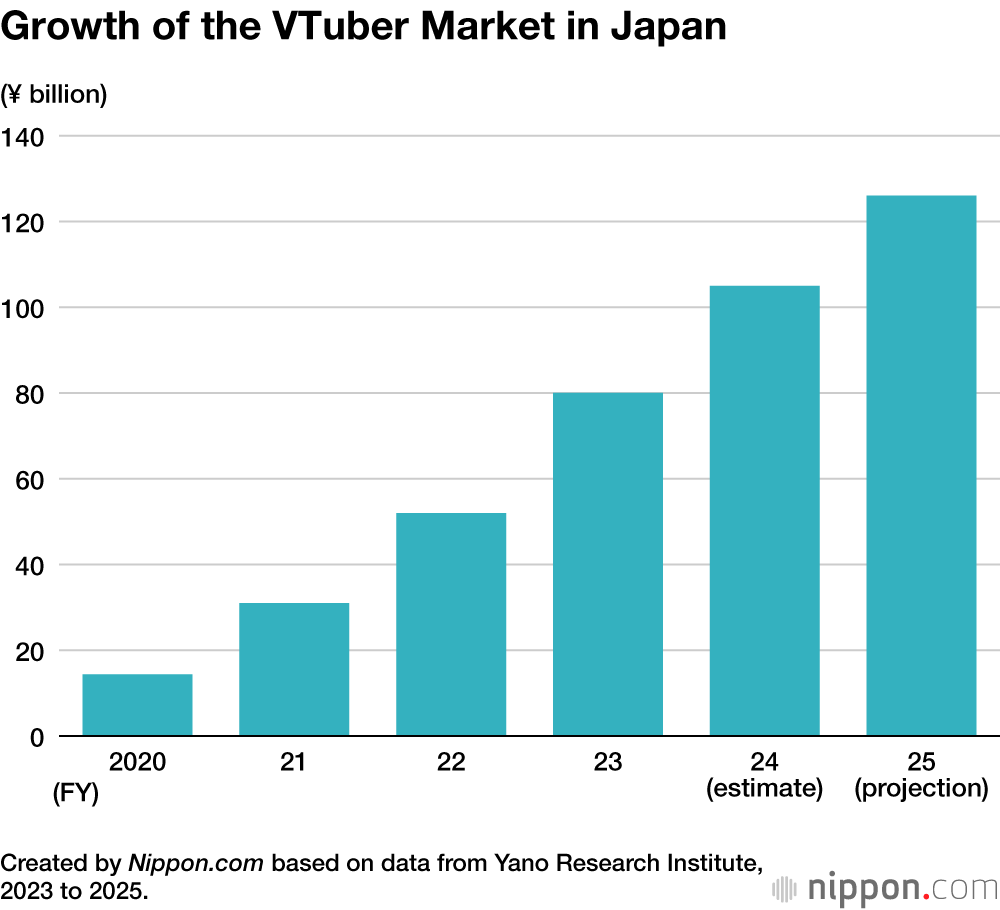
Market research firm Global Information stated in an October 2024 report that the global VTuber market was worth $1.35 billion in 2023 and is expected to reach $5.03 billion by 2030.
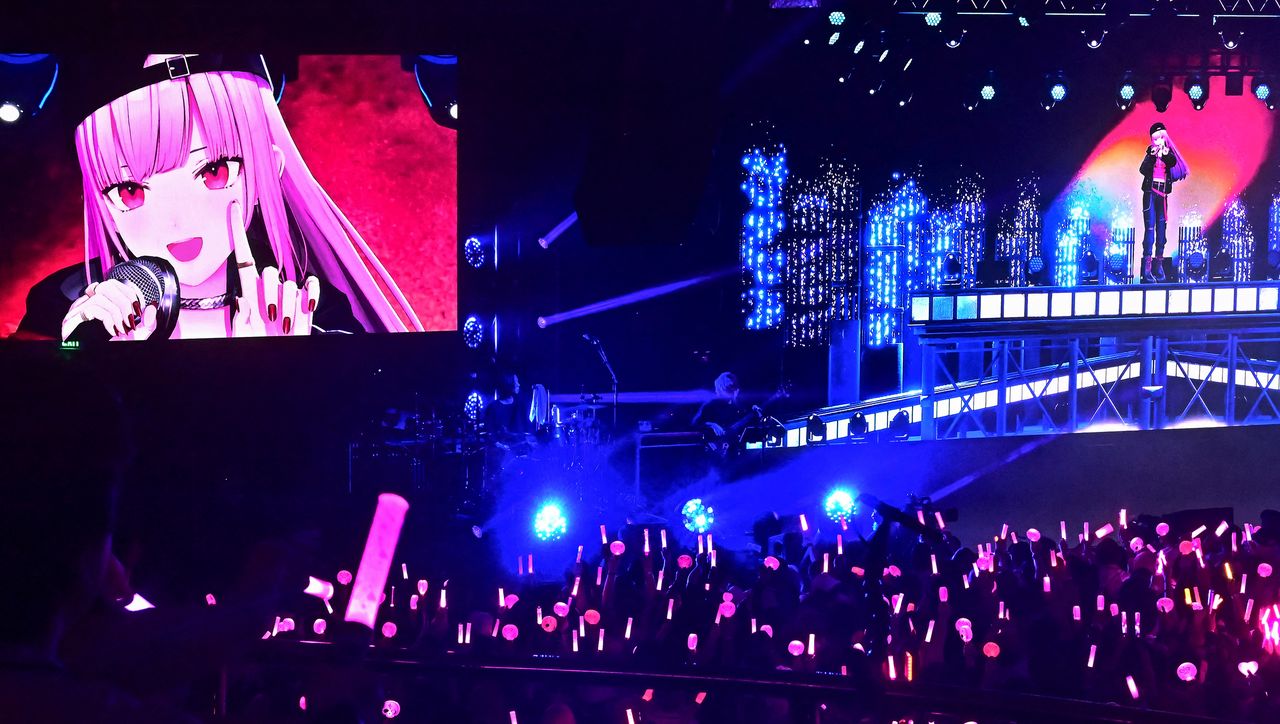
VTuber Mori Calliope performing live in California in February 2025. VTuber concerts are now held around the world. (© AFP/Jiji)
Gawr Gura, one of the most popular English-language VTubers, went on hiatus at the end of April. Even so, she still had 4.7 million subscribers as of May. Other groups cater to Chinese-, Indonesian-, and Korean-speaking audiences, showing how Japan’s online culture has expanded across the globe.

An advertisement for the popular VTuber Gawr Gura displayed at Shibuya Station in Tokyo, March 2023. (© Stanislav Kogiku/SOPA Images/Sipa USA/Reuters)
Online Culture Meets Anime Culture
What makes a VTuber different from an anime character? The 2024 Gendai yōgo no kiso chishiki, an annual lexicon of contemporary shifts in the Japanese language, explains it as follows:
Vtuber [Virtual YouTuber]: A person who performs as a 3D computer-generated character in a VR studio and streams commentary videos. The term became established after KizunaAI posted her first video on YouTube in 2016 and called herself a virtual YouTuber.
Generally speaking, VTubers have real humans behind the avatars. They behave freely as single, coherent personalities and interact with viewers in real time through social media and video platforms. In musical performances, advanced technology allows them to move, sing, and speak to the audience onstage.
Because VTubers rely heavily on “online interaction,” they are deeply influenced by internet culture such as message boards, social networks, and video-sharing platforms. At the same time, anime is also part of their heritage.
Ōsaka Takeshi, president of Activ8, the company that produces KizunaAI, has long sensed the global respect and demand for Japanese pop culture, including anime, manga, and games. He launched the company believing this field could become an industry capable of competing on the world stage.
KizunaAI’s concept was also shaped by the Japanese anime Ghost in the Shell. The idea draws from the “Puppet Master,” an information-based lifeform born on the internet within the story. As Ōsaka says, “What people imagine can become real and change society”—signaling that KizunaAI was created as a positive form of artificial intelligence intended to guide people in a better direction.
I see VTubers as one of the junction points of Japanese media, content, and communication. They arise from an environment where Japanese internet culture, anime, manga, games, and the interplay between physical and digital spaces all converge. Out of this dense and tangled mix, new forms of creative expression continue to emerge.
Corporate and Independent VTubers
VTubers generally fall into two major categories. One consists of professionals affiliated with agencies or companies, known as “corporate VTubers.” The other consists of individuals and amateurs, or “independent VTubers.” Among corporate VTubers, the two dominant agencies are Nijisanji and Hololive Production. Their talents cover a wide range of activities, including livestream chats, game commentary, and song covers, as well as collaborations with companies, distribution of original tracks, and large-scale live events.
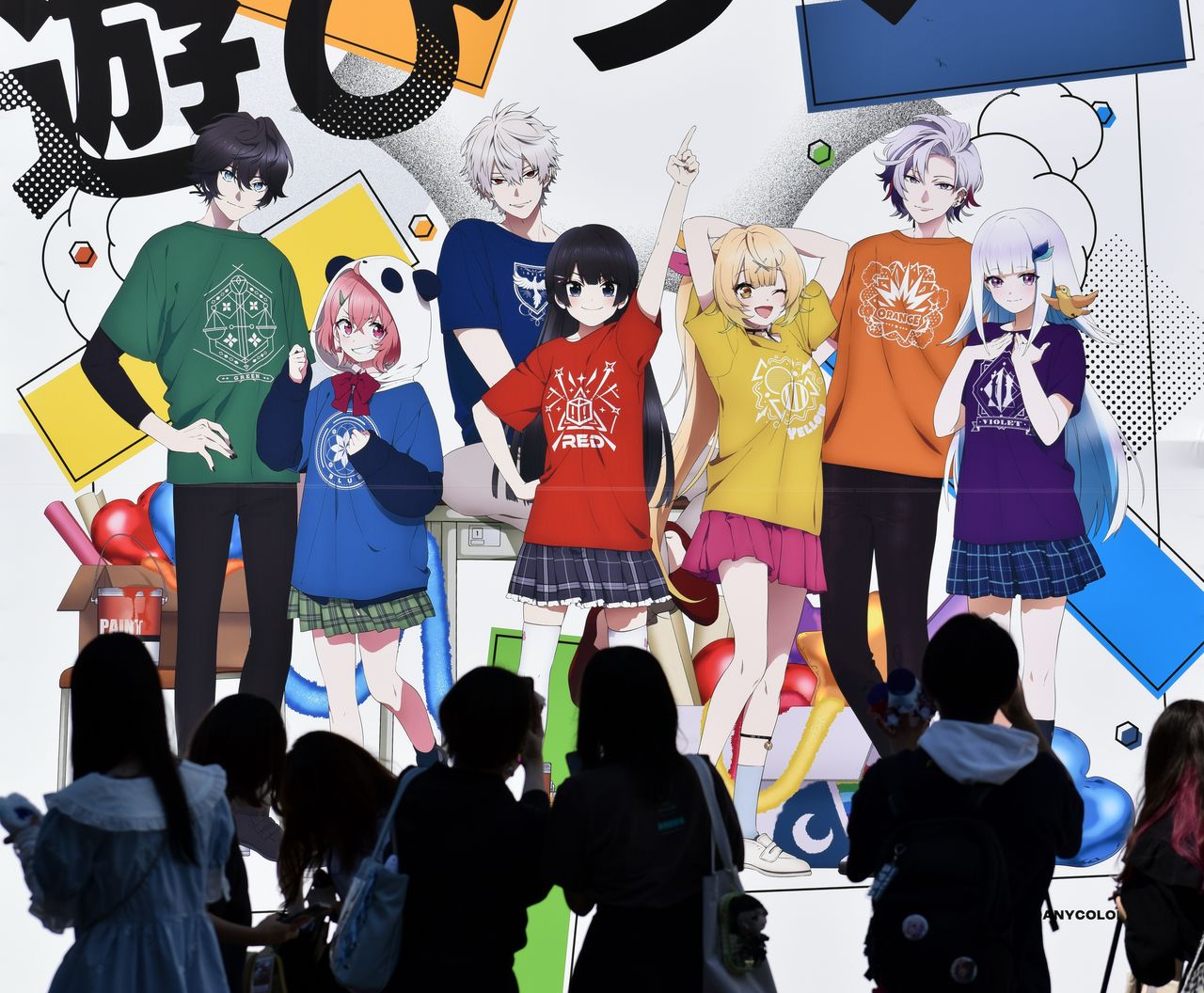
The Nijisanji Festival 2022, a major event featuring corporate VTubers, was held in October 2022 at Makuhari Messe in Chiba. (© Jiji)
An analysis by the Yano Research Institute report shows that the largest share of revenue comes from goods, music, and audio content, with character merchandise standing out in particular. In Tokyo Station’s underground Tokyo Character Street, a mall of shops dedicated to various character-based properties, Hololive operates its own shop alongside well-known brands such as Pokémon and Chiikawa.
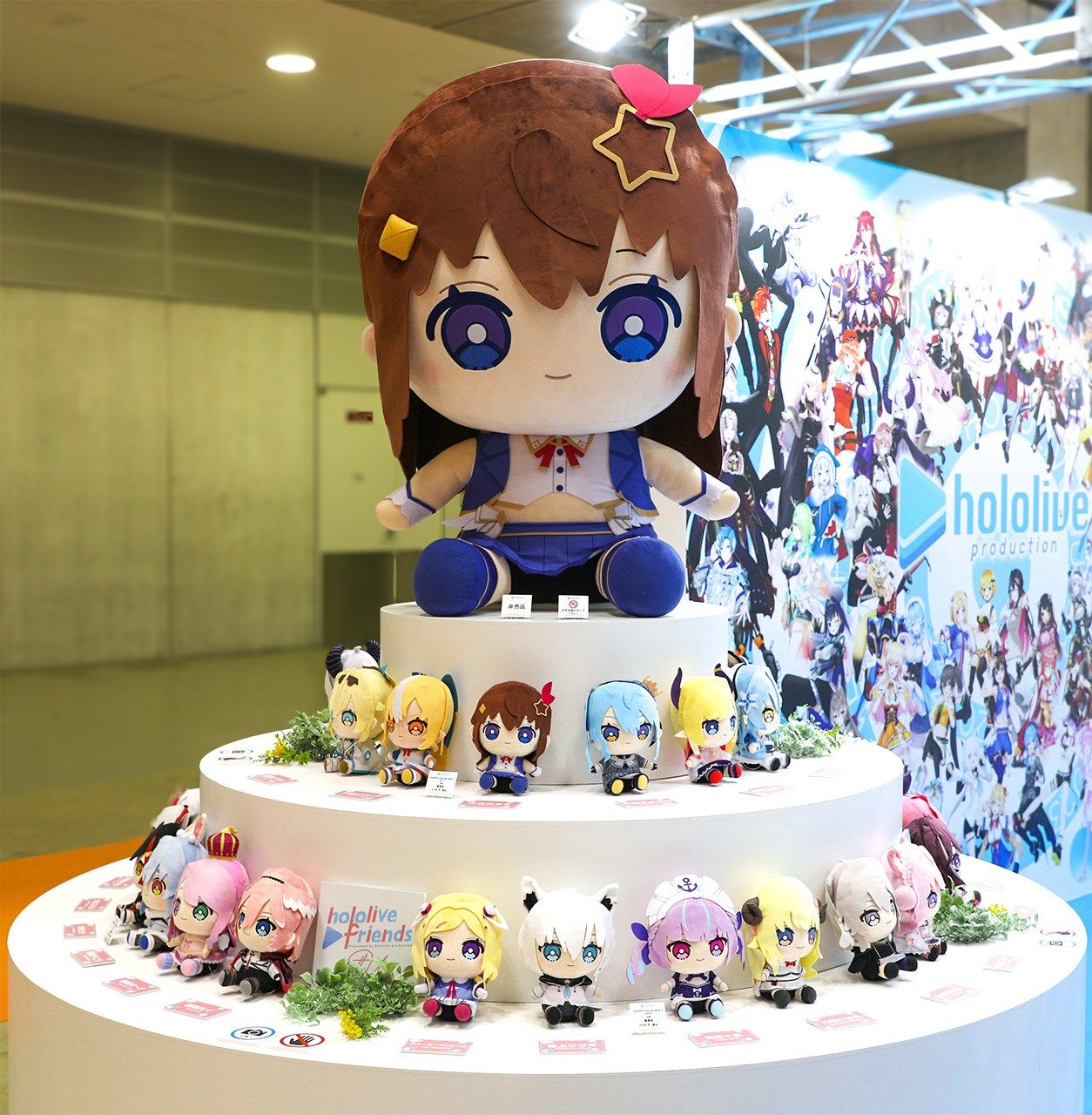
Hololive plush toys displayed at the Tokyo Toy Show 2023, June 2023, in Tokyo. (© Jiji)
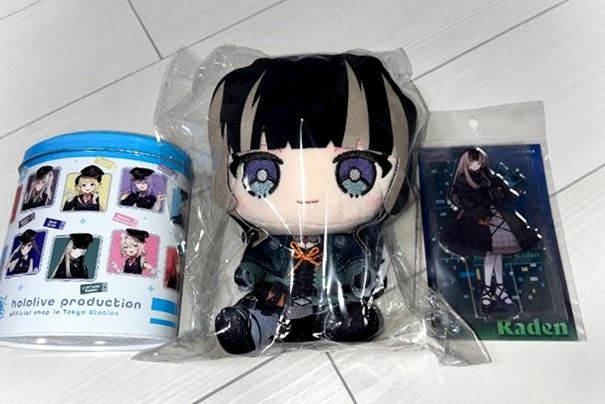
Hololive merch purchased at the Tokyo Station shop, including a plush toy and acrylic stand of the character Jūfūtei Raden. (© Okamoto Takeshi)
The fastest-growing category is promotions, licensing, and tie-ins. For example, the Nijisanji VTuber Suō Sango collaborated with Shima Spain Village, a theme park in Mie Prefecture, in spring 2023. During the event period, visitor numbers nearly doubled from the previous year, and churros featured in her videos sold an average of 1,000 per day—more than 30 times the usual amount.
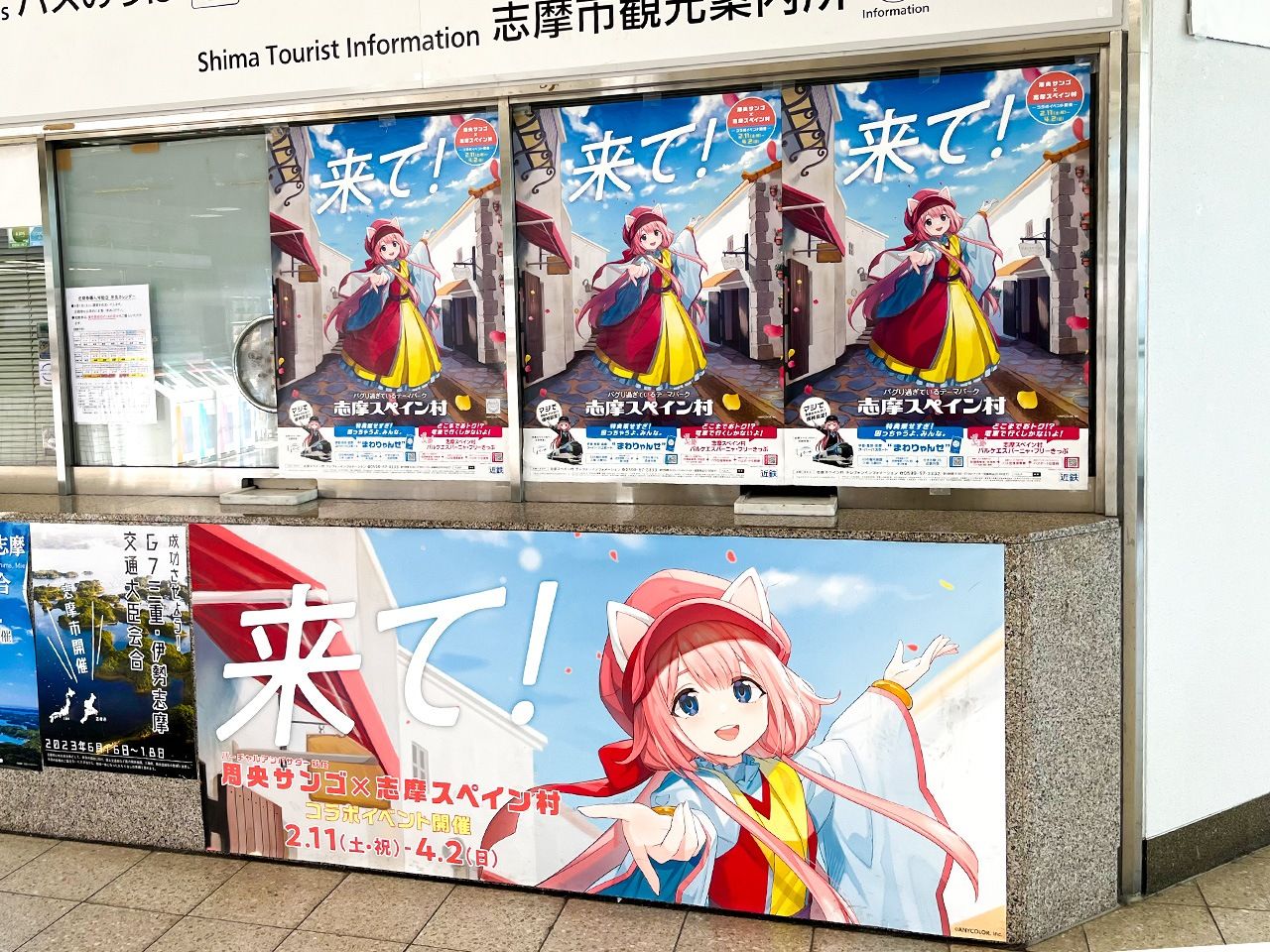
Suō Sango features in advertising at Ugata, the closest station to Shima Spain Village. (© Okamoto Takeshi)
Tourism has generally been tied to specific locations featured in anime or manga, which then become must-visit “pilgrimage sites” for fans of those titles. For VTubers, however, communication between facilities and fans is active even before a tourism framework takes shape. Visitors experience the places introduced by VTubers as something personal and familiar, rather than as distant fictional settings.
Independent VTubers Gain Influence
The rise of VTubers is also evident in the sheer number of independent creators. As apps for streaming and avatar creation become more widespread, and as motion capture technology becomes more accessible, anyone can step into the role of the “person inside.” Two of the most prominent independent VTubers are Kōga-ryū Ninja Ponpoko, a ninja character patterned after the popular tanuki, and the nut-shaped Peanut-kun. Together they form the duo Pokopea, collaborating with companies such as NTT Docomo and JR West. Their influence rivals that of major corporate VTubers.
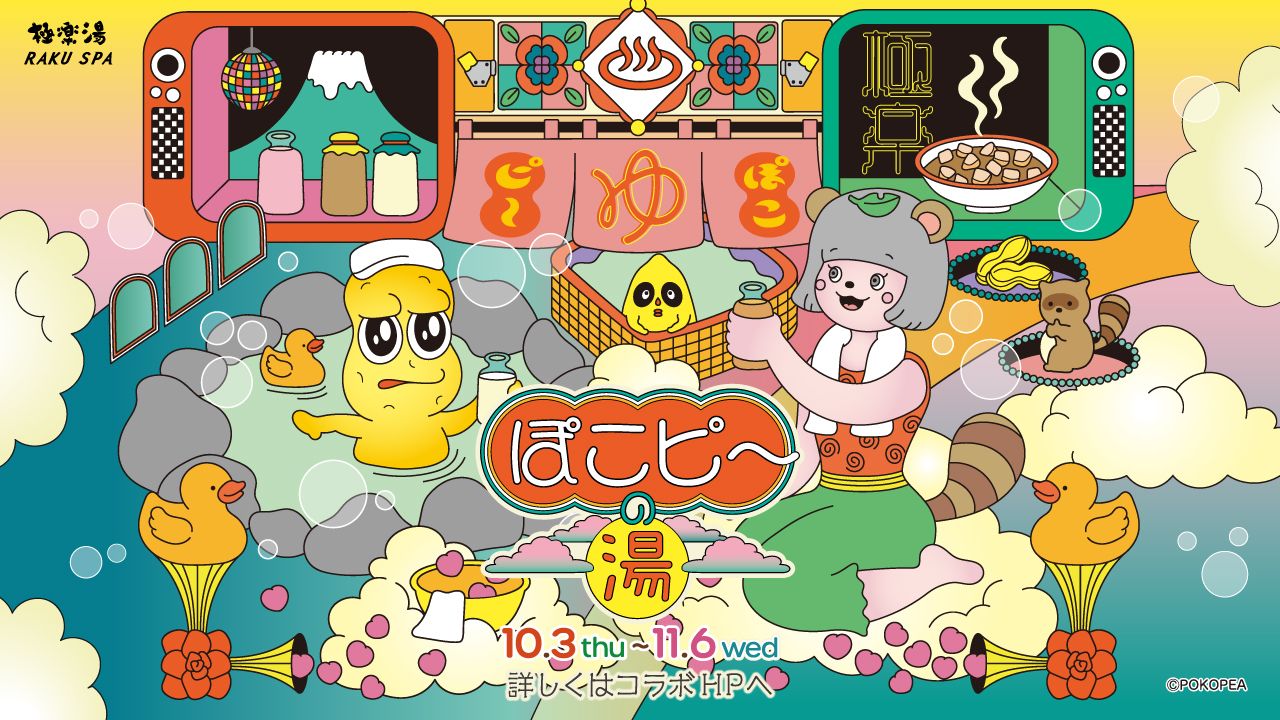
Independent VTubers Peanut-kun (left) and Ponpoko in a collaboration with the bathhouse chain Gokurakuyu. (© Pokopea)
I am also an independent VTuber, using an avatar created by my students called “Zombie-sensei.” Under the name Zonbi Katarō, I am a “mad professor at Forbidden University” who is currently staying in the laboratory of Okamoto Takeshi at Kindai University while on sabbatical.
Zombie-sensei streams lectures and game commentary. His approach in the videos, reading comments aloud while chatting and playing games, brings back the lively fun of childhood gaming sessions with friends.
My work fits within the category of “academic VTubers,” but there are many others, including manga artists, investors, and even senior citizens. Many people use VTubing to step slightly away from their real-world identities and express themselves freely. According to Hirota Minoru, editor-in-chief of the VR news site Panora, independent VTubers emerged early in places such as China, Taiwan, South Korea, and Indonesia, and have also been identified in English-speaking regions and Latin America.
Does Zombie-sensei Dream of VTubers?
For a VTuber, the person behind the avatar begins to live out a new existence distinct from their everyday self. During my own activities, I noticed my voice sounding different whenever I performed as Zombie-sensei. There were moments when I even caught myself thinking, “Is Zombie-sensei in the lab doing research right now?” It resembles the phenomenon that novelists, manga artists, and actors often describe, when characters seem to take on a life of their own and begin to move independently.
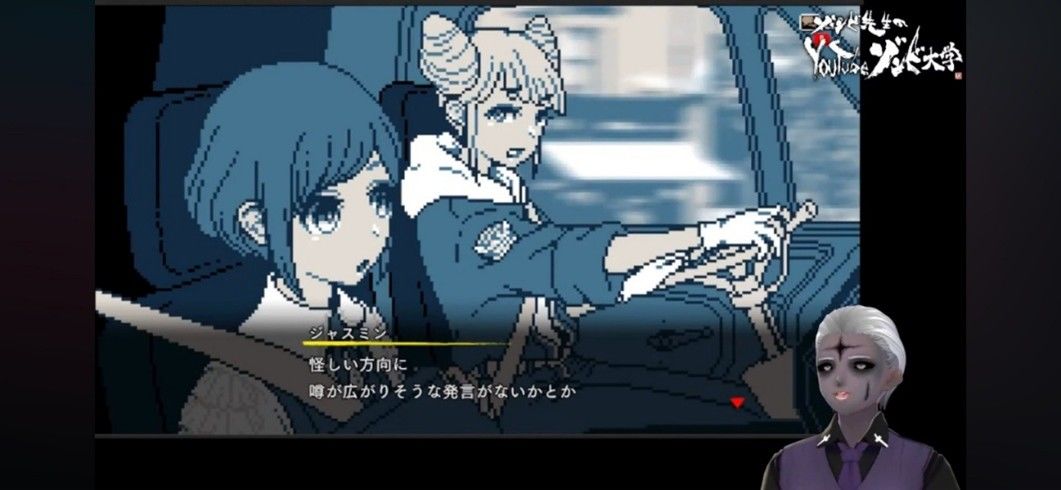
VTuber Zombie-sensei (bottom right) livestreaming a commentary on the game Urban Myth Dissolution Center. (Game © Hakababunko/Shūeisha Games; image courtesy Okamoto Takeshi)
Questions of identity inevitably come with the territory. When a VTuber becomes popular, the person inside sometimes wonders, “Is the success really my performance?” The overlap between the avatar and the performer is significant. As a result, VTubers are more vulnerable to psychological harm from online abuse, and such issues have already led to legal disputes in actual cases.
A Path Toward Better Lives
Challenges remain, but VTubers hold significant potential. If a time comes when everyone has an avatar, then in a sense everyone will be a VTuber.
VTuber culture carries a “dream” of connecting people across boundaries such as appearance, age, race, language, social standing, and national borders. As a new cultural form born in Japan, I hope it continues to grow into something that contributes to human well-being and global peace. As a researcher, as a fan, and as the VTuber Zombie-sensei, I want to be part of the process as this dream becomes reality.
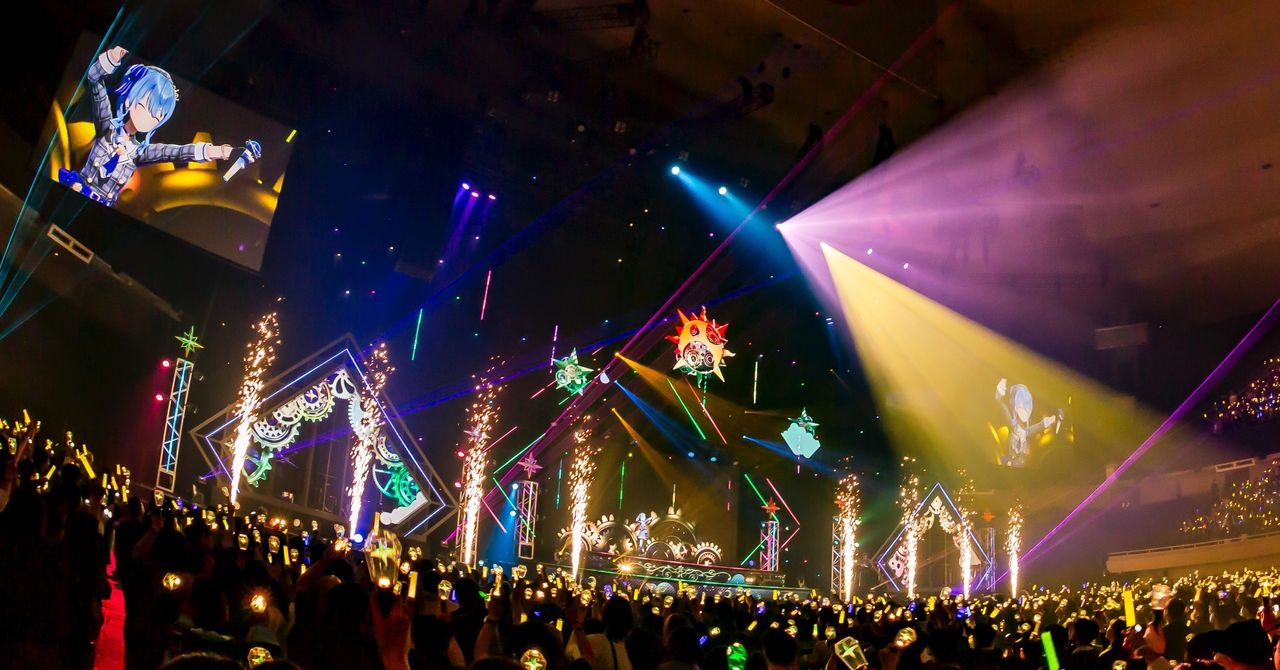
VTuber Hoshimachi Suisei performs her SuperNova concert at Tokyo’s Nippon Budōkan on February 1, 2025. The solo show filled the venue. (© Cover Corp.)
(Originally published in Japanese. Banner photo: KizunaAI, who returned to activity after three years. © KizunaAI.)
entertainment anime video idol Manga and Anime in Japan internet VTuber