Nissan GT-R Fades, Honda Prelude Returns: The Road Ahead for Japanese Sports Cars
Economy- English
- 日本語
- 简体字
- 繁體字
- Français
- Español
- العربية
- Русский
Built to Win Races
The modern incarnation of the Nissan GT-R “supercar” made its debut in 2007. In the 18 years since then, its core form has remained basically unchanged, while continual improvements have been made to its components and performance. In recent times, it has continued to evolve in its “year models,” with numbers marking the year of each new release. The car is also referred to with its model designation, R35. It traces its lineage back to the first Skyline GT-R released in 1969. Based on the four-door Skyline sedan, the classic GT-R of that era received upgrades, including a move from a straight-four to an inline six-cylinder engine, that turned it into a formidable, high-performance sports car.
The first-generation GT-R is recognizable for its boxy, square appearance. At the time, success on the racetrack was seen as the way to demonstrate a sports car’s performance and was a major factor contributing to sales. Mounted with a 2.0-liter, inline-six DOHC S20 engine—the latest technology of its day—the first-generation GT-R won 49 consecutive domestic competitions with its outstanding speed, securing its reputation as a high-function machine built to win races.
The second-generation Skyline GT-R arrived in 1973, based on the GC110 Skyline, which was also known as the “Ken-Mary”—a nickname coming from an advertising campaign featuring a young couple named just that, riding in their Skyline. However, stricter emissions regulations and the challenges of meeting them led to production ending after just three months.
Revival, Discontinuation, and Revival Again
It was 16 years later, in 1989, when the GT-R made a comeback. The third generation, referred to by its model designation R32, came with a 2.6-liter inline-six DOHC twin-turbo engine producing 280 horsepower, placing it among the most powerful Japanese cars at the time. Its performance was exceptional, with drivers claiming 29 victories over four seasons from 1990 to 1993 in the All Japan Touring Car Championship, then the nation’s premier racing series. The third-generation GT-R also received acclaim overseas, such as at the Spa Francorchamps 24 Hours in Belgium, and became globally well known.
The fourth generation, R33, debuted in 1995, followed by the fifth generation, R34, in 1999. Both were popular as high-spec sports cars. Unfortunately, production of the R34 came to an end in 2002, once again due to emissions regulations.
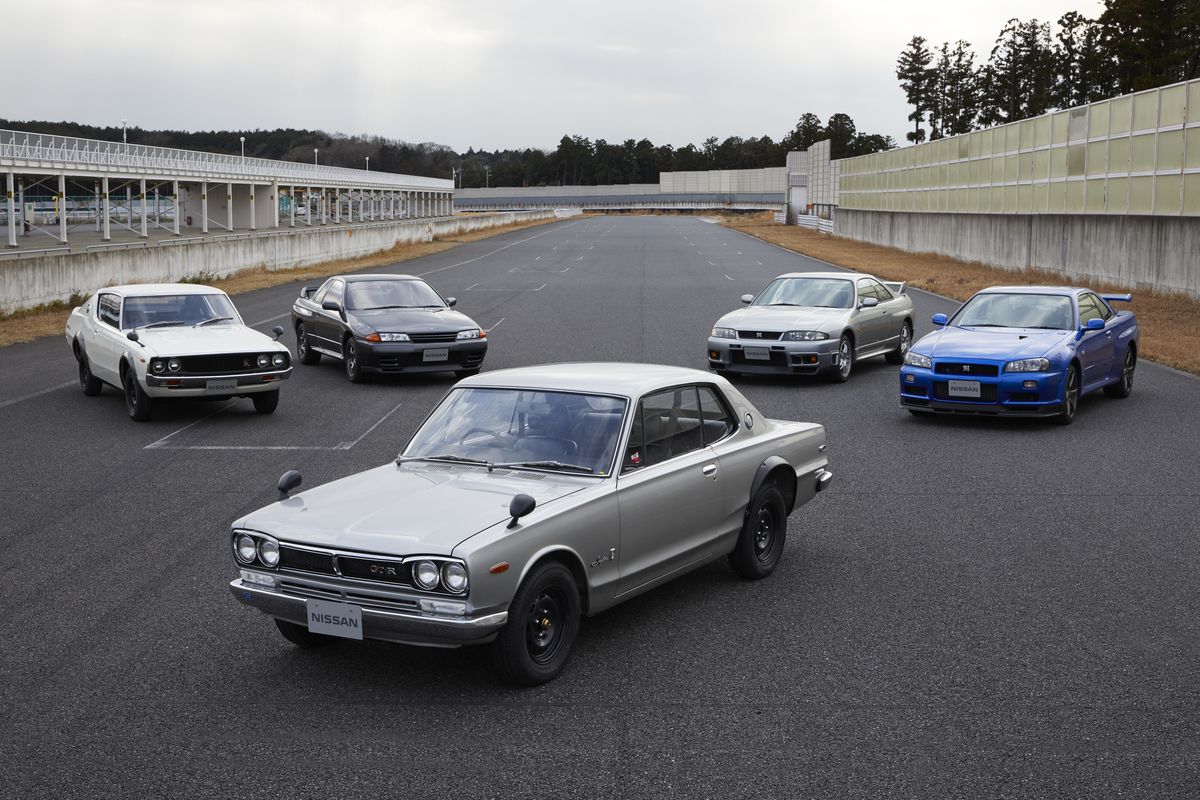
A historical lineup of Skyline GT-R vehicles. The coupe version of the first generation is front center, and behind it are the second, third, fourth, and fifth generations, from left to right. These cars are highly sought after in vintage car auctions in Japan as well as abroad. (Courtesy Nissan Motor)
Five years after the R34’s production ended, Nissan unveiled the R35 in 2007. Developed under then-CEO Carlos Ghosn during Nissan’s restructuring, it became a symbol of the company’s revival. The R35 departed from the earlier “race-dominant” concept, focusing instead on driving performance on public roads. Benchmarked against cars such as Germany’s Porsche, the R35 was positioned as a luxury sports car capable of maintaining high speeds comfortably over long distances. Whereas earlier generations targeted mainly the domestic market, the R35 was developed as a truly global model, and its name was changed from Skyline GT-R to Nissan GT-R, representing the company’s rebirth.
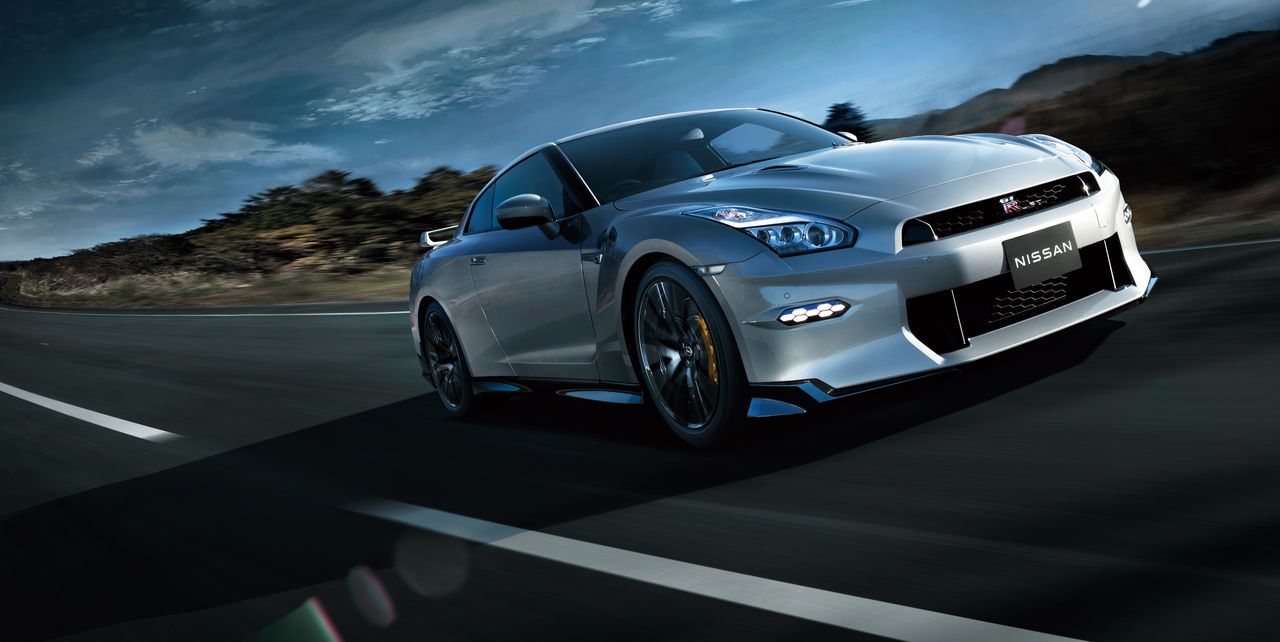
The 2025 model became the final version of the R35 GT-R. (Courtesy Nissan Motor)
The End of a Global Brand
As noted, previous GT-R generations were generally not sold abroad. Still, due to their impressive performance in international races and appearance in various media, their high performance became widely acknowledged in Western countries and beyond.
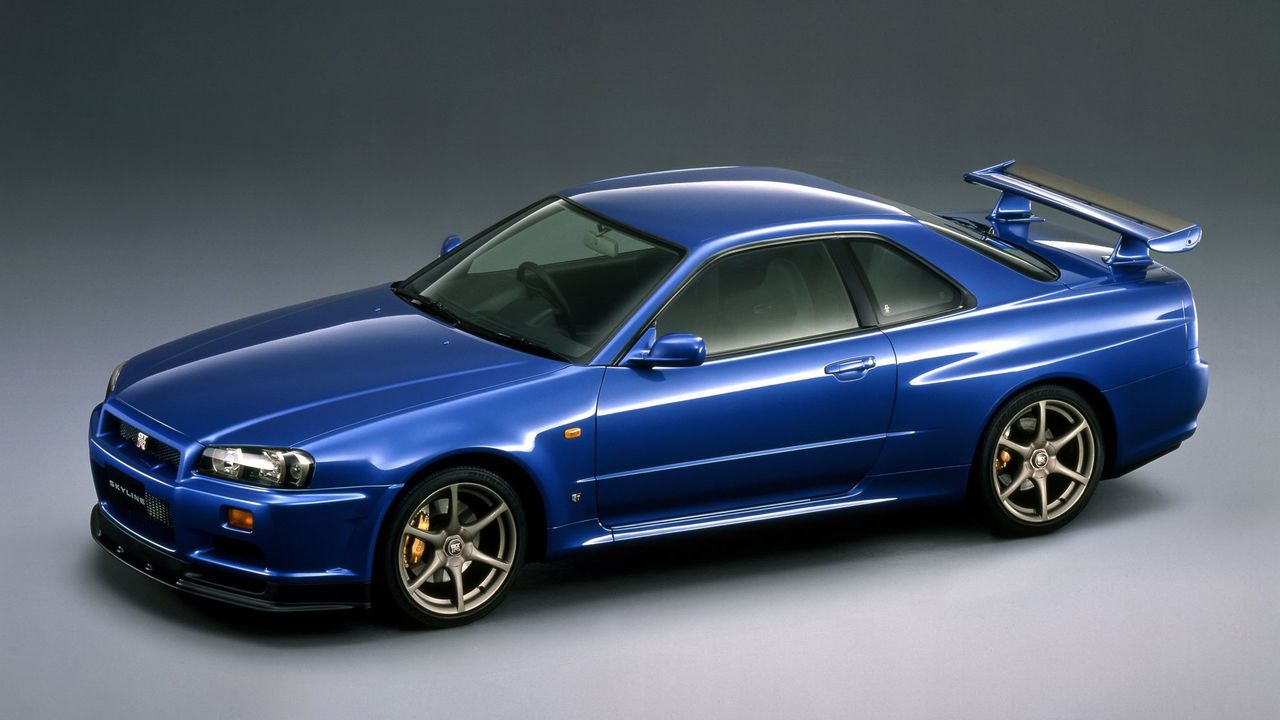
The R34, the fifth-generation Skyline GT-R, was launched in 1999. With a more compact body than the R33, it offered agile handling and outstanding driving performance. (Courtesy Nissan Motor)
The fifth-generation R34 gained worldwide popularity after appearing in the Hollywood action film Fast & Furious. Historic GT-R models were also featured in the Gran Turismo series of driving simulation games for PlayStation, which helped it win the admiration of both car enthusiasts and gamers around the globe. In this way, the GT-R evolved into a global icon that represented not only Nissan but also Japan’s automotive excellence.
In recent years, classic Japanese sports cars from the 1960s and 1990s have been appearing at auctions around the world, fetching high prices. The legendary Toyota 2000GT from the 1960s has sold for more than ¥100 million. The Skyline GT-R series is likewise very popular, with models like the R32 and R34 going for tens of millions of yen.
The R35 continued the legacy of internationally celebrated Japanese sports cars. Its 3.8-liter V6 twin-turbo engines were each hand-assembled by a group of nine master craftspeople, upholding exceptional quality and performance.
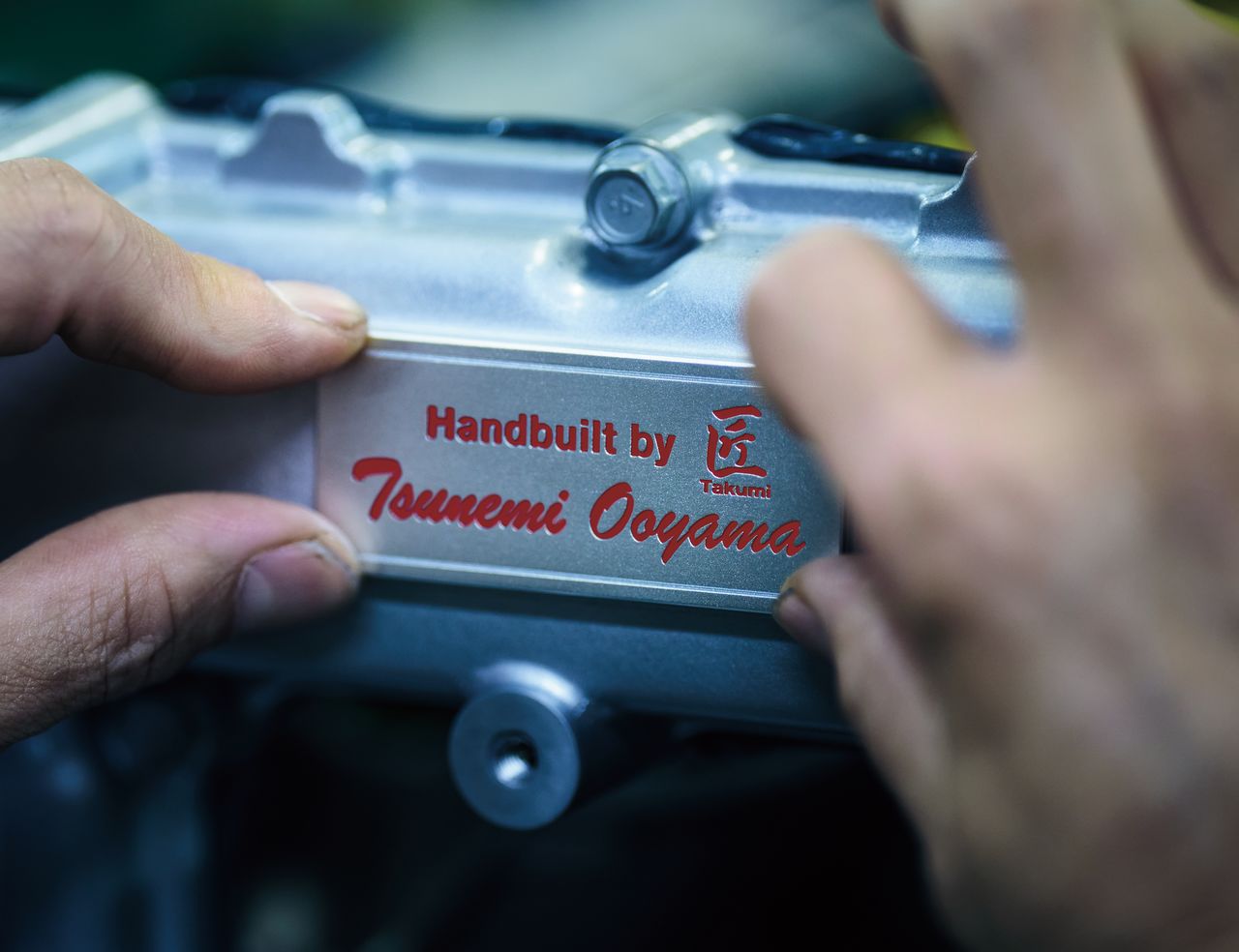
Each R35 GT-R engine is hand-assembled by nine master craftspeople, with the name of the person in charge of the team engraved on a plate affixed to the engine. (Courtesy Nissan Motor)
The final 2025 model produced 570 horsepower in the standard version and 600 horsepower in the high-performance GT-R NISMO, which is equipped with large-capacity, high-efficiency turbines. Prices ranged from about ¥14.44 million to ¥22.89 million in the Japan market, yet the car attracted fans not only at home but also Europe, the United States, and Asia. Despite its popularity, Nissan was forced to end production for the third time due to declining interest in sports cars and stricter emissions and other regulatory standards. A 56-year history had been traversed from the first Skyline GT-R’s launch.
Electric Vehicles: A New Path
Contrasting with the vanishing GT-R is Honda’s Prelude, which has made a comeback after 24 years. The Prelude, a historic sports car first launched in 1978, gained strong popularity, especially the second and third generations of the 1980s, which won over many female drivers with their stylish design. It led the so-called “date car” boom as the perfect car for romancing couples to take out for a drive.
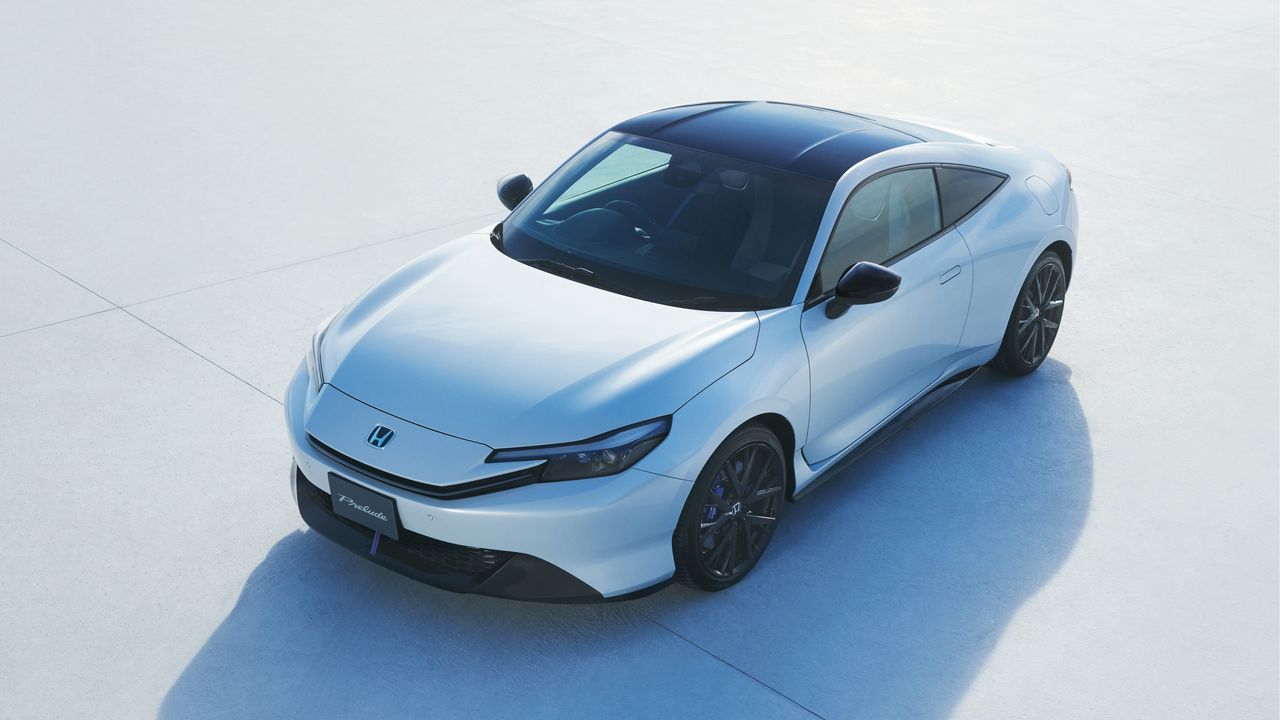
The Honda Prelude, relaunched after 24 years, went on sale on September 5, 2025. (Courtesy Honda Motor)
The new sixth-generation Prelude combines Honda’s unique e:HEV two-motor hybrid system with the company’s new Honda S+ Shift power-unit control technology. It has realized both the strong environmental performance of a hybrid vehicle and the direct, responsive driving feel of a sports car, representing a new type of “electric specialty car” unlike hybrid models from other manufacturers.
Japanese automakers across the board have been shrinking their sports car production. By bucking this trend and bringing back the Prelude, Honda appears to be aiming to revive a brand at risk of vanishing. During the 1980s, when the Prelude was a hit and Honda was competing in Formula 1, the company had a strong image as an automaker that was up for the challenge. However, Honda’s own surveys show that this image has weakened in recent years, with favorability decreasing among younger consumer groups. By reintroducing the Prelude as an exclusive electric/hybrid sports model unlike any offered by rivals, Honda hopes to revive its image as a challenger and set itself apart from the competition.
Meanwhile, Nissan posted major losses in its 2024 financial results and is now under pressure to restructure its operations. Emissions and noise regulations are becoming stricter each year, and complying with them requires major costs. As a company whose core strategy is switching to electric vehicles, Nissan no longer has the capacity to invest heavily in internal combustion engines. The same challenge applies to Honda, which aims to make all of its four-wheel vehicles electric by 2040. By reviving the classic Prelude with cutting-edge electric technologies, Honda is seeking to chart a new path forward.
Might the GT-R follow a similar path by resurrecting as an electric sports car, powered by the latest technology? With its established fan base around the world, the GT-R could play a major role in restoring Nissan’s brand image. With the end of GT-R production, on August 26, 2025, Nissan CEO Ivan Espinosa remarked: “While we don’t have a precise plan finalized today, the GT-R will evolve and reemerge in the future.” I hope that one day the GT-R will reappear as an even more powerful, cleaner, and safer electric “hyper sports car.”
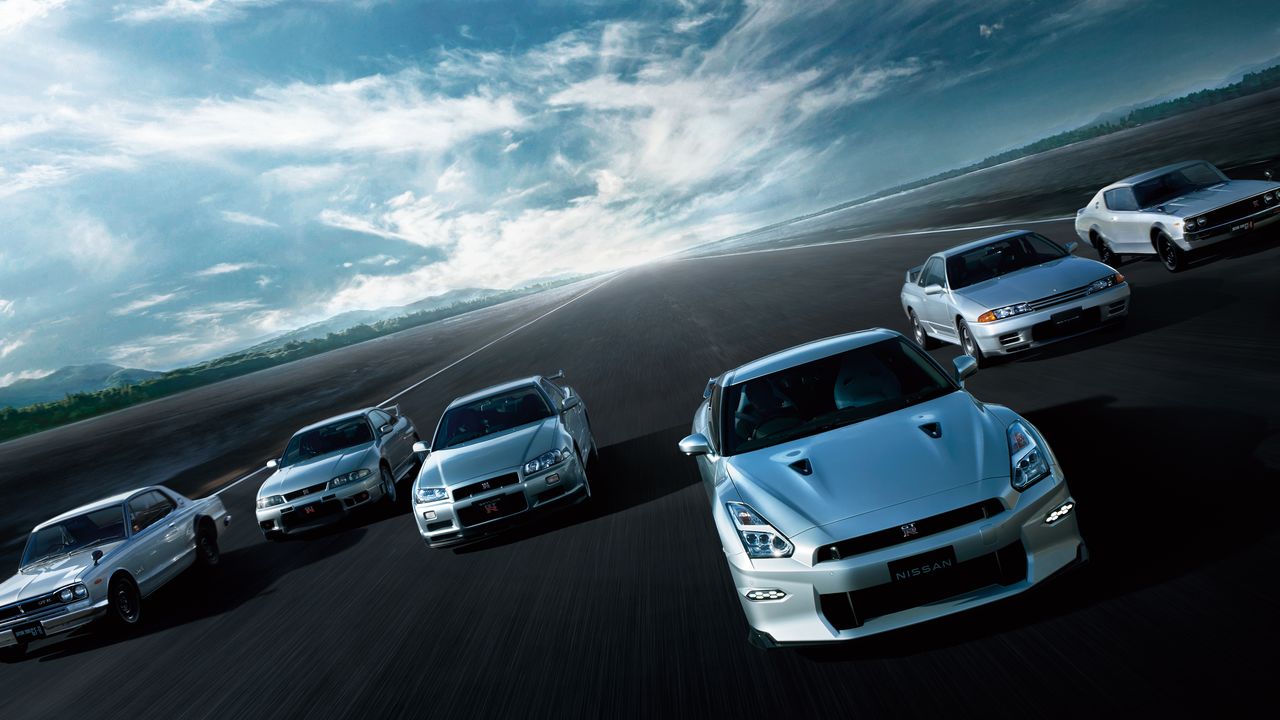
(Originally published in Japanese. Banner photo: A lineup of historic GT-R generations. At the front is the 2025 GT-R, the final R35 model. Behind it are the previous Skyline GT-R generations: from right, the “Ken-Mary” second generation, the third-generation R32, the fifth-generation R34, the fourth-generation R33, and the first-generation GT-R. © Nissan Motor.)