Grand Sumō Hits London: Success for Second Five-Day Tournament Ever Outside Japan
Sports- English
- 日本語
- 简体字
- 繁體字
- Français
- Español
- العربية
- Русский
Japan’s Sport Comes to British Shores
For a while this October, social media feeds seemed to fill with photos of cheerful, colorfully dressed, and somewhat unusually portly London tourists.
Sumō wrestlers in front of Buckingham Palace. A convoy of sumō wrestlers on rental bikes. A line of sumō wrestlers posing on the Abbey Road crossing. A sumō wrestler enjoying a pint in a pub. A sumō wrestler cuddling Paddington Bear.
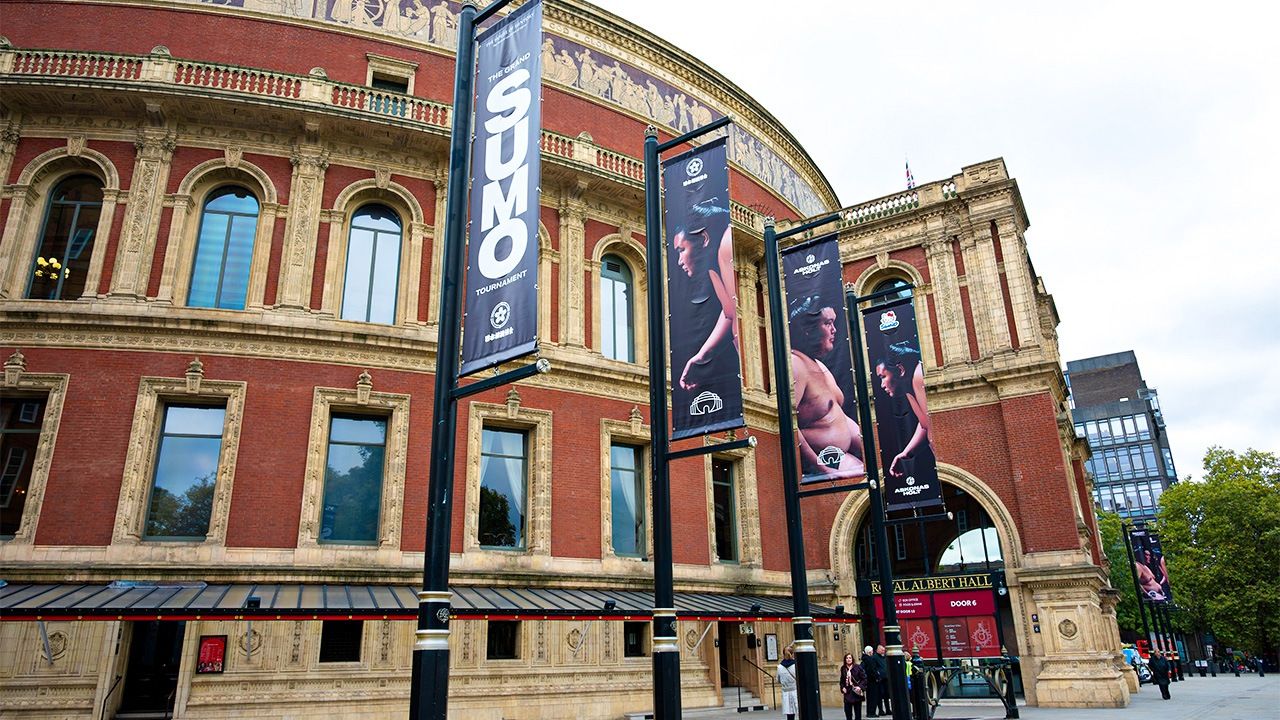
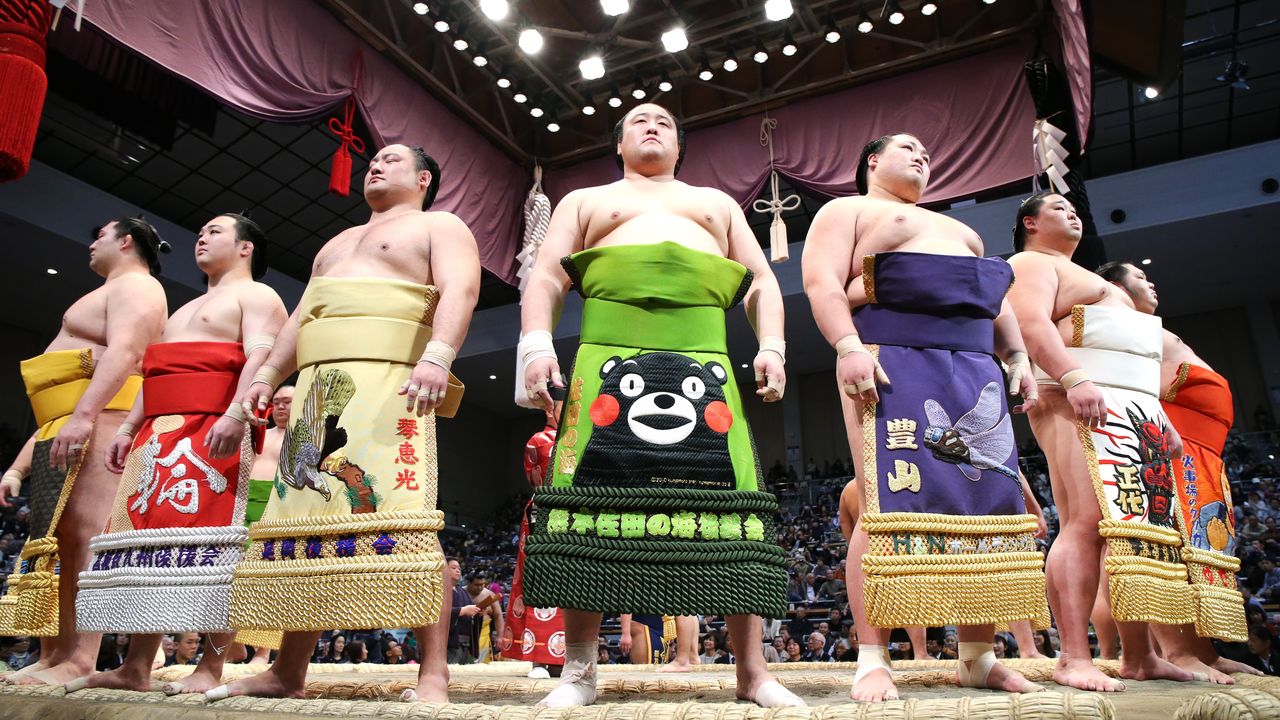
If the aim of the Grand Sumō Tournament held at London’s Royal Albert Hall from October 15 to 19 was to raise sumō’s profile outside Japan, it was surely a yokozuna-class success.
But the day before the tournament, staff were still busy with final preparations for only the second-ever five-day tournament to be held outside of Japan. One of the last stages in the complex process of making the dohyō (ring) was packing down the earth. This involved pounding it with what looked like heavy buckets on sticks and striking it with long-handled mallets. A small team of professionals from Japan was being assisted by local Albert Hall staff, with several of the latter wearing plastic bags on their feet to protect the ring surface. The sound of falling mallets was almost like a percussion performance—not inappropriate for a venue that is far better known for classical concerts than wrestling.
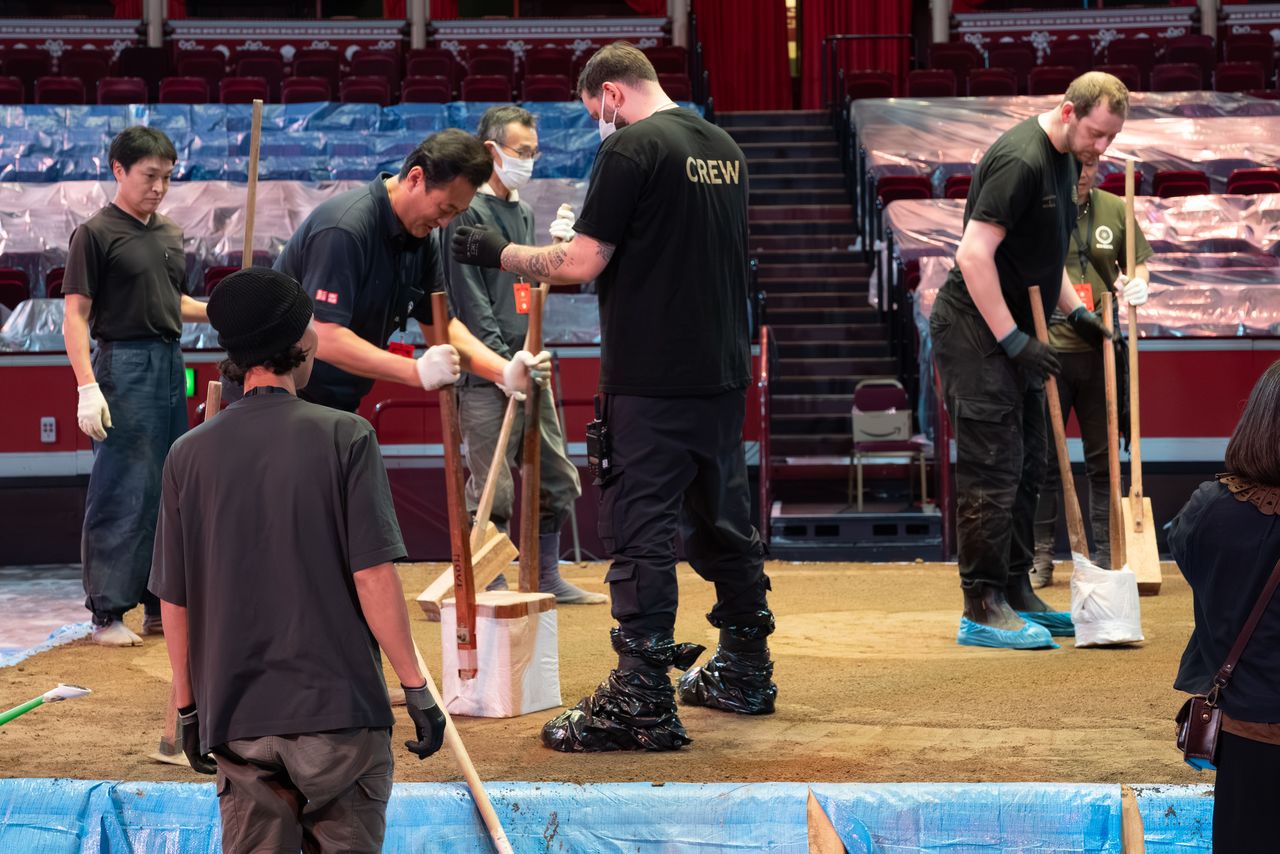
The dohyō under construction in the Royal Albert Hall. (© Tony McNicol)
Ben Hywel-Davies was one of the 20 Royal Albert Hall staff helping out. He said that he rarely works on sports events—or with organic materials such as wood and straw. Although several interpreters had been on hand to ease the language barrier, he said that much of the communication between the Japanese and UK professionals was on a “nonverbal” level.
“We all have physical manual labor jobs, and they show us without using words, so there’s a mutual respect,” he said, adding, “I’m sure we’ll find ways to communicate over a pint.”
Watching from the side was Kobayashi Masanori, CEO of Move, a Shiga Prefecture–based company that works with the sumō association. (Some of his staff would don ceremonial dress and continue maintaining the dohyō during the actual tournament.)
During a break, he told me that equipment and materials had been sent from Japan in two 20-foot sea containers. However, due to quarantine restrictions (soil can contain insects and bacteria), they had to locally source the nearest thing to authentic Japanese sumō soil they could find. In the end, they acquired 11 tons of soil from near London, adding a little cement to achieve the perfect consistency.
Quarantine rules also meant that the tawara straw bales that mark out the ring were made locally from plastic. The 1.3-ton yakata roof, meanwhile, couldn’t be built in the same way as in Japan due to the UK’s construction regulations. Instead, it was made by the Royal Albert Hall’s own team, using precise measurements sent in advance from Japan, down to the exact Pantone paint colors.
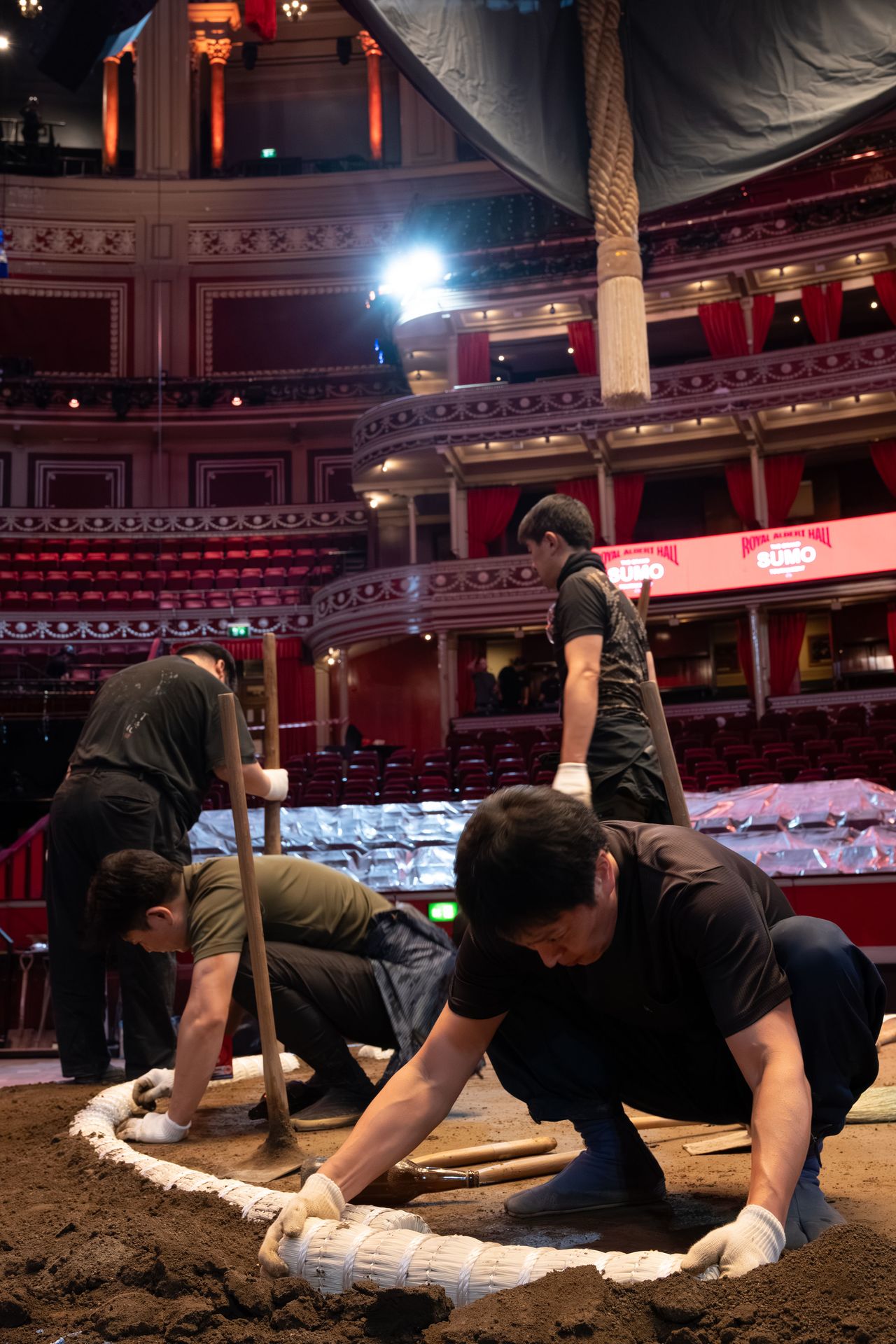
Workers lay down the plastic tawara bales marking the edge of the ring. (© Tony McNicol)
“I have been working since I came, so it doesn’t feel like I have left Japan,” Kobayashi said. “But I enjoyed the park with all the squirrels.”
He said he was also looking forward to visiting a London pub once the preparations were done.
Major Preparations, Mountains of Food
Professional sumō in Japan is known for its 15-day grand tournaments, or honbasho, held six times a year. But most of its touring events have been short exhibitions, often held in a single day. The only other five-day tournament to be held outside Japan in sumō’s over 1,500 years of history was also held in London, in 1991. Both were organized by Askonas Holt, a London company that specializes in classical music.
“We have been trying to get the sumō association back to London ever since 1991,” CEO Donagh Collins told me, as we looked down on the preday preparations from one of the Royal Albert Hall’s second-floor boxes.
“The hall is an intimate space with an incredible atmosphere. It’s also in the round, so it fits very well,” he said.
He points out that the first sumō stadium in Tokyo, the 1909 Ryōgoku Kokugikan, was also circular and possibly inspired by London’s Royal Albert Hall.
One challenge, however, was making sure that the floor was strong enough to support the weight of the dohyō—not to mention the kinetic force of sumō wrestlers weighing up to 200 kilograms slamming into the dirt. Back in 1991, he told me, staff had to install struts under the floor to support the 40 tons of dohyō soil. With that experience in mind, this time the builders used a more modest 11 tons of soil covering a wooden frame and polystyrene blocks.
Other special preparations for the wrestlers’ arrival have been reported by UK and world media, including 700 kilograms of rice, 1,000 packets of instant miso soup, and 750 packets of instant noodles—not to mention reinforced chairs and toilets.
Collins says that the venue had hoped to hold a sumō competition in 2021, the 150th anniversary of the Royal Albert Hall. Unfortunately, the COVID-19 pandemic put paid to that. Somewhat serendipitously, this tournament has coincided with the 100th anniversary of the Japan Sumō Association. Another impetus was the current head of the Sumō Association, Hakkaku, who won the 1991 London tournament as the yokozuna Hokutōumi.
“We’d like to have the sumō association back more regularly . . . not in another thirty-four years,” says Collins.
Champagne, Sushi, and Showers of Salt
That has surely been made more likely by the success of this year’s tournament. Tickets were snapped up almost instantly, and the event has received widespread media coverage. Spectators and sumō wrestlers alike seem to have had a splendid time.
The tournament was won by the yokozuna Hōshōryū with an unbeaten record, and while the grappling in the exhibition tournament perhaps wasn’t quite as no-holds-barred as usual, wrestlers clearly relished the chance to show off some spectacular techniques.
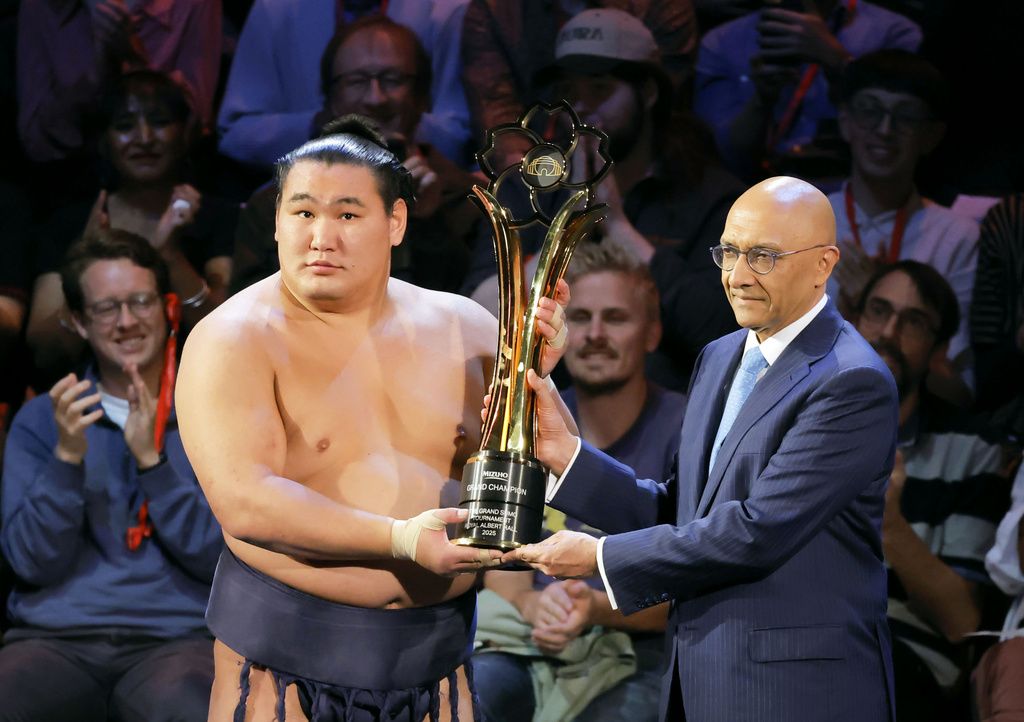
Hōshōryū, left, hoists the trophy after defeating Ōnosato to win the tournament on October 19 at London’s Royal Albert Hall. (© Kyōdō)
Alex Wicks bought tickets as a surprise present for his mother’s seventieth birthday, and was among a party of eight that also included his wife and their two children. He says that one of their favorite wrestlers was Tobizaru, known in English as “flying monkey,” the literal translation of the characters in his name.
“The amount of salt he threw split the family,” says Wicks. “Our two boys thought it was great, while my wife Mami, as a Japanese, found it arrogant.”
Hannah Tse Debenham describes the process of buying tickets as “surprisingly stressful,” but eventually managed to bag some of the cheaper seats.
“Because of the shape of the Royal Albert Hall, the view was still really good and the sumō wrestlers were way bigger than when we saw some bouts in Tokyo,” she says. “I was amazed we could hear all the slaps without amplification.”
Ticket prices ranged from around £40 for the quickly snapped-up standard seats, to almost £1,000 for “VIP Reception with Ringside Dohyō Cushions” seats. The latter luxury option came with champagne, sushi, and Japanese-inspired desserts, but also an ominous warning that “salt throwing may reach the Ringside seats, and it is possible that wrestlers may fall or be thrown from the ring into the Ringside area.”
From “Comedy Act” to Competitive Sport
The tournament is sure to give sumō’s popularity in the UK a giant push—not just as a spectacle, but perhaps also as an amateur sport. In fact, the last couple of years have already seen British sumō take great strides forward.
British Sumō is now the official body for sumō in Britain, having been recognized by the European Sumō Federation in 2023 and the International Sumō Federation earlier this year, and there are 13 amateur clubs across the country. This impressive growth is down to the work of a handful of energetic individuals like Scott Findlay, president of British Sumō and coach at Sumō Scotland, near Glasgow.
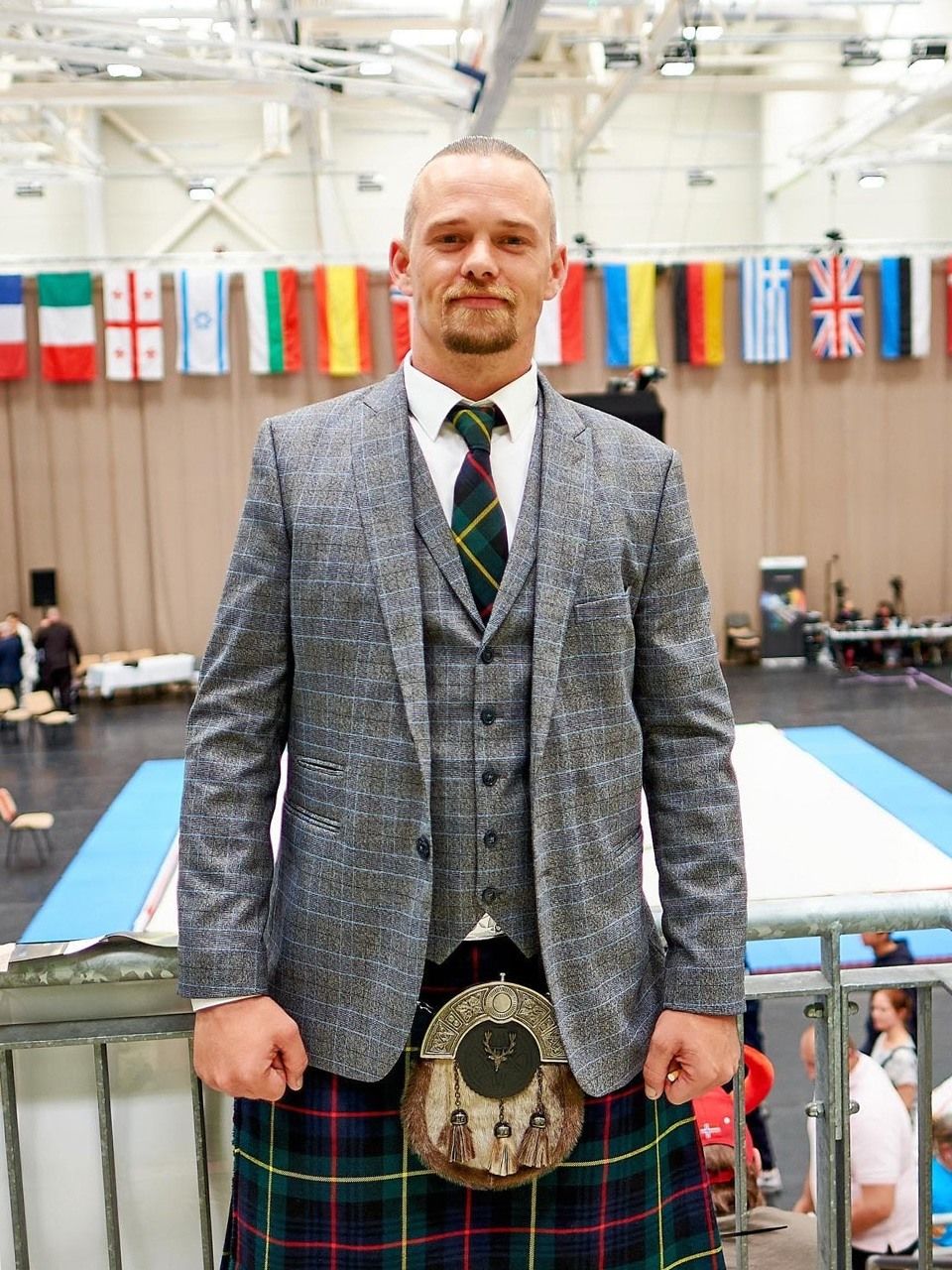
Scott Findlay brings some Highland flavor to the sport as coach of Sumō Scotland. (Courtesy of Scott Findlay)
Findlay says that until quite recently, sumō in Britain “didn’t have traction and wasn’t sustainable.” It tended to be dismissed as “a niche comedy act that you could only do if you were overweight and willing to get naked.”
But he points out that now there is an active international amateur sumō scene, not just in the sumō superpowers of Japan and Mongolia, but also Russia, Ukraine, Poland, Estonia, Norway, and increasingly Britain. Many people are coming to sumō from sports such as American football, rugby, jūdō, and power lifting.
“Lots of those sports are easily translated to sumō,” he notes. “You need to be fit, fast, explosive, and have a strong mind—the full package. It’s all about finesse. It’s one of the easiest sports to start, and one of the hardest to master.”
In fact, one of Findlay’s former students is hoping to be only the second British person ever to compete as a professional sumō wrestler in Japan. Nicholas Tarasenko joined the Minato stable in Saitama Prefecture this June, aged 15. He is said to be learning Japanese quickly (a condition for competing) and plans to enter his first tournament next March.
Maintaining Momentum
Meanwhile, in the south coast English city of Southampton, a small group of enthusiastic amateur wrestlers meet weekly on a Saturday morning. The club is run by experienced jūdō coach and occasional sumō competitor Lance Wicks. Once a month, the club is visited by well-known London sumō coach Sonny Bell.
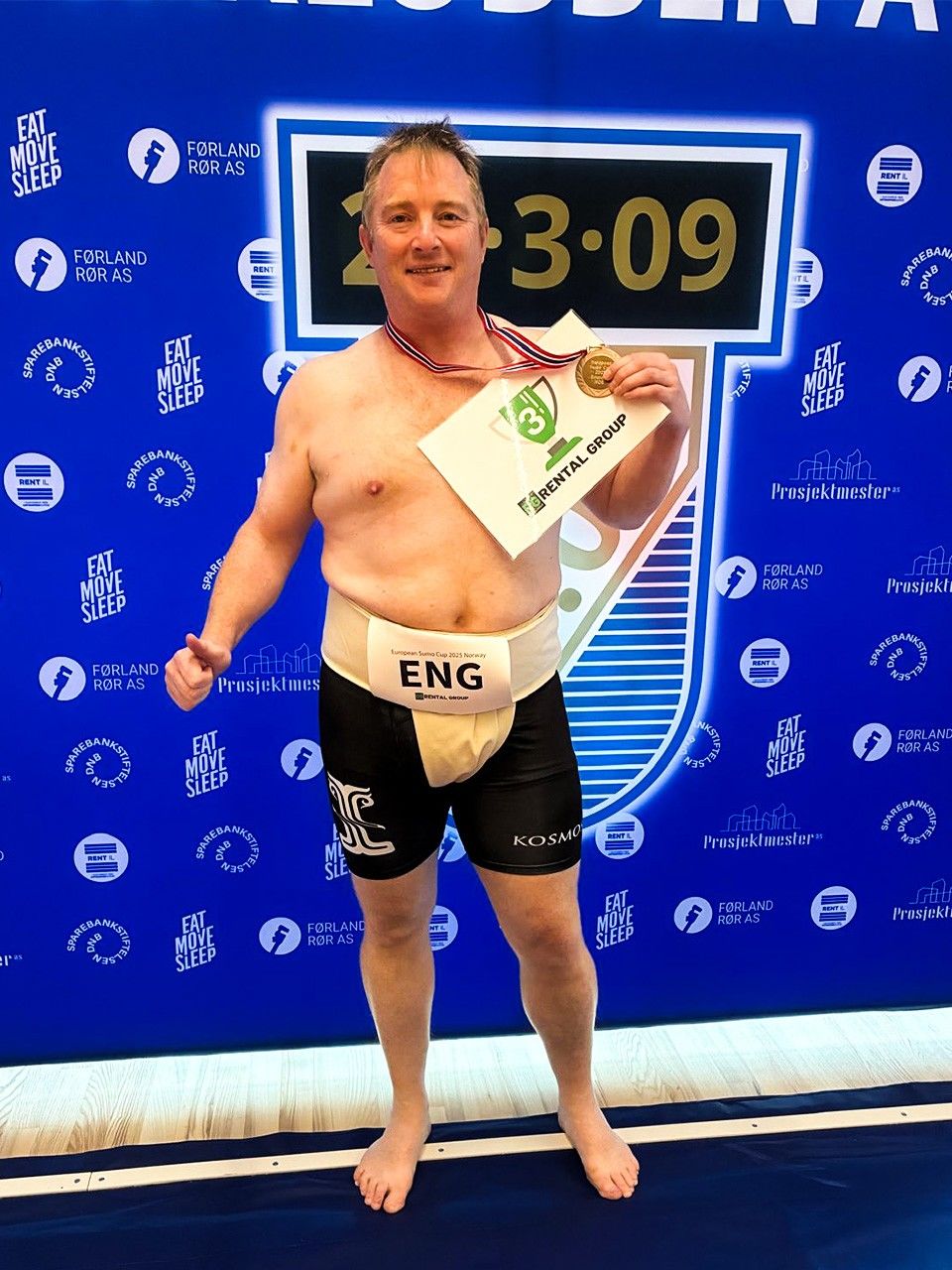
Lance Wicks took bronze in the men’s 92-kilogram category at the European Sumō Cup Norway 2025. (Courtesy of Lance Wicks)
Southampton Sumō was founded just this June, and is attended by a small but devoted group of members: wrestlers of different ages, sexes, and body sizes. The inclusivity of amateur sumō is something Wicks is keen to stress. While men and women in amateur sumō compete separately, and in various weight classes, everyone trains together. The club’s heftiest member is a 187-kilogram male rugby player, and its most petite a 50-kilogram woman. The club plans to soon offer sumō training to children, too.
For UK sumō to grow, the number of clubs in the UK needs to increase, Wicks tells me. Usually, his club gets one or two inquiries from potential members a month. But during the London tournament, it had 20 to 30. The challenge will be to keep the momentum from the tournament going.
But for the moment, Britain has clearly taken sumō to its heart.
“For a niche martial art that is amazing,” he says. “It’s absolutely buzzing.”
(Originally written in English. Banner photo: Banners advertising the tournament flutter outside the Royal Albert Hall in London. © Tony McNicol.)