The North Face: A Storied US Brand and a Japanese Success Story
Economy Culture- English
- 日本語
- 简体字
- 繁體字
- Français
- Español
- العربية
- Русский
An Asian Turning Point for a California Brand
The North Face is a global brand founded in 1966 in California, best known for its high-performance outdoor clothing and sleeping bags. It entered the Japanese market in 1978, when Goldwin, a sportswear manufacturer in Toyama Prefecture that supplied uniforms for Japanese athletes at the 1964 Tokyo Olympics, became the brand’s importer.
At the time, the Sierra Parka, a highly functional down jacket worn by professional mountaineers, became an icon for Japanese consumers drawn to the American West Coast lifestyle associated with outdoor culture. Backed by this jacket and its iconic logo, framed by a curve resembling Half Dome in California’s Yosemite National Park, the brand quickly built a strong following in Japan.
The brand’s product development for the domestic Japanese market began in earnest in 1994, after Goldwin acquired the trademark rights for Japan and South Korea. Since then, the company has blended street fashion with the brand’s American practicality while customizing designs to better suit the Japanese physique.
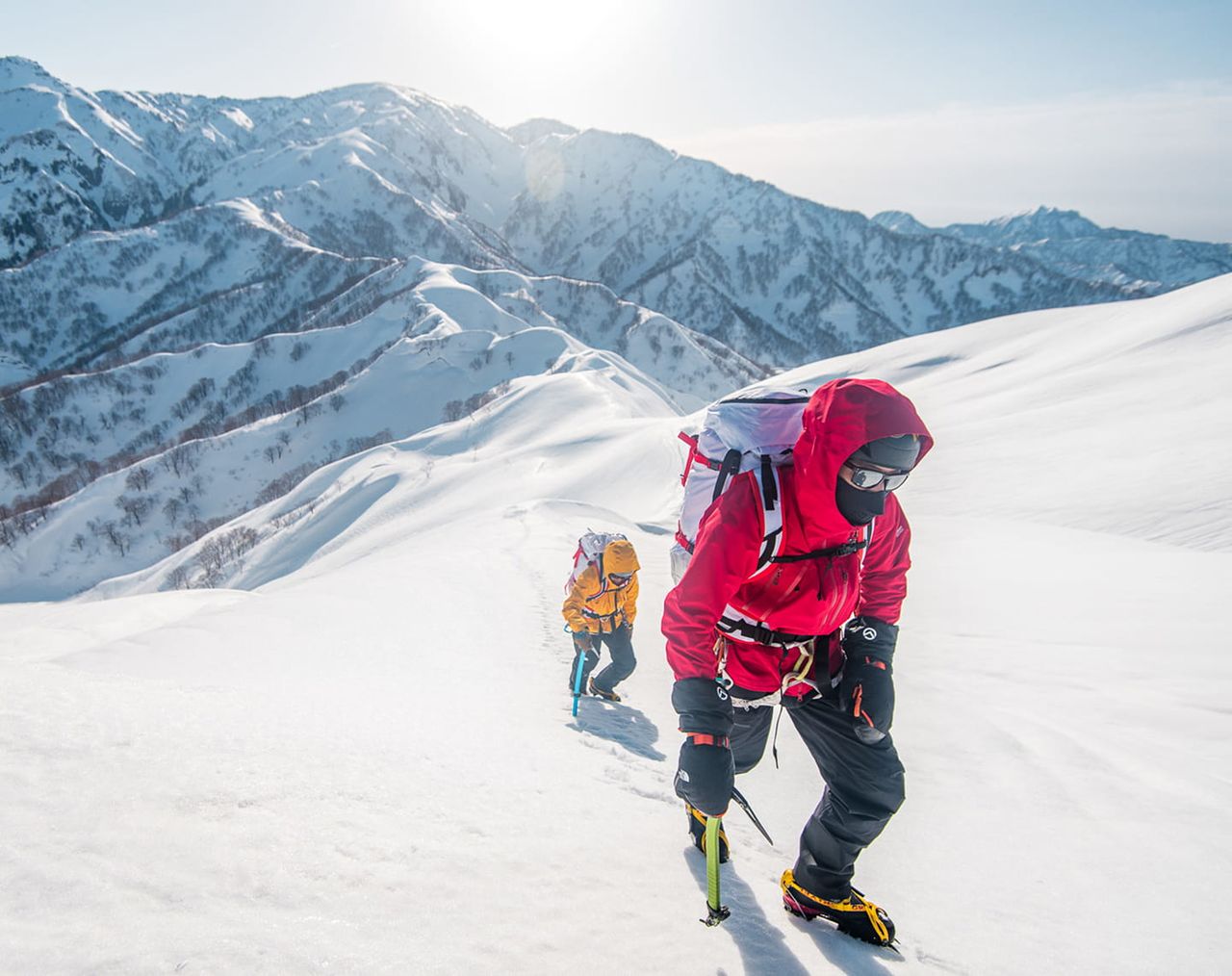
The North Face product lineup includes a serious mountaineering series developed with the athletes and adventurers who wear it. (© Goldwin)
A prime example of this Japanese customization can be seen in the Nuptse Jacket, first developed in the United States in the 1990s. Designed to withstand harsh mountain environments, it first gained popularity within New York’s hip-hop scene. For its launch in Japan in the 2000s, it was redesigned to fit Japanese body types and incorporated technologies such as Kōdenshi down fill, using infrared tech to reflect heat back to the body. It was soon a mainstay of Japanese street fashion.
Starting in the 2000s, Goldwin launched the Purple Label, a TNF line exclusive to Japan, together with apparel planning, manufacturing, and retail company Nanamica, and began developing uniquely Japanese products. By emphasizing high functionality while refining designs suited to urban life, more and more people began wearing TNF jackets for everyday activities, such as commuting to work or school.
In response to extreme heat and heavy rain resulting from climate change, the Purple Line strengthened its lineup of quick-drying T-shirts and lightweight jackets with water-repellent properties. The product range now offers versatile pieces that work well both in the city and outdoors.
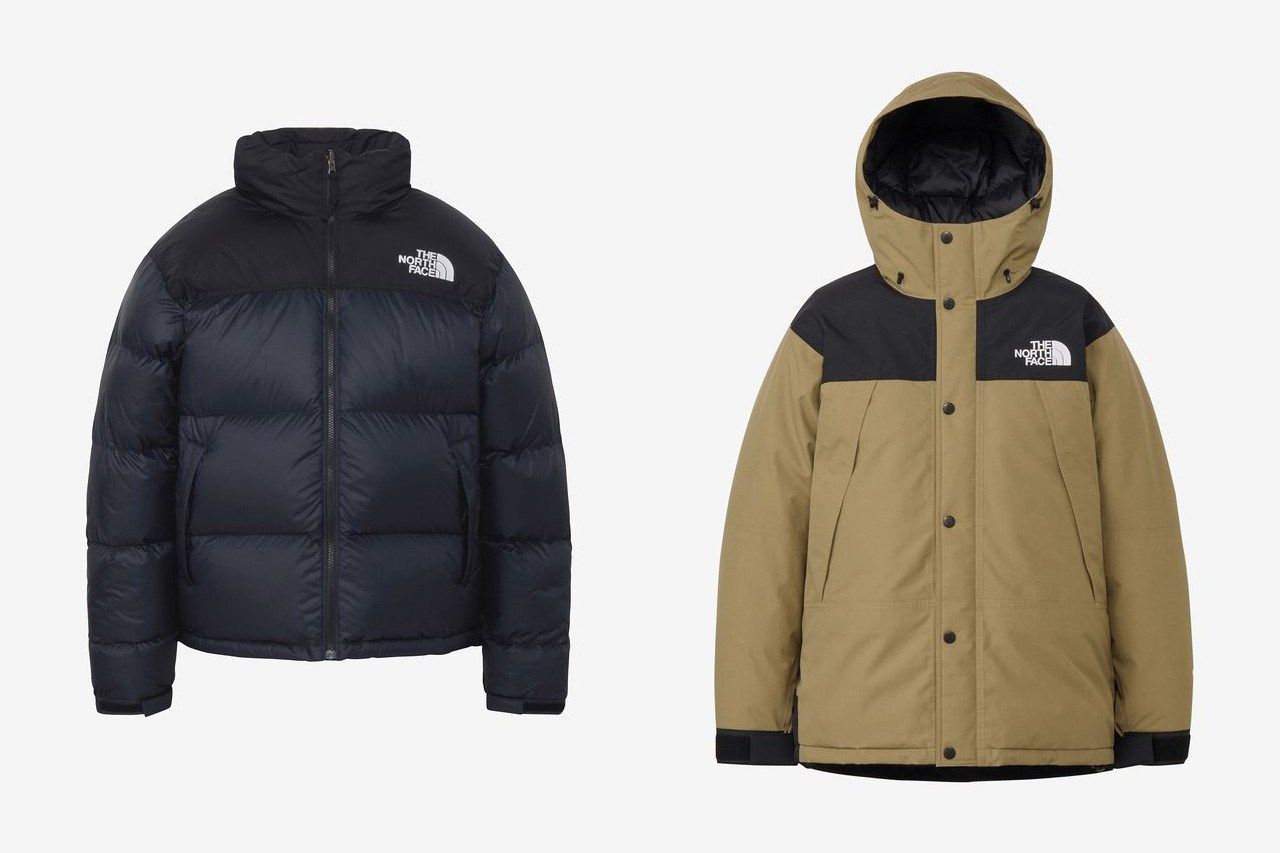
The ever-popular Nuptse Jacket (left) and Mountain Down Jacket. (© Goldwin)
Currently, the wind jackets are performing strongly in sales. Their lightweight, compact design offers protection from rain and wind, and performs well for the sudden temperature shifts and strong winds common in urban environments, making them a big hit with consumers in the city.
A Development Lab in Toyama
Product development for the Purple Line and other domestically oriented products primarily takes place at the Goldwin Tech Lab, located next to Goldwin’s Toyama headquarters in the city of Oyabe.
Oyabe is Goldwin’s birthplace. The company started off in 1950 as a small factory called Tsuzawa Knit Fabric Manufacturer. The current lab, established in 2017, oversees everything from material development to research into sewing methods, pattern design, and quality control. It is continually refining its products to make them beautiful and functional, and has created a number of uniquely Japanese TNF designs.
One example of this is the apparel under development for mountaineering and trail running, activities where temperature differences can be extreme. This gear utilizes new technology developed at the lab that allows for adjustment of heat retention through control of the amount of air circulated within the apparel.
For rainwear hoods, repeated prototyping and testing are carried out in sewing and pattern design to achieve graceful curves in pursuit of aesthetics that respond functionally to head movement as well.
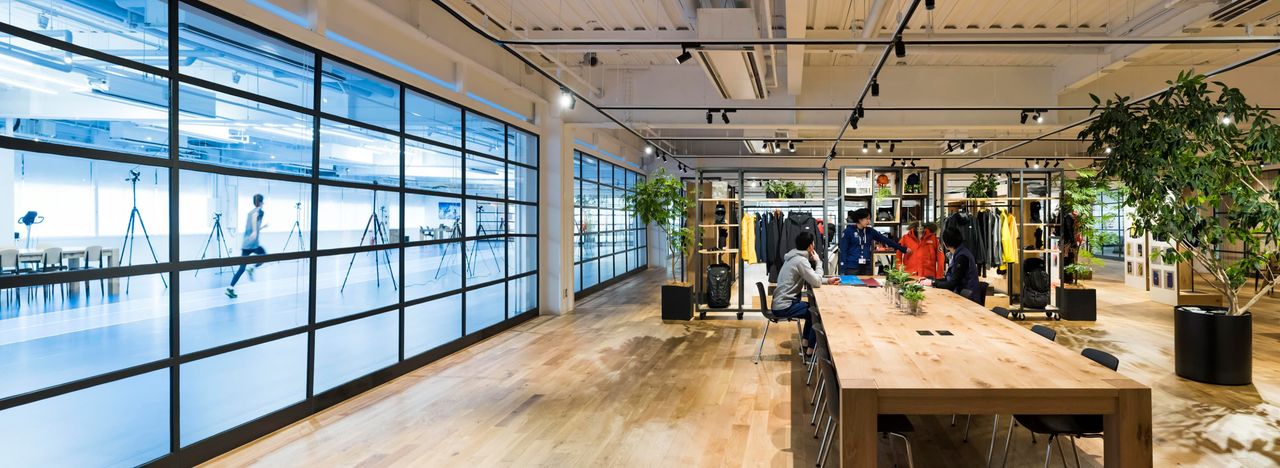
Goldwin Tech Lab, Goldwin’s R&D facility located in its place of birth, Toyama. (© Goldwin)
The success engineered at this lab is paying off in the Asian market as a whole, not just in Japan. The North Face flagship store in Harajuku, Tokyo, is immensely popular with customers from East Asia, such as China, Taiwan, and South Korea, who come seeking minimalistic and highly functional Japanese-version products. The Japanese version of the Nuptse Jacket is especially popular.
The North Face is of course a global company, but its presence in Japan cannot be overstated. Annual sales for the brand in the US market amount to roughly $1.7 billion, or around ¥260 billion. Meanwhile, according to Goldwin, TNF sales in Japan for the fiscal year ended March 2025 exceeded ¥100 billion. Considering that Japan’s market size and population are about 30% of those of the United States, the brand’s penetration in Japan can be said to exceed that of its home market. This is driven home by the November 2025 results of a survey by app developer Startdash targeting Japanese women aged 20 to 59, which found that among outdoor brands TNF ranked first in brand awareness, favorability, and perceived quality.
Popularity on the Rise in Korea, Too
The trend is impacting neighboring markets as well. The North Face White Label, jointly operated by Goldwin and a South Korean company, has begun attracting attention among young people in Japan. This Korean-version TNF mainly targets women in their twenties and features a more casual and sporty style than Japan’s Purple Label. Many items, such as the cropped down jackets, are slim and fashion-forward, a contrast with the more relaxed silhouettes of the Japanese designs. The lineup also includes a wide range of colors, including pastel tones.
According to a Japanese woman in her twenties living in Tokyo, “TNF in Korea has designs that you can’t find here in Japan, and that makes it appealing.” More affordable pricing than in Japan is another factor driving its popularity among younger consumers.
In Myeongdong, Seoul’s largest shopping district, about 40% of purchasing customers are tourists from places like China and Japan. The fact that these products are available only in Korea further boosts their appeal.
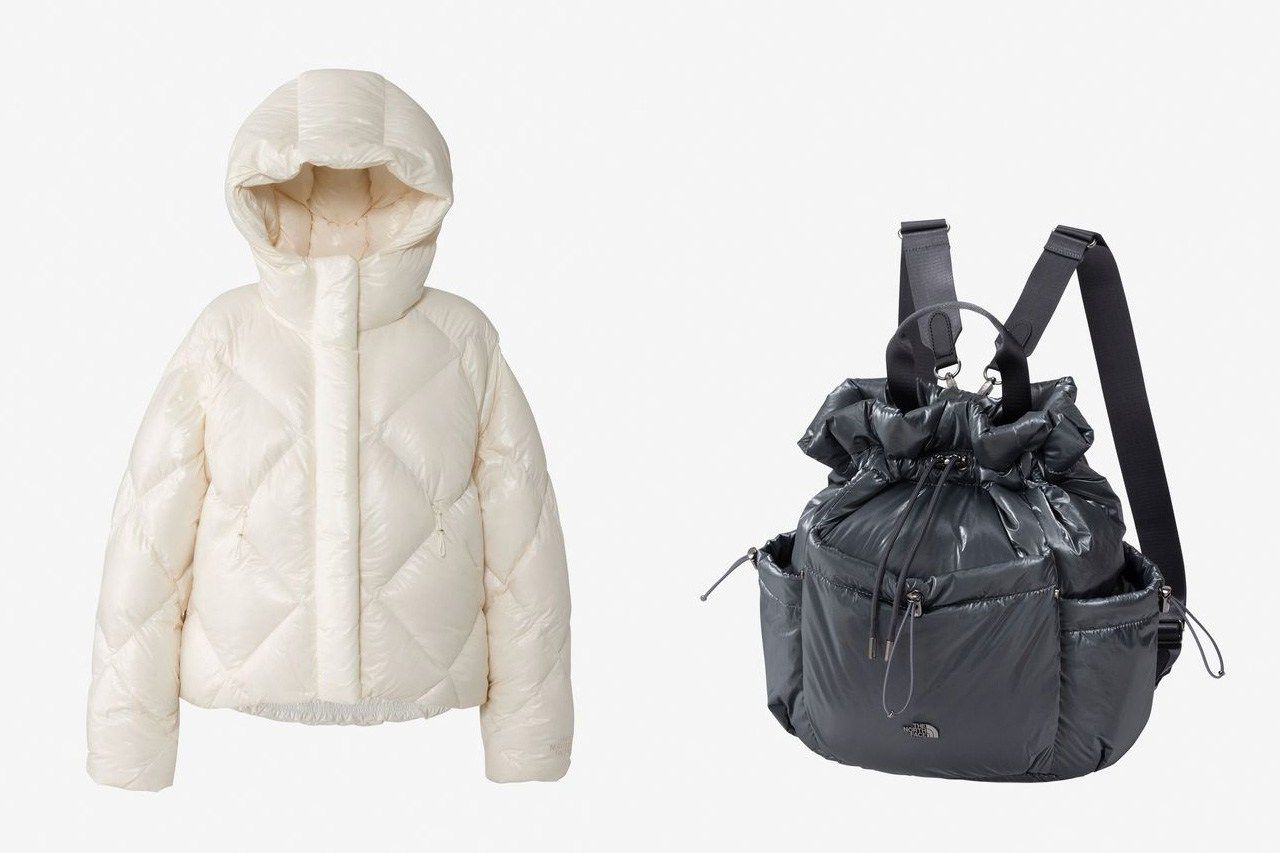
The Korean-version TNF offers many women’s products focused on urban use, including fashion-oriented down wear and bags. (© Goldwin)
Youngone Outdoor Corporation, the joint venture between Goldwin and the Korean company, handles the brand operations in Korea. It employs a uniquely Korean marketing strategy, using well-known figures like K-pop idols and Korean actors in its advertising.
A single photo posted on social media by a K-pop idol wearing a TNF jacket can quickly prompt a wave of Japanese fans to place orders for the same item. “There’s no other country where celebrity marketing works so effectively,” says Takanashi Ryō, the deputy director of the Goldwin’s TNF Business Division.
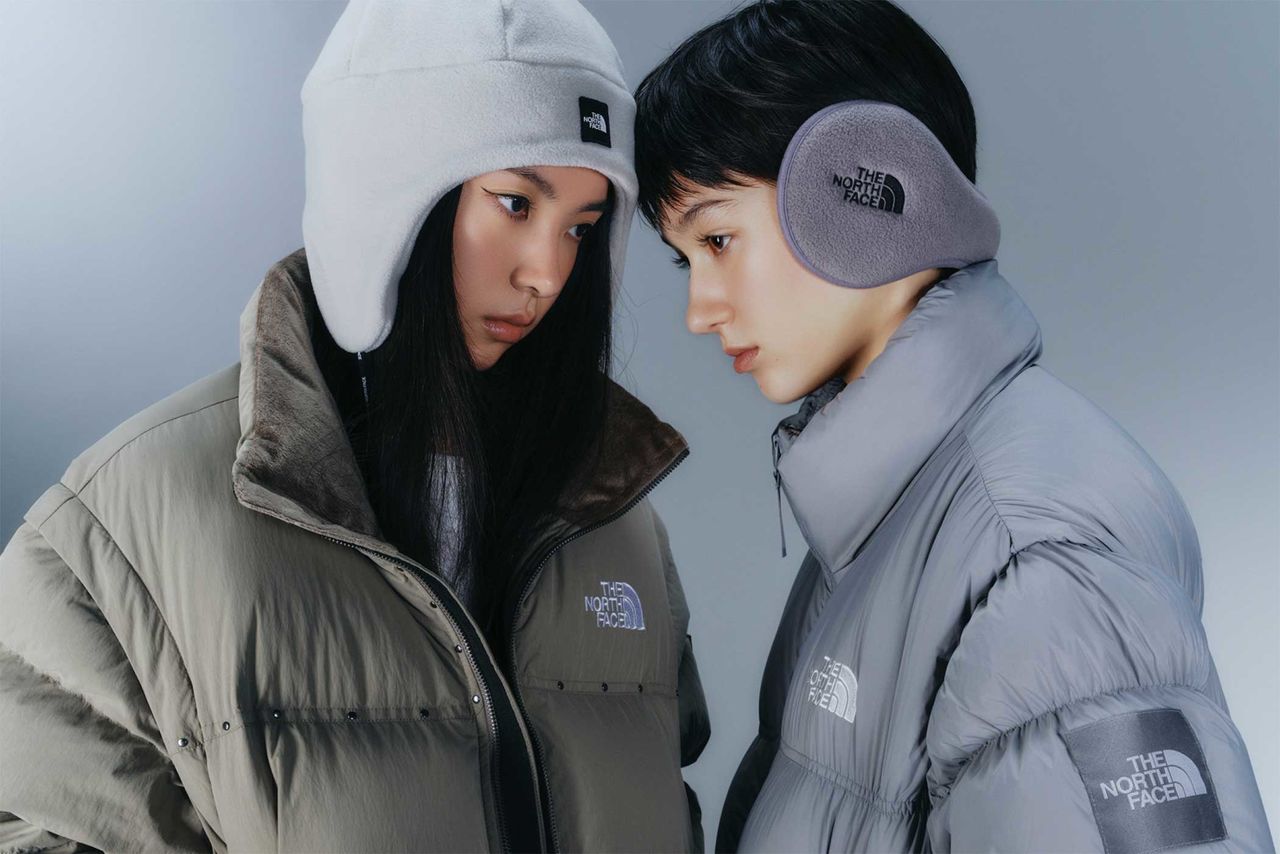
The Korea-exclusive collection targeting young women can also be purchased through the Japanese official website. (© Goldwin)
Looking Toward the Next Move
Building on its growth fueled by TNF’s success, Goldwin is turning its attention to raising the global profile of its own Goldwin brand. Overseas, it has opened stores first in the United States and Germany, and then in China and Korea, establishing its presence in sales areas from winter leisure wear to cold-climate urban apparel.
In China in particular, the brand makes use of the high-performance material Gore-Tex while minimizing ornamentation to appeal to affluent consumers with growing interest in winter leisure activities. Sales at its Beijing store, opened in 2021, are said to exceed those of its Harajuku and Marunouchi locations in Tokyo.
Originally founded in the United States, the North Face has evolved uniquely in Japan. Riding that momentum, it has gained popularity across East Asia. The different localized brands in Asia are being embraced by a new layer of fans across the region, creating a ripple effect that is generating even more demand.
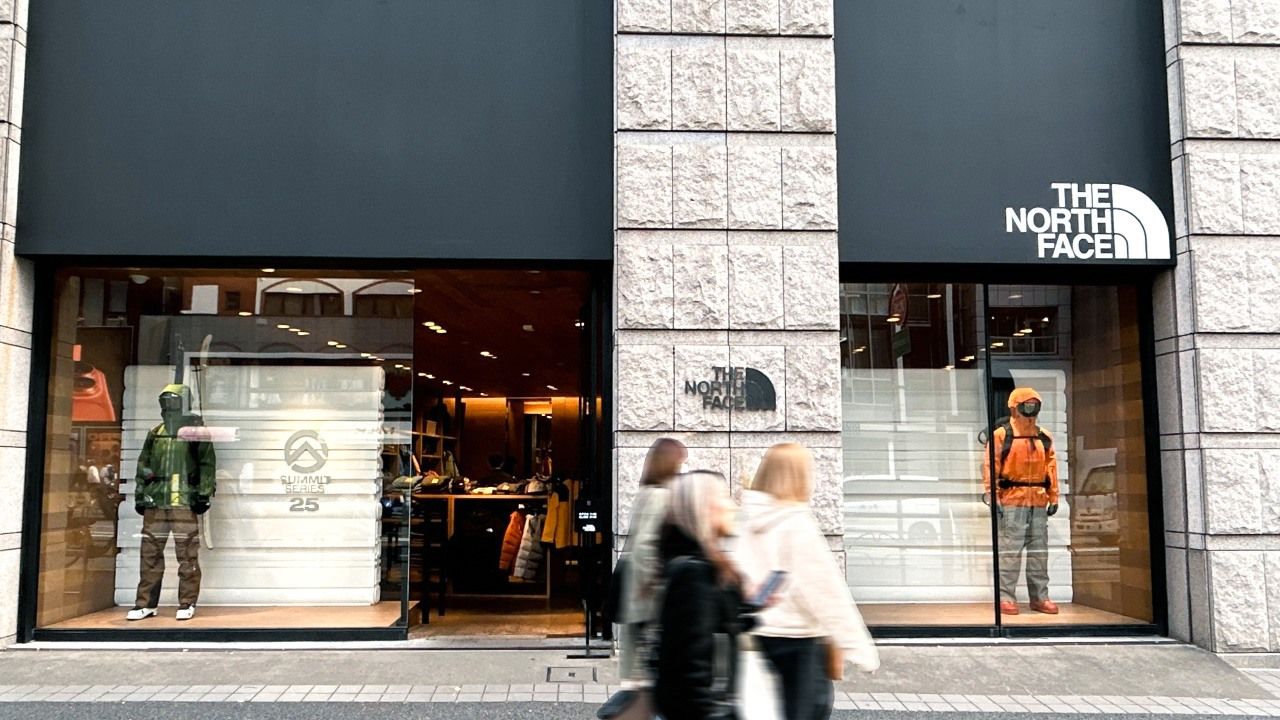
(Originally published in Japanese. Banner photo: The North Face Mountain, the brand’s flagship outlet in Harajuku, Tokyo, is a hub for young people and international tourists. © Matsumoto Sōichi of Nippon.com.)