NTT Docomo Ends i-Mode Mobile Service That Pioneered the Emoji
Economy Technology- English
- 日本語
- 简体字
- 繁體字
- Français
- Español
- العربية
- Русский
Using Phones for Banking, Travel, and More
On March 31, 2026, NTT Docomo shut down its third-generation mobile network (3G) and i-Mode service. i-Mode, which was launched on February 22, 1999, has now come to its end after nearly three decades.
When it first appeared, i-Mode was a groundbreaking service. Prior to its emergence, access to the internet required a computer. Being able to go online with a mobile phone was a game changer. But that alone does not explain the success of the service.
A key factor in i-Mode’s rise was the vision of Natsuno Takeshi, who led the service’s launch and now serves as president of Kadokawa Corporation. Natsuno was committed to making it easy for other companies to participate in the new ecosystem.
At the time, a markup language called WAP had been established for mobile websites, but its unique specifications made it difficult for website developers to use. What Natsuno did was employ “c-HTML,” a compact version of the HTML language used for websites. This made it easy for those with experience building PC-oriented websites to make i-Mode sites, and participation grew quickly.
Another point that Natsuno focused on was making i-Mode part of Japan’s social and economic infrastructure. From the start, major banks joined in the service, making it possible for users to check balances and make transfers on their phones.
In its television ads, Docomo featured the popular idol Hirosue Ryōko and highlighted the ability to make bank transfers on your phone. It wasn’t just about accessing the internet. With i-Mode, phones were shifting from being merely devices for talking to vital accessories with a range of uses, and were becoming more integrated into daily life.
Later, most i-Mode-compatible devices became equipped with FeliCa, a contactless RFID system used for transportation cards like Suica, as well as for electronic money. This enabled phones to be used for passing through automatic ticket gates for trains and for payments at convenience stores and supermarkets.
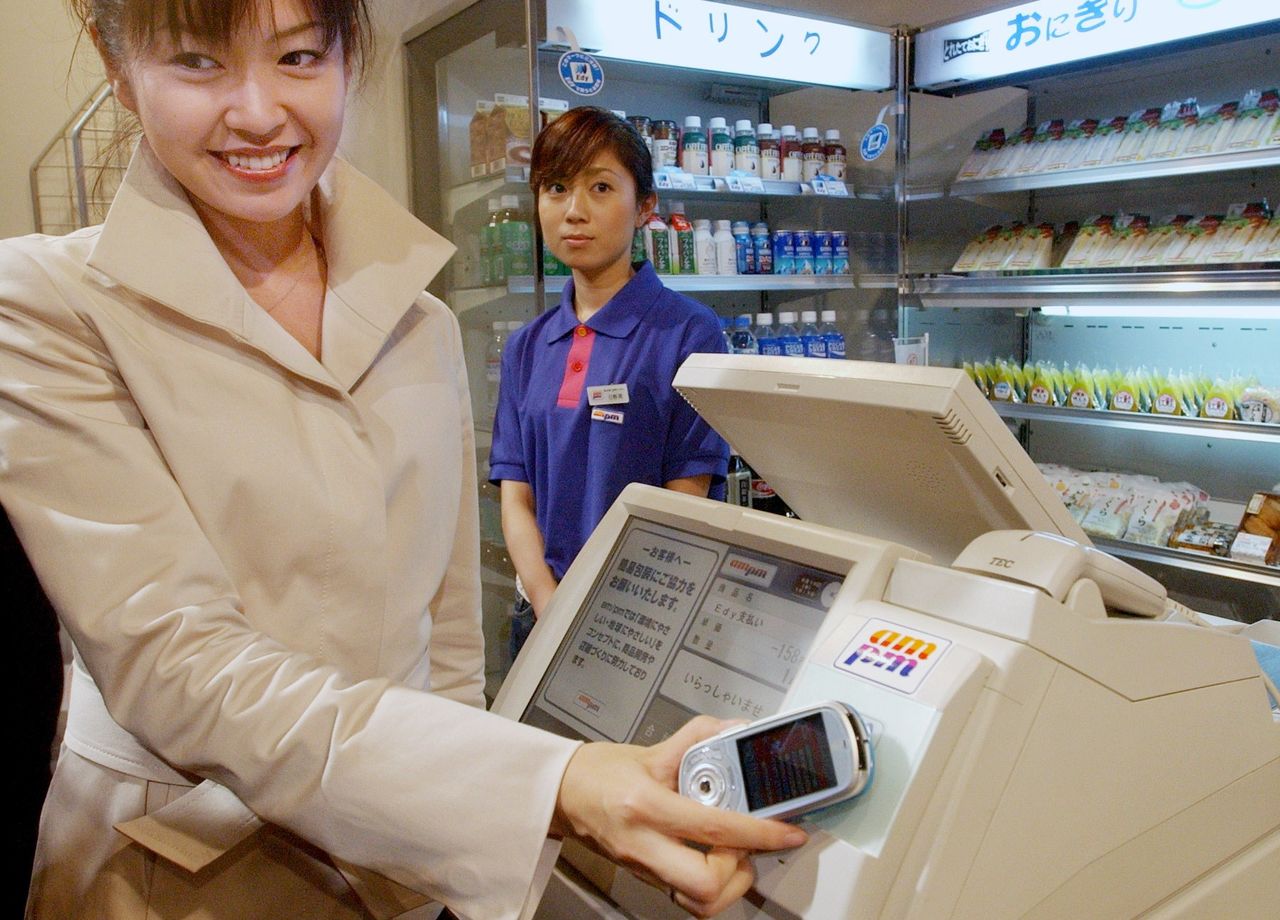
NTT Docomo’s Osaifu-Keitai service—literally “wallet cellphone”—enabled payment by holding an i-Mode phone over a convenience store register. Photo from a presentation in Chiyoda, Tokyo, on June 16, 2004. (© Jiji)
A Billing System That Created a Digital Content Market
As i-Mode took hold in Japan, it gave rise to a vast digital content market spanning games, ringtones extracted from published popular songs, digital comics, and more. What supported the ability of participating companies to earn revenue was the service’s billing system.
On i-Mode, paid content was typically priced at around ¥300, similar to the price of an inexpensive magazine, putting it in an affordable range for users. NTT Docomo took a 9% transaction fee from content providers, significantly lower than the 25%–30% fees charged by today’s smartphone app stores run by Apple and Google.
What made i-Mode‘s billing system effective was that it bundled content charges with monthly phone bills. Credit cards were already available for online payments, but entering a card number, name, and expiration date created a psychological barrier for many users.
With i-Mode, users only needed to enter a four-digit PIN to complete a purchase. Because the charges were added to the phone bill, failing to pay could result in losing access to calls, email, and internet service. Since that would seriously disrupt their daily life, users were sure to pay. This gave content providers confidence to participate, as cases of nonpayment were rare.
Dethroned by the iPhone
i-Mode was highly successful in Japan, reaching 5 million subscribers within a year of its launch, and it began expanding overseas around 2002. Seeing that Docomo was able to significantly increase its income per user, mobile carriers in North America and Europe started adopting the service.
It expanded to Germany, France, the Netherlands, Belgium, Spain, Italy, Greece, and Britain, as well as to Taiwan, Hong Kong, Singapore and more—18 markets around the world in total. However, after peaking around 2005, overseas carriers gradually withdrew, and i-Mode fell short of dominating the global market.
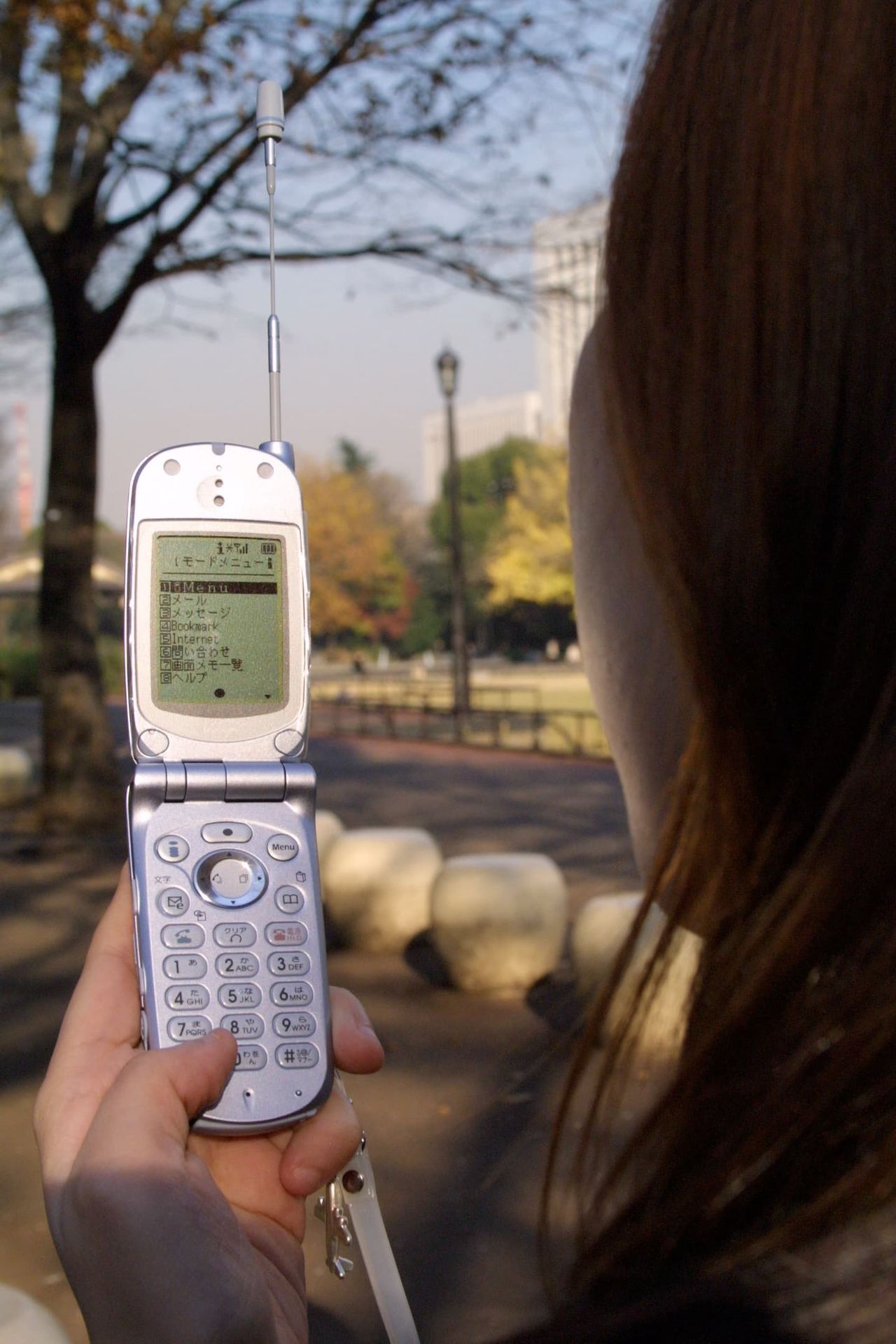
A menu screen from an early version of i-Mode in December 2000. (© Jiji Press Photo)
Why did the Japanese offering ultimately fail to gain worldwide dominance? One reason was the fundamental difference between Japan and overseas markets in the relationships among carriers, manufacturers, and retailers.
In Japan’s mobile phone industry at the time, carriers like Docomo were at the top. They built nationwide networks and developed services within those networks’ constraints, including connection speed and data limits. In this model, carriers defined technical specifications of devices, commissioned manufacturers, and sold the resulting phones through their own retail outlets, such as Docomo Shops.
In contrast, mobile carriers in other countries were simply infrastructure providers. Nokia held the largest share of mobile devices at the time, and its phones were only compatible with services it chose to promote. Retail structures also differed, as shops were not usually tied to a single carrier, and device sales tended to be separate from service contracts. As such, even when carriers introduced their own services, it was difficult for them to find a breakthrough for widespread adoption.
Then, in 2007, Apple introduced the iPhone. Using its brand strength and hardware appeal, it established overwhelming control over carriers and retailers worldwide. By operating an app store to provide a huge range of networked services, it expanded its influence and grew into a dominant force in the smartphone business, as did Google with its Android OS.
Although Docomo’s i-Mode had succeeded in its business model that shifted phones from talking devices to truly multiuse gadgets, in the end it was surpassed by Apple’s iPhone on the global stage.
How Emoji Went Global
i-Mode underwent its own unique evolution in Japan, which ties into how Japanese flip phones began to be mockingly called garakē, a portmanteau of the words Galapagos (denoting the globally unique development of the insular Japan marlet) and keitai (mobile phone). Still, we cannot forget i-Mode’s global legacy that persists today: the emoji.
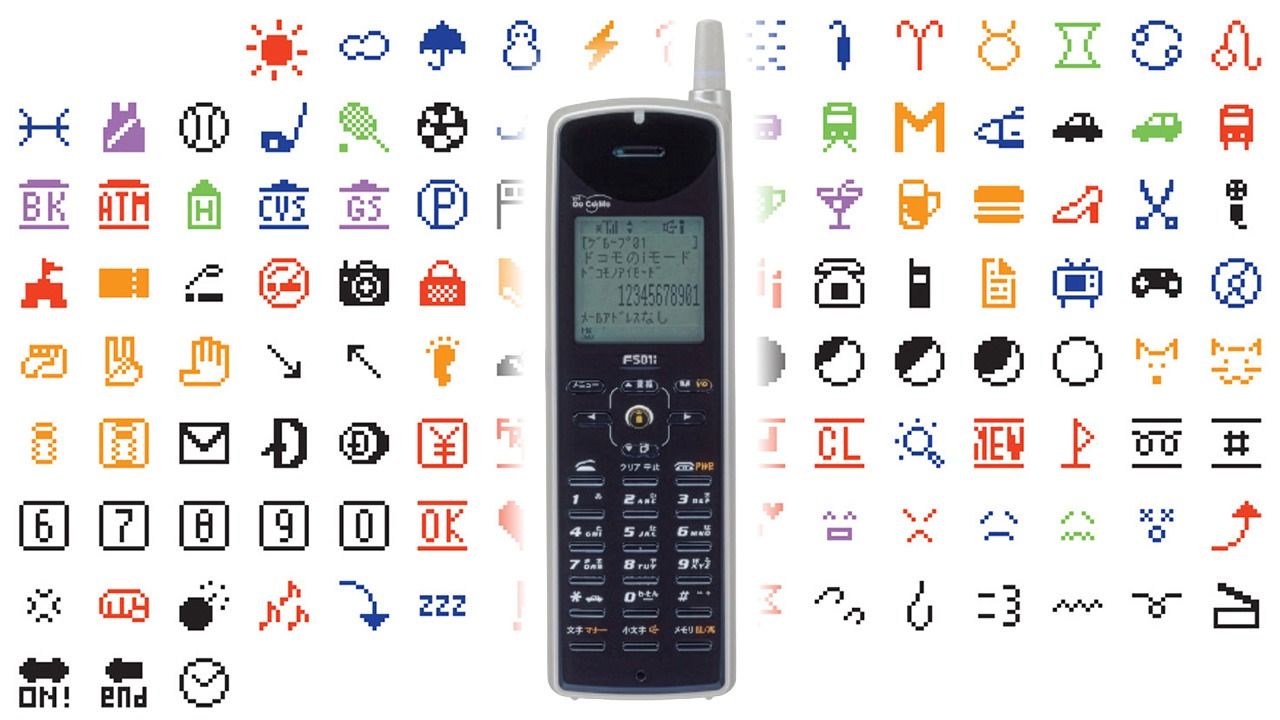
Until around 1999, the screens of mobile phones were small, and text messages on i-Mode were limited to 250 Japanese characters. That’s when i-Mode introduced a system that allowed users to send single-character pictograms called emoji (from the words e, picture, and moji, character), drawing on pager messaging that existed before mobile phones became widespread. By the time the service launched, 176 emoji had been created. They were designed by a single man, Kurita Shigetaka, then a Docomo employee and now a director at the IT/entertainment firm Dwango.
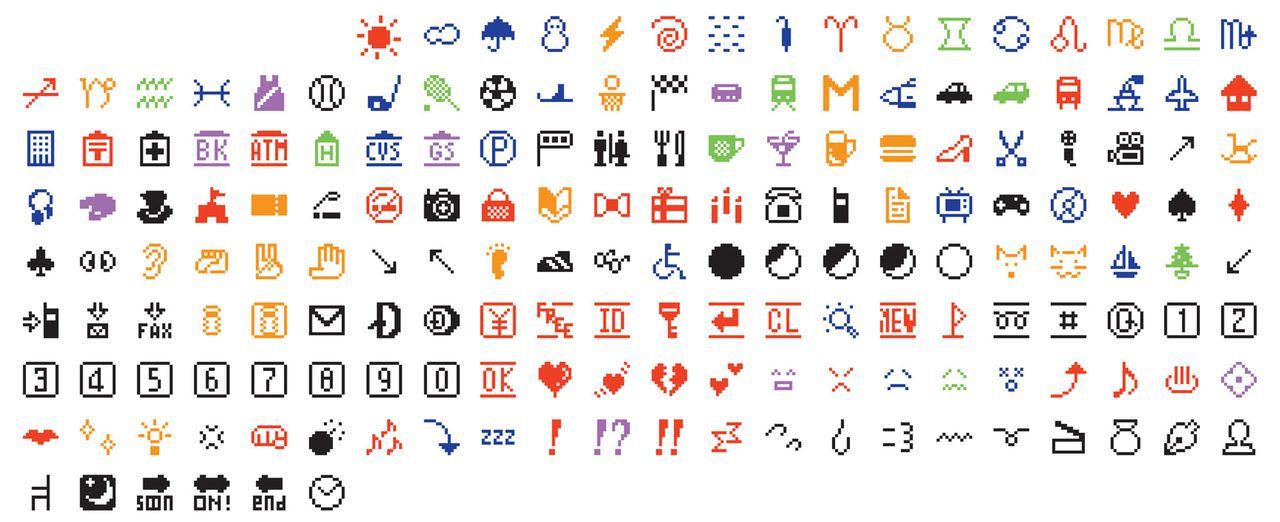
The original 176 emoji created at the launch of i-Mode, later added to the collection of the Museum of Modern Art in New York City in 2016. (Courtesy MoMA; via Jiji)
Other carriers in Japan also developed their own emoji to compete with Docomo, and these visual characters became a natural part of everyday communication for Japanese mobile users.
In 2006, Google set up a project led by its Japan team to enable emoji exchange between mobile phones and Gmail. The effort came to fruition in 2008, and in the same year the company made a proposal to add emoji into Unicode, the international standard for character encoding across all computing platforms, thereby laying the groundwork for worldwide adoption of this new communication tool.
A key figure in promoting the spread of emoji overseas was actually Son Masayoshi, chairman of Docomo’s rival, SoftBank Group.
SoftBank secured exclusive rights to sell the iPhone in Japan in 2008, but early sales were weaker than expected. At the time, consumers were interested not only in internet, email, and games, but also in phones that were compatible with Japan’s insularly evolved features, like the 1seg mobile TV broadcasting service and Osaifu Keitai mobile wallet function.
Seeking to boost iPhone sales in Japan, Son approached Apple’s Steve Jobs directly and asked him to add emoji support. As Apple placed great importance on the Japanese market, it enabled emoji on iPhones in Japan in 2009.
In 2010, about 700 emoji were adopted into Unicode. The following year emoji became available for use on iPhones globally, and thereafter spread swiftly.
The emoji is a convenient tool that lets you communicate across language barriers. It is a natural fit for the platforms of Apple and Google, which operate on a global scale with their smartphones and email services. While Docomo’s original emoji set, developed in 1999 for i-Mode, saw its final curtain call in 2025, the innovation itself endures—a shared language thriving on all sorts of devices all around the world.
(Originally published in Japanese. Banner photo: The F501i, NTT Docomo’s first i-Mode-compatible handset [courtesy Docomo], and the original set of emoji developed for the service [courtesy MoMA; via Jiji].)