Taking the Lead in Autonomous Navigation: All-Japan Consortium Sailing Toward Crewless Maritime Shipping
Technology- English
- 日本語
- 简体字
- 繁體字
- Français
- Español
- العربية
- Русский
Leading the Pack in Autonomous Ships
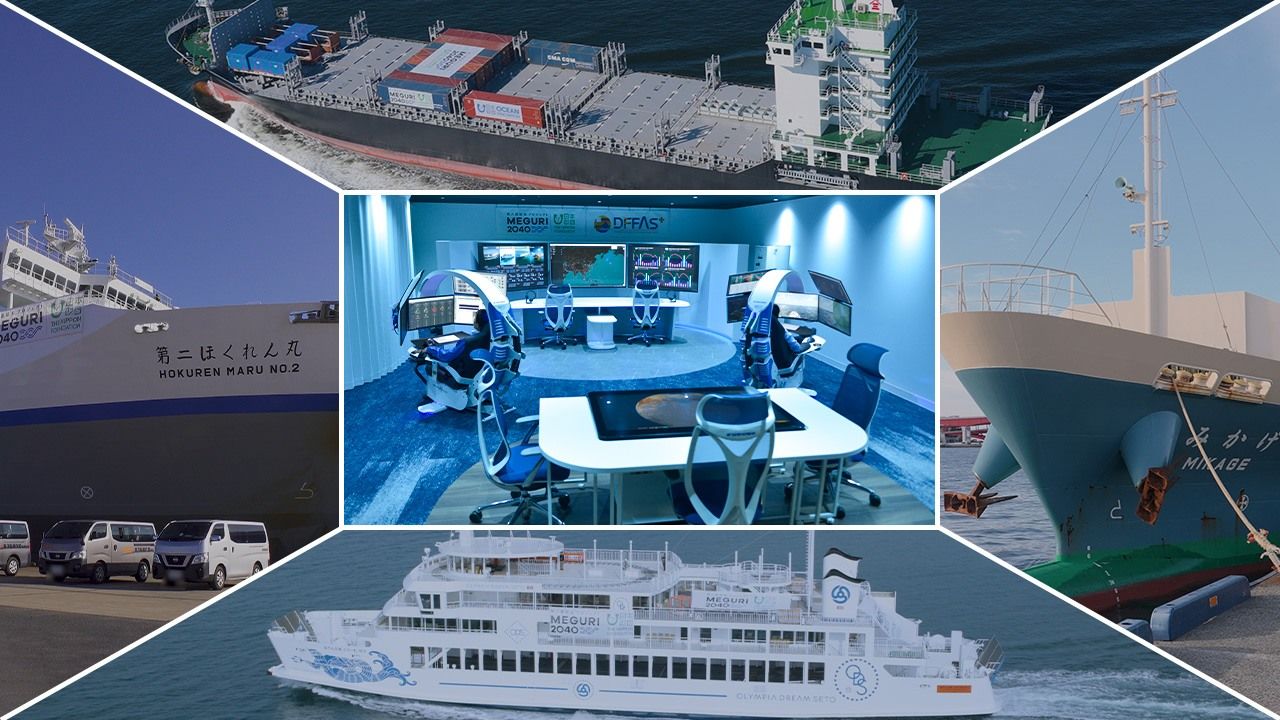
After repeated rounds of verification testing on uncrewed operation, the autonomous container ship Mikage received official certification from the Ministry of Land, Infrastructure, Transport, and Tourism on March 25. This means that all four of the domestic proof-of-concept ships that have undergone test voyages as part of the Meguri 2040 project—which aims to build the foundation for uncrewed shipping operations at sea—are approved for commercial operation, carrying passengers and cargo without any human pilots under certain conditions. Their autonomous operation is equivalent to Level 4 of the Society of Automotive Engineers’ Levels of Driving Automation.
In addition to the Mikage, the project has involved test voyages by the coastal container vessel Genbu, the passenger ferry Olympia Dream Seto, and the ro-ro (roll-on, roll-off) shipping vessel Hokuren Maru 2. As they sail around Japan, these four ships are monitored by land-based Fleet Operation Centers using satellites, ensuring safe navigation through changing maritime and shipping lane conditions. These control centers include one fixed location in Nishinomiya, Hyōgo Prefecture, and a trailer-mounted mobile center that can offer the same functionality from various points on the Japanese coast.
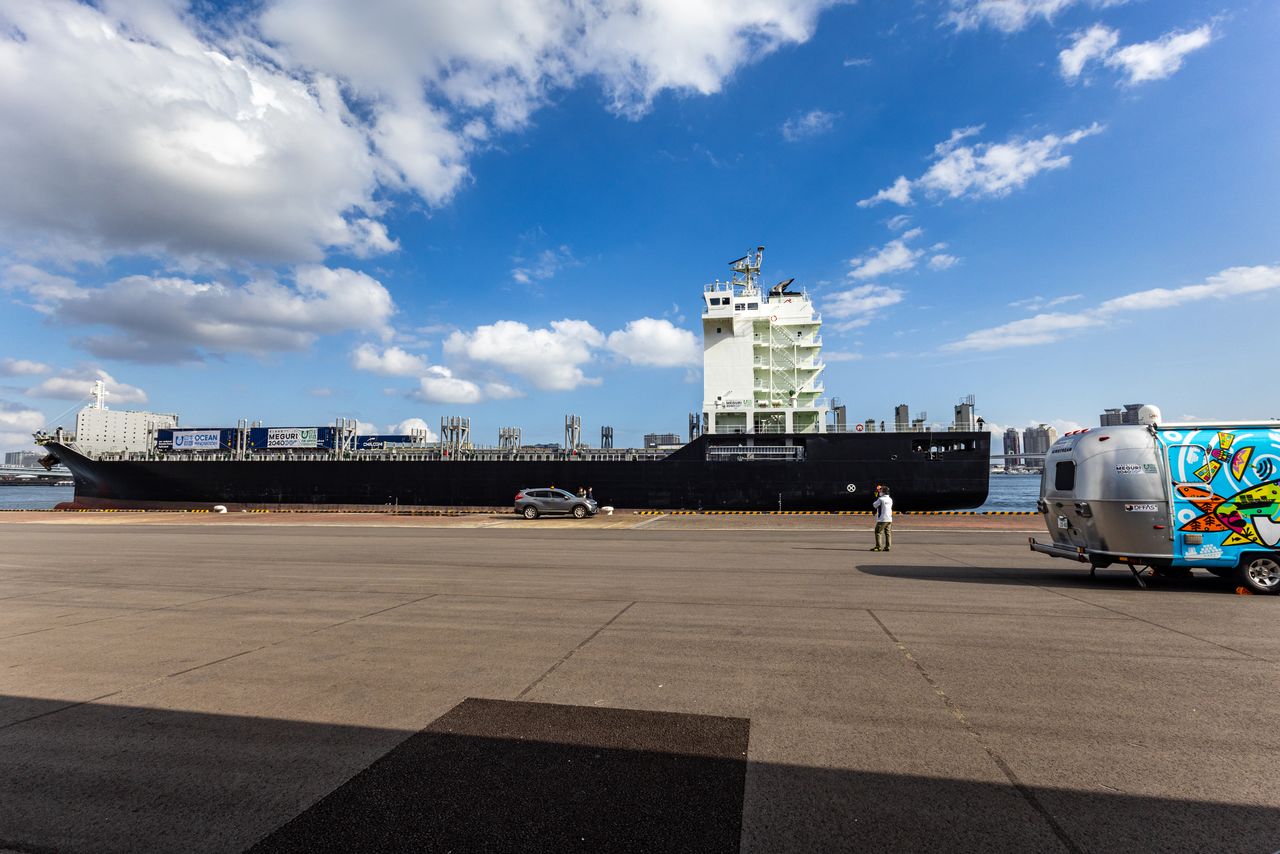
The fixed-route container ship Genbu is 134.9 meters long. To the right is the trailer-mounted mobile Fleet Operation Center. (© Nippon.com)
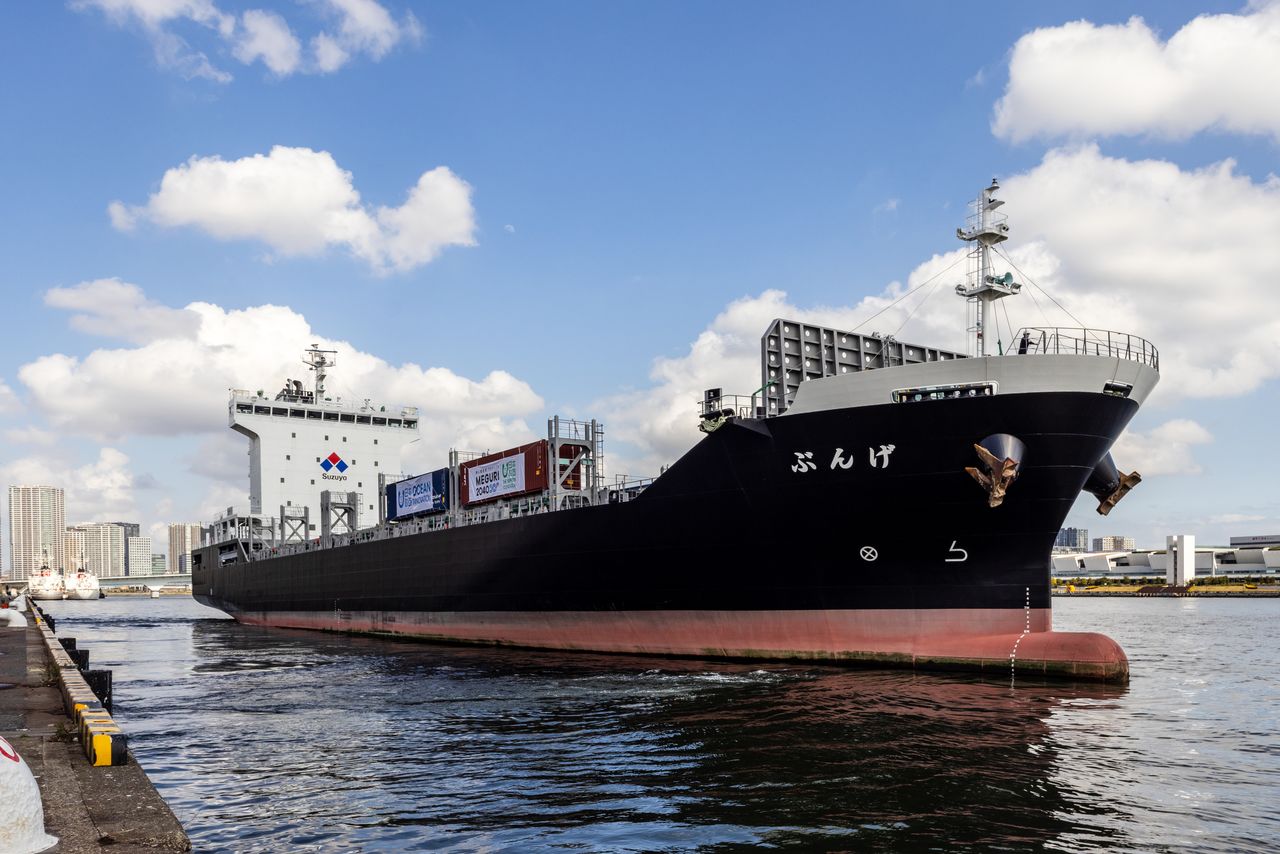
The Genbu manages to dock and undock successfully at a tricky pier. (© Nippon.com)
On March 27, the newly built container ship Genbu, which sails a fixed route between Kobe and Tokyo, demonstrated autonomous docking and undocking at Tokyo’s Harumi Pier for the media. In addition, the Nishinomiya Fleet Operation Center live-streamed remote support operations for both the Genbu in Harumi and the passenger ferry Olympia Dream Seto, which was sailing the Seto Inland Sea.
There are no other examples of simultaneous land-based support for multiple autonomous commercial ships. Unno Mitsuyuki, executive director of the Nippon Foundation, said, “While Japan’s shipbuilding sector is being left behind by China and South Korea, we have taken a two-lap lead on other countries in autonomous ship navigation.”
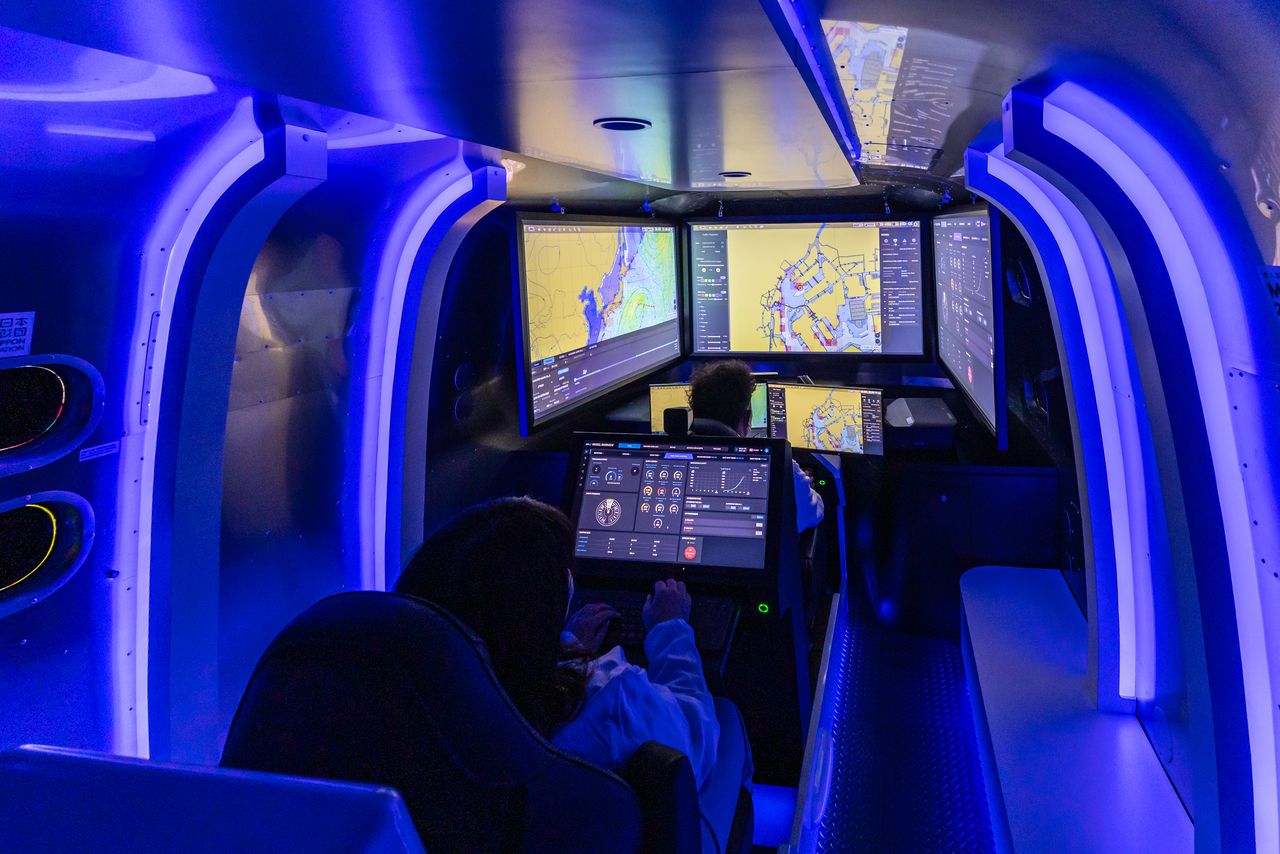
Inside the mobile Fleet Operation Center, which packs full functionality into a single vehicle to offer remote support to autonomous ships across Japan. (© Nippon.com)
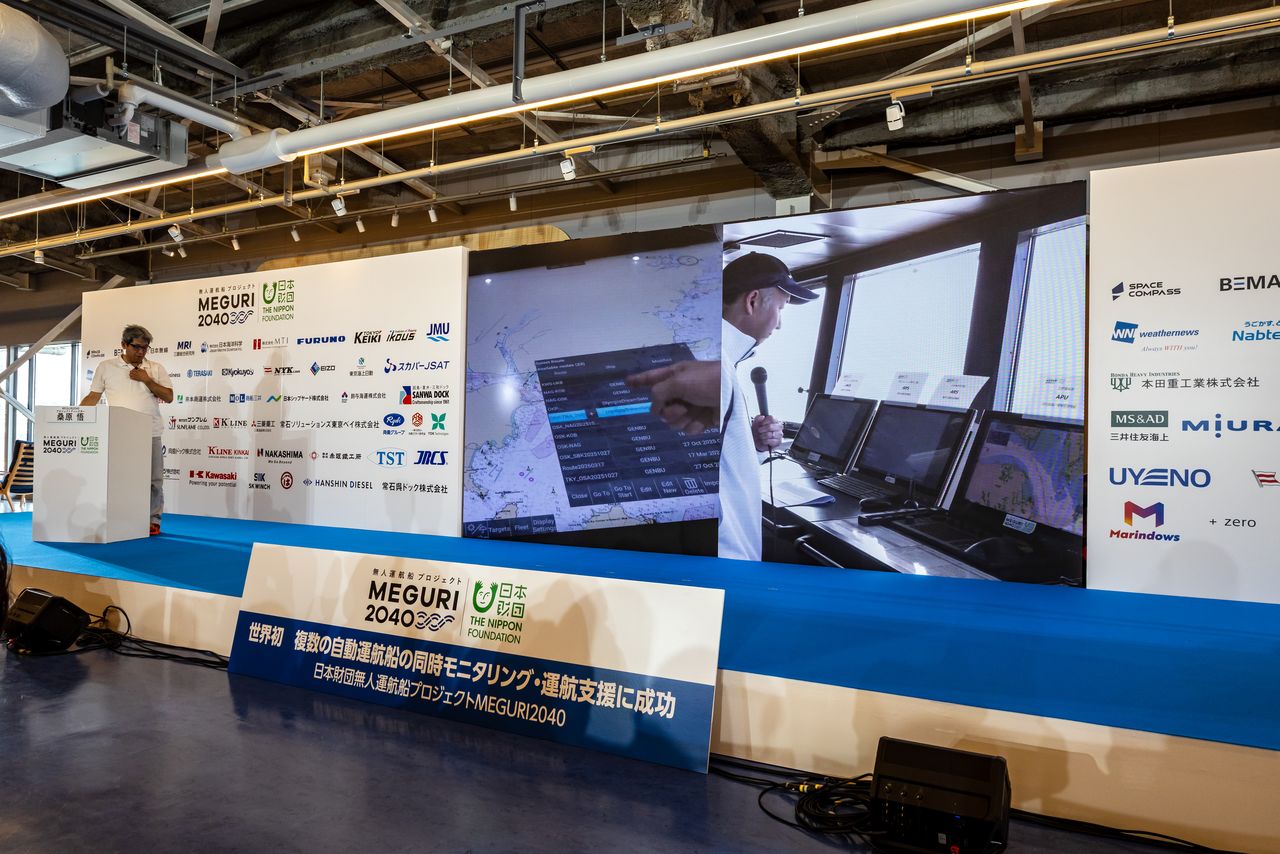
When the center transmits an updated shipping route, the ship shifts course while underway. (© Nippon.com)
A New Maritime Future
Domestic maritime shipping accounts for 40% of all domestic cargo transport. Although it remains vital infrastructure with a direct impact on public life, the industry is struggling with aging crews and understaffed ships. Autonomous ship navigation offers a key to addressing those issues. Widespread adoption could contribute to greater logistics stability and decreased maritime accidents, about 80% of which are attributed to human error. There are also hopes that it could help maintain remote island routes in danger of reduction or outright closure, as well as extending its impact to the automation of port and harbor work and fishing.
As Meguri 2040 enters its sixth year, it has evolved into an all-Japan consortium of over 50 companies and organizations across a wide variety of sectors, including maritime work, telecommunications, and AI. Since entering its verification phase, the project has seen a number of world-first achievements, such as automated docking and undocking of large ships and autonomous navigation of congested waters. The project has been covered by over 1,000 media outlets around the world. The culmination of this work, the successful simultaneous support of multiple ships, was a powerful demonstration of this vision of the future of maritime shipping.
Fully autonomous ships will require legislative action, as well. Unno says, “We plan to share shipping data with the MLIT to help in setting rules, and to have that data used by the International Maritime Organization in drafting conventions.” The hope is that Japan’s autonomous navigation technology will come to serve as a global model.
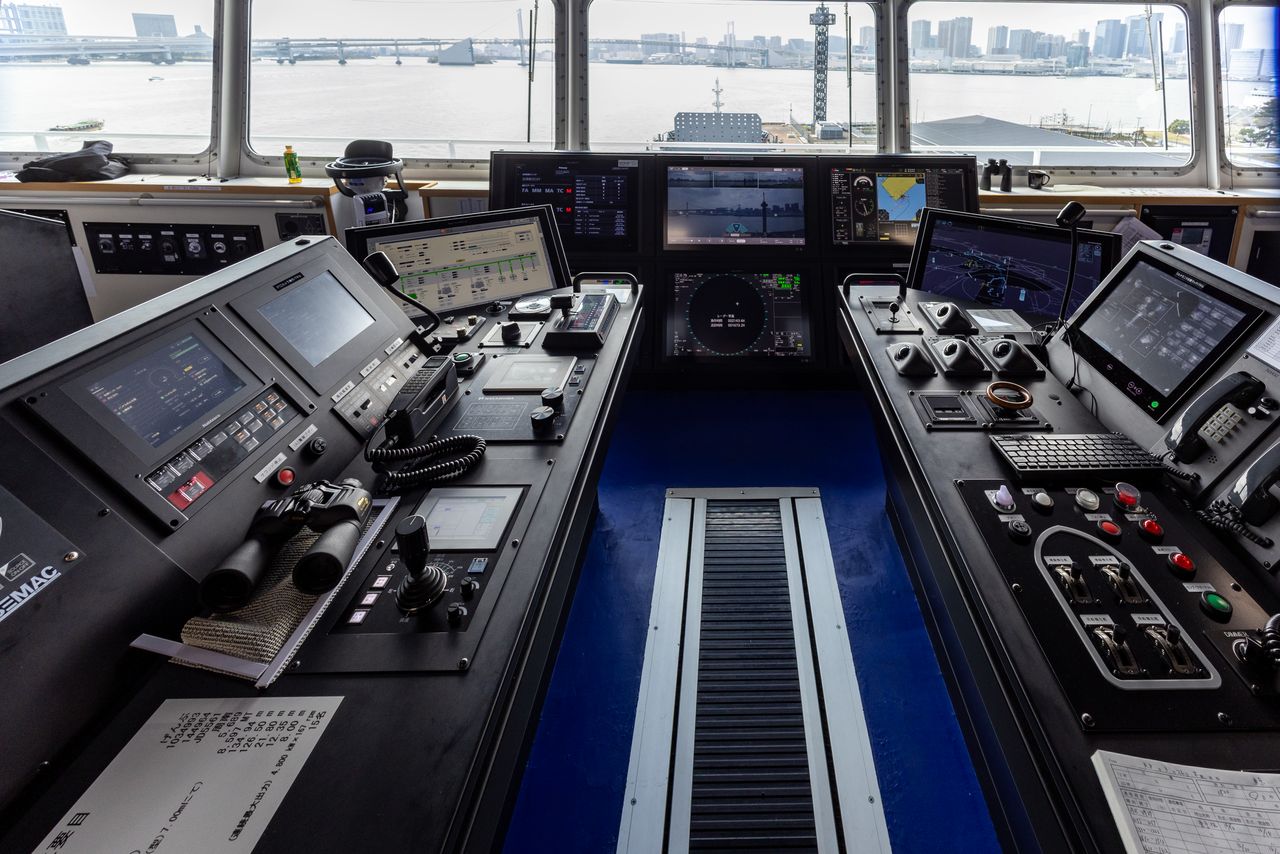
The interior is like something out of a spaceship. Children touring the center have been heard to say, “I want to ride this ship!”—a hopeful sign that the sailors of the future will be found. (© Nippon.com)
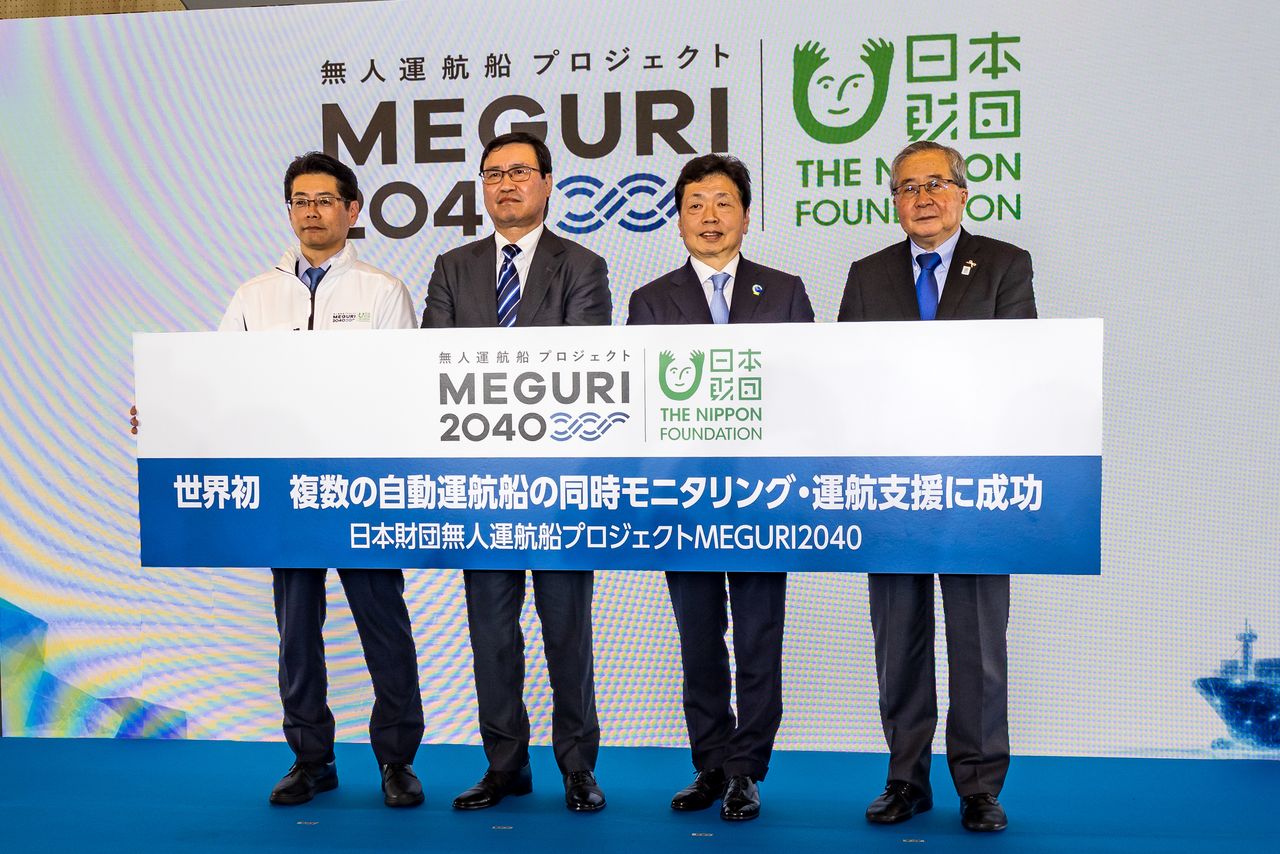
From left: Nippon Foundation Executive Director Unno Mitsuyuki; Matsuura Mitsuharu, president of the All Japan Seamen’s Union; Mizushima Satoru, vice-minister of the Ministry of Land, Infrastructure, Transport, and Tourism; and Ogata Takeju, chairman of the Nippon Foundation at the March 27 press conference. (© Nippon.com)
(Originally published in Japanese. Banner photo: Clockwise from top, the autonomous container ships Genbu and Mikage, the remote-island route vessel Olympia Dream Seto, and the ro-ro vessel Hokuren Maru 2. At center, the land-based Fleet Control Center that manages all vessels. © Nippon.com; all photos courtesy of the Nippon Foundation.)