Shōjin Ryōri: Japanese Vegetarian Food from the Heart
Culture Food and Drink Guide to Japan- English
- 日本語
- 简体字
- 繁體字
- Français
- Español
- العربية
- Русский
A Growing Focus on Healthy Food
Washoku, or Japanese cuisine, is noted for being low in calories, fat, and carbohydrates. But some believe that Buddhist cuisine, which excludes meat, fish, and other animal-derived products, can provide additional health benefits. Shōjin ryōri is also becoming popular among vegetarian and vegan visitors to Japan, together with those who avoid particular meats for religious reasons. It enables them to enjoy Japanese food culture without concerns of violating their beliefs. Some non-Japanese people study shōjin ryōri to incorporate it into their own eating habits.
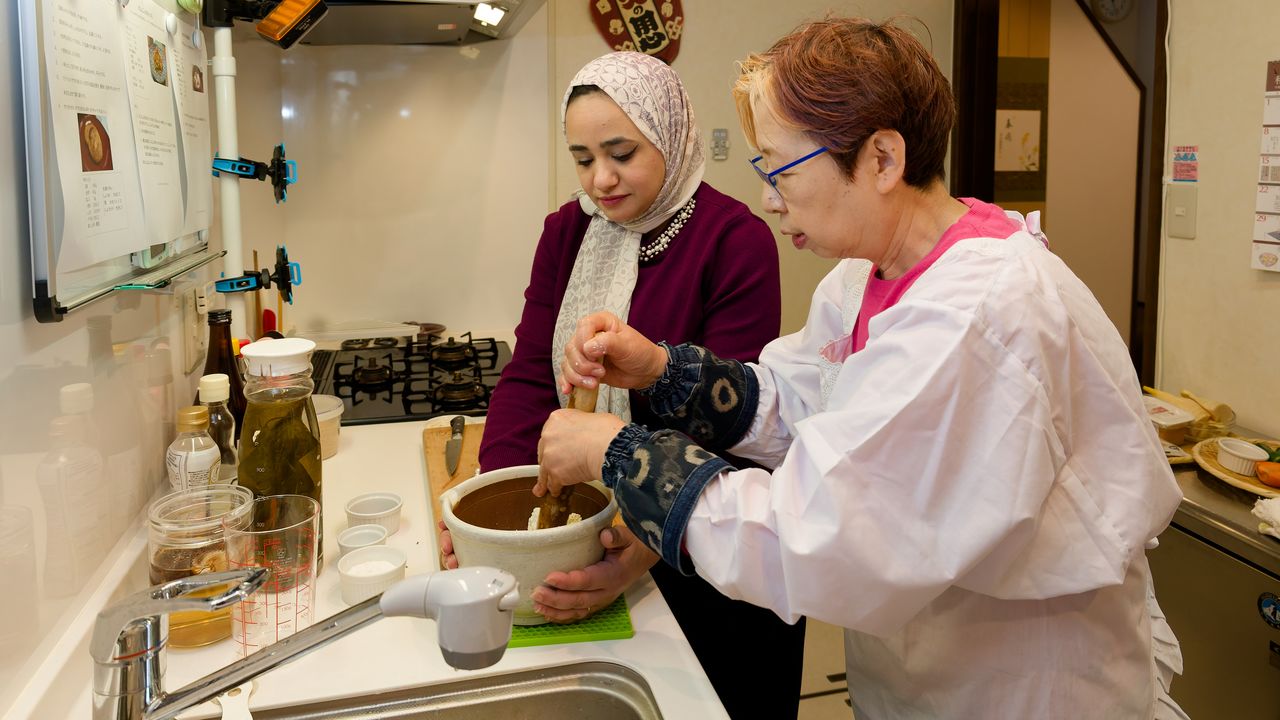
Two editors from Nippon.com, Arabic-speaking Marwa Adly and Spanish-speaking Daniel Rubio, took up the challenge of preparing shōjin ryōri at Teran, a Buddhist cuisine cooking school in Akasaka, Tokyo.
Teran is located within Jōkokuji, a 350-year old Jōdo Shinshū (True Pure Land School) Buddhist temple in the elevated temple precinct of Akasaka, encircled by office towers. Asao Masami, wife of the temple’s abbot, certified dietitian, and a priest herself, teaches Buddhist cuisine from beginner to advanced levels, using her extensive knowledge of nutritional science and ingredients.
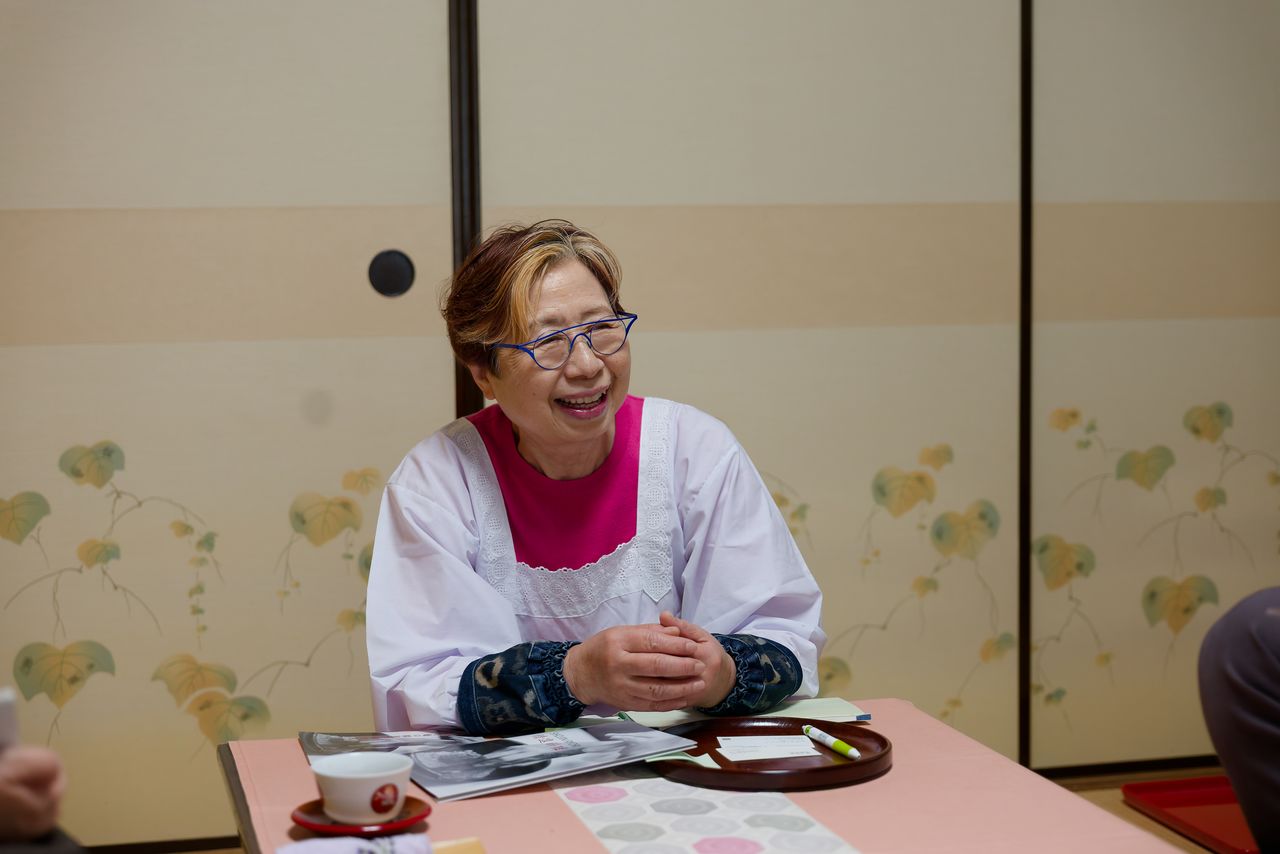
Asao Masami gives a precooking lecture. (© Nomura Kazuyuki)
Before teaching food preparation, Asao gives a lecture on Buddhist cuisine to ensure students start with an appropriate attitude.
She explains, “Shōjin ryōri has much in common with vegetarian and vegan food, but is defined by the ideology that underpins it.”
Shōjin ryōri entered Japan with the introduction of Buddhist beliefs over a millennium years ago, and evolved as it was adapted to the local ingredients and culture. At its foundation lies the Buddhist prohibition against killing any living creature.
“The term shōjin is sometimes used interchangeably with ‘vegetarianism,’” explains Asao, “but originally, it referred to asceticism, including abstinence from alcohol and meat, to eliminate evil thoughts that impede earnest Buddhist practice. This food came to be called shōjin ryōri. In the olden days, monks would go from house to house, reading sutras and begging for alms, in the form of food and monetary offerings. Because there were no refrigerators or motor vehicles, food consisted of local, seasonal ingredients. There was a tendency to receive ‘just gourds in summer and radishes in winter,’ but a little effort, monks developed ingenious methods of preparing these ingredients so that nothing went to waste. Nowadays, when we have more than we need, creative preparation of seasonal ingredients is a novelty.”
The food formally eaten by monks, governed by strict rules, is far simpler than the fare prepared at Teran. Asao notes, though: “Today, we are not undertaking training as a monk, so instead, I ask that you prepare the food with the diner in mind, placing importance on a different form of asceticism—that is, genuine effort, thankfulness, and kindness.”
In our cooking session, we prepare three dishes using tōfu and vegetables.
Grilled Minced Tōfu
This dish is somewhat like hamburger steak made with minced tōfu instead of meat. Tōfu is 90% water, so it cannot be used as is.
“The water content can be reduced by heating tofu in the microwave, but we’ll do it the hard way,” instructs Asao.
The first step is to place a weight on the tōfu, which removes some moisture. Next, the ingredient is wrapped in cotton and gently squeezed.

Firmly squeezing the tōfu to remove moisture. (© Nomura Kazuyuki)
The tōfu is then placed in a mortar, and broken up with a wooden pestle using a hitting motion. Continue to carefully break up this “beaten tōfu” until it has a smooth consistency.
A similar result could be achieved in under a minute in a food processor, but as Asao explains, “Shōjin ryōri is offered to Buddha before we receive and consume it.” It has long been believed that showing respect for the ingredients in careful preparation is one aspect of training.
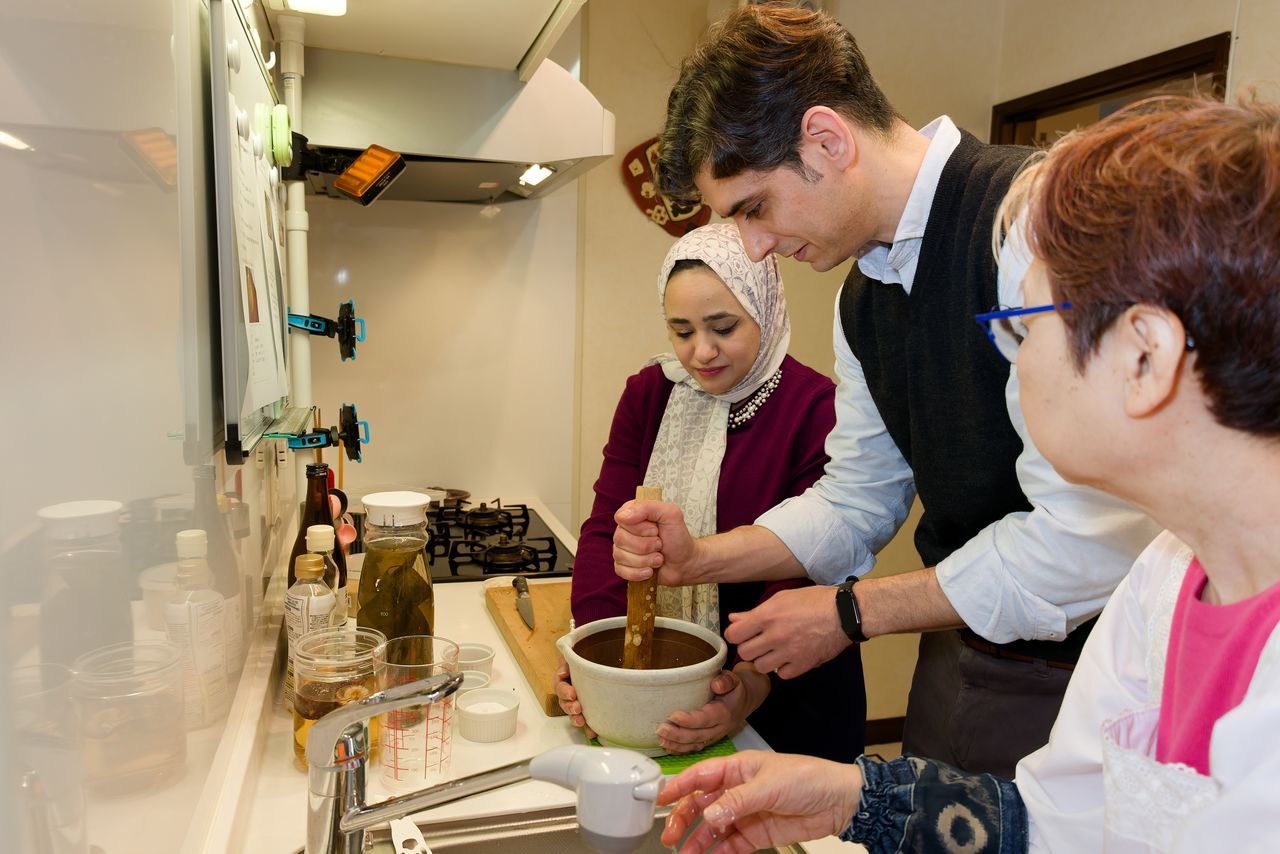
Cooperation between the person holding the mortar and the one beating the tōfu is essential! (© Nomura Kazuyuki)
Usually, egg is used as the binder in hamburger steaks, but shōjin ryōri substitutes yam and wheat, due to the prohibition on animal products. Strips of seasoned, dried konmbu (kelp) and grated ginger provide additional flavor. The mince is molded into an oval shape and cooked in a frying pan until lightly brown.

Mold thin, evenly shaped burgers to allow them to cook through. (© Nomura Kazuyuki)
Bamboo Shoot Stewed in Sake Lees
Sake lees are the sediment that remains after sake is pressed. They are considered a highly nutritious “super food,” containing rice, kōji mold, and concentrated yeast-derived components. Cooking with sake lees helps to achieve a thick, creamy texture without the use of animal-derived milk or cream.

Stir well to prevent the mixture from burning. (© Nomura Kazuyuki)
Japanese cuisine is often based on stock made from katsuo (dried bonito) or niboshi (dried sardine), but these animal sources cannot be used for shōjin ryōri. A vegan alternative, made by combining konbu and shiitake mushroom stock, is substituted to add depth of flavor.
Prepare konbu and shiitake stock separately, combine them, then crumble and add sake lees. Soak the bamboo shoot in advance to reduce its astringency, then slice and add to the mixture. Boil down until the lees dissolve to produce a smooth consistency. This also causes the alcohol to evaporate, making it suitable for children and others avoiding alcohol.
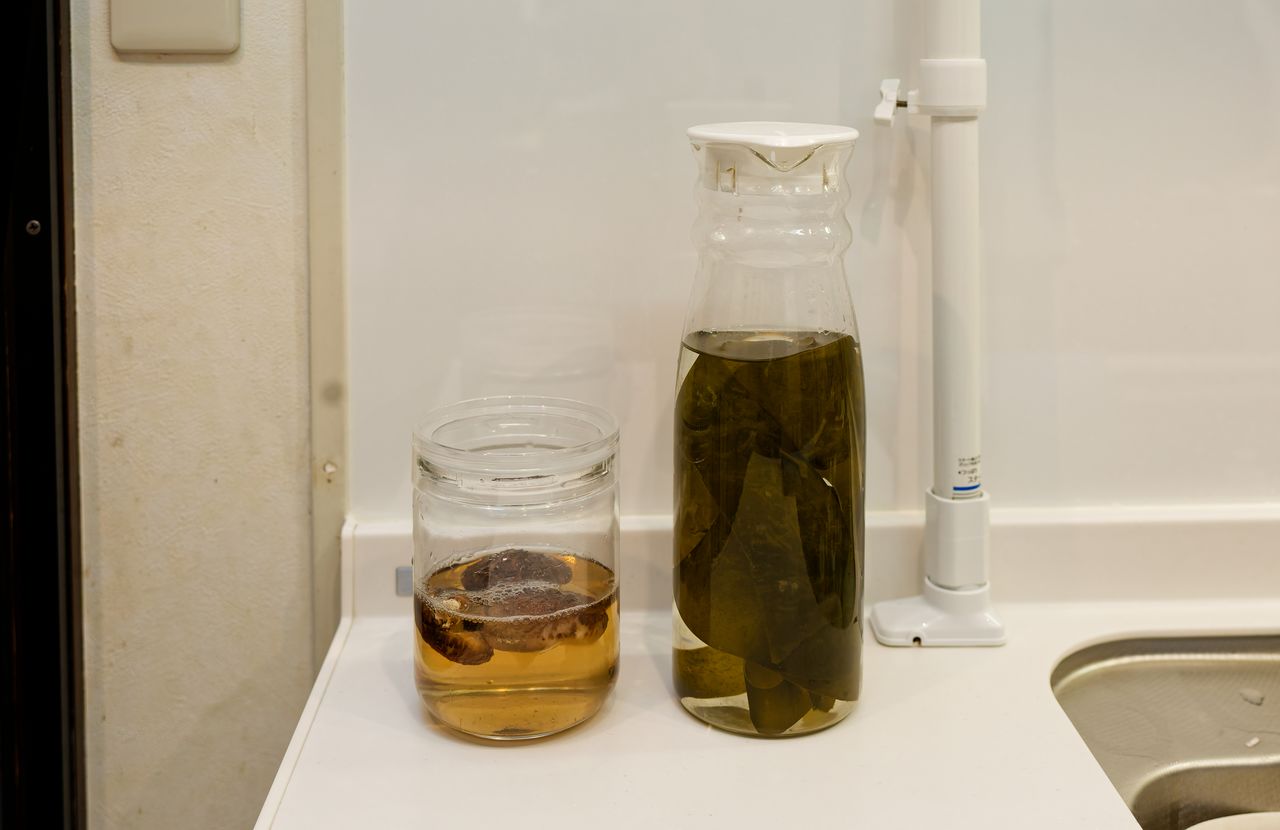
Unlike the meat- and bone-derived soup stocks used in Western cuisine, konbu and shiitake stock are made by soaking the ingredients in water. (© Nomura Kazuyuki)
Stock is used throughout the world, such as French bouillon and Italian brodo, to accentuate the umami in cooking ingredients. According to Asao, “While animal-derived stock such as bouillon adds umami to dishes, dashi from konbu and shiitake does the same while drawing out the inherent flavors of ingredients.”
Lotus Root Kinpira
This recipe combines thinly sliced lotus root pieces with carrot and green peppers to create a colorful dish.
Asao explains that “Lotus root is considered fortuitous because it is full of holes, giving you a view right through it and symbolizing the ability to foresee the future.” Marwa is astonished: “I thought the growers put the holes in them!”

Lotus root symbolizes good fortune. (© Nomura Kazuyuki)
Asao provides plenty of handy advice. “Imagine someone eating the meal and slice the vegetables to roughly equal lengths accordingly. The peppers cook quickly, so they should go in last.” Our two novices follow her instructions as they add the chopped vegetables to the pan.
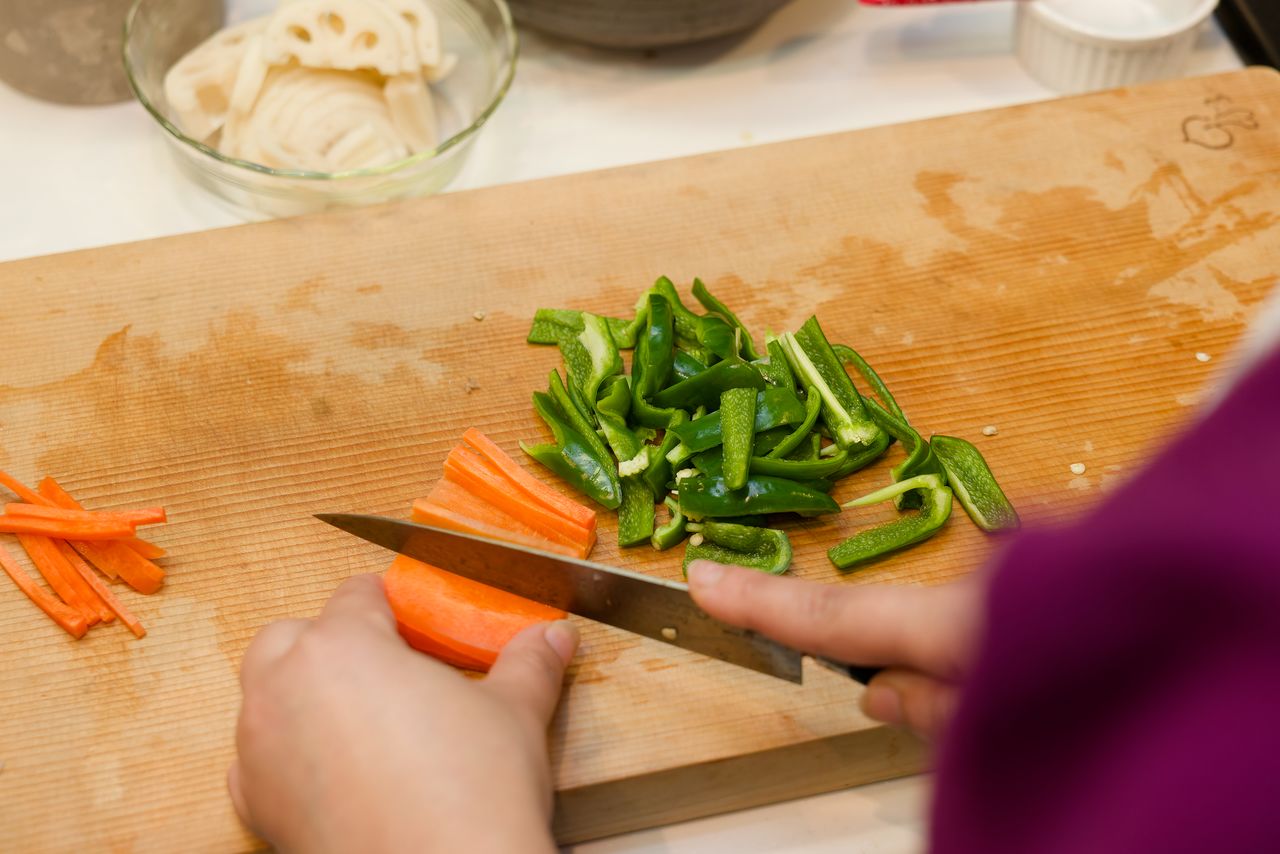
Cutting the ingredients for kinpira. (© Nomura Kazuyuki)
Avoid overcooking, to retain a crunchy texture. Next, blend in the marinade, made by combining sugar and plum vinegar with soy sauce. Finally, sprinkle with plenty of sesame.
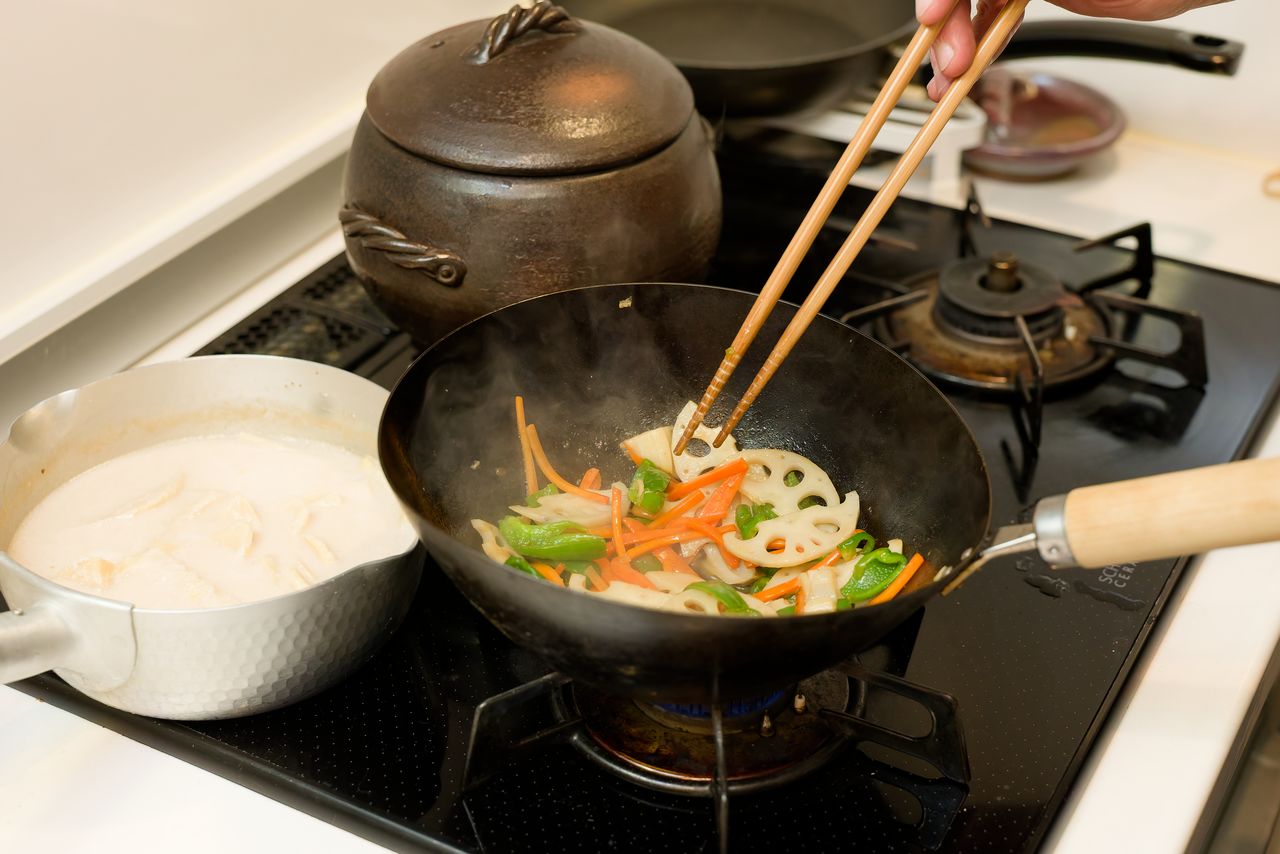
To retain the crunchy texture, be careful not to overcook. (© Nomura Kazuyuki)
Itadakimasu: An Expression of Gratitude
After an hour, the three dishes are ready. Today’s lunch menu is complemented with gokokumai “five-grain” rice steamed with additional cereals for extra fiber, and potato and snap pea miso soup, both of which Asao prepared earlier.
Each of the diners serves his or her own rice. Asao explains that this is to ensure each takes responsibility for the amount to be eaten, to avoid waste.
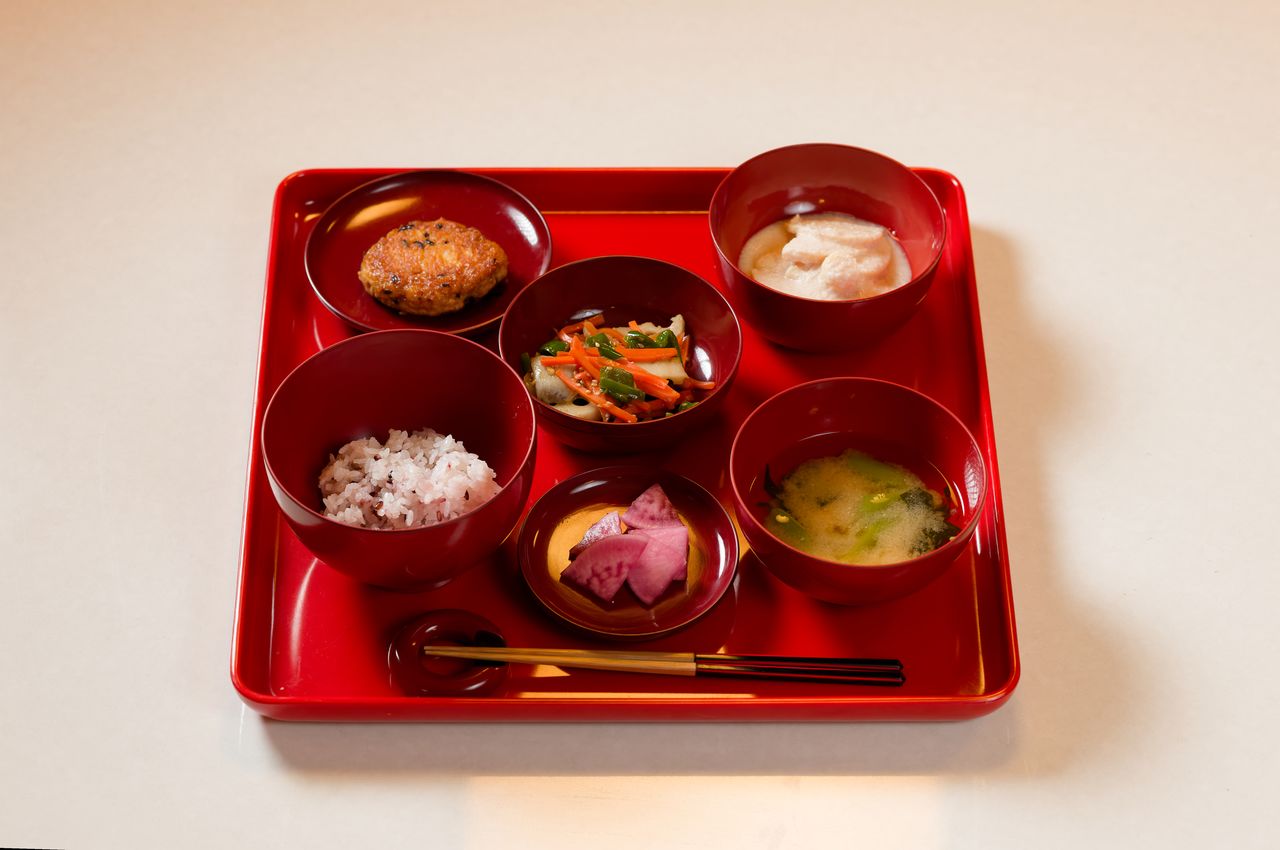
Clockwise from lower left: Gokokumai rice, tōfu hamburger steak, bamboo in sake lees, miso soup, and pickles; lotus root kinpira is at center. (© Nomura Kazuyuki)
Before starting the meal, everyone says itadakimasu, as is customary in Japan.
The meaning is not quite the same as Bon appétit in French or “Let’s eat” in English. Itadakimasu indicates a respectful acceptance of a thing—a sign that we are receiving food that has been offered to Buddha. It expresses appreciation for the life-giving energy we receive from the ingredients, gratitude to their producers, and thanks to those who made our food.
Rubio and Marwa’s meal, while simple, was prepared in collaboration, with a solemn approach to the ingredients and their teacher’s instructions. This allowed the ingredients to shine through.
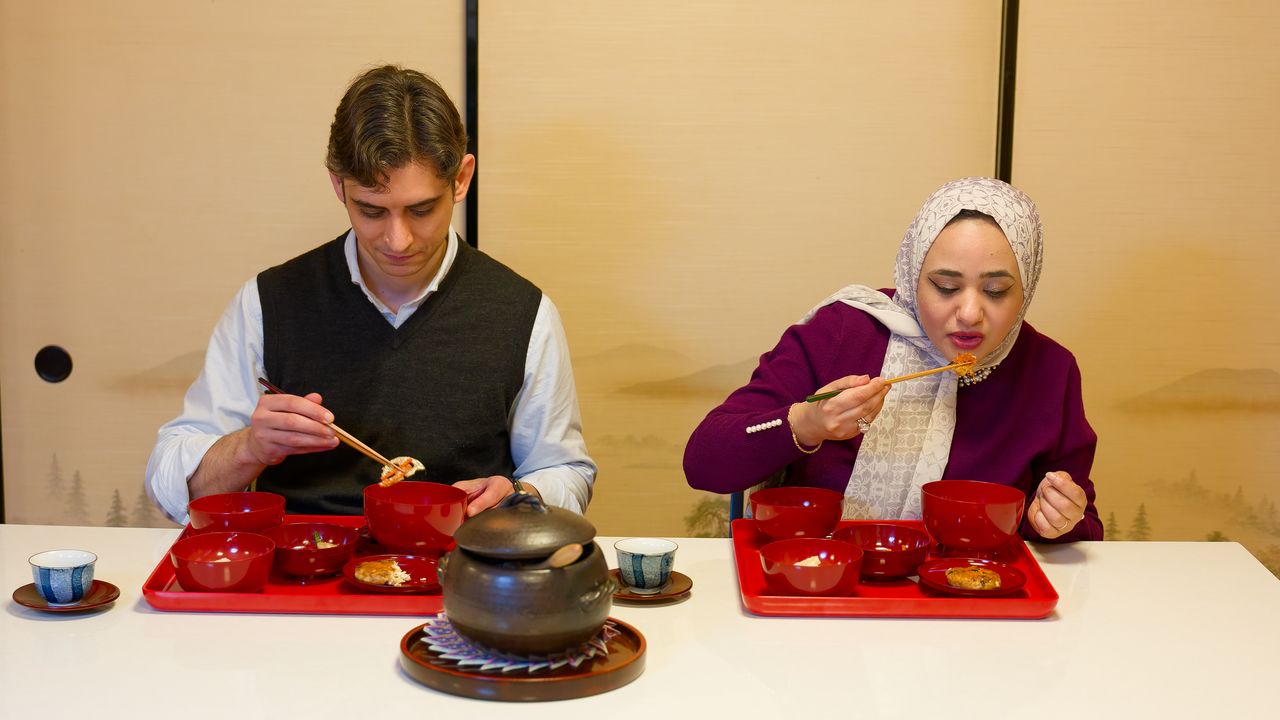
Taking time to savor the carefully prepared dishes. (© Nomura Kazuyuki)
Rubio reflects on the experience. “Some people think that vegan food lacks punch, and leaves you feeling peckish. But our meal today was more than satisfying. The complexity of flavors was tasty, and it represented kindness. I learned a great deal today.”
Marwa remarks: “My children love tōfu, but I didn’t know ways to prepare it other than just serving it as is. Using tōfu to make hamburgers is a wonderful idea. I want to try making them at home for my kids. Egyptian cooking uses tomato-based sauces, so everything tastes like tomato, but the dishes today showcased the flavor of each ingredient—they were all delicious.”
We live in an era fixated on “value for time.” Some days, you wolf down a take-out meal from a fast food joint so that you can focus on work. Ready-made dishes and reheatable packaged meals help fuel our busy lifestyles.
In contrast, careful preparation of shōjin ryōri provides an opportunity to be reacquainted with seasonal ingredients. By handling them ourselves, with respect for the food and those we prepare and eat it with, we can get back to what it means to be human.
Teran offers short shōjin ryōri cooking classes that also cater to visitors to Japan. Some first-timers are left wanting more, and sign up for online classes after returning home.
Asao assures us that religion doesn’t matter with shōjin ryōri. “I’ve met many Christians who felt a connection with the essence of shōjin ryōri and wanted to learn more.”
Perhaps a deeper understanding of itadakimasu helps to make food more appetizing.
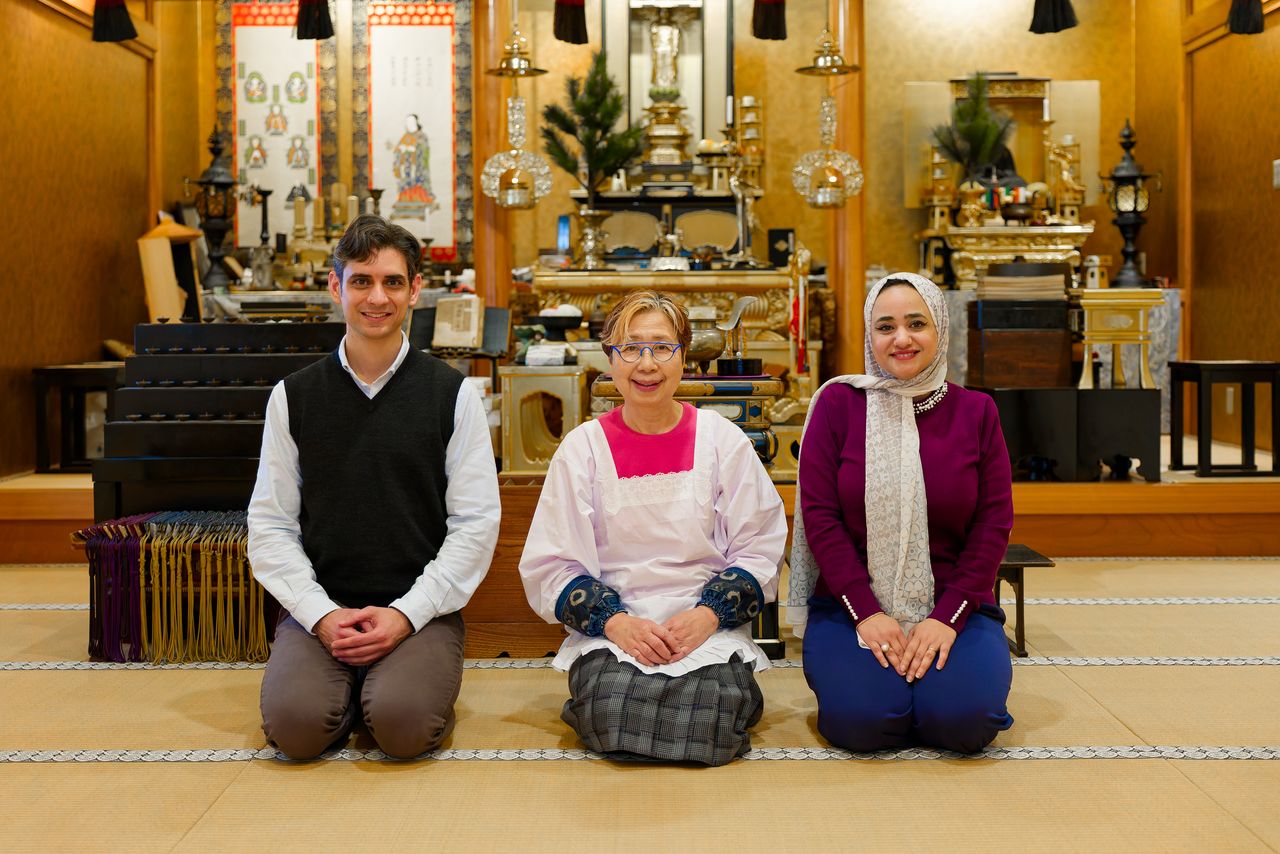
Nippon.com editors Daniel Rubio and Marwa Adly flank instructor Asao Masami. (© Nomura Kazuyuki)
(Originally published in Japanese. Banner photo © Nomura Kazuyuki.)