Japanese Researchers Make Breakthrough in Ensuring Farmed Eels Are Female
Food and Drink Culture- English
- 日本語
- 简体字
- 繁體字
- Français
- Español
- العربية
- Русский
Farmed Eels Almost All Male
A round shape, covered in glossy crimson lacquer, appears amid a cloud of steam, giving off the rich smell of charred fat, soy sauce, and sugar. . . Unagi kabayaki, eel grilled in a sweet soy-based sauce, is a key part of Japanese food culture. Just the thought of it gets the mouth watering.
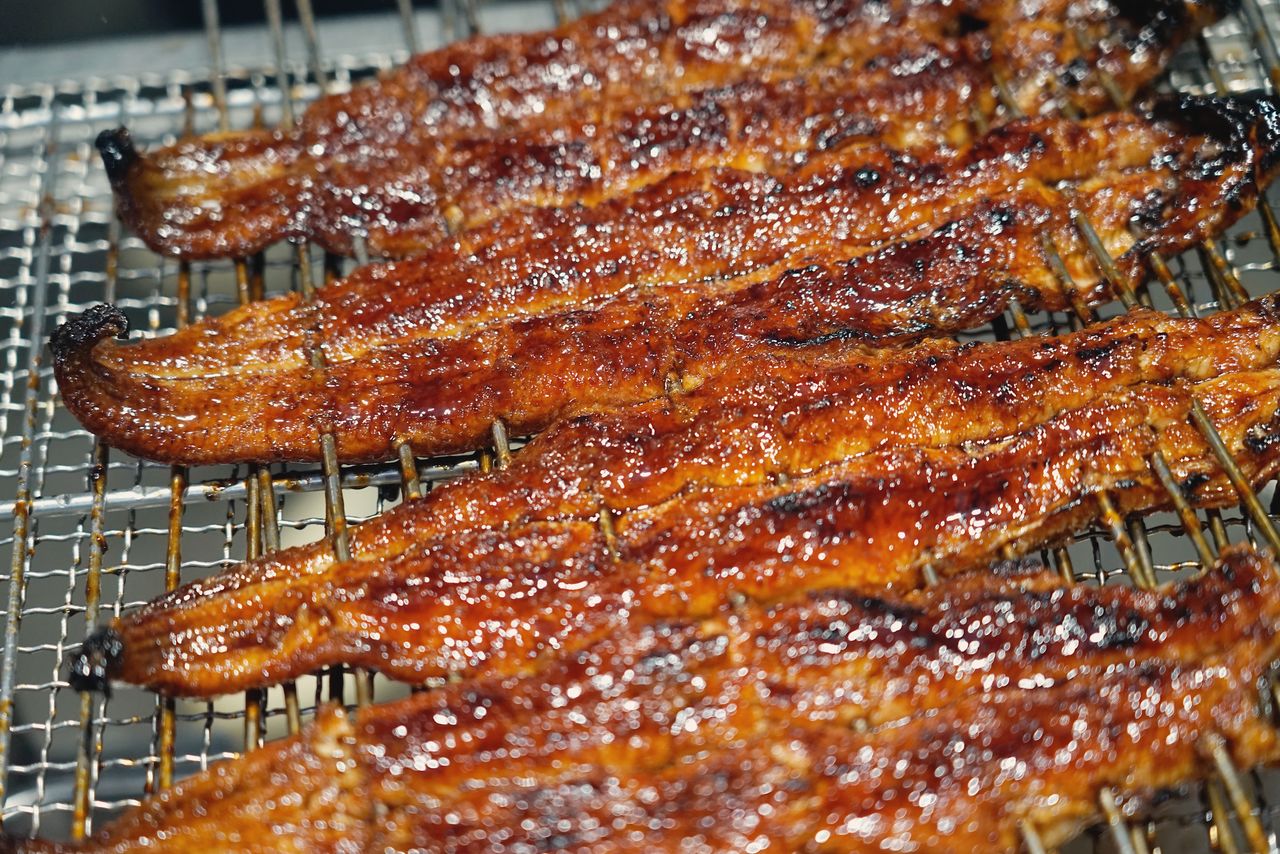
Female eels are raised from fry captured in March until they are large enough to ship out in late November. (© Ukita Yasuyuki)
Over 99% of the domestic eel on the market in Japan are farm-raised from fry captured along the coasts in winter. However, the number of fry has been dropping for the last 15 or 16 years, leading to an increase in prices. This means that eel has transformed from a commonplace meal into a luxury for special days, like doyō no ushi no hi, the midsummer “day of the ox” traditionally associated with eating eel.
Many feel that female eels are better eating than male. However, eel sex is not decided at hatching, but rather during the first few months of life, and for reasons that remain unclear, over 90% of farmed eels end up being male. While the mechanism is not yet fully understood, experts believe it is related to the stress of warm water temperature and high-density environments of the farming pools.
Some people are trying to find effective ways of artificially ensuring those eels that would normally end up as males become females. One of those is Inaba Hiroyuki, lead researcher at Aichi Fisheries Research Institute.
Inspiration Strikes
Inaba had seen how female eels grew much larger than males. If a single eel could grow twice as large, each one could feed two people. That is a truly efficient use of resources.
Those involved with eel farming had long talked about how much more fatty and tender female eels are, and how much more flavorful. In the past, farmers raising eels from eggs had used female hormones to ensure they had female breeding stock, but for safety reasons that technique has not been allowed for food eels. However, that gave Inaba an idea: what about loading the eel fry feed with soy isoflavone?
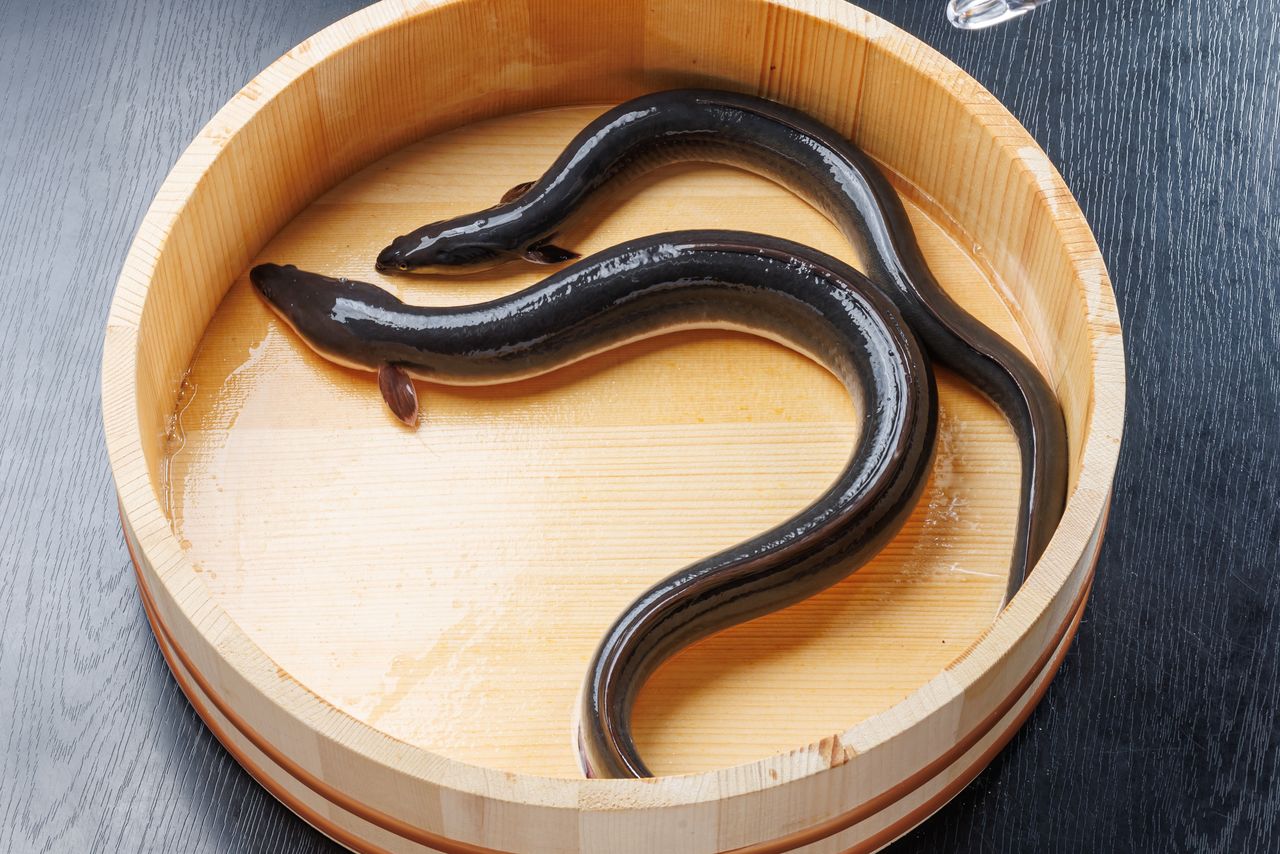
The size difference between male (top) and female (bottom) eels is clear at first sight. (Photo courtesy of the Consortium for New Market Development of Large Female Eels)
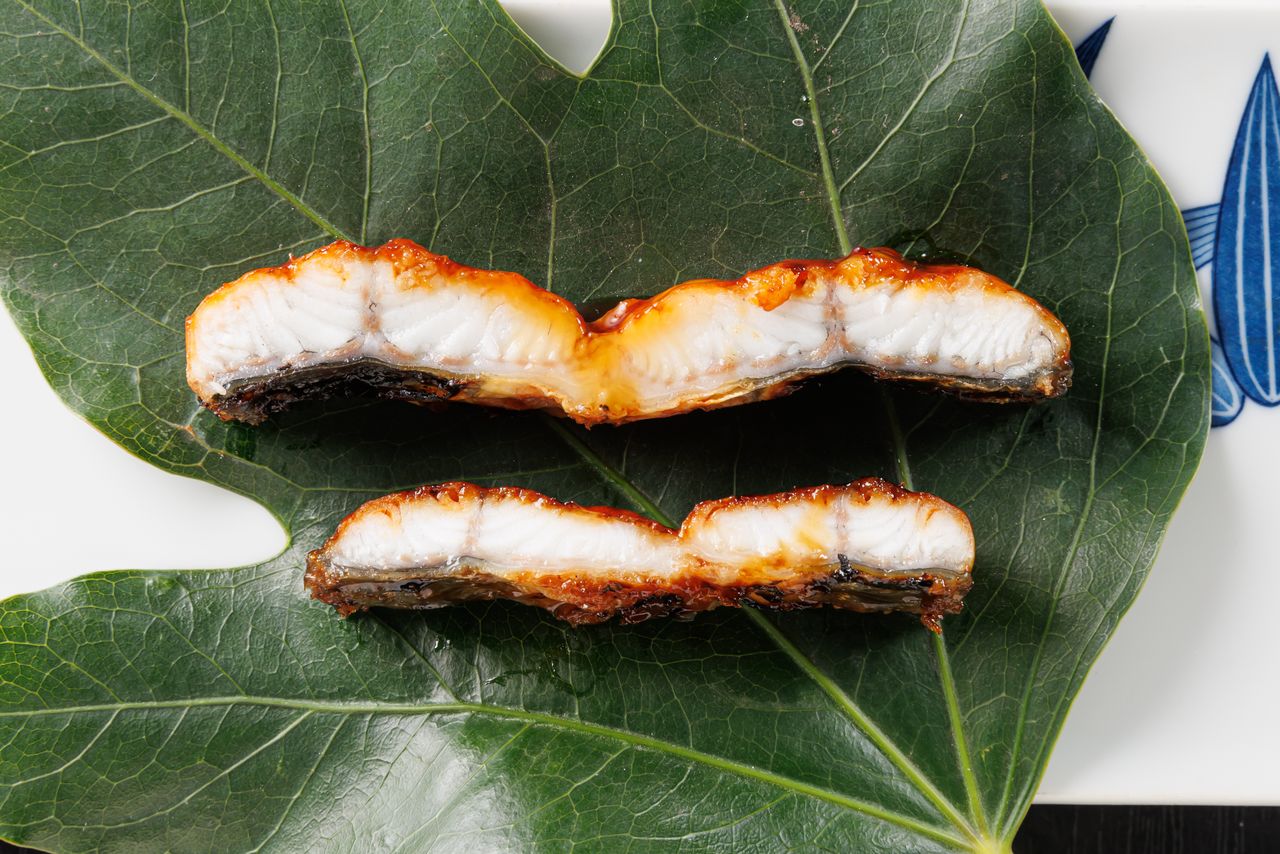
Cross section of female (top) and male (bottom) kabayaki eel. Not only are females bigger, but the fat layering and meat quality are better. (Photo courtesy of the Consortium for New Market Development of Large Female Eels)
“The overall idea is that we should be able to raise more females by adding soy isoflavone, which is chemically similar to estrogen, to the feed. There hadn’t been any trials with other animals, but I figured it was worth a try,” Inaba says.
Preliminary research began in 2016, and in 2017 they gained governmental funding with aid from NPO Bio Tech Tōkai, which supports research and development into cutting-edge biotechnology. In 2018, they formed a consortium of members including Kumamoto University, Hokkaidō University, and Kyōritsu Seiyaku, before kicking off full-scale research. Trials began with cooperation from Mikawa Tansui, Kanemitsu Suisan, and the Isshiki Eel Fisheries Cooperative—the “big three” producers in the Isshiki district of Nishio, Aichi Prefecture, Japan’s largest domestic source of eels.
The result was that nearly 100% of the fry given feed mixed with isoflavone ended up female.
There are over 50 different types of isoflavone products on the market. It was a daunting task discovering which among them offered the greatest results, as well as the best way to administer the mixture. In the end, the consortium developed Soy Venus, a high-isoflavone content feed additive. Specifically, when the eel fry reach a body weight of 0.5 grams, isoflavone is mixed into their feed at a ratio of 80 grams of Soy Venus per 20 kilograms of fishmeal, continuing until the fry grow to 25 grams. That pattern achieved the best results. In 2021, Soy Venus and its usage method was granted a patent.
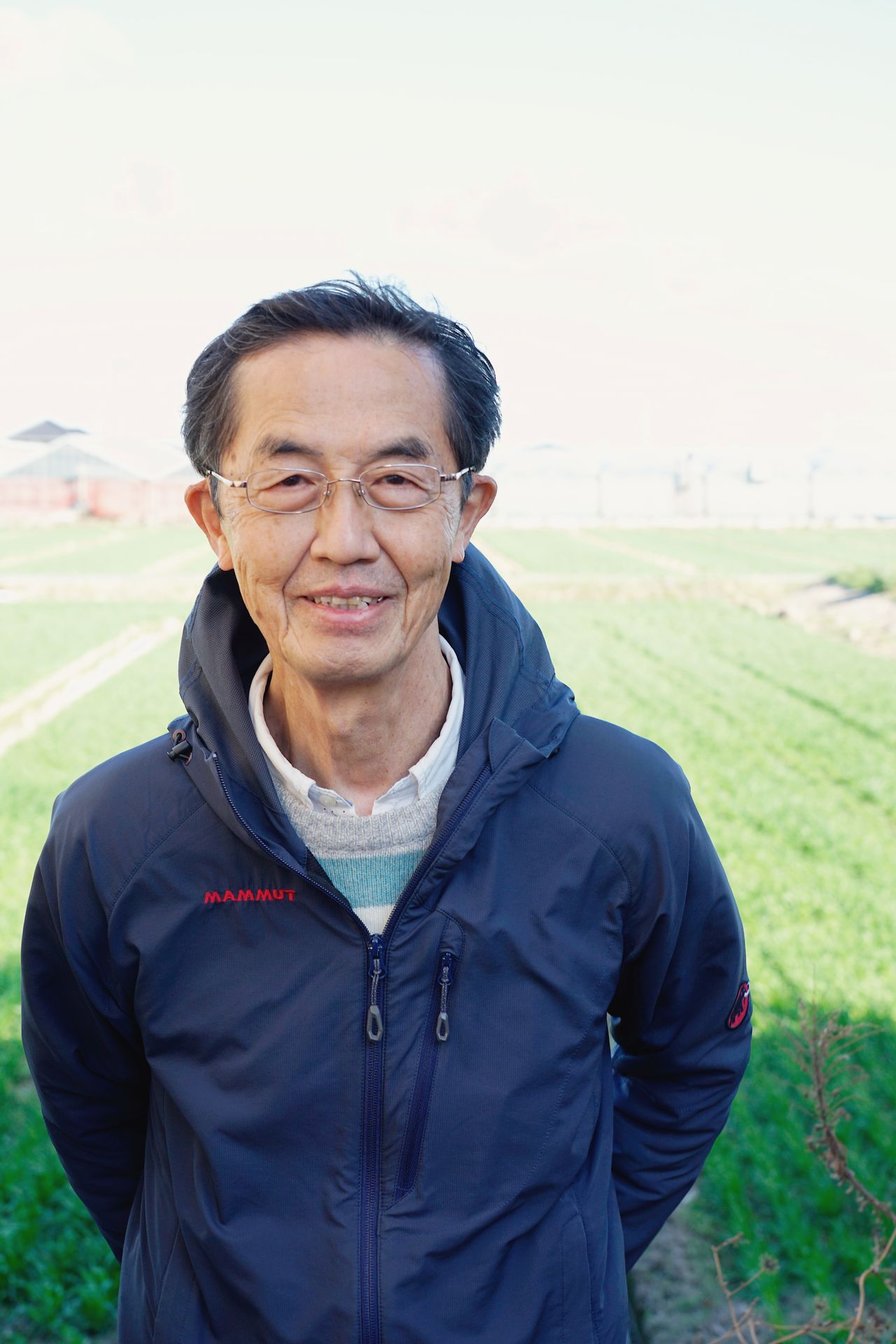
Ōishi Kazushi, a strong supporter of female eels. (© Ukita Yasuyuki)
“Consortium members held a sensory evaluation of female eels raised in our trial ponds in 2022. There was frozen kabayaki made from regular-sized males and giant females, and when we tried to warm them in hot water, the females were too big to fit in the pot. We could only fit half in at a time,” reflects Ōishi Kazushi on his first experience with them. Ōishi serves as Tōkai Bio Tech director and of the Mikawa Isshiki Female Eel Study Group, which promotes and supports both the development and popularization of the female eel project. He goes on, “I decided I had to go all-in on supporting female eels because it was more delicious than I had imagined.”
The consortium had a booth at this year’s Seafood Show in Tokyo, where guests could taste-test grilled male and female eel and answer a survey on which they preferred. Over 800 people responded, and 85% answered that they preferred the female. Based on the results, they gradually increased their limited shipment, leading up to full-scale shipment of female eel meat in 2024. That was the birth of their new brand, Enman. In November of 2025, Inaba was recognized for his achievements in establishing techniques for raising better tasting female eels, and in 2025 he was awarded the Japan International Award for Young Agricultural Researchers by the Ministry of Agriculture, Forestry, and Fisheries.
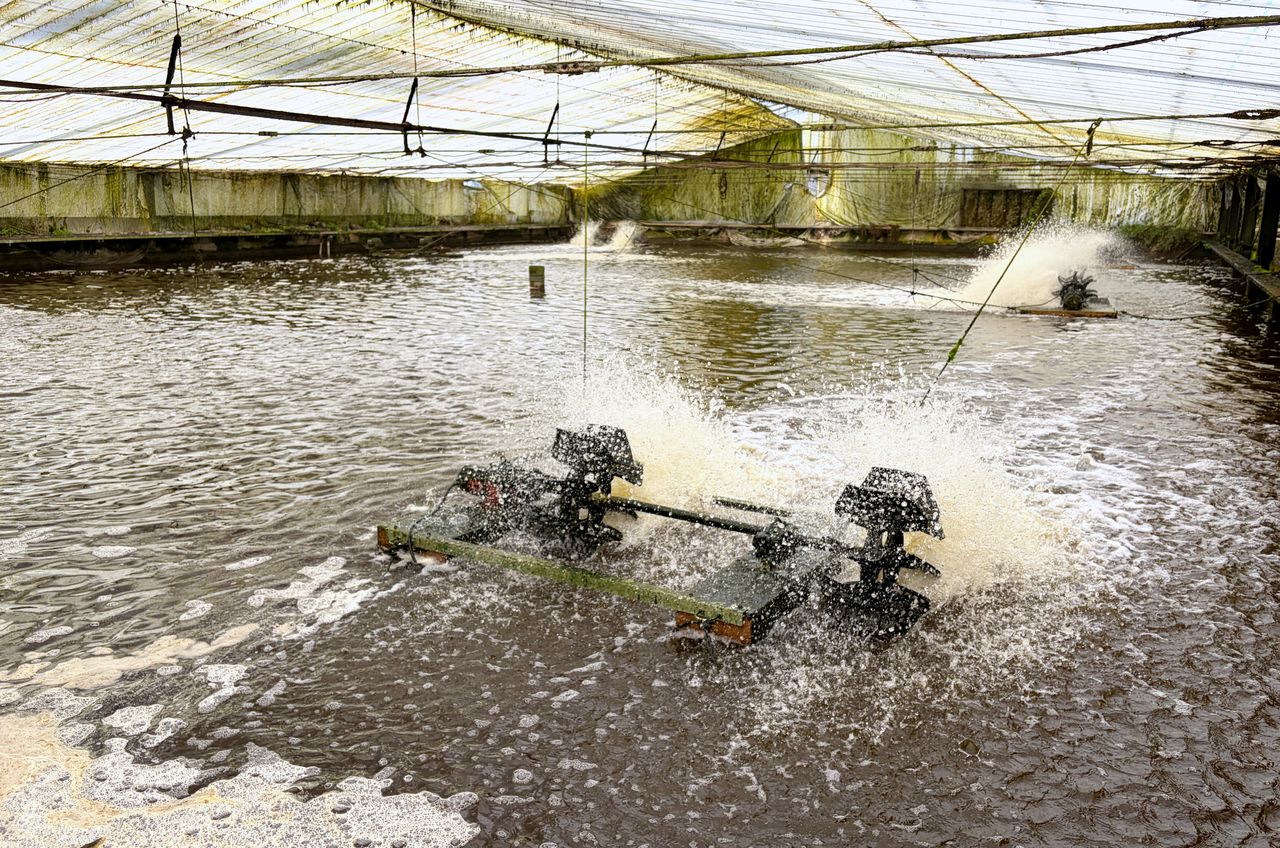
An eel farm in Isshiki. (© Ukita Yasuyuki)
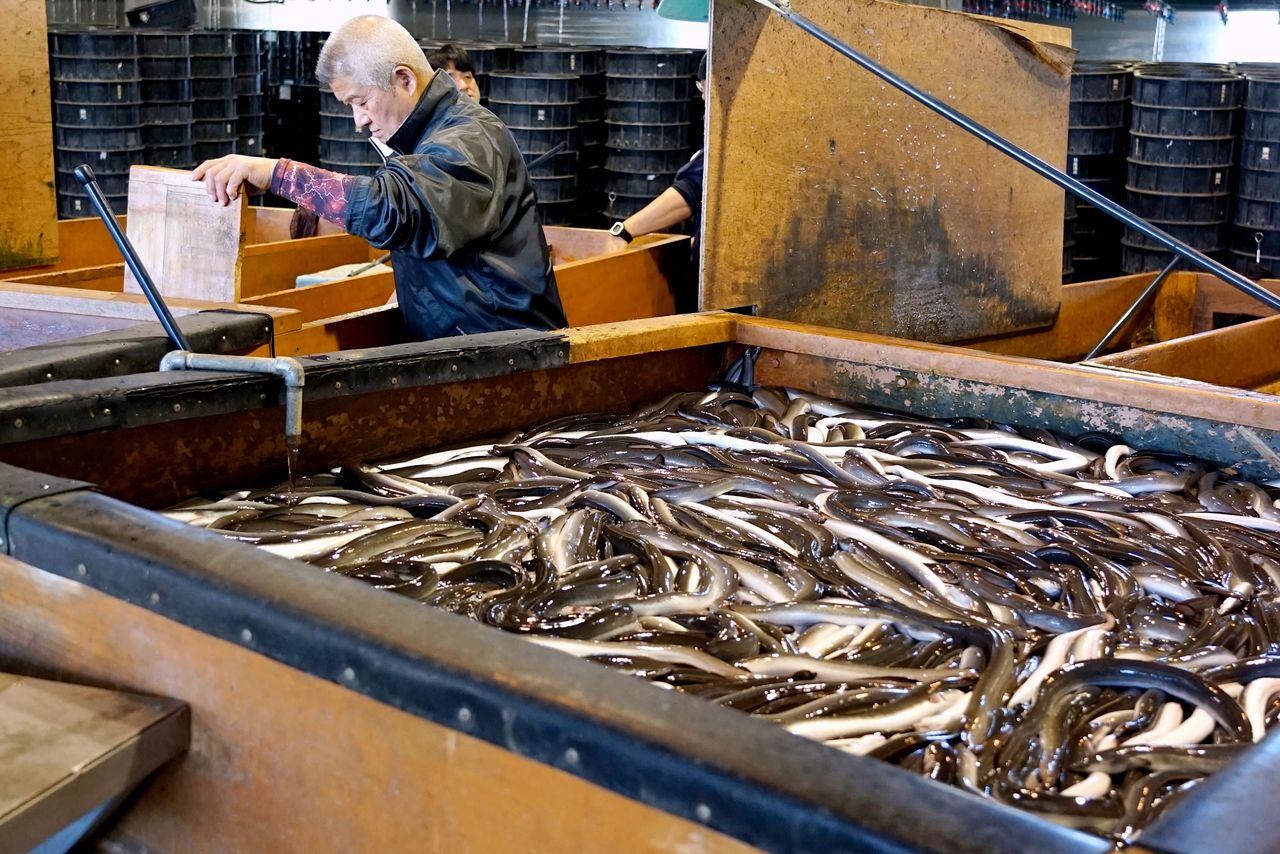
Processing at Kanemitsu Tansuigyo. Eels delivered from the farm are sorted by size and then placed in plastic containers in the holding area in back, where clean spring water is circulated to flush silt and mud from the eels. (© Ukita Yasuyuki)
Gentle, Refined, and Giant
Kanemitsu Tansuigyo is a company that covers every stage of the eel business, from farming to retail. I visited a restaurant they run, Unagi no Kanemitsu Honten, in early March. Although it was a weekday, the spacious restaurant was packed. During the spring season, they typically serve about 300 people a day, while the summer sees the number rise to around 800. When I was there, there was a sign on the wall reading “Today’s eels are females.”
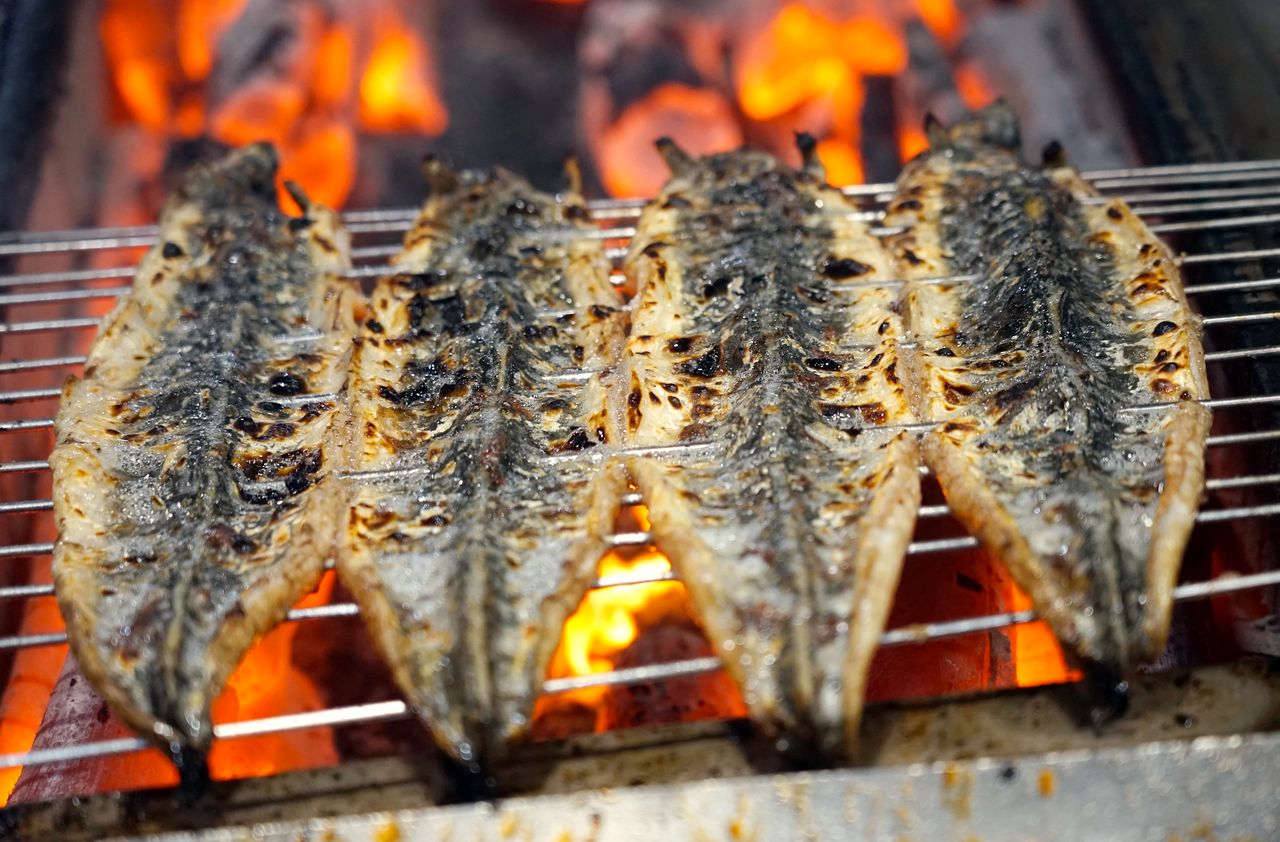
In Mikawa, eel is served butterflied from the belly, and restaurants skip the common Tokyo-region practice of steaming before grilling. (© Ukita Yasuyuki)
According to Ōishi, they are continuing to promote Mikawa’s established brand-name for summer-season male eel, Shinko, while now trying to increase recognition of female eels for the fall and later. Male eels tend to see a decline in flavor and quality from the fall, but females continue growing even as temperatures drop because their appetites remain large. Thus, they grow into larger, more delicious eels in the colder season.
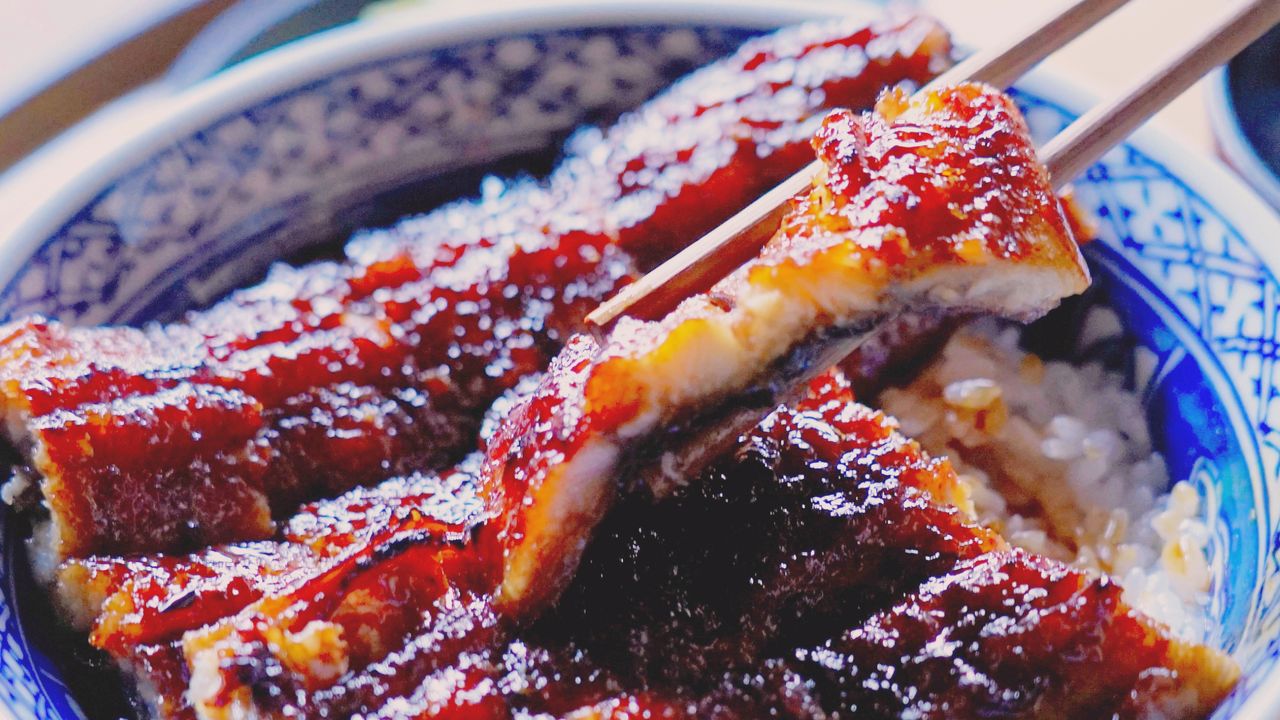
I ordered a deluxe Unadon eel bowl for ¥3,400, tax included. Apparently, rice bowls are “the” way to eat eel in Mikawa.
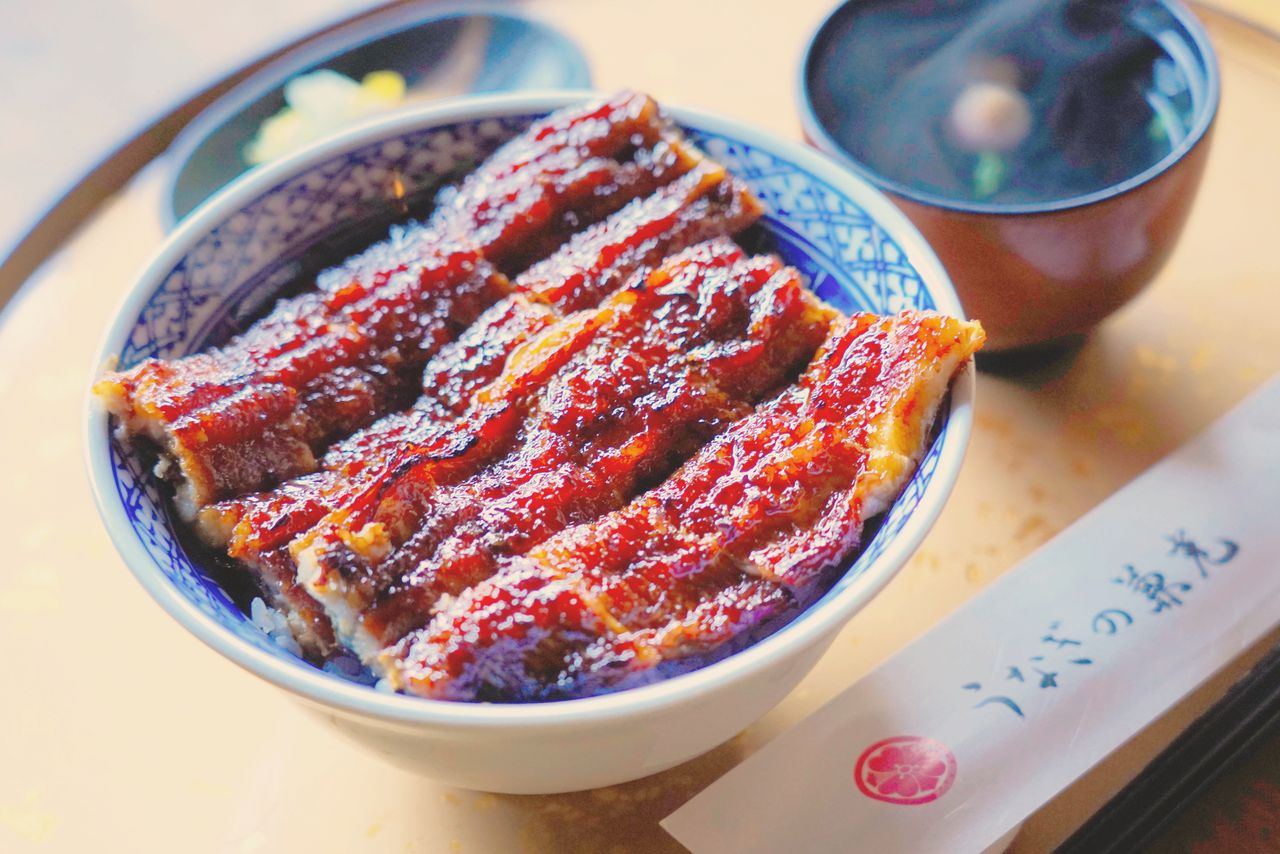
The deluxe eel bowl. The female eels even have a better aroma, apparently. (© Ukita Yasuyuki)
The ends of the kabayaki eel poked out from beneath the bowl lid, and I realized that female eels must be even larger than I had expected. When I lifted the lid, I was met by a veritable ocean of eel covering the rice. I reverently picked up my chopsticks. I would have liked to do a taste comparison with male, but at that time of year all the eels served are female. Still, it was obvious that this eel had delicate, tender flesh and skin, with no off notes in the aroma or flavor. Two words came immediately to mind: gentle and refined.
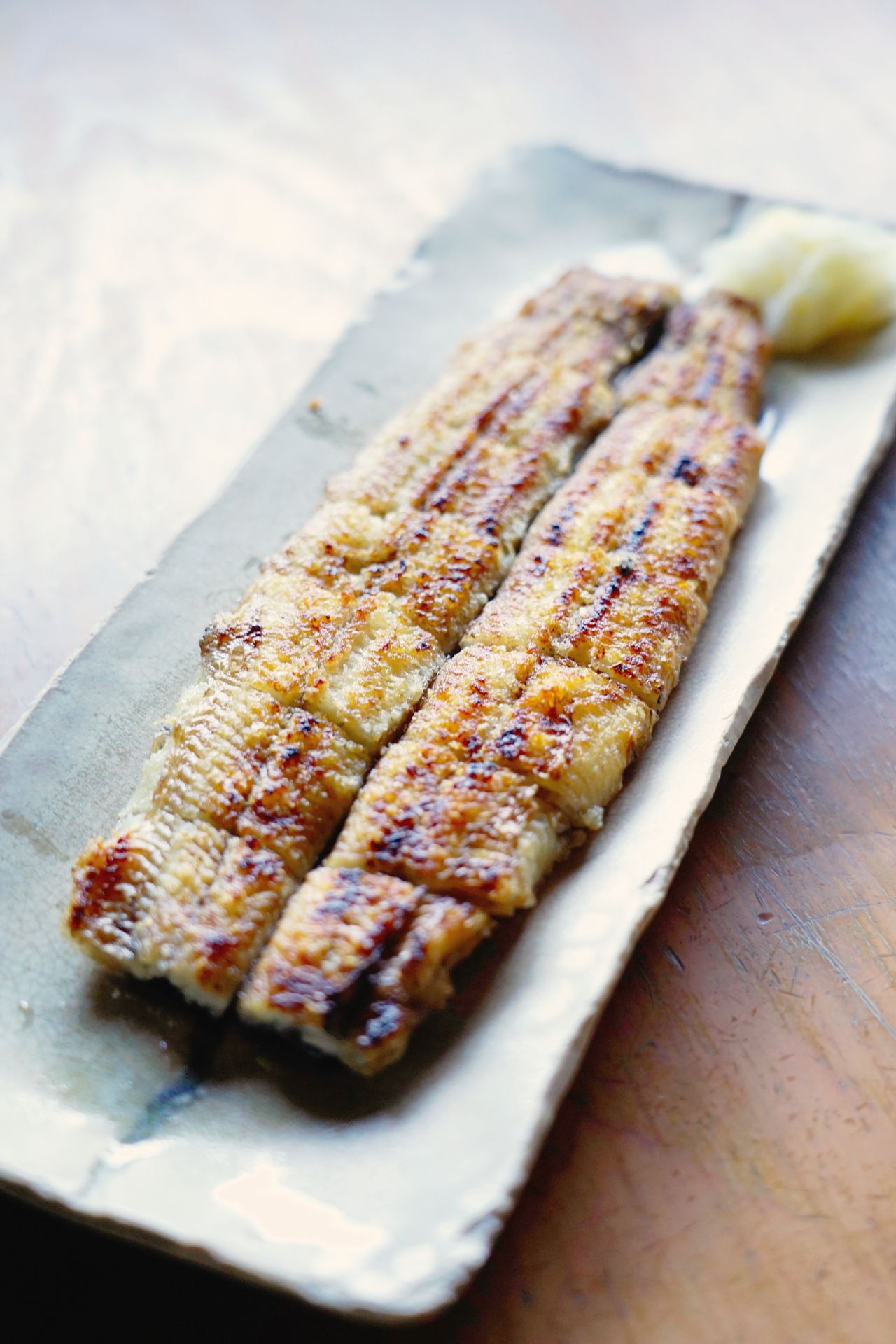
Shirayaki female eel, grilled without sauce. The flesh is plump and tender, with an elegant flavor. (© Ukita Yasuyuki)
For most Japanese, eel is associated with the doyō no ushi no hi days in midsummer when eel is the traditional meal. There is a story dating back to the Edo Period (1603–1868) about an eel salesman consulting with famed eighteenth-century academic Hiraga Gennai about how to deal with slumping sales in summer. Hiraga replied that the seller should start a campaign using the old saying that it is good to eat food starting with u on ushi no hi, such as unagi (“eel” in Japanese). The truth is, though, that in the traditional Japanese calendar, there are multiple days called doyō no ushi no hi throughout the year. In 2026, there are five of them. It might be good to use that same trick to spread the word about the existence and value of female eels across Japan. Then, we might just see people lining up outside eel restaurants on the wintertime doyō no ushi no hi, like we already do in summer.
(Originally published in Japanese. An unadon eel bowl using female eel meat. © Ukita Yasuyuki.)