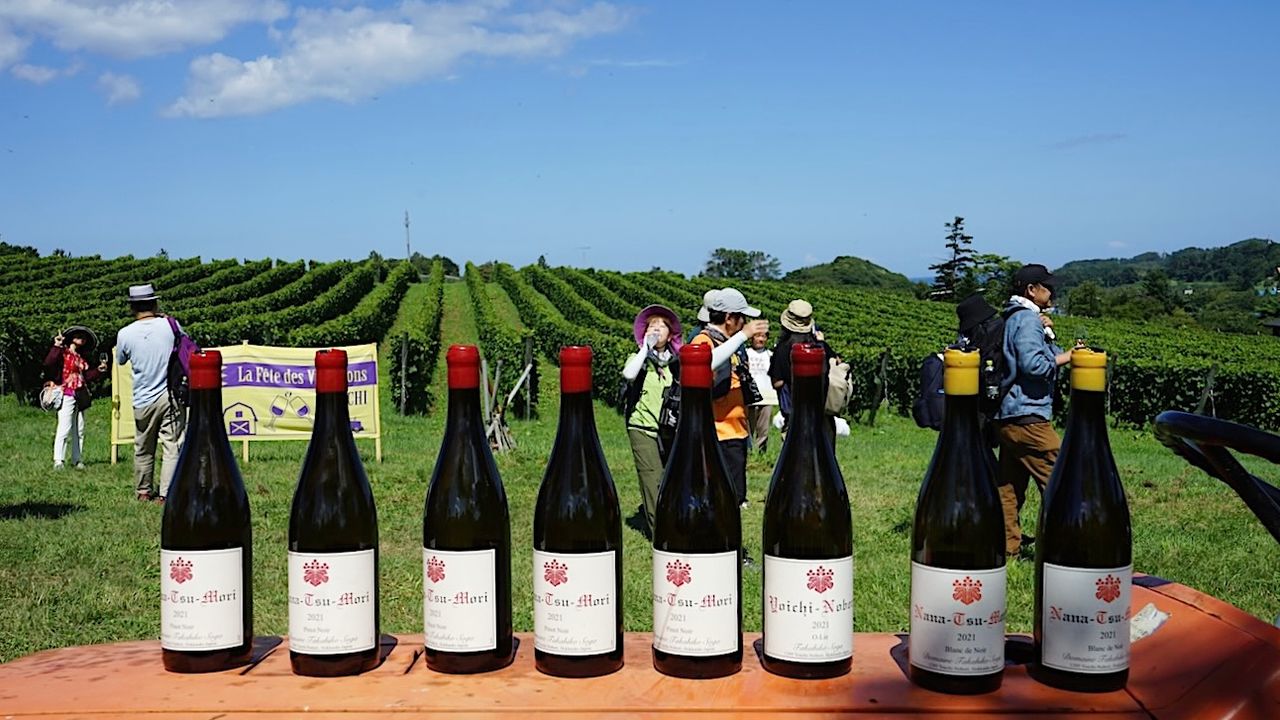
Yoichi, Hokkaidō: A Growing Destination for Wine Lovers
Food and Drink Travel Culture- English
- 日本語
- 简体字
- 繁體字
- Français
- Español
- العربية
- Русский
A Skyrocketing Wine Region
In March 2026, the noted jazz venue Blue Note Place in Ebisu, Tokyo, hosted an event where customers could enjoy the wine of Hokkaidō’s Yoichi region against a slick musical backdrop. Seven vintners came to serve their wines to 250 ticket holders, who paid ¥16,500 each for the privilege. The ticket site apparently crashed as soon as sales started.

Seven vintners took the stage to greet the crowd at the Yoichi wine event. (© Ukita Yasuyuki)
As Hashimoto Kō of the Hokkaidō Development Engineering Center recently explained in the DEC newsletter, “The past few years have seen Yoichi take on a special place in Hokkaidō’s wine industry. I don’t know of any other example where new value has been created in such a short time.”
Yoichi sits on the northern coast of Hokkaidō’s Shakotan Peninsula, west from Sapporo. The area has good drainage and a relatively warm climate for Hokkaidō, and it became a fruit-growing center as early as the Meiji era (1868–1912). Wine grape cultivation took off in the 1980s. However, there was only one winery there until 2009, when Soga Takahiko came from Nagano Prefecture to found Domaine Takahiko. As Soga’s wine became famous, people began making the journey to learn winemaking and grape cultivation under his tutelage, and Yoichi began to take shape as a new wine region.
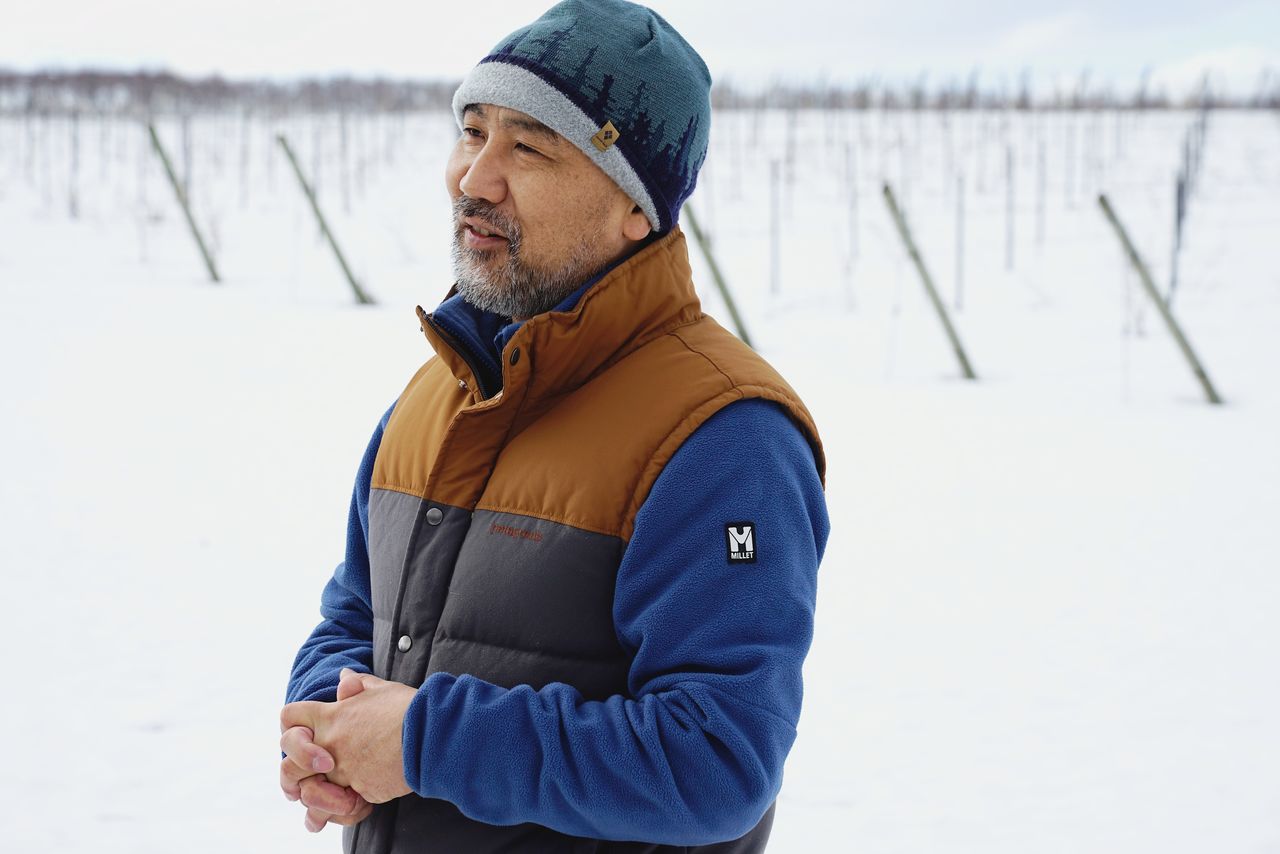
Soga Takahiko, who oversees both grape farming and winemaking at Domaine Takahiko. (© Ukita Yasuyuki)
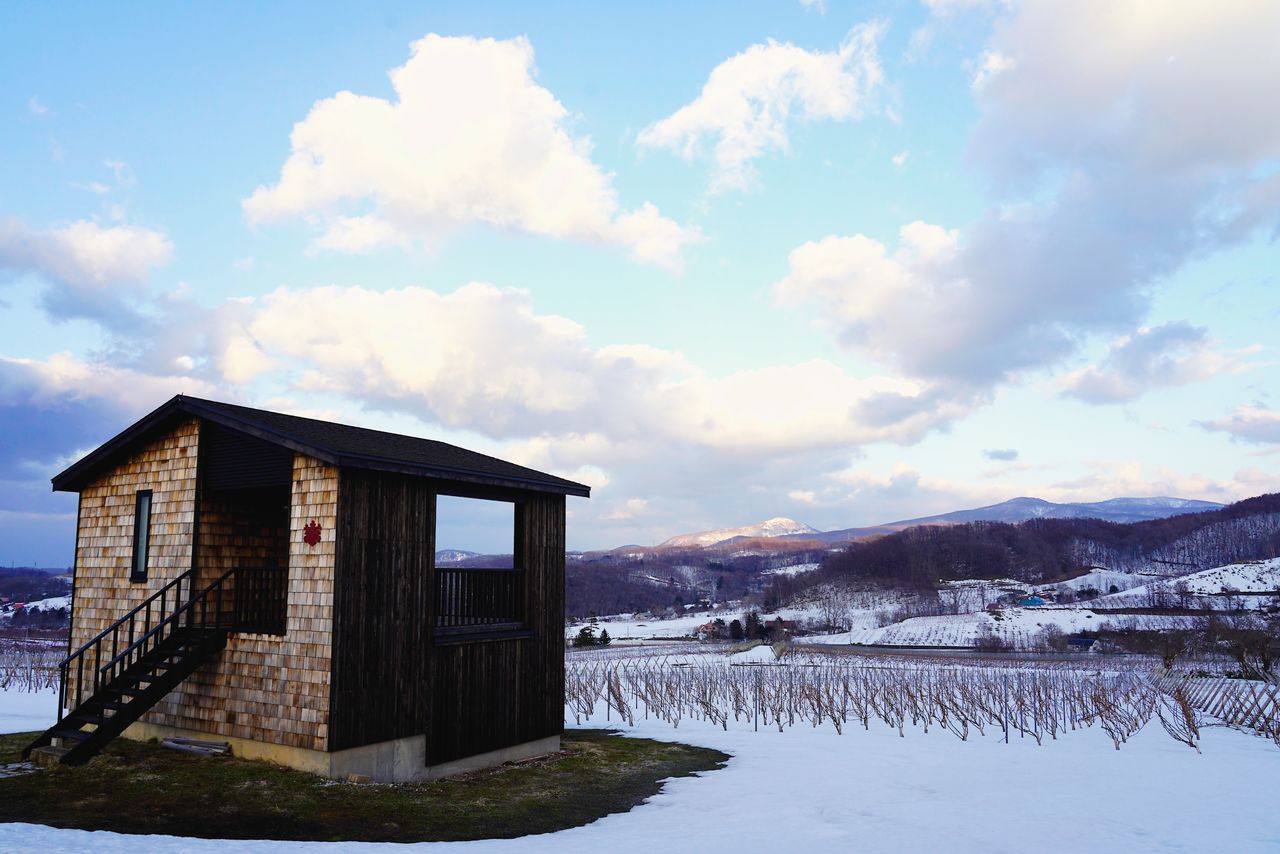
The Nanatsumori vineyards at Domaine Takahiko. The observation deck is open to tourists. (© Ukita Yasuyuki)
In February 2020, Soga’s Nanatsumori Pinot Noir 2017 was chosen for the wine list at Noma in Copenhagen, one of the world’s top restaurants, leading to greater recognition of Hokkaidō wine. There are now 20 working wineries in Yoichi. More and more restaurants serving local wine are opening up, and fans from all over Japan and the world are coming to visit. Six years after Yoichi’s big break, momentum is still building.
Small Town, Global Recognition
Wine and tourism have a natural affinity. Lush grape vines spreading out over the rolling hillsides make for excellent sightseeing, and if that landscape gives birth to a favorite wine, all the better. Yoichi’s growing name as a wine region is also raising its value as a travel destination.
Hotel Yoichi Loop opened in September 2020 in front of Yoichi Station. It was planned as a place where guests can enjoy local wine and fine dining, making it a forerunner for Yoichi’s budding wine-tourism industry. Its manager has experience as sommelier for a Michelin-starred restaurant, while the chef has trained at some of Japan’s top restaurants. It is pricy, with a single-night stay and dinner running around ¥50,000 a person, but it still boasts high occupancy rates and has hosted guests from over 30 nations. Current chef Narita Sekiya trained at three-star Tokyo restaurant Quintessence, among others. He says, “As we keep narrowing in on using local ingredients, the dishes have grown more and more simple.”
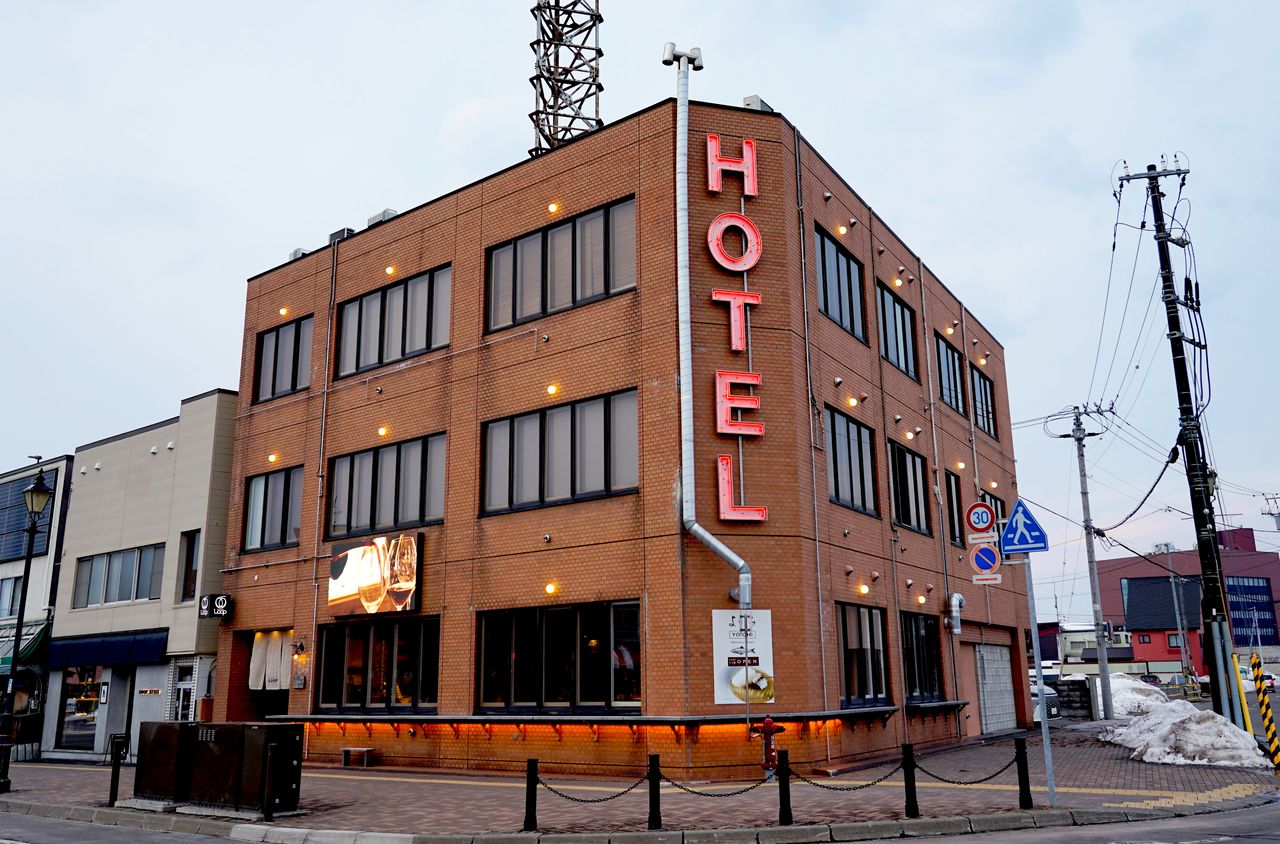
The facade of Yoichi Loop. The restaurant is on the first floor. (© Ukita Yasuyuki)
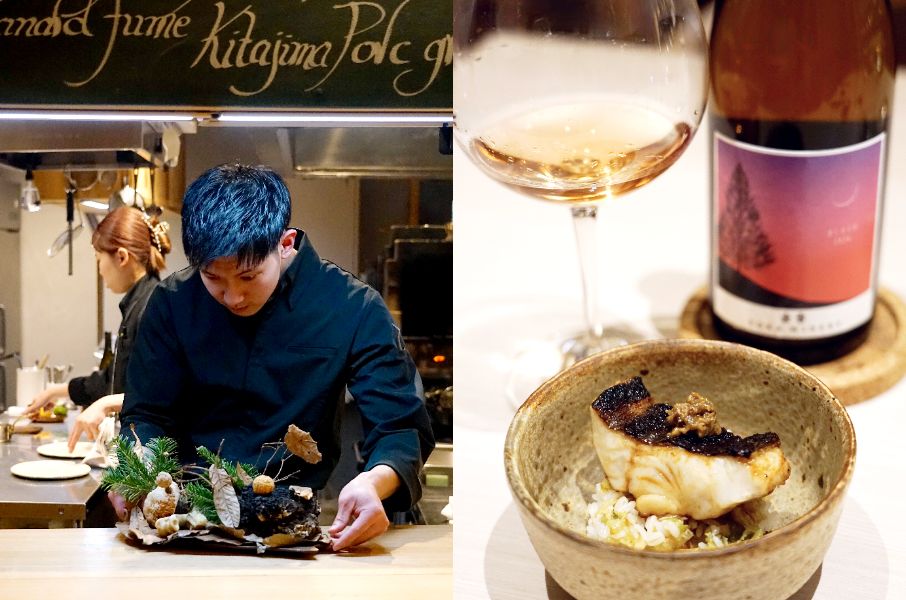
Yoichi Loop’s head chef Narita Sekiya (left). At right is a dish with aromatic roasted Okhotsk mackerel over rice mixed with giant butterbur miso. The wine is Yoka Blush 2024, from Yoichi’s Yoka Winery. The three-varietal mix offers a complex yet delicate flavor. (© Ukita Yasuyuki)
The winemakers are also prioritizing sales here in Yoichi or in Sapporo. Hard-to-get wines like Domaine Takahiko’s Blanc de Noirs or O-Lie can be found by the glass at the local wine bar Qunpue or the Italian restaurant Kihen.
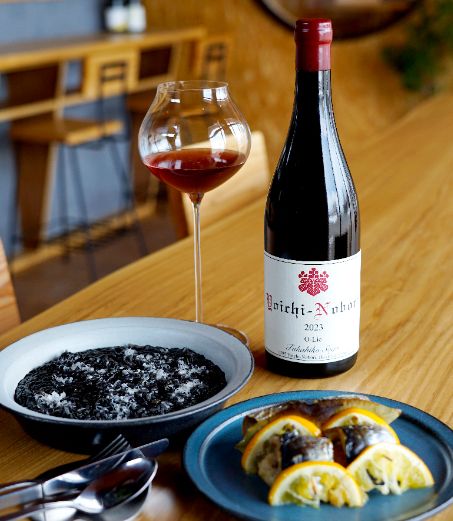
Kihen, the only shop in the world serving glasses of Domaine Takahiko’s rare red wine O-Lie. That name comes from the Japanese for lees, ori, which are used in a secondary fermentation in this wine. (© Ukita Yasuyuki)
Winemaker Ōno Takashi, who once worked from a natural-wine importer in Tokyo and now runs Winery Marumegane, opened Kihen in 2025. Its shelves are lined with local bottles as well as natural wines from France, and customers can sip them along with small sides. The surroundings make for a powerful draw, bringing dyed-in-the-wool Japanese wine fans for repeat visits.
La Fête des Vignerons à Yoichi is an early-September festival held yearly since 2014. It has grown so popular that its 1,500 tickets—running ¥3,500 each— sell out in a flash. A portion of those tickets are offered as rewards in the “hometown tax” system where people around Japan can designate portions of their local tax payments to other municipalities, contributing to their finances.
Yoichi Loop was listed in the 2025 edition of the French restaurant guide Gault et Millau. Local restaurant Yoichi Sagra, which has since moved inland to the city of Kitahiroshima just southeast from Sapporo, was also featured, and Soga himself was awarded the guide’s Terroir Prize. For a small city of 17,000 people, having two restaurants and one resident listed is an amazing feat.
From the fall of 2025, three new projects have been announced. The first is Atona, a luxury hot spring ryokan inn planned as a joint venture between the Hyatt hotel chain and a Kyoto business. Japan Airlines is also planning on opening a French-style auberge inn in the neighboring town Niki. And Yoichi Dreams, the company behind Yoichi Loop, has opened a condominium and rental property called Kisin.
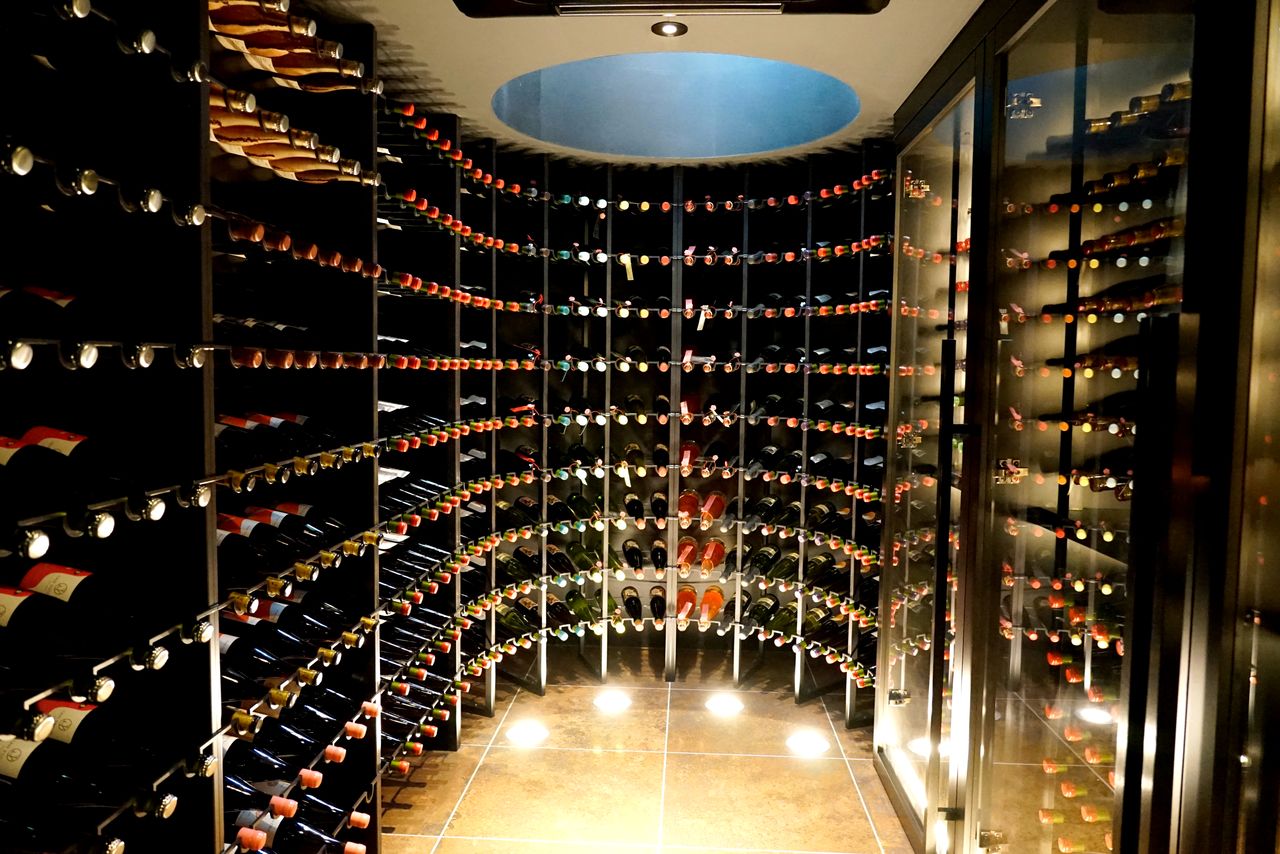
The wine cellar beneath Kisin. (© Ukita Yasuyuki)
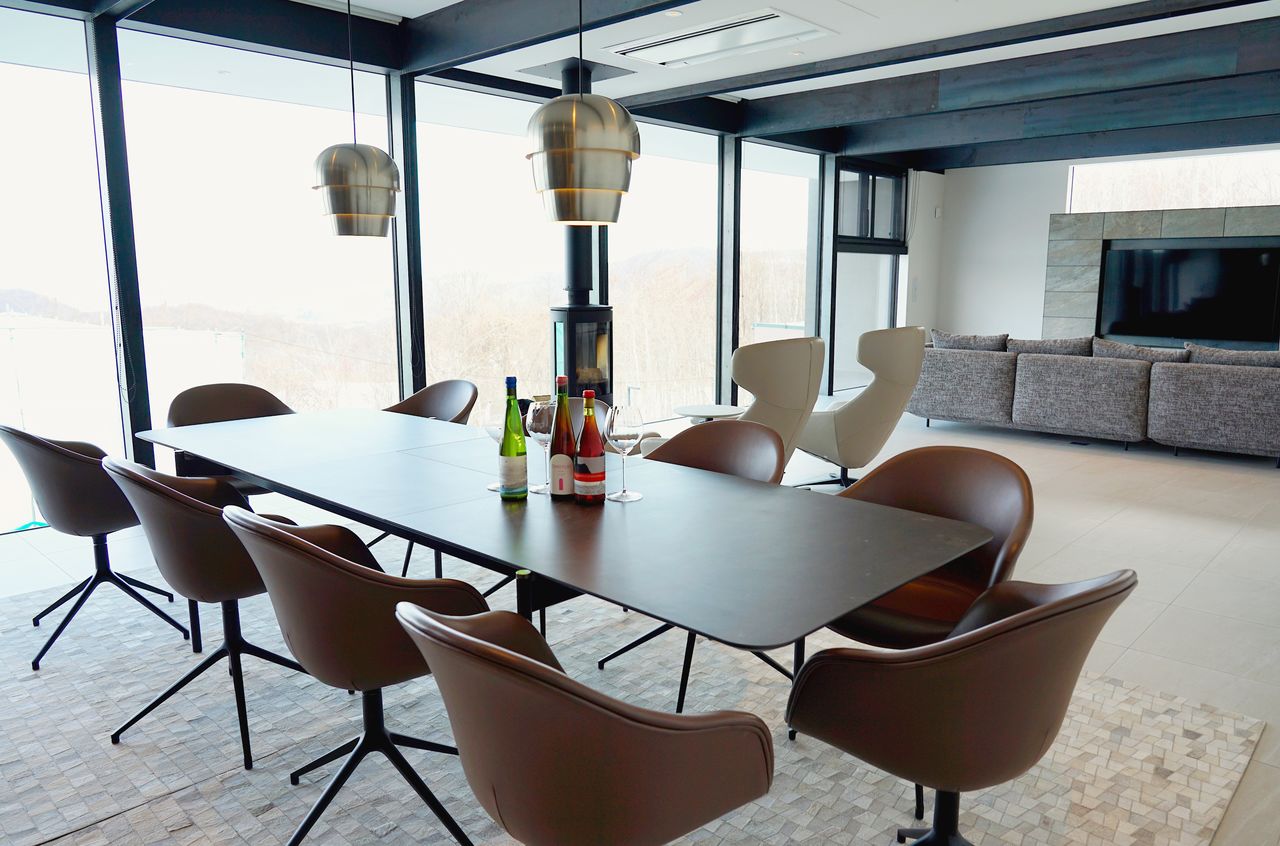
A living and dining space in the Kisin condominiums. The huge windows offer a view of the local vineyard scenery. (© Ukita Yasuyuki)
Kisin, already in full operation, offers spacious rooms with a view of the grape arbors of Kimura Vineyard, the town itself, and Cape Shiripa to the north. Below ground, Kisin is outfitted with a wine cellar holding 800 bottles. It is a place that embodies the ideal of wine tourism, where guests can immerse themselves in wine and the terroir that birthed it, along with meals provided by a dispatch-chef service from Yoichi Loop.
The Burgundy Model
Yoichi Mayor Saitō Keisuke, who took office in 2018, is actively promoting regional revitalization through wine. He sees tourism as an essential part of a “wine-industry cluster,” which is expected to link producers with visitors and bring life to the area. There is a clear lack of accommodation facilities, but plans are proceeding on redeveloping the area around the station and along the coast. The future looks bright.
Saitō says, “Many of the new projects are luxury plans aimed at affluent visitors. At the same time, we are also discussing more reasonable facilities aimed at a larger demographic.”
The tourism model that Saitō wants to emulate is different from that common in California, which bundles tours, tastings, and meals at the wineries themselves. He seeks rather to emulate the style seen in Burgundy, where visitors enjoy the rolling vineyards and then go into town to enjoy high-value wine with regional cuisine at local restaurants.
“We already have areas where restaurants cluster, and there is an established flow of tourists into town. More international visitors who come in winter for skiing in nearby Niseko or Kiroro are also expanding their range to come to Yoichi, as well.”
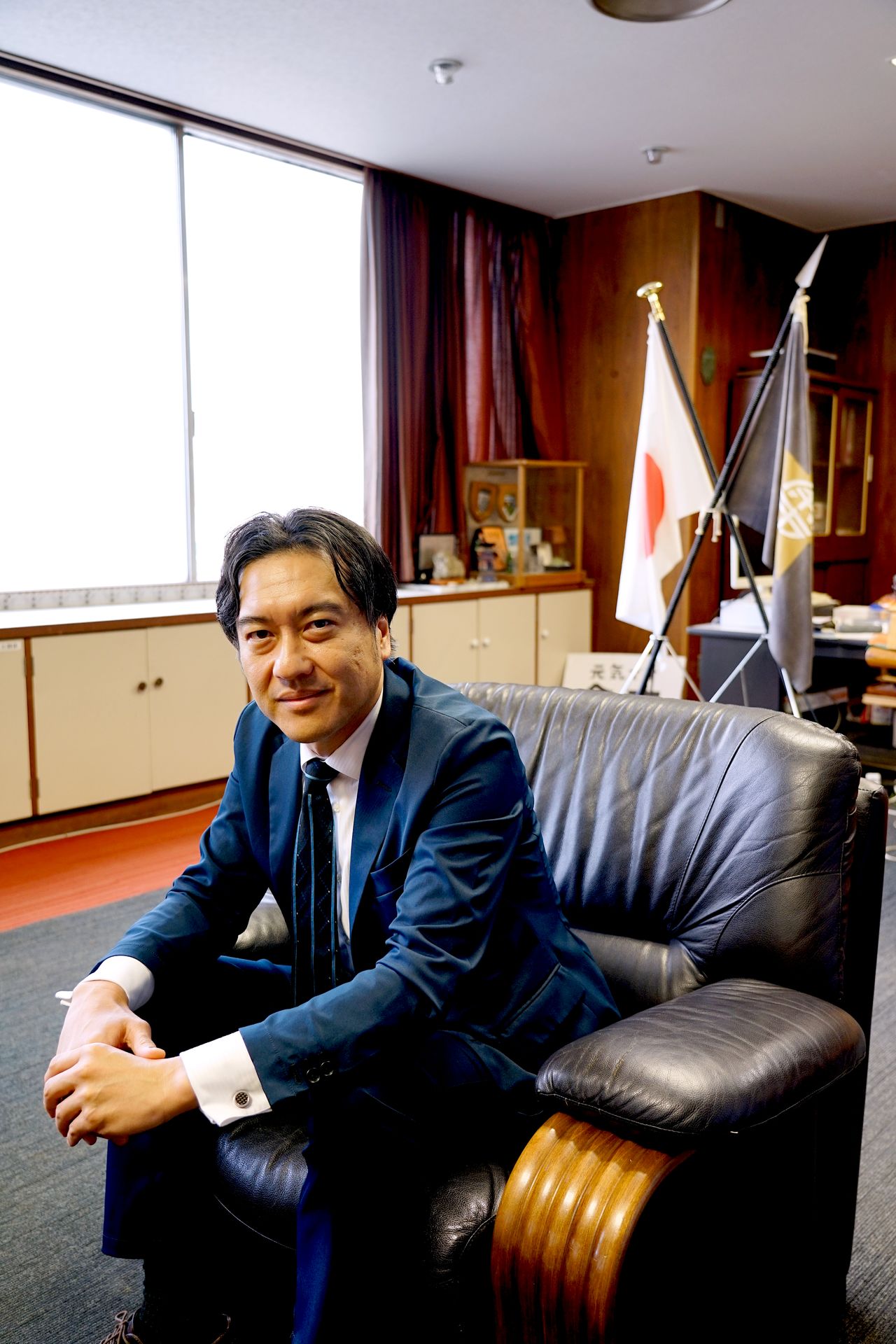
Mayor Saitō Keisuke is looking to wine to be the heart of regional revitalization. (© Ukita Yasuyuki)
Yoichi signed a “wine agreement” with the Burgundy village of Gevrey Chambertin in February 2025, which then led to further international connections with wine regions such as Gurjaani, Georgia—described by some as the birthplace of wine—as well as the respected Swiss wine region of Salgesch, and the northern Italian region of Langhe. These ties facilitate sharing of wine-tourism knowledge.
Yoich is 30 minutes by car from Otaru and just over an hour from the capital of Sapporo and its almost 2 million inhabitants. “You could call Yoichi an urban wine resort. I don’t think there are many other wine regions so close to urban centers anywhere in the world,” says Saitō.
As Japanese cities are struggling with problems or overtourism, the value of wine tourism as a way to entice visitors to the countryside is rising. If a new “Yoichi model” arises, we could see the birth of a wine-making cluster that covers wine regions across Hokkaidō, including Sorachi, Hakodate, Hokuto, or Furano.
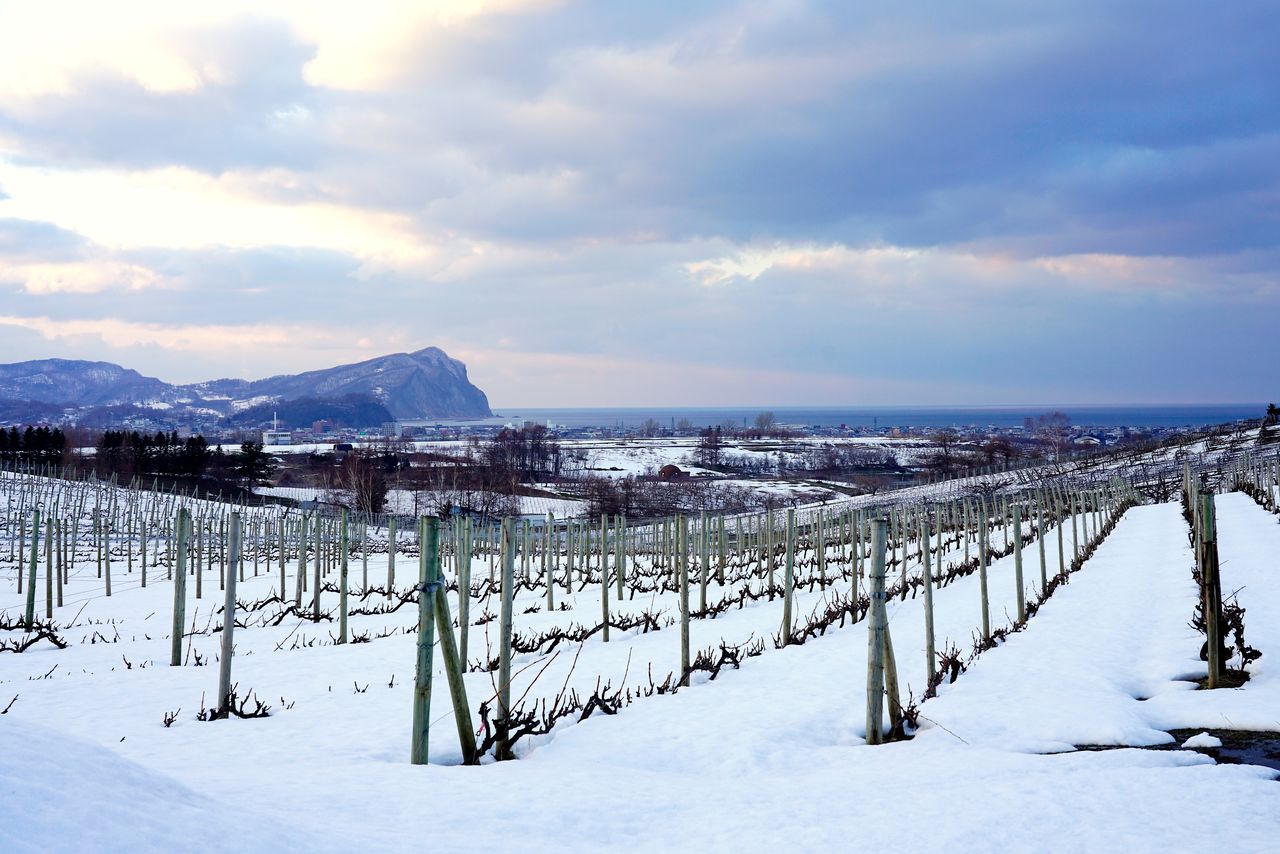
A view of Yoichi and Cape Shiripa from the vineyards at the Nakai Kankō Nōen tourist farm. (© Ukita Yasuyuki)
(Originally published in Japanese. Banner photo: Wine lovers strolling through grape fields with glass in hand at the farming festival La Fête des Vignerons à Yoichi, held each September. © Ukita Yasuyuki.)