Etajimasou: An Award-Winning Island Retreat in Hiroshima
Guide to Japan Travel- English
- 日本語
- 简体字
- 繁體字
- Français
- Español
- العربية
- Русский
A Break from the Norm
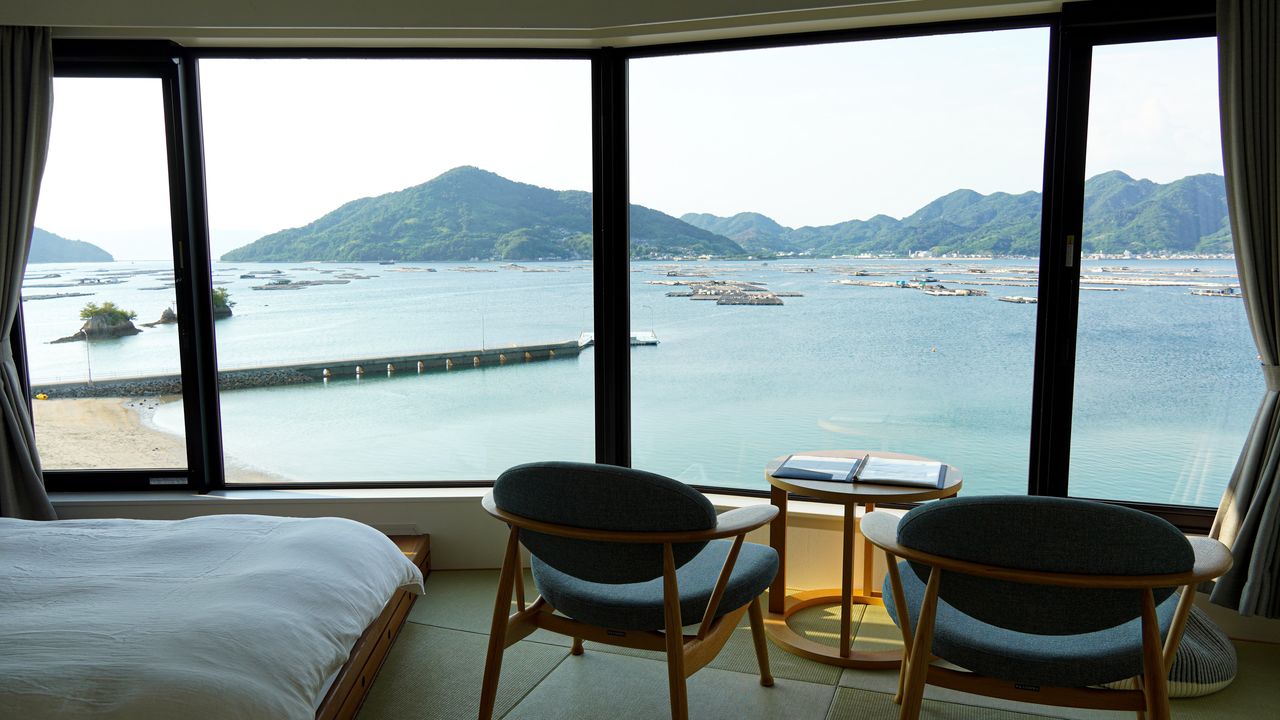
The hotel Etajimasou is located amid the tranquil islands of the Seto Inland Sea in Hiroshima Prefecture. The area’s warm climate makes it perfect for cultivating olives, citrus fruits, vegetables, and oysters.
It takes around one hour to travel to the hotel from the city of Hiroshima, using a combination of streetcar and high-speed ferry, and this journey is an experience in itself.
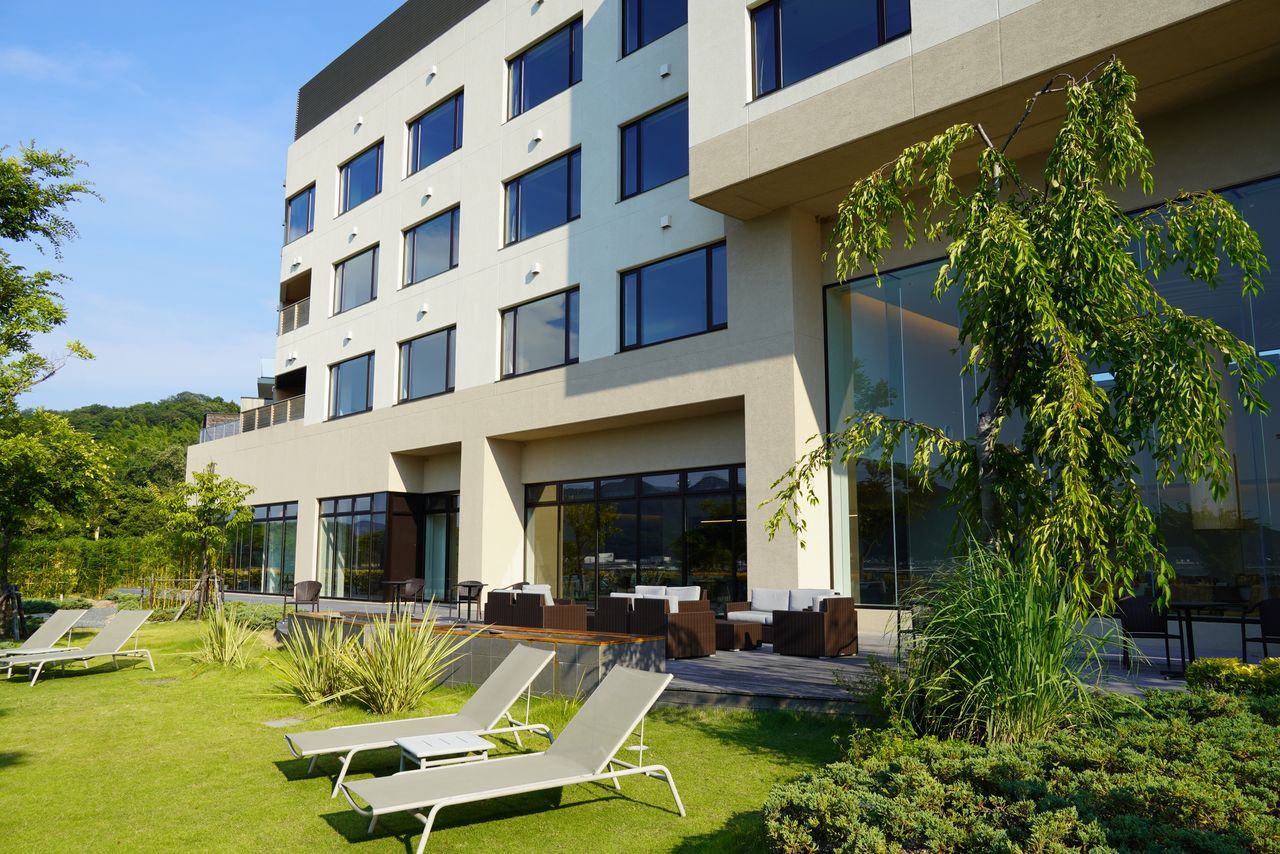
Exterior view of Etajimasou. Deck chairs in the garden offer views of the Inland Sea. (© Nakahara Mieko)
Etajimasou is a small facility by Nagase Beach, but it boasts sea views from all of the guest rooms and the reception area. The sunlit lobby has a counter showcasing locally grown fruits and vegetables, as well as unique drinks and sweets, which acts as a conversation starter between guests and staff. As I try some of the juicy cucumbers, a staff member informs me that the city of Etajima is the biggest producer of the vegetable in Hiroshima Prefecture.
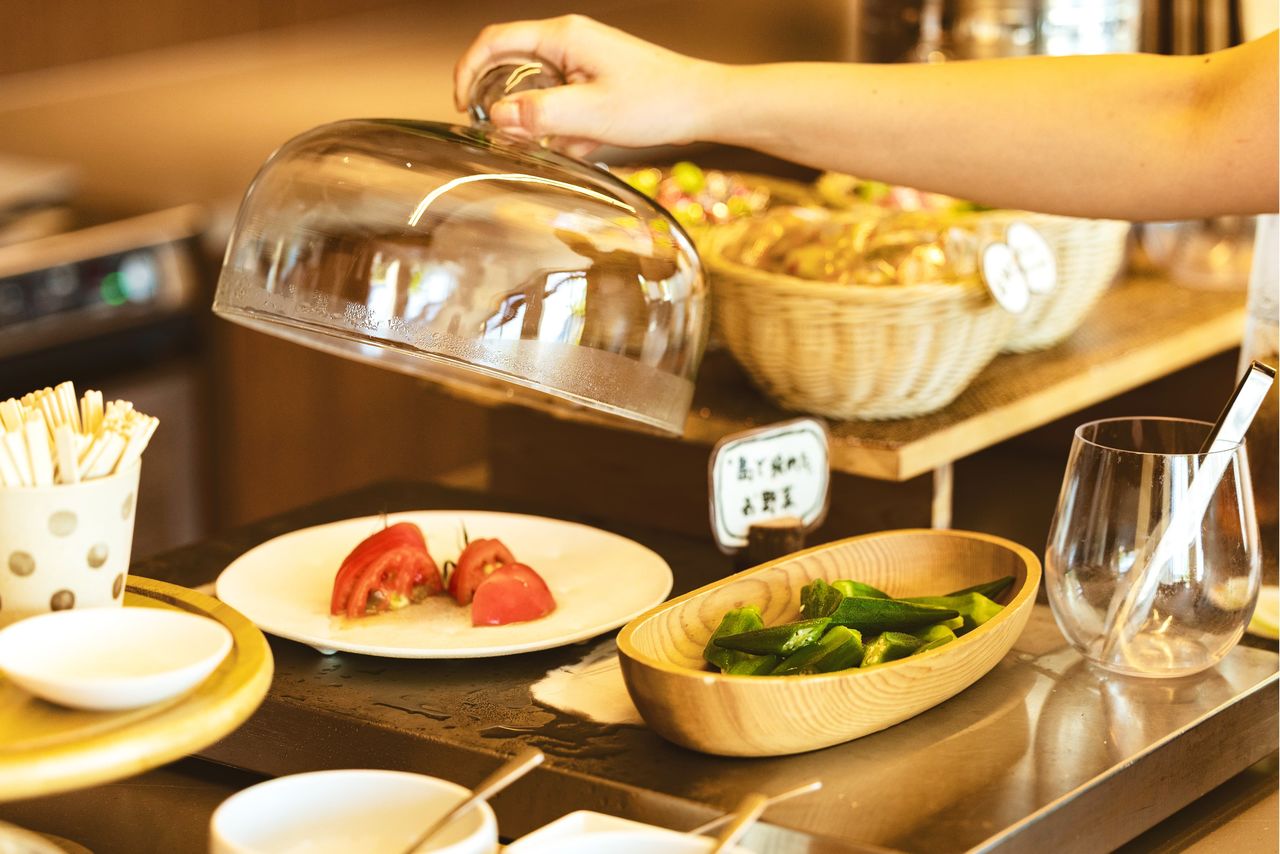
The lobby counter offers tastings of locally grown fruit and vegetables. (© Etajimasou)
Etajimasou is designed to highlight the best that the region has to offer. Its restaurant serves French fusion cuisine with a focus on locally sourced ingredients. Bathing in the natural hot spring attached to the hotel can provide health benefits, including improved blood circulation and skin cleansing. This traditional bathing spot remains open to local residents during the day, but is reserved exclusively for hotel guests in the morning and evening.
Indulgence Transcending Extravagance
In 2024, Etajimasou was a winner at the World Luxury Hotel Awards. The prestigious event received entries from more than 150 countries worldwide, with winners selected by region and category based on the votes of over 300,000 people. Three key criteria are assessed: service delivery, luxury, and presentation. There is a focus on the quality of the experience provided to guests, rather than simply how lavish a hotel’s facilities are.
Etajimasou received awards for Asia in the categories of Luxury Small Hotel and Luxury All-Inclusive Hotel, and a global award as a Luxury Hot Spring Hotel.
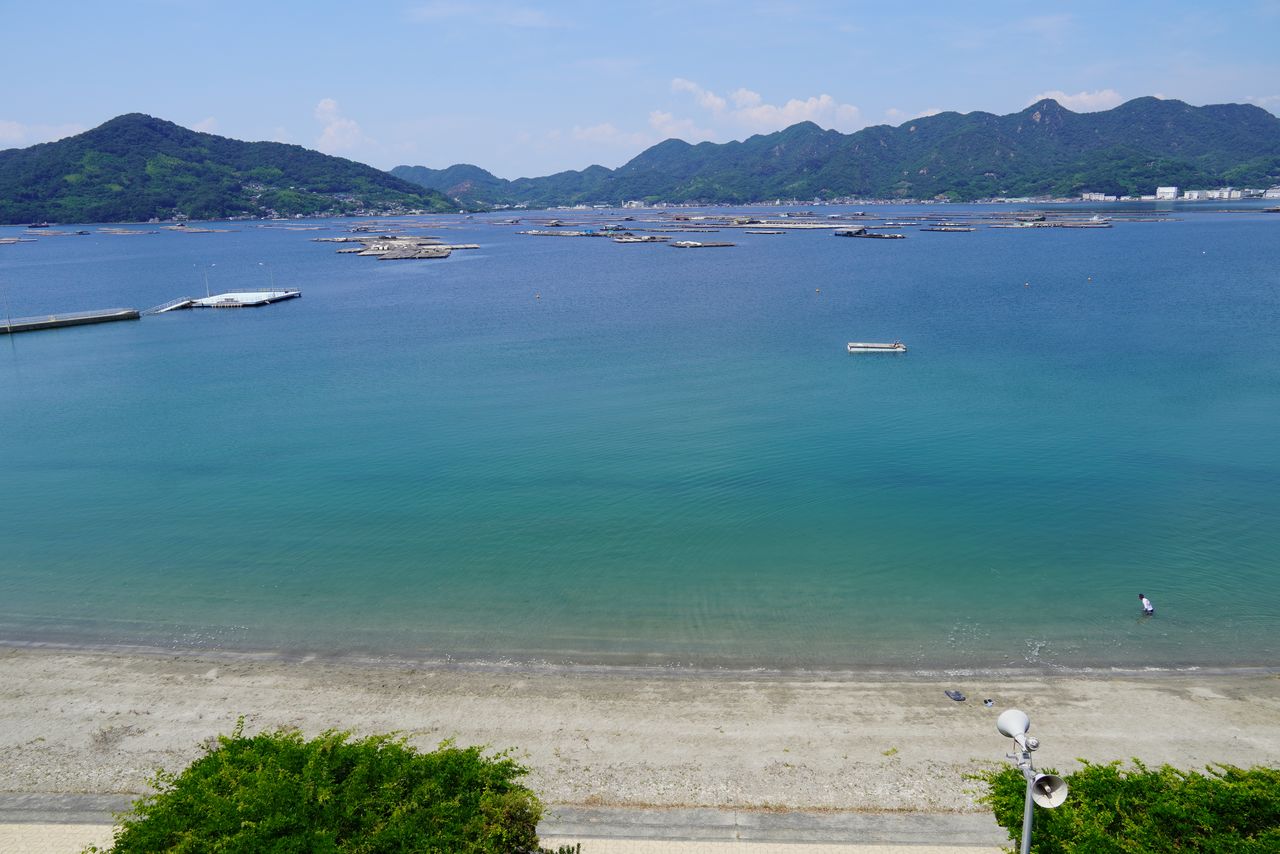
Floating oyster racks are visible from the hotel. The Seto Inland Sea is Japan’s leading oyster producing region. (© Nakahara Mieko)
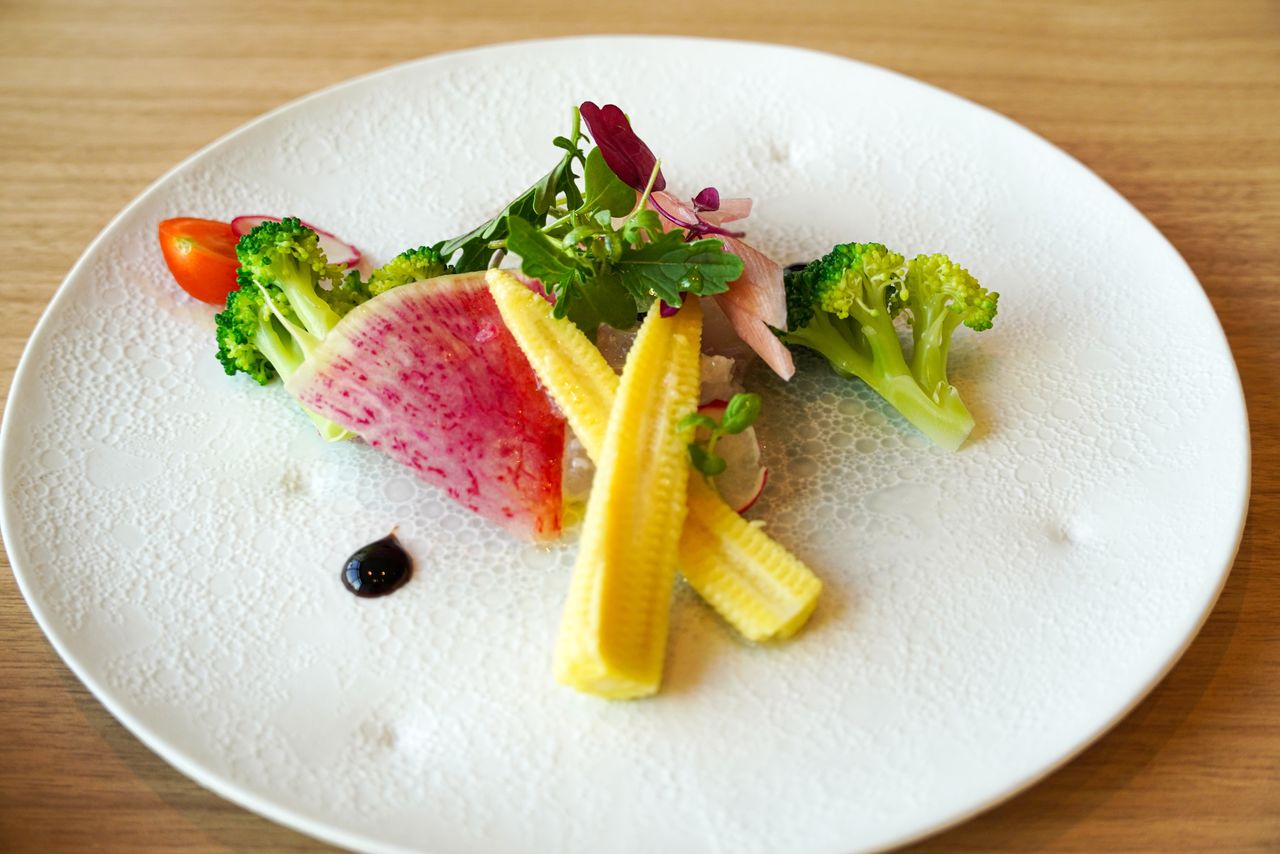
Dishes served at the hotel’s restaurant feature locally grown vegetables harvested that day. (© Nakahara Mieko)
In 2025, Etajimasou was one of around 340 Japanese properties in the Michelin Guide Hotel Selection, which lists some 7,000 properties worldwide. The small hotel, which just opened in 2021, gained global recognition for the second successive year. Etajimasou’s general manager Abe Naoki comments that “Luxury is not the same as heartfelt delight. I’m proud that evaluation of Etajimasou was not simply based on our facilities, interior, and guest rooms, but recognized the full experience, including our local setting, the hot spring, food, scenery, and our employees.”
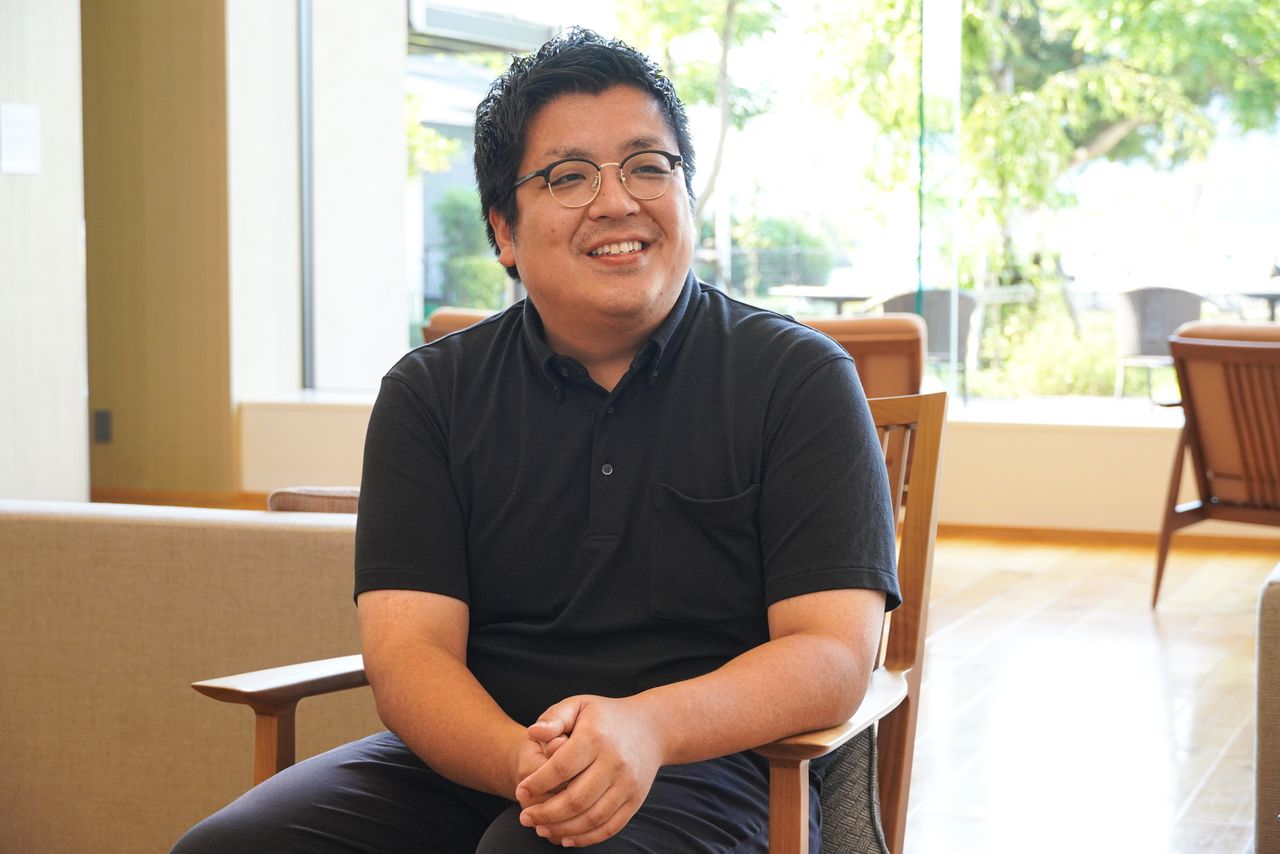
Etajimasou’s general manager Abe Naoki. (© Nakahara Mieko)
During the 2023 G7 Hiroshima Summit, members of the German chancellor’s delegation were lodged at Etajimasou, and now an increasing number of European visitors are choosing to take extended stays there.
Hot Springs Cherished by the Community
The greatest luxury available at Etajimasou is its natural hot springs, Etajima Onsen. The baths have a long history, and are treasured by the locals. The outdoor and private baths face the Inland Sea, with rustic gardens and sea breeze adding to the charm.
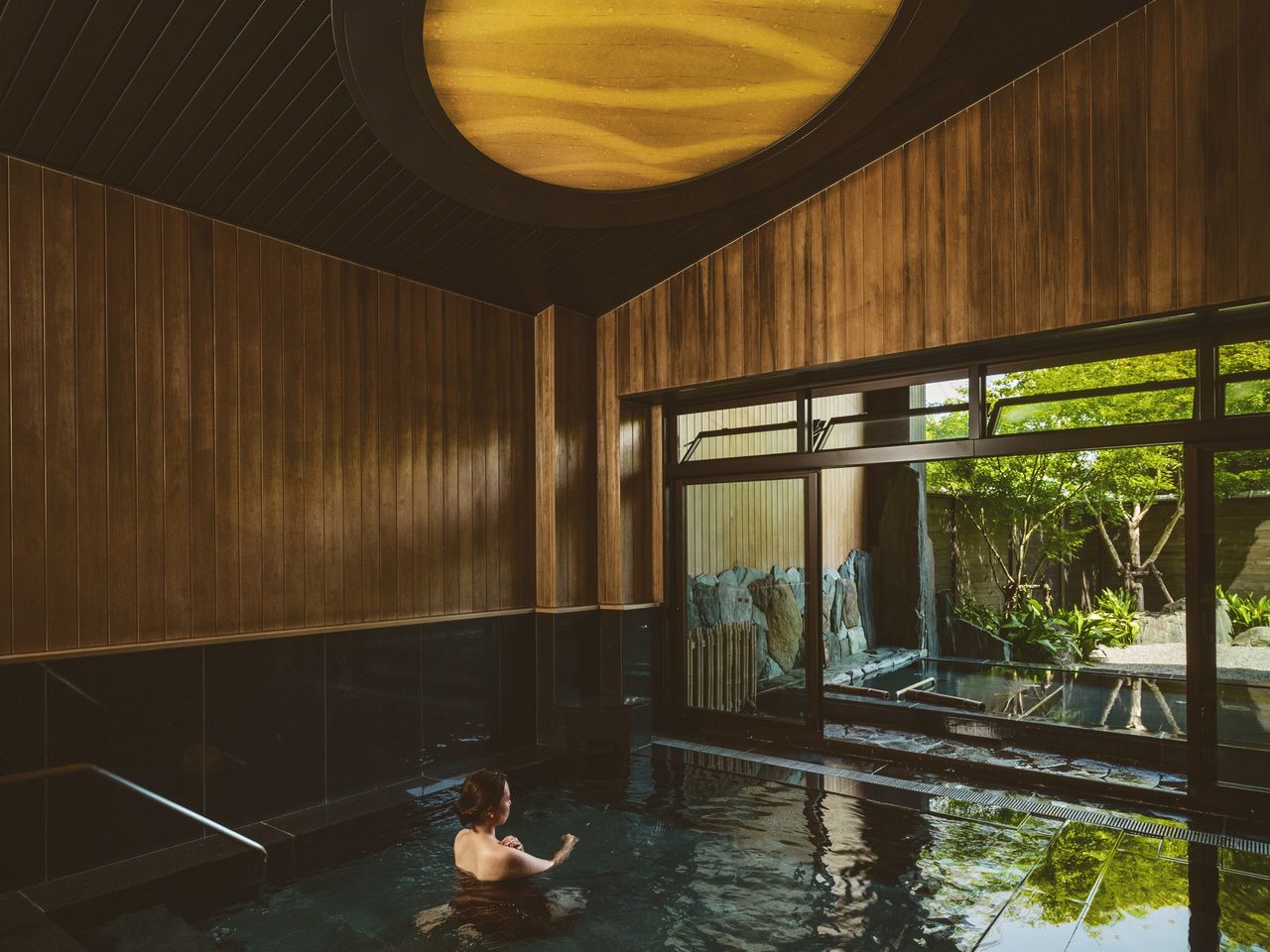
Etajima Onsen, the hot spring facility adjoining Etajimasou. (© Etajimasou)
The “fossil seawater” hot springs well up from 1,700 meters below ground-level. The seawater, dating from tens of thousands of years ago, has been filtered through the strata over the centuries. Abe speaks poetically of the onsen, “Ancient memories of the ocean that were trapped beneath the seabed now appear above the ground in the form of hot springs. Time spent in the bath in contemplation is another of life’s pleasures.”
The hot springs are rich in sodium, calcium, and chlorides, which impart strong thermal and moisturizing properties to the water. Etajima Onsen also contains radon, which is weakly radioactive and believed to have health benefits. At some 240 liters per minute, spring water flows directly from the source at a temperature of 31.8°C. The onsen has tepid baths, at the natural temperature, and others that further heat the spring water. By alternating between baths of different temperatures, guests can warm up thoroughly and feel relaxed.
In 2025, the onsen was admitted to an exclusive group of onsen that preserve traditional hot springs. Abe feels the organization recognizes the philosophies of Etajimasou—value people, and protect local assets. He believes that Etajimasou is maintaining the cherished hot springs in a modern format.
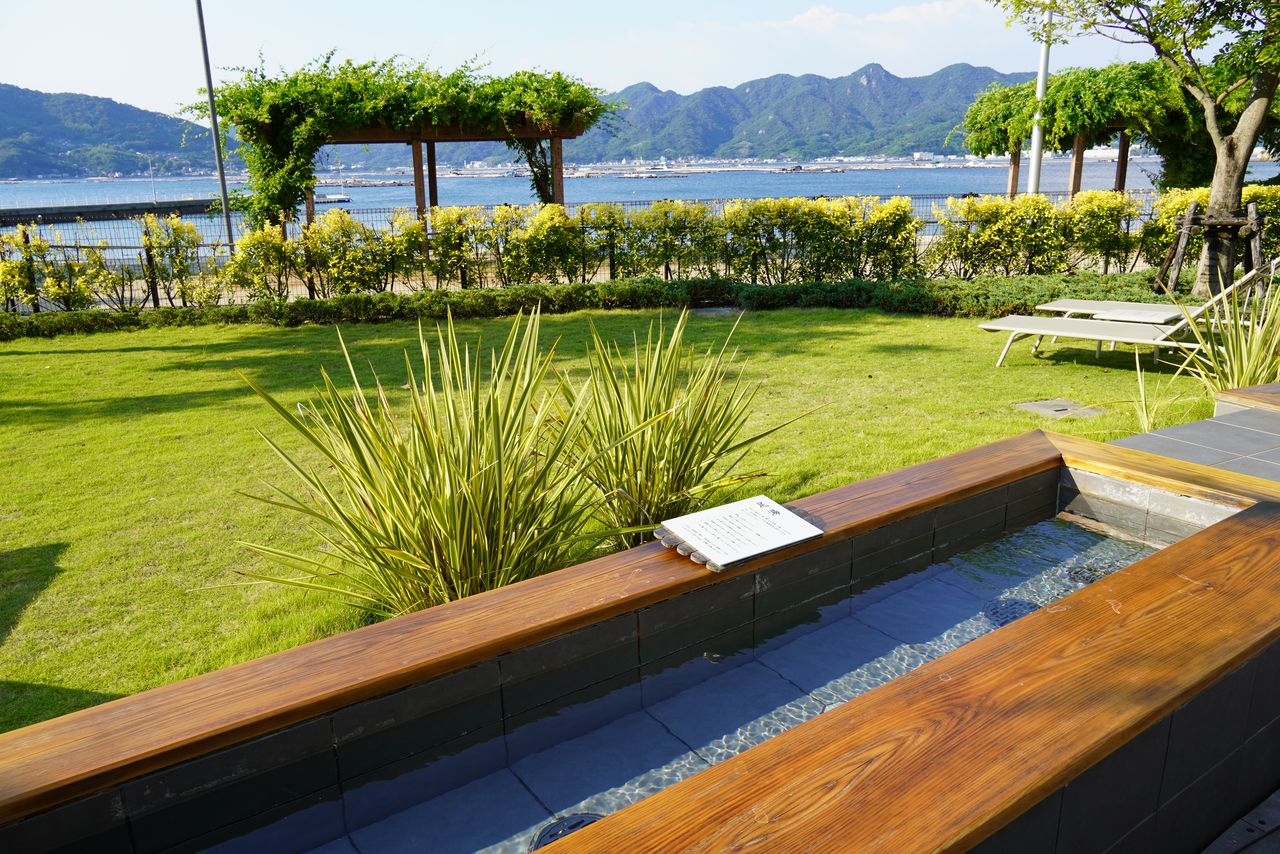
A foot bath with ocean views. (© Nakahara Mieko)
Opportunities for Collaboration
The hotel’s design and services consciously take full advantage of local color to maximize the positive experience of guests.
One example is the use of local traditional wallpaper, woven from washi paper by Tsushima Orimono, a company with over 130 years of history. The company is one of only two such producers still operating in Japan.
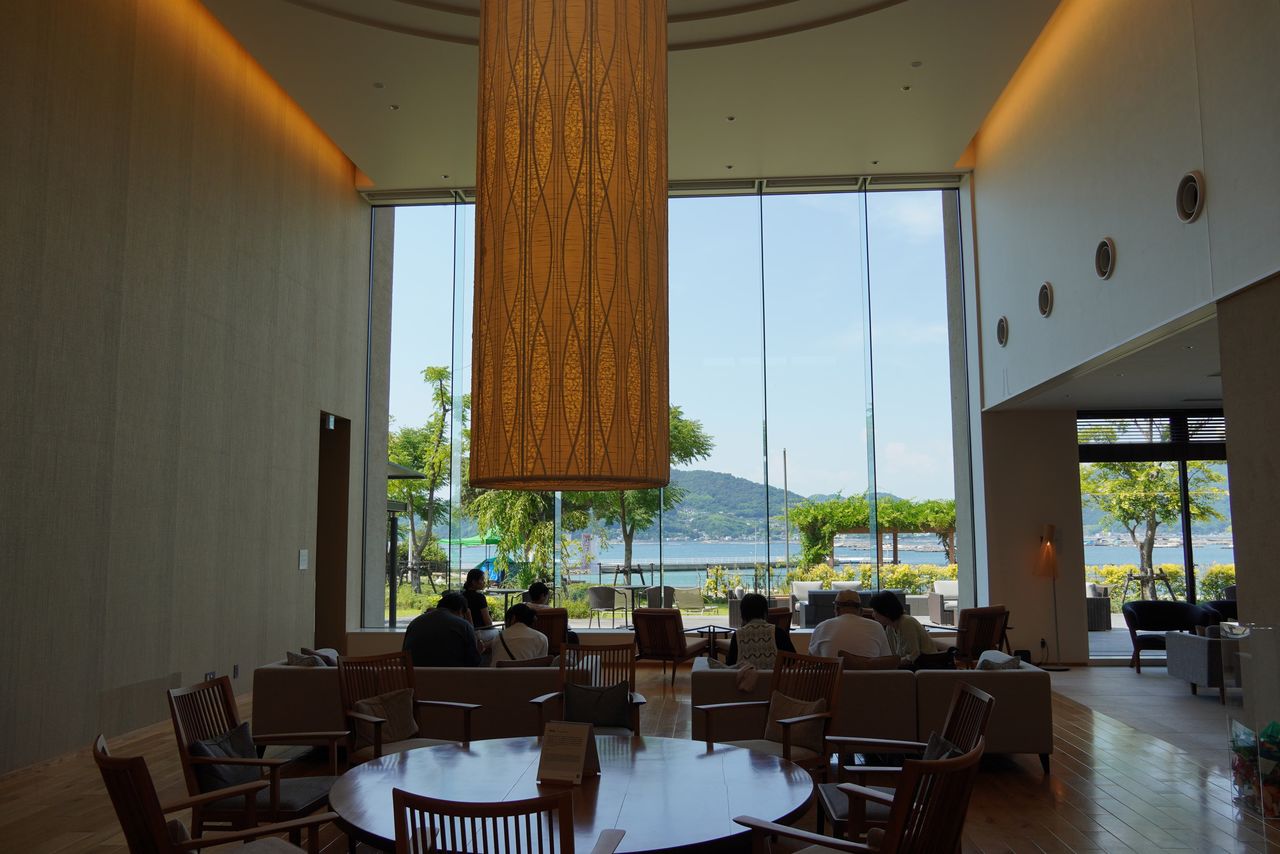
The Pillar of Light featured in the lobby is the work of leading Japanese washi artist Horiki Eriko. (© Nakahara Mieko)
A highlight of the hotel lounge is the Pillar of Light, a giant lantern made by washi artist Horiki Eriko that was inspired by the natural surroundings of Etajima and the stories of its residents. The bottom of the “pillar” is adorned with a design by local lacquer artist Rokkaku Shisui depicting two kirin, the same kind of mythical Chinese beasts seen in the Kirin Beer logo. The artwork inspired Kirin to provide technical support for a craft beer brewery to be established in the city.
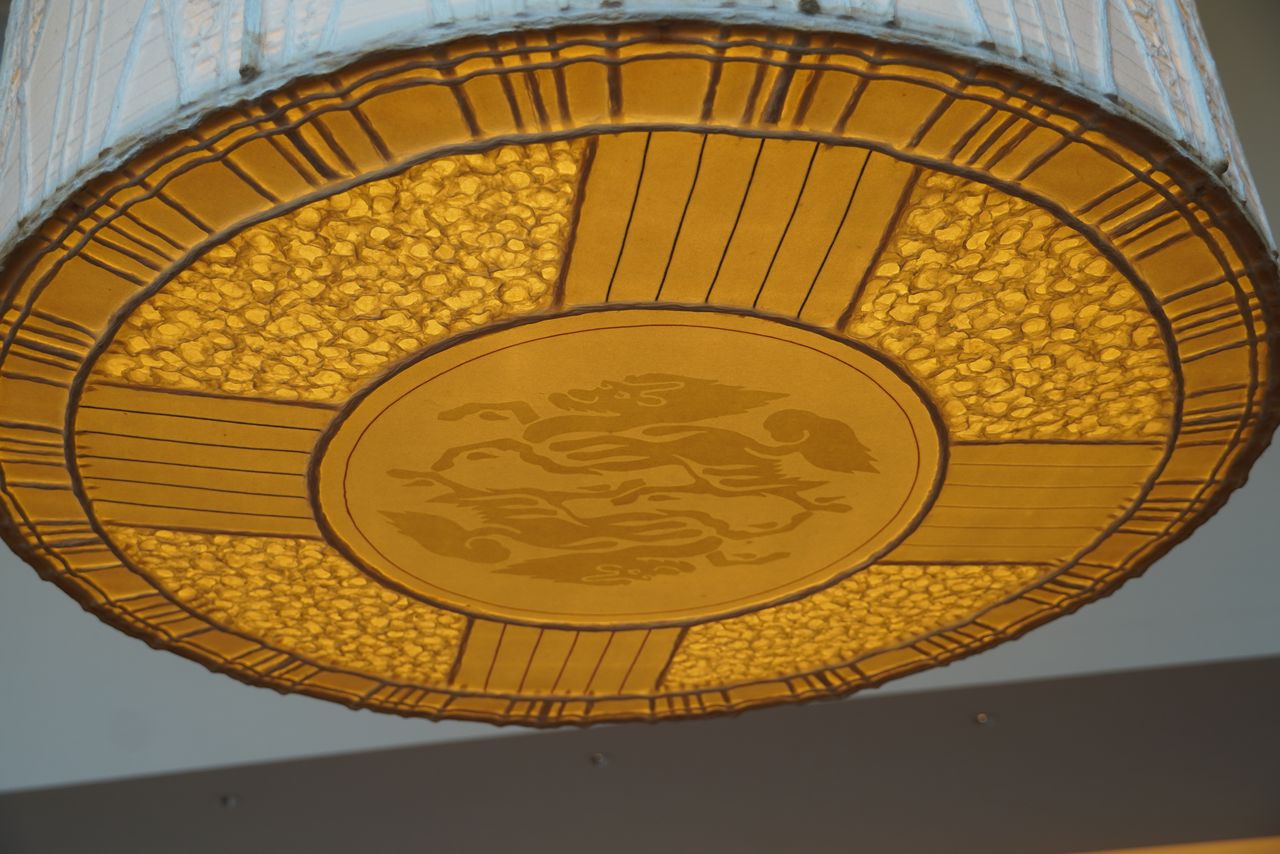
The base of the Pillar of Light is adorned with a design of two kirin. (© Nakahara Mieko)
A mini library in the hotel lounge has books related to Etajima and Hiroshima as well as fountain pens and ink in over 130 colors from nearby Kure. Guests may use brushes made in Kumano, also in Hiroshima, together with the ink to write letters or sketch pictures.
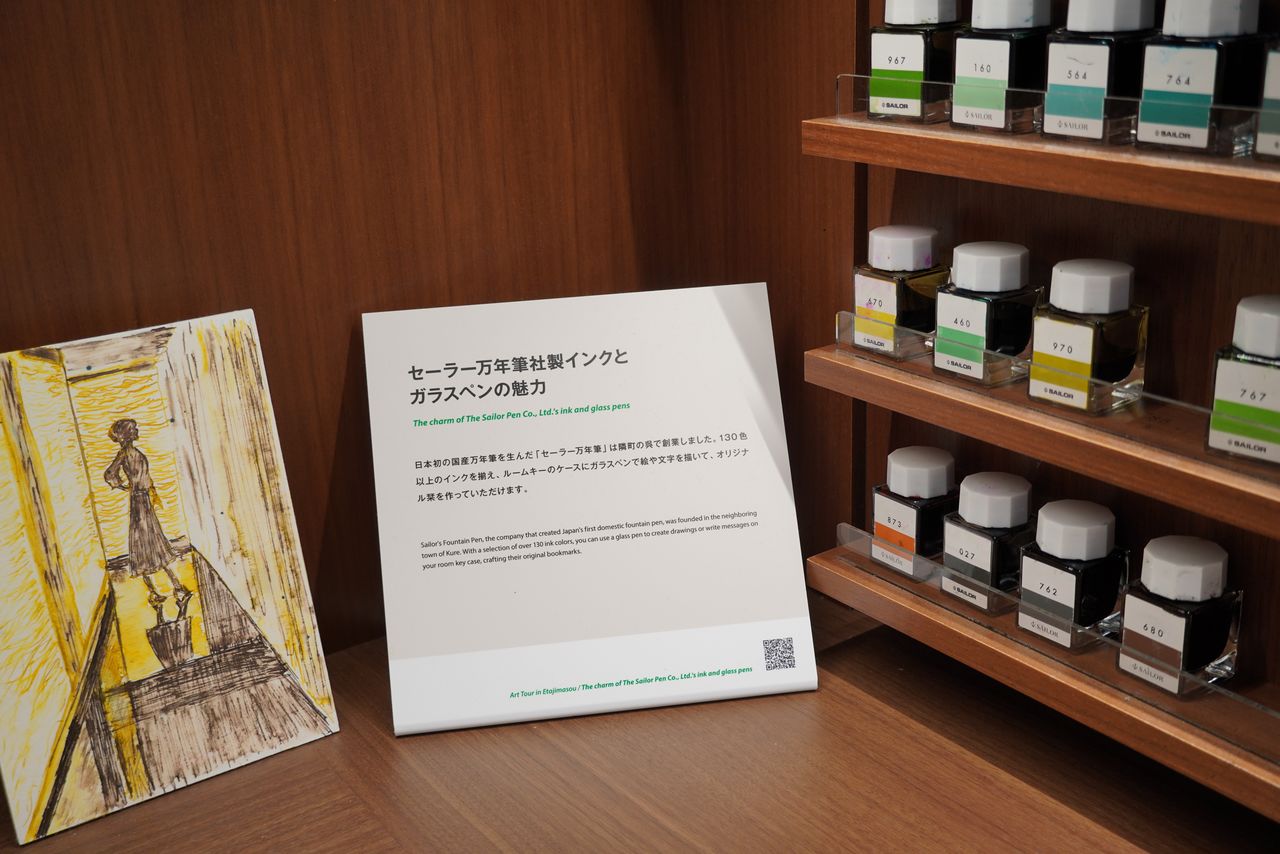
Different kinds of ink on display in the hotel’s mini library. (© Nakahara Mieko)
Striving to Be the Pride of Etajima
Etajimasou took over the location of former public baths. The hotel was part of the city council’s plans to create a tourism base. When the facility opened in 2021, there was discontent at the price increase for bathing in the onsen.
But Abe worked to turn the tide of local sentiment, one step at a time, aiming to make the new facility the pride of Etajima. His efforts to develop the hotel began before the opening, engaging in conceptualization, management methodology development, and staff training. The hotel’s name Etajimasou incorporates the suffix sou (or sō) meaning “villa,” which is commonly used in the names of old-fashioned inns. Most notices posted on the premises are written in Japanese. Abe believes that “The prevalence of written Japanese throughout the property gives guests a greater sense of the locality.”
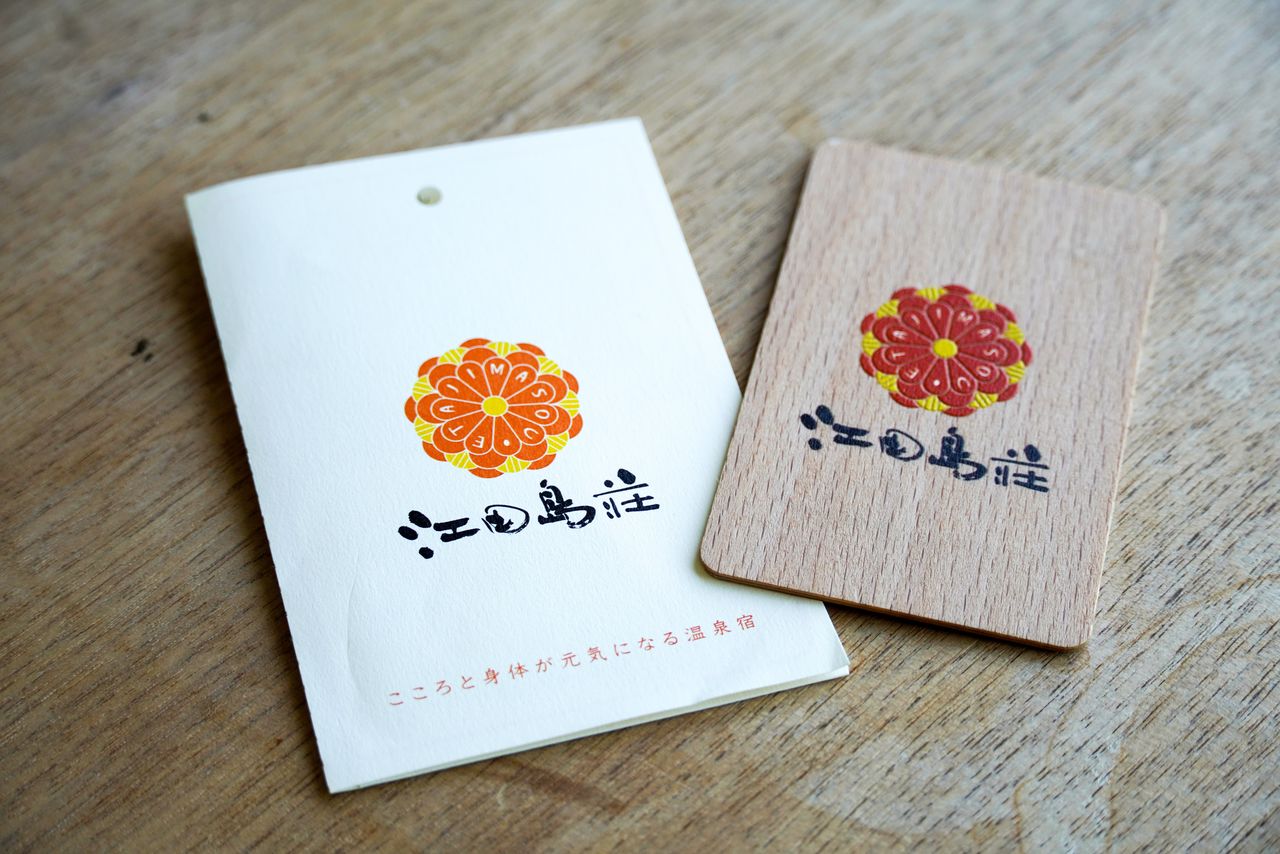
Room key with a unique wooden grain design (right) and the card case, which can be kept by guests to use as a bookmark. (© Nakahara Mieko)
Setting the Trend
Etajimasou has around 60 staff, most of whom are locals. Management prioritizes local people who understand the hotel’s philosophy over those with experience in the hotel service industry. Despite this policy, Abe says there has never been any negative feedback for the hotel’s customer service. “We want to create a sense of luxury based on our unique concept of service.”
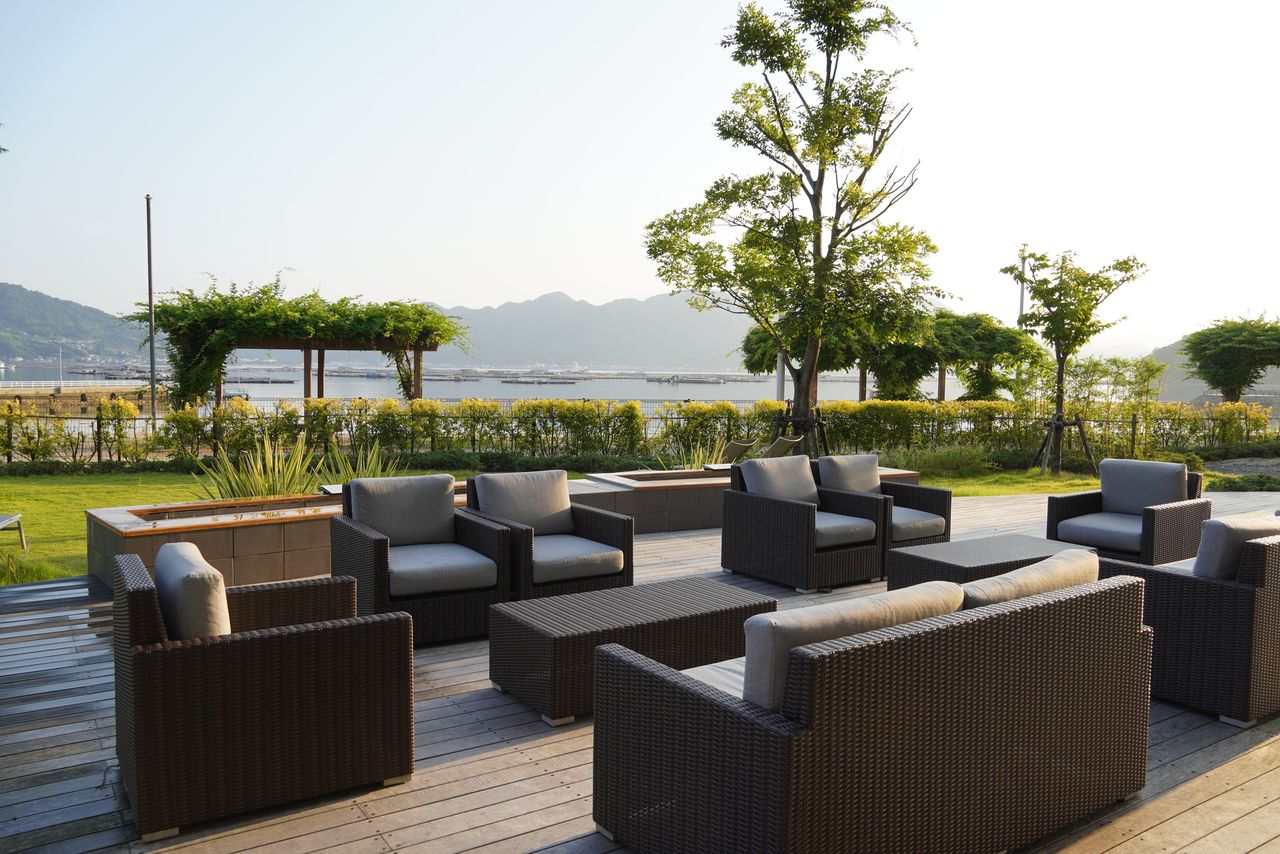
A range of spaces throughout the facility take advantage of the Inland Sea views. (© Nakahara Mieko)
Abe graduated from Tokyo’s Japan Hotel School before starting his career in the Sheraton Laguna Guam Resort. He was also involved in the launch of the Hyatt Regency Yokohama and the establishment of other Japanese regional hotels. Branded hotel chains strive to ensure the same standards of human resource training around the world, but they fail to capture the local vibe and lack individual flavor. In the words of Abe “I want Etajimasou to be a hotel with a philosophy developed with the local people, and deeply rooted in the locale. When staff interact with guests naturally, the guests shed their inhibitions, and can genuinely enjoy themselves and recharge. I believe staff members and the hotel service can become stronger through aiming to bring smiles and joy to others.”
As we depart, the sight of Abe casually interacting with guests leaves a deep impression of Etajimasou’s unique style of luxury and hospitality.
(Originally published in Japanese. Banner photo: A tranquil Seto Inland Sea view from a guest room at Etajimasou. © Nakahara Mieko.)