
Tokyo Mugicha: A Traditional Roasted Barley Taste Enjoyed for Over 80 Years
Food and Drink Culture Lifestyle- English
- 日本語
- 简体字
- 繁體字
- Français
- Español
- العربية
- Русский
A Classic Summer Thirst Quencher
Summers in Japan are hot and humid. Even a short walk to the station can leave you drenched in sweat. At this time of year, there’s little better than ice-cold mugicha (roasted barley tea) to keep you cool and hydrated. With virtually no calories and zero caffeine and sugar, everyone from babies to the elderly enjoys it, and you can drink it to your heart’s content.
These days, mugicha can be found sold in PET bottles, but traditionally each household would make it themselves by roasting some barley and then heating it in a large kettle with water to brew. Once it had cooled, the mugicha was transferred to a glass pitcher and placed in the refrigerator to chill.
Kawahara Seifun Mill, sitting in a quiet corner of a residential area in Nerima, Tokyo, still processes the barley for mugicha using traditional techniques. Established in 1940, during World War II, it is currently run by the founder’s grandson, Kawahara Wataru.
“We’ve been making this the same way for more than eighty years, so it has kept its original flavor,” he tells me.
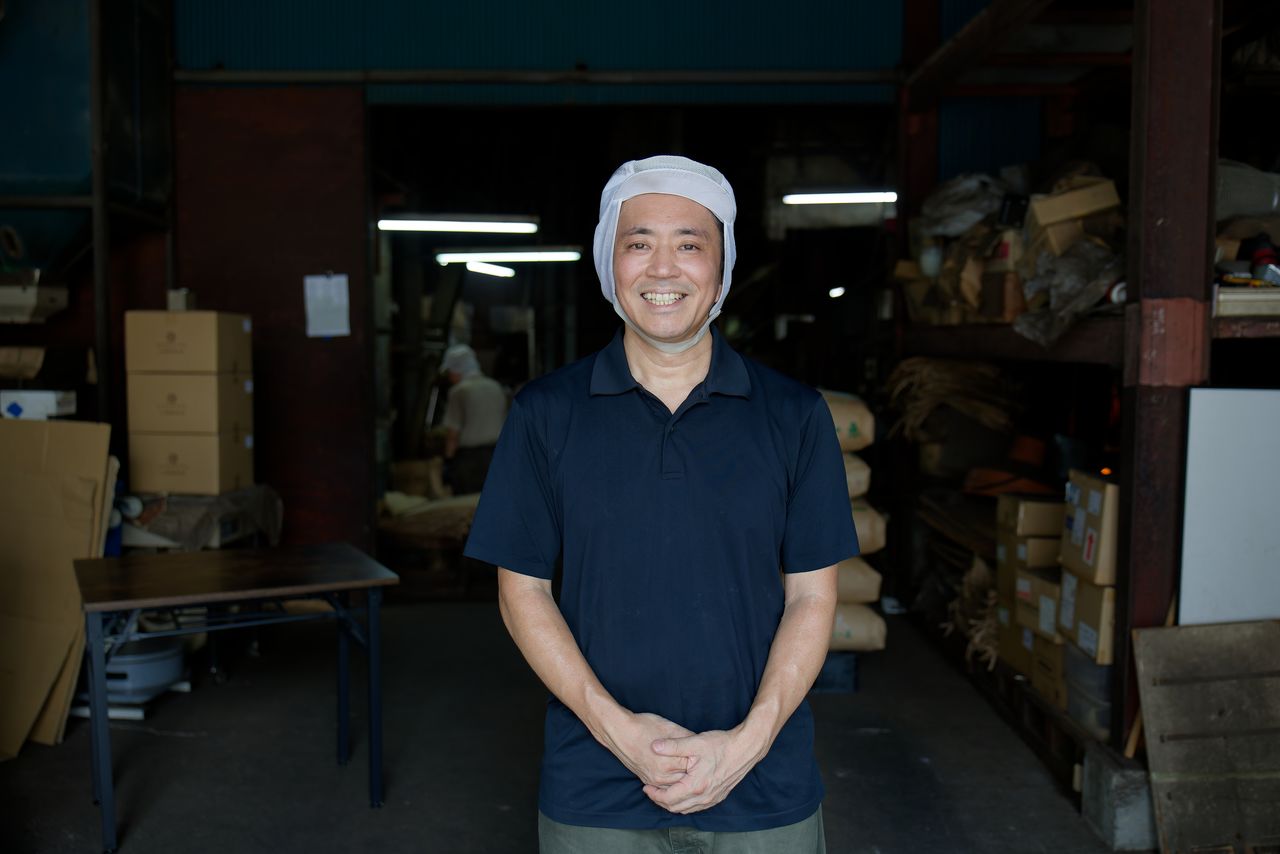
Kawahara Wataru, the third-generation owner of Kawahara Seifun Mill. (© Nomura Kazuyuki)
Sand-Roasting Makes the Barley Pop
Kawahara Seifun Mill specifically uses domestically produced six-rowed barley (Hordeum vulgare) and roasts it using silica sand. Their signature product, Tokyo Mugicha, is made from pesticide-free barley produced in Miyagi Prefecture. The packaging of this product features an illustration of a roastmaster at work before a brick oven.
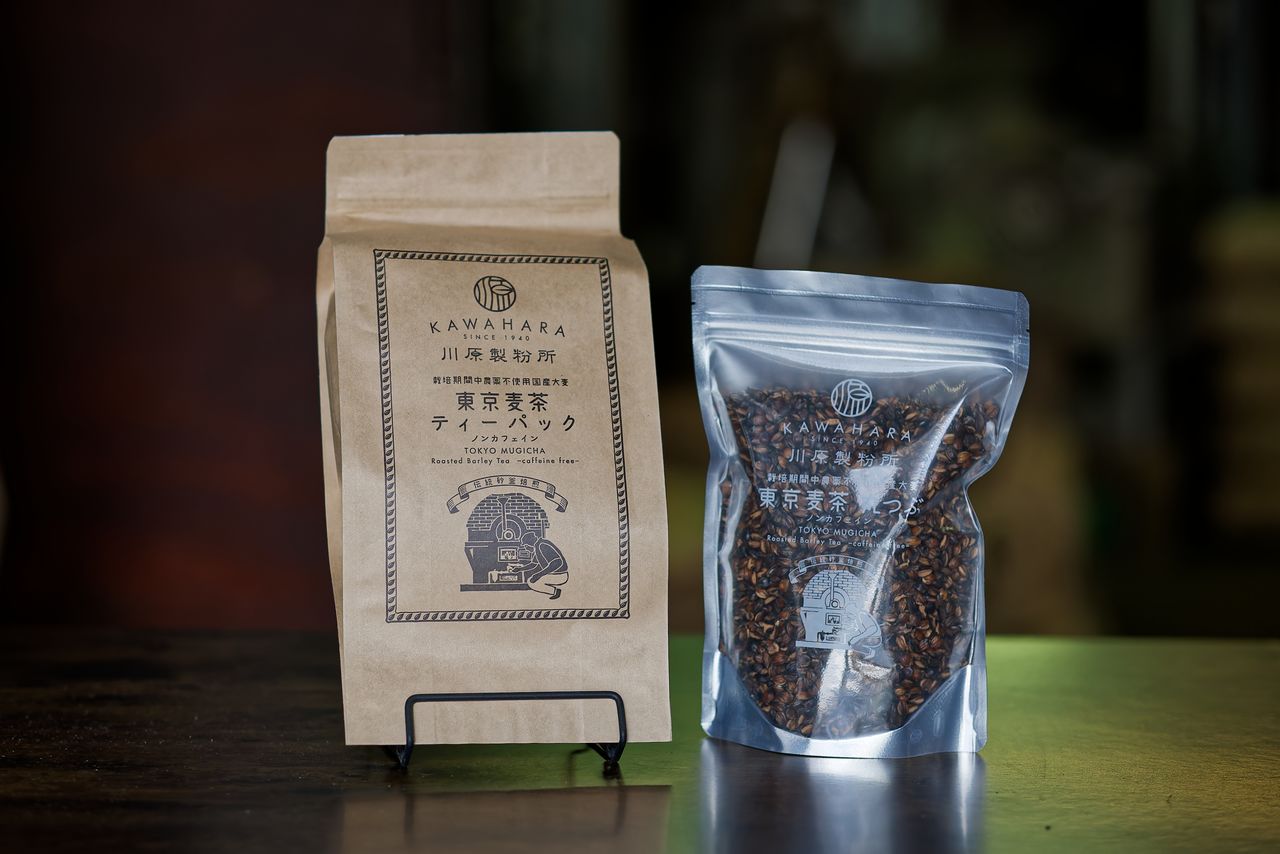
Teabags may sell better (left), but the flavor of loose roasted barley grains (right) is richer, even if it does take a little more time to brew. (© Nomura Kazuyuki)
The production area looks exactly like the illustration. “I created this design so people would know that time and effort have gone into making this properly by hand,” Kawahara explains.
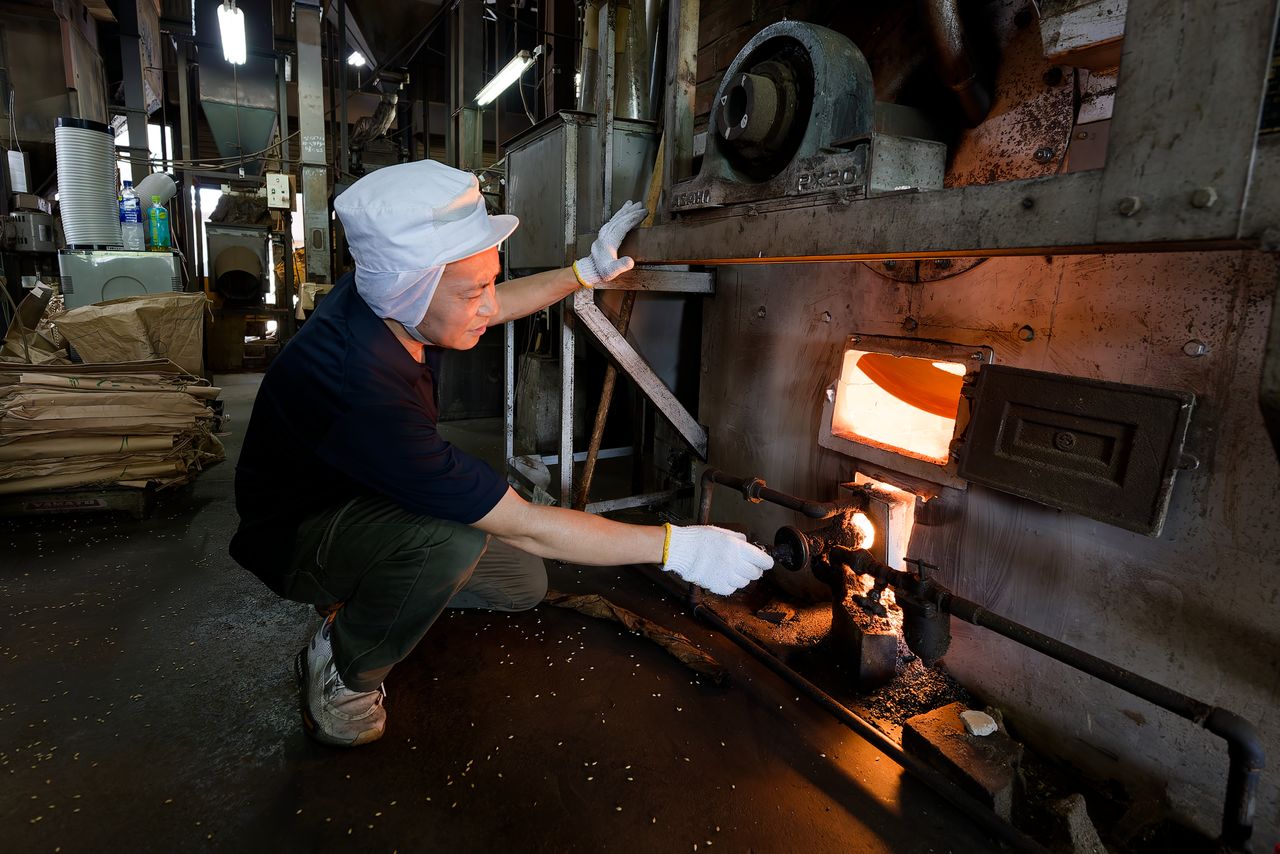
A large iron cylinder filled with sand is rotated above blazing flames within the oven, and barley is fed into that cylinder to be roasted. The roastmaster monitors the barley as it roasts, constantly adjusting the heat and amount of grain being fed into the oven. (© Nomura Kazuyuki)
The sand in the cylinder follows the same principle as for cooking sweet potatoes on hot stones. The extremely hot sand emits far infrared rays that ensures the heat penetrates right through to the center of the barley. Major manufacturers use a process of hot-air roasting in order to be able to roast large quantities of barley at a time. In comparison though, the barley roasted in a sand oven expands much more, around three times as much.
It’s something like popcorn. The heat from the internal moisture of the barley causes the grains to expand, and the resulting pressure makes the outer husks pop, so the barley increases in size. Barley grains stay encased in their hard husks when roasted using hot air, but this popping caused by the sand-roasting brings out a deeper flavor.
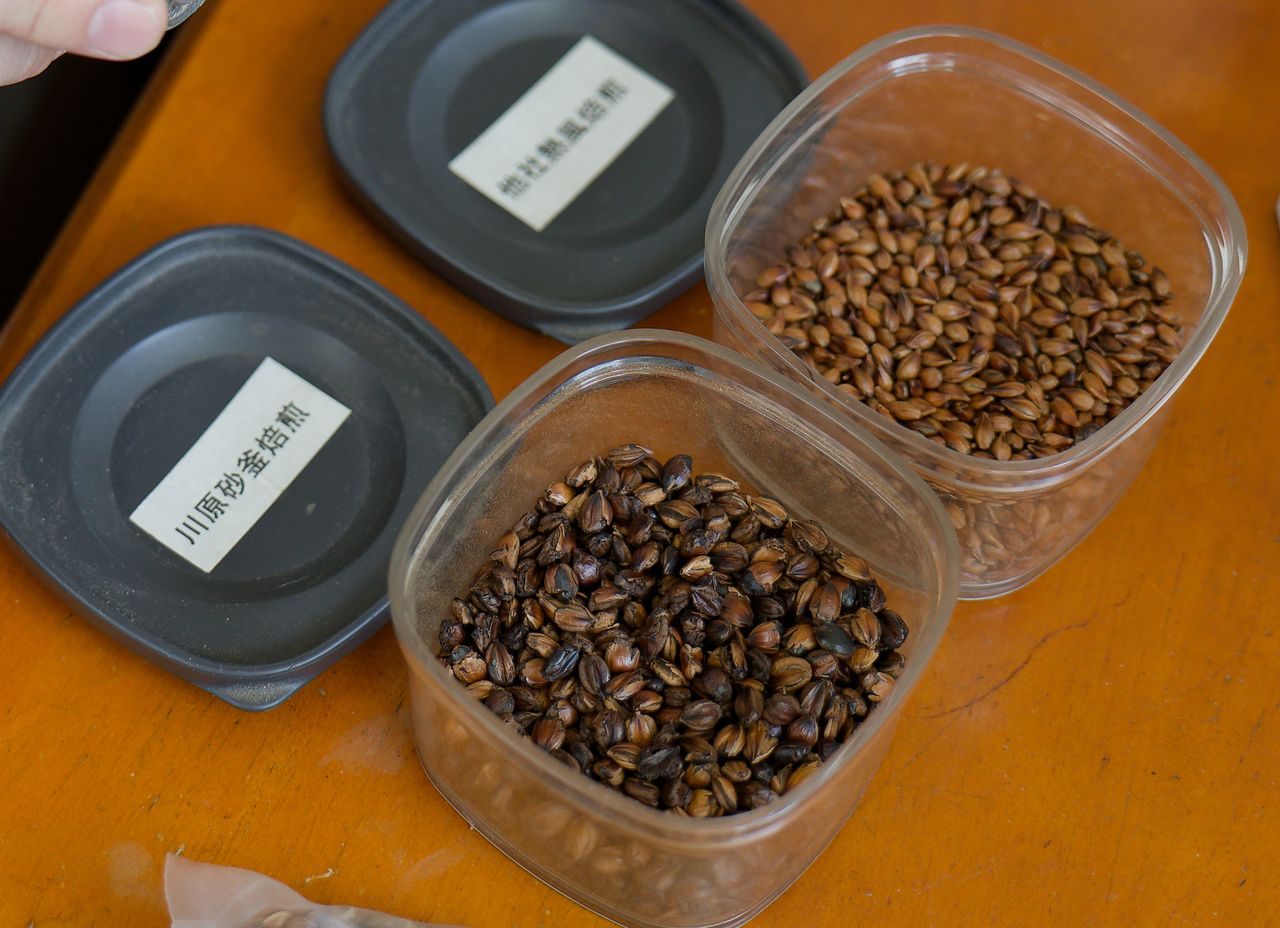
Sand-roasted (below) and hot-air roasted barley. The difference in size is clearly visible. (© Nomura Kazuyuki)
Depth Created by Variation
There are two stages to the roasting process. During the first stage, the barley is roasted at around 100°C for 30 seconds, lightly toasting it. At the second stage, the heat is increased to 300°C and the barley is roasted for around 90 seconds. These very short roasting times mean quick judgment is needed to make adjustments and the process can be affected by many factors, including the temperature and humidity that day, as well as the moisture content of the barley.
According to Kawahara, “the best time to stop roasting is just before the barley burns.” This, of course, requires an incredibly high level of skill.
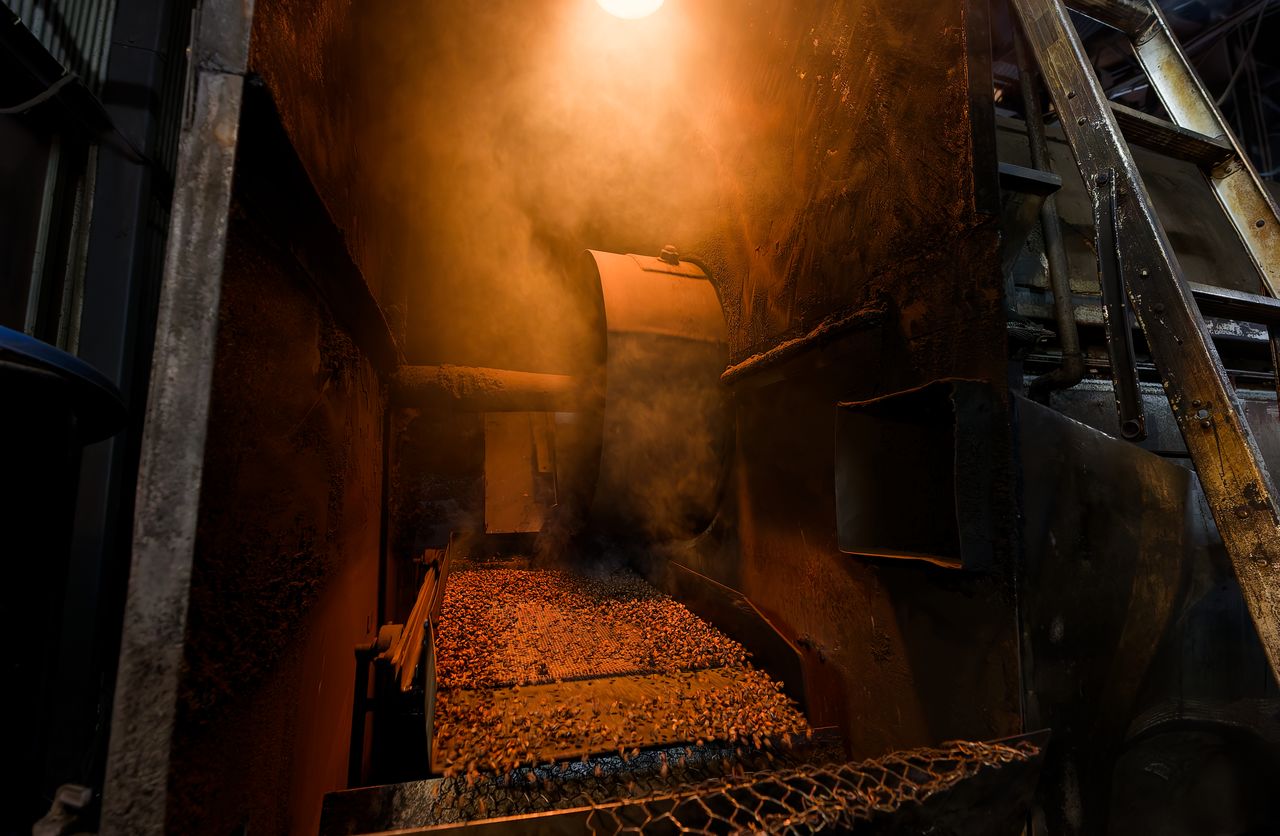
Plumes of steam rising from the barley after it has been roasted a second time. (© Nomura Kazuyuki)
Although variations in the color of the roasted grain usually indicates uneven roasting, the roastmasters at Kawahara Mill are able to adjust the process to achieve a perfect balance of lighter and darker roasts. The lighter colored grains give the tea more sweetness, while the darker grains add deeper color and aroma. This variation enhances the overall richness of the tea’s flavor.
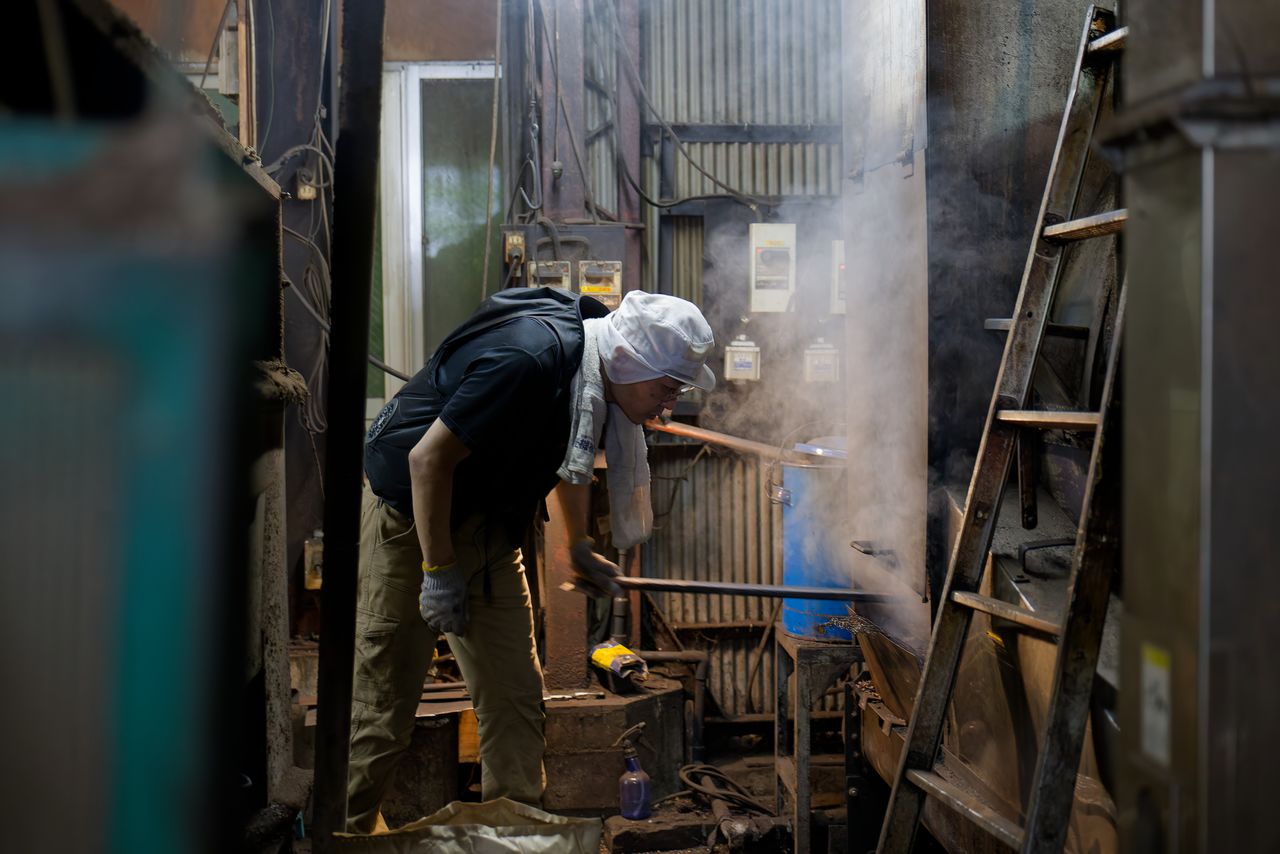
Checking the roasted grains. (© Nomura Kazuyuki)
It takes approximately five years to become a roastmaster. Kawahara remembers learning how to roast from his father, the previous owner, who told him to judge the roasting by the color of the grains, but to begin with, he could not see the subtle differences in color at all.
Currently, there are four people who have the requisite skills for this job, including Kawahara. In the mill, there is no air-conditioning and the temperature near the oven rises to 45°C. The roastmaster tending the oven wears a fan-equipped vest and hydrates frequently, as well as maintaining salt intake to prevent heatstroke. This is a tough environment, especially for the older workers, and daily production is limited to 800 kilograms.
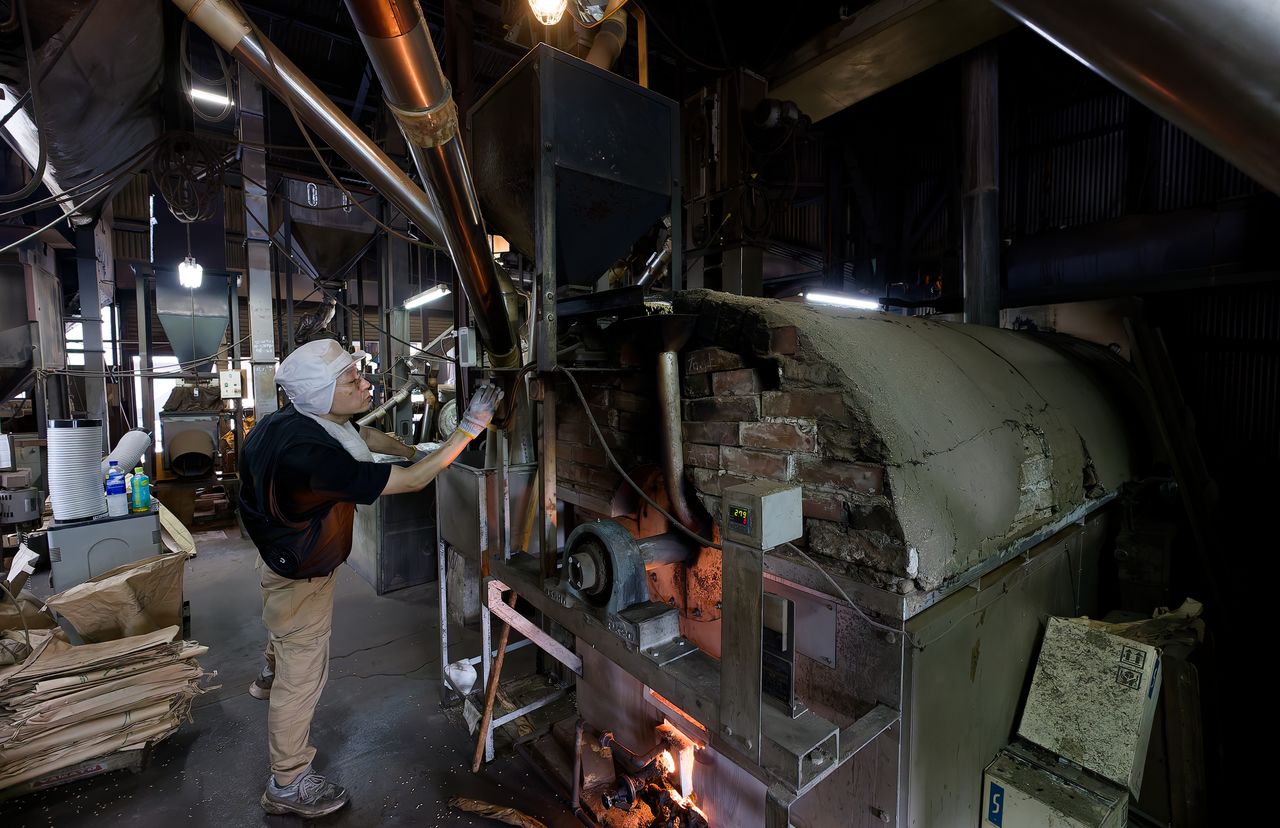
Adjusting the temperature and timing while overseeing the roasting. (© Nomura Kazuyuki)
A Much-Treasured Daily Beverage
Mugicha is very much an everyday drink to be enjoyed among family and friends, rather than for special occasions. It is for that exact reason Kawahara is so fastidious about its authenticity.
“I know the difference in our scale of productivity means we can’t compete on price with major manufacturers. Our tea might be cost a bit more, but I want to keep making every effort to produce mugicha for the customers who say ours tastes the best,” he states.
People are constantly dropping by the mill to buy mugicha. One regular customer, who arrived by bicycle, said he had been a fan of Kawahara’s sand-roasted mugicha for thirty years. “Once you’ve tried this, the bottled type just doesn’t compare. You can brew the teabags using cold water, but it tastes better if you brew them in boiling hot water. I reuse the barley by mixing it into potting soil,” he tells me.
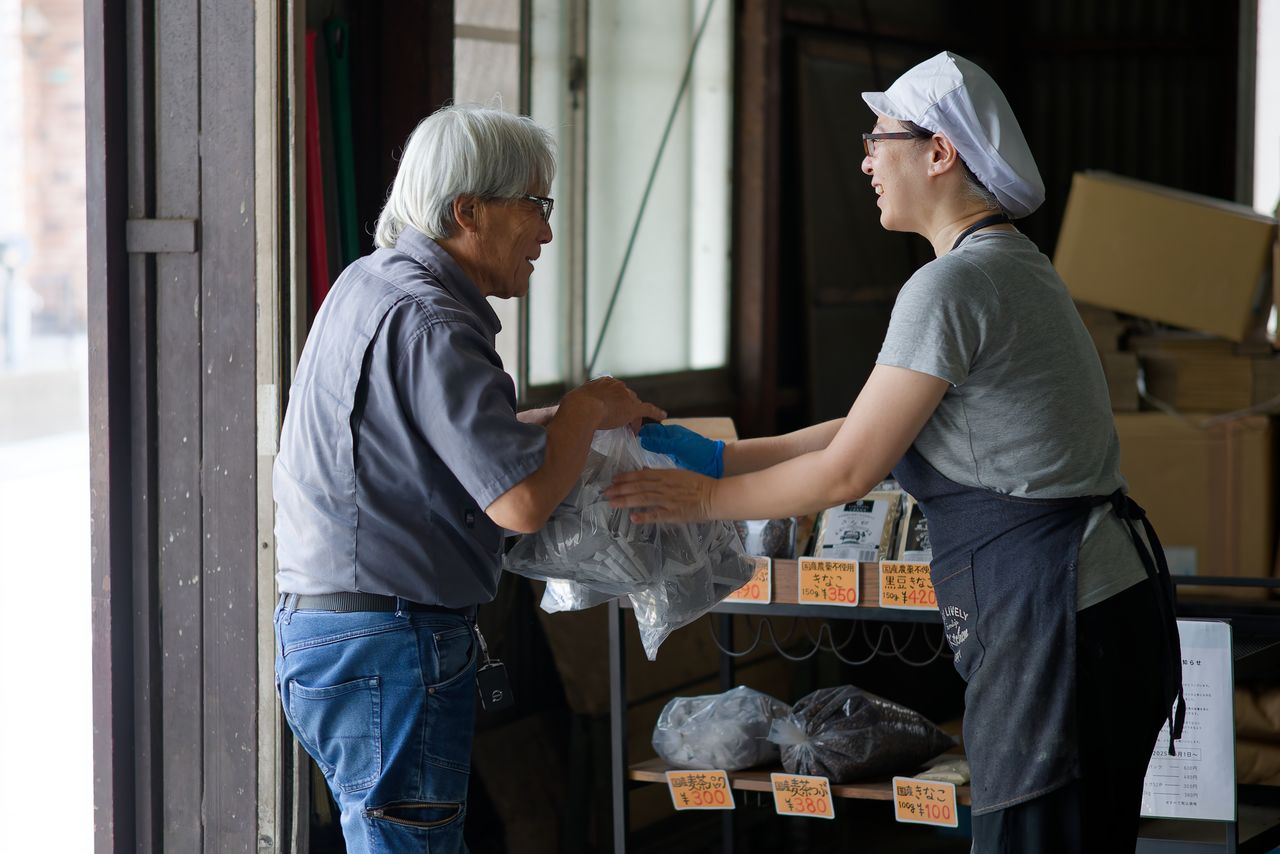
Many local customers purchase the large economy-size bags. (© Nomura Kazuyuki)
While there may be a market for a more high-quality mugicha, due to the recent boom for Japanese products and increased inbound demand, Kawahara is not considering that kind of strategy. “We’re currently selling our best product at this price. If we were to sell a product at a higher price, we would need to source more refined raw materials and adjust the roasting process to match that price range.” His stance on raising the price simply because a product might sell well is that “it is morally wrong.”
In addition, with the warm weather starting earlier and ending later each year, “our busy period has become longer, so we don’t even have time to develop a new product,” he jokes.
Continuity is Key
This year marks the eighty-sixth anniversary of the mill’s establishment. While Kawahara envisions being able to keep running the company until its centenary, he also acknowledges that it is time to start planning for the future and continuity of the business.
The largest obstacle standing in the way of passing on the manufacturing process to the next generation is the lifespan of the oven. While the construction of the outer brickwork was done by his father and grandfather, the iron cylinder will inevitably need to be replaced soon, as it is corroding due to age and use.
The problem is that the manufacturer of the cylinder currently being used has informed Kawahara that a new one cannot be produced because their artisans are too old to work now. Although he has sought out and received estimates from other manufacturers, not only is the cost high, there is a very real concern that changing the cylinder will alter the taste of the mugicha that they have been striving so long to preserve.
The reality has to be faced that protecting its inheritance is not something the company can do alone.
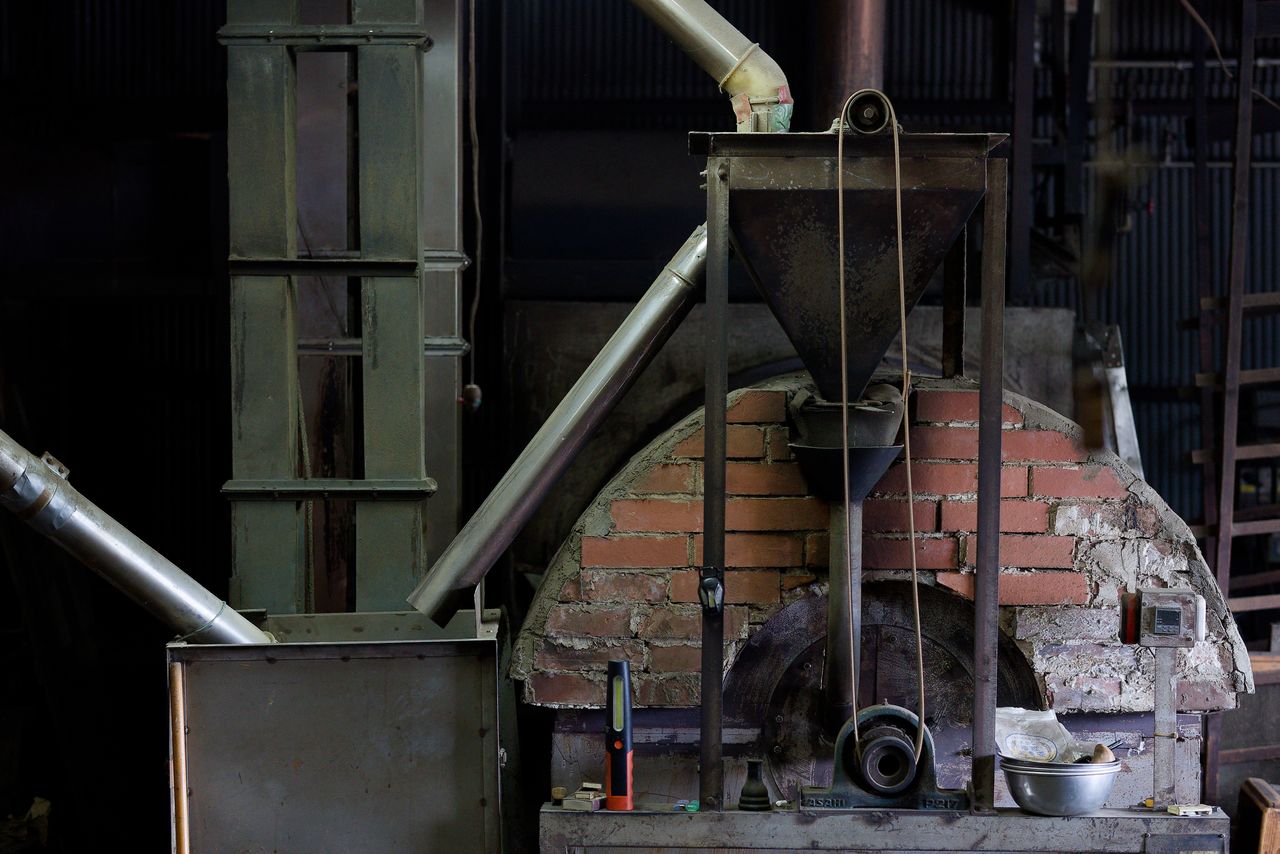
The bricks laid by Kawahara’s father and grandfather. (© Nomura Kazuyuki)
Kawahara’s hope is to pass on the traditional process for making mugicha to the next generation, while also expanding overseas sales. He says that in recent years there has been growing interest from Asia, and even farther afield, from Europe and the United States. “I want the whole world to know about mugicha. When I was younger, I went backpacking around the world and I’d love to be able to see the mugicha I’ve made being sold in the places I visited.”
Roasted barley drinks are quite common in Europe too. The difference is that they are regarded more as a substitute for coffee, rather than a welcome thirst quencher. Italy has caffè d’orzo, while Spain (and Latin America) has café de cebada. Both these beverages are made using ground roasted barley and served with milk and sugar. These may be markets that are more receptive to mugicha exports from Japan.
Kawahara has a special memory from a few years ago when he visited Taiwan and saw Tokyo Mugicha on the shelf in a supermarket. “The price was a bit higher than in Japan, so I was concerned whether it would sell or not, but the fact it was there and that people could buy it really moved me.”
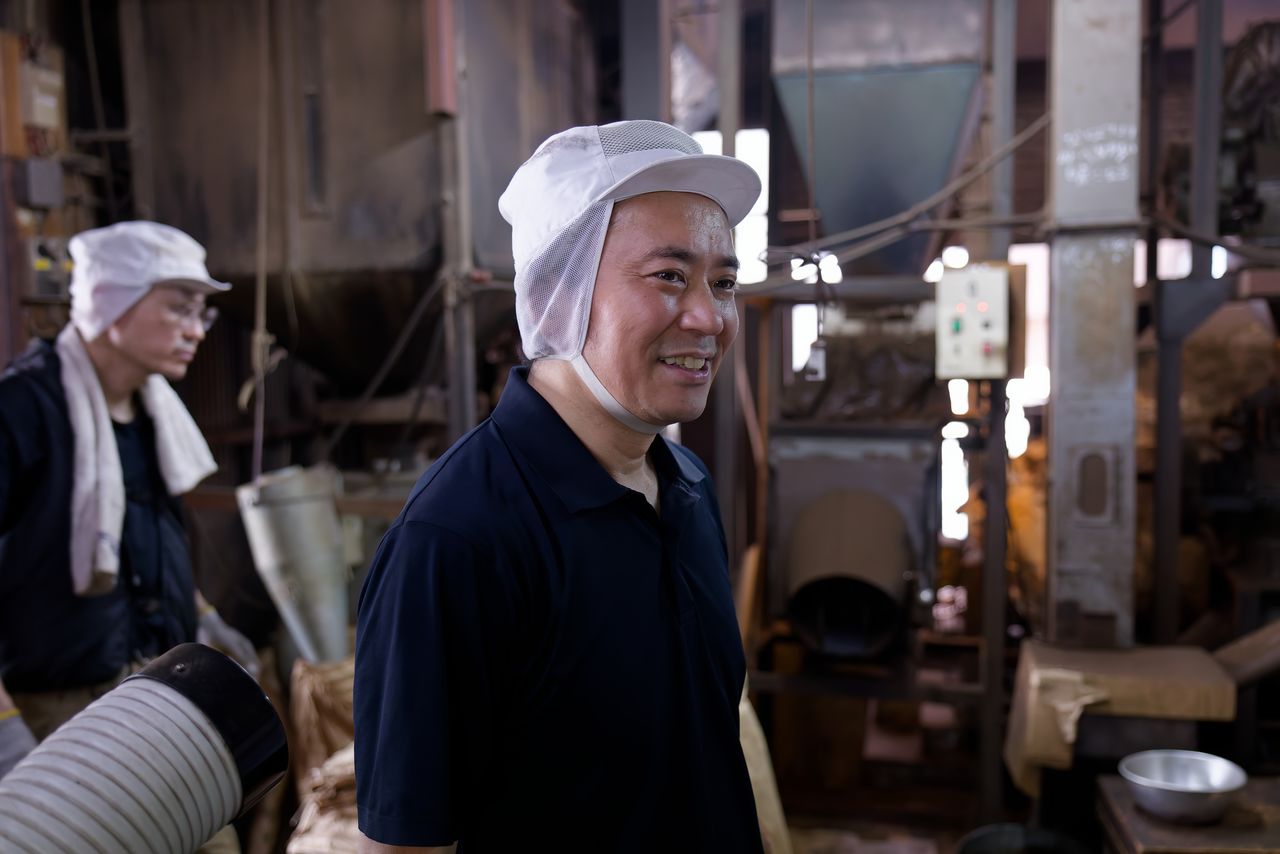
So, while it is ensuring it retains its long history, Kawahara Seifun Mill is gradually expanding its sales channels overseas. Meanwhile, as it continues to operate at full capacity, the fragrant aroma of barley fills the air.
(© Nomura Kazuyuki)
(Originally published in Japanese. Banner photo: Tokyo Mugicha, brewed using hot water in a cooking pot. © Nomura Kazuyuki.)