J-Horror Rises Again: Unraveling the Heart of Fear, Japan Style
Culture Entertainment- English
- 日本語
- 简体字
- 繁體字
- Français
- Español
- العربية
- Русский
The New Horror
In January 2026, a satellite station in Japan specializing in domestic cinema ran a special series called Yomigaeru Kyōfu J-Horror Serekushon (Terror Reborn: The J-Horror Selection). The channel website has two sections: “Generation One J-Horror” for films from the 1990s, and “The New Generation” for films from the 2020s. The film standing at the head of the first generation is, of course, 1998’s Ringu, directed by Nakata Hideo, with a screenplay by Takahashi Hiroshi based on the novel by Suzuki Kōji.
Japanese horror cinema saw hit after hit following Ringu. The lineup includes Shimizu Takashi’s Ju-On, with its straight-to-video release in 2000 and theatrical cut in 2003, and One Missed Call in 2004, from director Miike Takashi. The hits caught attention overseas, leading to many foreign remakes. This period of the late 1990s into the 2000s marked the first great J-horror boom.
From the mid-2000s, Japanese horror seems to have faded from the limelight. But coming into the 2020s it saw new vitality. This reawakening was heralded by the success of Shimizu’s Howling Village in 2020, which dealt with popular urban legends about a haunted tunnel. Despite pandemic restrictions, it earned ¥1.4 billion at the box office. That kicked off a new trend of using internet-based horror stories (creepypasta) and urban legends as a source of ideas, alongside use of documentary-style filmmaking in the mockumentary trend, which has breathed new life into not only cinema but also print fiction and even live events. This has fostered a new horror boom.
Sadako’s Hair
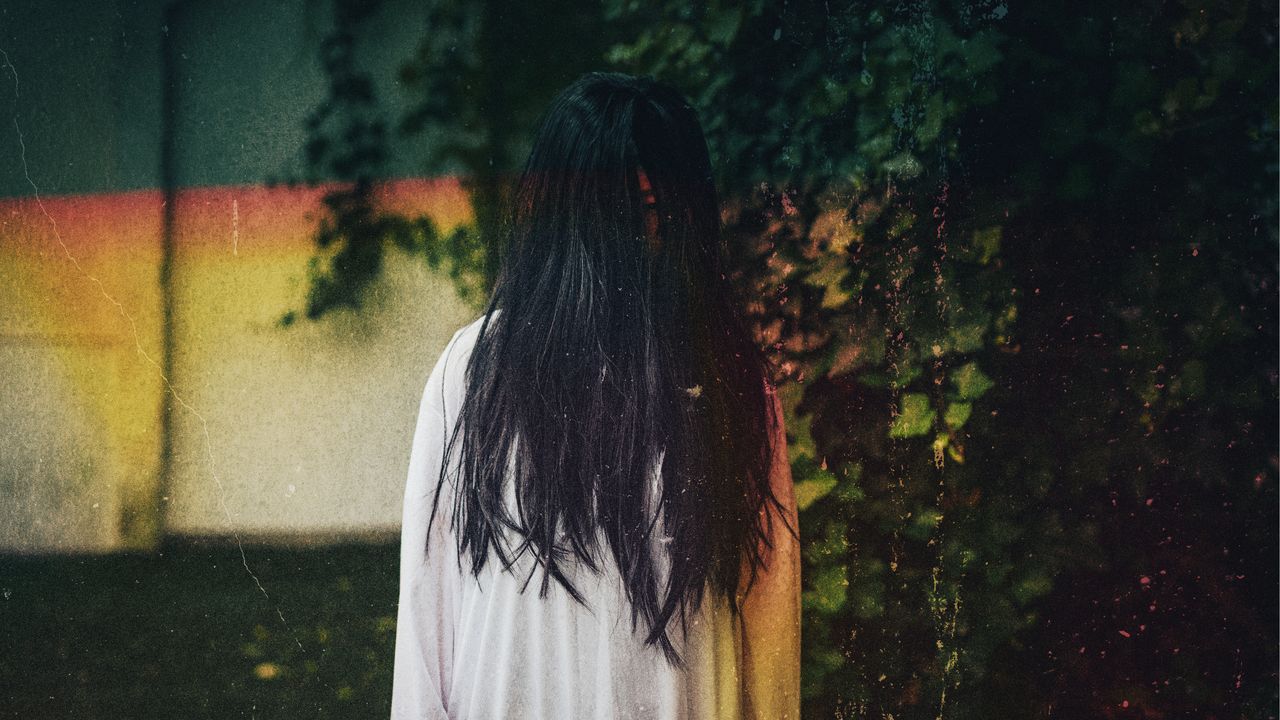
But let us go back to the film that started it all off, Ringu, and ask, just what was so scary about it? Perhaps the one scene that frightened and stayed with audiences the most was ghostly Sadako crawling out of the old cathode-ray television to menace the university lecturer character Takayama Ryūji. However, that scene was original to the film. Suzuki Kōji’s 1991 novel had nothing like it. When Sadako comes to kill Takayama in the book, she approaches from behind as a terrifying, yet totally unseen presence. The paralyzing sight of a ghostly woman with long black hair and white clothes plays no role in the book.
Ringu was remade in 2002 as The Ring by US director Gore Verbinski. According to film database Box Office Mojo, The Ring had a global box-office take of $249 million. In the novel, the protagonist is a male newspaper reporter, but the Hollywood remake follows the Japanese film in making the hero a single mother raising a young son. The identity of the ghost standing at the center of the curse is a girl named Samara Morgan. Both her life and her terrible death differ from the story of Sadako, but Samara shares the same long black hair and white clothes.
So, where did that specific appearance, used in both film versions but absent from the novel, actually come from? For that, we go back to the earliest origins of the 1990s J-horror boom to look at two straight-to-video works that inspired much of what came after and featured ghostly women. Let us start with the appearance of the ghosts in those stories.
From Psychic Visions to Ghostly Actresses
We start with the ghost from Psychic Vision: Jaganrei, which could well be the true origin of J-horror. Directed by Ishii Teruyoshi, it went on sale in 1988. The release presents itself as a television documentary that was never aired about a team filming behind the scenes of promotional work for a new pop idol. Amid the scenes of interviews with the young woman’s older male producer, we start to pick up glimpses of a ghostly woman whose baleful glare seems to burn through the screen at the men renting and watching this video. Indeed, in the 1980s when this video was released, Japan’s video-rental business was dominated by male film fanatics, so Jaganrei is liberally dosed with things aimed at a male audience, including female nudity.
In the sense of “a ghostly woman glaring out from a videotape,” Jaganrei’s ghost may seem like a partial inspiration for Sadako, but the former had hair in a style popular with pop idols in the 1980s that was much shorter than Sadako’s. She was wearing a white dress, but even in the grainy video footage, it comes across as something fashionably chic.
Ghostly women also showed up in director Tsuruta Norio’s straight-to-video series Honto ni atta kowai hanashi (Scary True Stories), which had three installments from 1991–92 and was based on the manga of the same name. Three of the short stories had female ghosts, and in one, she had long black hair and a white dress like Sadako, but she only appeared for a moment and made no strong impression. Both of these influential works in the J-horror canon lacked Sadako’s powerful visual impact.
However, if we look instead to earlier projects from the Ringu director and scriptwriter team of Nakata Hideo and Takahashi Hiroshi, we can find female ghosts sharing Sadako’s imagery.
Nakata and Takahashi first worked together on an episode of a 1992 television horror anthology series in which the protagonists visit a traditional inn on a trip and encounter the ghostly daughter of an important local family. She appears with long black hair, wearing a white dress.
Then we come to Don’t Look Up, a 1996 movie from the Nakata and Takahashi team that also featured a ghostly woman with the trademark hair and dress. This was about the making of a film, set in a studio. During filming, the figure of a ghost, her mouth gaping in a mad smile, appears behind the lead actress, and later torments the protagonist, young director Murai, on set. While Sadako kills her victims with her cursed eye, in this film it is the ghost’s mouth that holds peril. The figure with her gaping smile goes through staff one after the other as she closes in on Murai.
Horror Found in the Familiar
It is commonly known that both Tsuruta Norio, director of Scary True Stories, and scriptwriter Takahashi honed their craft pursuing a different kind of fear from those of the splatter films that were big in the 1980s. They focused on making movies based on the real stories of people who claimed to have brushes with the paranormal. One can see in the origins of J-horror an element that stands in antithesis to the extreme brutality of splatter films. It is a sensation of terror in the familiar and close-at-hand, and I think this is the true heart of J-horror.
Both the original novel and the film of Ringu spread their curse through rental videos, which are at the foundation of the J-horror genre. We also must not ignore the essential motif of the fear inherent in videotapes as a medium and how they find their way to watchers.
All the versions of Ringu, from the source novel to the Hollywood remake, and even the 1999 South Korean version directed by Kim Dong-bin, feature a cursed videotape appearing as an unlabeled cassette on the rental shelf at a vacation cabin. And unlabeled videotapes with content no one can recall, or even know, were found in every house of the day.
They seem to ask: What if one of those tapes in your house was a cursed video?
A familiar part of your daily life that you had taken for granted might suddenly become something to be feared. Planting that thought in viewers’ heads was what made Ringu so frightening. And we can also say that the cinematic vision of Sadako revives the classical female ghost with long black hair and white burial robes of old paintings and kabuki plays, reimagined as a modern apparition that embodies the terror lurking within the then everyday medium of video.
(Originally published in Japanese. Banner photo: © Pixta.)