Constructing Harmony: Tokyo Event Highlights Asian Perspectives on Peacebuilding
Newsfrom Japan
Politics- English
- 日本語
- 简体字
- 繁體字
- Français
- Español
- العربية
- Русский
Strategies to Achieve Harmony
On March 24 and 25, the Sasakawa Peace Foundation hosted the Harmony by Design: Asia Dialogue in Tokyo. The think tank, which promotes international understanding and cooperation, invited thought leaders who have contributed to peace and development in Asia to consider matters including strategies for bringing harmony to the turbulent international order.
Among those who participated were former Thai Prime Minister Chuan Leekpai, Nobel Peace Prize laureate Muhammad Yunus (former chief adviser of the interim government of Bangladesh and founder of the Grameen Bank), former Indonesian Foreign Minister Hassan Wirajuda, Sevalanka Foundation Chairman Harsha Kumara Navaratne, and Professor Emeritus Shiraishi Takashi of the National Graduate Institute for Policy Studies. They exchanged candid views behind closed doors.
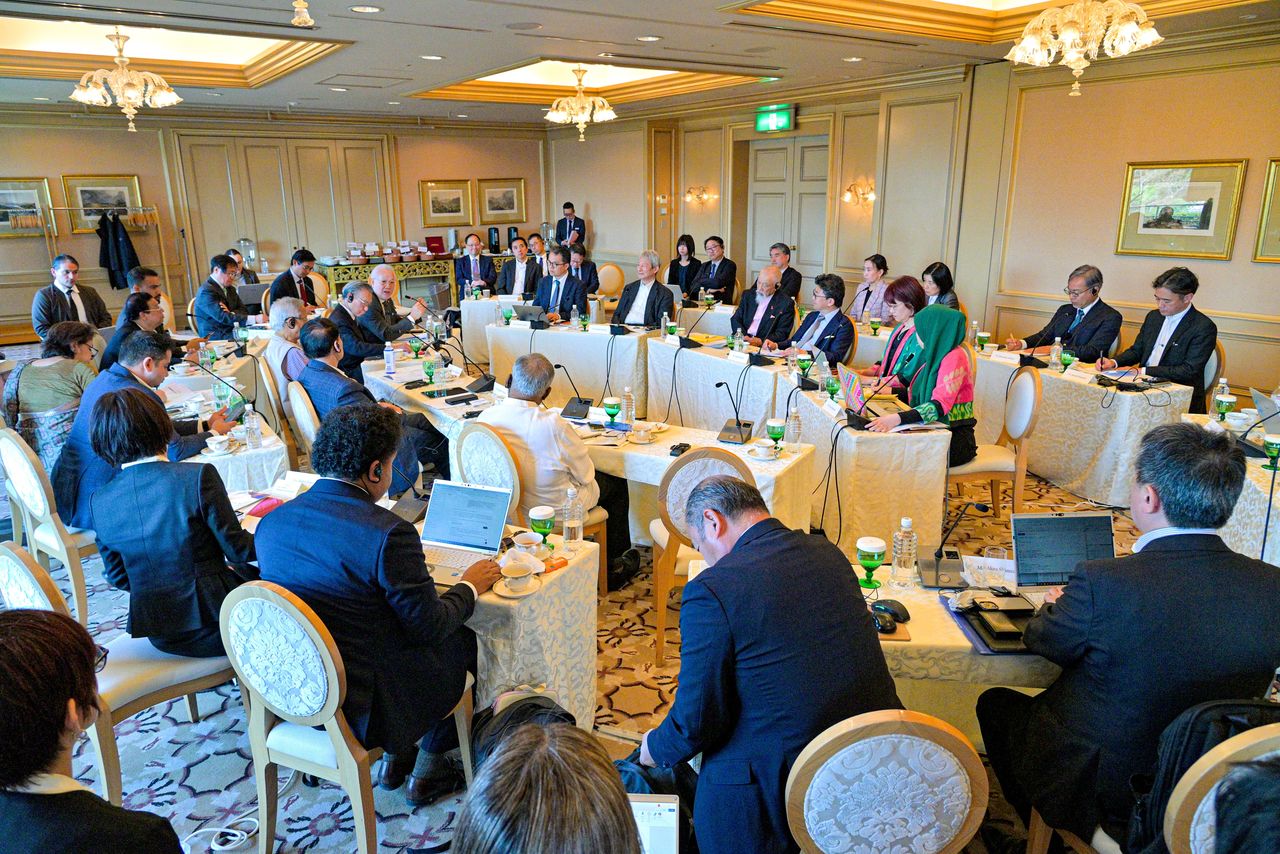
A discussion at the event in Tokyo on March 24, 2026. (© Sasakawa Peace Foundation)
While Asia’s global influence is rising, the region faces deepening complex issues, including economic disparities, social unrest, and geopolitical tensions. An additional common challenge was identified as the rapid spread of social media, AI, and other technologies, which has made it easier for young people’s anxieties to express themselves as direct dissatisfaction with existing political and social systems.
Participants reaffirmed the importance of multilevel dialogue in fostering joint creation of harmony, and emphasized the necessity for intergenerational discourse. There was also lively discussion of the roles Japan and the Sasakawa Peace Foundation can play.
Dialogue with Young People
In the morning of March 25, Muhammad Yunus and Hassan Wirajuda took part in the Next Generation Asia Peacebuilding Forum, a public dialogue session. They exchanged views with around 35 young people, including workers at NGOs involved in peace activities and university and high school students, on topics such as what kind of “new peace” can be envisioned from Asia.
Yunus stressed that human imagination is more important than ever when information travels instantaneously around the world via the internet. Rather than taking current reality as a basis for thinking, he encouraged young people to think first about how to change the world and then go out and make that change a reality. He also stated his belief that achieving “three zeros”—zero carbon emissions, zero wealth concentration, and zero unemployment—is a key to creating a sustainable future. He called on all members of the younger generation to transform how they act.
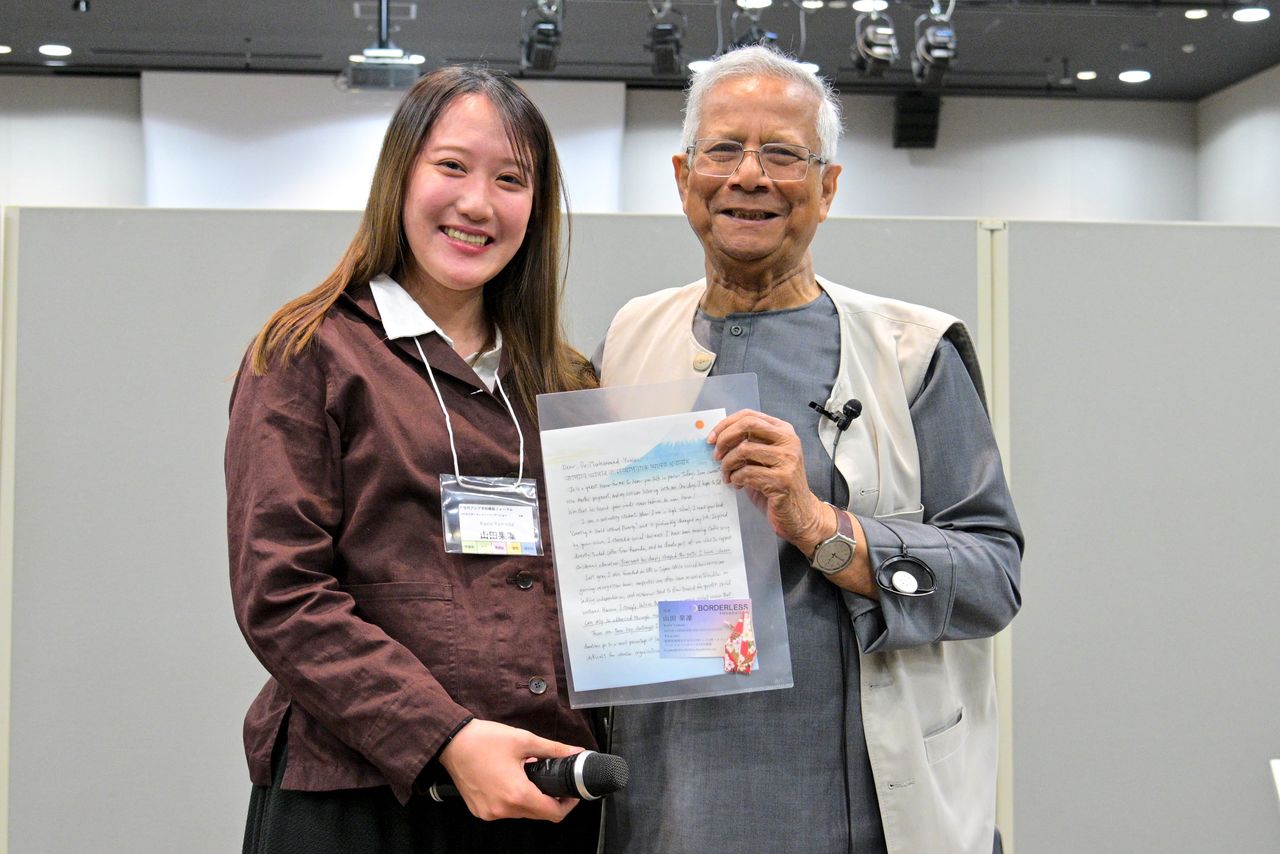
Muhammad Yunus (right) receives a message from a young participant in the event on March 25, 2026. (© Sasakawa Peace Foundation)
Wirajuda began by noting that many Asian and African countries were still colonies in the 1950s, stressing the value of independence and peace. He emphasized the importance of individual countries working on peacebuilding and mediation with their neighbors and other countries in the region, as this is also necessary for their own national security. He also looked back on his diplomatic involvement in peace negotiations from 1993 to 1996 to bring an end to the Moro Conflict in Mindanao, the Philippines, and in the reconciliation process between Indonesia and East Timor, sharing detailed reminiscences.
(Translated from Japanese. Reporting and text by Ishii Masato of Nippon.com. Banner photo: Muhammad Yunus [front row, left] and Hassan Wirajuda [front row, right] after a dialogue session with young people in Tokyo on March 25, 2026. © Sasakawa Peace Foundation.)