Ancient Treasures Come to Tokyo: National Museum Exhibition Highlights Buddhist Sculptor Unkei
Newsfrom Japan
Art- English
- 日本語
- 简体字
- 繁體字
- Français
- Español
- العربية
- Русский
An Exhibition of Buddhas and Guardian Gods
A special exhibition now underway at the Tokyo National Museum in Ueno re-creates one of the most remarkable temple halls in Japan, bringing together a series of masterpieces by one of the greatest Japanese Buddhist sculptors ever. Buddhist Sculptures by Unkei showcases works from the Northern Round Hall of the temple Kōfukji in Nara, a national treasure and home to one of the most extraordinary collections of Buddhist art in Japan. The exhibition opened on September 9, 2025, and runs until the end of November.
Kōfukuji was built in 710, the same year the emperor and his court relocated to the new capital of Nara. Today, the temple stands as a remarkable repository of artistic treasures from different periods of history. The Northern Round Hall in particular, reconstructed in the early Kamakura period (1185–1333), is famous as the original home of a remarkable collection of images made by a team of craftsmen led by Unkei (c. 1150–1224), the great genius of Japanese Buddhist sculpture.
With extraordinary realism and remarkable strength and power, Unkei’s wooden sculptures are one of the glories of religious art in Japan. All his surviving works have been designated as either national treasures or important cultural properties. This exhibition brings together seven of his most highly regarded works, all of them national treasures. Together, they represent the pinnacle of Japanese religious sculpture, including one of the great masterpieces of his later years, a seated image of Miroku (Maitreya), Buddha of the future.
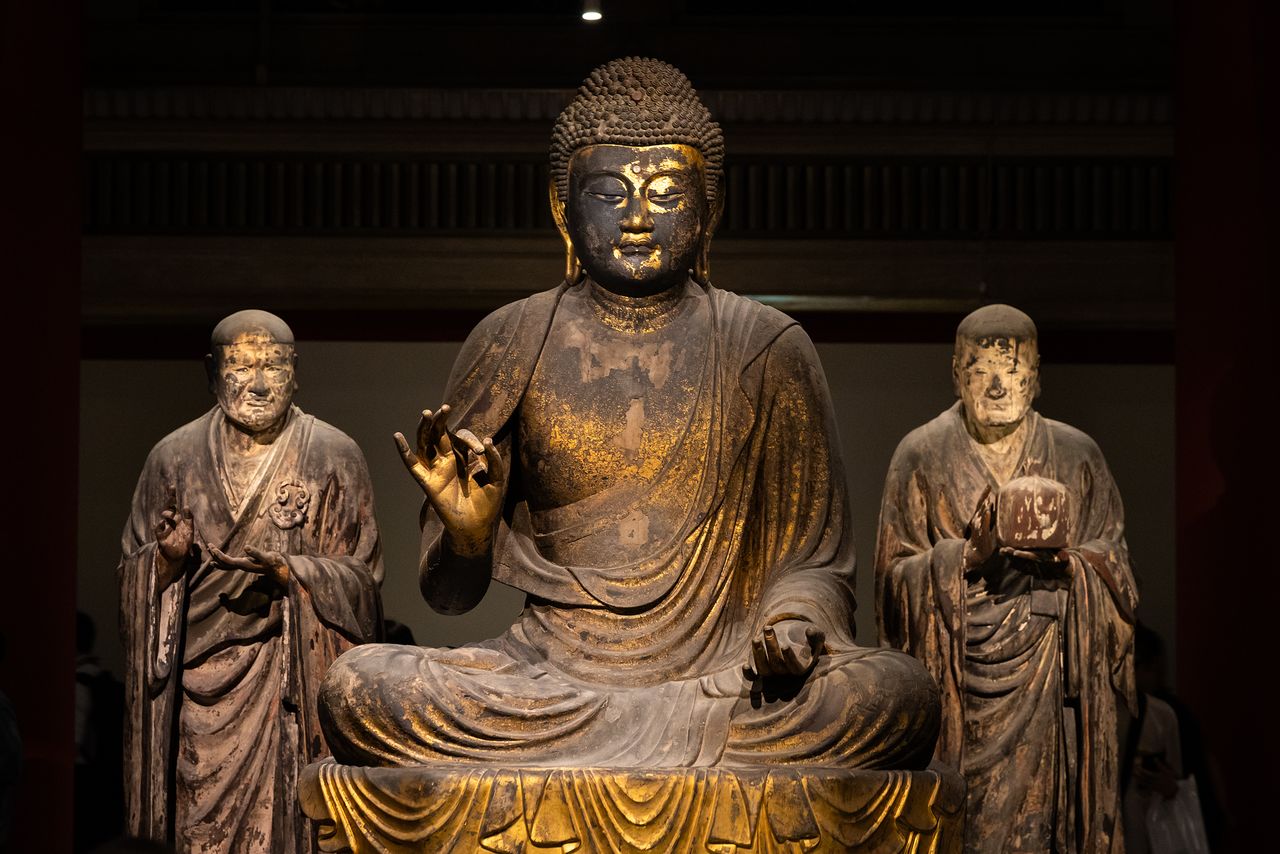
The main image of the Northern Round Hall, the seated image of Miroku (Maitreya), Buddha of the future. Standing next to him are Asanga (Mujaku) on the right and Vasubandhu (Seshin) on the left. (© Nippon.com)
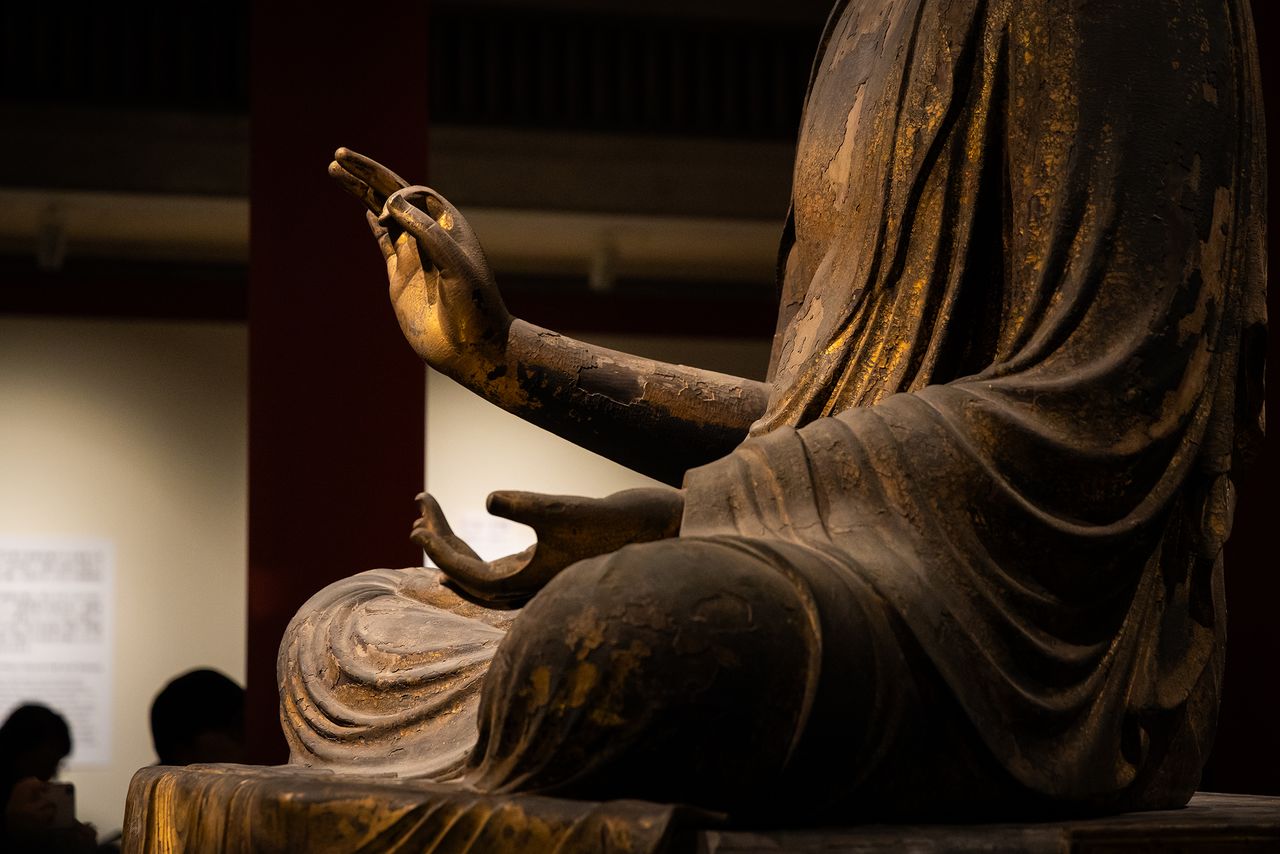
The delicate fingertips of the hands held in a mudra, or symbolic hand position, evoke the deep respect people had for Buddhist images in the Nara period (710–94). (© Nippon.com)
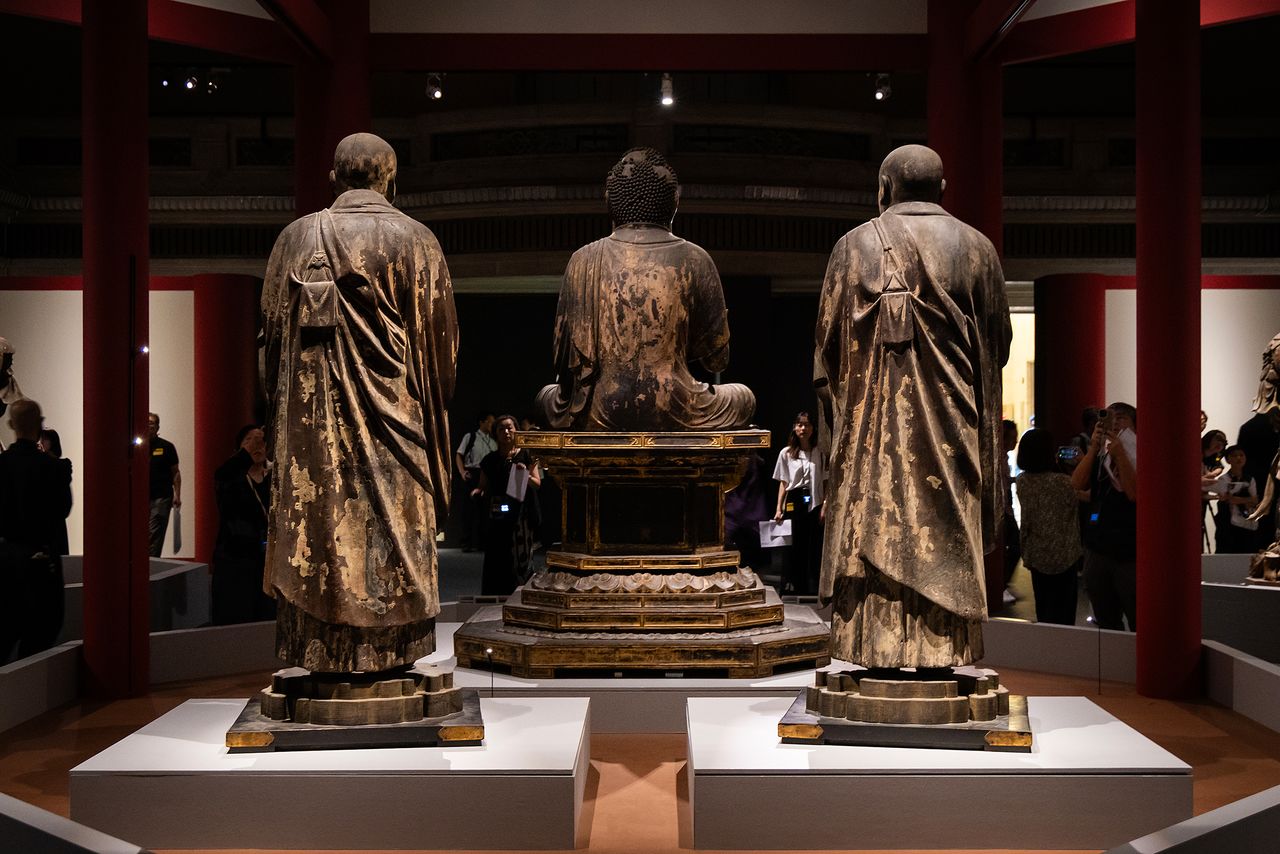
The painstaking artistry and detail continues on the back of the images, as seen in the beautiful wave-like ripples of the folds in the robes. (© Nippon.com)
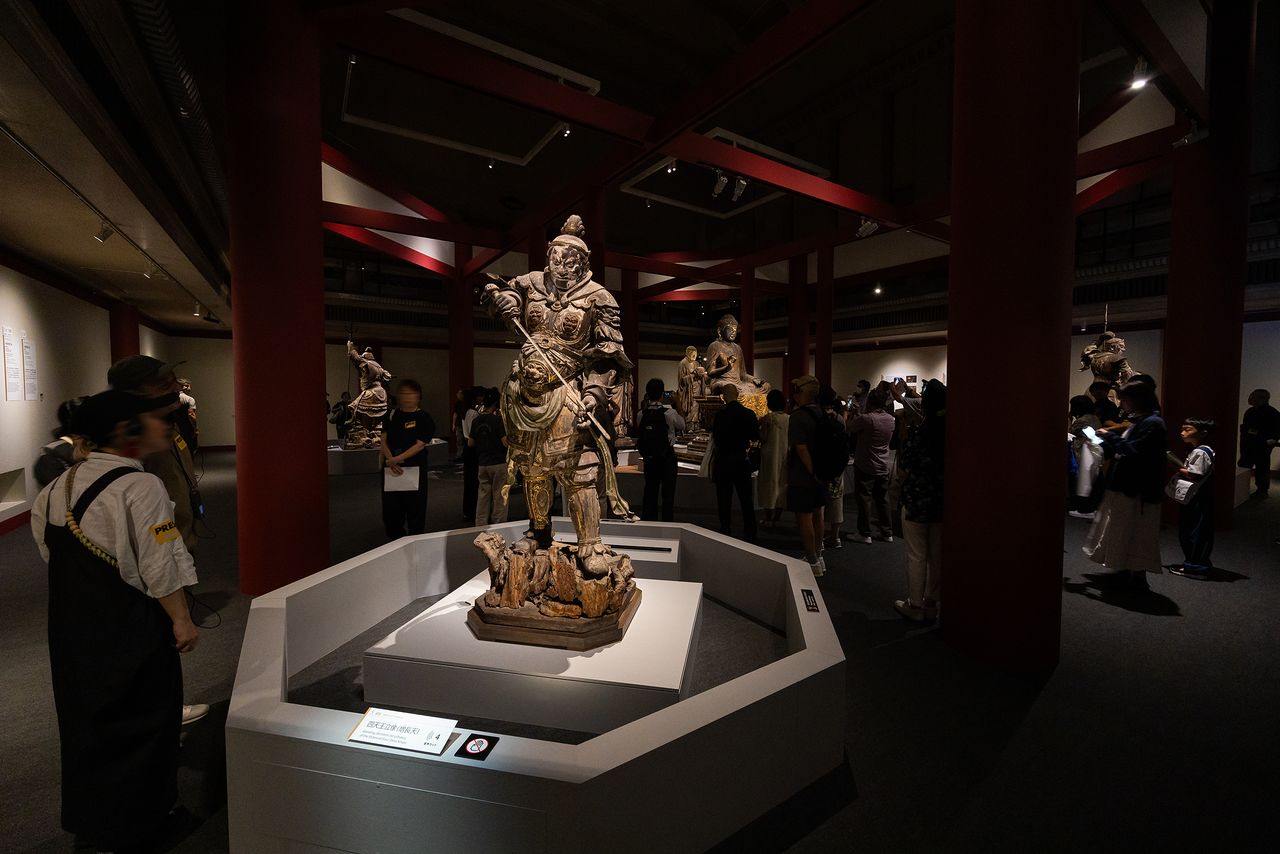
The exhibition brings together all seven of the images sculpted by Unkei and his assistants for the Northern Round Hall in the Kamakura period, presenting the appearance of the hall when the sculptures were new. (© Nippon.com)
Among the images on display, the main image of Miroku is being shown outside the temple for the first time in approximately 60 years. The sculpture combines a sense of gentleness and compassion with overwhelming strength and power. The main image is flanked by standing images of two bodhisattvas. Asanga (Mujaku) and Vasubandhu (Seshin) are modeled on two brothers who were important philosophers in ancient India and were instrumental in developing the sophisticated cosmography of Mahayana Buddhism. Details in the sculptures, such as the crystal eyes and the intricate folds in the robes, give the figures a remarkably lifelike appearance.
The lineup is completed by standing images of the four heavenly kings, depicted in poses that highlight their splendid musculature and dynamic movements. The whole collection of sculptures seems to pulse with energy and life. This place of prayer, shown as it would have looked 800 years ago, contains the essence what made Unkei such a remarkable artist and sculptor. It is impossible not to feel a sense of wonder at his achievement.
The Northern Round Hall is only opened twice a year for special public viewings, making this a rare chance to observe these magnificent sculptures.
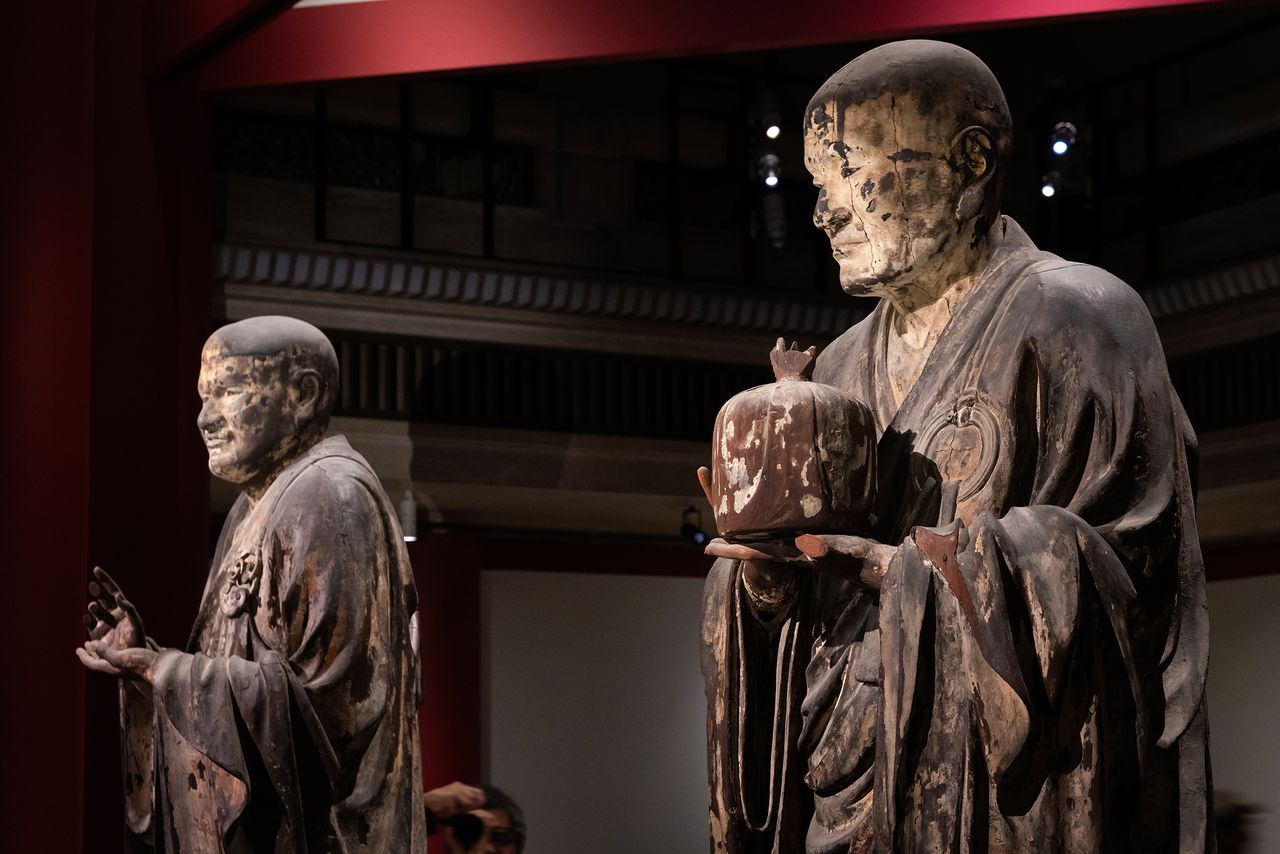
The brother philosophers Asanga and Vasubandhu are shining examples of the use of glass crystal eyes, a technique of which Unkei was an acknowledged master. (© Nippon.com)
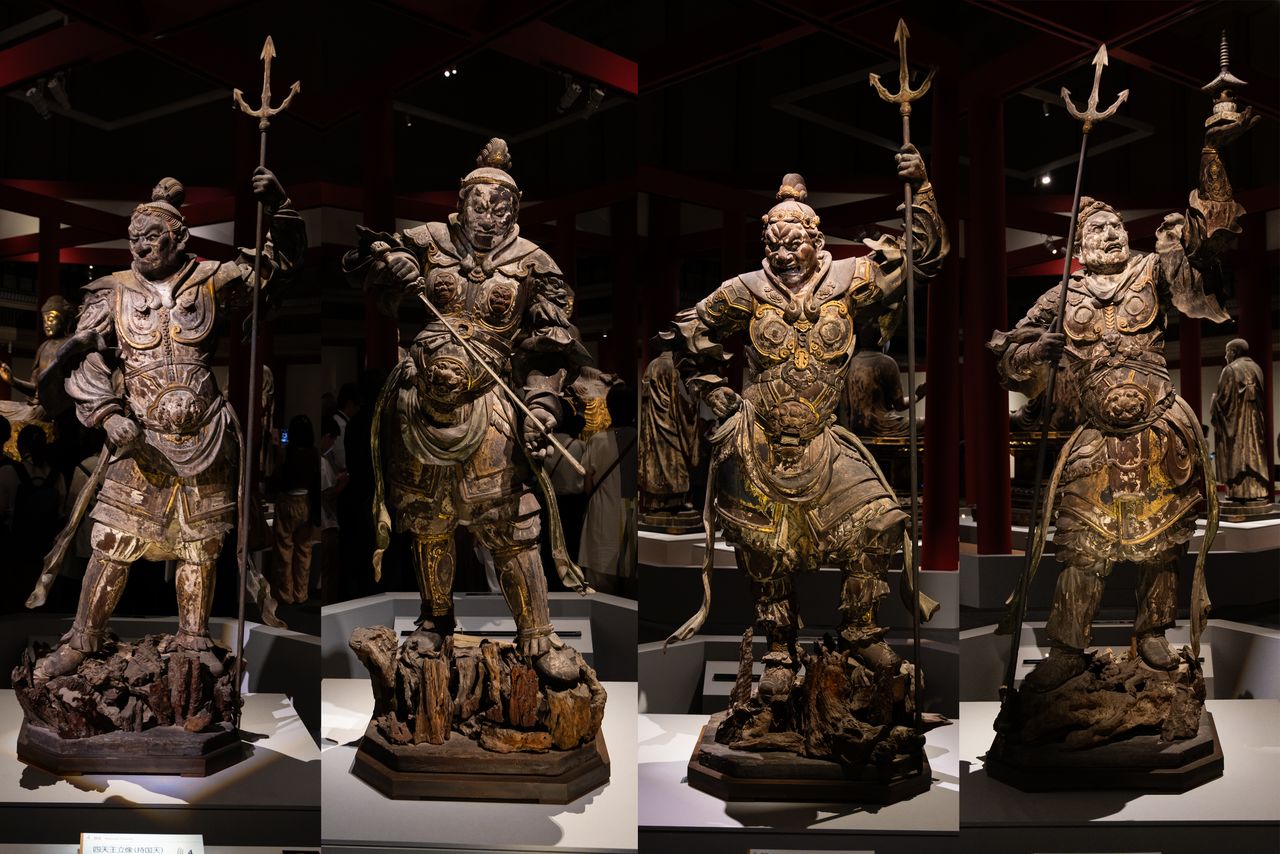
Today, the four heavenly kings from the Chūkondō (Central Golden Hall) are also national treasures. From left: Jikokuten (Dhṛtarāṣṭra), Zōchōten (Virūḍhaka), Kōmokuten (Virūpākṣa), Tamonten (Vaiśravaṇa). (© Nippon.com)
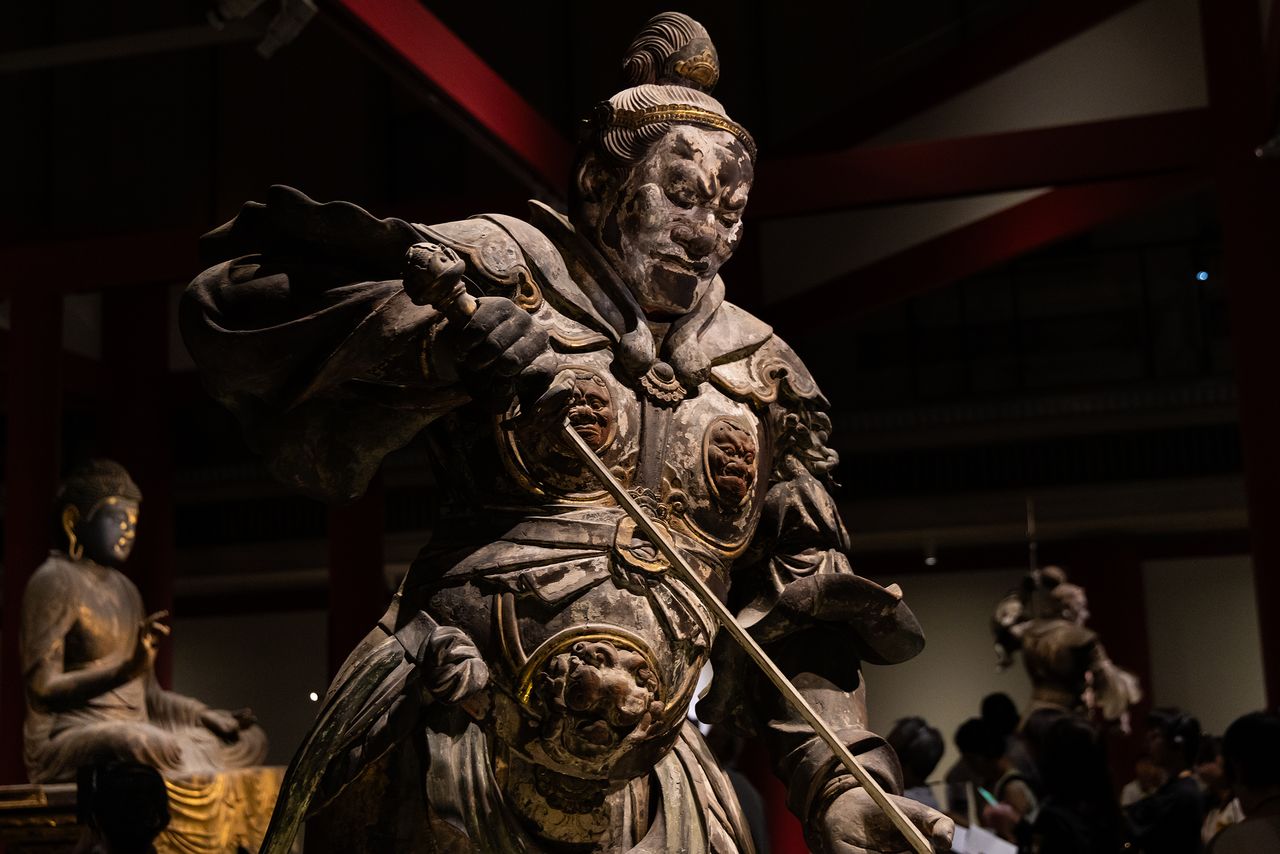
The expression on this image of Virūḍhaka makes clear his determination to ensure that no evil can approach the sacred presence of the main image. (© Nippon.com)
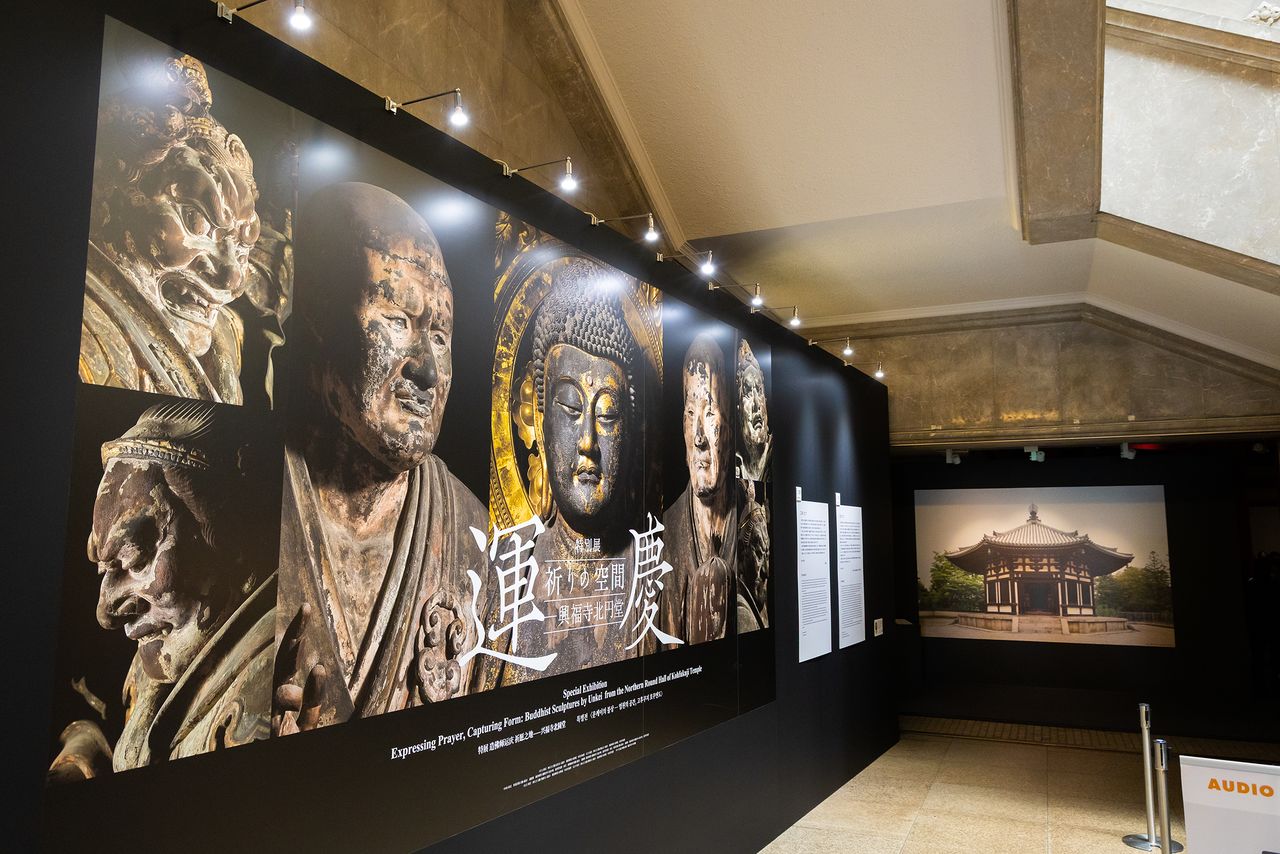
A photograph of the Northern Round Hall in Nara, at right, adorns the entrance to the exhibition. (© Nippon.com)
Buddhist Sculptures by Unkei
- Period: September 9 to November 30, 2025
- Place: Tokyo National Museum, Ueno Park
- Opening times: 9:30 am to 5:00 pm (last entry 30 minutes before closing). Open from 8:00 am to 8:00 pm every Friday and Saturday, and on September 14, October 12, and November 2 and 23.
- Closed: September 29; October 6, 14, 20, 27; November 4, 10, 17, 25
- Tickets: Standard ¥1,700, University student ¥900, High school student ¥600, free for children of junior high school age and below
- Exhibition website: https://tsumugu.yomiuri.co.jp/unkei2025/english.html
(Originally published in Japanese. Reporting, text, and photos by Nippon.com. Banner photo: Seated image of Miroku [Maitreya], the main image of the Northern Round Hall at Kōfukuji, flanked by Asanga [Mujaku] on the right and Vasubandhu [Seshin].)