Japanese Agrisolar Projects at Crossroads with Tighter Rules
Newsfrom Japan
Economy- English
- 日本語
- 简体字
- 繁體字
- Français
- Español
- العربية
- Русский
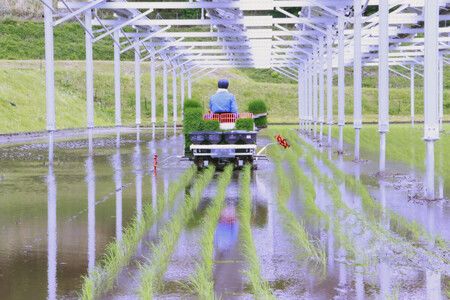
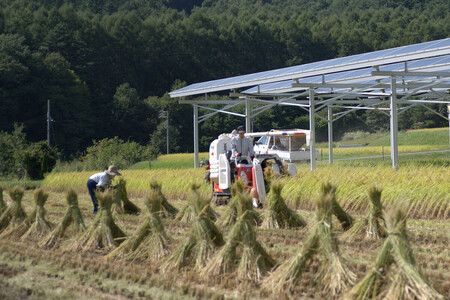
Tokyo, Sept. 3 (Jiji Press)--Japanese agrisolar projects, which use land for both solar power generation and agriculture, are at a crossroads with regulations set to be tightened following a series of inappropriate cases, including failures to meet required crop yield standards.
Meanwhile, some oppose the tighter regulations, arguing that they could exclude proper operators that seek to preserve farmland and promote smart agriculture using revenue from electricity sales.
The first of agrisolar projects started in Japan in 2013. Operators were granted approval to install solar panels on farmland as a temporary conversion of land use, on the condition that crop yields exceed 80 pct of the local average.
The projects attracted attention as a way to boost farmers' income, as the same land can be used for both agriculture and power generation without losing its status as farmland, to which lower property tax rates apply.
A total of 6,137 projects had been approved as of the end of fiscal 2023.
[Copyright The Jiji Press, Ltd.]