Getting Japan Back on Track
Economy- English
- 日本語
- 简体字
- 繁體字
- Français
- Español
- العربية
- Русский
Assisting the Relief Effort
Just over a month has passed since the Great East Japan Earthquake. More than 27,000 people are either dead or missing as a result of the disaster, and others are still suffering directly from its aftermath. For Japan this is an unparalleled national crisis. The road leading to recovery will be steep and difficult. This means that every Japanese citizen will need to steadily contribute to the recovery effort in whatever way possible. Nippon Keidanren, for its part, has been taking actions with this goal in mind, starting immediately after the earthquake and tsunami struck. The Keidanren Great Eastern Japan Earthquake Taskforce is in contact on a daily basis with the disaster areas via its Relief Supplies Hotline, and is working to facilitate the supply of relief supplies. Nippon Keidanren has also set up a Special Committee for Recovery and Restoration headed by Yonekura Hiromasa, the chairman of Nippon Keidanren, as a means of mobilizing the capabilities of its member companies to benefit the recovery effort and of encouraging the government to adopt necessary policies.
Peoples’ Lives Depend on Economic Recovery
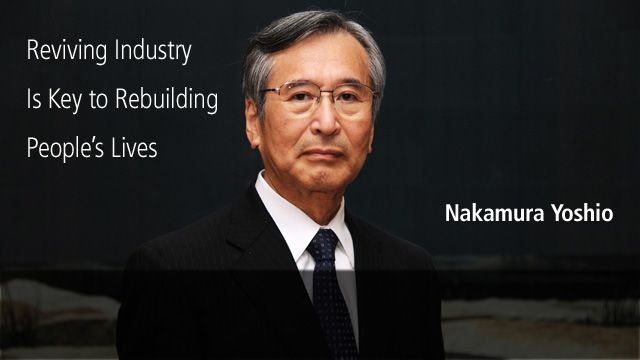
The Japanese government above all needs to display swift and composed political leadership, establishing a command structure capable of issuing resolute directions. Strong leadership is vital to the job of helping to quickly rebuild the lives of those facing the difficulty of living in relief shelters and experiencing aftershocks. There are numerous tasks to address. One is the need for the government to promptly enact fundamental laws geared to recovery. It is important for a basic recovery plan to be drafted and implemented, and for a disaster recovery agency to be set up in the hard-hit Tōhoku region. The situation calls for action without delay. The livelihoods of people in the disaster areas cannot be maintained unless Japanese industry recovers. Special measures must be implemented in the areas of tax and finance, and it is also likely that an extraordinary response will be necessary with regard to a variety of laws and regulations.
Naturally, the top priority must be the recovery and reconstruction effort. But that does not mean we can afford to overlook vital issues that will determine Japan’s future, including its declining birthrate and rapidly graying population and the extremely perilous state of government finances. First it is essential make bold revisions in the budget with a view to the recovery effort. And in order to make up for the resulting budget shortfall, it will be necessary to consider the temporary issuance of additional government bonds and tax increases, while gaining public understanding and safeguarding international trust in Japan by setting forth a road map leading to healthy government finances over the medium term.
Some Encouraging Signs
The recent disaster has shed light on some of Japan’s outstanding qualities. Japanese people have been stoic in the face of hardship and shown compassion for each other’s welfare. Moreover, there have been countless examples of self-sacrificing efforts on the part of relief workers from the ranks of the Self-Defense Forces, police and firefighting departments, and Japan Coast Guard, as well as active volunteer efforts in which young people have played a leading role. A country blessed with this sort of high-minded and reliable citizenry can certainly recover from such a setback. In addition, Japan has been fortunate that other countries around the world have extended a helping hand.
In his March 16 address to the disaster victims and citizenry at large, Emperor Akihito declared, “It is my heartfelt hope that the people will continue to work hand in hand, treating each other with compassion, in order to overcome these trying times.”
These words of kindness and encouragement were like refreshing raindrops that helped soothe the fatigue and anxiety that had been wearing down people throughout Japan. On this now moistened land we are finally beginning to see sprouts of life, which before long will bear fruit. With light shining in their hearts, Japanese people have nothing to fear. There is no turning back. By drawing on its inner strength, Japan is sure to achieve a third miraculous leap forward—following the 1868 Meiji Restoration and the recovery following defeat in World War II. Working hand in hand, everyone in Japan needs to join together to overcome the current difficulties and revive the country. Nippon Keidanren intends to be actively involved in this valiant effort. Even though Japan’s recovery still seems far away, the efforts being made now are bringing it closer.
(Originally written in Japanese on April 14, 2011.)