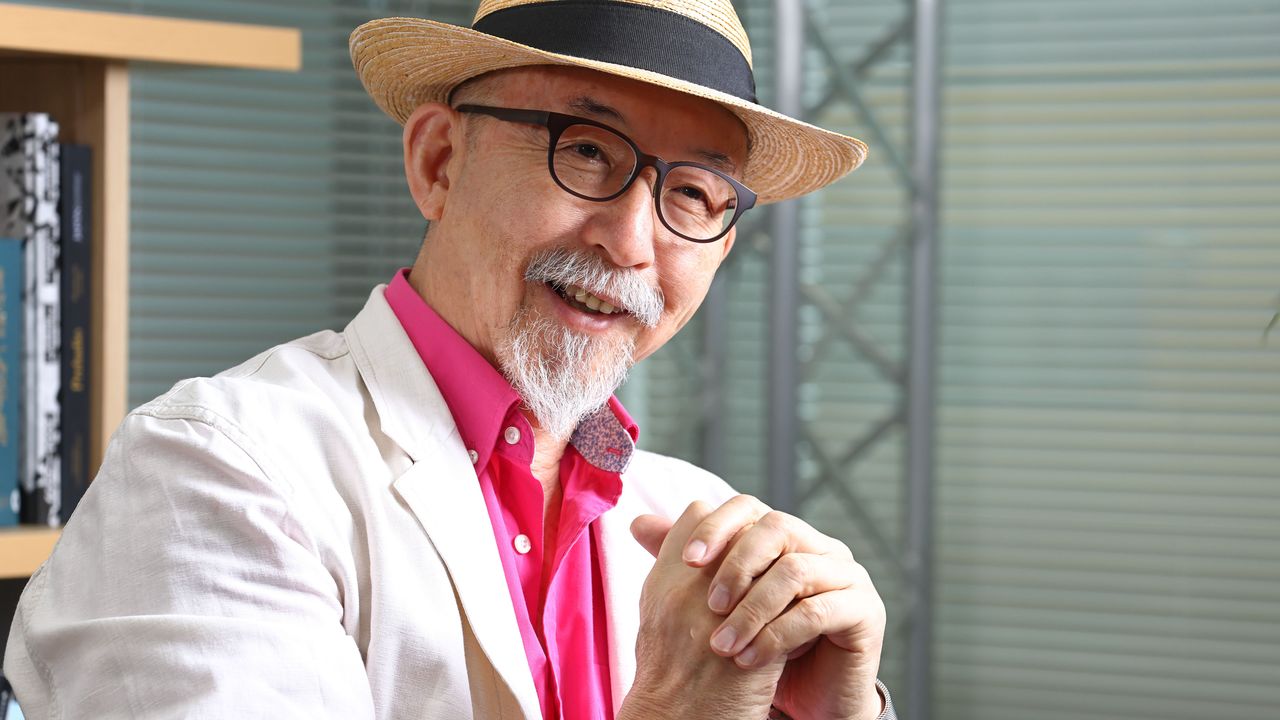
Sagrada Familia Sculptor Sotoo Etsurō—A Half Century in the Service of Gaudí’s Open-Ended Masterpiece
Culture Art Work- English
- 日本語
- 简体字
- 繁體字
- Français
- Español
- العربية
- Русский
A Serendipitous Encounter
Sotoo Etsurō vividly recalls the day in 1978 when he decided to follow his passion.
Since graduating from Kyoto City University of Arts in 1977 with a major in sculpture, he had contented himself with earning a living as an art instructor. Then one day he was seized by a powerful longing. He realized that what he wanted more than anything was to devote each day to stone carving, as he had done as an art student. Yielding to his impulse, he quit his teaching job and went abroad, determined to immerse himself in Europe’s age-old stonecutting and stone-carving traditions.
“At that point I wasn’t interested in finding a job and making money overseas,” he says. “I just figured I would stay until my funds ran out, which would be three months at best.”
Sotoo began his grand tour in Paris. But that capital’s rational, orderly cityscape seemed to leave no room for his own creative impulses. He had higher hopes for Germany, the next major leg of his journey. But first he made a side trip to Barcelona.
Nowadays the Sagrada Familia, Antoni Gaudí’s unfinished masterpiece, is known and admired the world over, but back then not even the locals placed much value on it. Sotoo himself had little interest in the structure before he stumbled on the construction site while exploring the neighborhood. His eyes were riveted by the magnificent piles of unfinished rock that seemed to have been waiting for his arrival. Determined to carve something there—even if only one small stone—he eventually managed to arrange a meeting with Gaudí’s disciple Isidre Puig Boada (1891–1987), who was directing the project. Sotoo was given a practical test, which he passed, and he became a stone carver for the Sagrada Familia.
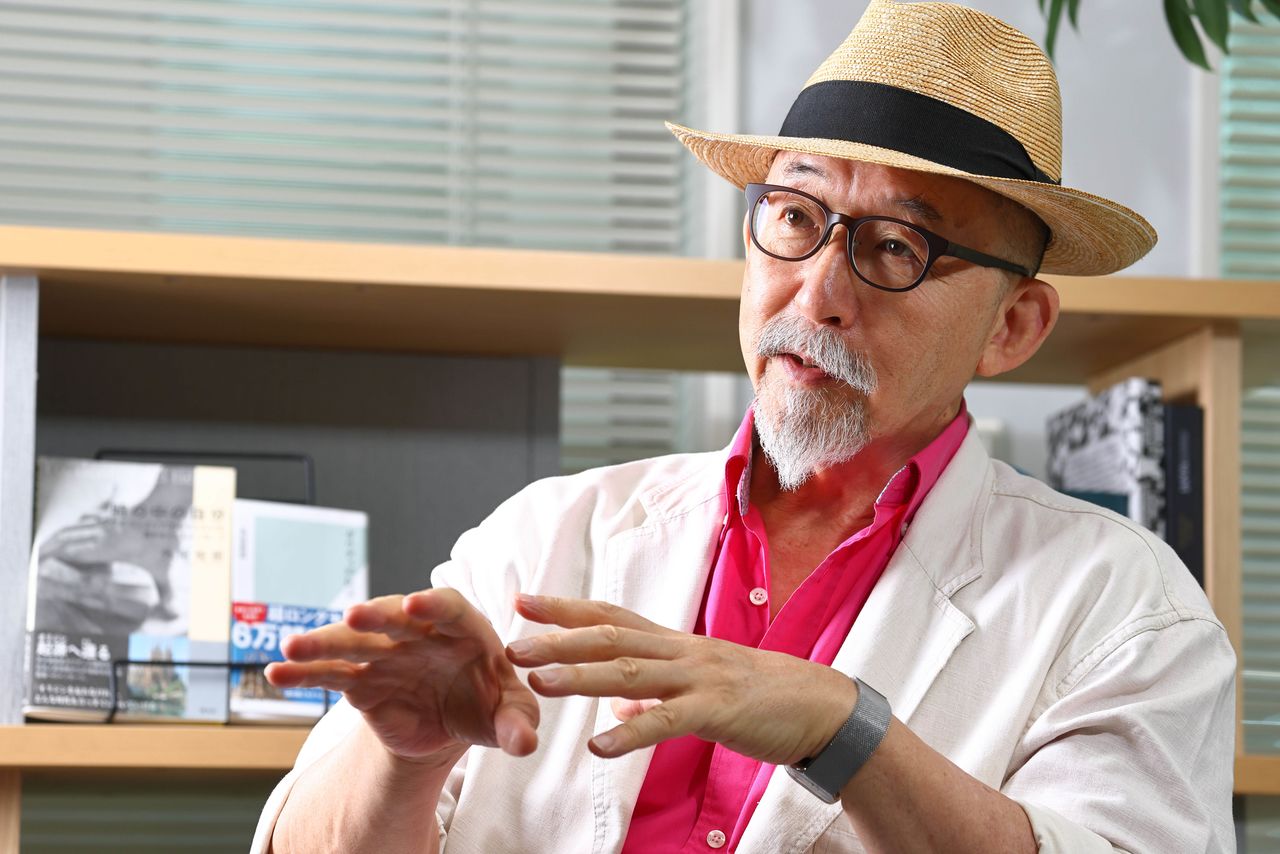
Sotoo Etsurō. (© Hanai Tomoko)
“All of this took several months,” he notes, “and my funds were dwindling rapidly. I had to make a choice: use my remaining resources to tour Europe and go home, as I had planned, or take a tremendous gamble on landing a job as a Sagrada Familia stone carver, against all the odds. I took that gamble, and that’s why I’m here today.”
Working under Gaudí’s Disciples
Construction of the Sagrada Familia originally began in 1882 under Francisco de Paula de Villar (1828–1901), but Antoni Gaudí (1852–1926) took over as chief architect in 1883 with a new and extremely ambitious plan. Gaudí poured his creative and technical ingenuity into the project for more than four decades before dying in an accident in 1926. At the time, only a fraction of the structure had been completed. Furthermore, most of Gaudí’s original plans and models were destroyed during the Spanish Civil War, which broke out in 1936. Still, Gaudí’s disciples and apprentices remained devoted to the project and resumed construction in 1944, guided by painstakingly reconstructed models and old photos.
“Two of Gaudí’s direct disciples were still working on the site when I arrived,” says Sotoo. “I didn’t know Spanish, so we couldn’t communicate very easily. But by working under these architects—men in their eighties who remained deeply devoted to Gaudí—I was able to feel a connection with the world in which Gaudí himself had lived. That turned out to be a great asset for me. Today, of course, there’s no one left who knew Gaudí personally, and I’m virtually the only person involved who has interacted with any of his direct disciples.”
The Sagrada Familia has three main facades, devoted to the themes of the Nativity, the Passion, and the Glory, respectively. Sotoo’s first assignment related to the Passion Facade. His job was to carve plant buds and leaves for the pinnacles crowning the structure that connects the Passion Facade to the rest of the building. He worked tirelessly atop a scaffold 60 meters high, with no handrails or safety belt.
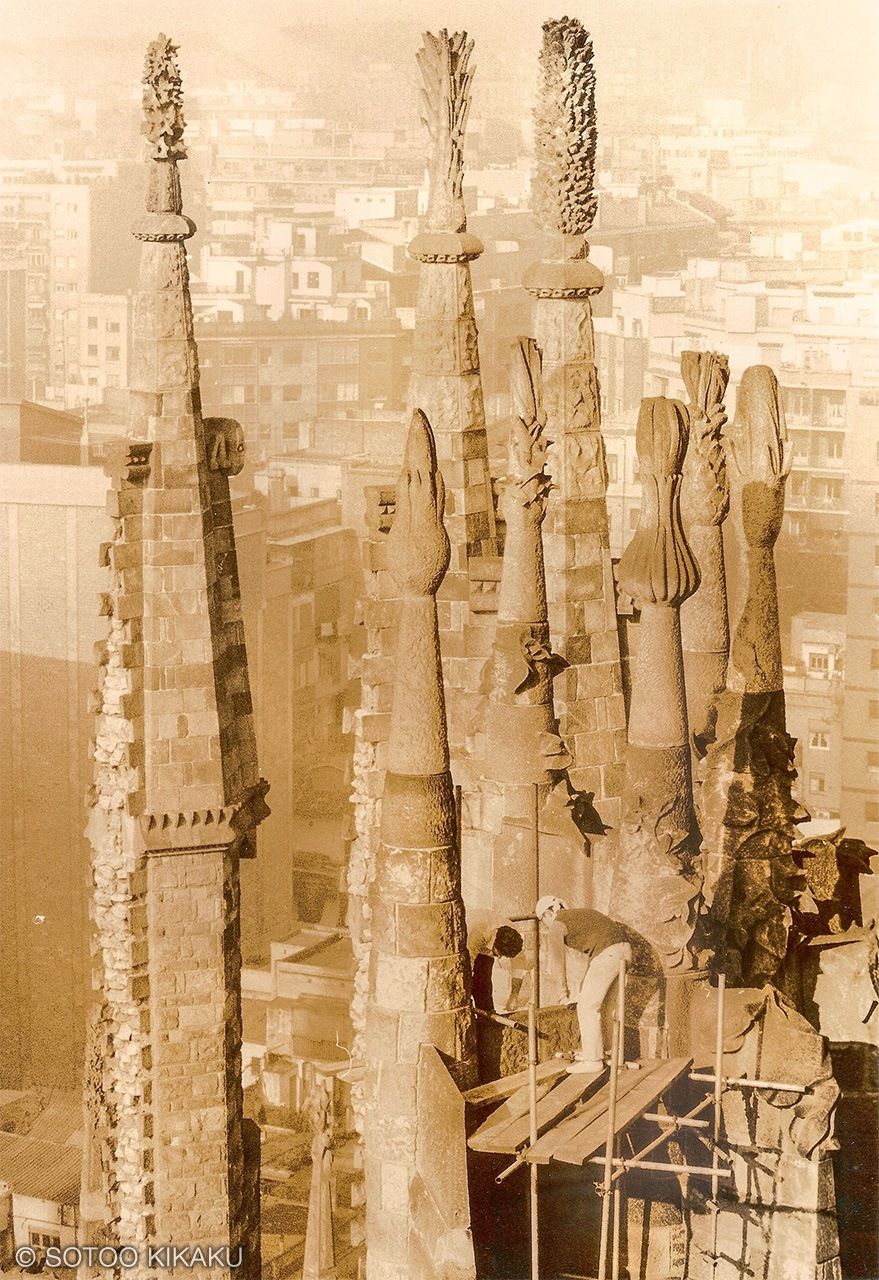
Sotoo works atop a 60-meter-high scaffolding, sometime around 1978. (© Sotoo Kikaku)
In the absence of detailed instructions from Gaudí, the job raised a number of questions. For example, it was unclear what species of plants should be depicted. Another key issue was how the structurally weak wall intended as the base would support the pinnacles. Sotoo continued searching among the clues left behind from Gaudí’s time and eventually realized that the architect’s intent was to use sculpture to strengthen the structure.
“Muddling along, I gradually got to know Gaudí through the stone. I realized that a hundred years earlier, someone else had been grappling with the same problems I was confronting, and that person already knew the solutions that I hadn’t figured out yet. To me, Gaudí wasn’t so much an architectural genius as a mentor who had discovered the answers to the very problems I was facing.”
Portal of the Rosary and Nativity Facade
Later, Boada assigned Sotoo the daunting task of restoring the sculptures adorning the Portal of the Rosary. This lavishly sculpted doorway was the only interior element that was completed during Gaudí’s lifetime, but it was badly damaged during the Spanish Civil War.
“He entrusted this important job to me, a young foreigner, though he had no way of knowing for sure what I was thinking or how capable I was. He told me he could only pay me two months’ salary for the job, but I felt I couldn’t pass up the chance.” Restoration of the Portal of the Rosary took more than a year and a half.
Among the portal’s sculptures are two that seem divorced from biblical iconography. One portrays a man working and the other a girl praying. In the former, the devil is thrusting an Orsini bomb (a kind of early hand grenade) into the man’s hand, goading him toward an act of public violence; in the latter, the devil is tempting the girl with a bag of gold coins. In restoring the ruined images, Sotoo sought to convey the inner turmoil of young people struggling to make their way in the face of various temptations. He believed that Gaudí wanted to give the viewer food for thought.
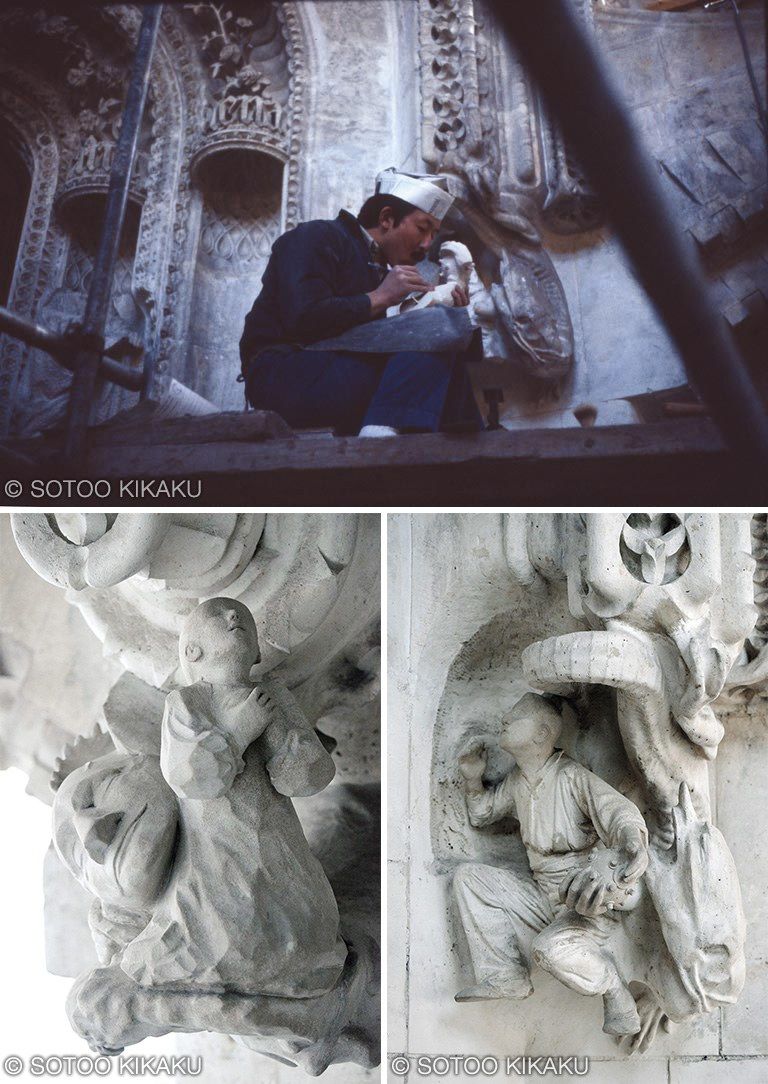
Top: Sotoo works on the Portal of the Rosary, around 1980. Bottom, from left to right: The sculptures of the girl and boy restored by Sotoo. (© Sotoo Kikaku)
Subsequently, Sotoo’s focus shifted to the Nativity Facade, which features 15 large statues of angels making music. In the early 1980s, having raised funds sufficient to finance the carving of one angel, Boada showed Sotoo a photo of Gaudí’s scale model and said he could choose which angel to carve first.
“Thinking this could be a once-in-a-lifetime opportunity, I chose the biggest and most challenging one, the angel playing a harp,” he says.
In 1983, Sotoo spent six months carving that angel from a massive stone block. As soon as the sculpture was installed, passers-by began to stop and gaze up at the facade. Donations began pouring in. Sotoo finished the last of the angels in 2000, and the Nativity Facade was designated a World Heritage site five years later.
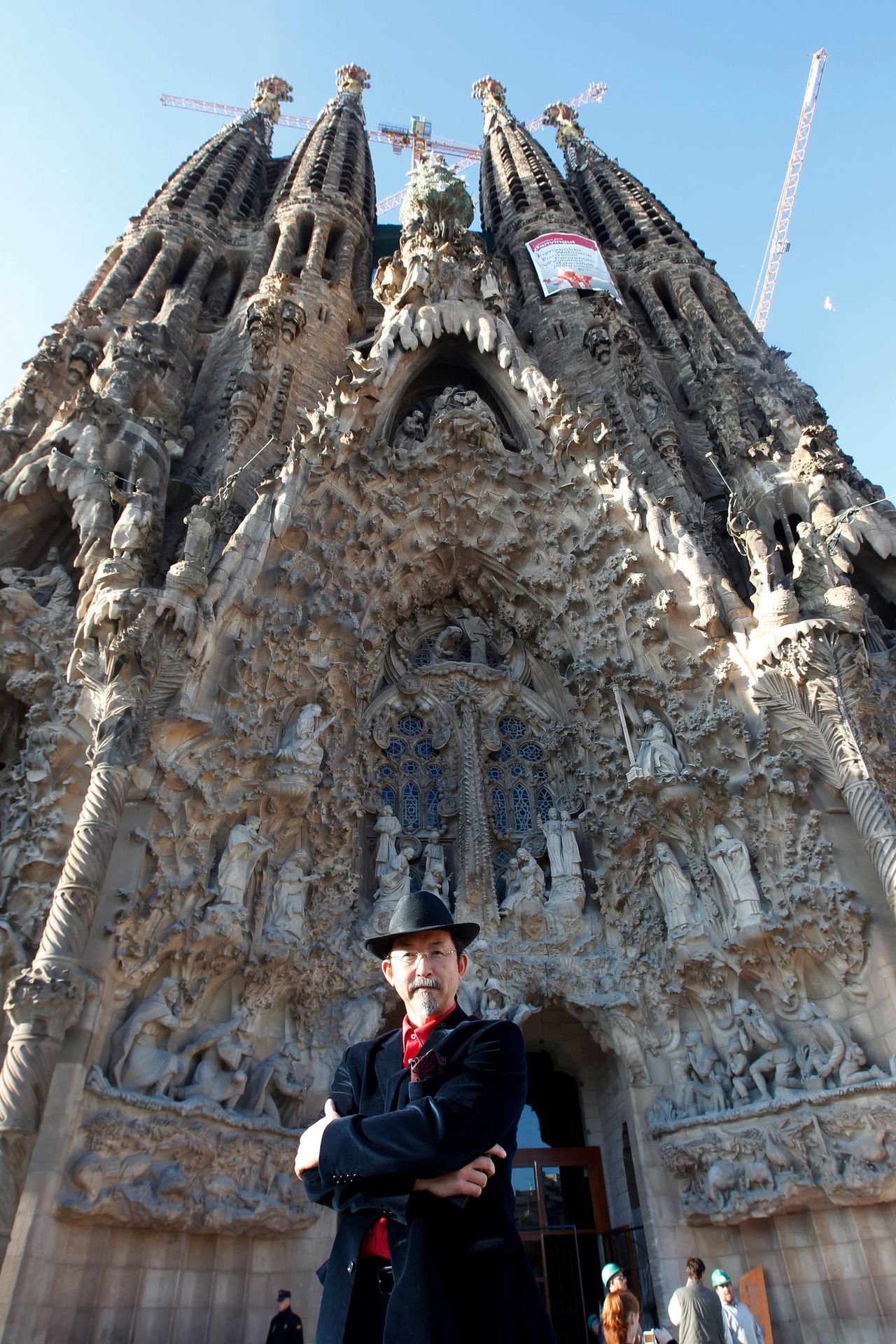
Sotoo in front of the Nativity Façade of the Sagrada Familia in 2010. (© Reuters)
A Japanese View of Nature
Sotoo was also responsible for the vegetal carvings decorating the exterior frames of the large windows (over 20 meters tall) in the side naves, as well as the pinnacles that surmount them. Gaudí had called for these features, but in the absence of more specific instructions, Sotoo had to exercise his own judgment.
Sotoo says he drew inspiration from the Japanese language. Recalling that the Japanese for “leaf” (ha) is part of the word kotoba, meaning “word,” he speculated that the leaves decorating the windows were intended to stand for words, which eventually bear fruit as wisdom. “If you want the wisdom in your heart to bear fruit in the hearts of others, you have to begin by using many words,” he explained. “But once the fruit is ripe, the leaves wither and fall off.“
With this idea in mind, Sotoo carved a plethora of small leaves and “green fruit” to adorn the window frames. He then placed baskets filled with ripe fruit on the pinnacles, with wilted leaves depicted beneath the baskets.
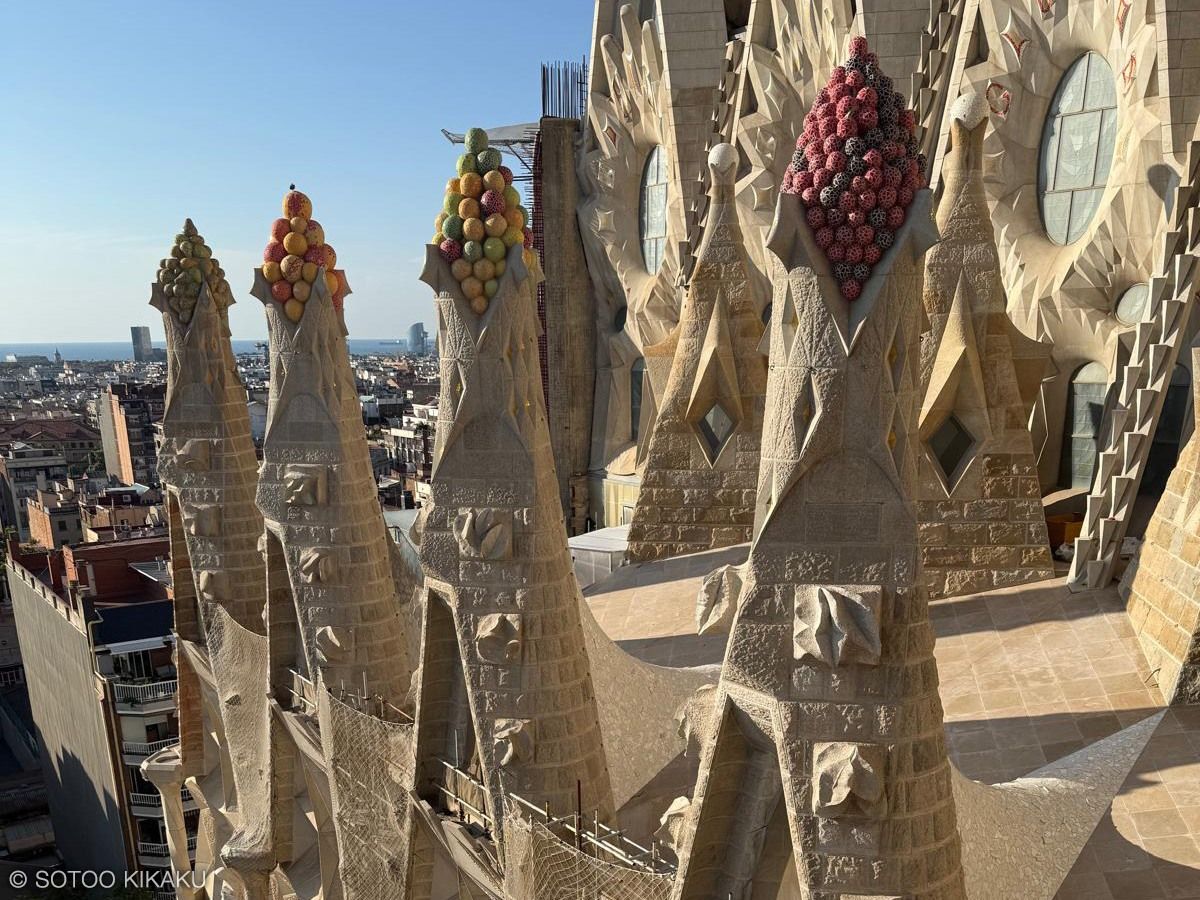
Baskets of ripe fruit top the side aisle pinnacles on the outer walls of the Sagrada Família. (© Sotoo Kikaku)
“Gaudí observed the changes in the natural world very closely,” says Sotoo, “and I believe he arrived at an understanding that has much in common with the Japanese view of nature.”
A distinctive feature of the fruit baskets is their jewel-like coloration. “Until then, the Sagrada Familia had the image of an abandoned ruin,” says Sotoo. “But when fruit ripens it inevitably acquires color. The fruit baskets embody the rich hues of heaven, in contrast to the monochrome of the world below.”
Preserving an Outsider’s Perspective
Although Sotoo has lived and worked in Spain for close to a half century, he remains a foreigner at heart.
“It’s always the foreigners who discover the beauty of a land. The native inhabitants are too accustomed to their surroundings to notice. That’s why I think it’s part of my job to approach the Sagrada Familia with the eyes of an outsider.”
Sotoo jokes that he spent his first 35 years on probation, inasmuch as he was working under a yearly contract. “I never knew what was going to happen from one year to the next,” he said. “I wasn’t even sure if my pay would come through from month to month.” Nonetheless, he gave the job his all on a daily basis, and he was ultimately rewarded for his effort. In 2012, he was officially named chief sculptor of the Sagrada Familia.
Construction on the Sagrada Familia has been going on for more than 140 years now, but the project shifted into high gear around 1992, the year of the Barcelona Olympics. Suddenly, the cathedral was a global sensation. Tourism skyrocketed, and funding became abundant. At the same time, new building technologies, including the extensive use of high-strength concrete, greatly accelerated the pace of construction.
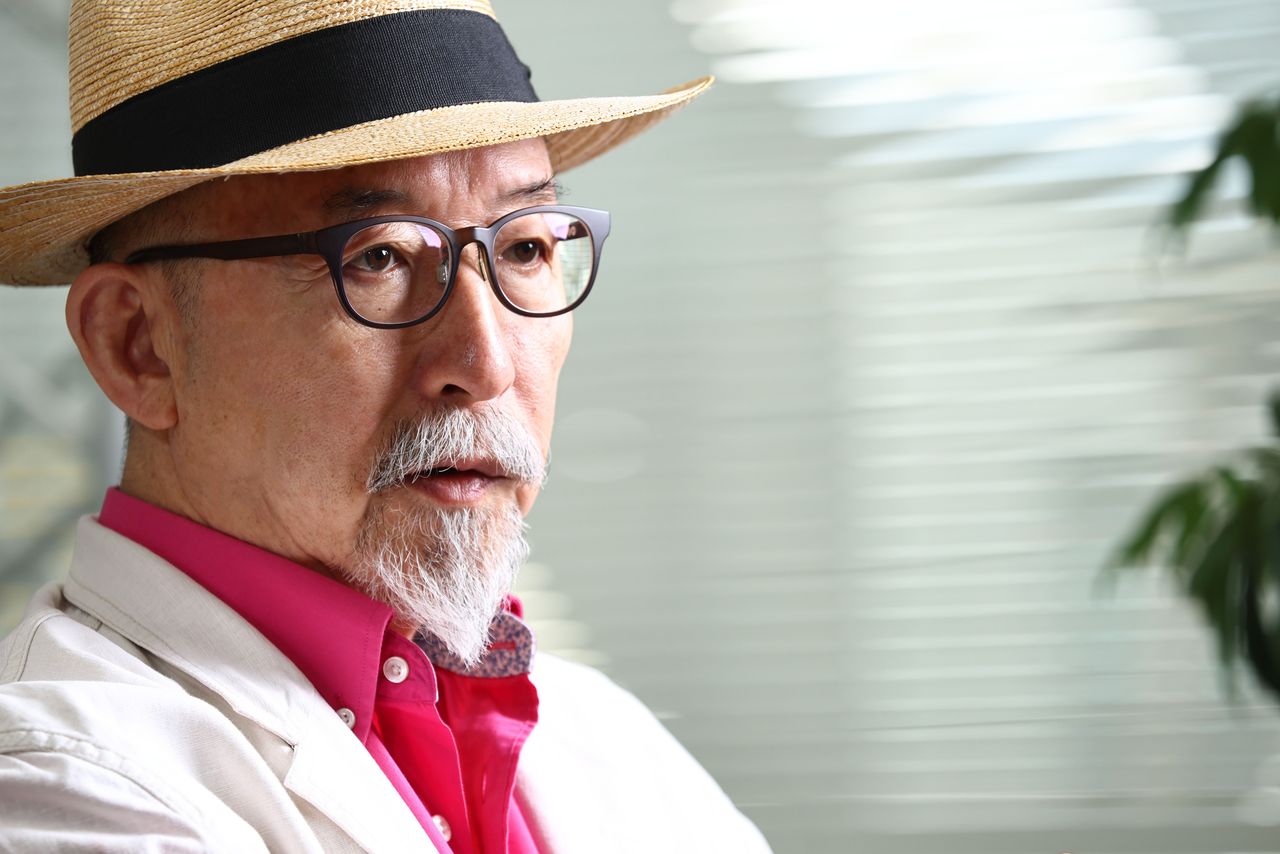
(© Hanai Tomoko)
Sotoo himself has remained devoted to the craft of stone carving, and he frets that the overriding goal of completion runs contrary to the essence of the project. At the same time, he keeps reminding himself, “We’re not creating a work of art for display, we’re building a church.”
Sotoo’s work on the Sagrada Familia equipped him for another historically important project. The iconic Cathedral of Santa Maria del Fiore, or Duomo of Florence (completed by Filippo Brunelleschi in 1436) had been designed without a permanent ambo (pulpit) in its main nave. After an international search that stretched out over seven years, Sotoo’s design was selected, and it now stands on the left side of the high altar.
“While my competitors were bent on installing their own artwork in the Duomo, I was focused on creating a tool for the Holy Mass. I think that’s what earned me the judges’ approval.”
Spiritual Tools for Imperfect Beings
With the completion of the Tower of Jesus this year, the Sagrada Familia is now the tallest church in the world. The next phase will focus on construction of the Glory Facade. To the inevitable question of when the entire project will be finished, Sotoo declares that it will never be truly complete.
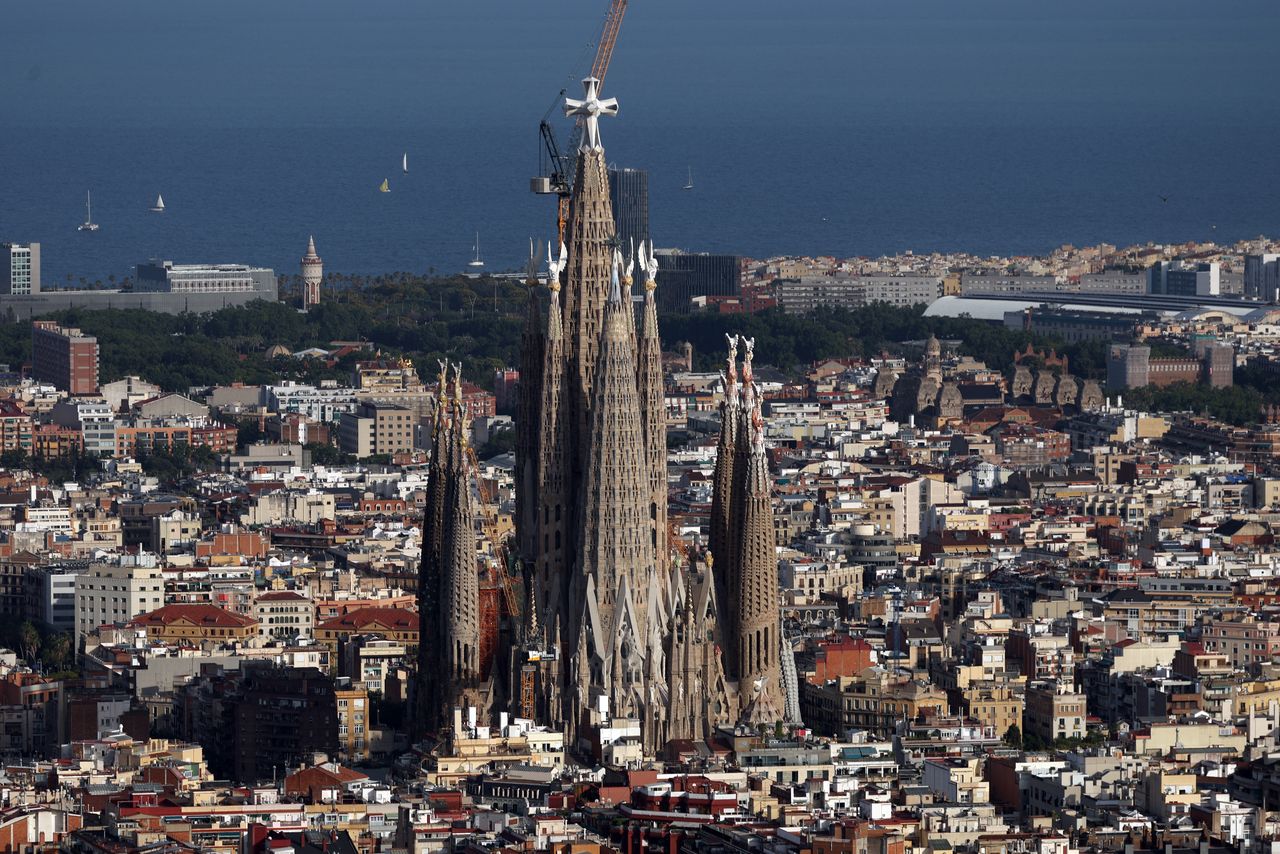
The Sagrada Familia with the newly complete Tower of Jesus at its center in June 2026. (© AFP/Jiji)
“That’s because what we’re building is not a work of art but a set of tools to help mold the human spirit. If human beings reach spiritual perfection, such tools will no longer be needed. Only then will we be able to say that the basilica is complete. But it seems to me that the human spirit is decaying as we speak.”
Humans are by definition imperfect. They err repeatedly and struggle each day with self-doubt. Yet they endure and strive ever upward. This, Sotoo believes, is the animating idea that Antoni Gaudí invested in his unfinished, open-ended masterpiece, the Sagrada Familia.
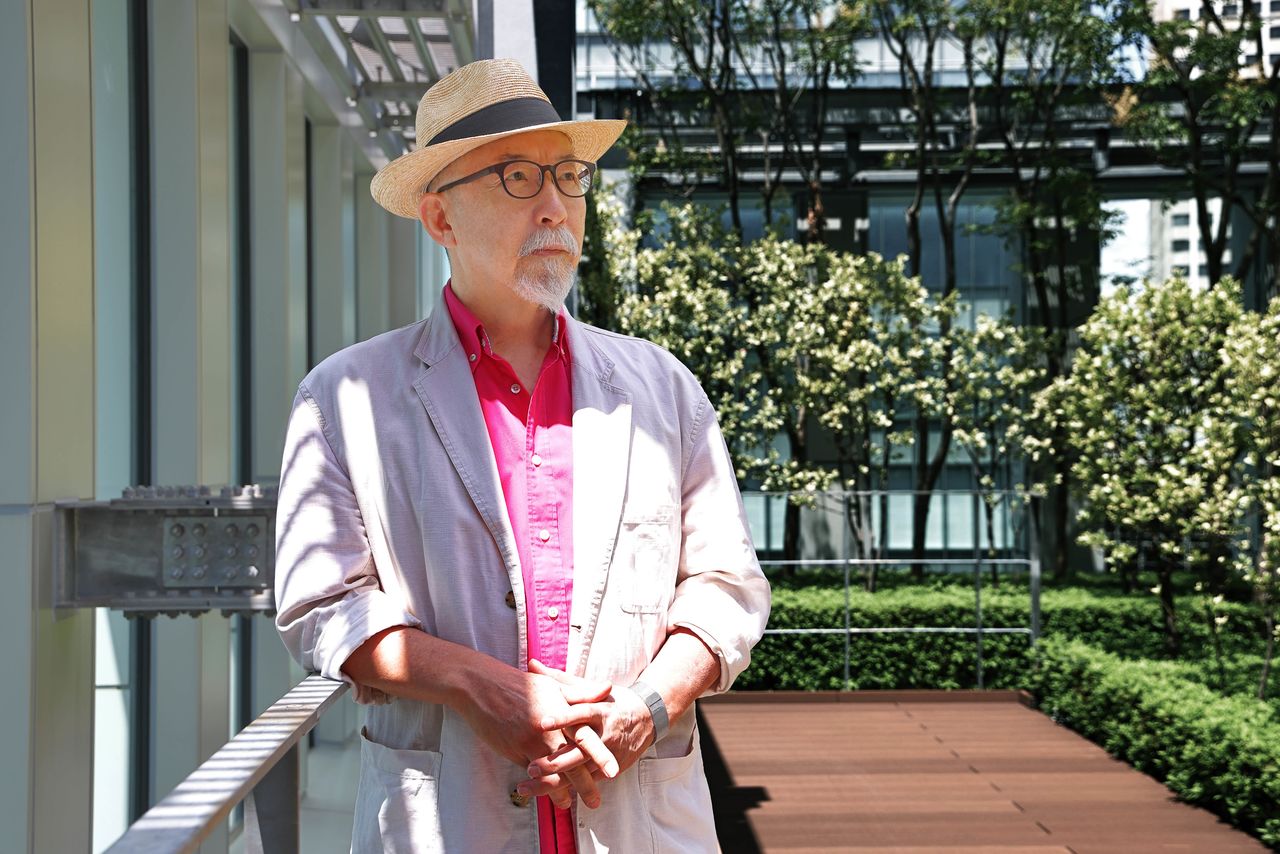
(© Hanai Tomoko)
(Originally written by Itakura Kimie of Nippon.com and published in Japanese on Sept.24, 2026. Banner photo: Sagrada Familia sculptor Sotoo Etsurō at Nippon.com in Tokyo in August, 2026. © Hanai Tomoko.)