Japan’s Cherry Blossom Spring: The Beauty and Traditions of Hanami
Society Culture- English
- 日本語
- 简体字
- 繁體字
- Français
- Español
- العربية
- Русский
While hanami literally means “looking at flowers” in Japanese, it is associated with cherry blossoms in particular. Cherry trees are planted throughout Japan in public spaces such as parks, school grounds, and along city streets. One of the most familiar ways to enjoy hanami is to gather beneath these blossoms with family, friends, or coworkers, sharing homemade lunches or picnic foods while taking in the delicate pink flowers overhead.
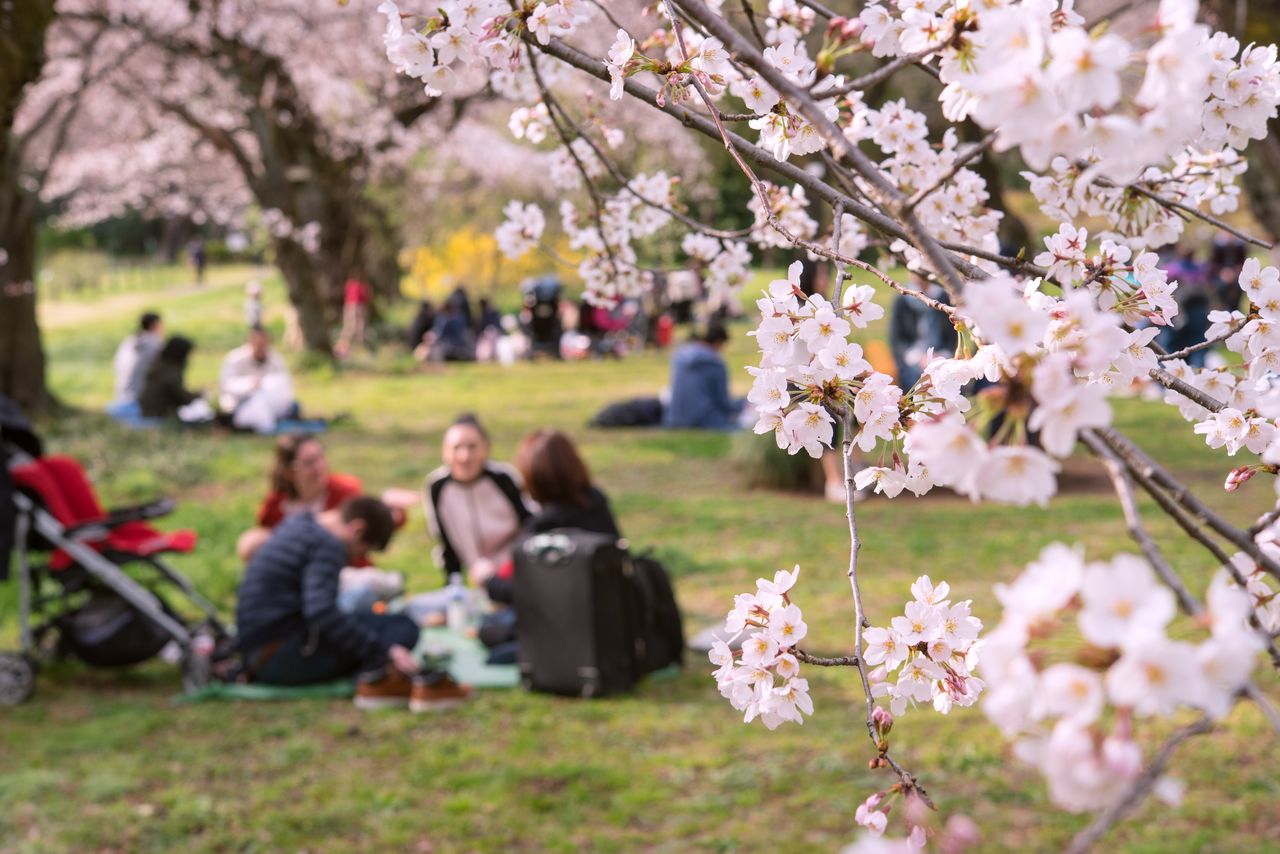
Enjoying a picnic under blooming cherry trees in spring. (© Adobestock)
At popular cherry blossom destinations, many areas host sakura festivals timed to coincide with the arrival of the flowers. During these events, visitors can sample local specialties from food stalls, enjoy live music and other performances, and experience special nighttime illuminations that transform the blossoms into a magical evening spectacle. Each region adds its own touches to make the season memorable.
That said, parks often have their own rules, such as whether food and drinks are permitted or limits on noise levels, as well as set times for illuminations. It is best to check such information in advance before heading out to enjoy the blossoms.
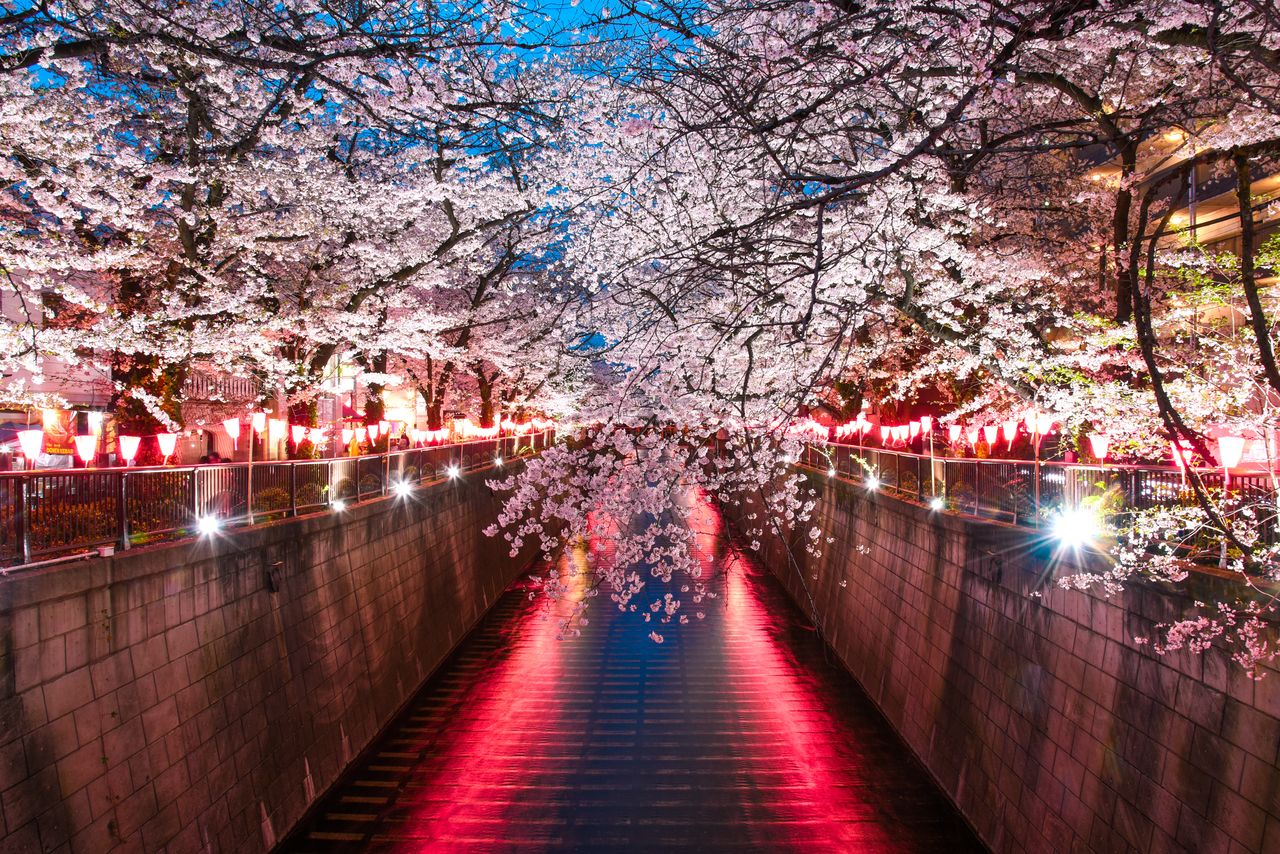
Cherry blossoms illuminated at night along Meguro River in Tokyo. (© Adobestock)
The “Cherry Blossom Front” and Bloom Forecasts
Cherry blossoms begin flowering first in Japan’s warmer regions. From early-blooming varieties that open in January to late bloomers that flower in May, different kinds of sakura appear one after another as the season moves north across the Japanese archipelago. The most common variety in Japan is the iconic somei-yoshino, which typically reaches its peak between late March and early May.
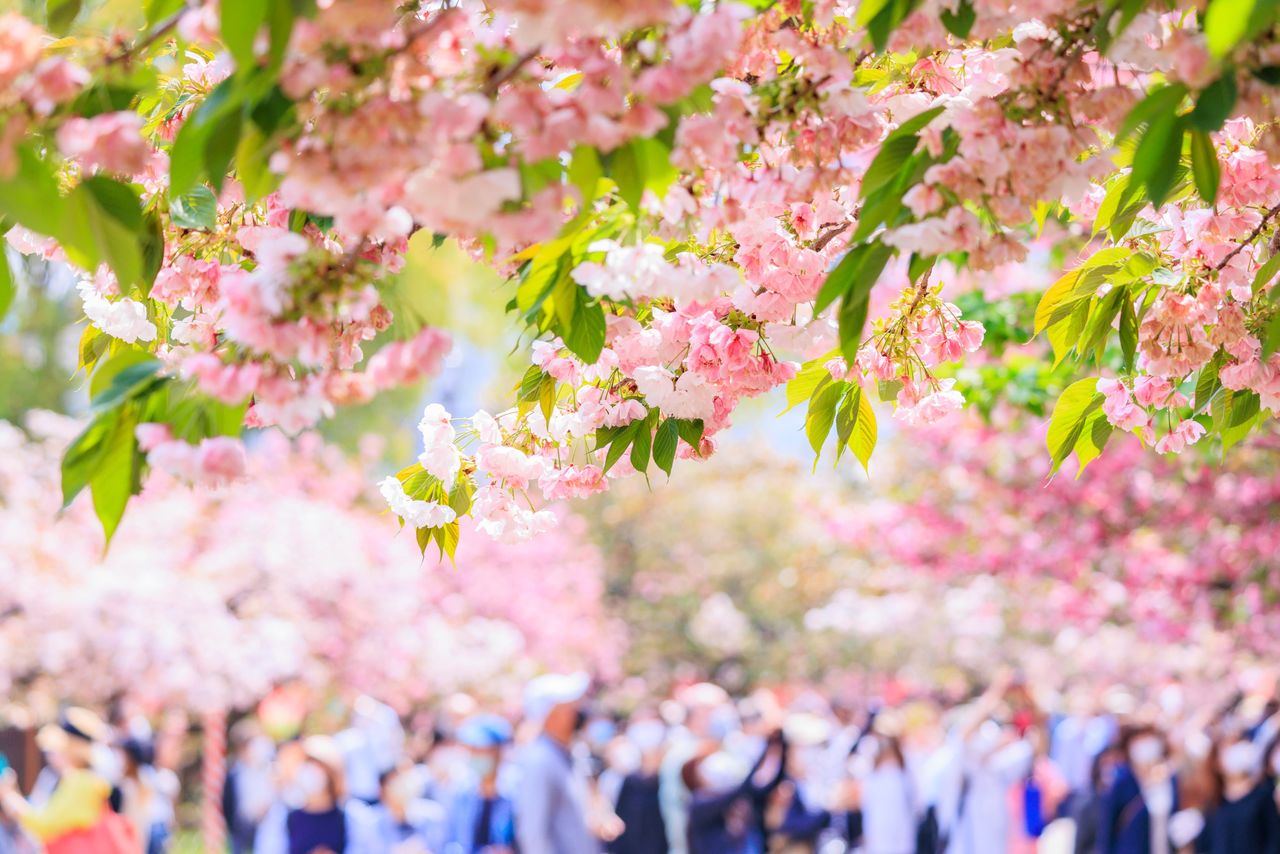
Double-flowered cherry trees in full bloom at the famous Osaka Mint passage. (© Pixta)
The term sakura zensen, or cherry blossom front, refers to a line drawn across a map of Japan connecting locations where somei-yoshino blossoms are forecast to open on the same day. Because this line gradually moves northward in a pattern reminiscent of weather fronts on a forecast map, it came to be known as the cherry blossom front. As spring approaches, weather forecasts increasingly track the expected progress of the front, helping people decide when and where to plan their hanami outings.
Several meteorological information services provide blossom forecasts and updates on the cherry blossom front. Nippon.com also publishes forecasts and updates.
The History of Hanami in Japan
The roots of Japan’s hanami tradition can be traced back to ancient China, where people gathered to admire plum and peach blossoms. When this custom reached Japan, plum viewing was the main focus until around the eighth century. During the Heian period (794–1185), however, a growing appreciation for Japan’s own developing cultural traditions led to a shift in taste, and cherry blossoms gradually became the flower most closely associated with spring.
One of the most famous historical hanami gatherings took place in 1598, when the powerful warlord Toyotomi Hideyoshi had around 700 cherry trees planted at the Kyoto temple Daigoji for a grand celebration known as the Daigo no Hanami. The three-colored dumplings—pink, white, and green—said to have been created for that event are believed to be the origin of today’s hanami dango, a classic treat enjoyed during blossom viewing.
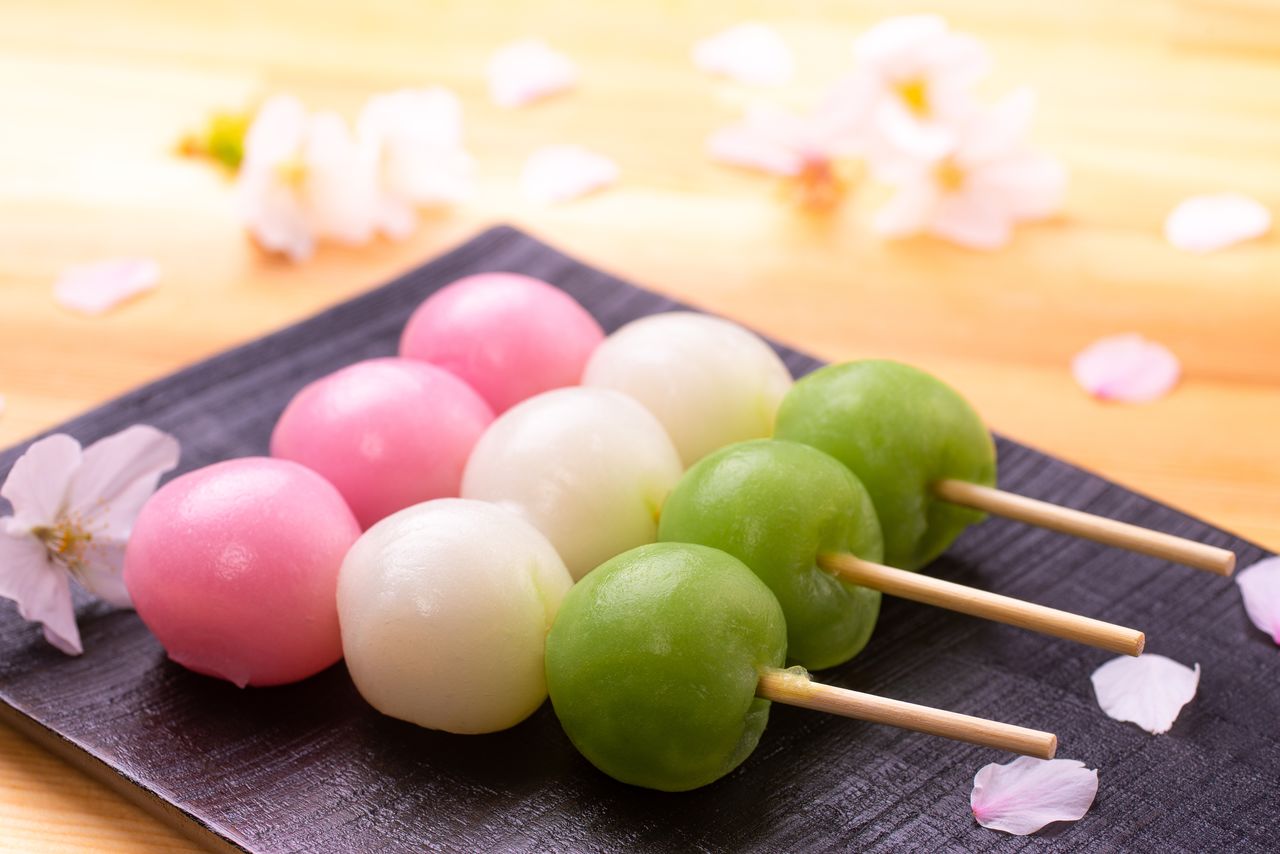
Three-colored hanami dango, traditional Japanese rice flour dumplings. (© Adobestock)
In the eighteenth century, the eighth shōgun, Tokugawa Yoshimune, encouraged the spread of cherry blossom viewing by planting wild mountain cherry trees in scenic spots and opening these spaces to ordinary people. As a result, the custom of gathering under the blossoms with packed lunches gradually spread among the general public.
A new kind of cherry tree called somei-yoshino emerged in the nineteenth century. Because it can be easily propagated through grafting, it was widely cultivated across the country, becoming the best-known variety. As these trees spread, so too did the tradition of hanami, and it is now a beloved seasonal ritual enjoyed throughout Japan.
An Overview of the Hanami Tradition
To learn more about the hanami tradition in Japan, see our content in the following articles.
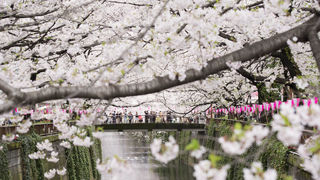
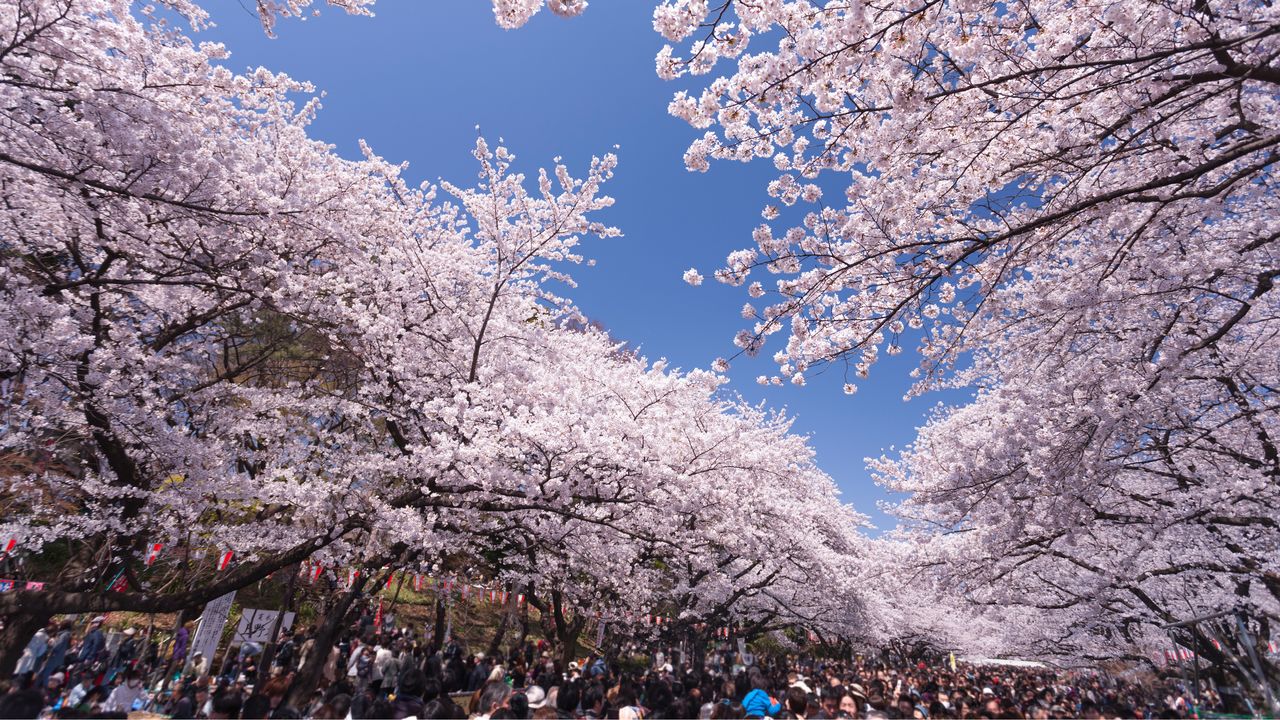
(Banner photo: Cherry trees forming a canopy at Ueno Park, Tokyo. © Pixta.)