Setsubun: Japan’s Bean-Throwing Festival
Society Culture- English
- 日本語
- 简体字
- 繁體字
- Français
- Español
- العربية
- Русский
Scattering Beans to Drive Away Demons
Setsubun is a popular Japanese festival held around February 3, on the day before the traditional start of spring in the former calendar, with the aim of ensuring good luck for the year ahead.
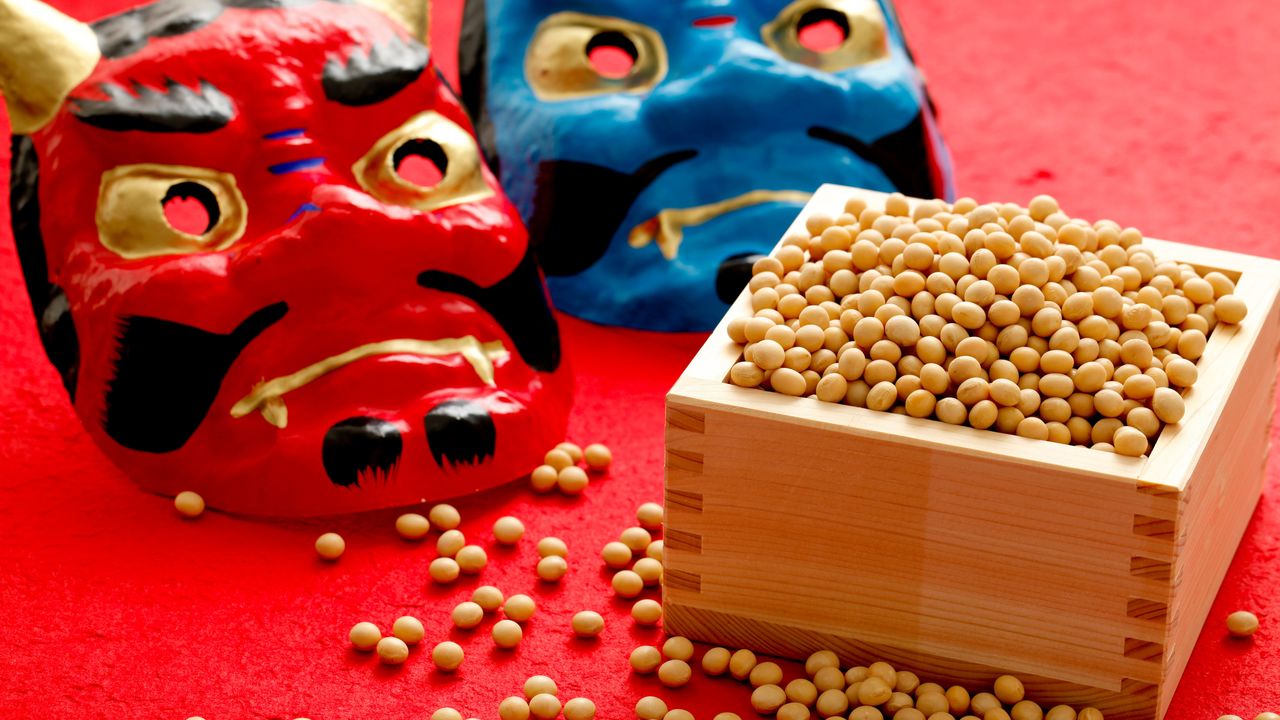
The best-known custom is mamemaki, in which people throw roasted soybeans to drive away oni (demon-like creatures) while chanting “Oni wa soto, fuku wa uchi” (oni out, good luck in). This is the most common version of the chant, but many regions have their own variations.
From mid-January, bags of Setsubun-themed beans and paper oni masks begin appearing on supermarket and convenience store shelves. Children often make masks as a craft activity at kindergarten or daycare, which are then used for mamemaki at school as well as at home.
The practice of mamemaki is thought to have originated from ancient Chinese rituals to ward off evil spirits, and it became firmly established as a Setsubun ritual from the seventeenth century onward.
Many temples and shrines around Japan draw large crowds to their mamemaki events. Naritasan Shinshōji near Narita Airport in Chiba Prefecture is particularly well-known, as the ceremony features celebrities and famous sumō wrestlers. In a twist to the usual chant, participants do not drive evil spirits away; they only welcome good fortune in. This is because the temple’s guardian deities are considered so merciful that even oni repent. Other temples famous for mamemaki in Tokyo include Sensōji and Ikegami Honmonji.
Families commonly conduct mamemaki by hurling beans at a family member wearing an oni mask. Some households may follow the tradition of eating the same number of beans as their age—or one extra—to pray for good health and long life. Others may use a substitute for beans that is easier to tidy away, like wrapped snacks.
Instead of soybeans, some regions use unshelled peanuts. And along with bean tossing, there is a tradition in some parts of Japan of warding off oni by placing grilled sardine heads skewered on sprigs of prickly holly at the entrance of homes—a combination thought to be unbearable for ogres.
Ehōmaki: Auspicious Sushi Rolls
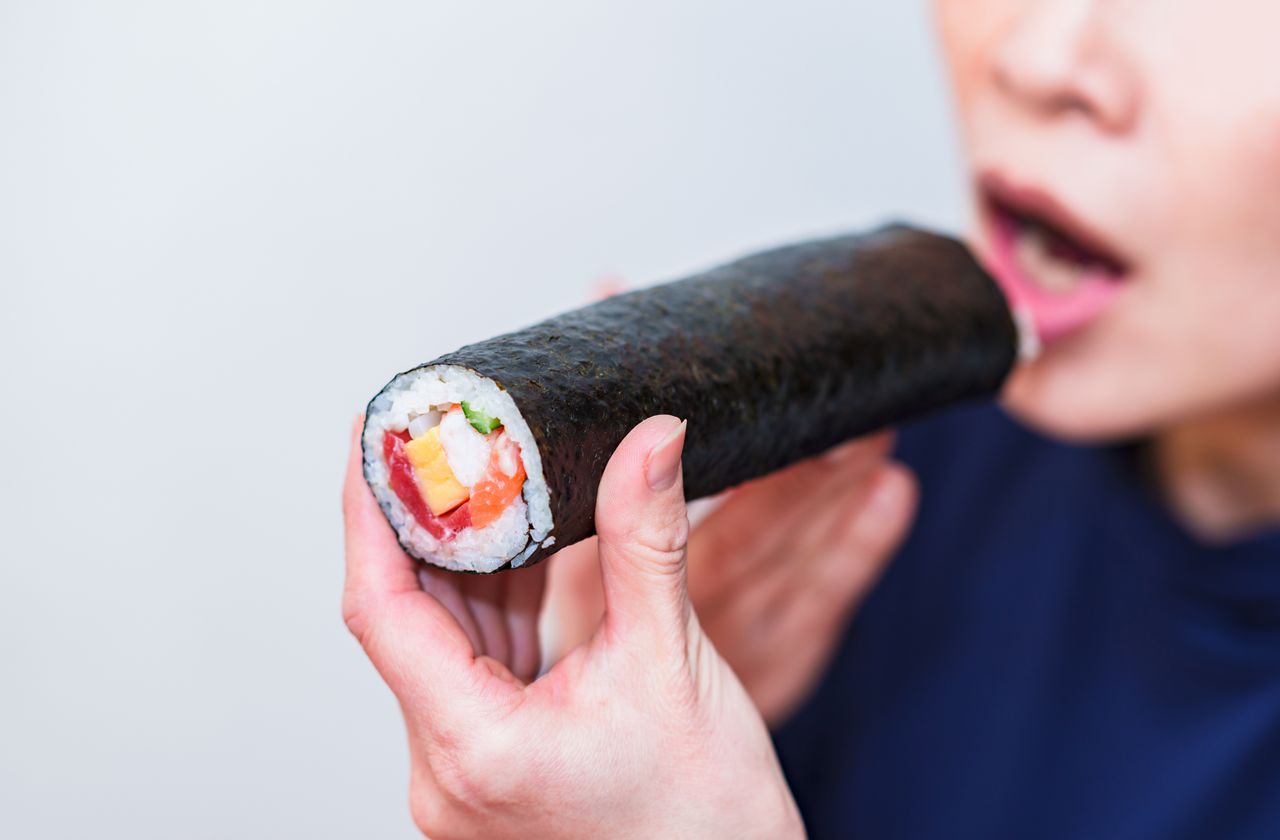
A more recent trend associated with Setsubun is an auspicious rolled sushi known as ehōmaki. Custom has it that people should eat an entire, uncut roll in one go on Setsubun while making a wish and facing the direction deemed most favorable for the year. Finishing the roll without speaking is said to help the wish come true.
(© Adobestock)
There are several theories about the origin of ehōmaki, the most popular one crediting Osaka merchants with beginning the practice in the nineteenth century to pray for business success. The custom spread nationwide in the 1990s thanks to promotional campaigns by major convenience store chains.
Today, as Setsubun approaches, supermarkets and convenience stores across Japan line their shelves with ehōmaki of all sizes and fillings.
(Banner photo: © Adobestock.)