Cafés at Tokyo’s Traditional Folk Houses
With Kamakura: Traditional Snow-Country Architecture in a Sunny Seaside Neighborhood
Guideto Japan
Food and Drink Architecture- English
- 日本語
- 简体字
- 繁體字
- Français
- Español
- العربية
- Русский
From Shirakawa-gō to Kamakura
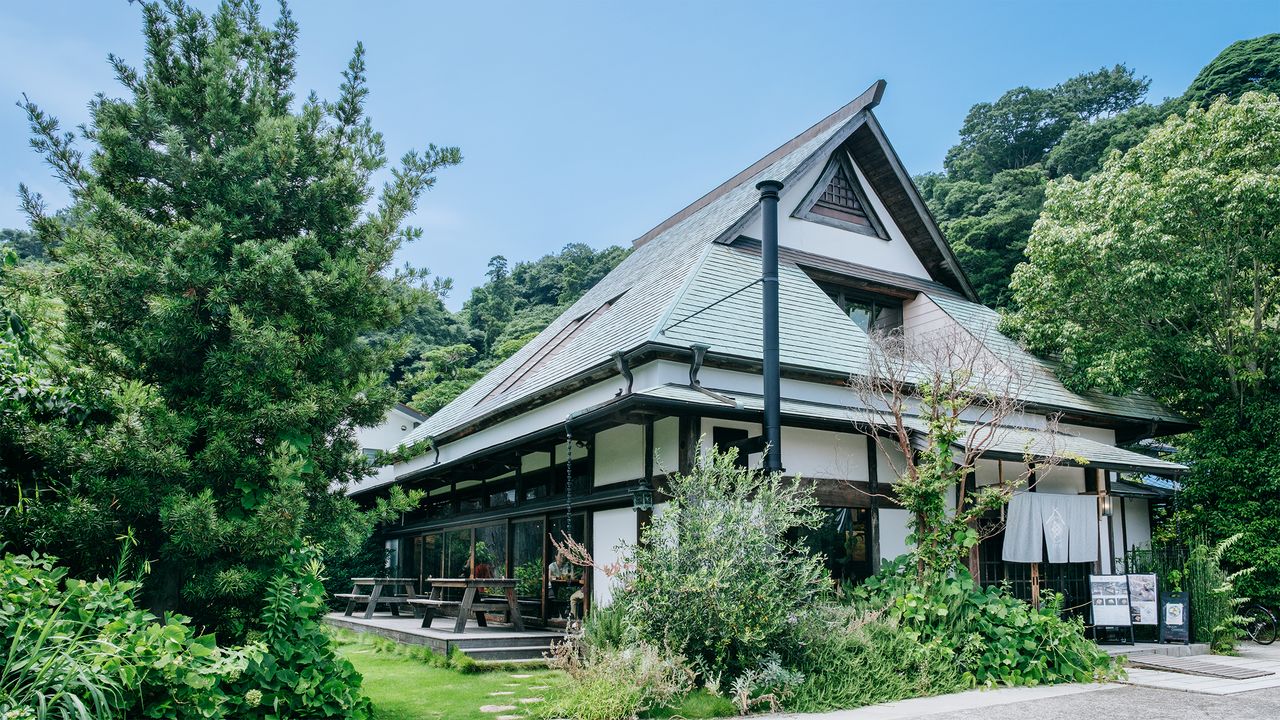
The neighborhood around Hase Station on the Enoden line is where Kamakura’s solemn history is leavened by sparkling seaside sunlight. It’s also the home of With Kamakura, a café in a unique building made by disassembling three 220-year-old homes at the distant, snowy World Heritage site of Shirakawa-gō, transporting the materials to Kamakura, and reassembling them into a new structure embodying the same principles of traditional construction under the bright Shōnan sun.
I decided to visit the café for a lunch overlooking its verdant garden, and then visit nearby Goryō Shrine, a popular sightseeing destination that has watched over the neighborhood for nearly a millennium. Join me on a relaxed stroll through Hase.
Finding New Charm in Old Houses
Exiting Hase Station, I walk for five minutes down a narrow lane that follows the Enoden line before I reach a corner in a quiet residential area where a peaked, pale green roof looms into view. The roof’s shape evokes the steepled gasshō-zukuri roofs of Shirakawa-gō, but this one is covered in copperplate instead of thatched, and has a window facing south. This is With Kamakura.
It turns out that thatched roofs aren’t fire-resistant enough for use in an urban setting. What’s more, both experts capable of thatching a roof and thatch itself have become scarcer over the years. As if to make up for this, the building has a different feature seldom seen in Shirakawa-gō: a wooden deck that extends out into the well-tended garden.
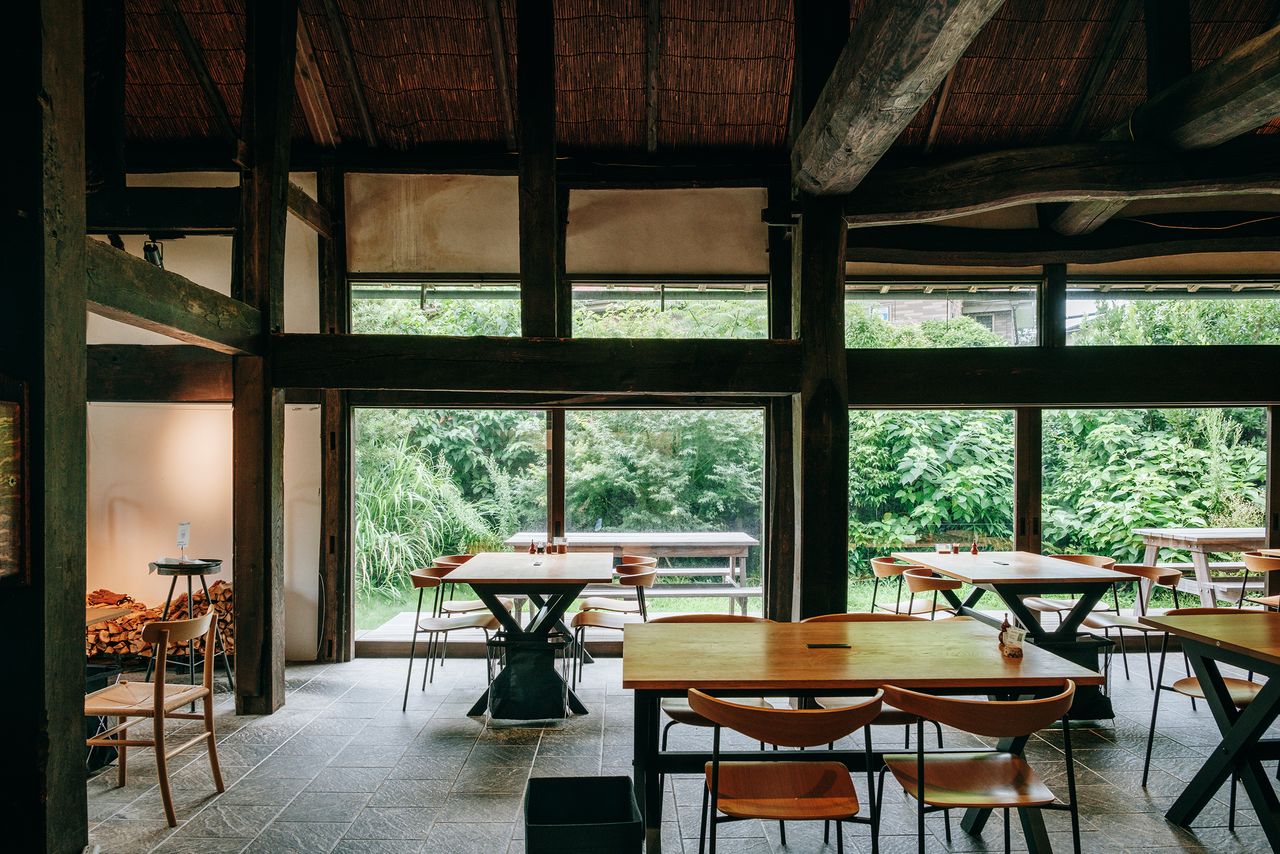
The green of the garden through the windows soothes the soul. (© Kawaguchi Yōko)
I part the noren curtains and step inside the café. The space is bright and airy, glowing with natural light from the verdant garden visible outside the windows. The sturdy beams overhead bear silent testimony to their former 220-year careers keeping traditional houses standing even beneath the deep snows of winter. In the corner that holds the wood-burning stove, a square lattice-like frame is suspended from the ceiling with hemp rope. What can that be?
Savoring the Tastes of Local Ingredients
I set the puzzle of the suspended frame aside for now and order lunch. With Kamakura’s menu has a number of tempting set meals that make good use of the many seasonal ingredients available in the local Shōnan region. The With Special Set Meal has the widest variety of flavors, and offers a choice between hamburger steak or salmon for the main dish. The set also includes smaller dishes with other morsels like stewed beef tendon using Hayama beef, plus salad, rice, and miso soup.
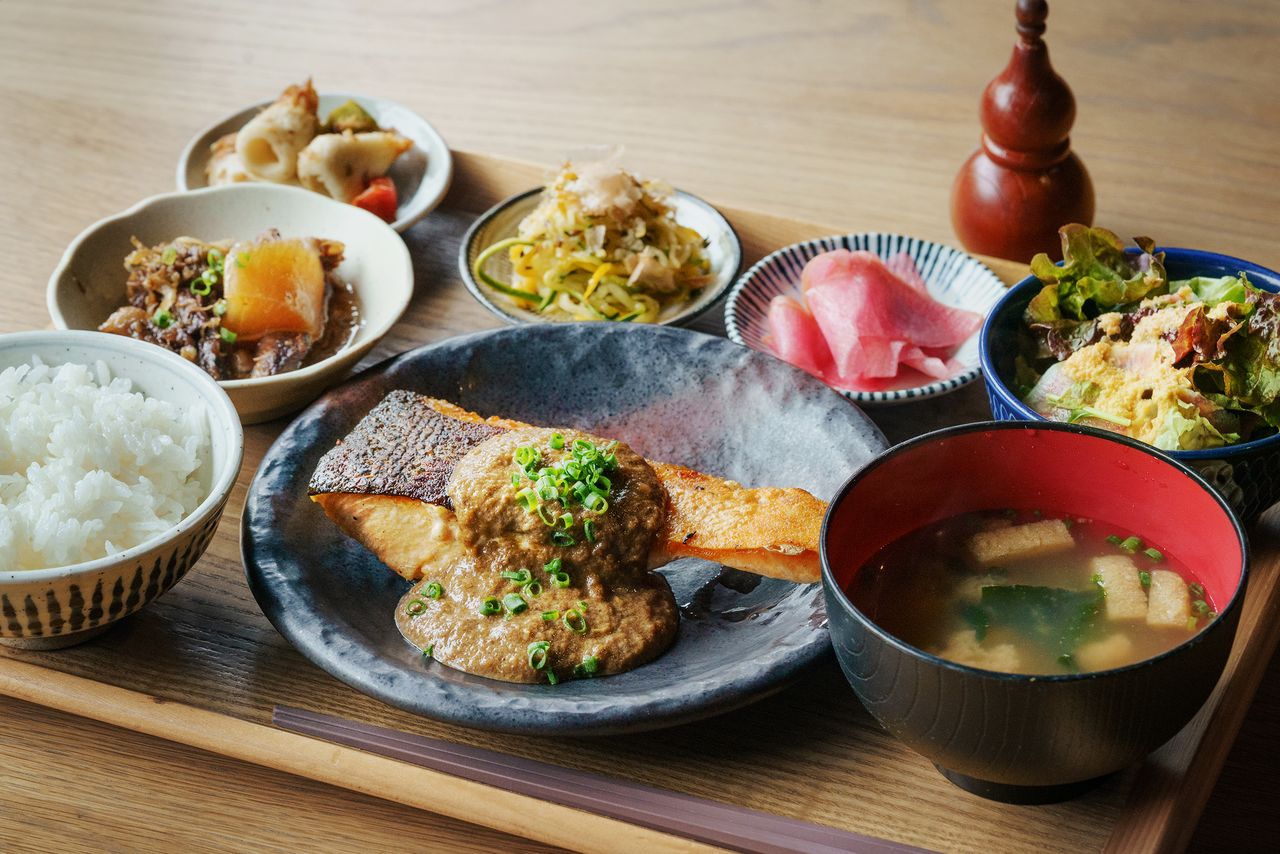
The With Special Set Meal is a cornucopia of seasonal local ingredients. Lunch is available from 11 am to 2:30 pm. (© Kawaguchi Yōko)
I order the salmon version of the set and am pleased by the generous filet I receive. The crispy skin, cooked teppanyaki style, crackles deliciously when my chopsticks touch it. Aroma and texture are a key part of the experience. Extra umami is supplied by a rich sauce of scorched black garlic and mushrooms.
“We strive to prepare simple but well-made meals, bringing out the innate flavor of the ingredients,” a staff member explains. The exact contents of the set change as the seasons pass. After lunch, during teatime, coffee is available alongside sweets like spicy carrot cake and Mascarpone ice cream cake.
Solving a Mystery
With Kamakura’s building was made by disassembling three traditional houses in Shirakawa-gō, all dating from the Edo period (1603–1868), and reassembling them into a single building in Hase in around 1984. This was made possible by the traditional approach to Japanese carpentry. Instead of being nailed together, the parts of the structure are shaped with the necessary slots and protrusions to fit securely together. This makes it possible to disassemble structures, carry them to a distant location, and then put them together again like a giant 3D puzzle.
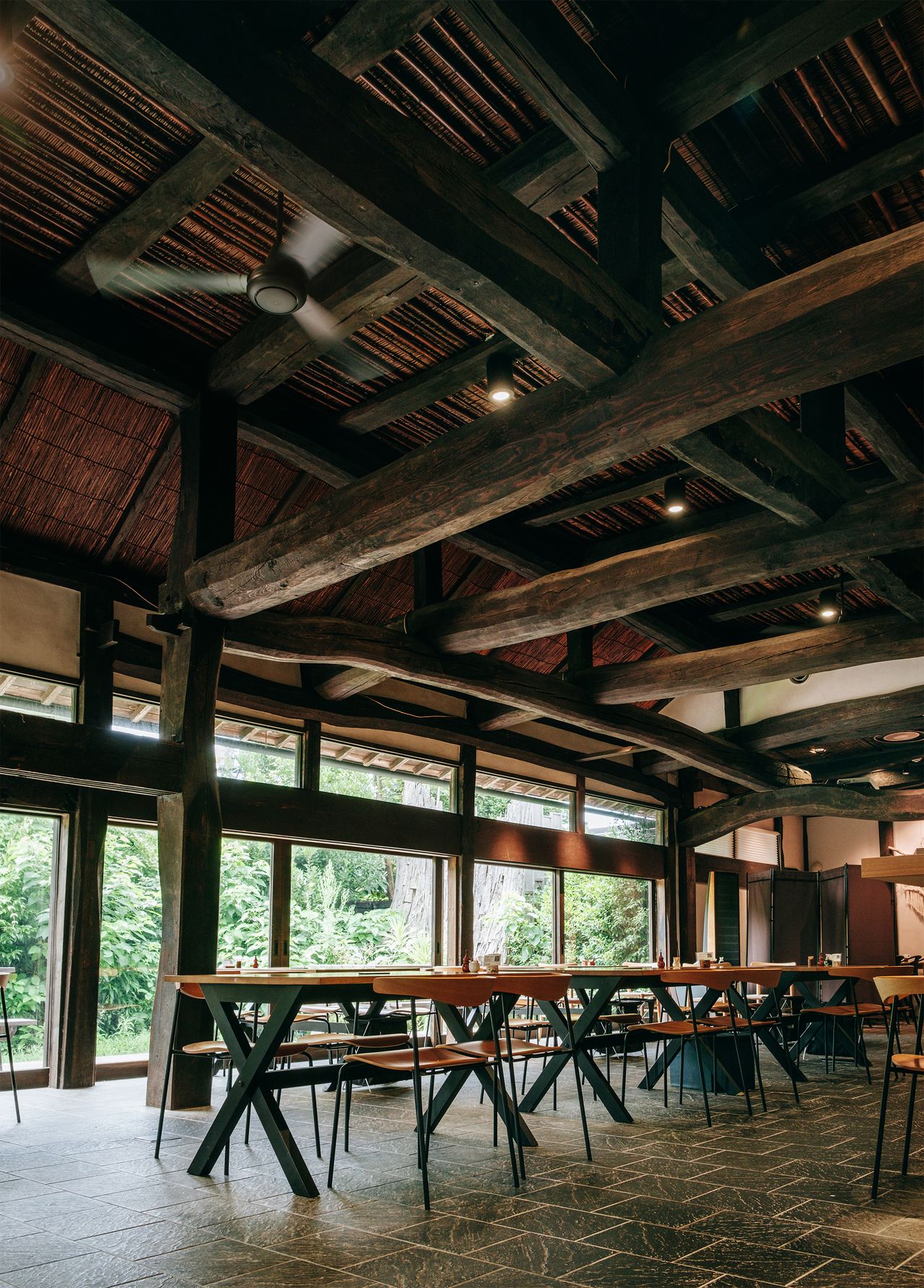
The interior is pleasant, relaxed, and spacious. (© Kawaguchi Yōko)
The reconstructed building was used for some 40 years as a restaurant before With Kamakura took it over, renovated the interior, and tidied up the garden. The goal, they say, was to create a space harmonizing the venerable charm of traditional Japanese architecture with contemporary lifestyles.
“We went through the process step by step, carefully considering the affinities between old buildings and modern facilities and how we might shore up any weak points,” says a staff member. “We made sure to preserve the powerful beams unique to a gasshō-zukuri house, the warmth of the timber, and the overall atmosphere, but we rethought the furnishings and movement lines to ensure that contemporary guests could feel comfortable here.”
The hanging square frame that caught my attention was, it turns out, a hidana. These were traditionally suspended above the hearth, and included a hemp rope dangling below on which people would hang pots over the hearth using an adjustable pothook called a jizaikagi. The frame above not only caught stray sparks and fragments from the hearth but also could be used to hang up fish and vegetables for smoking, and to dry wet tools.
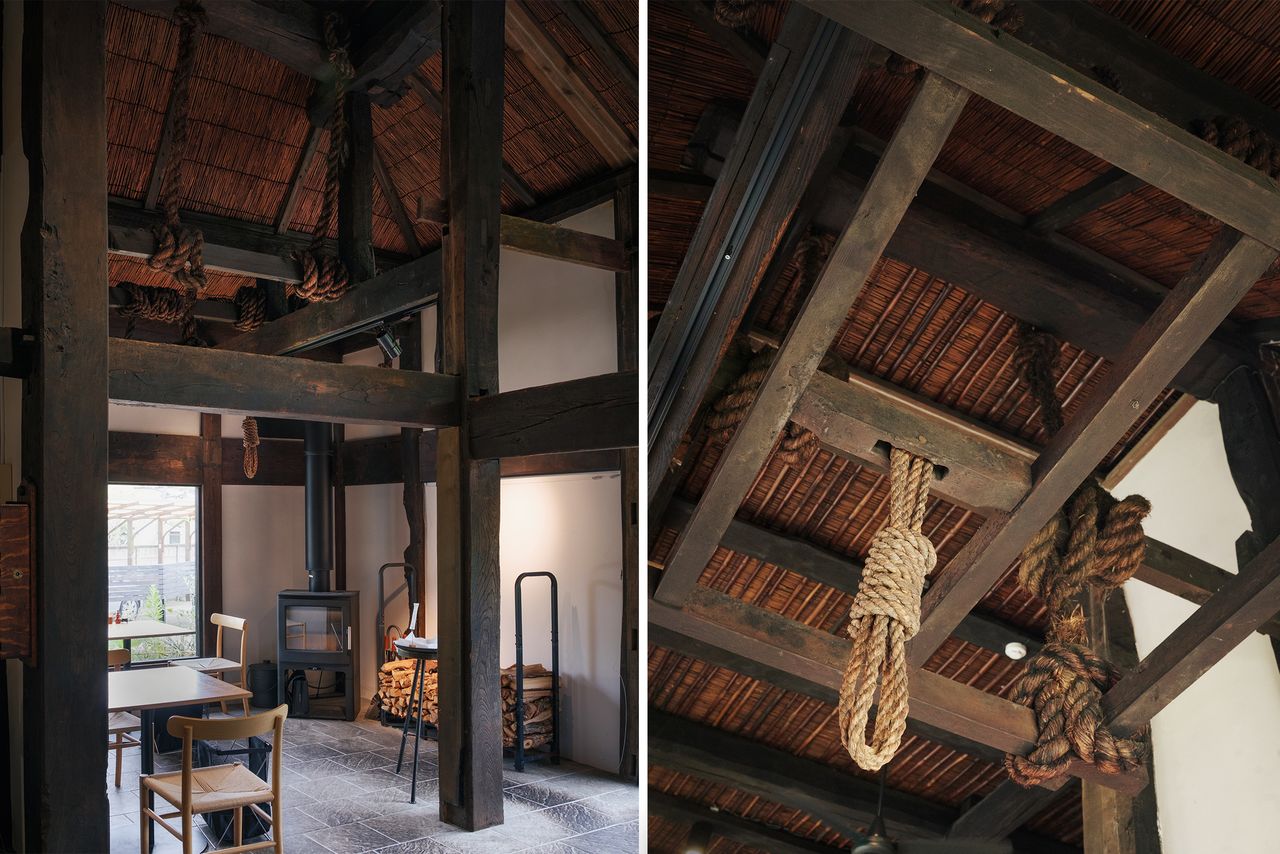
The hearth was an essential part of daily life, used not just to keep warm but also to cook, smoke food for long-term storage, and more. (© Kawaguchi Yōko)
The sight of a contemporary wood-fired heater below a structure so intimately connected with memories of life in Shirakawa-gō two centuries ago is a moving one. If you visit With Kamakura, be sure to keep an eye out for the hidana, subtle as it is beside the magnificent beams.
The third floor, reached via steep staircase, is rented out as an event space. In centuries past, gasshō-zukuri houses used the triangular cavity under the roof to raise silkworms. The sound of countless silkworms munching on mulberry leaves together was often compared to the sound of rain. An interesting thing to imagine when visiting the third floor.
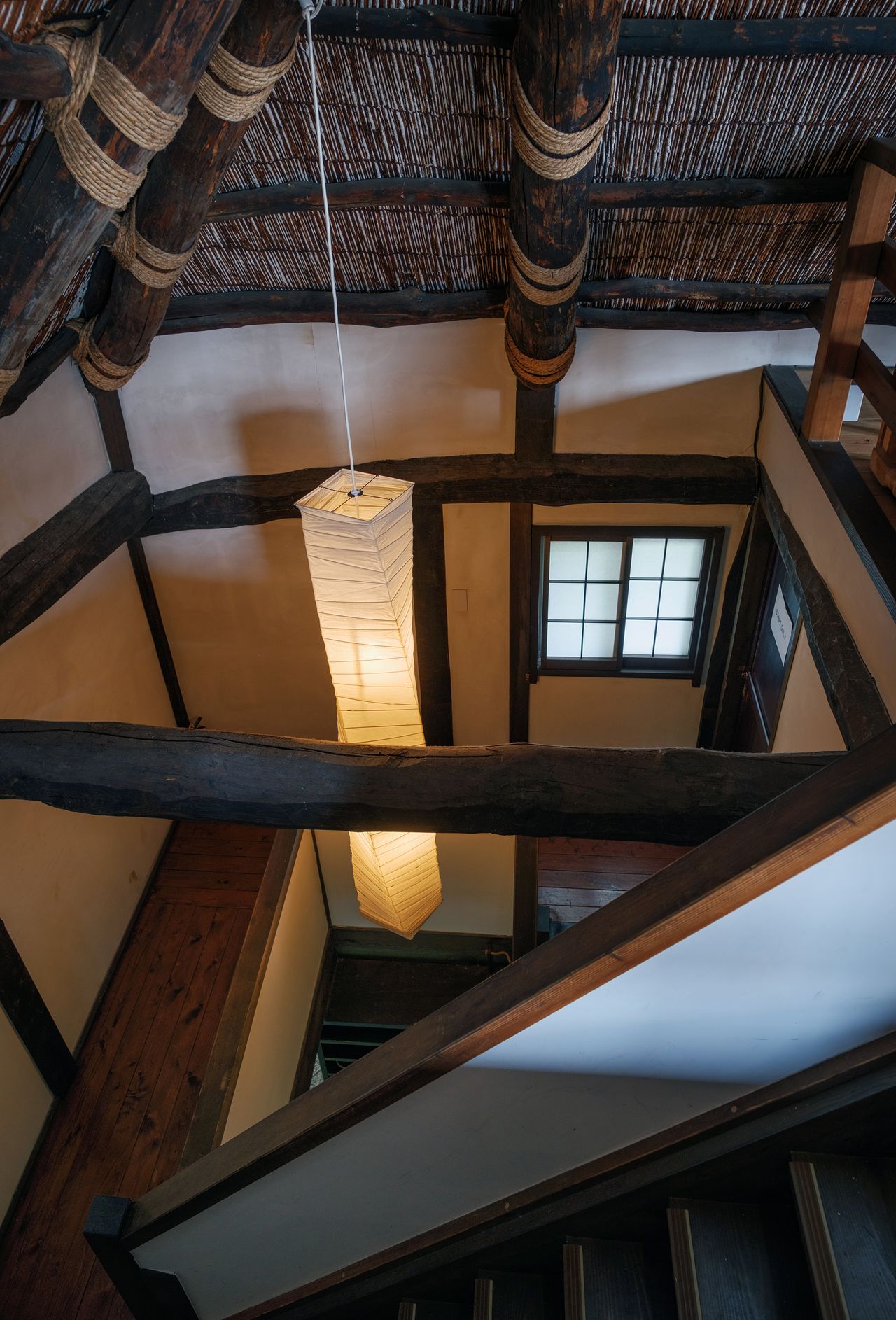
Looking down from the third floor. The extended light fixture looks stunning in the vaulted space. (© Kawaguchi Yōko)
The Backstreets of Hase
After thoroughly enjoying my lunch, I cross the train tracks and visit Goryō Shrine. Said to have been founded some 900 years ago, this popular local institution enshrines Kamakura Gongorō Kagemasa, the fearless lord who first developed the Kamakura area. Locals refer to the shrine fondly as “Gongorō-sama.”
The Enoden passes right by the shrine’s torii gate. It is rare to see sacred ground approach the circuits of everyday life so closely. I cross the tiny crossing and enter the shrine’s approach—this is the kind of experience only these laneways offer.
The hidana, host to memories of life in gasshō-zukuri houses; the terrace, enswathed in green; the train that all but brushes the torii. The laneways of Hase I stroll while enjoying these superimpositions have a different face for every season. No doubt if I were to walk them in high summer, they would summon up distant memories of long, lazy vacations in the hottest months of the year.
With Kamakura
- Address: 3-7 Sakanoshita, Kamakura, Kanagawa Prefecture
- Phone: 0467-33-5521
- Hours: 10:00 am–4:00 pm (last order: food 2:30 pm, drinks 3:30 pm)
- Closed: Please check the official website
- Access: 5 minutes on foot from Hase Station on the Enoshima Electric Railway
- Official website: https://with-project.jp/ (Japanese)
(Originally published in Japanese on August 4, 2026. Banner photo: With Kamakura, which was constructed by combining three traditional homes relocated from Shirakawa-gō in Gifu Prefecture.)