World Heritage Sites in Japan
Society Culture Guide to Japan Travel
Japan has 27 UNESCO World Heritage sites, with the Ancient Capitals of Asuka and Fujiwara as the latest addition in 2026.
- English
- 日本語
- 简体字
- 繁體字
- Français
- Español
- العربية
- Русский
The World Heritage Convention, adopted at the 1972 General Conference of UNESCO, called for a list to be created of natural and cultural sites of “outstanding universal value.”
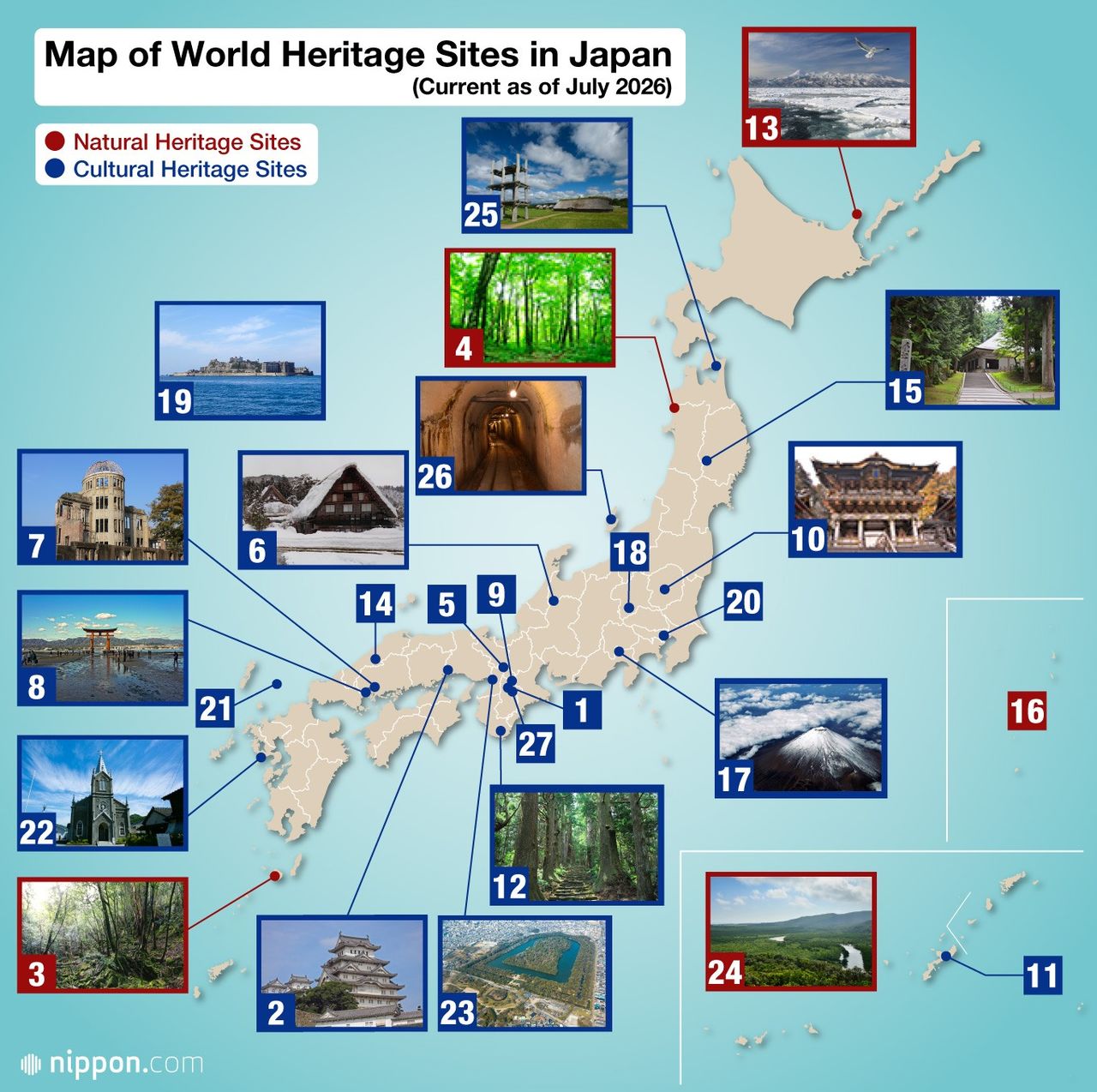
In December 1993, Japan’s first World Cultural Heritage sites were registered: the Buddhist Monuments in the Hōryūji Temple Area (Nara Prefecture) and Himeji-jō (Hyōgo Prefecture). The addition of the Ancient Capitals of Asuka and Fujiwara (Nara Prefecture) in 2026 means it now has 22 cultural and 5 natural heritage sites for a total of 27 World Heritage sites.
UNESCO World Heritage Sites in Japan
Sites are for cultural heritage, unless otherwise stated.
- Buddhist Monuments in the Hōryūji Temple Area (Nara): December 1993
- Himeji-jō (Hyōgo): December 1993
- Yakushima (Kagoshima): December 1993 (natural heritage)
- Shirakami-Sanchi (Aomori and Akita): December 1993 (natural heritage)
- Historic Monuments of Ancient Kyoto (Kyoto and Shiga): December 1994
- Historic Villages of Shirakawa-gō and Gokayama (Gifu and Toyama): (December 1995)
- Hiroshima Peace Memorial (Genbaku Dome) (Hiroshima): December 1996
- Itsukushima Shintō Shrine (Hiroshima): December 1996
- Historic Monuments of Ancient Nara (Nara): December 1998
- Shrines and Temples of Nikkō (Tochigi): December 1999
- Gusuku Sites and Related Properties of the Kingdom of Ryūkyū (Okinawa): December 2000
- Sacred Sites and Pilgrimage Routes in the Kii Mountain Range (Nara, Wakayama, and Mie): July2004
- Shiretoko (Hokkaidō): July 2005 (natural heritage)
- Iwami Ginzan Silver Mine and its Cultural Landscape (Shimane): June 2007
- Hiraizumi—Temples, Gardens and Archaeological Sites Representing the Buddhist Pure Land (Iwate): June 2011
- Ogasawara Islands (Tokyo): June 2011 (natural heritage)
- Fujisan—Sacred Place and Source of Artistic Inspiration (Yamanashi and Shizuoka): June 2013
- Tomioka Silk Mill and Related Sites (Gunma): June 2014
- Sites of Japan’s Meiji Industrial Revolution: Iron and Steel, Shipbuilding and Coal Mining (Fukuoka, Saga, Nagasaki, Kumamoto, Kagoshima, Yamaguchi, Iwate, and Shizuoka): July 2015
- The Architectural Work of Le Corbusier, an Outstanding Contribution to the Modern Movement (National Museum of Western Art; Tokyo): July 2016
- Sacred Island of Okinoshima and Associated Sites in the Munakata Region (Fukuoka): July 2017
- Hidden Christian Sites in the Nagasaki Region (Nagasaki and Kumamoto): June 2018
- Mozu-Furuichi Kofun Group: Mounded Tombs of Ancient Japan (Osaka): July 2019
- Amami-Ōshima Island, Tokunoshima Island, Northern Part of Okinawa Island, and Iriomote Island (Kagoshima and Okinawa): July 2021 (natural heritage)
- Jōmon Prehistoric Sites in Northern Japan (Hokkaidō, Aomori, Iwate, and Akita): July 2021
- Sado Island Gold Mines (Niigata): July 2024
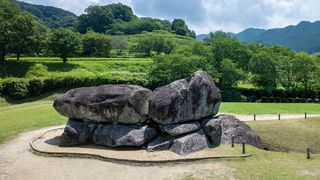
- The Ancient Capitals of Asuka and Fujiwara: July 2026
(Originally published in Japanese. Banner photo © Nippon.com.)