Photography as a Bridge to a Vanishing Time
Fukushima’s Old Farming Rituals Come to Life in Haga Hideo’s Photography
Guideto Japan
Lifestyle Culture- English
- 日本語
- 简体字
- 繁體字
- Français
- Español
- العربية
- Русский
Worshipping Tanokami: The Deity of Abundant Harvests
Before becoming a professional photographer, the pioneering folklore photographer Haga Hideo (1921–2022) worked as a translator at a news agency. That career came to an end in 1952 when the agency disbanded. For a change of scene, he headed to Fukushima Prefecture, where his father was from. While staying with relatives in what is now the city of Iwaki, he encountered a New Year ritual performed among farming families.
Prior to Japan’s rapid economic development in the years after World War II, folk beliefs in the tanokami rice deity were alive and well in many parts of the country. In Fukushima, the family patriarch and his eldest son would gather the straw from the rice harvested the previous fall to create a yorishiro, an object to beckon a deity, to welcome Shōgatsu-sama, the spirit thought to bring bountiful crops. In spring, this spirit would reappear in the rice paddies to make the rice ripen; it would then leave after the fall harvest, returning to the mountains where it dwelled.
The idea of an invisible deity responsible for the bounty of nature inspired Haga, who turned his camera lens to deity-welcoming ceremonies and their carefully crafted ritual implements and offerings. Casting a closer eye on this unadorned spiritual culture, he was reminded of marebito, the concept of a divine spirit visiting from the “other world” that he had learned about from the folklorist and ethnologist Orikuchi Shinobu (1887–1953) during his university studies.
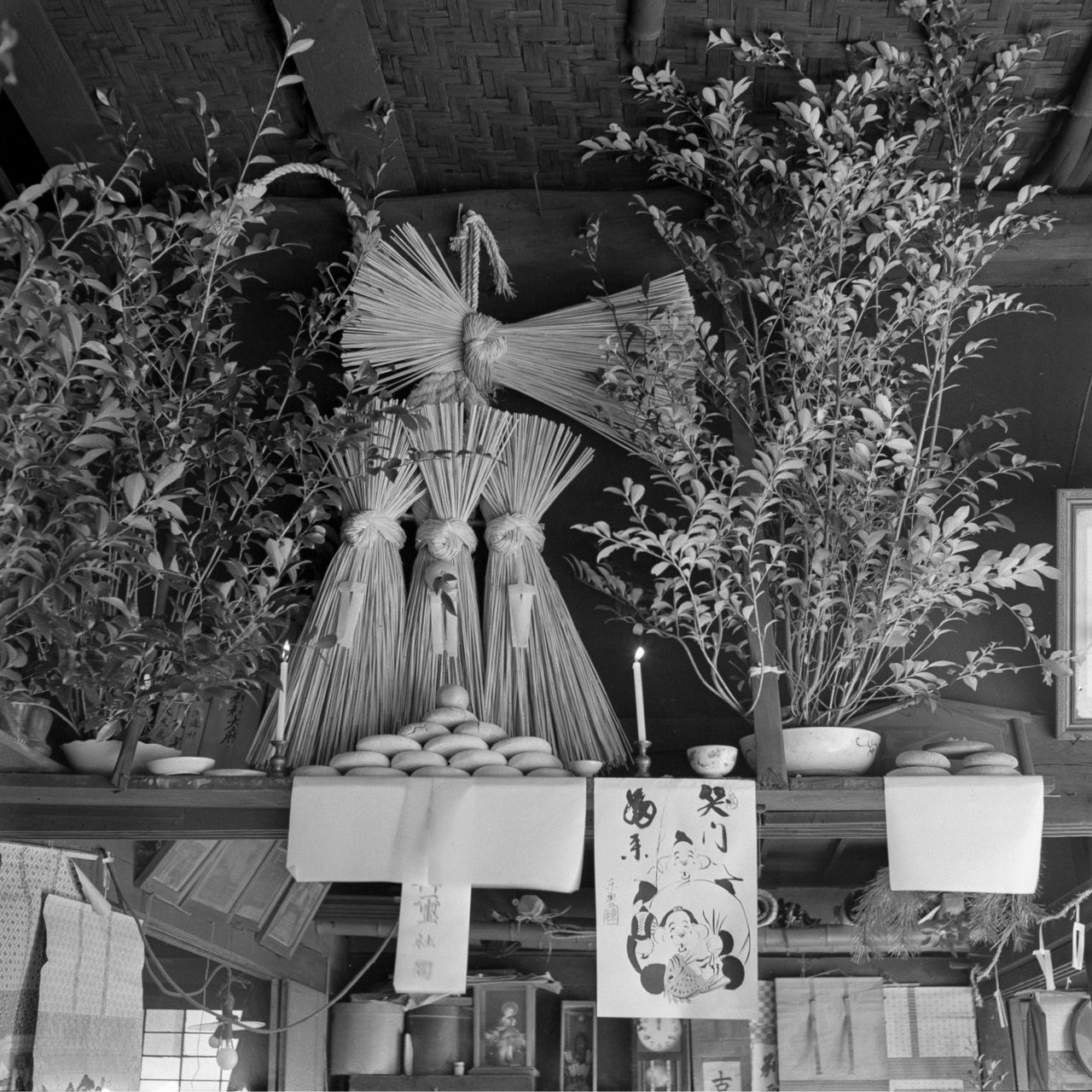
The altar for worshipping Shōgatsu-sama on the first day of the new year. (© Haga Hideo)
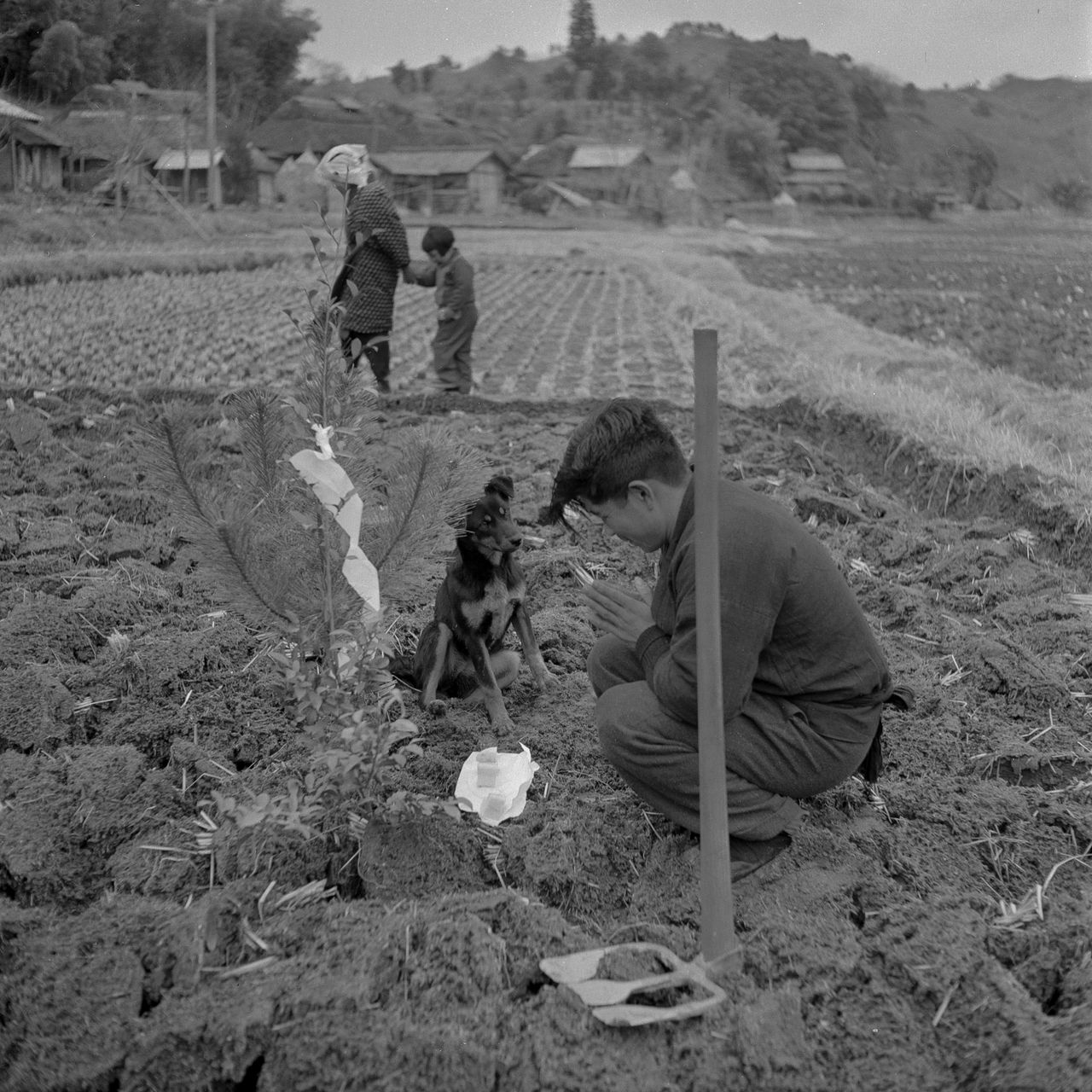
A ceremony to pray for a good harvest, performed after a paddy dried out during winter has been worked with a hoe in preparation for planting. (© Haga Hideo)
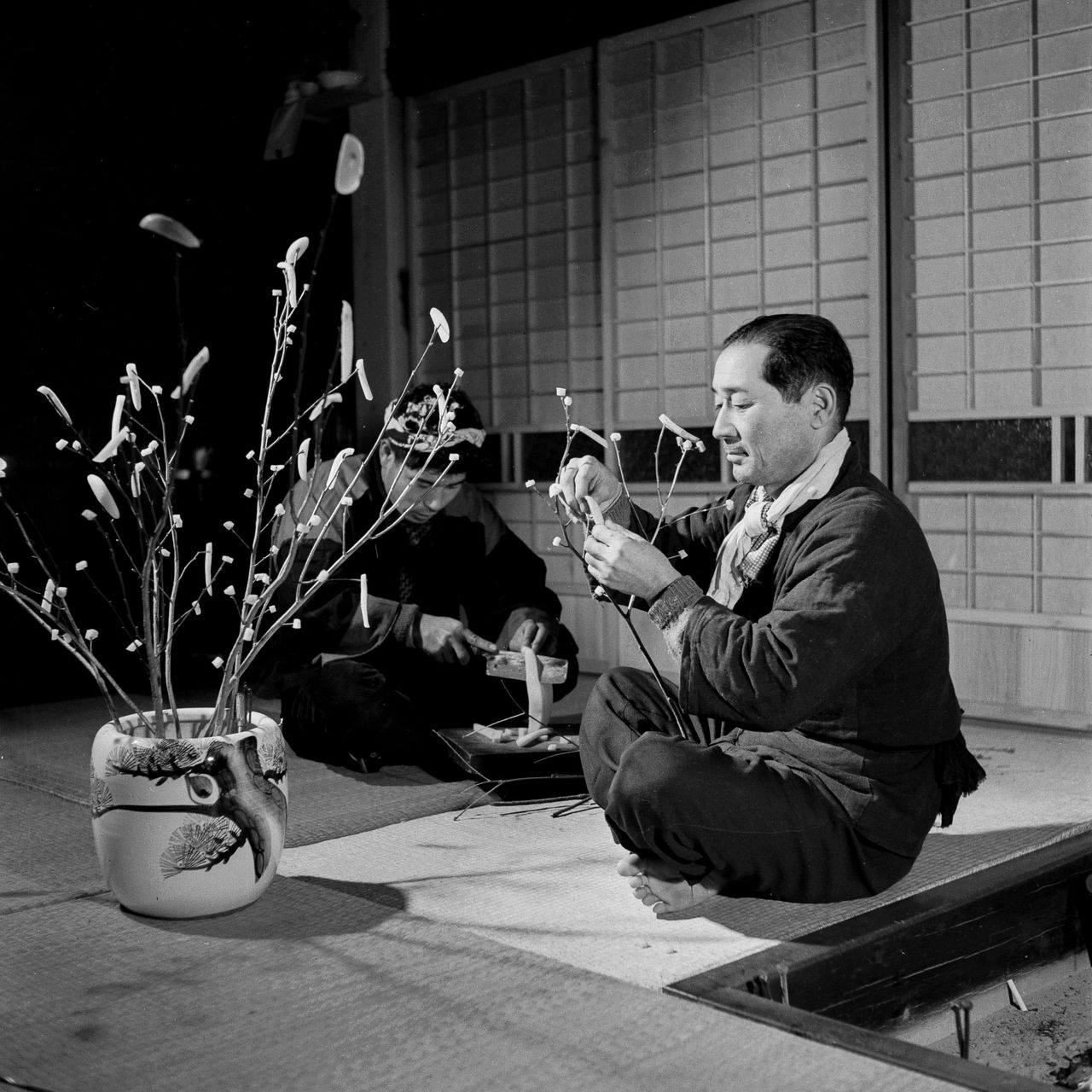
Preparing mochibana, bits of mochi pounded rice threaded onto branches, as a stand-in for Shōgatsu-sama, on January 13. (© Haga Hideo)
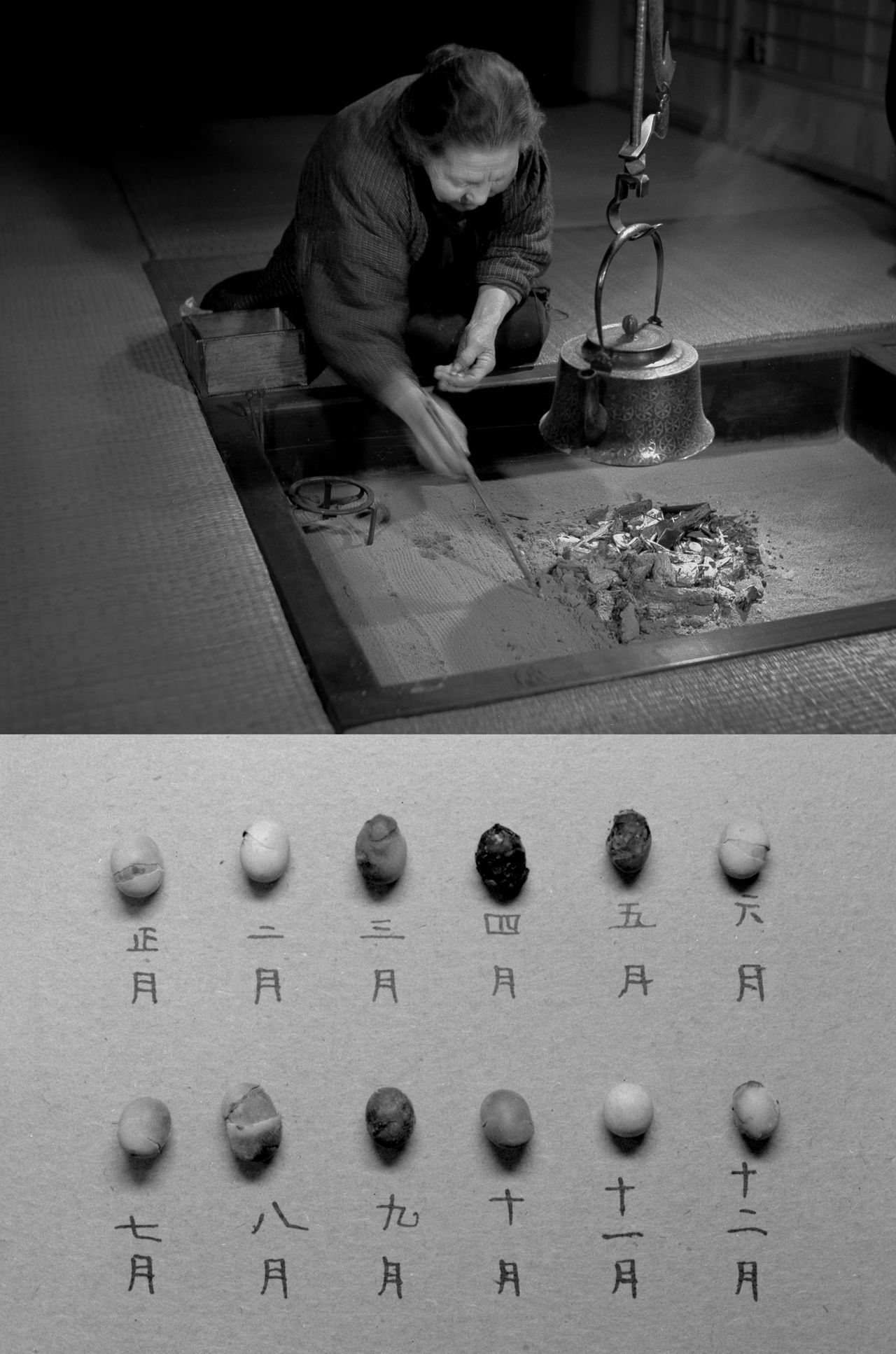
A divination ritual conducted on the evening of January 14. Twelve soybeans are roasted in the irori sunken hearth and used to predict the weather for the coming year according to the degree of charring. (© Haga Hideo)
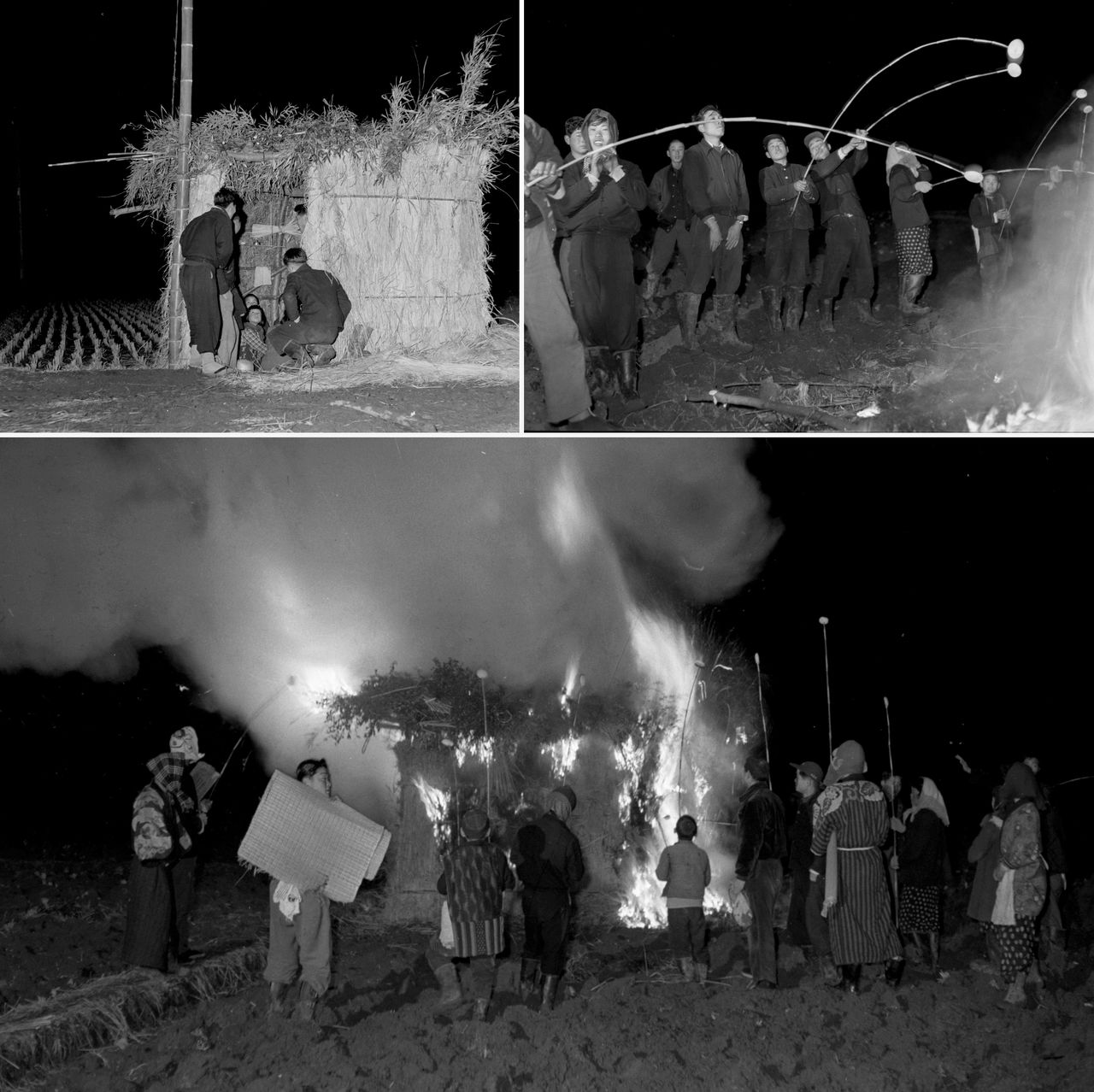
Torigoya is conducted even today on koshōgatsu, January 15. Bamboo, straw, and New Year decorations are burned to return Shōgatsu-sama to the heavens. (© Haga Hideo)
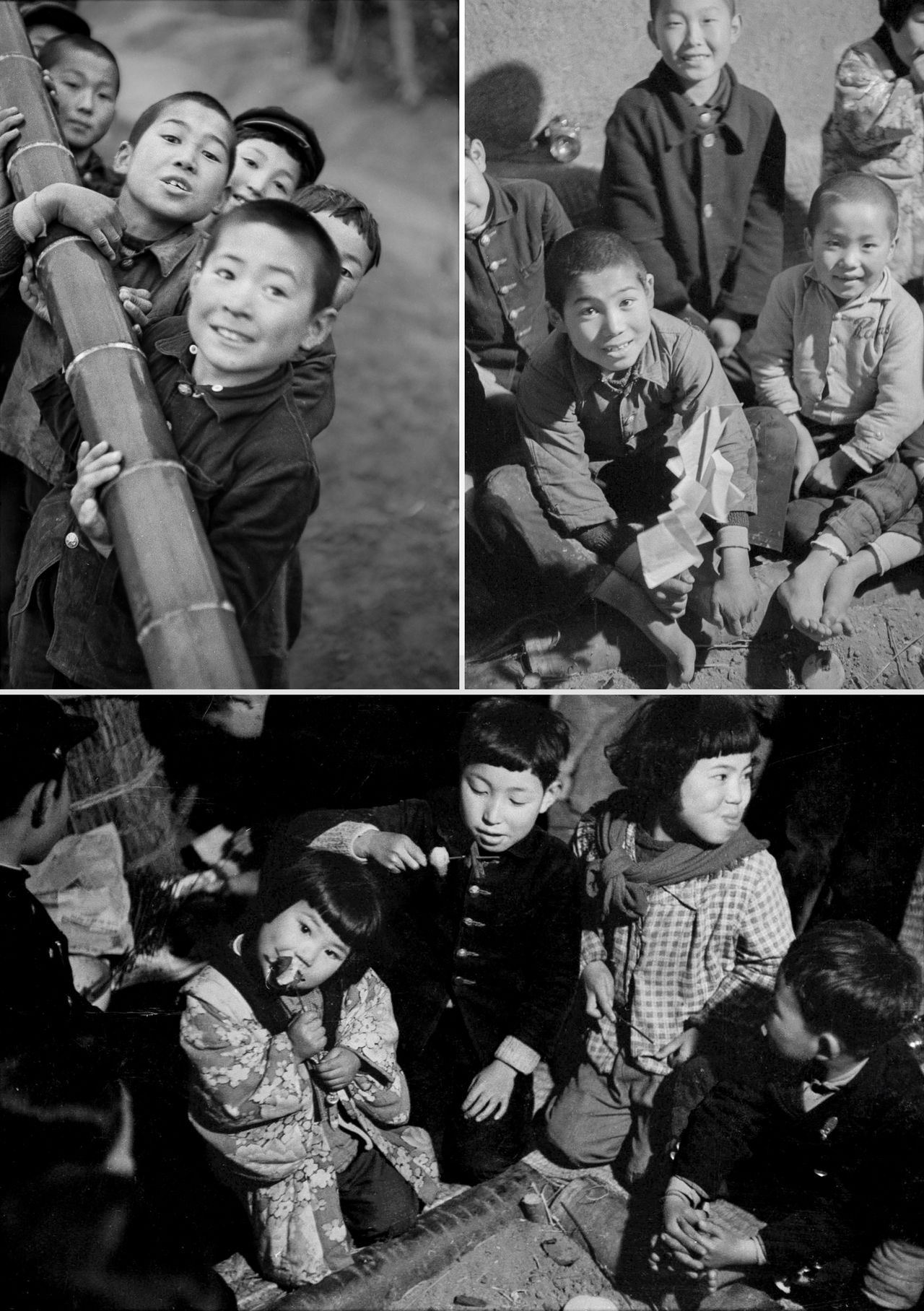
Warmed by hearty oden stew, children gather in a hut to sing a song to drive away birds, which eat the grain the fields, in the hope of an abundant harvest. (© Haga Hideo)
Passing On the Traditions of Iwaki
In the foreword to Tanokami: Nihon no inasaku girei (Deity of the Rice Paddies: The Rice Cultivation Rituals of Japan), Haga’s first collection of photos taken in Iwaki, he explained why he had chosen to pursue this work there.
For 2,000 years, the Japanese people have grown rice, around which the belief in tanokami and associated rituals has developed. Many Japanese customs and myths have been influenced by tanokami, providing insight into how rice cultivation rituals are reflected in daily life and social structures . . . Today, modern science has made good harvests possible without the intervention of tanokami. Progress in agricultural technology and the modernization of farm life are rapidly eroding traditional village society, in which religious beliefs, crop production, and entertainment were intertwined. This is a last opportunity to record the rituals associated with rice production for posterity.
As Haga had foreseen, the rituals around rice growing were rapidly becoming simplified or had disappeared altogether. Meanwhile, the significance of rites centering around tanokami, such as Hiroshima Prefecture’s Mibu no Hana Taue and Ishikawa Prefecture’s Oku-Noto Aenokoto, has been recognized with their collective inscription by UNESCO as Intangible Cultural Heritage. Haga, who made recording folklore for posterity his lifework, passed away in 2022 at the age of 101.
Iwaki, where Haga got his start as a folklore photographer, is today on the verge of losing its traditional farming culture. The Iwaki City Museum of Folklore and Traditional Housing, which opened in 1999, is leading efforts to preserve what is left of those traditions. The museum collects and displays all manner of artifacts related to local life.
Five traditional thatched-roof houses, dismantled and transported from various parts of Iwaki, have been re-erected in the museum’s vast grounds. Meticulously preserved, they reproduce a premodern farm village. On display inside the houses are farming tools of the era; visitors can also try their hand at working in the fields and paddies outside. Iwaki schoolchildren visit here as part of their social studies lessons, and on weekends, adults can participate in workshops to learn about the local culture.
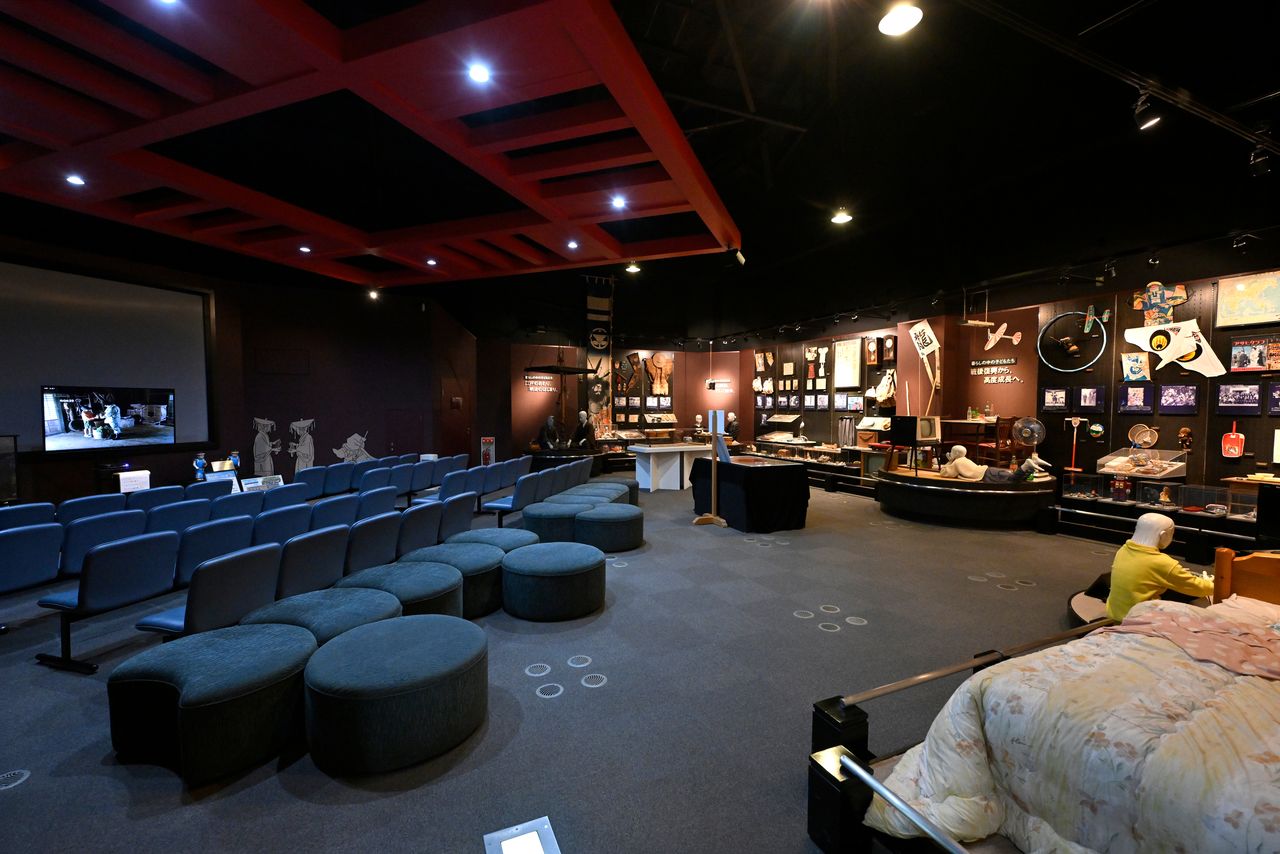
The permanent exhibit showcases farm life from the Edo period (1603–1868) to the present. (© Uzawa Akihiko)
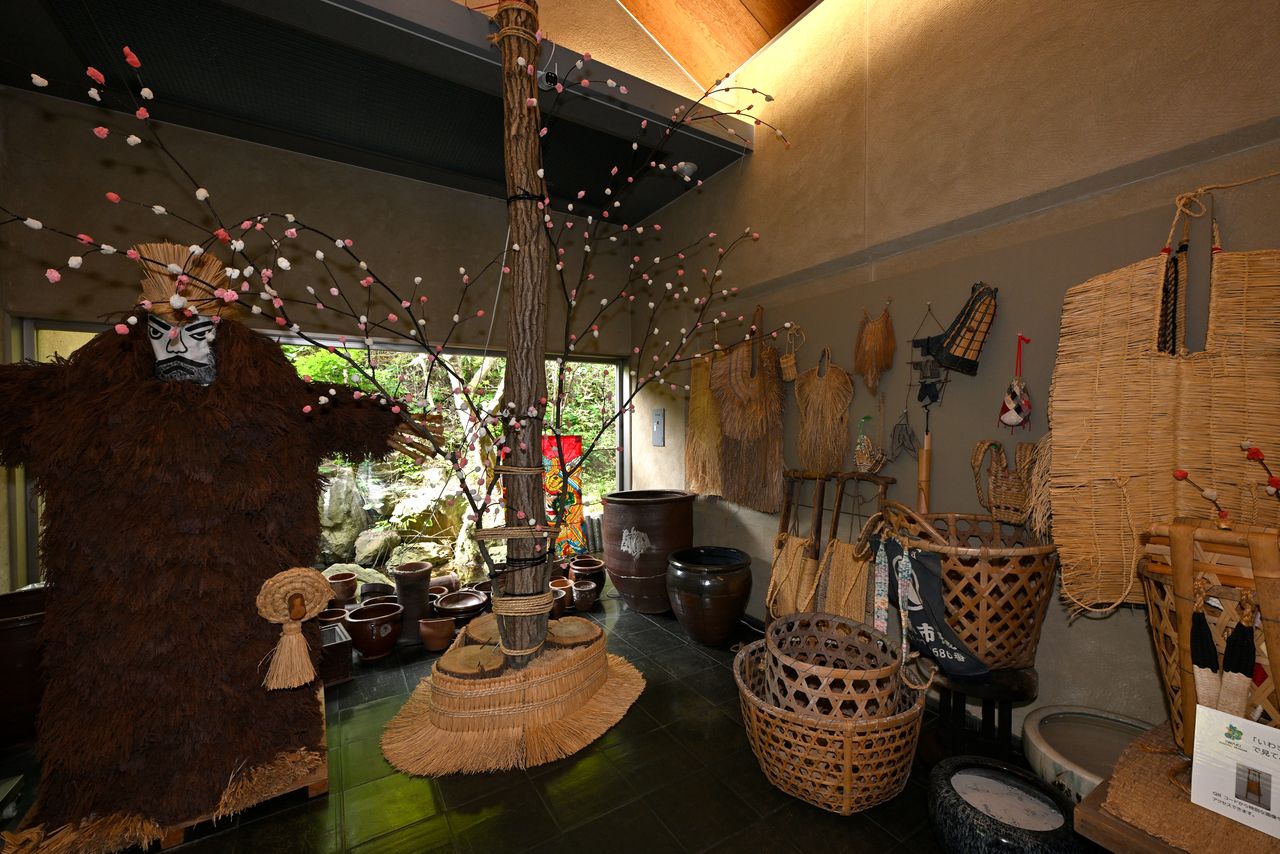
Farm tools and artifacts, including a life-sized figure (at left) created to protect the village from evil, have been collected from various parts of Iwaki. (© Uzawa Akihiko)
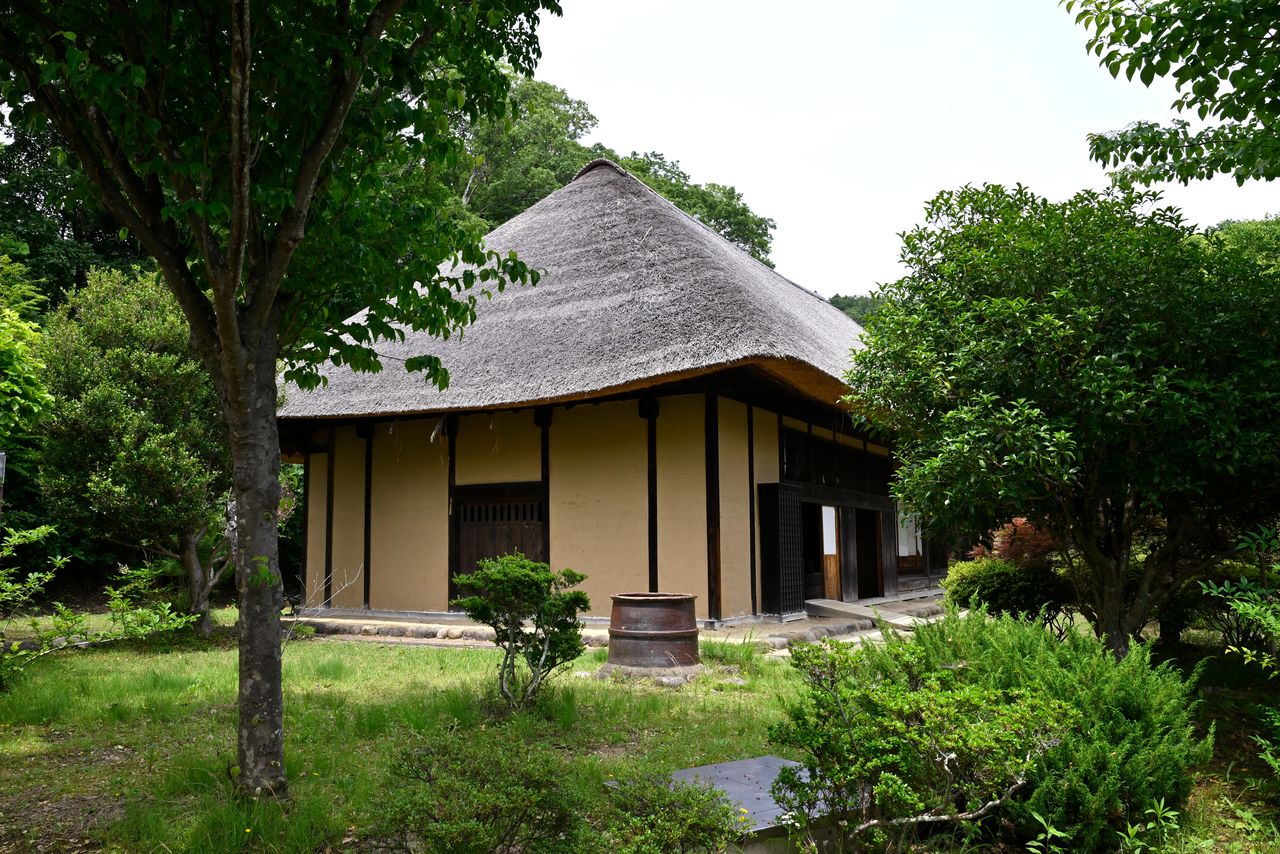
A traditional home from the latter half of the nineteenth century stands in the park. (© Uzawa Akihiko)
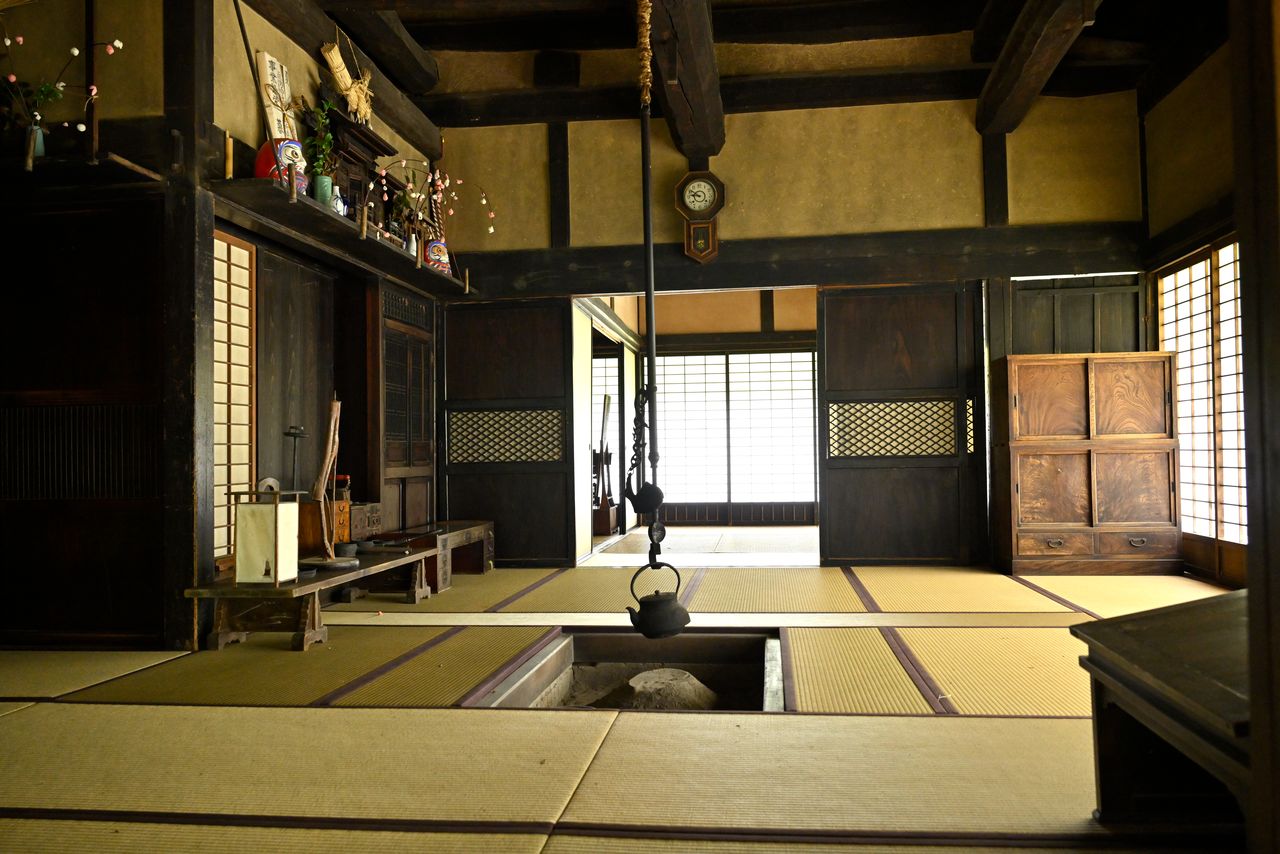
The interior is mostly untouched. (© Uzawa Akihiko)
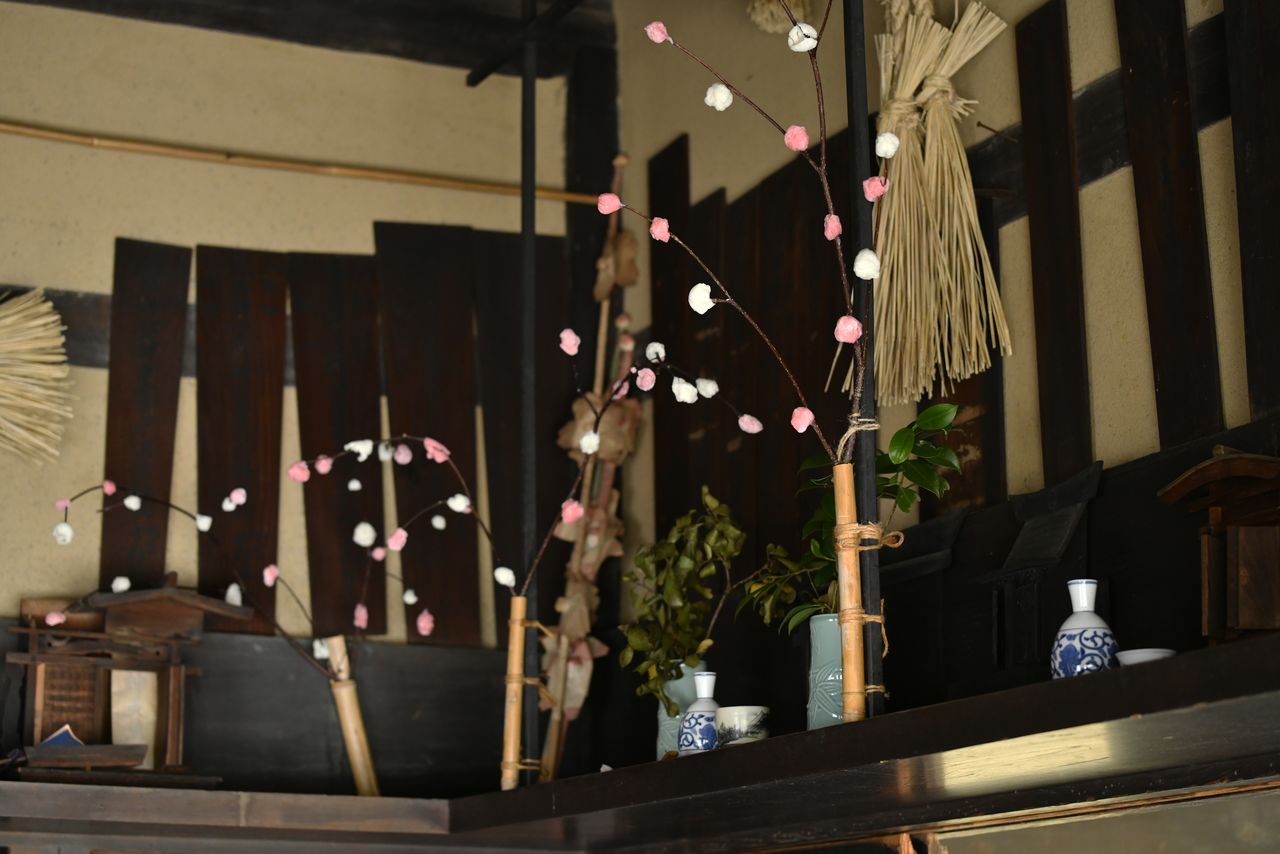
Mochibana prepared by children are displayed. (© Uzawa Akihiko)
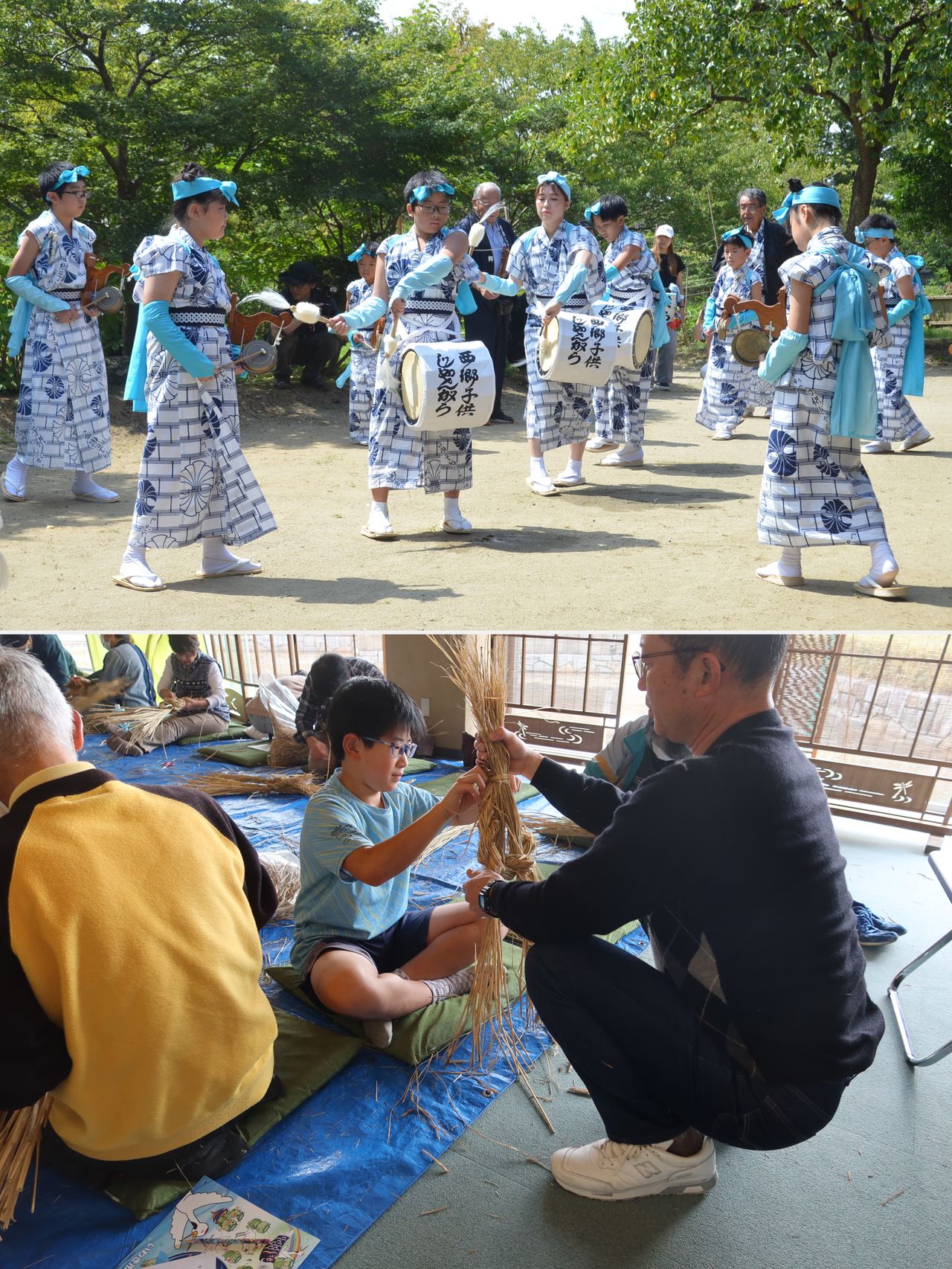
Top: The Jangara Nenbutsu Odori folk entertainment performed during the midsummer bon period. Bottom: A child is taught how to make a New Year decoration. (Courtesy Iwaki City Museum of Folklore and Traditional Housing)
In the summer of 2026, Haga’s son Haga Hinata visited the folklore museum to donate 46 film rolls’ worth of digitalized photo data, to help teach local history. Sorting through the collection, the museum selected photos of folklore entertainment that had died out more than 30 years before, including them in a special exhibit during the summer.
According to curator Ōta Yūhi, “Photos depicting farming in Iwaki in the postwar years are very rare, and they are invaluable for scholarly research. For example, the folklorist Seki Keigo [1899–1990] remarked that he had understood narikizeme, the act of hitting a fruit tree with a knife to cast a spell to ensure a bountiful crop, from a written description, but that Haga’s photo was the first time he had actually seen the action performed.”
A special exhibit planned for the fall on the theme of “straw” features donated photos illustrating Shōgatsu-sama, torigoya, and other traditions. The photos will also be used for school lectures by outside speakers and are included in the Iwaki Digital Museum showcasing cultural resources. Haga says “I’m very happy that the folklore museum values local folklore and that I was able to entrust it with my father’s photos.”
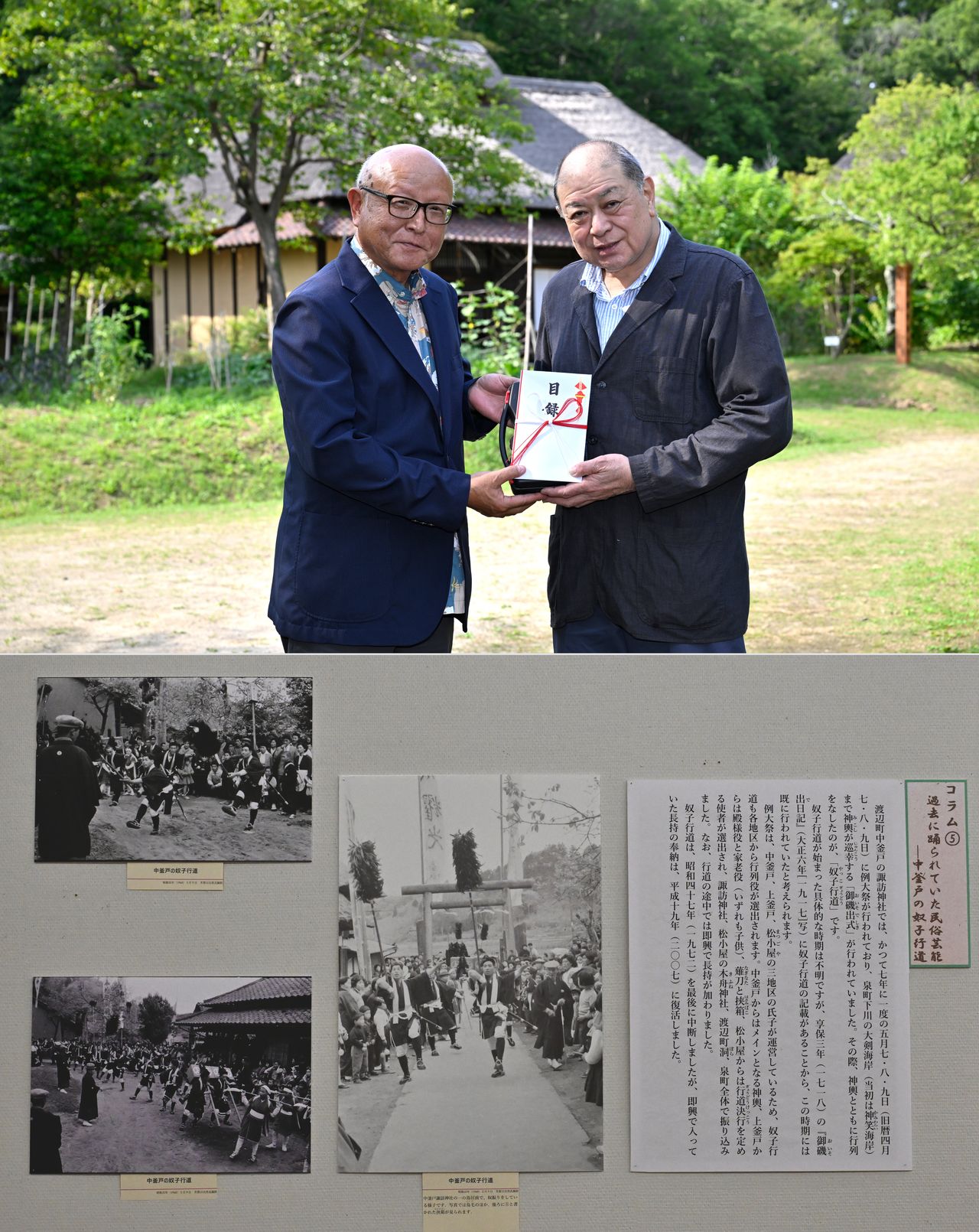
Top: Haga Hinata, at right, presents digitalized photo data to museum director Yajima Noriyuki. Below: The Folk Entertainment of Iwaki exhibition, which runs until September 27, includes photos taken in 1960. (© Uzawa Akihiko)
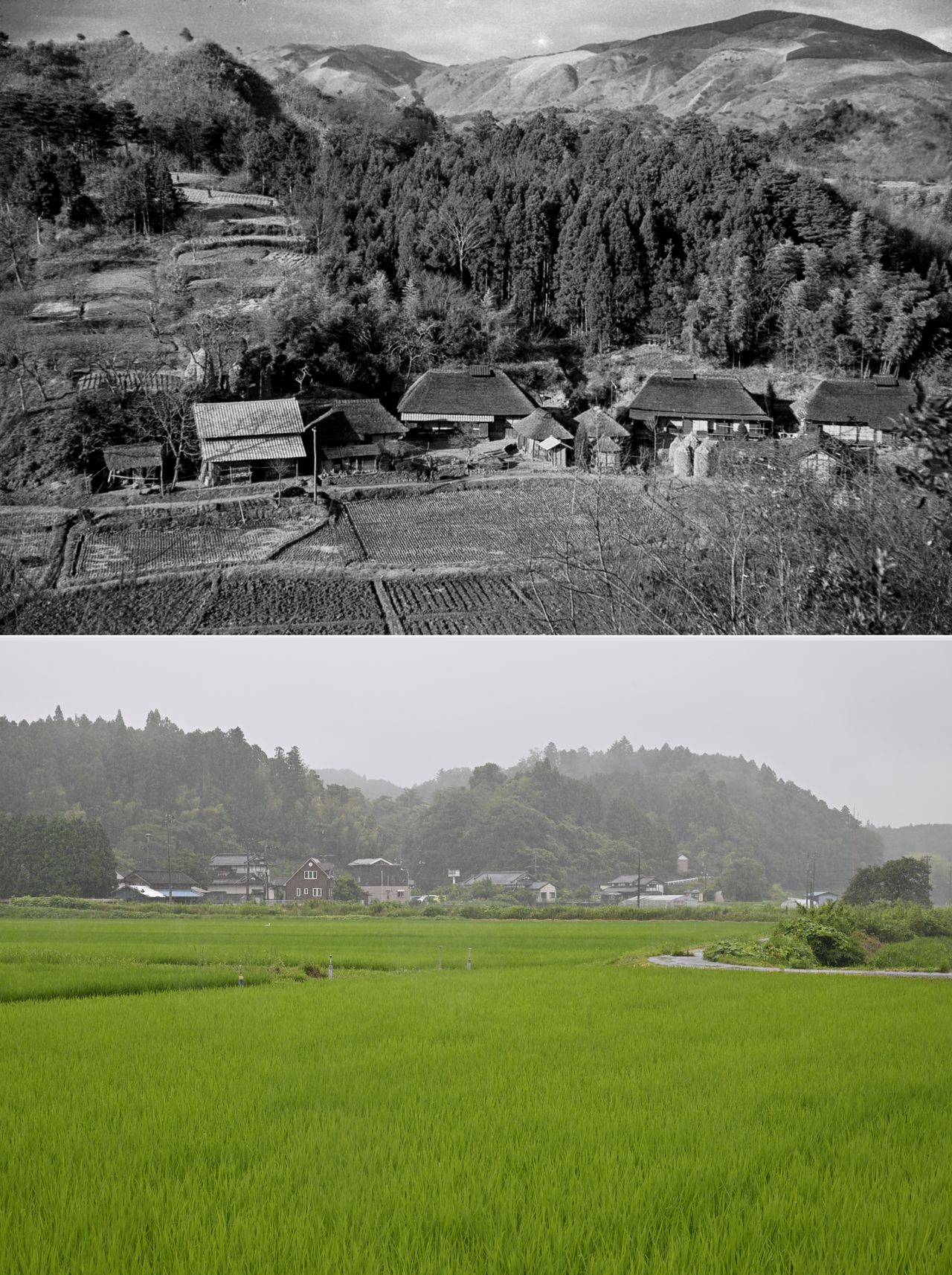
Although acreage under cultivation has decreased, rice-growing continues. The photo at top (© Haga Hideo) shows the hamlet of Kamikamado, where Haga photographed New Year ceremonies in 1953; below (© Uzawa Akihiko) is the same setting today.
Rich Folklore Traditions Live On
Haga also called on the Fukushima Museum in Aizu-Wakamatsu to donate the digitalized contents of 138 rolls of film containing photos taken throughout the prefecture. His father’s photos had been included in an exhibition that traveled to Beijing and Rome in 2012, the year after the Great East Japan Earthquake. Haga’s presentation took place on the occasion of the return of the exhibition to the Fukushima Museum.
At the ceremony, Ōsato Masaki, the museum’s curator in charge of folklore, displayed the actual ritual implements and crafts that the photos had recorded. He explained: “Along with actual physical examples, photos are vital for explaining traditional rituals. Haga Hideo’s photos, especially those in which he focused on capturing the essence of those rituals, are priceless.”
In addition, several film strips were digitalized in chronological order, giving a good idea of the sequence of events taking place. The 1960 photos showing festivities in the town of Miharu are particularly interesting.
One sequence shows the moment a bride enters the groom’s home, a once-in-a-lifetime occasion. According to Ōsato, “Haga must have negotiated beforehand with the family, since he took photos from inside the home.” He expressed surprise that the sequence of photos “shows the go-between and a female neighbor removing the bride’s umbrellalike wicker headgear and guests chanting the celebratory ‘Takasago’ song from the nō play of the same name. These are the kinds of photos depicting a ceremony that one might expect to see in school textbooks on folklore.”
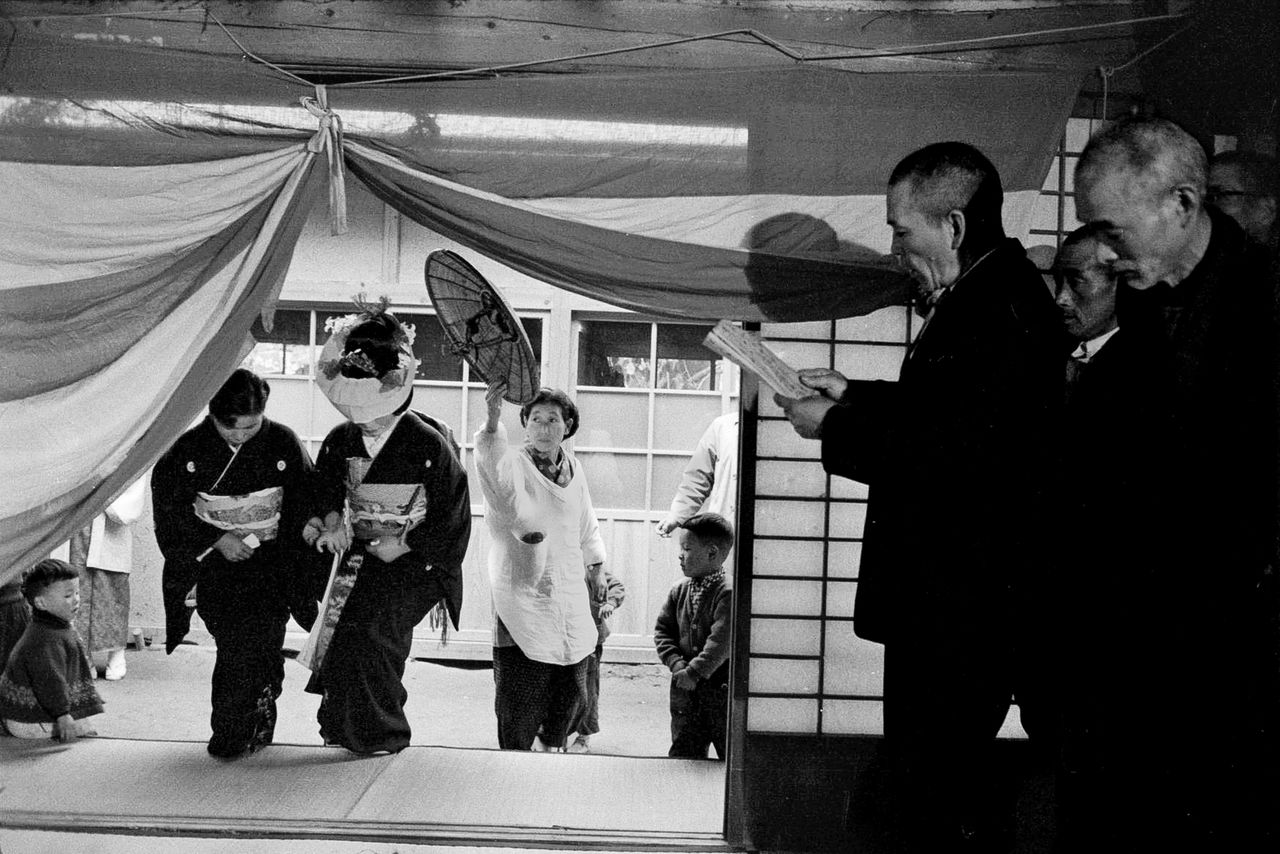
A photo from the wedding. Haga recorded the entire proceedings, from the exchange of yuinō betrothal gifts to reporting the marriage to the local shrine’s tutelary deity. (© Haga Hideo)
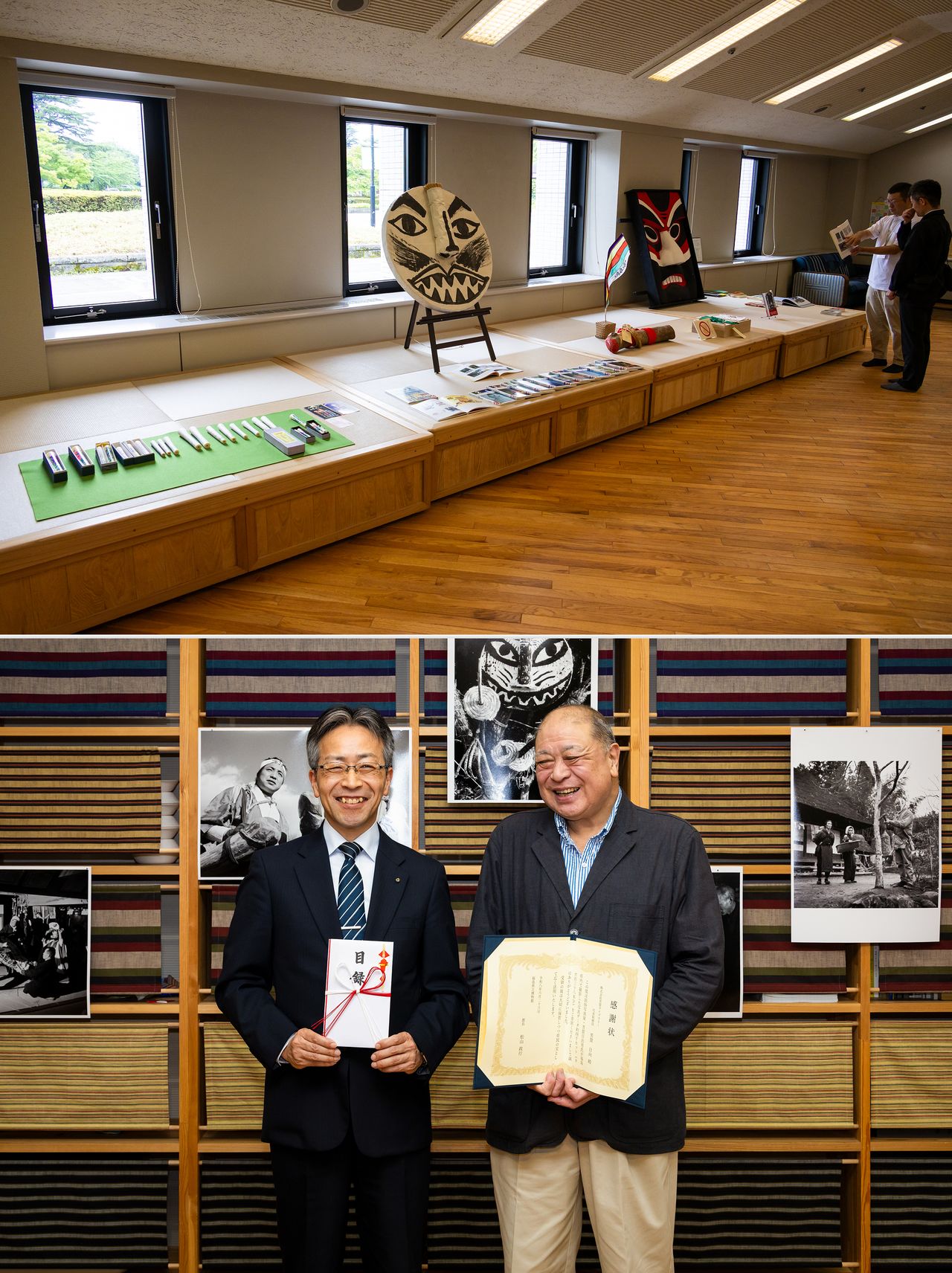
Top: A Fukushima Museum display of folk implements similar to those depicted in the donated photo collection. Bottom: Museum director Matsuyama Masayuki, at left, expresses pleasure at receiving the collection, which he considers a valuable resource for communicating Fukushima’s past way of life. (© Nippon.com)
Presenting the collection, Haga said, “Fukushima’s festivals are an important element in human relations. They haven’t really been in the public eye since the March 2011 earthquake, but I hope that these photos will make local people proud of their folk culture.”
A similar collection of digitalized photos, taken in the 1950s, was gifted to Kagoshima Prefecture’s Amami Ōshima in the summer of 2025; activities relating to the collection have been ongoing there. The Amami Museum held an exhibit commemorating the donation of the photos this summer and is also planning a traveling exhibition to other parts of Japan, starting with Kobe, targeting former residents of Okinoerabujima, one of the Amami islands. Perhaps a similar activity can be organized in Fukushima to communicate the local culture to younger generations.
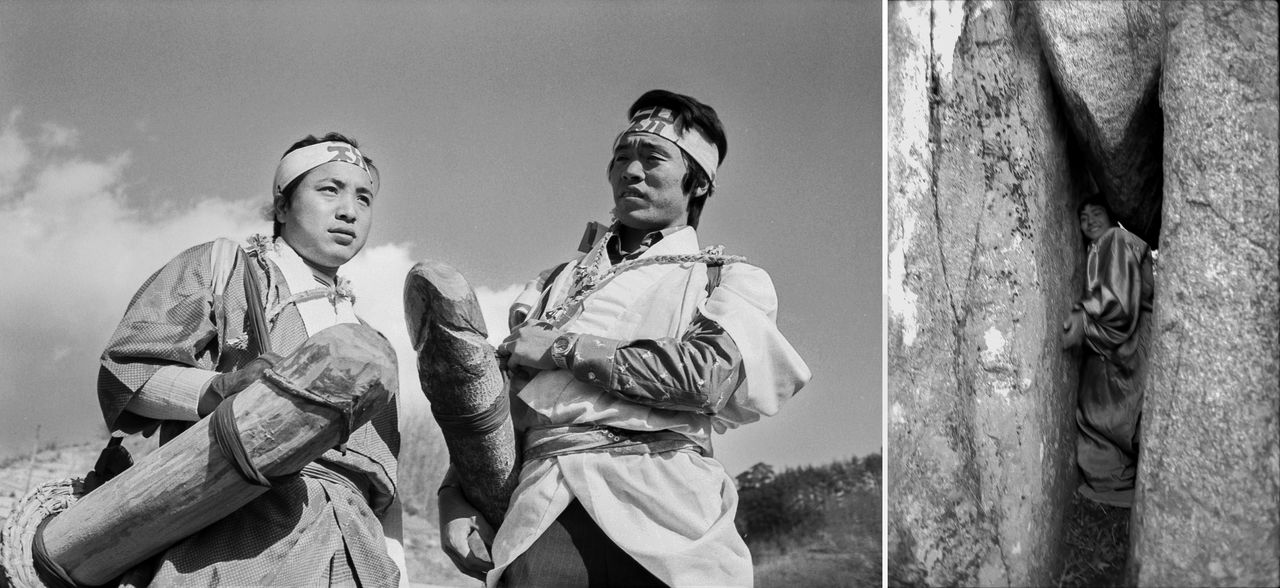
The Kohata no Hata Matsuri in Nihonmatsu, where a coming-of-age rite for 15-year-olds includes transiting through a narrow passage to symbolically “emerge” into adulthood, is still conducted today. (© Haga Hideo)
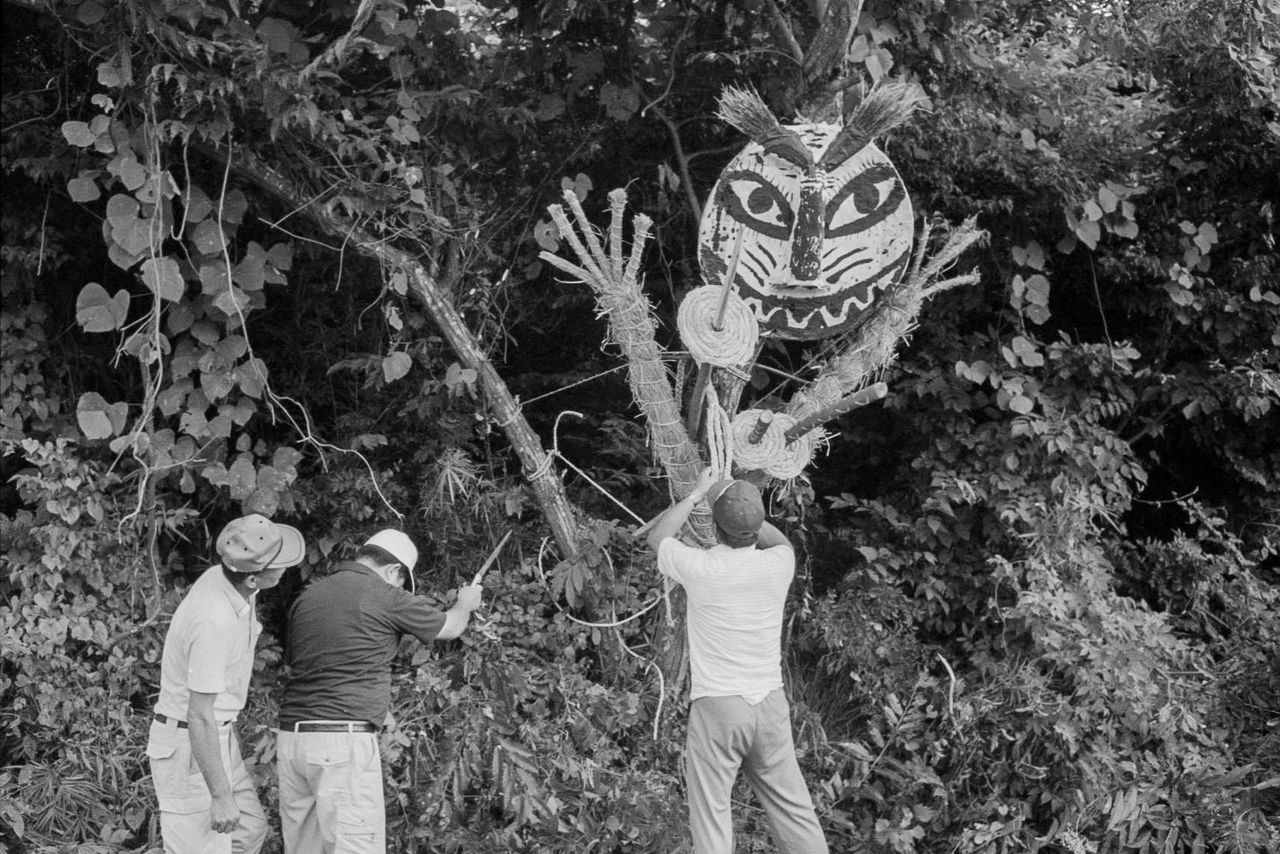
A traditional rite in the town of Asakawa, held to protect fields and paddies from strong winds, celebrates a deity known as Kazebukuro-sama. (© Haga Hideo)
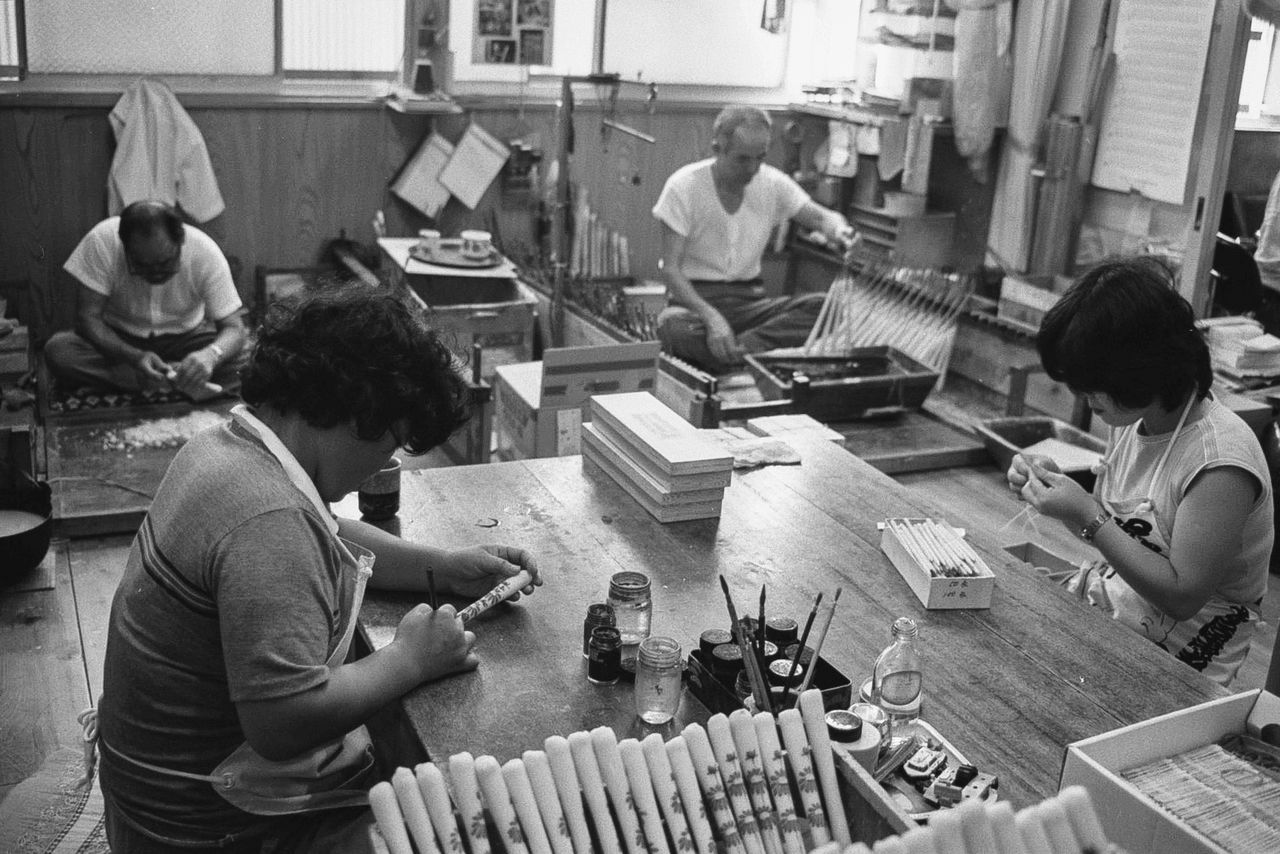
Artisans making traditional handcraft Aizu erōsoku candles. (© Haga Hideo)
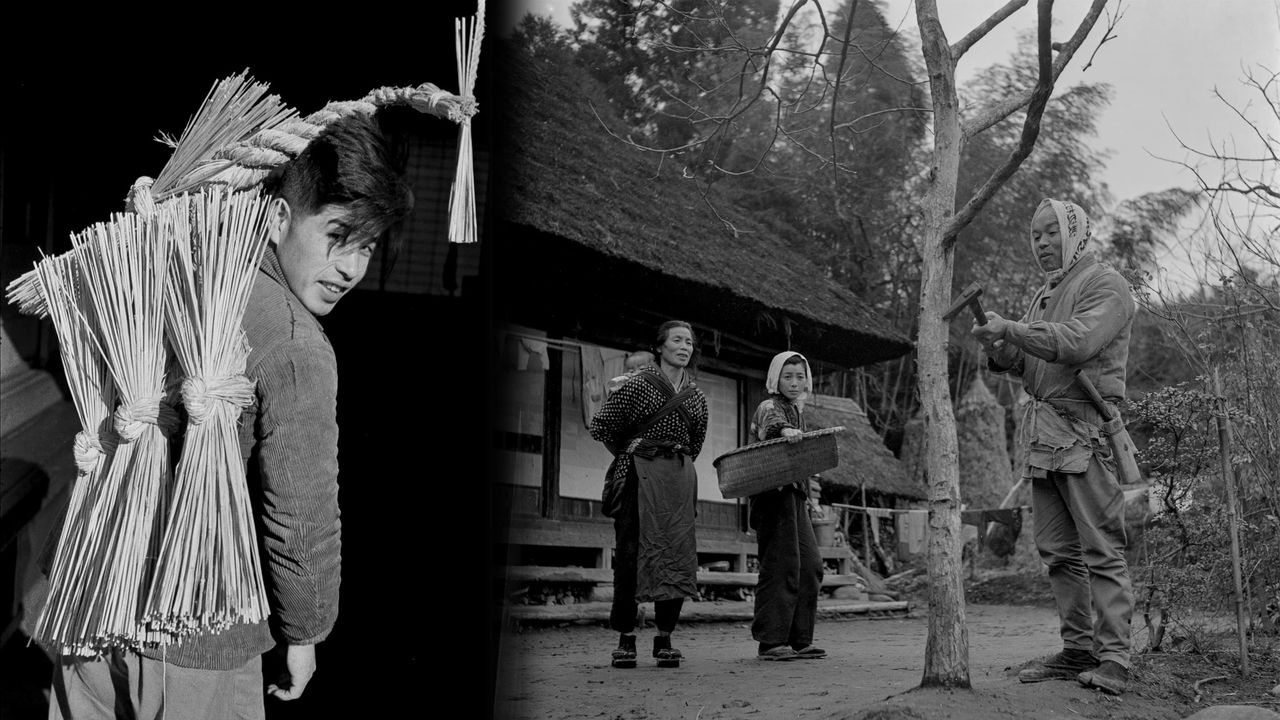
(Originally published in Japanese. Reporting and text by Fujiwara Tomoyuki of Nippon.com. Banner image: A man carrying the straw bundles used in the Shōgatsu-sama New Year ritual, at left, and a man striking a fruit tree in the narikizeme rite. © Haga Hideo.)