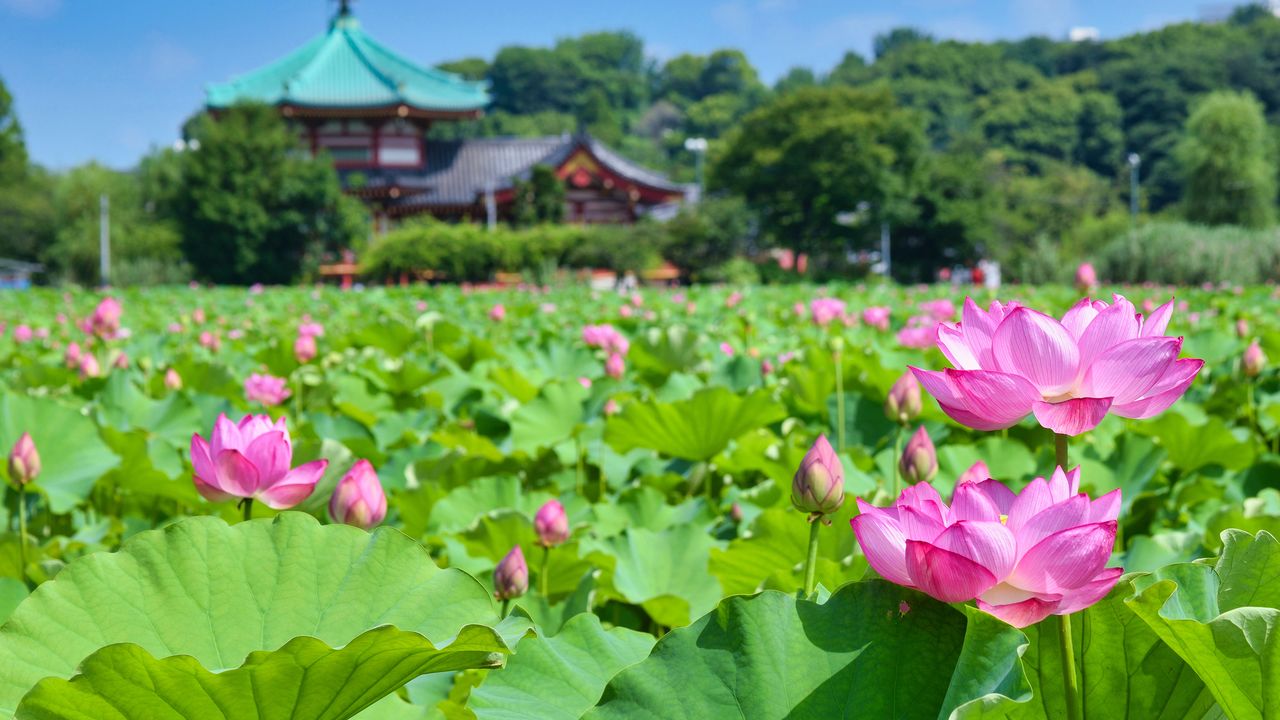
Lotuses in Japan
Guideto Japan
Society- English
- 日本語
- 简体字
- 繁體字
- Français
- Español
- العربية
- Русский
Buddhist Symbol
The Japanese word for lotus, hasu or sometimes hachisu, is said to derive from the word for bee’s nest, hachinosu, due to the similar honeycomb appearance of the plant’s seed pod. The lotus is closely associated with Buddhism. As the plant grows from the mud on the bottom of ponds, it symbolizes the possibility of transcending this world’s impurity to achieve enlightenment.
While the blooming seasons may vary depending on the kind of lotus, July is typically peak time for enjoying the flowers. Early morning viewing events are held at temples, shrines, and parks where lotuses are grown. Tokyo’s Shinobazu Pond in Ueno Park is particularly famous for the beauty of its flowers, which typically bloom from mid-July until mid-August.
Almost the entire plant—the seeds, leaves, stalk, heart, and roots—can be eaten or used in traditional medicine.
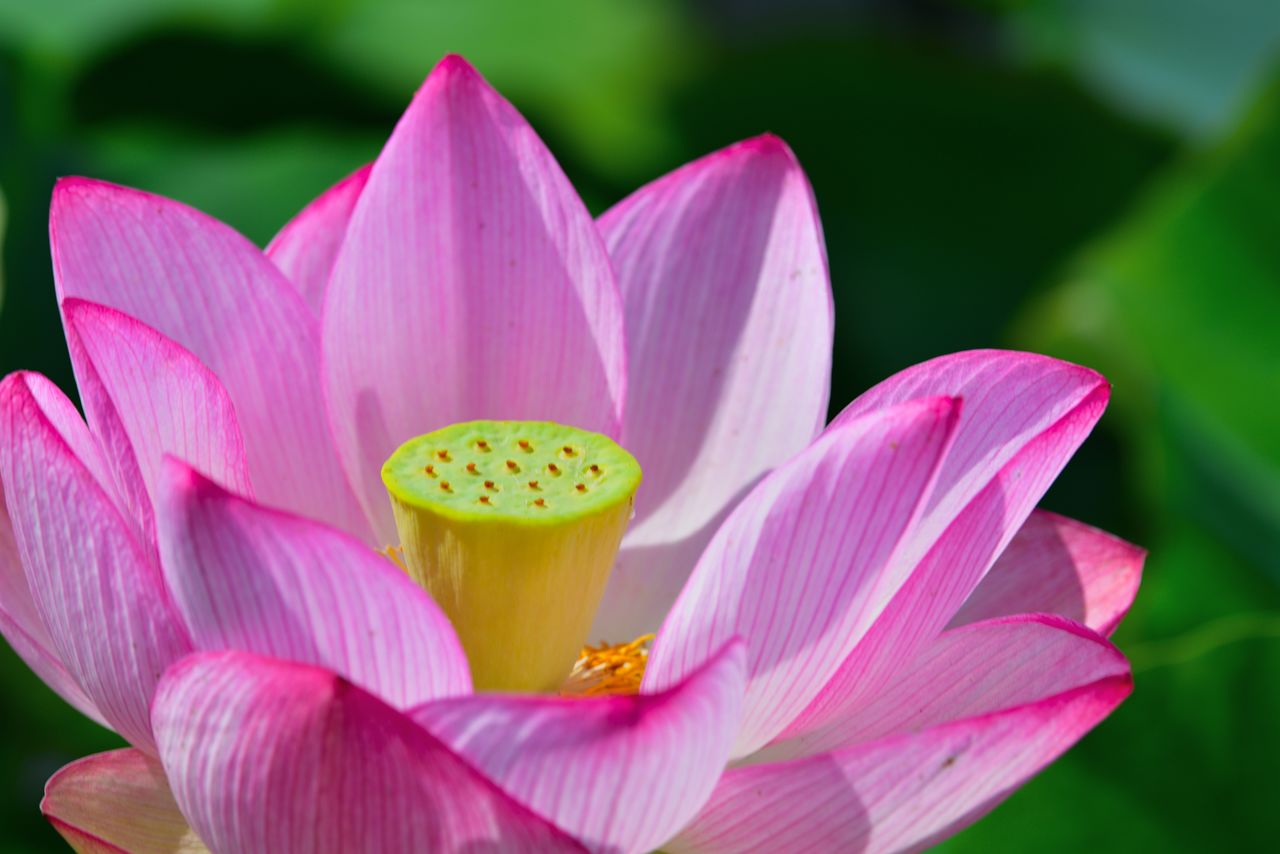
A lotus grown from seeds that were 2,000 years old. (© Pixta)
(Originally written in English. Banner photo: Lotus at Shinobazu Pond the Ueno Park. © Pixta.)