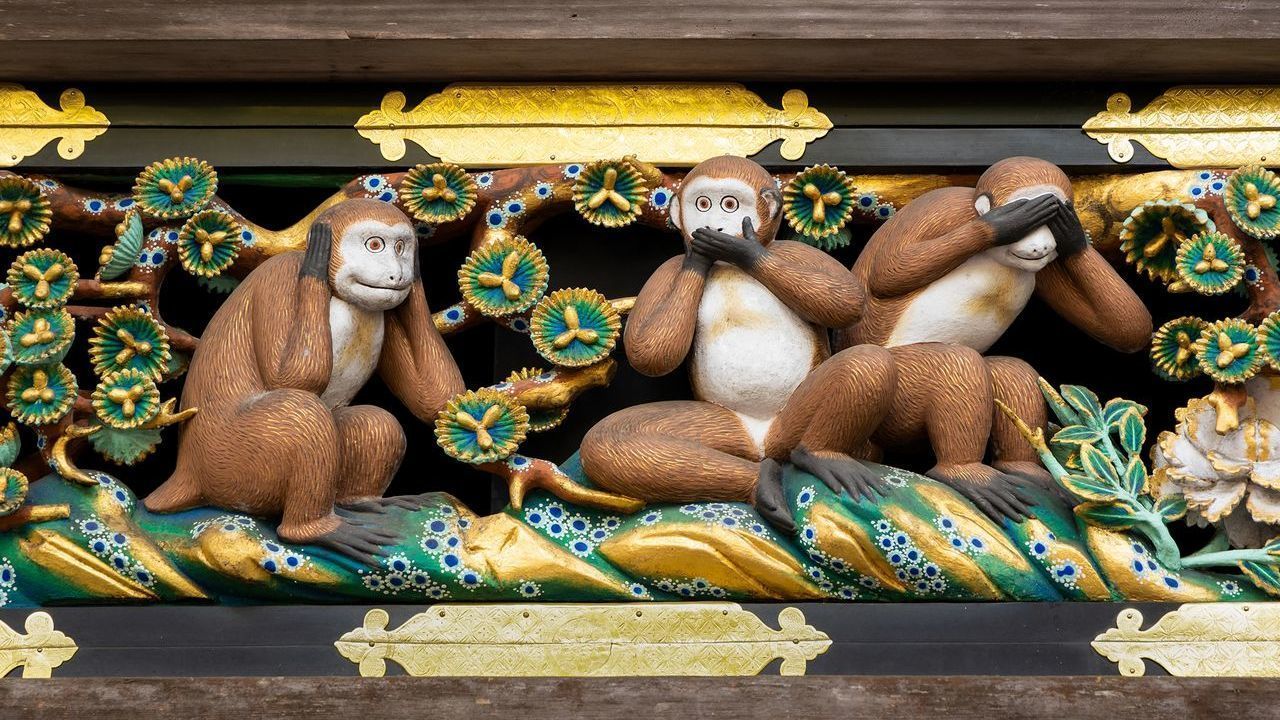
Nikkō’s Three Wise Monkeys
Guideto Japan
Culture History- English
- 日本語
- 简体字
- 繁體字
- Français
- Español
- العربية
- Русский
Shrine Monkeys
Nikkō Tōshōgū is a magnificent shrine dedicated to Tokugawa Ieyasu, the founder of the Edo shogunate, who is buried there. It is the centerpiece of the Shrines and Temples of Nikkō UNESCO World Heritage site.
Among the extensive artworks adorning the buildings of the shrine, a carving of three monkeys has won particular fame. It is one of eight monkey carvings on the stable for sacred horses within the shrine precincts, as monkeys were thought to be protectors of horses. The carving is known simply as “three monkeys” (sanzaru) in Japanese, but is commonly called the “three wise monkeys” in English.
The monkeys, covering their eyes, ears, and mouths, respectively, are known as mizaru (do not see), kikazaru (do not hear), and iwazaru (do not speak); these names also play on saru, the Japanese word for monkey. The carving is based on the idea that children should be educated through morally positive experiences, and should not see, hear, or say anything bad. In English, this is expressed as “See no evil, hear, no evil, speak no evil.”

(Originally written in English. Banner photo © Nippon.com.)