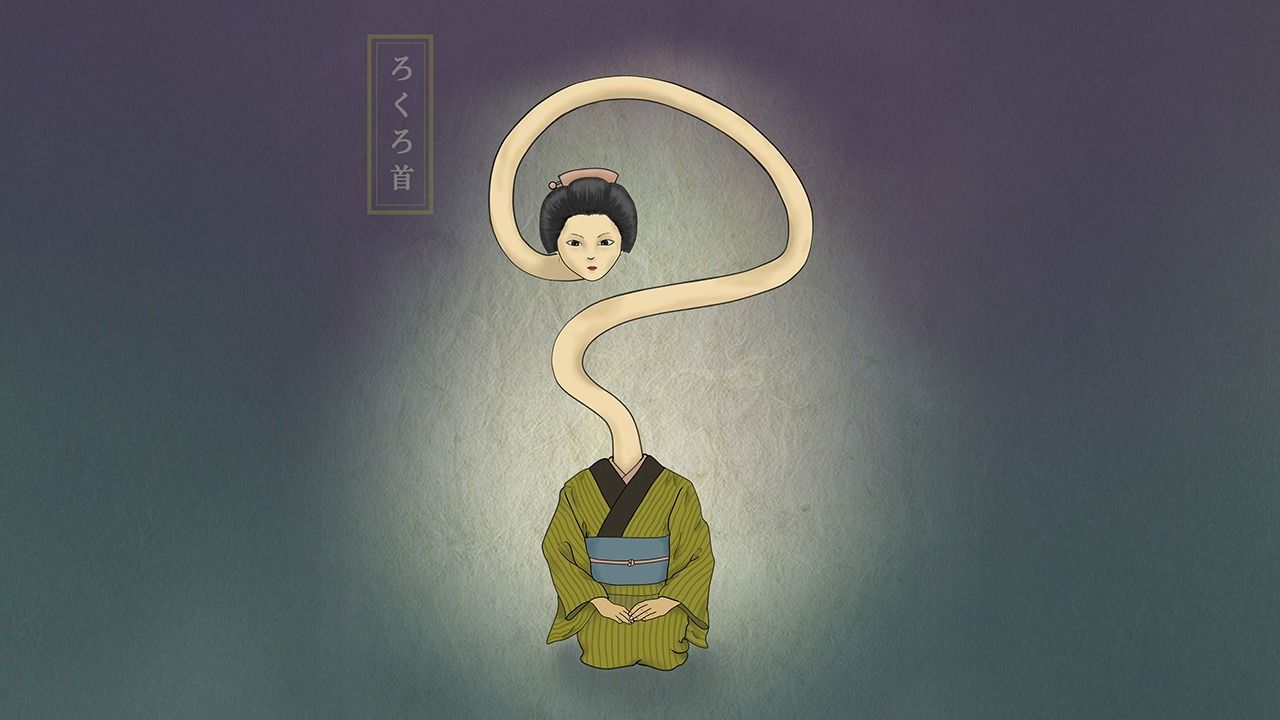
Rokurokubi: Long Necks and Flying Heads
Guideto Japan
Culture- English
- 日本語
- 简体字
- 繁體字
- Français
- Español
- العربية
- Русский
Weird Tales
In many Japanese stories, a rokurokubi looks just like an ordinary woman, but her head can go flying off, either at the end of a greatly extended snakelike neck or completely detached from her body (in which case she may be called a nukekubi). Tales about rokurokubi and depictions in art first became especially popular in the Edo period (1603–1868), when there was a boom of interest in the sometimes frightening, sometimes humorous imaginary creatures known as yōkai.
In Kwaidan, the classic collection of weird tales by Lafcadio Hearn, there is a story called “Rokuro-kubi” in which a priest stays with a family of what turn out to be these creatures. In the middle of the night, he discovers their headless bodies in one room and the heads flying around outside, planning to eat him. Incidentally, while rokurokubi are most typically depicted as women, they can also be male.
There are several good books in English about yōkai too, such as the following:
- The Book of Yōkai: Mysterious Creatures of Japanese Folklore by Michael Dylan Foster
- The Book of Japanese Folklore: An Encyclopedia of the Spirits, Monsters, and Yōkai of Japanese Myth by Thersa Matsuura
- Yokai Attack! The Japanese Monster Survival Guide by Hiroko Yoda and Matt Alt
- Japandemonium Illustrated by Hiroko Yoda and Matt Alt
(Originally written in English. Banner photo © Pixta.)