Tōka Ebisu: A Three-Day Festival for a God of Fortune
Guideto Japan
Culture- English
- 日本語
- 简体字
- 繁體字
- Français
- Español
- العربية
- Русский
Lucky Men
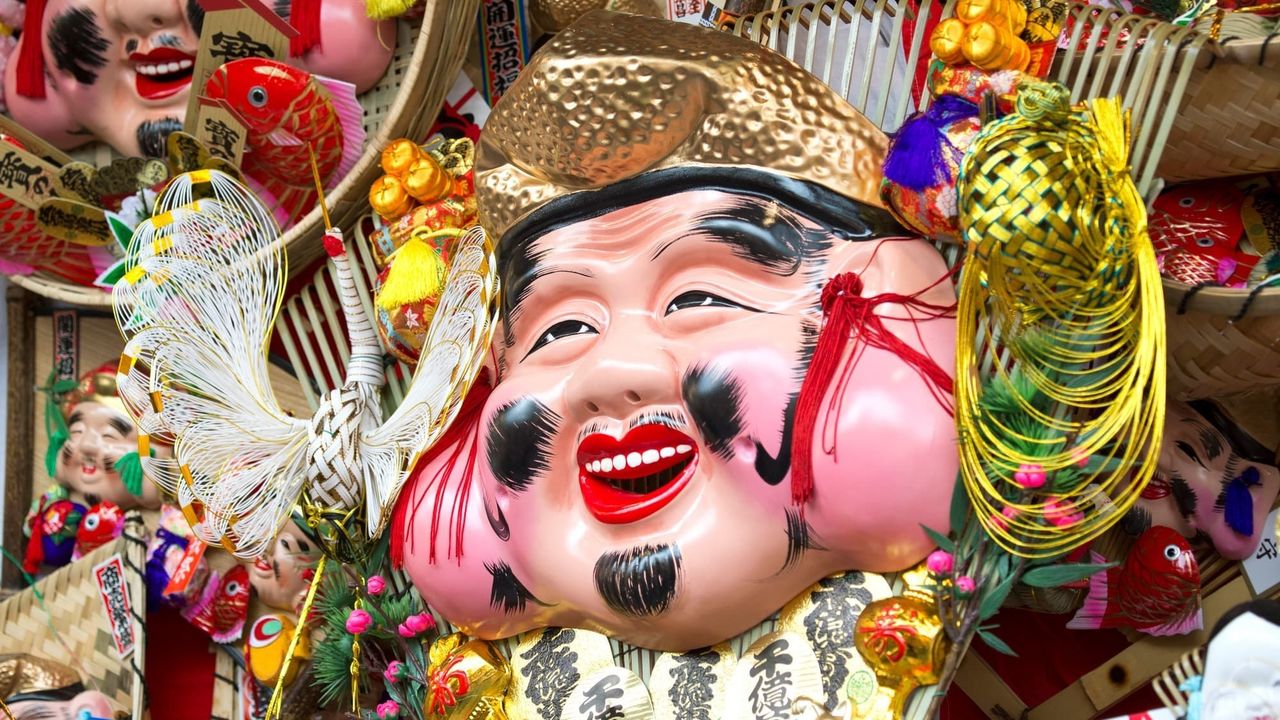
Ebisu, one of the shichifukujin (seven gods of fortune), is revered as the deity of luck and bounty. He is considered the god of fishermen, but is also thought to bring good fortune to commercial enterprises. From January 9, temples and shrines dedicated to Ebisu hold a popular three-day festival, the Tōka Ebisu. Many worshipers buy decorated fukuzasa (lucky bamboo branches) or ornamental rakes known as kumade (literally “bear paws”) to mount at their place of business to help ensure good luck in the year to come.
The three most famous shrines to Ebisu are Nishinomiya Shrine in Hyōgo, Imamiya Ebisu Shrine in Osaka, and Kyoto Ebisu Shrine. Nishinomiya Shrine in particular is known for its lucky man race, a lively rite that has gained national attention. When the shrine gates open at six in the morning on January 10, worshippers sprint along the 230-meter approach to the main hall, with the first three finishers being designated that year’s fukuotoko, or “lucky men.”
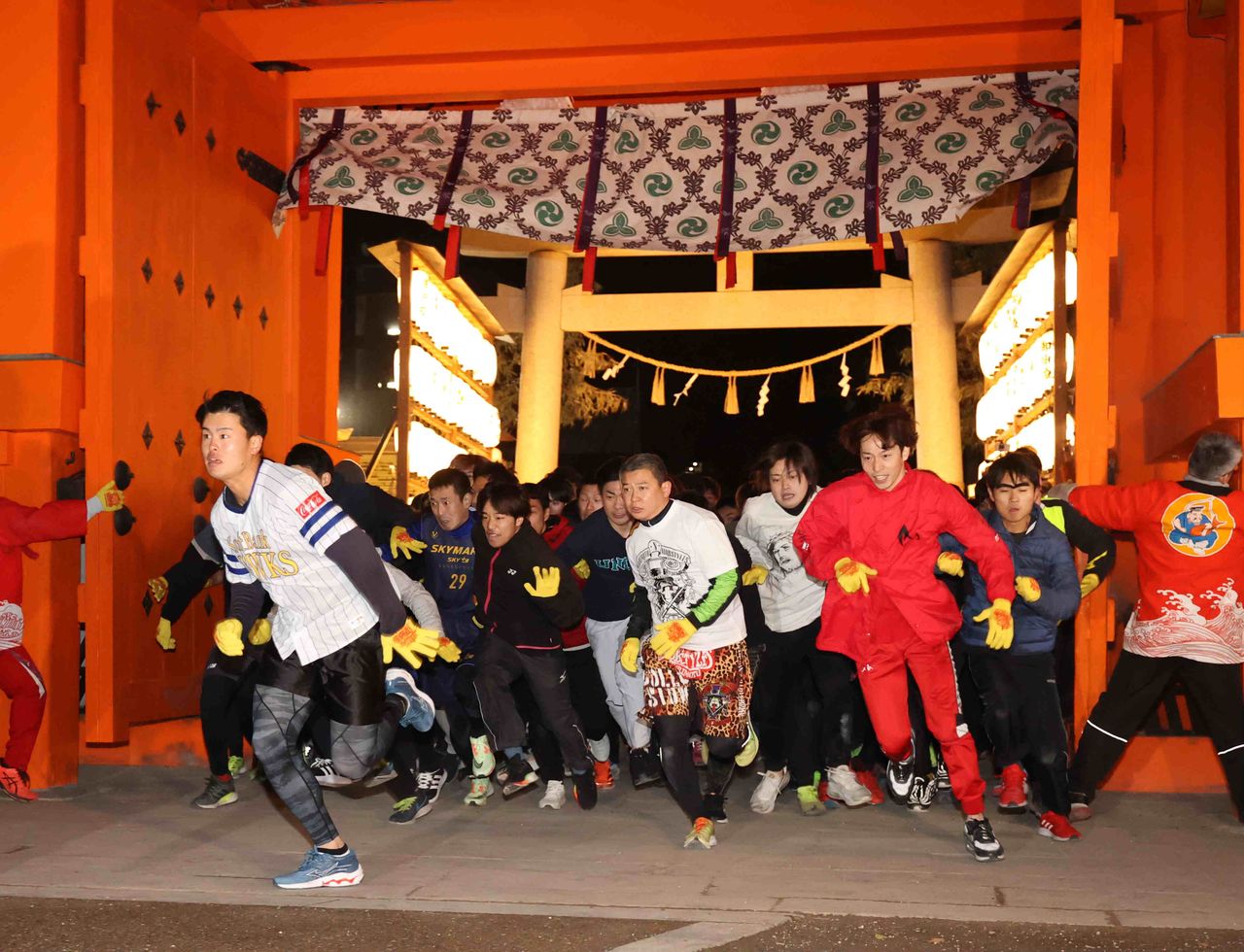
Around 5,000 runners take part to be the “lucky man” of the year in the annual race at Nishinomiya Shrine, in Hyōgo Prefecture, on January 10, 2023. (© Jiji)
(Originally written in English. Banner photo: Tōka Ebisu festive ornaments. © Pixta.)