The Imperial Regalia: Japan’s Three Sacred Treasures
Guideto Japan
Culture- English
- 日本語
- 简体字
- 繁體字
- Français
- Español
- العربية
- Русский
Legendary Origins
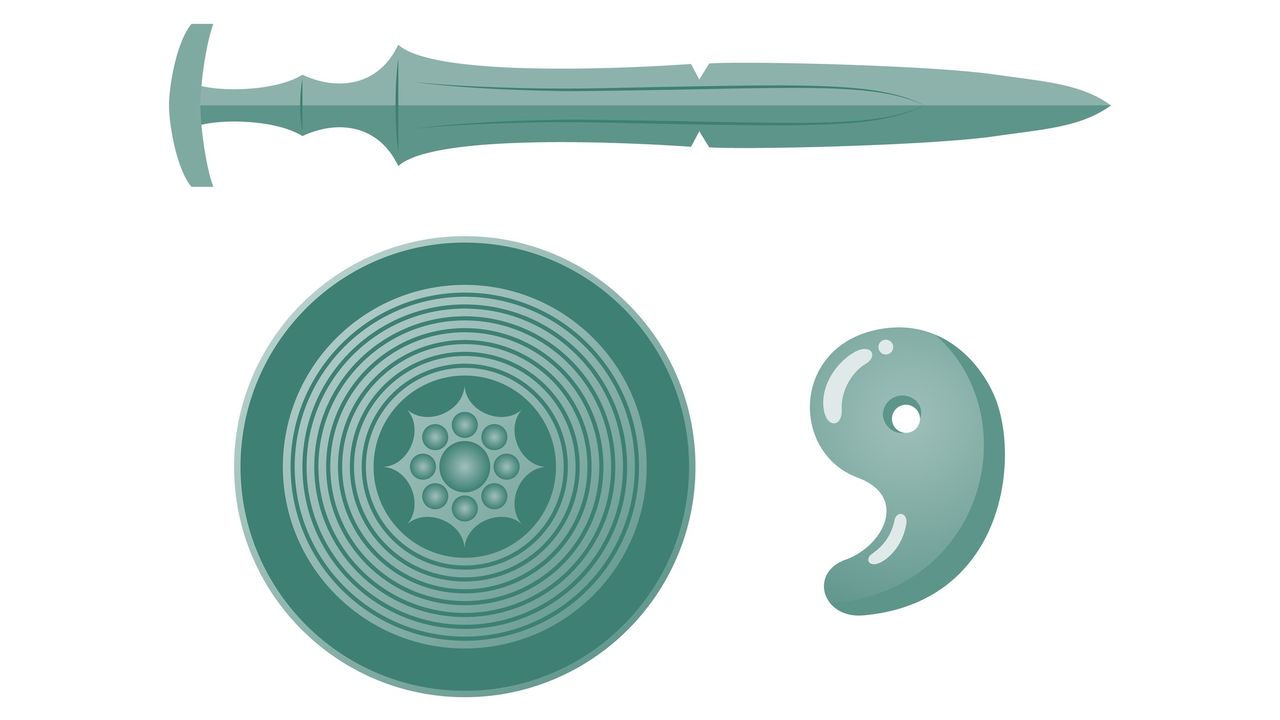
Japan’s imperial regalia, also known as the three sacred treasures, consist of the mirror Yata no Kagami, the sword Kusanagi no Tsurugi, and the curved jewels Yasakani no Magatama. According to legend, Japan’s emperors are descended from the sun goddess Amaterasu, and both the mirror and jewels appear in the story of how she was lured out of a cave where she was hiding, bringing light back to heaven; she is tricked by seeing her mirror image into leaving the cave. After slaying a giant snake, her brother Susanoo found the sword in the body, and later presented it to her.
As these items are considered to be highly sacred, they are never shown in public. In the 2019 imperial succession when Emperor Naruhito succeeded his father Akihito, the sword and jewels appeared in the ceremonies, but were inside boxes at the time. The intense secrecy surrounding them means it is unclear how often the items may have been replaced over the centuries. The mirror is said to be housed in Ise Shrine, the sword in Atsuta Shrine, Nagoya, and the jewels in the Imperial Palace, Tokyo.
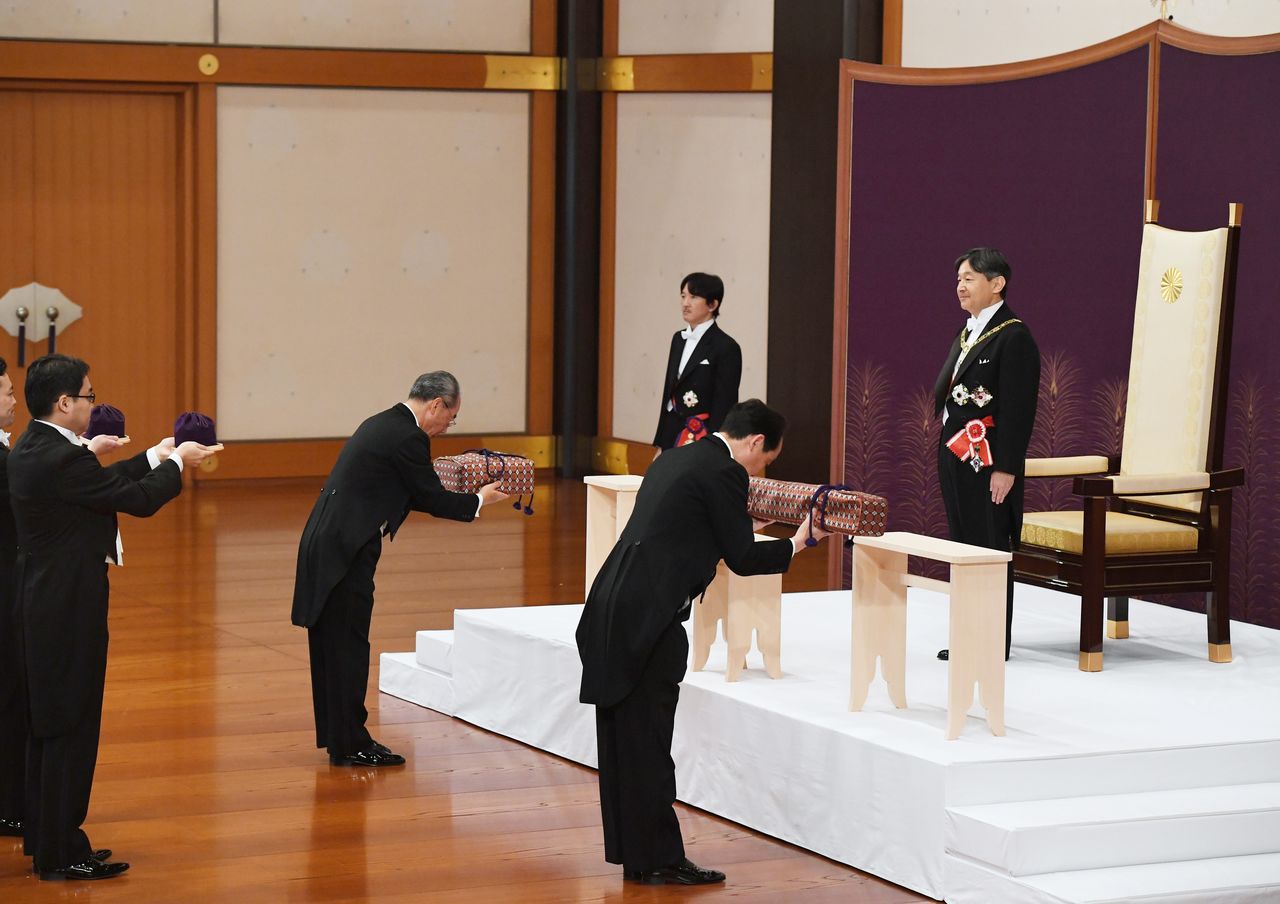
The sacred sword and jewels appear in boxes during a ceremony that is part of the imperial succession when Emperor Naruhito, at right, ascends to the throne on May 1, 2019. (© Jiji; pool photo)
(Originally written in English. Banner image © Pixta.)