The Paste that Pleases: Ways to Enjoy Miso Every Day
Guideto Japan
Food and Drink Culture- English
- 日本語
- 简体字
- 繁體字
- Français
- Español
- العربية
- Русский
Finding a Taste to Your Liking
Miso, along with the soup that takes its name, is a staple part of life for Japanese people. Now it is gaining recognition as a fermented food that contributes to Japan’s reputation for good health and long living. We visited Sanomiso, a firm founded in 1934 in the Kameido district of Kōtō, Tokyo, to speak with company head Sano Noriko and learn more about how to appreciate miso, as well as ways to enjoy delicious miso soup.
(© Nomura Kazuyuki)
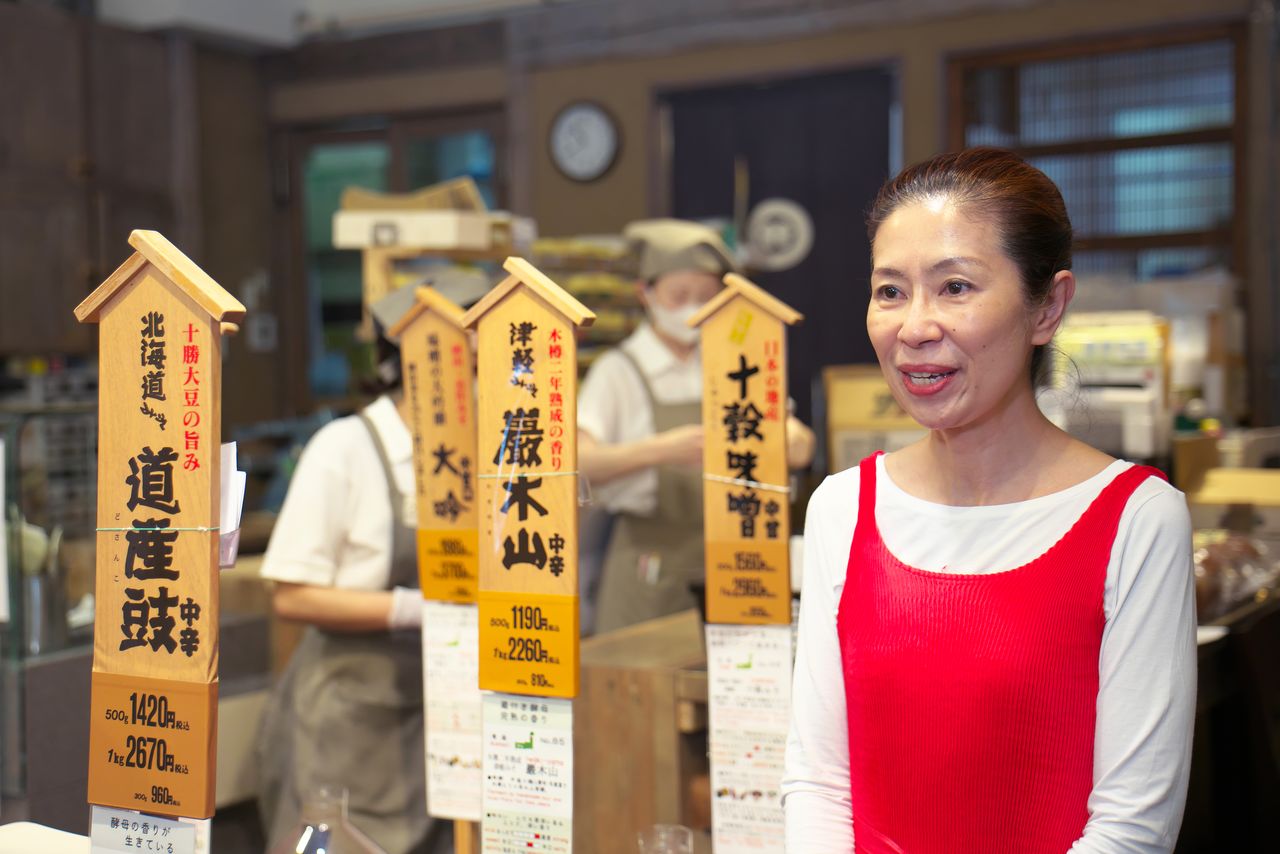
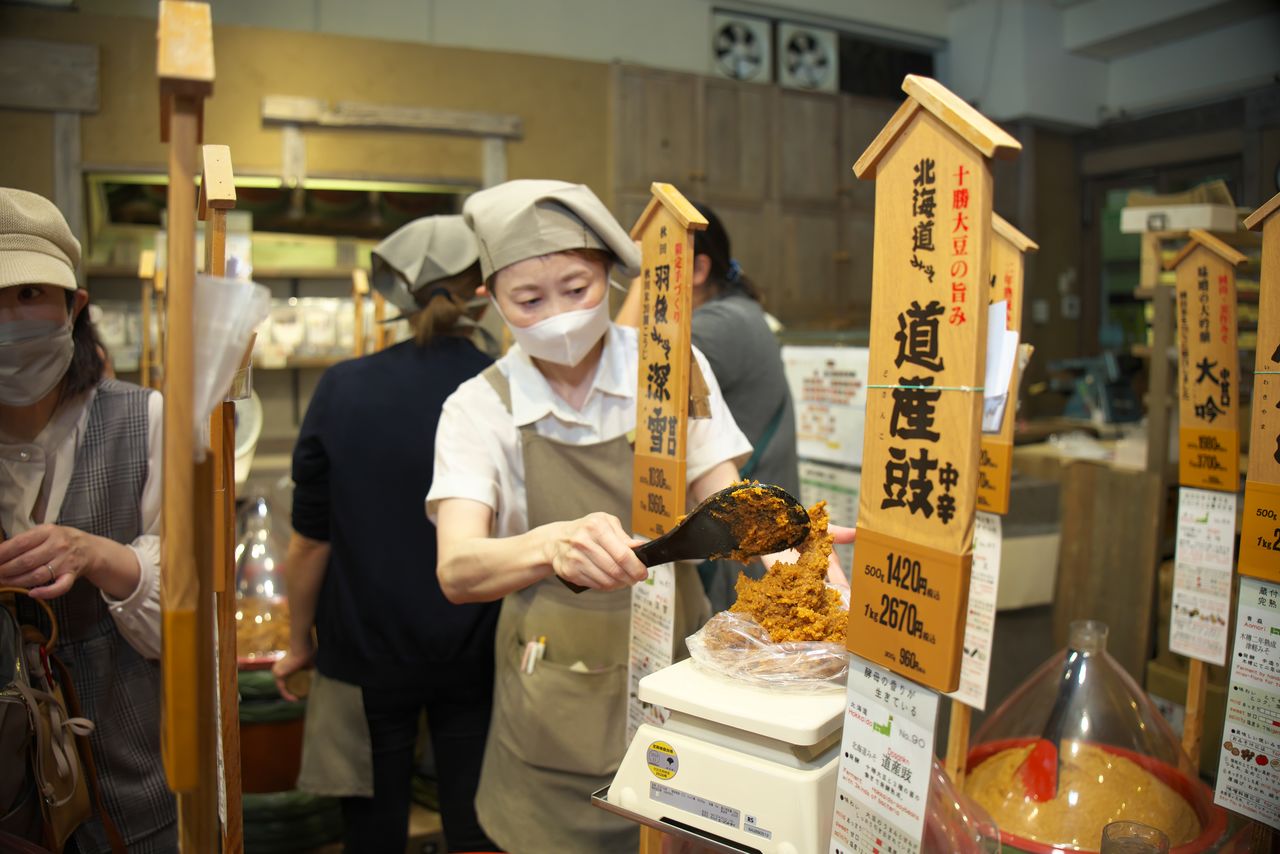
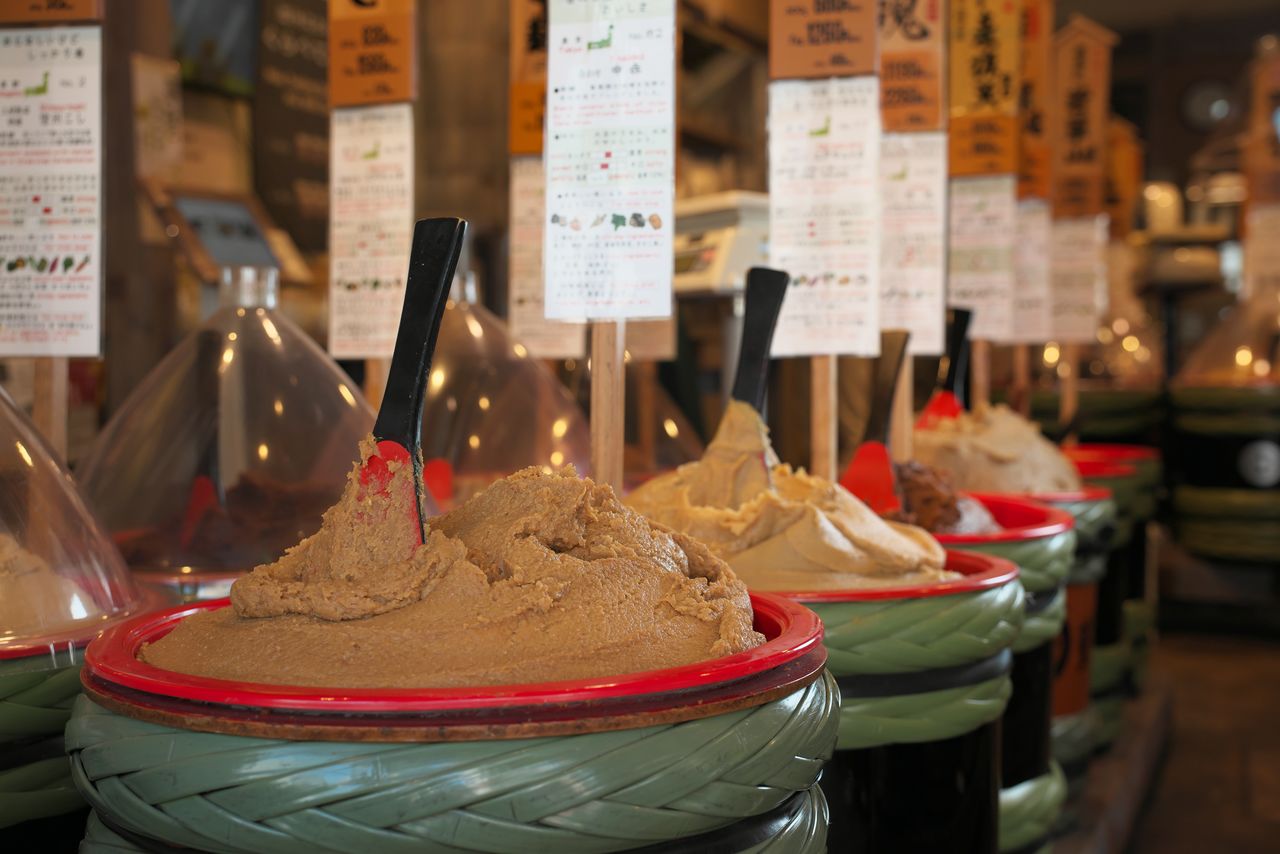
The main Sanomiso store stocks more than 70 varieties of carefully selected miso from breweries across Japan. Rows of miso barrels, each topped with a custom-made transparent funnel, are arranged in the store. Rare for Tokyo, the miso can be bought by weight, rather than in prepackaged amounts.
(© Nomura Kazuyuki)
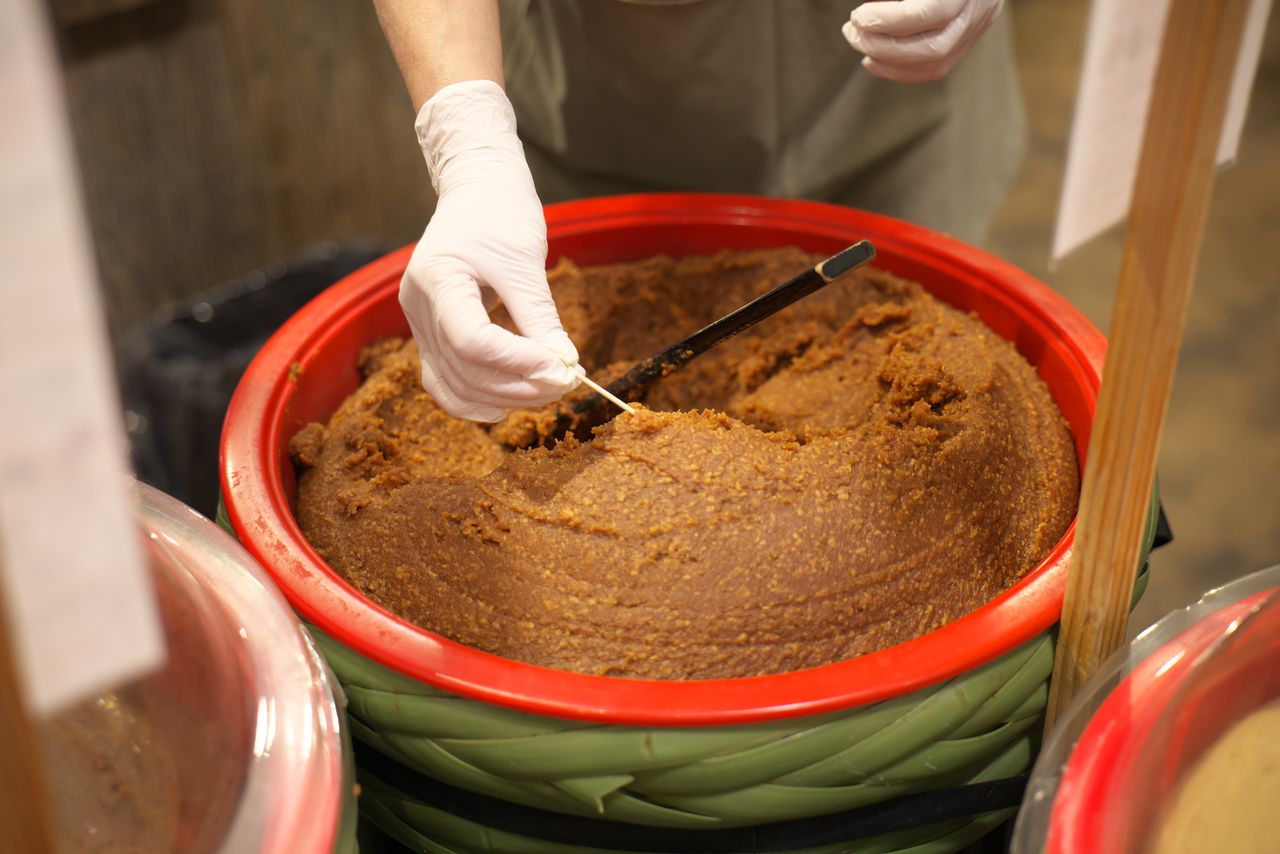
If you tell the staff what kind of miso you like, they will recommend several varieties and then scoop up a small tasting sample so you can try each one. They run you through the choices with clear descriptions of the miso-making process: “This one has been aged in a wooden barrel for more than two years, so it has a deep flavor,” say, or “If that’s a little too rich for you, this one is more versatile, with a good combination of sweetness and umami.” For those who usually buy prepackaged miso from the supermarket, this is a welcome chance to experience the distinct tastes and individual characteristics of the different varieties available.
(© Nomura Kazuyuki)
A Sense of Place
Miso is made by steaming and mashing soybeans, adding kōji mold and salt, and then leaving the mixture to ferment and mature. Despite only using three ingredients, an incredibly diverse range of colors, aromas, and flavors can be produced. Using rice kōji produces kome-miso (rice miso), barley kōji creates mugi-miso (barley miso), and soybean kōji naturally makes mame-miso (soybean miso). The miso matures through the action of the microorganisms contained within it, such as kōji, yeast, and lactic acid bacteria, and a deep, rich flavor is created through a complex combination of saltiness, sweetness, umami, bitterness, and acidity.
The French term terroir is used to describe how the unique flavors and characteristics of wine and cheese are determined by the local climate and environment. Miso has terroir too, formed not just by the local climate and soil, but also the production method and even by the brewery where it is made.
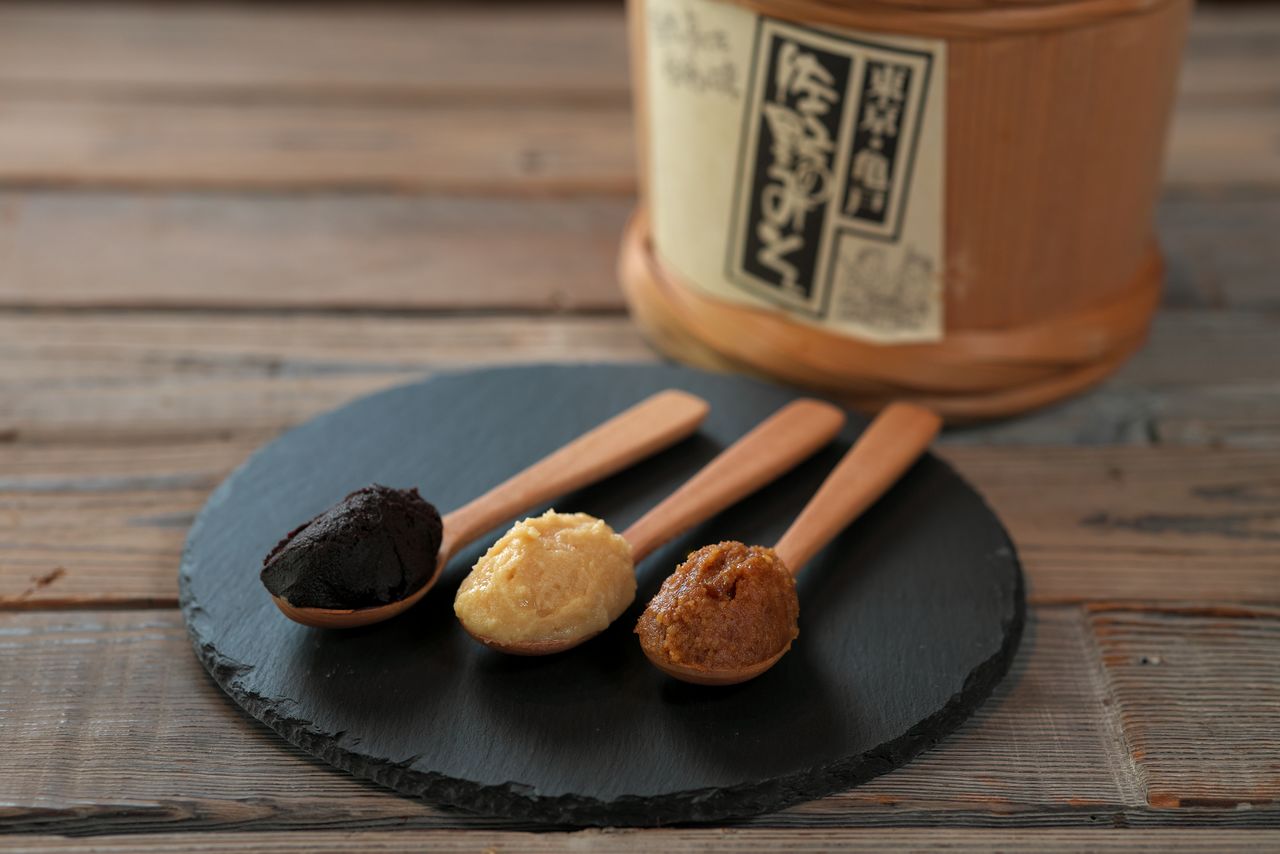
Kome-miso, using rice kōji, is the most common type of miso in Japan, accounting for around 80%. However, as a general guide, the miso changes color from red to white and salty to sweet the further south you go from Hokkaidō. The mame-miso produced in the Chūbu region, represented by Hatchō miso from Okazaki, Aichi, is a brown color so dark it verges on black. Mugi-miso is the cornerstone of miso culture in Kyūshū, as well as the westernmost parts of Honshū and Shikoku.
(© Nomura Kazuyuki)
When Sano visits miso breweries, she is sometimes told by the owners as they stand inside the fermentation storehouse that “the bacteria comes down from beyond that wall.” Although invisible to the eye, there is bacteria that has existed in the storehouse for many years, and it is this that creates the unique flavor and delicious taste only to be found in that brewery.
Leaving the Cookbook Behind
Making miso soup is very simple.
- Pour dashi stock into a pan (you can either make your own dashi or, to save time and make it easier, use instant granules or a dashi pack in hot water).
- Add your favorite ingredients and simmer them.
- Once the ingredients are cooked, stir and dissolve the miso into the broth.
Sano recommends that “once you have found a miso you like, don’t overthink it. Just enjoy trying out various ideas.” It seems that anything goes when combining ingredients and dashi.
Incidentally, the traditional way to make dashi is to extract it from ingredients such as katsuobushi, konbu, niboshi (iriko), or dried shiitake mushrooms. Among the standard ingredients used to make miso soup more filling are tōfu, wakame, aburaage fried tōfu, or daikon, but Sano asserts that “there are no ingredients that don’t pair well with miso.” Even Western vegetables like chicory or those usually eaten raw can be used.
“You can chop up any leftover vegetables in your refrigerator and put them in a pan, and this helps reduce food waste too. Add meat and you have a filling meal, more like a side dish,” she advises. For a twist, she suggests topping Hatchō miso soup with half a peeled avocado, breaking it up as you eat. Placing a cherry tomato in the dip left after removing the stone creates a stunning contrast of green and red against the black of the Hatchō miso and increases the dish’s visual appeal.
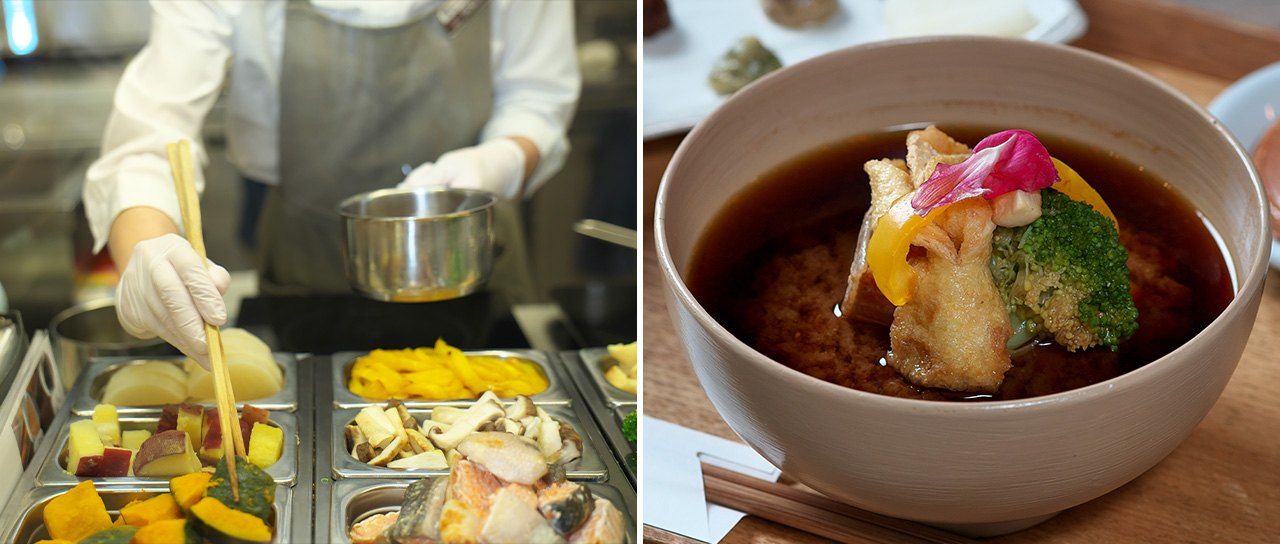
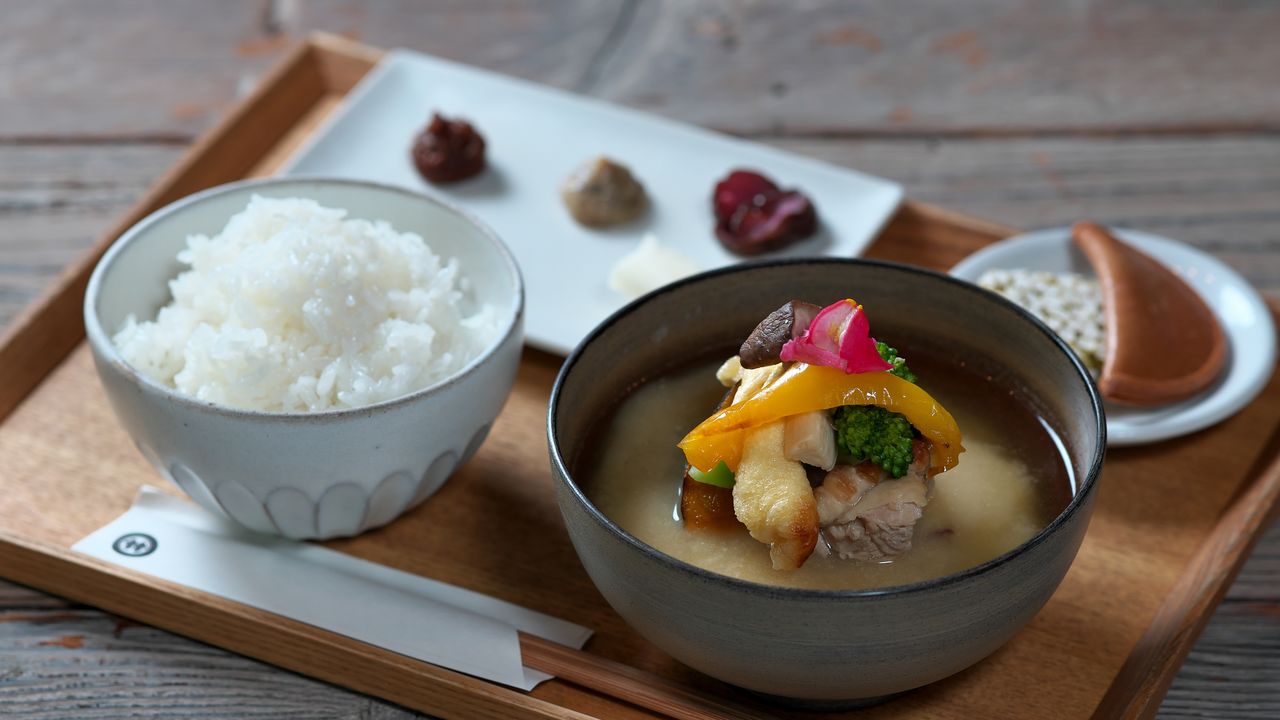
Packed with filling ingredients, this miso soup is a popular choice in the eat-in area at Sanomiso, where you can choose from six varieties of miso. You can also ask for a blend of two varieties. (© Nomura Kazuyuki)
A general guideline is to use 16 grams (just under one tablespoon) of miso in 160 milliliters of dashi per one-bowl serving. When using dark miso, as it is saltier, the amount should be reduced slightly, while with white miso, you should add a little more. In addition, if the dashi instant granules or pack contain salt, you will also need to adjust the amount of miso used, so the soup doesn’t taste too salty.
Make sure not to overboil the soup after adding the miso either. Sano emphasizes that the heat needs to be turned off as soon as the soup begins to bubble gently at the edges of the pan, or the delicious aroma of the miso will be lost.
Once you have your bowl of miso soup, you can add a garnish or topping, known as suikuchi. Adding green onions or mitsuba gives it a pop of color, while shichimi, sanshō, or yuzu peel can create extra fragrance and flavor. These help to stimulate all the senses and increase appetite. In the capable hands of Sano, the possibilities of miso are astonishingly wide. “Sprinkling a little black pepper or powdered cheese on top gives it a different flavor. A scattering of roughly chopped nuts works well too. You can even add a final drizzle of olive oil or a knob of butter for some extra richness.”
No Longer a Villain
Over the last 50 years, miso production has been gradually on the decline. According to industry groups, production in 2025 was just over 360,000 tons, around 60% of what it had been at its peak in the early 1970s. Along with changes in diet and lifestyle, miso was singled out for criticism due to being linked to excessive salt intake, a major cause of high blood pressure and strokes, and this too had a negative effect. This decline in consumption led some breweries to abandon their operations.
Now, though, production is stabilizing. Awareness growing that a single bowl of miso soup contains around 1.5 to 2 grams of salt, an amount unlikely to affect healthy people even if eaten every morning, and the health benefits of fermented foods have come into the spotlight. Centering on the United States, exports are on the rise, with the volume hitting a record high of 23,825 tons in 2025.
Sano, who runs the company with her husband Masaaki, the managing director, states that “our mission is to preserve the meticulous miso-making methods that have been passed down through generations of brewery owners.”

(© Nomura Kazuyuki)
She goes on: “It’s so sad when a brewery has to close due to the owner growing older and either no longer being able to sell miso or having no one to take over the business.”
She explains that each brewery has its own unique ways and heritage, noting one that takes three days and nights to make kōji, and another that uses water from a well that has served countless generations of their ancestors. “Every region has its own distinctive miso, and I want to preserve that culture. It’s for that reason I also want to convey the joy of this food.”
Expanding the World of Miso Through Blends
At Sanomiso, you are invited to try blends of different varieties as a way to enjoy miso even more. This could be combining kome-miso and mugi-miso, or blending miso from two very separate regions like Tōhoku and Kansai. What one lacks, the other provides, resulting in a deeper flavor. If you keep a stock of around three different varieties, you can blend them according to how you feel that day, providing you with an even greater choice of miso soup variations.
Miso contains living organisms, so leaving it at room temperature means it will continue to ferment. You can keep miso in the refrigerator for six months, but Sano recommends freezing it. As it doesn’t solidify, it can be used straight from the freezer and lasts up to a year.
“Some people push the miso they have bought to the back of the refrigerator and then end up throwing it away because it is too salty or the soup they made with it was too sweet for their liking, which is a real waste.” Her suggestion is to “try blending it with a different variety of miso.”
Miso has many uses, not just in soup. Mix it with mayonnaise or whisk it in with olive oil and vinegar to make a dressing. A miso dressing can transform even the most boring salad. It can also be added to yogurt or mashed tōfu to create a dip or sauce. Sano says that the rich umami flavor of the miso means you can reduce the amount of salt you use, compared to just flavoring with salt.
(© Nomura Kazuyuki)
When added as a secret ingredient, it enhances the flavor of all sorts of homemade food. Hatchō miso is good paired with beef stew, while white miso works well in cream-based dishes. A blend of white and black miso is perfect in spicy curry. There are a lot of fun recipes to try, including surprising combinations of ingredients for miso soup that you would never have thought possible, on the Sanomiso website (Japanese).
(Originally published in Japanese. Banner photo: The set meal at Sanomiso’s eat-in area, with its miso soup packed full of ingredients. © Nomura Kazuyuki.)